Bootstrap
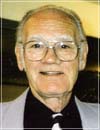
Scott Richardson

Life Is But A Vapor

James 4:8-17
Scott Richardson April, 12 1981 Audio
0 Comments

Sermon Transcript

Auto-generated transcript • May contain errors

100%
sudden death is an impressive
warning. And I think that this statement
is true, that death evidently from what we've experienced in
our own personal lives and what we have experienced in the lives
of others, what we've seen, what we know to be a fact in regard
to death, that death pays no respect to character or to age
or to hopefulness. Now a man may join himself to
the service of his country, but his patriotism will not protect
him. He is subject to this last and
chief enemy of mankind, which is death. A fellow can possibly surround
himself with a wall and world of love and affection from his
wife and his children, from his mother and his father, from his
friends, from his colleagues, but yet that's no refuge for
him. That's no screen of protection
that will protect him from death. Death will ultimately and finally
have its way and take its toll upon this individual regardless
of how much love and affection he has surrounding him. A man
might have at his command all the comforts of life and yet
may die before the doctor arrives on the scene to see if there's
any life in his body. You see, there's no discharge
from this war. We all march in this fight. We all march to the same tomb. We're all assembled on the same
battleground. We all must die. You know, the scriptures say
in the book of Hebrews that it's appointed. It's appointed. That means it's determined. It
is appointed unto man once to die. And after death, then there's
the judgment to contend with. So death has no respect for age
or for character or for hopefulness. We're all subject to death. We're all liable to give way
any minute to the power of death. Well, I know that we admit that
we shall die. We admit that. Everyone admits
that. You talk to anybody at random. He doesn't have to be of a religious
persuasion. As a matter of fact, he doesn't
have to have any religion at all in order for him to come
up with the right answer in regard to the question, well, do you
think you'll die? Yes, I think I will die. I'm
convinced that I'll die. I'm sure of that. That's the
reason. I read the obituary columns on
a morning to see who has preceded me. So I know I'll die, but not
so soon as to make it a pressing matter. I believe I will die,
but I'm just not real concerned about it right now. It's not
a pressing matter with me. It's not something that contends
for my time or contends for my for my consideration or my thinking. I'm not devoting too much of
my life to it right now. I know I'll die, but it's not
a pressing matter. It's not something that demands
my utmost attention and consideration right now. But I know I'll die. Well, most of us think that we're
not within measurable distance of the graveyard. We know we'll
die. But we think that it will be
some time yet before worms eat this body and worms become a carnival for the carcass of
this body of flesh. We're not within striking distance. I've got no semblance of A futility
is in regard to health. I'm hale, I'm hearty. I've been
to the doctor and they've given me a clean bill of health and
said that I'm disgustingly healthy. And as far as they can foresee,
it looks like I've got a lot of good years ahead. My blood
pressure's good. and I have no aches and pains,
and it looks like I'll be all right. I'm not within striking... I know that I'm going to die
now. I know that we're going to die, but I am not, I do not
think within striking distance of the graveyard as of yet. So therefore, in light of my
reasoning, I do not think that I'll make this a pressing matter
with my soul." Even old men, old women who live
long, 80 or 90 years, they still hug to life as much in their
80th and 90th year as they did when life first commenced for
them. They long to live. Have you ever
talked to anybody in his right mind who was not affected and
afflicted by the infirmity of old age or the disease that so
wracked his body? Have you ever talked to anybody
apart from that who said, well, I'm planning on dying here in
the next day or so? Not even in the hospital, not
even at home on the sickbed. No one's planning on it. I still
think maybe it'll be all right for me. I still think that I'm
going to whip this thing. I'm going to get by. Somehow,
I don't know whether it will be God, if there is a God, or
whether it will be just due to the course of events or what,
but I think that I'm going to make this thing. It's the way
most people talk. You know and I know that it's
appointed. It's appointed. God who does the appointing. It's not me that sets the time
or the place or the how and the wherefore and because of. It's
not me or it's not you. It's God. It's appointed. God appoints. Now whether we
agree with it or not is of little value or little matter. It's
not going to change. the course of His determining
appointing. It's not going to change in any
in regard to what I think. It is appointed, it is appointed
by God that we're going to die. You
see, as I said before, we're all in the same army, marching
on the same field, marching to the same tune, and how can we
escape when all others have fallen to this prey, this ark enemy
of death. How can we escape? There's no
way of escaping. No way. Only two of our race
has gone to a better land without crossing the dark river of death. Enoch and Elijah. The only two
in the history of the human race. Think of it now. Billions and
billions of people have passed on have come and lived upon this
earth, and lived their life out, and died, and crossed the river
of death. Billions, but only two out of
the billions have ever evaded the crossing of the dark river
of death. Only two, and that's Enoch and
Elijah, and I doubt seriously if there's any among us here,
including this preacher, will comprise or make up the third.
I think we are all destined for this. If the Lord tarries, we
must go. We must go the way of all flesh.
Well, the text here begins this way. Verse 14, that's our text. This is what I've said so far
has been the introduction to the text. And sometimes the introduction
is far better than the sermon. So it's always important for
those that hear to be attentive to the introduction. Now, verse
14 says, "...whereas ye know." You know! See, they'd been boasting
down here. You look at the 16th verse. It says, "...but now ye rejoice
in your boastings." They'd been boasting as to the continuance, the perpetuity of
their life. They'd been boasting about that.
But he said, in light of your boasting now, just settle down
here and wait a minute and listen to what I've got to say here,
and I believe that it will be of a help to you if you'll pay
attention to me. Whereas you know, now you know
this, you know this, you know not what shall be on the morrow,
for what is your life? It is even a vapor, a vapor. an airy, misty thing. That's what your life is. It
appears for a little time and then disappears or vanishes away. Now the text begins here by reminding
these people who were boasting and by reminding you and I here
this morning that we have no foresight. Foresight. We have no foresight. We always
say that hindsight is a whole lot better than foresight because
we have no foresight. If we could have had foresight
enough to see into the future, every one of us here would be
rich men and women today. We would have mortgaged our homes. and everything that we had and
bought gold when gold was $30 an ounce. And now we could have
recouped our investment 20 times over or more than that. We could have invested in land
when land was $25 or $30 an acre. We would have bought houses and
lands, but we had no foresight. You see, the text here reminds
us that we have no foresight. He says, whereas you know not
what shall be tomorrow. You don't know. You see, God
has given us a memory that we might go backward. We've got
that, and that's a blessing. That's a blessing that we can
go back into the past and cherished fond memories of home, of family,
of love, of children, of experiences. That's good, that's good. We
can go back. But God hath not given us any
foresight as to what's going to happen tomorrow. God has given
us no eyes to pry open the future. He hides the future from our
curiosity. So the first thing that I see
here in this text is this, that he reminds us that we have no
foresight, that we don't know what's going to happen tomorrow.
We don't know. And I don't think that it would
strain the text to say that we don't know what's going to happen
the next second. We don't know. We don't know
what's going to happen this afternoon. We don't know what's going to
happen tonight, much less tomorrow. You see, God has not permitted
us to be able to delve into the future to find out the length
of our days, and to what's going to happen to us. He's shut our
eyes to the curiosity of the future. Never know. Just never
know. I've told you this story before,
but I'll tell you again. Years ago, I talked to a fellow,
not so much about his soul, but I talked to him about some religion.
And I told him that I would like for him to come and attend church
and listen to the preacher. And immediately he informed me,
just real quick like, he informed me that he didn't want me to
do any preaching to him. And I said, well, that's all
right. I'd like for you to come where you can hear some preaching.
Well, he immediately informed me again that he'd come when
he got good and ready to come. And he didn't necessarily need
me to invite him or anybody else. It kind of bothered me, kind
of made me mad when he took that attitude. But I kind of held
myself by the grace of God and didn't say anything. I said,
well, that's all right. I hope everything goes well with
you. And I let him out to where he
lived. Well, the next evening he was going home and there's
a big high cliff there where he had to go, had to pass this
high cliff as he made his way towards his home and he'd been
drinking some and he had a package of drink in his hands and he
fell down over that cliff and they found him face down, stone
cold dead in that stream. And he didn't know, see. Had
he known, this is what I'm saying, I'm not trying to impress anybody
with my experiences. I'm not trying to scare anybody
or make any kind of impression for them apart from what the
Word of God says. I'm just saying, if that fellow
had known what the future held for him, if he'd have known what
lay in store for him on the morrow, if I'd have known it, if I'd
have known it, I'd have tied him up. I'd have tied him to
a tree and said, let's wait until this day passes because I perceive
in the future. I've looked in the little glass
ball here and I see something there that's dreadful and terrible
that's going to come your way. But I can't see in the future
and you can't see in the future and we don't know what's in store
for us. We don't know. I was coming. down the road here the other
evening. Been up to visit Clyde a little bit, just come down
the road. Here come a car, just shooting right by me. Just lickety-split. Just lickety-split. Next day,
next day I read in the newspaper where that, I thought, well that's
familiar, the description of that car. And I said, well that
car passed me. I was coming from Clyde, and
there I was going, lickety-split, right up the road. Two boys in
it, just grinning, having a big time, and went up there and had
a wreck. Both of them, This morning's paper said both of them is in
the hospital critically injured. Critically in intensive care. If they knew, or if I'd have
known, if they'd have known that just a mile or so up the road,
they would meet their Waterloo. You see what I'm talking about?
You see what I'm talking about? God has given us no eyes to pry
into the future, and he hides the future from our curiosity. Now, the people here that James
describes in these three or four verses of Scripture here, they
boast that they will go into the city. And now what it says,
listen, verse 13, Go to now ye that say, Today
or tomorrow we will go into such a city. They will go into the
city. They are sure that they will
go into it. They are boasting. They are sure
of what they are going to do tomorrow. They are sure that
they are going to go into the city. Now what is it that will
stop them? We are sure of what we are going
to do tomorrow. What is it that is going to stop
us? We've got plans, we've got our minds made up, we've got
certain programs that has got to come to pass and has got to
be completed by tomorrow. We shall go into the city, and
they are sure that they will, for what is it that could be
that would stop them? We'll go today or tomorrow, we'll
go, we've got plenty of time. See what he says? Why, I said,
we'll go today or tomorrow. That doesn't make any difference
whether it's today or tomorrow or the next day, but one thing
we know, we're going to go. We're going to go. We're dead
sure of that. We're dead sure of what we're
going to do tomorrow. We're going to go. We've got
plenty of time. We'll go where we want to go.
We'll go where we like to go. We'll go when we like to go. This is what they were saying.
They were boasting. They were off. fully assured
that they even might continue there for a year or so or more. We're assured of that. We'll go today or tomorrow. We'll go into such and such a
city and continue there a year, maybe more if we want to. It'll
be up to us. We may stay longer if we like
to. I may go to California and I may stay out there for two
months. I may stay longer. I may go to Florida and I may
stay down there for... Well, if I don't feel like it,
I may stay down there for a month. I may even stay down there for
a year. Well, I may do this tomorrow
and I may do that tomorrow. I've got plenty of time. I'm
old boss. I give account to nobody. I do
what I want to, when I want to do it and how I want to do it.
Boasting, boasting. Go where they like. They're fully,
fully assured that they shall continue their year. And if they
please, they'll stay longer. Now, they said, we're going into
the city. That's where we're going. What are we going to do
down at that city? We're going to buy. We're going to buy. We're
going to buy what we want to buy. We're going to buy, and
we may even sell if we want to sell. It's up to us. We've got
a lot of plans of what we're going to do. Tomorrow, tomorrow,
we've got some plans. We're going to buy and sell whether
they're sure of it or not. Don't take into consideration
or do not fear. Sickness, or disease, or even
an accident, as we understand the word accident. Not taking
into consideration that a little old virus might come along. Just
that quick, a little old virus might, you might breathe that
virus, or it might enter into you, however they enter into
you, I don't know. But you might, that virus might
take a hold of you and just down you that quick. But they're sure
that nothing's going to happen to them. We're not going to have
any accidents. Nobody's going to run into us
or we're not going to run into anybody else. We are going down
into such and such a city today or tomorrow and continue there
as long as we like. We're going to buy and we're
going to sell. That's what we're going to do.
We are assured of that. Don't fear sickness, accident,
or disease. Nothing like this will keep us
or hinder us from the active transaction of our business. They're boasting. That's what
he says. But now you rejoice in your boasting. Boasting of what? Boasting of
what they're going to do tomorrow. Am I wrong about this? That's
the right interpretation, isn't it? Why, certainly, anybody who
can read can see this right interpretation. They're boasting of what they're
going to do tomorrow. They know they're going, and
one thing they're going to do is buy and sell, and they're
going to make a profit, and maybe they're going to stay there for
a year or two. But James says, James, the inspired writer, the
oracle of God, He says, you better wait a minute,
for you don't know what is going to happen tomorrow, for you don't
know what your life is. If you knew what your life was,
then maybe you could say something in regard to tomorrow. But you
don't know what your life is, see? Listen. Whereas ye know
not what shall be on thee tomorrow, for What is your life? What is it? What is it for stability
or continuance or perpetuity? What is it? What is your life?
Well, I'll tell you what it is. The breath in your nostrils is
not more unsubstantial than your life. That's what he says. Your
life is as frail and as feeble as a cobweb. That's what your
life is. When you start talking about
tomorrow, no need for you to talk about tomorrow because you
don't know what your life is. Better find out what your life
is first. Better find out if there's any
stability in your life. Any continuance in your life.
Better find that out before you start finding out these other
things. On a cold morning, you see your
breath. On a cold morning when you exhale. And the warm, moist breath comes
from your lungs and comes out and hits the cold air. It makes
a visible appearance there. That's what he's talking about
when he's talking about a vapor. He's talking about your breath.
Your breath on a cold morning. You see it. You see it. You see
on the cold morning sometimes You used to see it, and you can
see it on the television now and then. Horses, they bring
them out of the barn, they start marching, or they start pulling
the wagon or the plow or something. You see their breath as it comes
from their nostrils. You see it. It's visible. But
how long do you see it? Now your life is like this vapor.
Your life is like this. For what is your life? It is
even a vapor. Is there anything stable about
it? Is there anything permanent about
it? You see it. You see it. But how
long do you see it? You see it for just a second,
that's all. What happens? It vanishes away.
When you exhale your breath on a cold morning and you see it
out there, you can't even catch it. You can't even corral it.
You can't even put it in a box. You just see it. You see it and
you say, boy, it's cold out. Someone else says, it's cold
out. How do you know? Look at that fellow's breath.
Look at it again. Where is it at? You can't see
it until he exhales again. No stability about it. Listen, your own breath, according
to what James says here, Not only your own, but my own breath,
according to what James says, is a fair picture of the flimsy,
airy thing which men call life. That's a picture of what we call
life. What is your life? Well, there are some things that
last for a while. Some things. But our life is
not one of them. Now you take a giant oak tree,
take a giant oak tree, a big old white oak tree, some of them,
some of them are seven, eight hundred, a thousand years old.
Some of the trees that we've seen around here are a thousand
years old, some of them older than that. Some of those giant
sequoia trees in California and in the west are far older than
that. There are some things that endure and are stable and last
for a long time, and I'm not an authority on that, but I do
know that there are some things, there are some rocks that have
been here since the creation, and they've lasted for a long
time, but they're not as big now as they used to be because
the elements have warmed down. There are some things that last
for a while, but life is not one of them. It doesn't last
that long, in light of eternity. in light of God. God always has
been, always will be. He had no beginning, He has no
ending. Who could describe the pre-existence
of God? Certainly I can't. I couldn't
even enter into the fringe area by way of description. Anything
I say would beggar the real truth of the matter. I couldn't do
it. You couldn't do it. So in light
of God, in light of the life of God, in light of the eternal
life that every believer has in Christ Jesus, I'm not talking
about the abundance of it. I'm talking about the longevity
of it. I'm talking about the length of it. In light of that,
what is your life? What is your life? It's like
a vapor. It's like the breath out here,
which is a flimsy picture of the airy thing that men call
life. There it is. How long does it last, huh? Oh,
what is our life for continuance? Something lasts for a while,
but what's your life? It's frail as a cobweb. There's
a thousand gates. More than that. There's ten thousand
gates to death. Ten thousand of them. You could
just keep naming things. It would take a scribe and he'd
wear out his pen before he could number the various weights or
the various gates of death. I read one time where a Pope,
a very religious man, he choked to death on a fly. He was talking,
Jack. and a fly, of all things, insignificant,
dirty fly that we want to kill. We chase him down and trap him
and try to kill him. A fly flew while his mouth was
gapped open for just a thousandth of a second. A fly flew down
his throat and choked him to death. I've read where men have
choked to death on grape seeds. Grape seeds, not much bigger
than the head of a pen, but men have choked to death on them. I knew of a fellow not too long
ago who was sitting in a restaurant, and had been enjoying a prosperous
life, and was forty-some years old, and the world was his oyster. And he and his friend dropped
into this restaurant one evening and sat down to eat, and all
at once, this fellow, they was having some steak, and all at
once this fellow, instead of trying to say anything to his
friend who was with him, he just kind of covered himself up and
rushed outside. And the waiter said to his friend,
what's the matter? He said, well, I don't know.
What's the trouble? Well, hadn't we better go out
and see? And they went out and there he laid on the sidewalk.
He had choked on a piece of meat. And look, there was bound to
be some brain damage there because he'd laid there and he wasn't
breathing. And they began to pound and pull and all of that,
and finally the rescue squad come and they got him to breathing
again. But the fella, the next time I heard of the fella, I
went to visit him on the request of his sister, and that fella
didn't know straight up he was in the nurse's home and it affected
his mind. But lots of folks are killed
that way. I was at a restaurant one time
up on the other side of the Philippines just a year or so ago, stopped
there at a restaurant, Stan and I. We got a piece of pie and
a cup of coffee and we were sitting there and there was a couple
of elderly ladies sitting right up to the right of us in a booth.
We were sitting at an open table. And all at once, I noticed this
lady. I noticed her. She was having a difficult time.
And I said, Stan, what's the matter? And we said, well, she's
choking. She's choking. And she began
to stand up and she began to pull. And here comes the waiter. And the waiter put his finger
down her throat. And here comes another fellow
customer. He ran and grabbed her by the waist and began to
go through this operation that they do in order to unchoke somebody. What's your life? It's nothing. It's nothing. A thousand gates
to death. Which one will it be for me?
I often wonder, don't you? How will I die? You ever wonder
that? Just wonder how I'll die. I was
talking to a lady here just recently. Her husband died that quick. He didn't have time. He didn't
have time to say, I haven't seen him say nothing. He thought things
was going good. He'd made plans for what he's
going to do tomorrow. He even had his clothes packed. He bought a new suit, had his
new suit hung up, already packed in there, his ties, his belts,
and everything else, his shoes. And he said, I'll do this now,
I'll mow this grass now, and I won't have to mow it when I
get back. But he never got the grass mowed
because he died. He made one swath across the
yard, and they heard some commotion outside, and the lady ran out,
and they laid stone cold dead in the market. A lady called me here not too
many years ago, and she said, we're good friends and been neighbors
a number of years. She said, I want to ask you a
favor. And I said, well, sure, what is it? She said, I wonder
if you'd preach my husband's funeral. And I said, well, I
will when he dies. She said, he's dead. I said,
well, what happened? Well, she said, he was out mowing
the grass. He was the same age I was. She said, he's out mowing
the grass. And she said, I looked out and
there he lay in the lawn, in the grass. I said, would you
hold his shoulder? Yeah, I'll do it. And it was just a matter
of two or three months that he'd stop by. And I was there in my
driveway. He stopped by and he began to
tell me what a wonderful fellow he was. He's a nice fellow, you
know. I said, well, why don't you come up and hear me preach
sometime? I've been knowing him for 25, 30, 35 years. Why don't
you come up sometime? He'd been telling me for years
that he was going to come. I said, why don't you come up and hear
me preach sometime? Just come up. I'm going to do that one
of these days. He said, I'm going to do that.
He said, you know, I don't drink anymore. I don't smoke anymore.
And I said, well, what's that got to do with eternal life? Well, he did. He did. Well, turn
with me for just a second here, if you will, to Psalm 39, and
let me emphasize something to you here. Psalm 39. You see what I'm trying to say?
I'm trying to answer that question there. What is your life? You're
worried about tomorrow. You don't even know what your
life is. You don't know the frailty of your own life. You don't know
it. What is it? It's like a vapor that appears
for a little while and then disappears. That's the way your life is.
Listen to what the psalmist David has to say here. He said, Lord,
he said in the fourth verse, he said, Lord, make me to know
mine end. Lord, make me to know how much
time I have left. Make me to know that. This King
David. This is not some rascal or some
individual that is bound in ignorance that can't read or write. This
is King David. This is one of the most glorious
men in all the history of mankind. King David. King David. There
is a nation of people that make this man, well, they bow to him
almost. A nation of people. I am trying
to emphasize who is going to talk in here. Lord, he said,
make me to know mine end, the measure of my days. And what it is, that I may know
how frail I am. Behold, thou hast made my days
as a hand-breath, and mine age is as nothing before thee." I
talked to a fellow in the funeral home the other night, and I said,
well, just how old are you? He said, well, I'm eighty-nine.
I said, well, boy, you sure don't look it. Well, he said, I've
got a sister that's 103. And he said, boy, I don't know
what could be attributed to her long life. He said, I don't know. Well, that sounds impressive,
doesn't it? Eighty-nine years old. Albert's
89, I think, or 88, somewhere along in there. That sounds impressive,
but that's nothing. Listen. What does he say? He says, My age is as nothing
before thee in light of, in light of, in light of the preexistent
God, the continual God Almighty who has no father or no mother
or no beginning or no ending. If you live to be as old as Methuselah,
nine hundred and fifty-some years old. Why, mine age is as nothing
before thee. Verily, listen, verily, every
man at his best state is altogether what? Vanity! Vanity! What is vanity? What is vanity? If you can find
out what vanity is, you can find out what you are, and what your
life is, and the duration of it, the shortness of it, and
the frailty of it, if you can find out what vanity is. Let me try to tell you this morning
in just a few words here what vanity is. First off, vanity
is nothing in reality. It is a pretense of something. It's an idle dream. It's empty
conceit. It's a delusion. It's a make-believe. That's what vanity is. An idle
dream. Delusion. Delusion. A pretense
of something. That's vanity. That's what he
says we are. We are vain and vanity. You see, the strongest, the strongest,
the most ablest, the most healthiest, the most richest, the most poorest,
a president, a prince, a king, doesn't make any difference who
he is. Every man, every man is a vanity. among the billions
of mankind, none rise beyond the dreary state of nothingness,
vanity before God. Oh, but there's more than that.
I just didn't get down there with it like I ought to. It said,
barely every man at his best state is altogether vanity. Every man is a vanity, a pretense
of something, an idle dream, a delusion, a make-believe. But he says every man at his
best state, at the prime of his life, Back when he was 29 years
old. Back when he was 32 years old. Back, brethren, in the glory
of his life. Back when he was the most healthy. When his eye was the keenest. When his eye was the clearest.
When his muscles were firm and there was no pat or flab on him. At His very best state, and that's
what it says, at His best state, He's what? Just vanity? He's altogether vanity. From the top of His head to the
soles of His feet, He's altogether vanity. He spends His years as
a tale that is told. Can you understand what I'm saying
this morning? I'm saying, brethren, we're dying. We're dying. I'm
a dying man preaching to dying people. That's what I'm saying.
I'm saying that there is no perpetuity or stability or continuance to
our lives as we know it. We don't even know what holds,
what's in store for us tomorrow, much less we don't really know
what our life is unless we understand what I'm talking about this morning
here by way of the breath. This breath that comes out our
nostrils or out our mouth is a fair picture of this flimsy
thing that men call life. Vanity, vanity. We're dying,
brethren, we're dying. Oh, he compares here. our life to a vapor, an unsubstantial,
flimsy thing. It appears, he said, it appears. That is, there is no substance
to it, no true existence. It appears, and then it is gone. It is like a phantom, it is like
a ghost, it is like a cloud, it is gone. You see it, now you
see it, now you don't. Like a phantom. How long? For a little while,
that's how long. How long are you going to live?
For a little while. For a little while. It's only a very, a short
little while that a man lives at his longest. Let him live
to be 950, but in light of life. And not the quality of it, but
the length of it. In light of it. It's just a little
while. Just a little while. I used to
talk to old Bender who died when he was about Between 85 and 90,
you say, Bender, do you think you've been here? He said, no.
He said, it was just like yesterday. We've done this and we've done
that. Here, he said, I'm ready for the grave. Oh, oh, how long? Ah, for a little
time. What then? It vanishes away. No trace of a man is left. You
can't recall it. You can't bring it back. Once
it goes out from the nostrils and it appears for a little while
and you recognize it, And as quick as you recognize it, it
goes out of sight, and it's gone, and there's no trace of it, and
you can't recall it, you can't bring it back. Here it lies! Here it lies! That's what's left
of us when we die, and they take us to the graveyard. And perchance,
and perchance, someone has some respect for our earthly remains. and goes to the cemetery sometime
in May, before the 30th of May, before Decoration Day, before
when we honor the time when we honor the dead. If you can find
somebody, you can't find very many people, but if you can find
somebody, one out of all of your clans, who will be concerned
and respectful enough to your earthly remains to go to where
they put you in the grave and take the lawn mower or pull the
weeds up and throw some plastic flowers on your tombstone or
pull up the weeds so you can see the tombstone. Nine times
out of ten, this is what you'll see. Here he lies. There he is! I think it was John Adams, the
President of the United States of America. This is what he said.
He said, put this on my tombstone when I die. And if you know where
John Adams is buried, you read the inscription of the epitaph
on his tombstone, it says this. He knew a whole lot more than
most know today. He said, here lies all of John
Adams that could die. Wasn't that wonderful? Here lies
all of John Adams that could die. Bless God that's so. Ah, here he lies. It's certain
then, brethren, that life will come to an end. That's certain,
isn't it? But it is most uncertain when it will come to an end. It's certain that it will, but
it's uncertain and most uncertain when it will. What is your life? It's a vapor. Why then, in light
of what I've said? And I didn't use anything other
than the Word of God. That's all. That's all I've used. Everything that I've said has
been saturated, baptized in the fervency and the urgency of the
Word of Almighty God. That's all I've been talking
about, the Word of God. Now, in light of what I've said,
in light of what the Bible says, why is it then that we are so
neglectful? You know, I don't have to pound
this into you, you know that it's appointed unto man once
to die, and after death sometime there is a fearful, terrible
judgment. Now, if life is so short, and
God said it was, And the next thing beyond this veil of tears
that a man runs into is what is judgment, the judgment of
God. Why then, brethren, are we so
neglectful? You see, brethren, the Scriptures
say, how can we escape? Escape what? Not death. There is no need to say, that
there's a possibility, a probability we might escape death because
that's inevitable. We're going to be subject to
that. How shall we escape? If we neglect
what? If we neglect God. If we neglect
God's salvation. If we neglect the Lord Jesus
Christ. How can we escape? Escape what?
Escape judgment! That's what he's talking about.
How can we escape? You can't escape. I tell you
here this morning of a heart that's full inside for your never-dying
soul. You can't escape the judgment
of God if you continue on the course that you're on. There's
no way of escaping it. Let me read something to you
here from the book of Hebrews, chapter 12, I believe it is. Look at this, verse 25, chapter
12. Let me read it to you. Verse
25, See that ye refuse not Him that speaketh. I spoke to you
this morning. I spoke to you out of my heart.
I spoke to you out of the womb of truth and urgency. See that
ye refuse not him that speaketh. For if they escaped not who refused
him that spake on earth, much more shall not we escape
if we turn away from him that speaketh from heaven, whose voice
then shook the earth. And now he hath promised, saying,
Yet once more I shake not the earth only, but also heaven. Verse 28, Wherefore we receive
a kingdom which cannot be moved. Let us have grace whereby we
may serve God acceptably with reverence and godly fear. Why? Why? Judgment. Judgment. For our God
is a consuming fire. Our God is a consuming fire to
those outside of the Lord Jesus, to those that have no refuge,
to those that have no hiding place. Our God is a consuming
fire. How can we escape? Remember,
who it is we have to do. Look in Hebrews chapter 1. Hebrews
chapter 1. Look there for just a second.
I want to show you something. Hebrews chapter 1, verse number
2. I want you to see this. And then
I want you to understand and try to remember and recollect
and meditate upon whom it is with whom you and I have to do. This is what he says. It says,
"...hath in these last days spoken unto us by son." God has spoken
unto us right now by and through His Son, the Word of God. Now
listen to the next. Now, His Son is the subject of
this sentence. "...He hath spoken unto us by
His Son," capital S, capital O, capital N, "...whom referring
to the Son, a person. He, that's God, hath appointed
heir of all things. Now, what's that saying? In my
language, it's saying this, that God hath made the Lord Jesus
Christ the heir of all things. He made them the sole, sovereign,
absolute owner of all things. When my dad died, he made me
the sole heir of his earthly possessions, even to his last
coat, even to some old tacky harnesses that hung on the barn
wall. even to some unused and used
horseshoes and horseshoe nails. He made me the heir of all His
earthly..." All that He had, He made me the heir. That's a
crude illustration, I know. But that's what I'm saying here.
That's what God said. God said that He hath appointed
He hath appointed the Lord Jesus Christ his Son, Creator of all
things." What does that mean? That means that he has an absolute
right over every one of us. Why? Because he earned the right,
certainly through his suffering and through his crucifixion.
But God hath appointed him that right. And in another place it
says that God hath turned over to him all flesh, that is, every
ounce of flesh, be it black, white, red, or yellow. God hath
turned over to the Lord Jesus Christ every ounce of flesh.
And every ounce of flesh is in the hands of the Lord Jesus Christ.
I'm saying all of this, brethren, in order that you might somehow,
that the Spirit of God may impress your heart with the perversity
of the message here, that life is so short, eternity is so long,
and if you neglect Him who speaks, Him who speaks is the heir of
all things, and you will face Him in judgment, and then God,
to you, will be a consuming fire. He has absolute, unlimited, and
universal power. He may pull down, He may set
up at His pleasure. He may kill, and He may make
alive. God turned it over to Him. All
power has been given me, he said, in heaven and in earth. All power over everything that
rises and moves and wiggles is mine. I control it. As an heir, he has been appointed
by the Father. Listen to this now. As an heir,
h-e-i-r, an heir appointed by God, and he cannot be disinherited. He cannot be. He cannot be. Whether I like it, or whether
you like it, or whether anybody likes it or not, our Lord Jesus
Christ is the heir of all things. All things are in His hand. And
by being an heir, you're part of that heirship. Oh my soul. Listen. All, every ounce of flesh
owes him what? Owes him homage. Homage and adoration. You owe that to him. You owe
the Lord Jesus Christ homage. You need to bow to Him. Bow down
to Him and adore Him. Pay homage to Him. Do that. Now, bow to Him while there is
yet time. Listen to this. In Philippians
chapter 2, listen to this. Verses 10 and
11. Listen to what it says. It says, Well, verse number 9,
Wherefore God also hath highly exalted him, and given him, the
Lord Jesus Christ, a name which is above every name. Your name don't mean anything.
It's His name! God has exalted him and given
him this name. Now listen, that at His name,
that at the name of Jesus, whom God hath highly exalted, that
God hath appointed heir of all things, that God hath turned
over, lock, stock and barrel, this whole universe unto Him,
at His name, Every knee should bow. You see, I said that all flesh,
every one of us, should pay Him homage. You say, well, preacher,
I don't think I'm saved. I didn't say whether you're saved
or not. I'm saying that if you're a creature and the offspring
of God Himself, you owe Him homage. Well, I'm not saved. That don't
make any difference. All flesh need to bow before Him. Bless
Him, praise Him, and thank Him! And ask Him, and ask Him, and
keep asking Him if He'll grant unto you the gift of repentance,
that you might repent of your sins, and the gift of faith,
that you might lay hold of the Lord Jesus Christ as your Lord
and your Savior. You can do that, can't you? You
can do that. At the name of Jesus, every knee
should bow. of things in heaven, and things
in earth, and things under the earth, and that every tongue,
the tongue of everyone in heaven, the tongue of everyone on earth,
and the tongue of everything under earth, should do what?
Should confess that Jesus Christ is Lord, that God hath appointed
Him Lord over all. to the glory of God the Father. Now, the question is this. The
question is not, will you bow? That's not the question. I'm
not asking you. I'm not saying, will you bow?
I'm saying this, when will you bow? That's what I'm saying. It's inevitable that you will
bow. You will bow. If I have not bowed,
I will bow. God said you will bow. Every
tongue. Every knee in heaven and in earth
and under the earth will bow to whom? My Sovereign Son! In Him am I well pleased. I am well pleased with my Son. And every man shall bow to my
Son and confess he is Lord. Every man, every atheist, every
infidel, every skeptic, every Christ rejecter, every religionist,
every man will bow, will bow. When will you bow? Will it be
now or will it be then? Rest assured, you will bow. I'm telling you the God's truth.
In closing then, let me say, be persuaded that your days are
few. You see, man that is born of
woman is of what? Few days. Few days. The life of a man is very short. He comes up like a flower and
is cut down. Now, it is easy to say it. It
is easy to acknowledge what I have said this morning to be true.
It's easy to say it, but it's hard to believe it and to live
in the sense of it, or to live in light of it. We're all going
to die. I've told you time and time again
that be prepared for it. Commit yourself to death. Commit
your mother to death. Commit your wife to death. Commit
your children to death. Do it right now. Do it. Do it. Commit to death. It's going to
happen. And when it comes, God won't have to break your arm
to make you loose them. Do it now. Commit them. Commit
them to death. Oh, and if you will, if you'll
commit them to death, then brethren, you'll live in light of it. You'll live in the sense of that.
You see, a child hopes to be a man, and a man hopes to be
an old man, and he that is old hopes to live longer still. Oh, it's appointed unto man to
die. God help you. See what I'm talking
about here this morning.
Scott Richardson
About Scott Richardson
Scott Richardson (1923-2010) served as pastor of Katy Baptist Church in Fairmont, West Virginia.
Broadcaster:

Comments

0 / 2000 characters
Comments are moderated before appearing.

Be the first to comment!

Joshua

Joshua

Shall we play a game? Ask me about articles, sermons, or theology from our library. I can also help you navigate the site.