Bootstrap
Scott Richardson

When I See The Blood

Exodus 12:13
Scott Richardson February, 1 1981 Audio
0 Comments

Sermon Transcript

Auto-generated transcript • May contain errors

100%
Most of you know the story here
in this twelfth chapter. It has to do with the Passover
lamb, and I think it's certainly a very important chapter, and
we want to look at some of it here this evening, and in particular,
this thirteenth verse. It shall be to you for a token
upon the houses where ye are." That is, it will be a sign. In the first part of the chapter
it tells us that they were to take a lamb, and the lamb must
be without blemish, and it must be a male of the first year.
And they were to keep it up until the fourteenth day of the same
month. And then there's to kill that in the evening and to catch
the blood from that lamb and take the blood and strike it
on the side posts of the upper and upon the upper door posts
of the houses. And of course then they were
to take the lamb and roast it with fire. They were to roast
that fire with, or roast that lamb with fire and eat it with
unleavened bread and bitter herbs. And the ninth verse says that
they were not to eat it raw or sodden at all with water. That
is, they wasn't to put oil or wine or any liquid in with it,
you know, boil it. They wasn't to boil it with water,
wine, but they were to roast it. Roast
that lamb that had been killed, roasted. They would take the whole lamb,
not dissect that lamb, but they would take the whole lamb, his
head with his legs and the pertinence thereof, the inside and all,
and take that lamb and put it over the fire and roast that
lamb, and then they were to eat that lamb. They were to feed
upon that lamb. Well, We'll talk about that some
other time maybe, but here in this 13th verse now, it said,
we've already read there to take the blood of that lamb that is
without spot and without blemish, take the blood of that lamb and
put it on the two side posts and upon the upper door posts
of the house. And then God says, I'll pass
through the land of Egypt this night, And I will smite all the
firstborn in the land of Egypt, both man and beast, and against
all the gods of Egypt, or the princes of Egypt, I will execute
judgment. I am the Lord. And the blood
shall be to you for a token, for a sign upon the houses where
ye are." They were inside the houses. And they had the blood. Now, they were resting inside
these houses. And the blood was on the sides
of the door and overhead, and they was inside. And when God
passed over, or the angel, or this mighty force, representative
of God, whatever or whoever He was, and the blood shall be to
you for a token upon the houses, and when I see that blood on
the side there, when I see it, now that's the key word right
there, See, when I see, when I see the blood, I will pass
over you, and the flag shall not be upon you to destroy you
when I smite the land of Egypt." Now, if you'll turn over with
me to the book of 1 Corinthians. 1 Corinthians chapter 5 and verse
number 7. Let me read a verse there. where
it says, "...purge out therefore the old leaven, that ye may be
a new lump. For as ye are unleavened, for even Christ our Passover
is sacrificed for us." What I'm trying to say is that this Lamb
in the twelfth chapter of the book of Exodus was a type of
the Lord Jesus Christ. For even Christ, our Passover,
is sacrificed for us. Then I want you to turn to 1
Peter, the first chapter. 1 Peter, chapter 1, and I think
verses 18 through 20. Now look at this. For as much
as ye know, that ye were not redeemed with corruptible things,
as silver and gold, from your vain conversation received by
tradition from your fathers, but with the precious blood of
Christ, as of a lamb, without blemish and without spot." Now,
you see, what I'm trying to say is that the lamb in Exodus 12
was a type of the Lord Jesus Christ. And this Lamb that was sacrificed
for our sins was none other than the Lord Jesus in type. Now it
says here that with the precious blood of Christ as a Lamb without
blemish and without spot, verse 20, who verily was foreordained
before the foundation of the world. That is, that the Lamb
of God was killed or slain in the mind of God before time ever
was. Well, if that's so, if that's
so, and certainly it is because that's what the Bible says, then
we can surely say that redemption must have been in the mind of
God before the foundation of the world. If the Lamb was slain
before the foundation of the world, then redemption was in
the mind of God before time ever was. Now, let's look at this
verse here. It says, When I see the blood,
when I see the blood." Now, it's not a question here of personal
worthiness. Self had nothing to do whatsoever
in this matter. All under the cover of the blood
was safe, according to this verse of Scripture. All under the cover
of the blood was safe. All that was in the house was
safe. And God said, when I see the
blood, I'll pass over you. So it's not a question of personal
righteousness or worthiness, because self has nothing whatsoever
to do with this. It doesn't have a thing to do
with it. These Israelites that were in this place of abode,
and the lentils, the side posts smeared with blood, and the post
overheads smeared with blood, now they were not in merely a
savable state. They were saved. These people
were actually saved. The people that were in this
house were saved. They weren't half-saved or partly
saved. They weren't half justified.
They were completely justified. They were completely saved. They
were completely secure. They were completely safe in
that house. Because God said that this blood,
this blood, shall be a token, shall be a sign. And when he
said, I see this blood. So your safety does not depend
upon your worthiness. Your safety depends upon the
blood. When I see the blood, I'll pass
over you. Well, these people were not hoping
and praying to be saved. They knew it as an assured fact
on the authority of the Word of God. When I see the blood,
what will He do? I will pass over you. Now, it needs to be made clear
as to what constitutes or what makes the basis of a sinner's
peace or a sinner's acceptance in the presence of God. We've
got to make that clear. Men's souls depend upon the clarity
of the preaching of the gospel, and we ought to make it as clear
as we can make it. through the use of language that
men might understand. What is the basis of their acceptance
before God? What is the basis, what constitutes
a sure-fire peace in their soul? What is it? Well, you know, there
are so many things mixed up, added to, the finished work of
the Lord Jesus Christ, that there is a whole lot of people that
are in darkness and despair, doubt and fear and dismay, and
certainly are uncertain as to their acceptance with God. They are uncertain as to what
constitutes their peace with God. They don't seem to be aware
of the fact that full forgiveness of sin rests entirely upon the
fact that a full atonement has been offered by the Lord Jesus
Christ and accepted by God. Now, the Israelite just didn't
know that there was safety in the blood. Everybody knows there's
safety in the blood. Talk to any religious person
and he'll tell you there's safety in the blood. He'll sing that
hymn, When I See the Blood, When I See the Blood. There's a fountain
filled with blood that flows from Emmanuel's veins. Sinners
plunge beneath that flood, lose all their guilty stains. They
sing those hymns. They know about that. Now the
Israelite, didn't merely know that there was safety in the
blood, but he knew he was safe. He knew he was safe. He was inside,
and the blood was on the door. He knew he was safe. He just
didn't know that there's safety in that blood. He knew that I'm
absolutely safe. Why was he safe? Why did he know
he was safe? Was it because of something he
felt? No, sir. Was it because of something he
done? No, sir. What was it then? It was because God had said,
when I see the blood. And so he rested entirely upon
God's testimony. He believed what God said and
he set to his seal that God was true. That's the reason he was
sure that he was safe. He believed what God said. It
wasn't what he felt. He didn't say, I feel safe in
here. I think I'm safe. I hope I'm safe. I pray I'm safe. He said, I know I'm safe. Why
do you know you're safe? Because God said I'm safe. Because
God said, when I see the blood, I'll pass over you. And the blood's
out there. So he said, I know I'm safe. It was not by his thoughts, it
was not by his feelings, it was not by his experience that he
rested. That's certainly a poor foundation
for a man to rest upon, isn't it? His thoughts, his feelings,
his experience, his good works. You rest upon that, man will
never have, he'll never have no settled peace if he rests
upon that. Because man in himself is as
changeable as the elements. He feels good one day and feels
bad the next. He is changeable. He is changeable. Nothing is settled about him.
That is a poor foundation. Listen, it is not said in the
Bible here, when you see the blood, and value that blood as
you ought to value it, then I will pass over you." Now, that's important
for you and I to understand. It does not say in the Bible
here, when you see the blood, when
you see the blood, I said that the importance of this 13th verse
is found in those One, two, three, four, five words of when I see
the blood. When I see it, when God sees
it. It does not say here, when you see the blood, and when you
estimate the worthiness, or when you value that blood as it should
be valued, then I'll pass over you. That's not what it says.
Who can sufficiently value the blood of the Lord Jesus Christ?
Nobody on the top side of God's green earth can value the sufficiency
of the blood of Christ. The basis of my acceptance with
God is not my estimation as to the worthiness of the blood of
the Lord Jesus Christ. Although I believe it is worthy,
I think about it, I value it, but my acceptance and my peace
before God does not rest upon my evaluating the worthiness
or estimating the value of the blood of the Lord Jesus Christ.
It does not say that. What gives peace to the soul,
to the poor sinner, and what gave peace to these Israelites
was the fact Now listen to me, that God's eye rested upon the
blood and God knew the value of that blood. Then is the peace
and the means of acceptance with God. That God's eye rested upon
the blood and that God knows the value of that blood. When
I see the blood, I'll pass. When I see it, not when you see
it, not when you place your value and estimate as to the worthiness
of that blood. I'll tell you, brethren, that
blood was on the outside, and the Israelite was on the inside,
and he couldn't see it, but God saw it, and that was enough.
God saw it, and that's enough. When I see it, when I see it,
I'll pass over you." When the Lord Jesus Christ shed His precious
blood as a perfect, complete atonement for sin, and when He
took that blood into the very presence of God and sprinkled
it upon the mercy seat, that's it. And that's what He
did. Our Lord Jesus Christ died, gave
Himself, I read to you there in 1 Corinthians 5 and 7 where
He's our Passover. He offered Himself in our stead,
in our place, in our room. He did it for a reason. He did
it to purge us of our sins. So our worthiness, or our acceptance,
And the basis of our peace is not based upon my value, although
I value it highly, His precious blood. It's based upon the fact
that God values it highly, and God has accepted what He did. God's accepted it. And that makes
it right. God's testimony assures the believing
sinner that everything is settled on his behalf. Not by his estimate
of the blood, but by the blood itself, which God, as I've said
here two or three times, estimates so highly. And that because of
it, that His blood, without anything added to it, our God can righteously
forgive all sin and accept the sinner as perfectly righteous
in Christ, as Christ Himself, because of Christ's blood. He can do that for us because
of Christ. not because of what I think about
His blood, although we have tried to say we do think something
of it and believe that it is precious and, unlike it, sinless
blood. And we are limited in being able
to voice our thanksgiving and appreciation for it, but we know
that the blood of the Son of God which merely means that he
gave his life. The sacrifice of the Lord Jesus
is something more than spatial. It's a wonderment to the angels
even, that the Son of God, as I told you this morning about
the Indian boy hearing folks sing, that God is singing about
God dying for them. That's a wonderment to angels,
that God would come here and die for his people. Well, how
could anyone experience or enjoy a settled peace if his peace,
now listen to me, if his peace depended upon his estimate of
the blood of the Lord Jesus Christ? How could you have it? What kind
of peace would you have? if your peace depended upon your
value of the worthiness of the blood of the Lord Jesus Christ.
When I know and you know that the highest estimate which the
human mind can form of the blood of the Lord Jesus Christ still
falls a thousand miles short. The ground of our peace, if we
are to have any, must be in the blood and in the blood alone. Our problem is this. Our problem,
we have a lot of problems, you and I, as believers. We have
a lot of problems. We have doubts and fears. We wonder half the
time whether we're saved or not. We doubt. Most of us doubt half
the time whether we're saved or not. If we lose our temper
or say something that's not right, the first thing you know, we
say, well, could I be saved? Well, I certainly must not be
saved. I said this, I thought that.
I can't seem to get it through my mind and my heart or yours
either, that we're not saved by what we do or we don't do.
I wish I could get a hold of that, don't you? Don't you wish
you could get a hold of that? You are not saved by what you
do or what you don't do, good or bad. You're saved by the fact
that God hung somebody on a tree 2,000 years ago. That's how you're
saved. God hung some man on a tree. and punish that man for your
sins. That's how you're saved. Not
by what you do and what you don't do. We have a lot of problems
laying hold of this. We believe in salvation by grace,
but yet we think, well, wait a minute now. If I'm really saved,
would I think like that? Would I do that or would I do
this? Well, you're not saved by what you do and what you don't
do. Listen, our problem is this. The words of our lips profess. This is what we profess with
our mouth. We sing it. We say, Jesus paid it all, all
to Him I owe. We sing, no other righteousness
but the righteousness of the Lord Jesus Christ. We sing those
hymns. The words of our lips profess
that the work is finished. We say it's finished. But doubts
and fears in our hearts declare that it's not finished. When we say, well, I wonder if
this and that and so forth, how can I be saved because of what
I think and so forth and all that business? Well, then what
we're saying is, what we're saying, well, the work's not finished.
He said the work's finished. He says here in the 12th chapter
of the book of Exodus, all that it takes to give you safety and
security is the blood on the side of the post and overhead.
And when I see that blood, when I see it, not when you see it,
not when you put your estimate of the worthiness of that blood
on it, when I see it, when I see it, when I see the blood, when
I see it, I'll pass over you." So the words of our lips profess
that the work is finished. We say it's finished. But then
the doubts and fears in our hearts arise and say, by doing so, by
these doubts and fears, that says that we don't believe that
the work is finished. Now what do we do there? We doubt. the full and everlasting forgiveness
of the Lord Jesus Christ. We doubt it. We doubt it. We
say, well, it just can't be. Not only do we doubt His full
and everlasting forgiveness, but we deny the completeness
of His sacrifice. Jesus Christ died in the sinner's
stead. What is it to be saved? This
is what it is to be saved. It's to have Christ revealed
to you. Well, what does that mean, preacher?
It means this. Do you know who is? Do you know
who Jesus Christ is? Do you know what He done? Do
you know why He done it? Do you know who He is? You say,
well, I know that preacher. I know that Jesus Christ is God
manifest in the flesh and He left heaven. And He came down
here among men. He was born under the law and
lived under the law. And sanctified the law perfectly
in my stead, in my place, in my room. And God forgives me
purely for Jesus Christ. I know that. I know that. Well, if you know
that, that's faith. That's what that is. The job
of the work of the Spirit of God is to what? Is to create
or produce in you a knowledge of Jesus Christ. A knowledge
of Him. Do you know Him? That's faith. That's what it's all about. That's
what it's all about. And when you know Him, you bow
to Him as your Lord. When He created this knowledge
of Christ in your heart, you bowed unto Him. You said, He's
my Lord. He's my Lord. I live for Him. I want to know more about Him.
That's what it is. That's what it is. I stake my
life on Him. That's it. But many, you see,
profess to be quite assured of the sufficiency of the blood.
They say, I believe in it. I believe that the blood of Jesus
Christ, God's Son, cleanses us from all sin. I believe that. And they say, if I only had an
interest in it, or if I only had the right kind of faith. Now, what's the problem with
that individual who says, I believe in the sufficiency of the blood. I just wish that I had an interest
in it. I just wish that I had the right
kind of faith. Well, the problem is this. They
are occupied with their interest and their thoughts. That is what
takes up their occupation, is their interest and is their thoughts,
instead of his blood. It's His blood. When I see the
blood, it's the death of the Lord Jesus Christ. It's His coming,
it's His doing, it's His dying. It's all in Him. But we're interested
in us. We're interested in our interests.
We're interested in our faith. Do I have this kind of faith
or do I have that kind of faith? We ought to be interested and
occupied with His blood and the testimony of His Word. What we're
doing, we're looking in at self instead of looking out at the
blood. We've got to look out at the
Lord Jesus. God says, when I see the blood.
It's not when I see your faith, when I see the blood. Well, the Israelites, were not
saved by their interest in or their thoughts about the blood. And I'm not trying to imply or
say that they weren't interested or they didn't have thoughts
about this blood. I'm not trying to say that. What
I'm trying to say is that they were saved simply by the blood
alone, not their interest in it or their thoughts about it
or their estimation of the worthiness of it. They were saved when they relied
upon the testimony of God who said, when I see the blood, I'll
pass over you. Now, if these Israelites, when
God in this chapter here says, now this is what I want you to
do. I want you to take that lamb and keep him up for so long a
time to observe him and see if there's any blemishes on him.
If there's any blemishes on him, I set him aside and get another
one. I want one without spot and without blemish. First thing
of the plot. Now, I want you to keep that
lamb up and at the appointed time, I want you to kill that
lamb and take the blood. And I want you to paint the top
of the door and the sides of the door. And when I see that
blood, I'll pass over you. Now, if those Israelites had
fought like you and I, and like the majority of men do in this
religious world, if they had said, well, now, I don't think
that that will be enough. What I think I'll do is I'll
place a slice of bread out alongside that blood. That blood will not
be enough. That will not be enough. I'll
have to add something to that blood. You see, if the Israelites
had added to That blood, anything, make any
difference what it was, even, as I told you this morning, a
crumb of bread. They would have insulted the integrity of God
and made God a liar and denied the sufficiency of the remedy
that He provided. And that's what we do every day
when we doubt as to whether we're saved or not because of this
and because of that. I'm talking about people that's
been born to the Spirit of God. I'm just not talking about everyone
that comes riding down the road in the back of a truck. I'm talking
about people that have been born to the Spirit of God. I'm saying
that these that are born of the Spirit of God, that when they
doubt, when they doubt, they deny the sufficiency. And I know
we're full of doubts. I know that. We ought to doubt
ourselves, but never doubt the blood. Don't doubt that. When God's eye rests upon that
blood, that's sufficient. He knows the value of it. We are prone to look at something
within ourselves or something connected with ourselves in order
to make up with the blood of God as the ground of our peace
every time. Let's add something to it. I
know, but do I have this, or have I done that, or have I done
something else? No, the ground of our peace is
the blood, is the blood, the shed blood of the Lord Jesus
Christ. And that's what it means when He says, "...and the blood
of Christ cleanses us from all sin." All sin. When He offered
Himself as our substitute and our sacrifice, and He was accepted
by God as our representative and as our substitute and our
sacrifice and our Savior, then God looks upon us as he looks
upon Jesus Christ when he sees the blood. The sacrifice has
been accepted. Full pardon has been given. Justification
has been granted. All that we need is in Him. So
we continue to look to Him. Well, listen now. Sometimes when
we look within, looking for some evidence as a means of security
or a means of a basis of peace or a basis of acceptance that
we can find within. We keep looking there, searching,
looking in our hearts. Is there something in me that
I can use as a platform to stand on, as a ground of my acceptance
with God or the ground of my peace with God? I'll tell you
what we're doing. We make the fruit of the Spirit
within us rather than the work of Christ for us as the ground
of our peace. Now, do you get what I said?
I said that we make the fruit of the Spirit. We keep looking
in. Any joy, any peace, any love, any gentleness and all of the
fruit of the Spirit, we're making. We're looking for that, and if
we can find it, then we use that as an evidence or a basis of
our ground of peace rather than looking out to the work of the
Lord Jesus Christ for us as the ground of our peace. Now, if
we can look out and see Christ as the ground of our peace, I'll
guarantee you that what He did in our stead and in our place
and in our room will be effective to the outpouring in our lives
of the fruit of the Spirit. But let's not get to cart before
the horse. You see, the fruit of the Spirit
is not the cause of our acceptance with God. It's not the cause. It's only the evidence of. It's not the cause. There's no
ground for peace or acceptance by looking within. Let me tell
you this. The Holy Ghost, the Holy Spirit
of God, did not make peace. He didn't make peace. Christ
made peace. The Holy Ghost didn't do it. The Holy Ghost is not said to
be our peace. Christ is our peace. God did
not send preaching peace by the Holy Ghost, but by the Lord Jesus
Christ. It's the blood of the Lord Jesus
Christ, which imparts peace and a perfect justification. Well,
have I said enough? And the blood shall be to you
for a sign, for a token upon the houses where ye are. And when I see the blood, not
when you see it, but when I see it, I'll pass over you. And when
a man, as I said, when a man has this knowledge of who he
is and what he's done and why he's done it, when he understands
this, this in effect, I believe, is the work of the Spirit creating
faith in him. I don't think you can separate
faith and knowledge. You can't believe on the Lord
Jesus Christ if you don't know anything about Him. You've got
to be some knowledge there. Is that right? Got to be. Does
not the Bible say this is eternal life that they might know? They
might know thee. It's the work of the Spirit of
God to produce in us a knowledge of who He is, that He's God. What He did? Did He do it for
me? Why did He do it? Because God
demanded the soul that sinneth shall surely die. How can God
freely pardon me? By the substitutionary work of
the Lord Jesus. He poured out His wrath upon
him against sin. He was made sin in my behalf
that I might become the righteousness of God in Him. He is my peace. He is my full and complete pardon
and justification and sanctification and righteousness. He is everything. And our Lord, our God says, when
I see that blood, when I see that blood, everything is settled.
Everything is settled. All is well when I see that blood.
It is not whether you hold out to the end or not. You will hold
out to the end. He will see to it that you hold
out to the end. We will be kept, every believer. I am saying that
there is a struggle, I know that, but every believer. that's a member of the body of
the Lord Jesus Christ, will hold out to the end. The Bible says
that we will be plucked, listen, by faith. And faith is the thing
that, it's not a thing that we see, it's a thing that we experience
day by day. It's a step by step, from start
to finish. We will endure. We will endure. God will see to it that we'll
endure. We will persevere. He will preserve us. But it will
be by faith. When I see the blood, I'll pass
over you. When I see it. When I see it.
Well, I'm going to quit. I think that's true. I believe it is. I said this morning that we need no goodness. We
need no goodness of our own. We are all dead in first Pentecost
and in sin, and God doesn't require goodness. In order for you and
I to be a qualified candidate for redemption, He doesn't require
it. We haven't got it. If He required
it, we couldn't produce it. He requires it, but we can't
produce it. So we don't have it. We don't have it. We're dead. We're dead in trespasses and
in sins. We've got no goodness, none whatsoever. So we've got to come to Him just
as we are, helpless and hopeless. Throw ourselves out here in the
court of mercy. Just throw ourselves out here and say, Lord, here
I am. I haven't got no righteousness. I haven't got no goodness. I
haven't got anything. If I'm accepted, I'll have to be accepted
like I am because I can't produce anything. I don't have anything. You can help me if you will.
It'll be all up to you. If I'm ever helped, you'll have
to help me. I can't help myself. You see, the Lord Jesus Christ
has got a hospital for incurables. That's what I'm trying to say.
He's got a hospital for incurables. Those that cannot be cured by
the medicine of good works and the medicine of religion, he
got a hospital here that he says that he'll take on all the incurables,
all the lepers, all those that there's no hope, no hope for. They ain't got any hope. They're
incurables. He said, well, you come unto
me. I got a hospital here and I'll help you. I'm the great
physician. You see, the doctor, the hospital is only for the
sick people. It's not for the well people. And he's got one. Hospital for Incurables. Just
come to him. That's what he said. Aren't you
glad that you come? You come. Bowed at his feet. He said, when
I see the blood, I'll pass over you. When I see the blood. Who's
your Lord? I said, well, the Lord Jesus
Christ. He's mine. I don't understand
all about him, but he's mine. He's precious to my soul. Well,
when I see the blood, I'll pass over. Well, all right.
Scott Richardson
About Scott Richardson
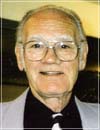
Scott Richardson (1923-2010) served as pastor of Katy Baptist Church in Fairmont, West Virginia.
Broadcaster:

Comments

0 / 2000 characters
Comments are moderated before appearing.

Be the first to comment!

Joshua

Joshua

Shall we play a game? Ask me about articles, sermons, or theology from our library. I can also help you navigate the site.