Bootstrap
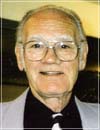
Scott Richardson

Why Do We Go To Church

Psalm 119:128-129
Scott Richardson January, 24 1981 Audio
0 Comments

Sermon Transcript

Auto-generated transcript • May contain errors

100%
Psalm 119. Psalm 119. Verse 128. verse 129 here just recently
in relationship to something that I had said in the book of
Exodus, where it says, Thy testimonies are wonderful, therefore doth
my soul keep them. I notice this other verse here,
verse 128, Therefore I steam all thy precepts concerning all
things to be right, And I hate ever a false way. That's David,
King David. He speaks there. And as I thought
about that, I thought, hey, it's a cold day today, and we're all
going to make our way here to the building for a reason. And I began to think What are
the reasons why we come to church? Why do we come? And first it
came to my mind what a blessed privilege it was to come because
our coming expresses that we have a hope, that we have a hope,
a good hope, a solid hope that's built upon a firm foundation. We've got a hope. That's one
reason why we come. We've got hope, a good hope,
a hope of eternal life in Christ Jesus our Lord. And we come to praise Him and to thank Him
and to bless His name. And secondly, I thought, well,
there's another reason why we come. We not only just come in
order to collectively be together and to experience some unity
and fellowship one with another, plus rejoice in hope and rejoice
in the Word of God as we listen to it being expounded in our
ears. But we also come because we feel
that it is a means whereby we might grow in the grace of God,
in the grace and knowledge of God. Now, and I think that that's
essential for every believer to assemble himself regularly,
to make a habit of it, in order that he might grow. Because I
found out, this to be true now, people who do not regularly gather
for worship and praise and thanksgiving because
they have a good hope, and gather for the unity and fellowship
that they receive, and to gather with the brethren and sisters
as a means of encouragement, a means of Bible study and prayer
and so forth, as a means of growth. I found out that if people don't
do that, they neglect then private means of the grace of God. Private means. Now, I know I
talked to a fellow one time and invited him to church. And I
said, well, why don't you get ready and go to church with me?
All you've got to do is just get ready and I'll pick you up
and take you on to church. Now, he said, I don't think I
want to go. And I said, well, tell me why. Well, he said, I don't think
you have to. He said, I don't think you have to go to church
just to worship God. And I said, well, maybe not. Maybe not. But I said, why would
God institute a church and command His people to not forsake the
assembling of themselves together if a man could, if a man could
worship God and be in the will of God and glorify God and progress
towards conformity to the image of the Lord Jesus Christ and
not go to church? Well, he said he believed that
he could just walk right back up here on the hill. A fellow
just lived a little ways from me. He was an old fellow, 69
or 70 years old at the time. And he said, I believe I can
just walk right back up here on the hill, and I can worship God
on Sunday. I said, probably you can, but
I said, do you? But do you really, on Sunday
morning, come out of your house and walk up through the field
here into the woods and find you a good log, and look up into
the sky and observe the power of God in what we refer to as
nature, and does that draw your heart towards God?" He said,
well, no, he didn't do that. Well, I found that people who
neglect, you see what I'm talking about? People who neglect attendance, neglect, worship, and pray, and
thanksgiving, and these things that I've mentioned, plus they
neglect the private means of grace also. Now, I think one thing that is
essential to growth in grace is diligence to the use of private
means in this growth. By this I understand such means as a man may use by
himself, A-L-O-N-E, alone. And no one can use it for him. He must do this for himself.
He must do what? He must give himself to private
prayer. What I'm saying is, if men and
women will not habitually and faithfully attend The church,
such as I thought as we come up here tonight, this cold night,
why would we attend? Why do these people come? Why
am I going? It's a privilege for me to go
when I realize I've got a good hope. And I can come. And I can,
to some measure, I can praise and thank God for this good hope
that I have. I can be encouraged in this hope.
And I can come for fellowship. I can come because what I hear
and what I read And what I sing somehow tends to cultivate within
me a right spirit and right attitude, and it cultivates within me a
desire to know more and to learn more of the Lord Jesus Christ
and be conformed to Him. But if I neglect that, I neglect
this out here too. I neglect these private means
too. If I neglect this, which is outward and visible, then
I find that I'll neglect this out here which is private, which
I must do myself. Like the fellow said, I don't
have to go. Certainly he doesn't have to go. I never did say,
never did, never have said that a man had to go to church. He
doesn't have to, but I believe that he will. He doesn't have
to, but I believe that he will. This fellow, he said, I can go
up on the hill on Sunday morning. But do you go up on the hill
on Sunday morning? No, he didn't. But do you pray
in private? Do you? If you neglect these
visible means, in all probability, you neglect these private means
of grace, which I think that is certainly necessary. necessary. I include under this
particular head private prayer, which a man can only do for himself. I cannot pray for my children.
That is, by proxy in their stead, I can pray for them. I can pray
for them. I can cry out unto God for my
own, for my family. and for you, and I can ask God
that these who are on my heart might live, might live, that
you might be pleased to give them life. I can do that. But
as communicating by proxy for them, I cannot do it. I can only
do that for myself. I must do that for myself. You must do that for yourself.
There must be private prayer, private prayer. There must be
a time of talking with God, communicating with God, telling out of our
desires to God. There must be a time of prayer
and praise from our heart to God in worship. Private, private
prayer. In your closet, our Lord said.
Our Lord said, when you pray, go into your closet. Go in there
by yourself. There has got to be that. And
I include under that not only private prayer, but private reading
of the Scripture. There's got to be this private
reading of the Bible, reading of the Scripture, a personal
application of the Scriptures to your own heart by looking
with your own eyes into this book. There's got to be that
from time to time. I'm not saying every hour of
every day. I'm not saying that you're to
carry your Bible to work, and every time the machine stops,
you're to pull your Bible out of your pocket and begin reading.
I'm not saying that. Folks that do that do more harm
to the cause of the Lord Jesus Christ than they do good. You
go to work, give eight hours of work. That's a good testimony. When you go to work, give a full
eight hours. I've known men who worked in
the mines. I know one man in particular,
and I know he's here tonight. And I know that he worked in
the mines, and I've had men tell me time after time, I know that
fellow. I know that he's a good man.
He's a good man. He's a good worker. And when
he works, he works eight hours. It was a good testimony. Good
testimony. And I've known other men that
I've heard testimony in regard to their time on the job. Well,
listen. I include under this private
prayer, private reading of the Bible, and also private meditation,
and also self-examination. A man who does not take pains
about these three things must never expect to grow. If you
take no pains in regard to these things that I have mentioned,
you cannot expect to grow in the grace and knowledge of God.
That is all they are to us. You may have good intentions
and all of that, and you may be punctual in certain religious
habits, but unless you adhere to these things that I've mentioned,
in a private means of grace, meditation, self-examination,
Bible study or Bible reading and prayer, if you don't avail
yourself to these means of grace, there'll be no growth. With no
growth, you will not grow. You will not be conformed to
the image of the Lord Jesus Christ. Well, what we're talking about
is a growth, a growth. Why do we come to church? We come because the visible gathering
of the people of God attend somehow. to cause us to make some progress
towards our conformity into and to the image of the person of
the Lord Jesus Christ. And we come because it is honorable
unto God to come. We come because it is duty to
come. We come because it gives God
honor and gives God's glory. You say, well, how can these
things be? I don't know. I don't know how God can be honored
by you coming. I don't know how God can be glorified
by you coming. And nothing happens after you
come. I don't know, but I do know that God's honored and God's
glorified. If I could explain God, He wouldn't
be no God. But I know that He is. I know
that He is. Somehow, some way, God's honored
and God's glorified. What we're talking about then
is this, is making some progress in Christianity, making some
progress in growth in what is known in the Bible as holiness. Holiness. Most people are scared
to death of that word holiness because what they associate with
holiness is limited entirely to some visible act of not drinking
out here. Well, I can't drink anymore if
I join that. First thing a fellow, well, it come to me when I was
saved, made a profession of faith was, well, brother, there ain't
no drinking now. Well, that was right. That was
right. But that's all that I had. That's all the understanding
I had, was now there'll be an absence of alcohol. Well, that's right to a degree,
but holiness is not limited to what you don't do and what you
do do. Let me talk to you just a little bit about holiness here
this evening. Just mention four or five things and I'll quit.
I found out in my, I don't know, the biggest part
of thirty years, my wife and I have been married thirty-six
years today. Thirty-six years today. And I've been a follower
of the Lamb of God for about thirty-one years. About thirty-one
years. Her and I have been followers
of the Lord Jesus Christ. About thirty-one years. And in
those thirty-one years of following the Lord Jesus Christ, I've learned
a few things. Not many, but a few. And I think
that I've learned to a just a slight degree as to what this thing
of holiness is. And I'll tell you in about ten
minutes here, if you'll bear with me. Number one, holiness
is the habit of being of one mind with God, according as we
find His mind described here in the Bible. Hating what God
hates and loving what God loves. That's holiness right there.
To hate what God hates and to love what God loves. And to be
in agreement with God towards these things. You see, he who
most entirely agrees with God He is the most holy man. You find a person who entirely
agrees with God, with the mind of God, as described in the Scriptures,
as described in the Scriptures, not described by the preacher,
or your imagination, or what mother told you, or father told
you, or the Sunday school teacher told you, but as The mind of
God is described in the Bible. The man who most entirely agrees
with God, he is the most holy man. That man that agrees with
God. It's not, I think. I hear these
people come to me every once in a while and say, well, I think
this. I thought, that's our problem. That's our problem. Let's get
away from this I thought, I think business and get down to what
the Word of God says. That's where it's at, Pat. It's
what He said, not what I thought. That's what got us in trouble
in the first place. Eve thought it was good. Adam
thought it was good and got in trouble. God said it wasn't good.
God said, don't eat of that fruit. The day that you eat of that
fruit is the day that you're going to die. But I thought,
but I thought, that's where you got in trouble when you started
thinking. Trying to give some advice to
a woman one time, and I think that I'm qualified to give a
little advice in regard to the Bible. A man who's been reading
this thing and preaching this thing for almost 30 years, I
believe that I'm qualified, don't you? I believe I'm qualified. I don't know much about it, but
I believe I'm qualified to know a little bit about it. And a
lady asked me for some advice, and I said, well, I'll tell you
what I think the Bible says about it here. And just, well, she
said, all right. And I told her what the Bible
said. And she said, well, she said, I couldn't do that. And
I said, why? She said, well, I'll have to
think about it. I'll have to think about it. No need to think
about it. Just do it. Just do it. You see,
holiness, then, number one, is the habit. of being of one mind
with God according as we find his mind described in the Bible. Hating what he hates and loving
what he loves. And he who most entirely and
absolutely agrees with God That individual is a holy man. Whether
he's a man, woman, boy or girl, he or she is a holy person. Well, here are some of the effects
of this. The effects of agreeing with
God will manifest themselves in this way, and you can count
on it. A holy man will try I'm not saying
he will be perfect in his attempts, but a holy man will try. He'll make an effort. He'll put
forth an effort to shun every known sin, and he'll make an
effort to keep every known command of God. This is the effect of
this entire absolute agreement with the mind of God as revealed
in the Bible. He will try. He will go in that
direction. He will be making an honest,
earnest effort. He will shun any known sin. He will not walk into it with
his He'll just not premeditate upon it. He may fall into it,
and I'm not saying that we're not talking about perfection
here. I'm talking about making an honest,
earnest desire, an effort. That's the aim that I'm talking
about. He'll try to shun every known
sin and to keep every known commandment. And there will be within the
framework of this man's soul a hearty desire to do the will
of God, whether it is in agreement with the individual's will or
not. But the will of God will be first
and foremost, and he will try his dead-level best to do the
will of God. And he will have within him an
intense fear, of displeasing God. Well, in this verse I read
to you, 119 and 128, David said, Therefore I esteem all thy precepts
concerning all things to be right, and I hate every false way. A holy man will strive to be
like our Lord Jesus Christ. I'm not saying that he'll be
like Him in 10 or 20 or 30 or 40 or 50 or 70 years. But he'll try to be like Him.
He'll strive to be like the Lord Jesus. He'll make an effort in
that direction. He'll be kicking up the dust
in that direction. He'll not be going in this direction.
He'll not be saying, well, I've been redeemed by the blood of
the Lord Jesus Christ, and you see him going off in the opposite
direction of Christ. No, sir, he'll be going in the
direction of Christ. A holy man will strive to be
like the Lord Jesus Christ. And it will be his aim to labor
to have the mind of the Lord Jesus Christ. and to be conformed
to the image of the Lord Jesus. And that will manifest itself
in the area of forgiveness. He will forgive others, even
as Christ hath forgiven him. He'll try to be like the Lord
Jesus. I haven't got time to go in detail on all these things,
but I just want to mention four or five things here. to you in
regard that they are the effects of disagreement that we have
with the mind of God as we find described here in the Bible.
A holy man will be a faithful witness
of truth. Don't you think he will? He will
hate every false way, and he will be a witness of truth. And
he'll take advantage of opportunities that he has to be a witness of
the truth that he knows. He can only tell what he's experienced
of truth. That's the reason why it's imperative
that we have private meditation, self-examination, private Bible
reading, private prayer, in order that we might be a witness. We
cannot come back from some place we have not been. We can only
tell of that which we've experienced. You cannot tell of Jesus Christ
unless you have experienced Jesus Christ. And you can only tell
of Him as much as you've experienced. So we need to experience Him.
We need some private prayer, private study. We need to not
only take advantage of the private means of grace, but also of these
outward, available, general means of the grace of God. in order
that we might be good witnesses, good witnesses for Him who loved
us. Oh, if I could just get a hold
of this. If I could get a hold of the fact that there was a
man There was a man that walked upon this earth that had blood
that run through the course of these veins like I do, and that
man loved me, and that man gave himself in my stead and place
and room, and bore that which was my due, and made me accepted
in his beloved. If I could ever get a hold of
that, I'll guarantee you there'd be some difference in this fellow. I'd be wanting to tell somebody
about it, wouldn't I? I'd be wanting to tell somebody
about who this man is. I'd be wanting to share with.
I'd be wanting to say, listen, listen, I found something. I found something. It's vital. It's living. It's a union with
God in Jesus Christ. It's a living person. It's happiness. It's joy. It's peace. It's righteousness. It's life eternal. I've found
it! I want you to have it. Let me
tell you about it. Would you let me tell you about
the truth as in Jesus? I'll tell you, a holy man will
be a faithful witness of truth. He will. So help me, God will. A holy man will follow after
meekness, and long-suffering, and gentleness, and patience,
he will forbear much, and he will bear much. A holy man will
follow after temperance and self-denial, and he'll labor to mortify the
desires of the body, and he will attempt to crucify the flesh. A holy man who agrees with God
will do these things. He'll do them. Well, a holy man
will follow after charity. That's love. He'll follow after
charity and brotherly kindness, and he'll try to observe the
golden rule. Look here with me at a verse
of Scripture in Romans chapter Romans chapter 13. I want you to see this. A holy
man will follow after charity and brotherly kindness, and he'll
try to observe the golden rule. Now these things that I've said,
they don't make you a Christian. We need to get that straight.
I'm talking about what men will do. who have been plunged beneath
the fountain filled with blood that flows from Emmanuel's veins.
What will he do after he's been immersed in the love of God in
the face of Christ Jesus? What will he do? How will he
look? How will he think? How will he feel? How will he
see in these things? Do these things in a... You can
do all these things. If you can do them, you can do
them in the flesh. You can't do them in the spirit.
And they will not bring you that much closer to God. That's the
problem with our religious world. People are doing things in order
to gain merit, piling merit upon merit, hoping that somehow God
will show favor to them because they're piling up merit. It don't
work that way. It's not that way. Well, all
right. Look at this verse. Romans 13,
verse number 8. Oh, no man anything. Pat, you
pay me that dollar. Oh, no man anything. But we do owe men something. What do we owe? But to love one
another. That's what you owe me, Bob.
And that's what I owe you. I owe you my love. I need to love you. I need to
love you as I love myself. I owe you that. You're entitled
to it. Every man, woman, and boy and
girl under the sound of my voice, you're entitled to my love. And that works two ways. I'm
entitled to yours. And if you don't pay me, you
owe me. If you don't pay me that, you owe me that. That's what
he says, Daryl. If you don't pay me that, you
owe me that. Owe no man anything but to love one another. We owe
that to one another. That's what the Scriptures say.
I'm saying that a holy man will follow after love and brotherly
kindness. And he'll observe, he'll try
to, the golden rule. He'll do unto others as he would
have others do unto him. He'll think about that. And another
thing is that a holy man will follow after the purity of heart. That is, he'll hate the filthiness
and the uncleanness of the Spirit. And He'll avoid all things that
will draw him into it. He'll avoid them. You know, this
business of, you know, my heart's heavy because we've got some
here. We've got some people here, some members of this church that
I've been knowing for twenty-five years. Twenty-five years, and
I've seen them in the past two or three years, I've seen them
just Going farther away. Step at a time. Step at a time. Let's keep going. It didn't happen
all at once. Some of them haven't been here
to hear me preach for four or five Sundays straight. It didn't
happen all at once. I'll tell you how it happened.
It happened at a step at a time. Just one step at a time. You
see? Miss one Sunday, and come back
the next Sunday, and come back the next Sunday, and miss the
next Sunday, and finally, and finally. You see, they didn't
have to do that. They didn't have to do that.
There was no reason why they did that. No reason, no justifiable
reason under God's heaven why a man would do a thing like that. You mean, It's justifiable to
slack off honoring and glorifying God by attending church where
the gospel is preached, where prayers want to be made, where
the Bible is studied, where nothing but Jesus Christ is the central
subject of the preacher's message. Huh? There can be no justifiable
reason. Man could have stopped it. And
that man and woman could have done it. All they had to do was
turn around and say, I'm wrong. I'm wrong. I've got to get back.
I've got to get back. But they didn't. And on and on
and on and on. You see, we need to avoid everything
that will draw us into any uncleanness or any unfaithfulness. Avoid
it. Like you had bought a rattlesnake. It will poison you. It will kill
you. You remember the prodigal son? You remember him? You know what
he said? He said, I'm tired of my father's house. I'm tired
of my father's house. I'm tired of the do's and the
don'ts of my father's house. I'm tired of the rules and regulations
of my father's house. He said, Father, give me my portion. Give me what's coming to me.
And he lived in a good home and he had a good father. His father
put food on the table and clothes on his back and give him a shelter
and give him an allowance every week. He had a good father. And he said, Father, I'm tired
of your house. Give me what I've got coming
to me. And the father said, Well, here it is. And you know what
happened? He left his father's house, and
the first thing he did, he began to associate himself with some
so-called friends. And he spent all that he had
on righteous living with these newfound friends. Is that right? He spent all that he had, and
he didn't have anything. He could have stopped right there.
He should have stopped right there and said, I'm going back
to my father's house. I want to go to my father's house. But he didn't. He kept on and
he kept on. And you see, God had some things
to say to that prodigal son. And God had some tricks in his
bag that was available to him. And God sent a famine in that
land. The Jewish boy didn't have anything
to eat. He could have went back, but he didn't go back. What did
he do? He got so hungry that a fellow
came with his friends and had forsaken him. They didn't have
any money then. They didn't have no need for him. The only reason
that they spoke to him, the only reason they took him in was for
the money that he had in his pocket. When the money was gone,
they said they told him to go to hell. They said, you go on
and go to hell. We don't want nothing to do with
you now. And so he didn't have anything. The famine coming in,
his stomach began to gnaw from hunger. He went down to the pig
pen, to the hog pen, where they fed the hogs slop. And he said
in his heart, I'm so hungry that I could eat the slop that was
fed to these hogs. God, he went a long way before
he went back, didn't he? But he finally sat down. Oh,
he said, my Father's house, my Father's house, my Father's house,
I will arise and go back to my Father's house. What did he find? What did he find? You find a
seeking sinner, and I'll tell you and show you a seeking, loving,
merciful God. A seeking sinner and a seeking
God met. And what did they do, Carl? Embrace,
didn't they? They embraced. They embraced.
Ah, follow after things that are pure. Things that are pure. Avoid anything that will draw
you into these impurities. Avoid them. Stay away from them.
Stay away from these. Here are some of you young people
here. You go to school, and they're
smoking pot, marijuana, and drinking beer, and you think that you've
got to do it in order to be recognized. In order to be one of them, I
don't want these fellas to look down on me. I want to be cool. I want to be big. I want their attention. You don't
have to have their attention. You better say stop right now.
You better say stop! You better say, I don't want
none of that marijuana. I don't want none of that beer. I don't
need it. I don't have to have it. No! You wind up. you'll wind up in
the pig pen. You see, you just didn't take
one great big junk and get to the pig pen. It was that first
marijuana, first bottle of beer, first drink of whiskey, first
night club, first this and that. Where'd you wind up? Wound up
right down there in the pig pen. Right down there. And all the
time, back there at your father's house. Your father's house. Back
there. Dear sweet father and mother,
brothers and sisters, clothes, a warm bed, plenty of milk to
drink, plenty of meat on the table, plenty of clothes on your
back. Here you are down in the hog pen. You say, well, I won't
go there. Bless God, that's where you'll
wind up. If you don't avoid these things,
if you don't avoid it, you'll wind up in the hog pen. You'll wind up. That's where
you'll wind up, right down in that hog pen. Oh, follow after
this man who's holy, who agrees with God the most. He'll follow
after the fear of God. He'll follow after humility.
He'll follow after faithfulness in all duties in relations to
life. And he'll do his utmost to try
to fill his place. wherever God placed him, he'll
try to do what God has taught him to do. He'll try to serve
his generation for the glory of God. God help us might understand
a little bit about what holiness is and the effect of a man who
agrees with God. Well, let's stand. We'll be dismissed.
Scott Richardson
About Scott Richardson
Scott Richardson (1923-2010) served as pastor of Katy Baptist Church in Fairmont, West Virginia.
Broadcaster:

Comments

0 / 2000 characters
Comments are moderated before appearing.

Be the first to comment!

Joshua

Joshua

Shall we play a game? Ask me about articles, sermons, or theology from our library. I can also help you navigate the site.