Bootstrap
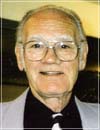
Scott Richardson

God Has Spoken To Us Through His Son

Hebrews 2:1-5
Scott Richardson November, 16 1980 Audio
0 Comments

Sermon Transcript

Auto-generated transcript • May contain errors

100%
on the word spoken. And as I referred to you there
in that first verse, it says, Therefore we ought to give the
more earnest heed to the things which we have heard, lest at
any time we should let them slip. The word spoken by angels was
steadfast, and every transgression and disobedience received a just
How shall we escape if we neglect, if we put aside or remain indifferent
to that which was spoken even by the Son of God Himself? Now,
over here in the first chapter of this book of Hebrews, it says
in verse number 1, that God, who at sundry times and in divers
manners, who in other times, in times of various or different
economy, dispensation. In the time of Moses, in the
time of the prophets, back prior to the time that he is speaking
of right now, God who at sundry times or various times and in
diverse manners, different ways spake in times past unto the
fathers by the prophets." He spake unto the children of Israel
mostly by the prophets. Sometimes he spake audibly to
them through other means, but for the most part he spake to
the children of Israel through the prophets. But he says, "...hath
in these last days spoken unto us by his Son, the Lord Jesus
Christ. And then he tells us about the
Lordship of Christ when he says, whom he hath appointed, that
God hath appointed his Son, the Lord Jesus, Heir of all things,
by whom also he made the world, who being the brightness of his
glory and the express image of his person, upholding all things
by the word of his power, when he had by himself purged our
sins, sat down on the right hand of the majesty on high. And then
he continues on in the exaltation of the Lord Jesus Christ, that
Jesus Christ has been exalted to God's right hand higher than
the angels, has more authority than they do, and as far as the
men in time of the human race, there is no comparison to their
power and their glory, to the power and the glory of him whom
God has seated on a throne at his right hand. in the second
chapter now when he says, Therefore, we ought to give the more earnest
heed to the things which we have heard. He is talking about the
things that we have heard through his Son. God speaks to us now
through the Lord Jesus Christ. And I remember one time hearing
a fellow say this, and I will repeat it. He says, If my voice
is the only voice that you hear, there will be nothing of any
eternal value accomplished in your heart or in your life. You've
got to hear another voice apart from my voice. As a matter of
fact, if there's any eternal good or value that ever comes
to me or comes to you, it will come by and through the voice
that speaks from heaven. So we ought to give the most
earnest heed to the things which we have heard, lest at any time
we should let them slip. There are some things to be heard,
and God has spoken to us by and through the Lord Jesus Christ,
his Son. Now, turn with me, if you will,
again to the book of Isaiah, chapter 6 of the book of Isaiah. Isaiah chapter 6. Now, the biggest mistake that
a man can make in regard to his soul is to listen to the wrong
voice. That's the biggest mistake. Now,
you know, I've said many times, and of course, not because I've said it many
times, You know this yourself, and it
doesn't add any emphasis, I don't think, upon it just because I've
repeated it time and time again, but you know that you are a living
soul. Not that you have a soul, but
you are a soul. You are a soul. God breathed
into the nostrils of this man that he made out of dust. And
that man became a living soul. And so we are a living soul. It's not that we have a living
soul, we are a soul. And we have just this one soul. And so it's important in regard
to our souls what voice we hear. And the biggest mistake that
a man can make is listen to the wrong voice in regard to his
soul. And that's the reason I say if
the only voice that you hear is my voice, you may be in trouble. If the only voice that you hear
in your lifetime is the voice of a man, apart from the accompanying
power of the Spirit of God, then you and I are in trouble. We've
got to hear from Heaven. You remember our Lord, or our
Heavenly Father, said in regard to the Lord Jesus, He said, This
is My beloved Son, hear ye Him. Hear Him. Hear what He's got
to say. Now, I'm saying that the biggest
mistake that a man can make in regard to his soul is to listen
to the wrong voice. Now, there's lots of voices to
be heard today. There's lots of voices out there
in this world. There's lots of voices that speaks
through publications, through newspapers, through the printing
press. There's voices that speaks on
the television. There's voices that speaks on
the radio. There's voices that speaks from
door to door in regard to religious things. And the majority of the
voices that are out there speaking They all claim to speak for God. All the voices claim to speak
for God. I'm even claiming here this morning
that I speak for God. That's the claim I make. And
if I don't make that claim, then I ought not to speak. As a matter
of fact, you ought not to listen to me. But now there's a lot
of voices. This is important. There's a
lot of voices. out there this morning that claims
to speak for God. And it's a big mistake now to
listen to the wrong voice because we'll be made probably ten times
more a child of the devil than what we were to start with. See,
only one voice can do a man any good. There's only one voice
that can help a man out of the awful mess that he's in, and
that's the voice that speaks from heaven. Now, in Hebrews 12 and 25, let me
look at that hardly there. I think I know what it is, but
I just want to... Hebrews 12 and 25, It says, "...see that ye refuse
not him that speaketh." Of course, he is talking of the Lord Jesus
here. The 24th verse, in order that
we might keep it in its context, the 24th verse says, "...and
to Jesus, the Mediator of the new covenant, and to the blood
of sprinkling, that speaketh better things than that of Abel,
see that ye refuse not him that speaketh." And I said that there
is only one voice that can do you and I any good, and that
is the voice of him that speaks from heaven. See that ye refuse
not him that speaketh, for if they escaped not who refused
him that spake on earth, much more shall not we escape if we
turn away from him that speaketh from heaven. Now, Paul in one place in the book
of 1 Corinthians said that he was concerned about the church
of Corinth lest Satan should lead them away from the simplicity
of the gospel or the simplicity of the Lord Jesus Christ. Now,
Adam in the Garden of Eden listened to the wrong boy. He listened
to Eve, and he got us all in trouble. God had already spoken
to Adam and Eve in the garden, and he told them, he said, now,
whatever you desire of this garden is yours, except this tree in
the midst of the garden. And don't eat of the fruit of
this tree. The day that you eat of this
fruit is the day that you're going to die. Now, God spoke
that to Adam and to Eve. But the devil came along and
spoke to Eve, and Eve was deceived, listened to the wrong voice,
and she ate of that fruit. And when she ate of that fruit,
her eyes were opened. And along come her husband, Adam, And she gave of this fruit to
Adam to eat, and Adam did eat. And when he ate, he plunged the posterity of his seed into
destruction and degradation and sin and death and all that is
involved in death and sin and misery. Adam listened to the
wrong voice. That's what I'm trying to emphasize
here this morning. We better be sure what voice
we listen to. Lots of voices out there, all
of them claiming to speak for God. I'm claiming to speak for
God. So we better be sure of what
voice we're listening to. Adam, I guess he was sure, but
he was wrong. He listened to the wrong voice.
Now old Solomon, you remember, had 700 wives and 300 concubines. Now he compromised his faith
and he listened to his concubines and to his wives. Now Abraham,
I remember, he listened to his wife and the result was that
he had to send away his fourteen-year-old son and nearly broke his heart.
You remember that God had spoke to Abraham and to Sarah and He
said, I'll give you a son. I promise you, I promise you,
I'll give you a son. They said, we're old. Abraham
said, I'm a hundred years old and Sarah said, I'm in my nineties.
How in the world can we have a child? I promise you, I'll
give you a child. I promise you that. Abraham?
Well, Abraham was strong in the faith for a long time. But the
more he thought about it, the worse it became. And finally
his wife said, now, here's what we'll do. We have a hired servant
here by the name of Hagar. He said, you take Hagar and we'll
help God along in this promise. I'm too old to have a child and
maybe Hagar can have the child. And of course, she conceived
and had a child. And of course, you know what
happened to that child when he was about 14 or 15 years old. God spoke unto Abraham and He
said, that child's got to go. That child's got to go. You've
got to get rid of that child. So he took the child and its
mother out into the wilderness and that was it. Well, he listened to the wrong
voice. He listened to the voice of his
wife. Now Aaron, you remember, the brother of Moses, he listened
to the voice of the Israelites. God had told Moses to come up
into the mountains. And while Moses was up on the
mount with God, receiving the Decalogue of the Ten Commandments,
he was there for some time, and while he was gone, the children
of Israel rose up and began to play. And they told Aaron, the
brother of Moses, and Moses was his right hand at that particular
time. And they said, well, let's get
some of the gold earrings and the rings and everything that
pertains to gold from the children of Israel here, and we'll make
us a golden calf. And Aaron listened to the voices
of the children of Israel, and they melted the gold and made
a golden calf. And you know what happened then.
Judas Iscariot, he listened to the voice of greed and ambition,
and you know what happened to him. He sold his lord for thirty
pieces of silver. Well, Pilate listened to the
voice of the people, and of course, you know what happened. He said,
I find no fault with this man. But the pressure was so great
from the people, from the chief priests, from the rabbis, and
from the ordinary people, that he said, well, behold your king. Here he is. I find no fault with
him. Bring me a basin of water here
and I'll wash my hands with this whole situation. And of course,
the Lord Jesus Christ wound up on a cross. Of course we know
that that was all in the eternal purpose of God, but Pilate didn't
know that. Pilate, his responsibility unto
himself and unto God and unto those people was to do what was
right. And of course he didn't do what was right simply because
he listened to the voice of the people. Well, I've said these
things in order to emphasize the fact that we better be sure
who we're listening to. We can't listen to the wrong
voice. If Aaron, who lived in the very light of God Almighty,
if Aaron could compromise his faith and listen to the wrong
voice, If Abraham, who was called a friend of God, if he could
listen to the wrong voice, if Adam, the first man, if he could
be deceived and listen to the wrong voice, it's highly possible
and probable that you and I could be deceived and we too could
listen to the wrong voice. So, let's be sure of what we hear. Now, I told
you to turn over here in the book of Isaiah chapter 6. Now,
I don't know a great deal about Isaiah. I know that he was a
religious man. I know that. And I know that
he was a prophet. And I know that he prophesied
during the days of Hezekiah. And I've been told that he lived
to be about 120 years old. And out of those 120 years, he
prophesied 85 years. He was a prophet for 85 years. He lived 700 years before the
Lord Jesus Christ came from heaven and was born of a virgin upon
this earth. Now, his writings are quoted in the
New Testament more than any other writings of the Old Testament
apart from the Psalms. Isaiah. As a matter of fact,
when John the Baptist came on the scene, if I remember right,
in, I believe it's Matthew, Chapter 3 and verse number 3, I believe
that when John the Baptist came on the scene, the first time
he preached, he quoted from the prophet Isaiah. Listen to this.
In those days came John the Baptist preaching in the wilderness of
Judea, and this is what he said. He said, Repent ye, for the kingdom
of heaven is at hand. Third verse. For this is he that
was spoken of by the prophet Isaiah, saying, The voice of
one crying in the wilderness, Prepare ye the way of the Lord,
and make his paths straight. Now, I think that what is said here in this sixth
chapter of the book of Isaiah, is important in light of what
we've already said. Now, in another place, Luke chapter
4 and verse 16, the beginning of the ministry of the Lord Jesus
Christ. And I want you to notice this.
Luke chapter 4 and verses 18, I believe it was, it says that
Jesus This is verse 16. And when Jesus came to Nazareth,
where he had been brought up, as his custom was, he went into
the synagogue on the Sabbath day, and he stood up for to read. Now this is his first public
discourse. And there was delivered unto
him the book of the prophet Isaiah. And when he had opened the book,
he found the place where it was written, The Spirit of the Lord
is upon me, because he hath anointed me to preach the gospel to the
poor. He has sent me to heal the brokenhearted,
to preach deliverance to the captives, and the recovery of
sight to the blind, and to set at liberty them that are bruised,
and to preach the acceptable year of the Lord, And he closed
the book and gave it again to the minister and sat down. Now, do you remember when the
Ethiopian eunuch was going back to his place of abode from being
down in Jerusalem? And Philip, the evangelist, was preaching at Samaria, I believe
it was. And the Lord spoke to him and
told him to leave that place and to go where this Ethiopian
eunuch was. Well, when that took place, the
first thing that Philip said to that Ethiopian eunuch was
this, Do you understand what you read? And he said, How can
I understand except some man help me or teach me? And Philip
took the passages of scripture that the Ethiopian eunuch was
reading and preached unto him out of those passages Jesus Christ. Now what were those passages?
Those passages that the Ethiopian eunuch was reading was the 53rd
chapter of the book of Isaiah. Well, what have we found thus
far? The importance of the book of
Isaiah. John the Baptist began his ministry
by quoting and preaching from the book of Isaiah. Our Lord
began his public ministry by preaching from the book of Isaiah. The Ethiopian eunuch was reading
the book of Isaiah. All right, Isaiah chapter 6.
Verse number 8, look at that. Verse number 8 says, And I heard
the voice of the Lord. I heard the voice of the Lord. Well, then, not only did he hear
the voice of the Lord, but what did Isaiah see? Verse number
1. He heard the voice of the Lord,
But he also seen something here. In verse number 1, look at that.
What did Isaiah see? He said, I saw also the Lord. In that year that King Uzziah
died, now Isaiah talking, I saw also the Lord sitting upon a
throne high and lifted up and his train filled the temple. I saw the Lord. Now, I used to
think maybe that that meant that when he saw the Lord here, he
saw God in all of his might and power and splendor and majesty
and righteousness and holiness. I thought that this meant that
when Isaiah saw the Lord, He saw God, the Father, as God is
represented in the Old Testament, Jehovah God, in all of His might
and power. That's what he saw. But that's
not what he saw. He saw the Lord Jesus Christ. That's who he saw, the Lord Jesus
Christ. I think I can make good on that
if you'll turn with me to the twelfth chapter of the book of
John. I want to show you something.
I want to show you something. John chapter 12 and verse 41. I will not take time to read
everything prior to this one particular verse, The 40th verse
is certainly in context with the 6th chapter of the book of
Isaiah. He hath blinded their eyes, and
hardened their hearts that they should not see with their eyes,
nor understand with their heart, and be converted, and I should
heal them. Verse 41 now says, These things
said Isaiah when he saw his glory, and spoke of him. These things! This is what Isaiah said. This
is what Isaiah has seen. He saw His glory. Whose glory? The glory of the
Lord Jesus Christ. Well, he spake of the Lord Jesus. You remember Moses. The Bible
says that Moses wrote of the Lord Jesus Christ. The Bible
says, like Abraham, Abraham said, he saw my day and rejoiced. Like David, David said unto my
Lord, sit thou on my right hand. The question was asked to them,
what think ye of Christ? Well, they said, he's the son
of David. And our Lord Jesus Christ said,
how come then you call him my Lord, if he's just the son of
David? Well, they saw Him, really, in
His glory, and this is who Isaiah saw. Isaiah saw the Lord Jesus
Christ here. I saw the Lord sitting upon a
throne, high and lifted up. He saw Him as Lord. This is what I want to try to
emphasize here this morning. I've said many times, and I believe
this is true, that our generation has been deceived, religiously
that is, because we have been talked into accepting facts and
propositions developed by preachers, and to trust these facts and
propositions as a means of our eternal salvation. Therefore,
for the most part, this generation has missed the true salvation
which is in the Lord. The Lord. And I don't think that
a man can be saved apart from trusting Him as Lord. As Lord. Isaiah, here in this sixth chapter,
He heard the voice of the Lord. That's what he heard. And he
saw some things, and the first thing that he saw was the Lord. And where did he see the Lord
at? He saw the Lord sitting upon
a throne. That's where he seen Him. He
said, I saw the Lord. Now, the Lord Jesus Christ is
Lord by the Father's decree. The Bible says that He died that
He might become Lord of the dead and the living, the quick and
the dead. Now, He is my Lord and He is
your Lord. I hear people saying sometimes,
if a man The reason I don't come to the Lord Jesus Christ is because
I don't feel my need. Well, that may be true, but just
because you don't feel your need, just because you don't feel that
you're hopeless and helpless and destitute, and just because
you don't feel that you're a sinner by nature and by choice and by
practice, just because you don't feel it, does not do away with
the fact that you need to come. You say, well, I don't feel like
I ought to come. I haven't been made to see my
wretchedness and my awfulness before God. And so I'm going
to sit back and wait until I see that. Well, you can sit back
and wait until you see that, maybe, and die and go to hell.
Just because you don't feel it does not discredit the fact that
it's so with you. You see what I'm talking about?
Now, many people say, well, you talk about the Lord Jesus Christ
as being your Lord. Well, He's the Lord over all
flesh. Now, you say, well, I don't see
it. Well, He is, whether you see it or not, you see. You see,
you say, well, I don't feel my need. Well, you have a need whether
you feel it or not. You say, well, I don't feel that
I'm a greater sinner as you say I am. Well, you are a sinner
whether you feel it or whether you don't. You're still a sinner.
And your only help and relief is to come to Him The Lord, who
is seated upon a throne, and it may be peradventure, it may
be that He will speak peace to you. He doesn't have to. But
He may do it. But that's where it's at. You
see, it's not in a little old 65 Jesus. And that's where we've
been deceived. We thought that salvation was
in accepting Jesus. Salvation is not in accepting
Jesus because Jesus is not up for acceptance or rejection. Do you see that? He is not up
for that. He is not up for both. Isaiah
said, I heard the voice of the Lord, I saw the Lord. Who did you see, Isaiah? I saw
the Lord. Where did you see him at? I see
him on a throne. Well, I thought Jesus, I thought
that he was looking over the battlements of heaven there and
looking down to see how things was going on down here. I thought
that things were out of control with him. I thought that he was
doing the best he could. I thought his heart was grieved
because he couldn't have his way. I felt sorry for Jesus that
men wouldn't accept Him. Salvation is not in accepting
this little Jesus that this generation has been told about. Salvation
is in Him who's seated on a throne. You see, He's not up for election. He doesn't need your vote. God
has already accepted him. That's what this generation needs
to be told. God has already accepted him. He offered himself in the stead,
in the place, and in the room of his people, poor, unworthy,
undeserving, hell-deserving rebels. He offered Himself in their place,
in their stead, in their room. He satisfied everything that
the law demanded of them. He satisfied that. He satisfied
God's perfection. He satisfied God's holiness. He satisfied God's justice. Therefore, God has highly exalted
him at his right hand and given him
a name which is above every name and turned over this whole world
to the Lord Jesus Christ. And he's there on God's right
hand on the throne. That's where Isaiah is seen. And that's where
salvation is. That's where it's at. It's in
the Lord Jesus Christ seated on a throne. Isaiah said, I saw the Lord.
Where did you see Him, Isaiah? I saw Him on a throne. Now listen
to me. He didn't see Him in a cradle.
Now I wonder how many people are saved by seeing Jesus in
a cradle. We're entering into the time
now, the time of the year when we're going to have church in
the whole area, I suppose. Somewhere in that church, either
outside or inside the building, they're going to have a cradle
with a little replica of Jesus in that cradle. They're going
to have a little doll baby of some sort, made to look like,
depict the scene of the birth of Jesus Christ in the stable.
Isaiah didn't see Jesus in a cradle. He didn't see him in a cradle.
He didn't see the Lord Jesus Christ in a stable either. He
said, in that year that King Uzziah died, I saw also the Lord
sitting upon a throne, high and lifted up, and His train filled
the temple. His glory filled the temple. I didn't see Him in a stable.
I didn't see Him in a cradle. I didn't see Him in the Madonna's
arms. I didn't see Him in the Garden
of Gethsemane. I didn't see Him weeping by a
rock. I didn't see Him hanging on a
cross. I saw Him on a throne. That's
what it says. I saw Him on a throne. Our Lord Jesus Christ finished
His work, the work that the Father gave Him to do. After He purged
our sins, after He made an atonement for our sins, and after He put
His blood on the mercy seat, after offering Himself for our
sins, the Bible says that He sat down on the right hand of
God. And that's where salvation is,
in the Lord Jesus Christ on the right hand of God. Now I want
you to turn with me to Hebrews chapter 12, I believe it is. Look at that with me for just
a few minutes here this morning. Hebrews chapter 10. Chapter 10. 11 through 14. I want you to see this. And I
think about all the words here in these few verses mean something.
It says, by the which will we are sanctified
through the offering of the body of Jesus Christ once. That for all is added by the,
or at least the all is added by the translators in order to
to perfect the sentence a little more, I suppose, but it could
be said this way and accepted, and I believe perfectly honest
and in complete unity and harmony with the rest of the Scriptures,
by the which will we are sanctified through the offering of the body
of Jesus Christ once! Once! Once for all, it says here. And every priest, now listen,
and every priest standeth That's significant to note that this
is every earthly priest under the economy of Moses. He's talking
about the tabernacle and he's talking about the temple. The
services performed by earthly priests in the temple and in
the tabernacle. Every one of those priests, when
they performed their services, stood, they stand, daily ministering
and offering off times the same sacrifices which can never take
away sin. But this man, I'm talking about
this man seated on God's right hand. But this man, I'm talking
about the man that Isaiah saw. I saw the Lord. But this man,
the Lord Jesus Christ, after he had offered one sacrifice
for sins forever, sat down on the right hand of God from henceforth
expecting, not hoping now, from henceforth expecting till his
enemies be made his footstool, for by one offering he hath perfected
forever them that are sanctified. I said that they stand. Why do
they stand? Because their work is never finished. There were no chairs in the tabernacle. Seven pieces of furniture in
the tabernacle, but there are no chairs in the tabernacle. Why? Because no earthly priest
Work is ever finished. It's ever done. And I read to
you where it says that they do it over and over and over again. Every priest stands up and he
performs all times the same sacrifices over and over and over again,
which can never take away sins. But this man, the man Christ
Jesus, offers Himself once and for all and forever in the stead,
in the place, in the room of His people, satisfying the demands
of God's justice and God's holiness and God's perfection. God demands
an absolute, immaculate, Perfect, spotless perfection. That's what God's law demands.
That's what His righteousness demands. That's what His holiness
demands. The Lord Jesus Christ satisfied
that by offering Himself in their stead, their place, and in their
room. He offered Himself. He sat down, not hoping, but
expecting. You see, brethren, at places
today, not only today, but will continue until the world no longer
stands, they have what they call a mass, a sacrifice, which depicts
the sacrifice of the Lord Jesus Christ. the doing, the dying
of Jesus Christ, and it is done all over again. And actually
what it is, it is a public denial of who He is and what He done. Every time that the Mass is said,
when the wafer is placed upon the tongue of the precipitant,
And every time that the wine is offered to them or drunk by
him who offers it, it is a public, it is not done in secret, it
is a public denial of what is taught in Hebrews 10. It is saying
that the Lord Jesus Christ did not satisfy all that was his
people's due. And it must be done over and
over and over and over again. Well, this is one place where
the Apostle Paul would not tolerate compromise. Now, you might find,
I'm not saying that he did. I'll leave that up to you to
figure it out for yourself or make your own assumption make
your own, come to your own conclusion as to whether Paul compromised
a little bit on days and on what men should eat. He may have,
I'm not sure, I don't know. But I can tell you this, this
is one place where the great preacher would not compromise
one iota. He said, if an angel came from
heaven, if an angel came from God, he said, and preached, and
preached any other gospel than what I have preached to you and
what has been delivered unto me, he said, let that angel be
damned. Oh, brethren, Isaiah said, I
saw the Lord sitting on a throne. sitting on the throne, not leaning
over the rail to see how things were going on down here. Not standing at the church door
knocking, trying to get in, but it says that he saw Him on the
throne, on the throne, the King of kings, the Lord of lords,
high and lifted up. Well, we could talk about the
seraphims and the cherubims and so forth, but let's not do that. Just let me mention four things
here relative to this sixth chapter of the book of Isaiah. Isaiah
said, I heard the voice of the Lord. And he said, I saw also
the Lord. And he saw him seated on the
throne. I said that that's where it's
all at, is in the Lordship of Christ on a throne. It's not
seeing Jesus in the Madonna's arms, it's not seeing Jesus in
the stable, it's not seeing Jesus in a cradle, it's not seeing
Jesus in the Garden of Gethsemane. It's not seeing Jesus weeping
on a rock. It's not seeing Jesus here, not
seeing Jesus there. But salvation is seeing the Lord
Jesus Christ on the throne. Now, in light of that, I've mentioned
these four things before, and you know them, but I want to
repeat them anyhow because I think it's pertinent to what we're
saying. David Brainerd. Do you remember David Brainerd?
Oh, that dedicated man. The man that was a missionary
to the Indians up in Rhode Island and parts of Massachusetts and
Connecticut and Pennsylvania during the days of Jonathan Edwards. In fact, he died in Jonathan
Edwards' home, I believe. Well, David Brainerd said this.
He said, before God saved me, he said, I found out four things
that made me angry. He said, made me mad. He said, He said that the first thing
that made me angry was this. He said that, I found out that
God demanded, or he said, I found out that God
didn't demand the best that I could do, or didn't demand a pretty
good life, but demanded this from me. First thing, he said,
this is the thing that I found out, and he said, and it made
me mad, it made me angry. But he said, these four things
finally broke me, finally stripped me, and finally I fell to the
feet of God and cried for mercy. He said, the first thing that
I found out was that God didn't demand the best that I could
do, or demanded a pretty good life, but He did demand of me. And what God demands of David
Brainerd, He demands also of me, and He demands also of you.
He demands an absolute, perfect, immaculate holiness. And David
Brainerd said, I didn't have it, I didn't have it, and he
said, that made me mad. That's what God demanded out
of me, and he said, I didn't have it. Now, in other words, God will
not accept anything less than what He is. What is God? In reference to His character,
God is holy. God is so holy He cannot even
look upon unholiness. As a matter of fact, God is so
holy He couldn't even look upon the Lord Jesus Christ as Christ
stood hung there on the cross as our representative. He who
knew no sin was made sin in our behalf. The Lord Jesus Christ
knew no sin, but He was made sin. He had no sin in Him, but
He had my sin on Him. My sin was transferred from myself
to the person of the Lord Jesus Christ. Not only my sin, but
the sins of all of His people was placed on Him. And when that
took place, the Bible says that God did forsake His Son. My God, my God, why hast thou
forsaken me?" That was the cry of the Lord Jesus Christ. Why
hast thou forsaken me? Because he was, as a substitute,
he was made sin. He was made sin. Now, if God
will turn his back upon the Lord Jesus Christ, who was only who
only had our sins as a substitute, if God refuses to look upon him
who has our sins by transfer and by substitute, what will
the end be to the individual who attempts to stand before
God with his own sins? If God will turn His back upon
His Son, who only has my sins by the way of a substitute, what
will He do to a man who stands in his own sin? David Brainerd
said, he said, that I see that God demanded this, an absolute,
immaculate, perfect, absolute holiness. God demanded no less
from me than what He is. And he said, I couldn't, I didn't
have it. And he said, it made me mad,
it made me angry because I didn't have it. Oh, God demanded. what David
Brainerd couldn't produce. And I'll tell you this, neither
can any other man. God demands what you can't produce. He demands an absolute 100% perfection
and you haven't got it. And there's no way under God's
heaven, there's no way under the sun that you can produce
it. That will make you mad, I'll
tell you that. That's what God demands right there. He demands from you what He is. Absolutely holy and perfect,
and you haven't got it, and you can't produce it, and God will
not be satisfied with nothing less. This business of doing
the best you can is just saying that I'm not taking God serious.
That's what we're saying. When we lean to that lie and
give place for it in our lives? Say, well, they're doing the
best they can, or I'm doing the best I can, and I hope that God
somehow will overlook my sins, and I didn't mean this, and I
didn't mean that, but I'm doing good to my neighbor, and all
that kind of talk. We're just giving vent to a lie,
and we're just saying that God is not serious. God is serious. That's what I'm trying to say
this morning. God is serious. God demands this. God demanded
it of David Brainerd and He demands it of us. I can't produce it?
No! Neither can any other man on
the face of God's earth produce it. And God's not going to be
satisfied unless He has it. The second thing that old David
Brainerd said, he said, I saw that God demanded and required
faith, and he said, I couldn't produce it. God demands faith
in His Son. Belief, trust, a reliance, a
dependence upon His Son, the Lord Jesus Christ, who is on
a throne. He demands that. He demands that
I believe His Word, not just accept it. Some people say, well,
I accept it. I read a preacher here in the
Fairmont Times yesterday morning. I believe he was a Baptist. I
believe he was. Anyhow, I read a little article
there, and he said, you're going too far, you're going to get
in trouble if you start taking the Word of God literal. He said,
if you start believing that the Word of God, word for word, from
word number one in the book of Genesis to the last word in the
book of Revelation, is divinely inspired by God, he said, you're
going to get in trouble. He said, it will lead you to
a place you can never get back to. Well, brethren, God demands
that we believe it. He doesn't demand that we just
accept it. He doesn't demand that we explain
it. He demands that we believe it.
That's what God demands. God demands. Actually believe
what God says. Well, he said, I saw, this is
David Brainerd, he said from the reading of the Bible, and
listening to the voice of God. He said, I saw that God could
give me that faith. He said, I saw that it was in
the power of God to give me that faith. He gave Noah that faith. He gave Abraham that faith. He
gave David that faith. He gave Paul that faith. He gave
Peter that faith. He gave John, and John Mark,
and Luke, and all the rest of them that faith. And he could
give me that faith, and it was in his realm of power to do it. He said, I saw that faith was
a gift of God, and it made me mad. He said, I couldn't produce
it. And God demanded it, and it was
a gift. It was a gift. Now, I want to
tell you this this morning. I wouldn't offend nobody if I
could help it. But I can't tell you the truth
unless I tell you the truth. Salvation is not an offer. Salvation is not an offer. But
salvation is a gift of God. It's not an offer. Now, what
I'm saying is this. If you're saying that salvation
is an offer and you mean that we're to preach the gospel to
every creature, well, then I agree with you. I'm with you there.
We're to preach. We're to go into all the world. We're to
go to the four corners of the earth proclaiming the gospel
of the Lord Jesus Christ. But if you're saying that by
what you mean that salvation is an offer, that you think that
we ought to go around and offer salvation to every man on the
side of the street and say, now, Christ died for you, Christ died
for you, well, then I don't believe it. I don't believe it. I don't
think, and I told you just a little bit ago, that salvation is not,
or that the Lord Jesus Christ is not up for re-election or
election. Whether he's exalted and whether
he's successful is not up to man's acceptance or rejection
that God's already accepted him. And salvation is not an offer,
but salvation is a gift. You know what the Scriptures
say? It says the wages of sin is what? Is death. The gift of God is
eternal life. And I'm going to tell you this, you don't never turn down a gift,
especially if God gives it. Now this business of people saying,
well, take it or leave it. That is, but listen, this is
one gift. When it's offered or given, this
gift is given to a man, he never turns it down. Man never turns
down the gift that comes from God's hand. He never does. I'll
tell you why. Because God makes the recipient
of His gift willing to accept it. He doesn't work. That's where we talk about Holy
Spirit conviction. Man is convicted by the Spirit
of God. Convicted, he is brought to the
place that he seizes me. He actually seizes me. He feels his guilt, his shame,
his ungodliness, his unholiness. He feels the weight and the burden
of his sins and he hears a voice from heaven that says, Come to
me and I'll give you life. Come to me and I'll give it to
you. You don't have to pay for it.
You don't have enough money to buy it, you're bankrupt, you're
poor, you're hopeless, and you're helpless. Come to me and I'll
give it to you. And he works that work in a man's
heart, and a man comes with open arms and empty hands. He doesn't
come to bargain with God, but he comes to do what? To receive
from God. What does he receive? The gift
of eternal life. Old David Brainerd, he saw that
faith was a gift of God and salvation was a gift of God. And that made
him mad. Well, you check these with the
Word of God. Don't you go around people and say, well, this is what I thought.
Scott Richardson
About Scott Richardson
Scott Richardson (1923-2010) served as pastor of Katy Baptist Church in Fairmont, West Virginia.
Broadcaster:

Comments

0 / 2000 characters
Comments are moderated before appearing.

Be the first to comment!

Joshua

Joshua

Shall we play a game? Ask me about articles, sermons, or theology from our library. I can also help you navigate the site.