Bootstrap
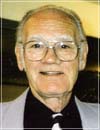
Scott Richardson

The Crucifixion Of Our Lord

John 19:14
Scott Richardson November, 7 1980 Audio
0 Comments

Sermon Transcript

Auto-generated transcript • May contain errors

100%
Here in this 19th chapter of
the book of John is the record and history of facts regarding
the death, crucifixion of our Lord Jesus Christ. We find him here hung on a cross. Now there's three very different
persons hung together on these three crosses on Golgotha. One is the Savior of sinners,
one is a sinner about to be saved, and one is a sinner about to
be damned. But we want to think about the
Savior of sinners who hung between these two sinners, one about
to be and one about to be damned. Here in the 15th verse, or the
14th verse, it says, and it was the preparation of the Passover,
and about the sixth hour, he saith unto the Jews, Behold your
king. That is, Pilate saith unto the
Jews, Behold your king. That is, the religious element
of the day, the chief priests, the rabbis, and all that were
loyal and faithful to the religion of the Jews. He said to them,
Behold your King. He said this as kind of a degrading
way, an insulting way. Here the Lord Jesus Christ is
abound and He's been lacerated. been abused in every sort and
form and description that the human mind possibly could think
of by way of degradation and about to be stripped of his clothes
and all and he's tired and I'm sure his facial expression doesn't
give forth the healthiness of of an individual
and so forth. And he looks at him, you know,
and he says, Behold your king. Here he is. Now, is this your
king? Behold your king. And so they cried, Jewish people. They cried in unison, as of one
voice, a perfect agreement. Disagreed on many things, but
they was agreed on this one thing. They said, and they cried out,
Away with him, away with him. Crucify him. Pilate saith unto
them, Shall I crucify your king? This is you. Behold your king.
Shall I crucify your king? The chief priests answered, who
was the spokesman for the Jews, who should have been the best
friend of the Lord Jesus Christ upon the face of the earth, was
the chief priests. The chief priests were those
that went into the holies of holy. They were the ones that
had access into the place the visible place in the temple that
depicted the residence of God himself. They were the ones that
were called the rabbis. Instead of being his friend,
they said, We have no king but Caesar. We have no king. We don't want no king. then deliver
him therefore unto them to be crucified. And they took Jesus. They took him. He offered no
resistance. And they led him away. They didn't
force him to go. They didn't take goads or sticks
or ropes and pull him or drag him, but they led him away. As
a sheep is led to the slaughter, is dumb, so they led the Lord
Jesus to the place of crucifixion. He was submissive in their hand.
And he, bearing his cross, had to bear his own cross. I don't
know, it wasn't like we see in pictures. It had something to
do with the tree trunk and another tree limb or something nailed
to it. It wasn't a thing of architectural
beauty in any sense of the word. It was a cruel looking thing. certainly crueler than it looked. It was designed to hang a man
on, that he might die in agony and grief. So they made him,
made the Lord Jesus. Now they took Jesus and led him
away, and he bearing his cross, bore his cross. He bore his,
we'll have to bear ours. If any man come after me, let
him bear his cross daily. He got to carry his own cross.
I can't carry yours, you can't carry mine. to bear our own cross
daily. All right, he bore his, and he
went forth into a place called the Place of a Skull, which is
called in the Hebrew Golgotha, and where they crucified him,
that is, they stretched him out on this, he offered no resistance
now, they stretched him out on this wooden form of a cross,
they stretched him out there and they nailed him to that cross,
they nailed his They nailed his feet to the wood and they nailed
his hands to that wood to suspend him, hold him up between heaven
and the earth on that cross. They crucified him, two others
with him on either side one and Jesus in the midst. Three persons
hung on that cross together, three different types of individuals. Want a sinner about to be saved? Want a sinner about to be damned?
And Pilate wrote a title, and he put it on the cross, that
is, over the cross. He put an inscription over the
cross here, and the writing was over this man that hung between
the two. This was the inscription over
his head that all might see it. They said that it was written
in Hebrew and Greek and Latin. And this was the inscription
that all men might know if people came by there that day after
the crucifixion, and they would inquire, which one is? He who is King of the Jews. Which one is it? They would not
have known. It's three men hanging on a tree
there. And there was nothing that would
depict who the other was. And so, God in His providence
must clear the honor of the Lord Jesus Christ. And in His providence, Cross
the will of this man Pilate. Put this in his heart and put
this in his mind to write this down. This is the inscription. If people passed by, they would
know who this one was. Jesus of Nazareth. Jesus the
Savior. His name shall be called Jesus,
for he shall save his people from their sin. He was Jesus, the Savior, and
He was King of the Jews. Jesus, the Savior, and Jesus,
the King. This title then read many of
the Jews, for the place where Jesus was crucified was nigh
to the city, and it was written in Hebrew and Greek and Latin. And then said the chief priests
of the Jews to Pilate, Write not, don't write that, don't
write that. Write not the king of the Jews,
but that he said, I am king of the Jews. Pilate answered, now
here's the providence of God, here's the will of God, crossing
the will of Pilate. Pilate answered, what I have
written, I have written. Now he could be stubborn when
he wanted to be. He's not too stubborn when he tried to placate
the Jews, when they cried for his blood, and he knew that they
were going to crucify him in his blood, but yet for fear of
these Jews, or because they might cause a little trouble for him,
he agreed to go ahead with it. But here he is very stubborn,
and I think certainly that that has something to do with with
the will of God crossing his will right here. And the will
of God must be done, and God has a way of doing things and
getting his will done. If he has to evade our will and
our privacy in order to get the job done, he's going to do it.
Anyhow, he says, what I've written, I've written. Then the soldiers,
when they crucified Jesus, took his garments and made four parts
to every soldier a part, and also his coat. Now the coat was
without seam, woven from the top throughout. They said, therefore,
among themselves, Let us not rend it, nor tear it, but cast
lots for it, whose it shall be, that the Scriptures might be
fulfilled which saith." Now, of course, they didn't say this.
This is by the author. They didn't say that the Scripture
might be fulfilled. They didn't know anything about
the Scripture. But God the Holy Ghost, who moved
upon the heart and mind and body and soul of John here, to write
this, moved upon him to write this, that the scriptures might
be fulfilled, which sayeth, They parted my raiment among them,
and for my vesture they did cast lots. These things therefore
the soldiers did. crucified our Lord Jesus Christ.
I want you to look at this latter part of the 19th verse, the inscription
that's written over the head of our Lord Jesus Christ, and
the writing was, Jesus of Nazareth, the King of the Jews. Now I want
to tell you what this tells me. I want to relate to you some
things that I get from from this inscription, Jesus of Nazareth,
the King of the Jews. First off, I think it is a picture
of how the world at large, or the world in general, despises
and rejects the Savior of sinners, the Lord Jesus Christ. Now, it
is a fact that he came into this world to save sinners. And as
I quoted to you, in Matthew 1 and 21, I believe it is, it says,
His name shall be called Jesus, Joshua, for He shall save. That's what He'll do. He will
not be intimidated. His will, His purpose will not
be thwarted. His mission will be accomplished. He came into this world to save
sinners. He came to seek and to save that
which was lost. Now he had come into this world
to save men and he had started his mission by saving many from
diseases which had been regarded in that time as being incurable. He did what? He opened blind
eyes. He gave sight to the blind. An
incurable thing, When a man loses his sight and
is blind, he's incurable. Eye transplant or nothing else
helps him. Well, anyhow, he opened blind
eyes and unstopped deaf ears, and he gave speech to the dumb,
and he cleansed the lepers, and the Bible says that he even raised
the dead to life. He gave faith to the faithless. But how did man receive the Lord
Jesus Christ? He did all of this. You know
that he did. It's here in the Bible. Over and over and over
it tells us about the miracles and the deeds and the generosity,
the kindness, the love that gushed from the Lord Jesus Christ to
the people of this universe. tells us that. But I say, how
did the men, the women, the boys and girls of this world, how
did the people of this world receive him when he came? Did
they come and fall at his feet and did they kiss the very dust
of the ground that he walked upon? It would have been no surprise
to me if they had, but they did not. It says that he came unto
his own. He came unto his own, but his
own received him not. They wouldn't receive him. The
world would not bow down to him. The world would not kiss the
very dust that he walked upon. I'll tell you, did they gather
around him, the Lord Jesus Christ, in praise and in worship? Did
they reverence his name? Certainly they did not. Well,
were all of the sick people of that day eager to touch the hem
of his garment that they might be made whole? No, sir. Not so. But there was a few that
did so. There was a few that did so.
I'll read something about that in just a second here in Romans
chapter 11. Let me read something to you
here. It says in Romans chapter 11,
verse number 3, verse number 2, God hath not cast away his
people, which he foreknew? Know ye not that what the Scriptures
say of Elias, how he maketh intercession to God against Israel, saying
this? This is Elias appealing unto
God, and he says this. He says, Lord, they have killed
thy prophet. They have digged down thine altars,
and I am left alone, and they seek my life." Elias said, they
are all gone. They killed all the prophets.
They tore down all the places of worship, and he said, I'm
the only one that's left. That's what Elias said unto God.
But this is the answer of God unto him. The scripture says,
But what saith the answer of God unto Elias in Elias' appeal
unto God? Lord, they've killed the prophets.
They've torn the buildings down. There's no altars no more. I'm
the only one left. This is what God said. God said,
I have reserved to myself 7,000 men who have not bowed the knee
to the image of Baal. Even so, then at this present
time also, There is a remnant, a remnant according to the election
of grace. There's a few left. A remnant
according to the election of grace. There's some left. I say
that the Lord Jesus Christ came into this world and went about
these good works and these good deeds and performed these miracles
and all. He came the Savior of sinners. He came as the King of the Jews. He came as God over all, the
only potentate, the worshipful master, the illustrious potentate. And how did man receive him?
Did they bow to him? No, they did not bow to him.
But there was a few that did. And the few was a remnant according
to the election of grace. A few did. And if you bowed here
this evening, the reason why you bowed was That is, the first
cause was because you are a part of that remnant of the election
of grace that God chose and purposed in himself before time ever was. Listen, the world hung the Lord
Jesus Christ upon a tree, and in so doing, men said, is the
Savior, the Nazarene, and this is how we are going to treat
him. I am saying that what I see in
this is how the world treats, how the world shows their respect
and gives their homage and their rejection to the Lord Jesus Christ. They say, This is how we're going
to treat him. This is what we're going to do.
We do not want to be saved from sin. We love it. That's what
they're saying. We love it. We don't want to
be saved from sin. We love it. To be saved doesn't
mean that we're saved from the penalty of hell. It doesn't mean
that we're rescued from hell. That's not what's involved. To
be saved from sin means to be saved from the love of it. Do
you want to be saved from the love of sin? Do you actually
want to be saved from the love of sin? Well, when that question
is put to the forefront of most men's
understanding, and if they are honest, they will tell you, We
do not want to be saved from sin because we love it. And no
man can or will ever be saved from sin because his will must
be effected. His will must be changed. My
will must be changed. Your will must be changed. Because
by nature we all love sin. We love it. We love it. That's
all they are to us. We love sin by nature. Our wills must be changed. We
do not want to be saved from sin, is what the world says.
This is Jesus the Nazarene. This is Jesus the Savior. We'll
hang him on a tree to die. We do not want to be saved from
sin. We do not want to be saved from rebellion and be brought
into peace with God through this man, Jesus Christ. So this is
what we're going to do with God's ambassador. We're going to put
him on a tree and he's going to die. That's what we're going
to do with him. That's what I see here. The world's treatment of
the Lord Jesus Christ. This is how we're going to serve
him. We're going to hang him on a tree to die. This is what
all, and I mean absolutely every, sinful heart would do till changed
by the grace of God. Left to ourselves. Someone prayed
here, someone sat here this morning, or tonight. He said, unless,
if God leaves us to ourselves, no telling where we'd be, no
telling what we'd be, if God had left us to ourselves. And
that's right. If God would leave us to ourselves
and not interfere and change us by His grace and soften our
hearts and give us a heart of flesh, Brethren, we agree with
these people. We'd say, hang him on a tree.
We don't want to be saved from our sin. We love it too much. You say, well, that's a pretty... And I know people have thought
this sometimes. They thought, well, now, when
I talk like this, they say, well, you're just a little strong in
your language there. You're just a little harsh in
your accusation and your charge against men that men would really
do that. Well, is that so? Is that so? Well, let me ask you this question. If you vainly fondled that around
a little bit and tossed that around a little bit and say,
well, now, you're just a little bit too tough here. You're making
a charge here that's just, I just don't know about that. That's
kind of harsh. That's kind of mean. Well, let me ask you this.
Let me ask you this. Have you believed on the Lord
Jesus Christ? Have you surrendered to Him?
Have you submitted yourself to Him? If not, if not, then this
is what you're saying. I prefer to be damned forever
rather than believe on the name of the Lord Jesus Christ. That's
what you're saying right now. At this present moment, that's
your choice, that's your option, that's what you're saying. Now,
I don't know what you're going to say tomorrow, I don't know,
but right now, if you, make a difference who it is, whether it's me or
whether it's Bob or whether it's Pat or whoever it is, if you're
saying in your heart, I've never believed in the Lord Jesus Christ,
I haven't believed on Him. I haven't submitted myself to
Him. I haven't done it. If you're
saying that, if that's what you're resting on, standing on tonight,
then you're actually saying, I prefer to be damned in the
torments of hell forever rather than submit to the claims of
Him who hung on that cross. That's what we're saying. So
it's not too harsh. It's just the truth. just the
truth. I believe that if the Lord Jesus
Christ would come into this world tonight among the unregenerate,
that they would hang Him before sunup, if they could get their
hands on Him. I believe they would do it. I
believe that is just how strong our reaction is toward the salvation
which is in the kingship, the lordship of this suffering Savior. Even to this day, and you'll
admit it, even to this day, when substitution is preached, or
when salvation is preached by substitution, through the vicarious
offering of the body of the Lord Jesus Christ. And when salvation
is preached by faith alone in the Lord Jesus Christ, and not
by sacraments, and not by priests, and not by works, men fall at
the mouth with rage, for they still hate the Lord Jesus Christ. And if you tell man, you tell
the average church member today. I'm not talking about you. I'm
not talking about you. Thank God for you. God has overcome
your rebellion. God has brought you low and brought
you to the feet of the Lord Jesus Christ. And you can say, Amen,
preacher, I agree with you. But the average church member,
wherever you find him, wherever you find him today, the average
preacher, the average Priest, the average religious man, foams
at his mouth in rage when you say that salvation is by and
through the bread of atonement of the Lord Jesus Christ and
through him alone. It's not by works! As if someone
told me today, who was it? We were talking, he said, well,
when they prayed, I believe, he said, if we just had to lift
a finger, if God required us to lift a finger in our salvation,
we couldn't do it. It would be salvation by works
and not by grace. Men hate this, and they show
their hatred to it because they will not submit to it. They won't
do it. If they believe this, As I said
this morning, if they believe what I'm preaching and they believe
what this church stands for, they believe what you believe
in regard to how salvation is through the Lord Jesus Christ,
they'd knock that door down and get me in. They'd be here. They'd
be here because they want to rejoice and to praise God from
whom all blessings flow. They'd be so thrilled to hear
the good news that Christ died for sinners in whom I am chief,
and absolutely justified me from all things that the law couldn't
do, and give me a perfect justification before God, and has forgiven
me all of my sins, past, present, and future, and will remember
those sins against me no more! No more, and no more, and no
more, and no more. Don't you tell me that people
won't rejoice in that, the sheep of God, the elect of God. If
they knew it, if they knew it, if they knew it, they'd tear
the doors down, getting in here, sitting on the front row, hearing
what I've got to say. This is the truth, as in Jesus. And I'm telling you, to this
day, to this very day, to this very hour, this is the way men
react, just like they did here. And I read that inscription,
Jesus of Nazareth, the King of the Jews, tells me something,
tells me how the world hated the Son of God. And another thing
I see here is this, is that man's chief objection to Christ is
His authority. That's their chief objection.
The, what would you call it, the sum and substance of this
inscription, look at it, the sum and to analyze it, to condense
it, to make it as brief as you can, and as strong as you can,
with as less words as you could. What would you come up with?
Jesus of Nazareth, the King of the Jews. You'd have to say it
in three words. Jesus the King. That's what it
says. That's the pith of it. Jesus
the King. And the chief objection of men
is the same now as it was then. His authority. Pilate did not
write on this board or parchment or whatever it was. Some say
it was written in letters of black. Some say it was written
in letters of red. I don't know. I don't know, but
I just know it was written there. It was written in three languages,
Hebrew, Greek, and Latin, that all might know who this man was
here. Now, Pilate did not write, this
is Jesus, the great teacher. He didn't write that. We would have said, or the world
would have said, we'd agreed with him, if that's what was
there. Jesus, the great teacher, the great example, great teacher.
We would have said, let him teach what he will. It's of no concern
to us. Let him teach. Pilate did not
write, this is Jesus the priest. He did not do that. But this
is what he wrote. This. But this hanging here is
Jesus the King. And that's the target right there.
That's the target at which they all shoot their arrows. Is the
authority, the lordship, the kingship of the Lord Jesus Christ. Look what the writer of the 2nd
Psalm said here. Long ago, years before this took
place, look what this writer said, if I can find it here.
I believe 22nd Psalm, I think. Maybe I haven't found it. Well, you can read it. You can
read the whole psalm if you want to. I haven't got time to pick
it out right now, but you can see that he's talking here about
the Lord Jesus Christ. The first verse begins like this,
My God, my God, why hast thou forsaken me? That's one of the
statements that our Lord made upon the cross, a statement that
had regard to the loneliness of the Lord Jesus Christ. Why
art thou so far from helping me and from the words of my roaring?
Oh, my God, I cry in the daytime. But thou hearest not, and in
the night sees, and am not silent. But thou art holy, O thou Inhabitant,
Inhabitant of the praises of Israel." And so forth. Well,
you can read it, and I'll go on. Men, listen to me. Men might be willing, they might
be willing, for the Lord Jesus Christ to save them. Now follow
me. Generally speaking, if you would
talk to a man, and he had a bit of rational understanding about
it. If you had talked to him and
presented this to him, and told him that if he believed in Jesus,
he could be saved from eternal torment, I believe that a man
would be willing for the Lord to save him, but not for the
Lord to reign over him. I think there's the rub. I don't
think that men would want, that is, unless the grace of God changes
them, that man will submit to the Lordship of Christ. They
will not have the Lord reigning over them. They won't do it.
Now, this is what I mean by the Lord reigning over them. Now,
such laws as these, Thou shalt love the Lord thy God with all
thy heart and all thy strength and all thy soul. That's the
law of God. God said, love me with all your
heart, all your body, all your mind, all your soul, all your
strength, every portion of your being, love me supremely, thou
shalt have no other gods before me. It also says, thou shalt
love thy neighbor as thyself. It also says that thou shalt
forgive seventy times seven. It also talks about the law of
love, the law of kindness, the law of gentleness, the best laws
that depict the character of God throughout the New Testament
and the Old Testament as well. And most say, well, these are
all good and we certainly admire them, but when these laws come
home to an individual, now you can admire them, you can sit
back and say, I like the ideals that they set forth and the principles,
I'm in agreement with them, and to the extent that we admire
them. When these things lay hold of us, when these laws come home
to us, when our Lord Jesus Christ teaches an absolute necessity
of the purity of a man's heart, and when he says even a last
tibidus glance of the eye is sin, and even when he says if
a man hates his brother it's murder, then man says his rule
will never do for me. That's what he said. He can save
me if he wants to, but he can't rule me. I'm telling you the
truth. That's what men say. They say,
He can save me, but He can't rule me. He can't take this book
and tell me what to do. He can save me, but He's not
telling me to give my money, give my time. He's not telling
me to love my... He's not going to tell me who
I can visit and who I can't visit. He's not going to tell me when
I can go to church and when I can't go to... He's not going to tell
me that now. Oh no! What's He saying? He said, He
can save me if He wants to, but He can't rule me. And you can't
have it that way. You can't have it that way. You've
got to have them both. You can't have either one of
them. He will not be your Savior without being your Lord. Everywhere
in the Scripture, it's the Lord Jesus Christ. The Lord, the Lord,
the Lord. The Philippian jailer said, What
must I do to be saved? Paul said, Believe on the Lord
Jesus Christ. You'll be saved in your household.
The Lord, the Lord. You see, what I see in this is
that the chief objection to every man is still the same now as
it was then, and that's his authority. What's on that cross? Jesus the
King! That's what's on there. The King! Now, He'll either be our King
or be our Judge. He'll either rule us or He won't
be our Savior. If He's our Savior, He'll rule
us. If He's our Savior, He's our Lord. He's our Master. He's our King. We have no other
King but Jesus. Caesar's not our King. President
Reagan's not our King. We honor Him. We respect Him,
but we don't fear Him. We respect our Lord. We love
our Lord and we fear Him because He's our King. We have no other
king but the Lord Jesus Christ. Oh, no, they say this rule is
not for me. I'll be saved, all right. I'll
be saved, but I'm not going to have Him rule
over me. All right, look at that inscription, if you will, over
the head of the thief who hangs on the next cross. And I'm kind
of interjecting this because I believe there was an inscription
there. I believe over the thieves that were crucified on either
side of the Lord Jesus Christ, it was a custom of the Jews and
the Romans, too, to put the charges over the head of the man that
was found guilty and punished by crucifixion. They put the
charges right over there. If you could see the inscription
over the head of this thief who hangs on the next cross, aside
the Lord Jesus Christ, you would see something like this, put
to death for robbery. You would see something like
that. This man was put to death because he robbed somebody. Or this man was put to death
because he was a murderer. He killed somebody. Now look
at the inscription over the head of the Lord Jesus Christ. And
this is what the inscription was, and I have read it a half
dozen times. The writing was, Jesus of Nazareth, the King of
the Jews. Well, you want to know, you can
understand, if you read the inscription over that thief's head, and it
said that, here hangs a murder. Man guilty of robbery. You can
understand that. You can understand, you can come
away and say, well, I know why he died. He robbed a man and
killed him. He robbed him and he killed him,
And the penalty for robbery and the penalty for death is crucifixion. It's written right over there.
I understand that. But here's a man over here. There's
a man in the middle. I want to know why he died. I
want to know. I know why this fellow died.
He's a robber. I want to know why this fellow died. What's
the inscription that's over his head? What's he guilty of? What
is the inscription? This is the inscription that
was Jesus of Nazareth, the King of the Jews. I'm sure that if there was any
crime that the Lord Jesus Christ had committed, I'm sure that
they would have put it up there. I'm sure that whatever the worst
thing the Lord Jesus Christ ever did in his three years of ministry,
or his thirty-three years of life, would have been brought
to the forefront. Whatever, if he'd done a wicked
thing sometime in the corner where nobody knew about it, somebody
knew about it. If he'd done anything that was wrong, they'd put it
up there. You see, because Pilate would
have wanted to salve his conscience a little bit. He kind of had
a guilt complex about this, and he wanted to be exonerated if
he could. And if he could have put anything
up there, other than what he did, he would have done it. Well, Pilate was wanting to excuse
his conscience. And if he can write anything
that will exonerate him from the guilt of putting the Lord
Jesus Christ to death, he'll do it. So he takes his pen in
his hand and he writes, This is Jesus of Nazareth, King of
the Jews. Now this is the only offense
that they can come up with. This is the only offense. They cannot sum up his guilt
in a way than in these words. Jesus of Nazareth, the King of
the Jews. His crime is what? Let me tell
you what the crime of the Lord Jesus Christ is. Why are they
crucified? Why are they crucified in here?
And what this inscription means. His crime is that he is what
he is. That's his crime, right there. He is what he is. What is he?
He's Jesus the Savior and he's King of the Jews. That's his
crime, right there. That's his crime. They couldn't
put anything else up there. That's his crime. That he was
a Savior and that he lived at Nazareth and that he was the
King of the Jews. Oh, my soul! God Almighty saw
that his honor was clear. He saw fit to that. You know
and I know, and we know this because God revealed it to us.
We know this because God the Holy Ghost taught us this about
the Lord Jesus Christ. We know this! We are not of this
breed that has no desire to know of our Savior. We love to hear
about our Savior. We read the Bible that tells
us of our Savior. We read books of good men that
tells us of our Savior. And our God has taught us through
the Word that the Lord Jesus Christ knew no sin. He knew no
sin. Most people don't know that.
The average religious person today does not know that the
Lord Jesus Christ knew no sin and they could care less. Did
you know that? But it's important. It's a cardinal
truth. It's the foundation truth of
the substitutionary work of the Lord Jesus Christ. He knew no
sin. He knew no sin. I'll tell you
this. They couldn't put no crime against
the Lord Jesus Christ above his head. Oh, he was a lamb without
spot or without blemish. The Bible says that he was made
a sin offering for us. He was hung there because he
was Jesus the Savior. He was hung there because he
was Jesus the King. Oh, he made a sin offering for
us that we might be made the righteousness of God in him. He died first because he's Jesus. Secondly, because He's the King.
Oh, if we have not, if we have not stood at His feet and acknowledged
His claims to be true of us, do so right now, if you haven't
done it. If you haven't done it, do so
right now. Stand at His feet, Jesus the
Savior, Jesus the King, and acknowledge His claims right now. And if
you don't, I'm not threatening you, I'm just telling you, I'm
telling you the bold faith truth. I'm telling you, if you don't,
you're saying to God, I prefer to go to hell forever, rather
than submit to the claims of this man who hung on a cross. What's your chief objection?
Why don't you believe in the Lord Jesus Christ? If not, why
not? What justifiable excuse could
you give? The only excuse you can give
is a statement of truth. It's not an excuse. You could
say, I don't want to
Scott Richardson
About Scott Richardson
Scott Richardson (1923-2010) served as pastor of Katy Baptist Church in Fairmont, West Virginia.
Broadcaster:

Comments

0 / 2000 characters
Comments are moderated before appearing.

Be the first to comment!

Joshua

Joshua

Shall we play a game? Ask me about articles, sermons, or theology from our library. I can also help you navigate the site.