Bootstrap
Scott Richardson

The Lord's Love For His People

John 11:1-3
Scott Richardson February, 21 1979 Audio
0 Comments

Sermon Transcript

Auto-generated transcript • May contain errors

100%
first three verses of this eleventh
chapter and we'll probably go and maybe deal with
some other verses but we'll start right here. Now a certain
man was sick, named Lazarus Bethany, the town of Mary and her sister
Martha. It was that Mary which anointed
the Lord with ointment, and wiped his feet with her hair, whose
brother Lazarus was sick. Therefore his sister sent unto
him, sent unto the Lord Jesus, saying, Lord, behold, he whom
thou lovest is sick. Now, in this third verse, we
have their appeal, their declaration of what is taking place, the
desperate condition of their brother. And they said, Lord,
he whom thou lovest is sick. must not be understood or regarded
as a protest. It was not that Mary and Martha
were complaining against the Lord Jesus Christ because he
had permitted one whom he loved to fall sick. I hope that you'll
see that and not understand that they came with a complaining
heart or an attitude of protest. because he and his sovereignty,
might, and power had permitted one to be sick. And, of course,
this ought to be of some help to us to understand
that even those who he loves sometimes are taken with infirmities
and sickness And it's not always a sign that God's mad at us when
we fall sick. Lots of people believe that,
you know, that God is displeased with us and He's punishing us
for our disobedience when we fall sick. Now, that's not always
the case. I'm sure that sometimes that
is the case, that God does chastened His people, not punish His people. Now, I've heard preachers say
that God punished His people. Now, I don't believe that at
all. I don't believe that God punishes His people. We were
punished in Christ. God punished Christ. God poured
out His wrath upon Christ Jesus, our Lord. God chastens us with
a chastening hand in order that we might discover within us the
peaceable fruit of his righteousness, but God doesn't punish us. And
so it's not always true then that when one falls sick as afflicted
that it's a sure sign that there is some unconfessed and undiscovered
sin in his heart and in his life and therefore God's going to
take it out on him. That's not always the case. Not
always the case. Sometimes it is the case. It
was the case with Job, I believe. Job, although God certainly loved
Job, yet he permitted Job to fall into the hands of Satan,
and Satan done his utmost in order to bring about a complete
denial of the belief and existence and mercy and understanding of
God that Job had in his heart. But he did so in order that,
not that God didn't know about it, but he wanted Job to find
out about it. There was a seed of, there was
a root of complacency, there was a root of indifference, there
was a root of coldness and almost a legalistic attitude in the heart
of old Job, and God knew about it, and He wanted Job to see
it. So He permitted Job to go through some times like I don't
think any other man has ever went through with, apart from
the Lord Jesus, that Job might discover this. He might see it,
and he might judge it, and he might confess it, and he might
forsake it. And that's what Job did. Job finally got a glimpse
of his own heart as he compared himself with the Lord Jesus Christ,
or with God, with the mercy of God, and finally he said, I've
heard of thee with the hearing of the ear, but now, he said,
I see you. I see thee. I've discovered thee. Throughout those 40 chapters,
and I don't know what the period of time was involved there, but
there's 40 some chapters involved in the discovery that old Job
made of who God was and who he was, and when he said, I have
seen thee, I have heard thee, but now I see thee, and the result
of my seeing thee is what? Is that I repent, I repent, I
change my opinions, I change my attitude, and by the grace
of God I change my mind about myself. I repent in dust and
ashes. Well, I want you to see that,
I want you to see that This is not to be regarded as a protest
or complaint by Mary and Martha against their Lord for permitting
one whom He loved to be sick. Now, it's simply this. It's an
appeal to the heart of one in whom they had implicit confidence. It's an appeal. They simply acquainted
him, our Lord and their Lord, with his desperate condition. He whom thou lovest is sick. Now, they did not request of
him to hasten at once to Bethany. They didn't say that. Nor did
they ask him to heal their brother by a word from a distance. as once he had restored to health
a nobleman's son. They didn't do that. But they
simply left it to him to decide what
ought to be done. They presented the desperateness
of the case of their brother to him and they left it there
in his hand. They had the utmost confidence
in Him, so they left it there for Him to decide what should
be done. Now, notice, "...Lord, behold,
he whom thou lovest is sick." Each word in this touching message
of Martha and Mary is worthy, I believe, of separate consideration
and certainly due deliberation in regard to the matter of our
hearts in understanding what's going on here. Notice, Lord here, Lord, behold he whom
thou lovest is sick. word in their appeal, Lord. Now, Lord is the language of
believers. No unbeliever, I don't think,
can ever address the despised Nazarene as Lord. To do so would be to acknowledge
His deity, to own His authority, and to express their humility,
so therefore that rules out unbelievers calling Christ Jesus the Lord
Jesus. Now, I think that it's very commendable on the
part of everyone whose heart is occupied with Him to refer
to Him as the Lord Jesus. He is not the lowly Nazarene
anymore. Now, I know we sing sometimes,
or there are some hymns that address Him as, There is no friend
like the lowly Jesus, or there is no friend like the lowly Nazarene. Well, He is not the lowly Jesus
anymore. He is not the lowly Nazarene.
God hath highly exalted Him and given Him a name which is above
every name. God hath reversed the order of
this human race that crucified and killed him, and God hath
raised him from the dead. And God hath seated him upon
a throne on his right hand, and given him a name which is above
every name. And at the name of the Lord Jesus,
and at the name of Jesus, every knee shall bow, and every tongue
shall confess that Jesus Christ is the Lord. So it's the Lord
Jesus Christ, and this needs to be noticed here in their appeal. It's commendable on their part
that they referred to Him as Lord. Lord! Over all and above
all, none can be compared to Thee. Remember we read here in
the book of 1 Samuel the other night, we talked about Hannah's
prayer. Part of Hannah's prayer went
like this. It said, There is no rock like
our Lord. There is no rock like our God.
None can be compared to Him. Well, I think it's commendable
on their part. Notice, Lord, He whom thou lovest. Now they did not say, and I want
you to notice this, they did not say, He who loves thee, and
that's highly significant to notice that. He whom thou lovest,
not he who loves thee. It's His fathomless love for
us, and not our feeble love for Him. It's the fathomless love of the
Lord Jesus Christ for us. It's not our feeble love for
Him that ought to be ever steadily before our hearts. The thing
that ought to occupy our hearts is God's love for us in Christ,
not our love for Him. Our love varies. Our love changes. But His love never changes. Now, our brother said as he prayed
here, I listened and prayed with him the best I knew how. He prayed
that God would enable him and those of us that he prayed for
to believe the un- changeableness of the word of God's promises,
not in that many words, but that's what he said, that God would
enable us to believe it. Well, what I'm saying here this
morning, that this expression here that comes out like this,
Behold, he whom thou lovest is sick, that if our hearts would
be occupied and have steadily before us this
blessed truth of God's love for us, and not so much our love
for Him, we'd be far better off if we'd be occupied with God's
love for us. Well, someone I said one time that
biblical and a practical cure for worldliness among Christians
was to fill his heart and his life with the eternal blessedness
of God, that there will be a joyful occupation and absent-mindedness
of unspiritual things. And I think that's right. If
we'll fill our hearts and our lives with the eternal blessedness
of God Almighty, which I'm talking about is love to us, then there
will be an absent-mindedness on our part of unspiritual things. In other words, let me give you
an illustration here of what I'm trying to say. I'm trying
to impress upon us here this morning the fact that that our
hearts ought to be occupied with the Lord Jesus. Occupied in every
sense of the word. Body, soul, and spirit. This triune being ought to be
occupied with the triune God. Constantly, continually, and
perpetually, all the days of our lives, we ought to be occupied
with Him. Occupied with Him. And if we're
occupied with His love to us, it will do something for us.
In other words, by way of illustration, a dead leaf, a dead leaf now
out here on the tree that may have clung to the twig through
the external raging of the storms of winter will silently fall
to the ground when the new flow of sap from within has begun
in the spring. That leaf hanging out there that
has survived the blast of the winter will silently fall to
the ground. When the spring comes and that
new surge of sap runs through the twigs into the bud, that
leaf will fall to the ground. The leaf falls because there
is a new manifestation of life pressing from within outward. We understand that. The reason
that leaf falls is because there's new life surging within and forces
that leaf to fall. That's the reason it falls. Now,
a dead leaf cannot remain where a new bud is springing. It's an impossibility. Nor can
worldliness remain where the heart is occupied with the triune
God in the face of the Lord Jesus Christ. Worldliness cannot exist in the life of a Christian whose
heart is occupied with the Lord Jesus Christ. I'm talking about
big... I know that you can cite cases. I know people can say,
well, what about so-and-so, and what about this, and what about
that? All these things may be true,
but it does not change the inalterable fact that a man whose heart is
occupied with the Lord Jesus Christ, if his heart is occupied
with Christ, he'll not be involved with what's known as worldliness. Because that new life, that newness
of life, that newness of life that is within will outwardly
manifest itself and the dead leaves will drop. Now, I'm not
called, neither do I think any other preacher is called, to
preach against the dead leaves. I don't think so. I think that
we have a message of the imperishable spring. I think that's what her
message is, the newness of life. If any man be in Christ, now
listen, I know that all of us can argue all day on this, but
it will not change this Scripture. If any man be in Christ, he's
a new creature. Old things have passed away,
all things become new if a man's in Christ. Now, right there is
the root of it. Right there is the rub. There
is where we need to stop and camp if a man is in Christ. If
he is in Christ, sometimes we are trying to lop off the dead
leaves, the dead limbs of this dead tree out here, and there
is no life in it. But if there is life in it, the
life within will manifest itself outwardly, you see, and the worldliness
will fall to the ground, the leaf will fall. What I'm trying to say is this
being occupied with God, it is the outflow of the limitless
life of God. I think that this is what the
Lord Jesus Christ had reference to when He... Well, let me read
to you here in the 16th chapter of the book of John. John chapter
16 and verses 12 through 15. I think this is what our Savior
is talking about. You see, I believe that it's
the Spirit's work. It's the work of the Spirit of
God. We know very little of the Spirit
of God, the Holy Spirit, Third Person of the Trinity, God the
Father, God the Son, and God the Spirit, God the Holy Spirit. Notice that, the Holy Spirit. What is the work of the Holy
Spirit? I believe the work of the Holy
Spirit is to lop off those leaves. That's what I believe. Now, you
may differ with me, but I believe that it's the work of the Spirit
of God to work in us, Christ in you, the hope of glory, this
new life, which will express itself outwardly and force off
those dead leaves. I think that's the work of the
Spirit. Now, I know that we can do it in the energy of the flesh.
I know that. I know that we can live by a
set of rules and regulations and so forth, but that will not
get the job done. You might lop off some things
out there, but it will not be because your heart is occupied
with the limitless life and being of God Almighty. Now listen,
I think that this is what is being taught here. Our Lord says,
well, you know, He said in the 5th verse, I believe it is, I
go my way to him that sent me, I go to God the Father that sent
me. My time is up. I'm about to go
to Jerusalem. I've set my face towards Jerusalem. I must go there and I must be
scourged. I must be crucified and killed. But on the third day I'll rise
again." That was his message. And he said, nevertheless, I
tell you the truth. It's expedient. That word expedient
means it's necessary. It's necessary for you. It's
necessary for these disciples that I go away. Now, they couldn't
understand why it would be necessary for Him to break this unbroken
fellowship that they had for these three years and leave them
as orphans here in this world. Now, they were with Him. 24 hours
out of every day, practically, wherever he went, he went, or
they went. And they shared with his grief
and sufferings and hunger and what have you. They left all.
They left their nets. They left their ships. They left
their tax collecting jobs. They left all to follow him.
And now he says, I must go away. I'm going to leave you. It's
necessary that I go. It's necessary that I go. And
they couldn't understand. It would be like your wife or
your husband telling one another here, it's necessary that I go.
It's for your benefit. It's for your benefit that I
go away. And you'd say, well, I don't understand that you're
my blood of my blood, bone of my bone, flesh of my flesh, and
I so love you, and I can't live without you. But here you tell
me it's for my benefit and for my good that you leave me. I
don't understand it." That was their attitude. That was their
attitude. And he said, nevertheless, I
tell you the truth. This is the truth, so help me
God, he said. It's expedient. It's necessary
for you that I go away, for if I go not away, the Comforter
will not come unto you. The Comforter is the blessed
Spirit of the living God, the Holy Spirit. And He's got to
work and ministrate in our lives, which we know very little about
simply because very little is preached about Him and very little
of our attention has been engaged to this great subject of the
Spirit of the Living God of the Bible. But nevertheless, He said,
It is expedient for you that I go away, for if I go not away,
the Comforter will not come unto you. But if I depart, I will
send Him unto you. And when He has come, when the
Comforters come, that is, the Spirit of the Living God, He
will reprove the world of sin and of righteousness and of judgment,
of sin because they believe not on Me, of righteousness because
I go to My Father and you see Me no more, of judgment because
the Prince of this world is judged. I have yet many things to say
unto you, but you cannot bear them now. How be it? Now here's the part. Howbeit,
when He, the Spirit of truth, is come, what will He do? He will guide you in all truth. When the Spirit of God is come,
He will guide you in all truth. Now, I believe, brethren, as
I said here, it is the Spirit's work to produce in the believer
a life which is heavenly in character. That is the work of the Spirit
to produce that. And I believe He will produce
it. When the Spirit has come, what is He going to do? He is
going to guide you into all truth. The Spirit is. For He shall not
speak of Himself. He will not magnify or glorify
Himself. But what will He do? He shall
not speak of himself whatsoever, he shall hear, that is, from
my Father's throne, that shall he speak, and he will show you
the things to come. He'll teach you, he'll guide
you in all truth, and he'll glorify me, for he shall receive of mine
and shall show it unto me. All things that the Father hath
are mine, therefore said I, that he shall take of mine. He'll take of mine all things
that the Father has are mine, and He's going to take that which
is of mine, and He'll show it to you. And when He shows it
to you, and teaches this to you, and when the love of God is shed
abroad in your heart, and your heart becomes occupied with the
limitless being of the triune God, when the love of God has
been shed abroad in your heart, then the dead leaves is going
to fall off. Now, I believe that I'm on the
right track there. I want to read something else
to you. If I can find it hurriedly here. I believe in 1 John. in that 27th verse of the 2nd
chapter of the book of 1 John. But the anointing which ye have
received of him abideth in you, and ye need not that any man
teach you, But as the same anointing teacheth you of all things, and
is truth, and is no lie, even as it hath taught you, ye shall
abide in him." I think that refers to the blessed Holy Spirit. You shall not have need of any
man teaching you, but the Spirit of God will teach you and guide
you. Well, does not the Bible say
that Ears have not heard, or eyes have not seen the things
that God hath prepared for those that love him, but the Spirit
hath revealed them unto us." It is the Spirit. Then there is another verse over
here, if I can find it, I think in 1 Corinthians. 1 Corinthians chapter 2 and verse
number 12. Well, I'll read several verses
there beginning at verse number 10. I think they all, verse number
9, I think they all pertain to, at least in a vague sense, I
hope, of that which I'm trying to teach, or I'm trying to say. It says in that 9th verse, But
as it is written, I hath not seen, nor neither hath entered
into the heart of man the things which God hath prepared for them
that love him." Now, many times that's quoted just like that
and say, well, you know you can't understand. You really don't
know because eye hath not seen or ear heard, neither has entered
into the heart of man the things that God has prepared for them
that love him. And so they just leave it go there. But I want
to tell you this, and I learned this a long time ago, that a
text Taken out of context is a pretext, and it will only cause
you a lot of misery. A text taken out of context is
a pretext. Now let's not take this out of
its context. Now listen, the 10th verse says, But God hath
revealed them to us by His Spirit. He teaches us. When the Comforter
has come, He will guide you, He will teach you, All truth. He will show you the things that
are mine. Why? That your hearts might be
occupied with me. I think that's the design of
God in relationship to His eternal purpose and discipline of the
children of God in Christ Jesus, is that is that through his various
providential means, through this teaching of the Spirit, through
the observance of certain commands and so forth, the design is all
that he might bring us to the place that we would be occupied
constantly with him, with his love to us. So many times, brethren, as I
listen maybe to someone preach, or as I listen to someone talk,
or as I read certain things, I begin to think about my love
to God. Now, I'm not saying that's wrong.
Don't misunderstand me. I'm not saying that's wrong.
But I begin to think about if I would do this, if I would do
that, that would increase my love to Him, but I found out
that those things do not increase my love for Him. I am worried
about the wrong thing. I am worried about the wrong
thing. I should be worried about His love for me, you see. I should be occupied with God's
love for me. And when I am occupied with God's
love for me, then all things work together for good to them
that love God to them who are called according to His purpose.
If I'm occupied with the love, God won't lie. I mean, if He
said He loved me in Christ, then brethren, I ought to shout. I
ought to jump up on top of this pulpit and I ought to shout.
I ought to be like a cheerleader. I ought to have more enthusiasm
than a student body in a high school. If I believed and was
occupied with the blessed truth that God loved me in Christ and
His love is immutable, unchangeable, it does not bury, it's not on
and off like me that He loves me. He loves me when I'm sick.
He loves me when I'm well. He'll never cease to love me. My God, that does something for
me. I don't know about you. That does something for me. He
loves me. He loves me. I get to think about
my love for Him. And I'm not saying that's wrong.
I know that my heart My heart, it's desperate, and it's dangerous,
and I don't know it. Not many things I do know. One
of the brethren came to my house not too long ago, and we talked
a little bit and discussed the things of God. Had fellowship. We had fellowship, sweet fellowship. This is what he told me. He said,
well, preacher, he said, I read my Bible. I read it, and he said,
I pray. I don't know that my life is
indecent or anything like that. And he said, I try to be a good
witness and fail miserably, but he said, one thing I know, one
thing I know, he said, I've been joined to God in Christ. He said,
I know that. He said, I know that. He said,
I know I'm a sinner. And he said, I know that I'm a sinner. I know
I've been joined to God in Christ. Boy, if a man can be occupied
with that. You remember the story I told
you one time about that poor, poor old tinker there during
the 17th or 18th century there in England? He heard, as he went about from house to
house during the day, he heard a couple of ladies who were Christian
ladies. They used to sing a song, a little
hymn or a little ditty, And he got to listening to it. He had
become so captured by what the little diddy said that he just
listened and began to sing it himself. And finally, that means
he was constrained to go and hear the preaching of the gospel
and finally was saved and finally began to sing that himself. And
what it was was this, I am only a poor sinner. I'm only a poor
sinner and that's all I am," he said. I'm only a poor sinner. I'm only a poor sinner and nothing
at all. But he said, Jesus Christ is
my all in all. That's what I want us to know.
I want us to know that we're only poor sinners and nothing
at all. And I want us to know, or I want our hearts to be occupied
with the Lord Jesus Christ. And if we're occupied with the
Lord Jesus Christ, this newness of life, not this letter out
here, not this deadness of the letter, but that we serve God
in the newness of life, this life, this life that's in us,
Christ in you, the hope of glory. Listen to me now. If you grow
cold, if you're growing cold, it's not because the Lord Jesus
Christ has changed. You've grown cold because your
heart is not occupied with Christ. That's where you've grown cold.
Don't you blame it on Christ. Don't blame it on the Word of
God. Blame it on yourself. Blame it on yourself. You've
grown cold because your heart's not occupied with the Lord Jesus.
When my heart's not occupied in your heart, we'll grow cold.
There'll be a strangeness about us. That's right. Occupied with
the Lord Jesus Christ. And when we become occupied with
Him, I believe these dead leaves will fall off. I really do. I believe that. I don't believe
that that dead leaf can resist that new bud, that sap, as it
flows in that little twig in the spring. It won't resist it.
It'll silently fall into the air. Now, some of you fellas
know something about the never-shed oak. Never-shed oak. Them leaves stay on there all
winter long, don't they? All winter long. But there's
a time they'll fall. Isn't that right? When? When
that sap begins to come down through there, they'll silently
float and fall to the ground. Well, I think, brethren, and I'm not
saying this to be smart, because the Lord
knows I'm not that smart. Maybe I shouldn't even say it
at all. But there's little blessing for
any Christian until he abandons the principle of livable rules
and learns to walk by the Spirit in God-ordained liberty and in
fresh and unbroken fellowship with his God, occupied with the Lord Jesus
Christ. Now, where was it? Where was
it? I said it was highly commendable,
didn't I? They did not say, these two sisters, they did not say,
He who loves thee. But it was Christ's fathomless
love for us and not our feeble love for Him. And I say, brethren,
that this is what we ever need to keep steadily before our hearts
well i wonder if you'd notice this
in there in that uh... portion of scripture
there relative to to uh... prayer and petitions and requests. We've talked here lately, we've
talked about prayer and so forth, and it's hard sometimes for us
to know how to pray and what to pray for, but I think that
maybe there may be some practical value here of how these two sisters
acted in their time of need and how they prayed and so forth.
They sought the Lord, and they unburdened their hearts to Him.
You remember we talked there at Hannah, about Hannah the other
night, and one part of that prayer that describes Hannah's attitude
and character was this. It says that she poured out her
heart, or poured out her soul unto the Lord. And I think that
that's typical of what the case was here. These two women unloaded
or unburdened or poured out their soul before the Lord. Well, do we always act like that? Do we always pour out our soul
before the Lord and unburden our hearts to Him? Does not the
psalmist say in Psalm 46 and verse number 1, does it not say,
God is our refuge and our strength and a very present help in trouble. Yet to our shame, how little
we know Him as such. When the people murmured against
Moses, they didn't think Moses was doing right, you know. They
murmured against him, wanted to get rid of him. We're told
that Moses did this. He cried unto the Lord. That is, he unburdened his heart
unto the Lord. He poured out his soul unto God. When Hezekiah received that threatening
letter from Rabshaketh, the Bible says that he spread it before
the Lord. When John the Baptist was beheaded,
his disciples went and told Jesus. Oh, brethren, what an example
for us. We have not a high priest who
cannot be touched with the feeling of our infirmities. No, he's
full of compassion. He's, as he was on earth, acquainted
with grief. We need a practical lesson for
us here is to understand their appeal to God in that sense.
They cast their burden upon the Lord. And I want you to notice
something else and then I'll quit. The actions of these two
sisters and the wording of their appeal gives us a striking example
of how we ought to present our petitions to the Lord. I think
much of the present-day teaching on the subject of prayer is certainly
grossly dishonoring unto God. The most high God, is not our
servant to be brought into subjection to our will. Prayer was never designed to
place us on the throne, but to put us at the foot of the throne. You know, you've heard men and
women talk to God as if God was their equal, haven't you? command
God to do certain things. There's a difference between
a command and a request, or a command and a petition. I know the Bible
says, Let us come boldly to the throne of grace, but the word
boldly does not imply a command. The word boldly implies a freedom,
a freedom of pouring out our hearts unto God. It's not to
dictate to God. tell God what He can do and what
He can't do. These sisters came. They came
and they told Him. They appealed to Him. They made
requests unto Him. They said, He whom thou lovest
is sick. And they left it to Him. Oh,
God, help us this morning that we might learn something and
be profited somehow from these few words. We'll stand.
Scott Richardson
About Scott Richardson
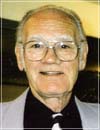
Scott Richardson (1923-2010) served as pastor of Katy Baptist Church in Fairmont, West Virginia.
Broadcaster:

Comments

0 / 2000 characters
Comments are moderated before appearing.

Be the first to comment!

Joshua

Joshua

Shall we play a game? Ask me about articles, sermons, or theology from our library. I can also help you navigate the site.