Bootstrap
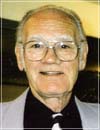
Scott Richardson

The Sorrows Of The Lord

Lamentations 1:12
Scott Richardson November, 19 1978 Audio
0 Comments

Sermon Transcript

Auto-generated transcript • May contain errors

100%
Good morning to the second chapter
of the book of Lamentations, or the first chapter of the book
of Lamentations. The Lamentations of Jeremiah.
Jeremiah comes first, and then the Lamentations of Jeremiah. Chapter 1. the 12th verse. I have already read to you the
3rd verse of the 53rd chapter of the book of Isaiah, but I
will do so again. This is Isaiah chapter 53 and
verse number 3. You just hold on to the Lamentation
chapter 1. He is despised. Speaking of the
Lord Jesus here, He is despised. That's strange, isn't it? Isn't
that a strange thing, that the Son of God, who made the worlds,
who framed the worlds, who made the angels' wings? A strange thing to be said about
Him. He is despised. Well, I'll tell
you this morning, if you love Him this morning, it's not the
natural thing, it's the unnatural. to love him. It's the supernatural
making the natural. He is despised and rejected of
men, the Lord Jesus, God Almighty, despised and men rejected. We will not have this man to
rule over us. I was talking to a lady here
the other day. We were talking about the Lord Jesus in this
vein that we're reading about Him now, about Him being despised
and rejected of men. And she couldn't understand why
anybody could despise and reject Him. And she didn't really think
anybody did despise and reject the Lord Jesus. She was under
the impression that there was some sort of an unconscious love
in the heart of every man for the Lord Jesus that needed to
be awakened. And somehow it would be awakened
if we could just get men and women to assemble together to
hear the Word of God proclaimed and to hear the story of the
Lord Jesus told and retold somehow this unawakened love would be fired
into a burning zeal and enthusiasm, and men would submit to the government
of God in Christ and would truly be in love with Him. And I said,
well, I told her that it all sounded good, but it really wasn't. I said, I was talking to this
lady about between Well, she must have been about 30 years
old, and an elderly gentleman who was about 75 or 80 years
old, and they both were Christians, or at least gave some evidence
of being a Christian. So I asked them why they loved
the Lord Jesus. I said, well, I'm assuming from
what's been said here that you're a lover of the Bible, love the
Lord Jesus?" And I said, why is it that you love him? Why
do you love the Lord Jesus? And of course they were both
very reluctant, maybe hesitant would be the better word, to
express an answer to this question that I posed to them. Why do
you love the Lord Jesus? Of course I know many things
could be said. We could say, well, we love him because he's
the fairest of ten thousand. He's the bright morning star. He's the lily of the valley.
He is the personification of loveliness and perfection. We
could say that he's such a sweet and good and wonderful person
that we'd just be confronted with him, we'd have to love him.
A lot of things that we could say. And they began to talk about,
well, it was my will that did this, and my will that did that.
And I didn't know what that had to do with the question that
I proposed to them. And I said, well, now, both of
you have read the Bible. And I said, this elderly gentleman
here is 70 or 80 years old, and he's read it lots of times. And
I said, did you ever read in the Bible where it says, we love
Him because He first loved us? I said, did you ever read that?
I said, it's there. over in the book of 1 John. He
said, yeah, he said, I recollect reading that. Well, I said, that's
the reason you love him. I said, when it's all said and
done, that's the reason you love him. You love him because he
first loved you, I said. That's the reason. And so if we love him this morning,
it's unnatural because as he's presented to us in our
natural state, We despise Him. We despise Him, the Son of God. That's a sorry commentary on
the human race, on the human heart, isn't it? That the human
heart is so desperate and so wicked that left to itself, it
despises the Son of God. But that's the truth. That's
the truth. That's true of all of us. Left
to ourselves, The Bible says that we despise it, despise the
Son of God. And that's an awful word, that
word despise. Do you ever stop to think just
what's involved, the various connotations involving the background
of that word despise? There's not many times you use
that word. Do you know that? You just stop
to think of it. Daily conversation, there's very
few times that you use the word despise. You use the word love
a good bit. Oh, love you, love you, say that. People talk to you on the telephone
before they hang up and say, well, I love you. I love you. But you don't talk about, you
don't use this word. It's a terrible word, the word
despise. that he is despised. Not he might be despised, or
maybe he's despised, but it says he is despised. Not only is he despised, but
he's rejected. They lifted him up. They said,
here he is. Here he is, the Son of God. He
came unto his own. Here he is. They said, thumbs
down. We despise him. We despise this
man. We reject this man. We reject
him. The whole world said we reject
him. We don't want him. Turn him aside. He's despised
and rejected of men, and he's something else. He's a man of
sorrows. The Lord Jesus Christ, who's
despised and rejected of men, The Bible says he's a man of
sorrows. A man of grief. That's what sorrow
is. Grief. A man of sorrows and he's
acquainted with grief. Listen to this now. We hid. We hid as it were our faces from
him. We hid. When I think of the word hid,
I'm reminded of the very first story in the Bible that has to
do with you and I. It has to do with our first parents,
Adam and Eve. You know what's significant about
Adam and Eve is that they hid from God. They hid from God. God came and God made them. He made him out of nothing, out
of the dust of the earth. God created man after his own
image. Created the woman through man. Came where they were. It was a companionship. Speak unto
man as friend to friend. But because of man's awful terrible attitude towards God, this rebellion. He turned his back on God, rejected
God, and went out and hid, Bob. Went out and hid! We hid! We hid! Adam hid! Adam was disposed to his own
or exposed to his own nakedness and to his guilt, and he decided
that he'd cover himself up. And he covered himself up, and
his own covering did not satisfy his own conscience, so he said,
I must hide from God. What did God do? This is the question I propose
to you this morning as I introduce our lesson here. What did God
do that would cause us to despise Him, reject Him, and hide our
faces from Him. What is it that God ever did? You've just got to look that
in the face and say, well, there's nothing that He ever did. But
there's a whole lot of things that I did. Is despised and rejected of men
a man of sorrows? and acquainted with grief, and
we hid, as it were, our faces from him. He was despised, and
we esteemed him not. And then in Lamentation, the
first chapter in the twelfth verse, Jerusalem complaineth of her
deep sorrow, and Jeremiah lamenteth the misery of Jerusalem. And
in this twelfth verse it says, it is nothing to you? It is nothing to you? All ye
that pass by? Question. Is it nothing to any of you that pass by? Behold, and see if there be any
sorrow like unto my sorrow. which is done unto me, wherewith
the Lord hath afflicted me in the day of his fierce anger."
Now, I want to talk to you just a
little bit here this morning about the sorrows of the Lord
Jesus. And that's kind of a Well, I really don't know how
to express that. A man of sorrows. It's a title, a label, a description
of the Lord Jesus that ought not to be. It ought not to be
said of Him that He's a man of sorrows. It ought not to be said
of the Son of God that He was despised, rejected of men, a
man of sorrows. He who made all framed the world
and could make 10,000 more at just the very end, at his own
will, at his own good pleasure. But yet the Scriptures say that
he's a man of sorrows. Well, you know that we live in
a sick and a sinful world. In this world, you know, back
when they shot the President of the United States and a few
The president's brother and other dignitaries, officials, shot
them in cold blood, premeditated murders. And all the commentators
and the men who analyzed the situation, analyzed the world,
they all said, well, this is a sick society in which we live
in. Well, it goes beyond the society.
It's a sick world. It's a sick world. It is a sick
and sinful world, and you could rightfully say that humanity
is head dizzy, it is body weary, it is soul hungry, and it is
heart faint, this world. This world is sin soaked, it
is blood bathed, and it is hell bent. Man has traded the government
of God for the bondage of sin. In seeking freedom from God,
he has bound himself with the cords of sin. This old world
is full of sorrow and suffering. Sorrow is real in spite of the
philosophy that pain is only the imagination of the mortal
mind. Sorrow is real. The mother with
Her dead baby in her lap is in real sorrow, wouldn't you say?
The wife awaiting her drunken husband to come home in a rage
is in real sorrow, wouldn't you say? Parents whose children have
gone astray, who have gone to the dogs, and whose path is in
the way of godliness, is in real sorrow. wouldn't you say? I believe
you would. But the sorrows of him, the sorrows
of him, the Lord Jesus Christ, this man of sorrows, are in a
class by themselves. Our sorrows cannot be compared
to his sorrows. We all have sorrows. We all have
grief, to some measure, some more than others. Some are constantly in a state
of sorrow for some reason or the other. We're in God's hand.
God can do unto us as it pleases him. We belong to him. The same lady that I was telling
you about here in the conversation that we had, the old gentleman
wife, she said she couldn't understand how God could just If it was
true, she said, if what you're saying is true, that God leaves
some, goes and saves others, she said, I can't understand
that. She said, I can't understand why God doesn't save everybody.
She said, can you answer me that question, why God doesn't save
everybody? She said, why? I said, that's
God's business. I said, all I can tell you is
that's God's business. That's His business. He has the
right to do with His own as it pleases Him. If he wants to call
some, that's his business. If he doesn't call any, none
would come. It's an act of mercy on the part
of God that he calls some. We all deserve to be left uncalled. But if he calls some, it's an
act of mercy that cannot be described. Some men and some women, some
children, are in a state of sorrow. And what it can be ascribed to,
I don't know. Not necessarily because there's
some secret fault or secret sin in their lives. That's not always
right. It's rarely right as far as that
goes. But it can be ascribed, I think,
to the fact that we belong to God. All of us belong to God
and he disposes into our lap as it pleases him sorrow, grief,
sometimes mingled with joy. But I'll tell you here this morning,
the sorrows of him who is the man of sorrows are in a class
by himself. Of what did the sorrows of the
Lord Jesus Christ consist? That's what we want to bring
to your attention. What were the ingredients that
made up the cup of sorrows that he must drink? We find the Lord
Jesus Christ speaking of his cup, the cup of sorrows, the
cup which the Father had given him to drink. What was in that
cup? Do you remember reading that
in the Bible? Shall I not drink of this cup? What was in the
cup? that the Lord Jesus Christ must
drink. It was a cup of sorrows. It was
a cup of grief. But what were Christ's sorrows
to consist of? First off, I think it was, we
might say, we might say there was a sorrow separation. You see, the Lord Jesus Christ
in the eons of ages ago, where time is not in the vocabulary. The Lord Jesus was with the Father.
He has always been with the Father. God always was and always will
be. There never was a time when there
was no God. There never was a time when there
was no Son, when there was no Holy Spirit. The Son of God is
not an afterthought of God. They say that necessity is the
mother of inventions, but not so with God. There was never
any necessity with God. There always was God the Son,
as God the Father and God the Holy Spirit. Just think about it, let your
imagination wander for a little bit back into eternity, the eternities,
the ages, the ages as they roll by. We talk this morning of a
man in Russia, a hundred and some years old, the oldest man
in Russia lived to be 140. We said, my, the antiquity that's
involved there. Will I ever live to be a hundred
years old? As if that's a long time. A hundred
years. Three hundred and sixty-five
days in a year. A hundred times three hundred
and sixty-five. That's all that is. That's only
like that. I remember almost down to the
minute what we were doing this time last year. What I was thinking
about three hundred and sixty-five days ago. Getting ready to go
deer hunting. I remember that. Can't remember
anything about the Bible. Can't remember what I preached.
Can't remember the reaction of those that heard me. But I can
remember this. Why? Because it gratifies myself.
I remember those things, can't you? I remember those things. But I'm only mentioning that
in order to show you the brevity, the shortness of this time, 365. But the Lord Jesus Christ was
with God the Father throughout the dateless ages of the forever
past, always with Him. There come a time, there come
a time in this great scheme of redemption in the mind and the
purpose and the will of God that the Lord Jesus Christ must separate
Himself from this union and unity and companionship and fellowship
and love of the Father. They must be separated. Now I'll
tell you, brethren, I believe that I believe that one of the
sorrows in that cup consisted of the sorrow of separation,
that the Lord Jesus Christ must be separated all of this time
from that companionship and that perfect unity with the Father. We call it separation, but really
a word that would describe it that we could understand it would
be homesickness. Homesickness. Homesickness. Anybody who's ever been homesick
knows that it's a bad sickness. Huh? It's a bad sickness. You ever get homesick, Jack,
when you went to the Army? Got homesick, didn't you? I talked
to Neil one time. He told me he got homesick. Just
married. Away from his wife. Homesick. I've talked to some of these
other men, they was homesick too. Homesick. Left their homes. They
got sick. Lost their appetite. Couldn't
sleep. Wasn't anything desirable about
it. Whatever took place wasn't desirable. Wasn't desirable. There was nothing.
They couldn't get their heart in it. Couldn't get their heart
in it because it was homesick. It was away from Mother. away
from mother's tender care and tender love and father's instructions,
away from the home that had sheltered them, away from their friends,
away from their way of life. There's homesick boy, homesick. There's a little old boy from
Wheeling that was in my company. We were down in Florida, down
along the St. Johns River, where the St. Johns
River empties into the Atlantic Ocean. We were there that night. He was about 16, lied to get
in the service. He was about 16 years old. Them
old fellas come up there, turn them lights off at a certain
time. We was laying in them bunks, and I was in an upper bunk. Lights
went off, and no one went to sleep, you know. We'd been there
for four days. I could hear someone sobbing,
someone cry. The world is crying. Here was
that little old boy, 16 years old. Sick, just weaned from his
mother's breast. Homesick. I tell you, brethren,
the sorrow of separation is real. It's real now. You know it's
real. Some of you young people here,
you'll experience that one of these days. You think right now,
You think right now that you got it tough. Yeah, you got to
wash the dishes now and then or mow the grass or something
like that. But one of these days, you'll experience the pangs of
homesickness. You'll say, oh, that's right,
I'm home. I wish I was home. I wish I was
under mother's care and father's care one more time. I wish I
was back. I wish I hadn't have done this.
I wish I hadn't have went there. I wish I'd have stayed right
there with mother and father. They was good to me. They was
kind to me. They cared for me. They provided
my meals, washed my clothes. They done all for me. Why did
I ever leave? I had a good time. You'd be so
homesick. Listen, I know when I was a boy,
I left home. It wasn't a voluntary thing either. It was kind of out of necessity.
And I left. One time I remember I stayed
several places, but I remember one time I stayed, I was about
12 years old, I stayed with my aunt. She had about 18 coal miners,
boarders, in a boarding house. And I stayed up there in that
boarding house as a 12-year-old boy with about 18 boarders. My brother and I knew something
about homesickness. I said several times to myself,
how in the world did I ever I ever get in this mess. I'll tell you
a little story about Stanley Borders. Remember I told you
this before, but I'll tell you again. I'm trying to impress
upon you, I'm trying to impress upon you what was in this cup,
this cup, this cup of sorrows. We went to Montana one time hunting
Glen and Pact and Stanley Borders, maybe somebody else, I don't
remember. Now we got out there in Montana. And, oh, he was way
off out in the wilderness there, back off four or five miles from
the ranch house. Camped out there. Tried to go
hunting. It was warm and all. Couldn't
do much hunting. But anyhow, we kind of humped up there at
night on them bunks and was laying down there sleeping. And old
Stanley, he couldn't eat. He couldn't eat. Lost his appetite.
We had steak. He said, Stanley, don't you want
anything? No, I said, I never eat anything. I said, I don't.
He's fat as a little pig. But he said, no, I said, I never
eat. I said, I don't eat anything. I was wondering what made him
so healthy looking if he didn't eat. But he said, well, I don't
eat much. I don't want any. It's good,
tender steak. Mine was good. We had gravy,
and we had anything you could think of. He wouldn't eat. We
were laying up there that night. What are you thinking about,
Stanley? He wouldn't talk. I said, well, Stanley, let me
say something to you. Maybe be of some help to you.
But I said, the first time I ever come out here, I said, we was
out here. It was about 10 o'clock at night,
and I was trying to go to sleep. And I said, here's what I said
to myself. I said, what am I doing out here? What am I doing out
here? When I've got a dear wife and
a family and a nice home and dear friends back there, what
am I doing out here 2,000 miles away? He said, that's what I
was thinking about. He got so homesick. Now, believe
it or not, this has only been about five or six years ago,
hasn't it, Glenn? Maybe not that long ago. Three years ago. I
don't know. He's 50-something years old. Now don't mention
this to him when he ever comes up here now. Get me in trouble.
Let him tell you. But he got so bad that they had
to put him on an airplane and send him back. We only hunted
a couple of days, wasn't it Glenn? Hunted about two days. We had
to put Stanley on the airplane and send him back. Stanley would
appreciate what I'm talking about here this morning. Homesickness. Separation! The Lord Jesus was
separated from the Father. And that was one of the ingredients
that was in that cup of sorrows that he must drink. That's a
bad sickness, isn't it? He came from the heights of glory
to the depths of this earth. Listen to this. He came from
the praise of angels to the persecution of men. He left the air of purity
for the stench of this earth. He left the place where everybody
loved God for a place where everybody hated God. No wonder, no wonder
there was an air of homesickness in that cup. He left a place
where everybody loved God. Everybody bowed and worshipped
and sang praises unto God. He left that place and came down
here where the Scripture says that he was despised, where everybody
hated God. No one would recognize him. Listen, in John chapter 17 it
says this, I have given them thy word, and the world hath
hated them, because they are not of the world, even as I am
not of the world. I pray not that thou shouldest
take them out of the world, but thou shouldest keep them from
evil. Then again it says, If the world
hate you, You know that it hated me before it hated you. So that was one ingredient that
made up the cup of sorrows, that sense of separation. And secondly,
there was the sorrow of being poor, poverty. The sorrow of poverty. Now there's
sorrow in poverty. Poverty is not an ideal to be
sought after. There's no virtue in being poor
unless you're poor for Jesus' sake. There ain't no virtue in
being poor. Just to be poor. Unless it be
for Christ's sake. Unless it be for His honor and
for His glory. But just the virtue of being
poor to be poor. There's no virtue in that. No,
I don't want to be poor just to go around and say, well, I'm
poor. But if I'm poor because God made me poor for His honor
and for His glory, then that's something else. But just to be poor for no reason
at all is something else. Because heaven is going to be
a place of plenty. But our Savior who was rich,
the Scriptures say, became poor for our sakes that we, through
his poverty, might become rich. You're rich this morning if you're
in Christ. You may be poor. You may be poor
as far as material things are concerned. That is, you may not
have the $75,000 home, and I don't suppose anybody here does, at
least not too many. You don't have the great cars
and limousines and the security of a great bank account. You
don't have all that. But yet on the other hand, there's
not too many here that are deprived of the very necessities of life.
But nevertheless, be that what it may, we are, if we're in Christ,
we are rich. We are absolutely rich because
He was poor because he drank in that cup of sorrows, that
cup of poverty, he drank that poverty, that poorness, that
we might become rich. We are rich in Christ. We have
everything. We have everything. We have all
things in Christ. I told you here at the outset,
he who made angels wings, was weary and foot sore as he sat
on Jacob's well to save that fallen woman. He was poor. The Scriptures say that he had
not where to lay his head. Listen to this. The Lord Jesus
Christ was poorer than any creature that he ever made. He was poorer
than anyone that he ever made. He had nowhere to lay his head.
Nowhere! And the script, absolutely, that
means exactly what it says. It just didn't say that to fill
up space and say, well, we know that he had some place that he
could lay down. He had no place! There was nowhere. Everywhere that he went, he was
unwanted. And he was so poor that he had
nowhere to lay his head. And you've got to remember that
the Lord Jesus Christ had all the attributes of man apart from
sin. That is, he could get hungry. The pines of hunger were as real
to him as it is to you. He could get tired. He could
get just as tired as you get. He could get just as sleepy as
you get sleepy. He could weep just like you weep. He had all the attributes of
man apart from this nature to sin. He had all of them. Ah, brethren, he was poor, he
was poor. That was one of the ingredients.
There was that separation and then there was that poverty.
He was poor, poor. Then there was the There is that
sorrow of human hatred and misunderstanding. He came into this world, the
world that he made, and the world knew him not. The world wouldn't
or couldn't recognize his goodness. I'd say the world wouldn't recognize
the goodness of the Lord Jesus Christ. He was a light, the Bible
says, shining in a dark place, and the world would not comprehend
that light. He came unto his own, that is,
his own people, his kinsmen after the flesh, and they would not
receive him. His kinsmen, his relatives, were
ashamed of him. They thought he was crazy. In
fact, they were the ones that were crazy. No one was so badly
misunderstood as the Lord Jesus Christ. People could not understand
his teaching. He said one time, destroy this
temple in three days, I'll raise it up again. They thought he
was talking about that magnificent structure out there that was
made of stone. That's what they thought. And they went on. Before
the crucifixion, at the trial, they said, well, he said, destroy
this temple. They misquoted him. They said,
he said he'd destroy this temple up there. And three days he built
it back again when he was talking about his body. Ah, brethren, he spoke of the
temple of his body, didn't he? Then again he said, except you
eat the flesh of the Son of Man and drink his blood, you can
have no life in you. And they said, how can this man
give us his flesh to eat? There was never a man that was
misunderstood like the Lord Jesus Christ. Even his own disciples
could not understand him. He said unto them, He must go
and awake Lazarus out of his sleep. And they said, Lord, if
he sleep, he shall do well. He had to say to them, Lazarus
is dead. They didn't understand what he
was talking about. Some of us know how painful it is to be
misunderstood, don't we? Have you ever been misunderstood? I'm sure you have. And it's very
painful sometimes to be misunderstood. Wives wish their husbands could
understand them, don't they? Some of you wives, don't you
wish that your husband could understand you and some of your
feelings? I'm sure you do. Husbands wish
their wives could understand them. That's right. Parents wish
their children could understand them. And children wish that
their parents could understand them. And preachers wish that
their people could understand them. And much of the friction
of human relationship is the result of misunderstanding. We wish that we could understand
one another. But in our little misunderstandings
here in life, they cannot be compared to the misunderstandings
of the Lord Jesus Christ. They couldn't get anything right.
Everything that he said, they twisted it to make it mean something
else. They hated him. Then, brethren, lastly, let me
say this. The last ingredient that comprised
this awful cup of woe and bitterness and sorrow that filled this cup
that he must drink is the sorrow of the cross. The scandalous
agony and shame of the cross. The shame of the cross. We don't
realize what shame there is to that. Shame. Shame. The most shameful death and the
most cruel and terrible death that any man at that time could
endure was the cross. The shame of the cross. We don't
get that, do we? We don't see that. We just don't
get that. Shame. Something like a hanging. Of course, there's not much shame
to that, I don't suppose. Men taken out there, exposed
to a great crowd of people. People used to gather in, they
say, at the hanging. Everybody that was somebody came
to the hanging. Everybody that was somebody came
to the hanging of the Lord Jesus Christ. B.H. Carroll, great historian,
great Baptist preacher and theological student said there was a hundred
thousand people in the streets of Jerusalem at that time at
the hanging of the Lord Jesus Christ. Another fellow, we were
down there at lookout, I heard that English preacher say, I
don't know whether he knew what he was talking about or not,
I questioned some of them there and they said it was right. He
said that there was two and a half million people in Jerusalem when
the Lord Jesus Christ was crucified. Two and a half million people
lived in Jerusalem in that city. Peach Cow said there was a hundred
thousand jammed streets that day. They brought him out there
and disrobed him. They disrobed him, took his clothes
off, exposed his shame, his nakedness to that ungodly world. I'll tell
you there's something about the shame of the cross. The shame
of the cross. What do you think about that?
They took his clothes off the Son of God, who made the angels
wings, who made the angels sing, who made the angels breathe,
who made the world. He came and they took his clothes.
They disrobed him. They took his clothes off. There
it was. Not anything to cover himself,
to hide his own nakedness. They stripped him of his dignity. That's what I'm talking about.
They stripped him of his manhood. They stripped him of everything
that he held dear. They took it away from him. There
was no privacy. There was no sacredness, not
even to this awful death. They exposed him there and men
and women, boys and girls, children, they looked at him. They looked
at him with eyes, not eyes of of sympathy. There was not a
tear shed for the Lord Jesus Christ there except that handful
of disciples, two women was there. Mary, the harlot, Mary Magdalene,
Mary the mother of the Lord Jesus, the only two women there, they
shed tears for the Savior. Apart from that, there was not
a tear shed. Ah, the sorrow. of the cross. Who can estimate it? In the cross,
listen to me, in the cross He exchanged the Father's love for
the Father's hatred. Oh, that's a profound statement. I don't make many of them. I
don't make many of them, but that's a profound statement there.
He exchanged the Father's love for the Father's hatred. There
with the Father, I told you, as the ages rolled by, He was
there daily in the delight of God the Father. He exchanged
that love, that companionship for the hatred of God the Father. When He hung on the cross, God
poured out His wrath and hatred towards sin. He filled that cup
up and He drank it all. God turned His back on him. God
turned His back on him. In fact, the separation, the
awful manifestation of the wrath of God was so evident there that
the Lord Jesus Christ could not even call him Father. He didn't
say, Father. He said, My God, My God, why
hast thou abandoned me? Why hast thou forsaken me? Oh, yes. He was being made sin,
and God hates sin. God hates sin. And the Lord Jesus
Christ was being made sin. God hates sin. He exchanged the
Father's blessing for the Father's curse. In redeeming us from the
curse of the law, He had to be made a curse for us. At the cross, he exchanged the
place of nearness with the Father for the place of separation from
the Father. At the cross, he could not even
say, Father, which we've already mentioned to you. What's your
response to all this this morning? What is your response? Is it nothing to you, all ye
that pass by? Behold and see. if there's any
sorrows like unto my sorrow which is done unto me wherewith the
Lord hath afflicted me in the day of this fearsome. Is it nothing
to you? Does it mean anything to you?
I fear brethren this morning that many people are hoping in
a general mercy of God apart from the Lord Jesus Christ. They
reasoned that a merciful God will not send anybody to hell.
That's what they reasoned. And this was once the best hope
I ever had. Did you ever have that hope? I had that hope once that a merciful
God wouldn't send anybody to hell. I had that. I held on to
that hope for a long time. People talked about religion.
I heard things pertaining to religions. Even in the loneliness
of various hours, my own thoughts and meditations, I reflected
upon that. A merciful God. Merciful God. He won't send anybody else. That's
my hope. That's my hope, brethren. That's
the best hope I ever had. But I came to see that that was
a vain hope. That hope wasn't no good. That
hope was built on sinking sand. Yes, sir. Oh, is it nothing to
you this morning? Is it nothing to you that the
Son of God suffered as He did suffer? Does it mean nothing
to you to save sinners like me and you from an endless hell?
Is it nothing to you? Oh, may it be something to you
this morning. May it mean something to somebody
here this morning. Is it nothing to you, all ye
that pass by, and behold and see if there is any sorrow like
my sorrow? God help us, we might know something of his sorrows, something of
what he did, something of what he become, in order that we might
have the righteous be made the righteousness of God Let's stand and wait.
Scott Richardson
About Scott Richardson
Scott Richardson (1923-2010) served as pastor of Katy Baptist Church in Fairmont, West Virginia.
Broadcaster:

Comments

0 / 2000 characters
Comments are moderated before appearing.

Be the first to comment!

Joshua

Joshua

Shall we play a game? Ask me about articles, sermons, or theology from our library. I can also help you navigate the site.