Bootstrap
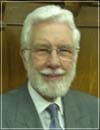
Stephen Hyde

Remaining Firm on God

Habakkuk 3:17-19
Stephen Hyde August, 29 2021 Video & Audio
0 Comments
Stephen Hyde
Stephen Hyde August, 29 2021

The sermon titled "Remaining Firm on God" by Stephen Hyde addresses the theological topic of trust in God's sovereignty during times of desolation and despair, as illustrated in Habakkuk 3:17-19. Hyde emphasizes that faithfulness to God is not contingent upon external circumstances but is rooted in a deep, personal relationship with the Lord. Drawing on Habakkuk's example, he articulates the idea that even amid barrenness and spiritual drought, believers can find joy and strength in their relationship with God, who is their salvation. The preacher references Psalm 40 to underline that God is a steadfast rock upon which believers are set, and he encourages congregants to seek a revival of faith despite difficult conditions. This message has significant practical implications in the Reformed tradition, highlighting themes of providence, grace, and the importance of resting in the redeeming work of Christ.

Key Quotes

“Yet I will rejoice in the Lord; I will joy in the God of my salvation.”

“We should never despise the day of small things... it is not the quantity; it is the quality that emanates from the grace of our God.”

“The Lord is my strength. The Lord God is my strength, and he will make my feet like hinds' feet.”

“What a blessing it is to prove that it does emanate from Almighty God.”

Sermon Transcript

Auto-generated transcript • May contain errors

100%
may almighty God be pleased to
bless us together this morning as we meditate in his word let
us turn to the prophecy of Habakkuk and as I said when we read this
it comes between Nahum and Zephaniah so the book of Habakkuk and the
last chapter, chapter 3 and the last three verses verses 17 and
18 and 19 in the third chapter of Habakkuk Although the fig tree shall not
blossom, neither shall fruit be in the vines, that the labour
of the olive shall fail, and the fields shall yield no meat,
the flock shall be cut off from the fold, and there shall be
no herd in the stalls. Yet I will rejoice in the Lord,
I will joy in the God of my salvation. The Lord God is my strength and
he will make my feet like hinds feet and he will make me to walk
upon mine high places to the chief singer on my stringed instruments. We know very little about Habakkuk. we do know that he was a prophet
because we're told in the first verse the burden which Habakkuk,
the prophet, did see and of course in the chapter that we read in
that third chapter it would seem that in that prayer he is referring
to the history of Israel especially as they came out of Egypt and
through the wilderness so we can assume that he lived after
that time but nonetheless there are some wonderful truths in
this little book, this little prophecy and we should be thankful
for it and so as we come down to the very last three verses
in this prophecy to see the situation which he observes And it is quite
clearly a very desolate scene. You could not perhaps think really
of a more desolate scene that he describes here when he speaks
about the trees and the fruits and the cattle. Cattle being
non-existent and the and really there's nothing there at all
he says, although the fig tree shall not blossom well in actual
fact because we know that fig tree doesn't actually blossom,
it has fruit there isn't any flower or blossom nonetheless
we understand the picture although the fig tree shall not blossom
or fruit neither shall fruit be in the vines we know how of
course needful the grapes are in the vines neither the labour
of the olive tree and again in the eastern countries how necessary
the olive tree, the fruit was because it was used so widely
and so much and then he goes on to the flocks and he says
the flocks, the sheep and the goats shall be cut off from the
fold and there shall be no herd in the stalls well really it
is a picture of desolation and that was a situation which Habakkuk
refers to in a physical way but we know of course that the scriptures
always have a spiritual line behind them that deep which catches
beneath and we can imagine this not only in a natural way but
also perhaps in a spiritual way, insofar that the soul may feel
and may consider themselves to be just like this, very barren,
no fruit, no evidence almost of any life, deadness, darkness. You may say, well, surely that
can't be the path of any Christian. Well, the Bible does tell us,
the days of darkness shall be many. We should never be satisfied
with times of darkness, but nonetheless we should understand that sometimes
the Lord brings us into such conditions to cause us to recognize
that we cannot produce the blessing of God ourselves. It totally
rests with the sovereign power of Almighty God. And therefore
when the Lord sees fit to grant us His favour and His blessing,
surely it is then that we have thankfulness in our heart to
realise that God has not cast us off as our sins deserve he's
not forgotten us but he's dealing with us in love to our souls
because to the true believer such a condition and such a situation
is not easy because there's many questions which arise in our
heart As to whether we actually possess the life of God in our
souls. As to whether we are a true believer
or not. And if we are, why are we found
in such a place as this? Well, we only have to really
trace through the Word of God to find out that God's people
did walk through a wilderness and the wilderness was not a
place where there was a great variety of things and a great
plenty of things that the Israelites perhaps wanted physically but
God did supply their needs and sometimes we may perhaps be a
bit impatient in our spiritual life we may perhaps think that
the Lord should bless us in a far greater way but we should not
and we should never despise the day of small things and we should
not forget the Word of God tells us a little that a righteous
man hath is better than the treasures of many wicked you see it's not
the quantity It is the quality and it emanates from the grace
of our God. And so although we may, as we
look at ourselves, perhaps be in a case very similar to this
described in a physical way in this 17th verse, yet to recognise
that nonetheless the Lord is dealing with us as his children
and sometimes God causes us to be in want because if we are
in want spiritually it means that we do come and
cry unto the Lord God that he will look upon us and that he
will bless us and that he will remember us With that favour
he bears unto his people. The Lord does not forget his
people. He does not forget us. We perhaps
forget God very sadly. Sometimes we seem to forget God
almost days without number. What a mercy that God doesn't
cast us off. The Bible describes it as a cumbra
of the ground, something which is of no value. And yet, you
see, we are of value if the Lord has loved us with an everlasting
love, and therefore he will deal with us in love to our souls,
and he will make us appreciate his favor and his blessing, and
he will cause us to cry unto Him in a day when He may be found. So, if we perhaps feel ourselves
like this description in this 17th verse, we should not despair,
we should continue to read what the Prophet says in the following
verses, because there we see a humble confidence that he has,
not in himself, not in his own ability, but he has a confidence in his
Lord. He has a confidence in his God. And that'll be a wonderful blessing
and a wonderful favour for us even today. And we can see that
He speaks here in gracious anticipation. When we pray to God, we should pray believing the
Lord will hear and answer our prayers. May we be able to come
in faith, in faith to our God, believing we come to a God who
does hear and a God who does answer prayer. Again, we should
remember that God has His way of blessing and God has His timescale. And those things usually don't
correlate with what you and I want or you and I anticipate. But God will show to us. He is
a sovereign God. He is the King of Kings, He is
the Lord of Lords and He will deal with us in that way which
will be for His honour and for His glory. How often we forget
that we live on this earth if we are His children for His honour
and for His glory and therefore He has a perfect right to deal
with us in that way which will bring honour and glory to himself. So we can therefore come to God
with a gracious anticipation that he will hear and answer
our prayers. Like Habakkuk here, he's able
to come in this time of darkness and desolation and say, yet,
yet, He believed there will be a time. Yet, I will rejoice in the Lord. It's a very simple but a very
wonderful statement. And the reality is, with every
true believer, however dark it may appear however far off we
may appear with every true believer this is true yet I will rejoice
in the Lord the Lord says I will not leave you comfortless it
doesn't mean to say we won't have times when we seem to be
forsaken and forlorn The Lord has promised, and we
should be very thankful, that the promises of God are yea and
amen. They are sure. They are certain. What God says comes to pass. And yet, you see, our religion
will be tested the reality of it will be tested and that's
a good thing you may say, why is it a good thing? I'll tell
you why it's a good thing because sometimes we might be relying
on a false religion you may say, well what do you mean by that?
well perhaps it's something that we've worked up in our mind,
something perhaps which we might grasp to ourselves, which is
not from God. You see, sometimes we may have
been praying for a word from the Lord, for guidance and direction,
and we come across a word and we may think, oh, that's just
what I wanted, that suits me very well. I know now I'm in
the right way and I'm doing the right thing well such a word
needs to be tried and it needs to be tested because the devil
is able to quote scripture don't think he's not and don't listen
therefore to anything the devil may say very often the Lord speaks
in an opposite direction And it's not perhaps the word that
we wanted. It's not perhaps a direction
that we desired. But nonetheless, what a blessing
it is to prove that it does emanate from Almighty God. And so the
word of God will be proved. The word of God will be tested. And the benefit is this. that
which is not of God that which is of the flesh will thankfully
be burnt up we're told in the Word of God
the Lord brings the third part through the fire what does that
mean? it means that two-thirds of what
we might think emanated from God was false and it was burnt
up. The fire tries every man's work
of what sort it is. Such times are not easy. They're testing to our faith. They test our religion. But we
don't want, do we, to have a false religion. We don't want to be
resting on our religion. We want to be resting upon what
God has done, what God has said, what he has spoken, because we
can be sure that that will stand every test and live at last. So therefore don't be surprised
if sometimes things don't seem to be working out quite the way
that you and I thought they would. God's ways are higher than our
ways. God's ways are best. and it's
a good thing for you and I to submit ourselves to the mighty
hand of God to be under the mighty hand of God well, that's why
we have a word like this in the midst of what apparently seems
desolation the Prophet has that humble confidence to say, yet
I will rejoice in the Lord And what rejoicing that is when the
Lord appears. The Lord comes and he quietens
our spirit. And he gives us patience. He gives us patience to walk
out the path that the Lord has ordained us in. I often think,
as you probably well know, I quote sometimes what David said in
the 40th Psalm, where we're told, and it's a good thing to have
such an example before us. David was a man like we are,
no different. But he tells us this, I waited
patiently for the Lord. We can sometimes become a bit
impatient. Because we don't seem to receive
answers to our prayers. But don't forget, the Lord waits
to be gracious. Your time is always. My time
is not yet. I waited for the Lord. Was David
disappointed? No, he wasn't. And, he tells
us, he inclined unto me and heard my cry. He tells us he brought
me up also out of an horrible pit, out of the M?ori clay. It must have been a similar kind
of condition to that which Habakkuk describes here. There he was
in a pit. M?ori clay. If you and I have
ever known what M?ori clay is, it's very difficult stuff to
walk in. It's very slippery, and especially in a pit. In a
pit to actually try and climb out of a pit, with slippery clay,
it's virtually impossible. And that's why David describes
it like this. And he says, he brought me up
also out of a horrible pit, out of the M?ori clay. And then what
did God do? He brought him up. Out of it,
what did he do? Did he leave him and say, well
David, now you've got to get on by yourself? No. He set his feet upon a rock
and established his goings. You may say, well what is that?
Well it's quite clearly, he set his feet upon the rock, the Lord
Jesus Christ. And that rock is firm. And that rock is not slippery. What a blessing that is. And
so he tells us, remember it was God that did it. It wasn't David
that clambered out. God brought him up. God set him on this rock. And on that rock of Christ, he
was established. in his goings, in his spiritual
life, the Lord established him. Now what a blessing it is when
God establishes you and me in the truth of God. Today, we live
in a day, a day of many lies, many untruths in the things of
God, but what a blessing it is when the Lord takes hold of us. It doesn't leave us to just wander
our own way, to select the route that we'll go. No, God takes
hold of us. Again, it's a great blessing
that isn't it? That's why we have such a word
like this. Yet, I will rejoice in the Lord. And therefore, here was David
in this situation. And was he able to rejoice in
the Lord? Yes, he was. He says, He hath put a new song in my
mouth, even praise unto our God, rejoicing in what God had done. Now, my friends, that's cause
for rejoicing, isn't it? if you and I have the experience
in our spiritual life of God coming upon us and God taking
us, as it were, by the hand and lifting us up and bringing us
up out of a condition like this horrible pit of the Maori clay
You know, no doubt, we know David's life. We know something of David's
life, don't we? We know how David was left to
himself on occasions and to sin against God and to disobey the
law of God and to sin very grievously. and no doubt in that condition
he was brought to this place in this horrible pit and there
was that condition and there was that position that he deserved
to be left in but of course the Lord did not leave him there
and of course we have that very wonderful psalm that David was
able to write, the 51st psalm where he recognises the condition
and the situation that he brought himself into and we do bring
ourselves into these conditions sometimes this condition of barrenness
this condition of far-offness because of our own sin and we
can't point fingers at someone and say it was his fault or someone
else's fault We recognize and we understand what Nathan came
and said to David when he pointed out his sin and he told him very
clearly, thou art the man. You don't look around. And other
people, when the Holy Spirit convicts us, we know that we're
the sinner. But we're the one that needs
forgiveness. We're the one that needs mercy. What a blessing it is that we
have such a wonderful account as Dave is able to give us in
the 51st Psalm when he asks the Lord a wonderful prayer. This is a prayer of Habakkuk. This is a prayer of David. Have
mercy upon me, O God. according to thy lovingkindness. That's a mercy, isn't it? The
lovingkindness of God to unworthy sinners, because He has indeed
loved all His people with an everlasting love. An everlasting
love, wherever you and I might feel to be today. God's love
hasn't changed. We may have changed. We may have
walked backwards. We may have backslidden. And
yet the Lord's love hasn't changed. That's why David
is able to plead like this. That's how Habakkuk was able
to have that humble confidence. in his God. Have mercy upon me,
O God, according to thy lovingkindness, according unto the multitude
of thy tender mercies. Blot out my transgressions. Perhaps that's the cause of our
barrenness. Perhaps that's the reason why
we are in this condition, like he describes. And yet you see,
to have that humble confidence Yet, notwithstanding, notwithstanding
this condition, yet I will rejoice in the Lord. And so indeed, David
was able to come and to rejoice in the Lord, and he pleads then
for this mercy. And he confesses, and he confesses. It's good when you and I confess,
and we're told, aren't we? Peter says, or rather John says,
if we confess our sins, If we confess our sins, it's a great
question. If we confess our sins, he is faithful and just. Faithful
and just to forgive us our sins and to cleanse us from all unrighteousness. Well, that's good news, isn't
it? Isn't that good news? And so here, David says, for
I acknowledge my transgressions And my sin is ever before me. Yes, you see, David thought he'd
hidden his sin. People didn't know about it.
They may not have done, but God knew. God knows today all about
us. Everything. And that's why David
says, Against thee, the only, have I sinned and done this evil
in thy sight? that thou mightest be justified
when thou speakest and be clear when thou judgest. So, you see,
David wasn't going to condemn God for bringing him into that
condemnation. Neither was Habakkuk. Neither
were you and I. But we'll bless God that we have
a God who is merciful and a God who is faithful and a God who
is gracious and so David goes on to say purge me with hyssop
and I shall be clean wash me and I shall be whiter than snow
and then make me to hear joy and gladness that the bones which
thou hast broken may rejoice there was that good hope that
belief that by the grace of God he would come and be able to
rejoice indeed restore unto me the joy of my salvation and uphold
me with thy free spirit confidence in his God just like he tells
us here in this 40th Psalm when he comes and says and set my
feet upon a rock and establish my goings and he hath put a new
song a new song in my mouth. It was a song of praise, wasn't
it? A song of thankfulness, a song
of rejoicing because of what God had done. Oh, it was a good
time, wasn't it? A new song in my mouth, even praise
unto our God. I think this is very important.
Many shall see it. That was the evidence of God's
work in the life of David. It wasn't something that was
buried. It was something which was set forth to show forth the
mercy and the goodness and the love of Almighty God to such
an unworthy person. Praise unto our God. Many shall see it and fear and
shall trust in the Lord. You see, it gives confidence,
doesn't it? To believe in our God. Well, here was Habakkuk
then really with this confidence in these words when he says,
yet, yet I will rejoice in the Lord. He had a hope in his God. Hope in his God for better days. Hope in his God that he would
yet praise him. Hope in his God that he would
indeed rejoice in the Lord. It's so relevant, isn't it? It's
not in anyone else. In the Lord. That's the rejoicing. It's not what you've done, what
I've done. It's rejoicing in what the Lord has done. Why is that so important? It's
so important because it brings honour and glory to our God. What a mercy that is. I will
rejoice in the Lord. And he goes on, he says then,
I will joy in the God of my salvation." If you look at those words carefully,
it's very good to understand what he says. It's in confidence. He says, I will. I will. By the grace of God, I will.
Joy? In what? In what he'd done? No. In the Lord. In God. I will joy in the God of my salvation. What do we see there? We see
there that he has that confidence, that humble confidence that God
is the one who has redeemed his soul and of course it's wonderful
isn't it as I've often said in these Old Testament prophets
you know they they didn't have the New Testament like we have
they were blessed with faith through the wonderful pictures
there was in those old sacrifices of redemption of the shedding
of blood, they were to look forward to the day of the Redeemer, the
day of Christ. And that's why he's able to say,
I will joy in the God of my salvation. You see, it wasn't any old God. It wasn't a God of wood and stone. It was the God of his salvation.
It was the God who redeemed him, the God who saved his soul. Isn't
that wonderful? If you and I can have this gracious
and blessed and yet humble confidence
in our God. And you see, this is personal.
He says, the God of my salvation. And all of us need a personal
religion. All of us need to have a personal
salvation. To have the personal evidence
that God has spoken to our soul That God has come and saved our
soul. That God has caused us to hear
his voice and to have the humble evidence
that all our sins are forever washed away, taken, forgiven. Where does that direct us? It
must direct us. to the God of my salvation, who
is none other than the Lord Jesus Christ. Well, this morning, we
might feel to be barren, we might feel to be perhaps in a time
of famine and yet have this humble confidence of being able to say,
yet I believe, yet I will. Yet I will rejoice, yet I will
joy in the God of my salvation, that those blessings will be
renewed. I look forward to that blessing
of that spiritual revival, just like Habakkuk mentions in that
second verse, O Lord, I've heard Thy speech and was afraid, Oh
Lord, revive thy work. Again you see, he's referring
to God's work. Thy work. Oh Lord, revive thy
work. In the midst of the years. In
the midst of his life. We don't know what he's referring
to, but it's the midst of his years, it may be his natural
years, it may be his spiritual years, nonetheless, he wants
that spiritual revival he wants health in his spiritual
life and how important that is for
us today to have health in our spiritual
life you see we often, and I hope we do, we thank God for our health
and our strength in our natural way, in our natural bodies but
you know it's more important to be able to thank God for health
and strength in our spiritual life because the blessing is
of that it brings forth honour and glory to Almighty God and
we can almost sense here in this word he says in the midst of
the years make known in wrath remember mercy perhaps we feel
that God is angry with us you see God and God alone knows
our heart God and God alone knows our thoughts no one else does
We may perhaps have to recognise perhaps God is angry with us.
He's wrath. The word he says in wrath, remember
mercy. That's a great blessing, isn't
it? To know that we have today a God of mercy. David knew what
it was. All God's people know what it
is. You and I will know what it is and we'll bless God for
it. Yet I will rejoice in the Lord,
I will joy in the God of my salvation, that glorious and blessed Saviour,
who has died upon that cross at Calvary, to redeem my soul. And let us never underestimate
the cost of our salvation. It costs the Lord of life and
glory, His life, He shed his most precious blood in order
that you and I might be saved and you and I might be restored,
in the fact that you and I might be revived. So he says, I will
joy in the God of my salvation. Well, bless God if you and I
can find such occasions in our life or plead for such occasions
which may come upon us that we may indeed joy indeed in the
God of my salvation, the almighty God who has wondrously, gloriously
saved our souls. And then he goes on again in
that confidence, the Lord is my strength. The Lord is my strength. Again, a very positive statement,
isn't it? The Lord is my strength. Again,
it's a great blessing when you and I can be positive in our
religion. People today are often seen to
rest on what I might call a negative religion. My friends, what a blessing when
God gives us these positive evidences because what a blessing it is
for us and what glory it brings to our God when He conveys to
us a humble confidence in what He has said and what He has done. Remember the Apostle Paul who
knew how he relied upon the strength of God when he said in the Philippines,
I can do all things through Christ that strengtheneth me. There
was his hope, the Apostle's hope. It wasn't in what he'd done,
but he was confident in receiving this strength. So was Habakkuk
here. The Lord is my strength. And therefore he says, and he
will make my feet like hind's feet. You may know that hind
of course is a deer and a deer has it's great stability as they
jump from rock to rock their feet are very agile and very
firm and they grip the rock they don't slip and slide they go
from one place to another well you see if our strength is in
the Lord you see the path that we take will be the right path
it'll be a good path it'll be a firm path our feet won't slip
they will if we go in the wrong way will slip and slide what
a mercy then if we are able to have that confidence again in
this God the Lord God is my strength and he will make my feet again
personal let us not forget now friend you and I have to stand
before God you and I need a real religion we don't look around
at others we don't worry what other people think We worry about
our personal relationship with Almighty God because one day
you and I will have to stand before the judge of all the earth.
May it not be in our own strength, in his strength, to know that
we are complete in him. Nothing lacking. There will be. if you and I rely on ourselves,
on our religion. But we won't lack if we rely
upon what God has said and what God has done. Well then, the Lord God is my
strength. Well may you and I prove that
every day. And he will make my feet like
hinds feet and it will make me to walk upon mine high places. Yes, what a blessing that is,
to be found walking in the right way. Not stopped, not stagnating,
but walking. Walking with our God, hand in
hand with the blessed Saviour. He led them forth by the right
way. that they might go to a city
of habitation. Humble confidence, blessed confidence,
good confidence, a good hope in the mercy and grace of our
God. And finally he says to the chief singer on my stringed instruments,
this is something to sing about. It is something to testify of. of the goodness and mercy of
almighty God, gracious confidence, a gracious anticipation, the
Lord will visit our souls. The Lord will bless us indeed. The Lord will put a new song
in our hearts, even praise unto our God for his honour and for
his glory. Amen.
Broadcaster:

Comments

0 / 2000 characters
Comments are moderated before appearing.

Be the first to comment!

Joshua

Joshua

Shall we play a game? Ask me about articles, sermons, or theology from our library. I can also help you navigate the site.