Bootstrap
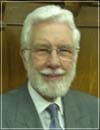
Stephen Hyde

All These Things Are Against Me

Genesis 42:36
Stephen Hyde February, 8 2015 Audio
0 Comments
Stephen Hyde
Stephen Hyde February, 8 2015
'And Jacob their father said unto them, Me have ye bereaved of my children: Joseph is not, and Simeon is not, and ye will take Benjamin away: all these things are against me.' Genesis 42:36

Sermon Transcript

Auto-generated transcript • May contain errors

100%
I please God to bless us together
this morning as we consider his word let's turn to the book of
Genesis chapter 42 and we'll read verse 36 the book of Genesis
chapter 42 and reading verse 36 and Jacob their father said unto
them me have you bereaved of my children Joseph is not and
Simeon is not, and ye will take Benjamin away, all these things
are against me." The statement that Jacob makes
in this account is surely a statement which is made in similar terms
by many people. Perhaps If we look at the Church
of God by perhaps most people in their lives, at some stage
in their life, perhaps many stages in their lives, they make a statement
like this, that all things are against me. It just appears at
that time that things are not going in the right direction. They seem to be going in the
complete opposite direction. And of course, naturally, It's
hard for us to understand and appreciate the future, because
the future is not revealed to us. And God knows the future,
and he knows what he will do, and he knows the path that he
has ordained for his church, so that his name will be honoured
and glorified, and his people blessed and brought at last safely
home to glory. And it is, therefore, a path
which is only known to our God. Now, Jacob here is becoming an
old man, he's lived a good many years, and his father Isaac has
passed away, his grandfather Abraham has passed away. And
it was to Abraham, when he was known as Abraham, before he was
known as Abraham, that God appeared to him and spoke to him and told
him that his family that would come forth from him would eventually
go down into Egypt and be there for 400 years. Now that was a
very important statement in the history of the children of Israel. It would have been recognised
and remembered by those who had followed on, like Isaac and Jacob,
but it's very easy to just forget these things and to not really
take them into our heart, to recognise the outworking of them. Now, what was happening, and
poor old Jacob didn't realise it, that which had been spoken
to Abraham all those years ago was now moving very much closer.
very much closer, and this was the ordained way that the Lord
would bring it to pass. And as we therefore read an account
like this, and perhaps are tempted to say in our lives, all these
things are against us, It's good if we think about the many accounts
in the Word of God which would encourage us to realise that
no, they're not against us. In fact, they are for us. And
it's wonderful to think that the Apostle Paul, in his life,
and there were many, many things in his life which were so, so
difficult, we might touch on a few later, but he tells us
when he wrote to the Roman Church, his letter to them and he said,
and we know, that's the Apostle, that all things work together
for good. And it is true. And so here we
have this statement, all things work together for good to those
who love God and to those who are called according to his purpose. Now God's people are called according
to his purpose. There is a very clear plan for
each of their lives and it is a plan which God has ordained,
and a plan which will bring honour and glory to God. And so therefore,
in our lives today, as we may think things are going in a contrary
direction, they're not going according to plan, but they are
going according to plan. They're going in accordance with
God's plan. And we can know and believe that
God's plan is right, and God's plan is best, and God's plan
is perfect. God never makes a mistake. You
and I make many mistakes. Jacob made a mistake here. He
said, all these things are against me. They weren't against him.
They appeared perhaps to be against him, but they weren't. They were
performing the direction in a way that Almighty God had ordained. So it's good for us in our lives
sometimes to just stand back as it were when we're in perhaps
times of crisis and we look around Jacob was here in a time of crisis,
really, because he thought he'd lost Jacob, lost Joseph, and
he was now being told he should possibly lose Benjamin, and Simeon
wasn't there. It was a real problem for the
poor man. But yet, you see, he didn't really look up. He looked
around. He looked at everything around
him, and he drew his conclusion. from the things which he saw
naturally. He didn't draw his conclusion
without our faith, which looked beyond the natural things, to
those things which are ordained by God. And it would be good
for us today, if God gives us that grace, to look beyond the
things which are intimately around us, and we look at those and
potentially draw a wrong conclusion. but to look beyond those things,
to believe that God is dealing with us in a particular and a
peculiar way, and that way is this. It's love to our souls. love to our souls and if we are
able to concentrate and recognize therefore the truth of God's
word that it is all things are working together for our eternal
good to realize then that the things which may appear to be
against us are not against us. Well we know they weren't in
Jacob's case and we know they weren't of course in Joseph's
case and we only have to think of Joseph now in his elevated
position ruling the land under Pharaoh to realize that Well,
in Joseph's case, of course, that which had been spoken to
him, revealed to him in those dreams, which of course the Lord
refers to in this chapter, that he remembered. Joseph remembered
the dreams he'd had. And you probably remember the
dreams that Joseph had when those evidence of the sheaves etc,
all bowing down to him in the sun and moon and stars, all bowing
down to him in those two dreams. And he would have pondered that
in his mind at the time as to what it meant. And then, of course,
Joseph, he was taken captive, sold into Egypt, all part of
God's plan. Joseph would have thought surely
in his mind, all these things are against us. And you may say,
well, do you think he really did? I'm sure he did. Because
we read in the Psalms, the word of the Lord tried him. That meant
his dreams that he had, which he felt were from God, were now
being tested. And he was in prison. And there
was no prospect of them coming to pass. And therefore, you see,
That situation in his life was sorely tested. But the time came
when he would have seen that the things were not against him. All these things are against
me. There he was in prison, poor man, for not offending or doing
anything wrong. But because of the evil words
of Potiphar's wife against him, And they were liars and they
were criminal liars, the poor man, cast into prison. But nonetheless, we do read God
was with him. God hadn't forsaken him, although
he was tried and although he was tested and tempted. Now in
our lives today, what a blessing it is to realise that perhaps
we might be thinking, all these things are against me, to realise
still God is with us. God has not forsaken us. God
has not cast us away. No, God is fulfilling, in your
life and my life, his divine purposes. And surely those divine
purposes are really brought to bear in this way. They are to
bring us more like the Lord Jesus Christ. The Christian's life
is for that purpose. for His honour and glory and
to make us more like Him. And if our lives were just a
smooth path through this world, it would never be like that.
And so we could thank God if there is the evidence in our
lives, in our spiritual life, that God is dealing with us to
make us more like Him and that our lives may be for His honour
and glory, which they will be. The life of His people without
any doubt is for his honour and for his glory. And in order to
bring that to pass, it will usually be to bring us down in our own
estimation that Christ may be rised up in our heart. And so,
as we may think perhaps, all these things are against me.
Well, they're not. They weren't in Joseph's case.
In Joseph's case, you see, at the appointed time and not a
moment before, Pharaoh had dreams. No one could interpret them.
Who was going to? Well, remember then, the butler
then remembered his faults. And don't forget, it had been
two years since the butler had been restored to his position.
And Joseph was still in the prison. And he'd asked the butler, don't
forget me when you come out. The butler forgot all about him.
in the appointed time, the butler remembered, remembered what Joseph
had said, remembered what Joseph had done for him in interpreting
his dreams. I know it was through God of
course. And then Joseph was brought before Pharaoh and was able to
give the answer to his questions and the revelation of those dreams
and was then given that important place in Egypt and in due time
his family came, his brothers came and we see they bowed down
to him and there was the beginning of the fulfilment of that dream.
Many years had passed, many years had passed, but all those things
weren't against him. No, God was with him and it was
being fulfilled in God's way. So my friends, it's good for
us today to think of these examples in the word of God, which may
encourage us. As we may think sometimes, well,
my life's really difficult, and I wish it wasn't like that, and
I wish it was different. We may say in these words, all
these things are against me. Well, just pause, just stop,
just think, perhaps they're not. Perhaps they're not. Perhaps
they're working together for good, for your eternal good,
for your soul's blessing, not something which is therefore
evil, something which is good. All these things are against
me." Well, Joseph then is a good example of that situation and
we might also think of, well there's so many other people
in the world of God, we might think of Ruth. Remember Ruth, the Merbite-ish
lady. in Moab and married the son of
Nehomai. And then her husband died. Nehomai's husband had died and
Orpah, also who she married, he died. And we might think,
well, surely then all these things are against me. All these things
are against me. Well, we don't read that Ruth
ever said that all these things were against her. They were against
her. They appear to be against her.
But of course, in Ruth's case, it was a time of wonderful blessing
because she was brought to know intimately Naomi. And Naomi set
before her a good example. and clearly described to her
and spoke to her of the God that she worshipped. And by the example
and by the blessing of God, Ruth was brought to that knowledge
to worship the true God. And so, as it might be looked
upon, all these things were against her. No, they weren't. Those
things were working together for her good, to bring her into
the knowledge of the true God. With her desire then, when Naomi
decided to leave Moab and go back to her country, she was
blessed with that knowledge of God to such an extent that she
was prepared to leave all her family, the town of Moab, the
country of Moab, leave everything there, and to go and to be with
Naomi, and to be able to say, thy God will be my God, thy people
my people, where thou dwellest will I dwell, where thou diest
will I die. What a testimony that was, what
a blessing it is if the Spirit of God takes us in hand perhaps
in a situation, perhaps in some way like Ruth then, and we find
the pathway is Very difficult, we may not understand it, we
may say all these things are against me, but they're not. If we are part of the glorious
family of God, he's leading us and he's teaching us in that
right way. Not a wrong way, but in the right
way. All these things are against
me. Well, I believe one of the real
reasons that the Lord brings us into these situations is to
lower ourselves in our own estimation. To bring us down. Bring us down
a few pegs. Perhaps bring us down a lot of
pegs. Perhaps bring us right down. All these things are against
me. The Lord ordains that there are
those situations. when we find the Lord is dealing
with us in love and mercy to our souls. When Moses wrote the first five
books of the Bible and when he came to Deuteronomy, when he
wrote that, that was the account really of a history he gave to
Israel of the path they've been walking in. And he tells them
In the eighth chapter he writes and says, and thou shalt remember
all the way which the Lord thy God led thee these forty years
in the wilderness. Now, note that he says thou shalt
remember all the way, not just the odd occasion. Thou shalt
remember all the way that the Lord led thee these forty years
in the wilderness. And what was it to do? Here it
is described. to humble thee, and to prove
thee, and to know what was in thine heart, whether thou wouldest
keep his commandments or no." It's very clearly put, isn't
it? But it's very important, isn't
it, in our lives, because the path that the Lord directs us
in sometimes to bring us like this, to say, all these things
are against me. And then the reason is to humble
us. to humble us, and to prove us,
to prove the reality of our religion, to prove whether we do mean what
we say. And it's not just a knowledge
that sticks in our head, but it's the work of God in our heart. And that's the proving. He will
prove us to know what was in thine heart, Whether it is the
work of God within, or whether it's just our own imagination,
whether it's only that which is of the flesh. No, the Lord
brings us by the right way. He brought Israel the right way. Forty years they were in the
wilderness. It's a long time, wasn't it?
And the reason the Lord gives here is to humble them and to
prove them and to know what was in their heart. It took them
40 years, some of them. We know of course that most of
them, well in fact all of those who were over 20 years of age,
died in the wilderness. But nonetheless were those younger
people, those younger people who lived through that period,
And through all that time, the Lord was working with them to
bring them to that situation, to humble them, and to prove
them, and to know what was in their heart. So in our lives
today, as we, in essence, I know we've got a very comfortable
life by comparison, but nonetheless, in essence, you and I are walking
through a wilderness. Because this world, to the people
of God, is a wilderness, and it is so because it's not our
eternal home. We're travelling through this
world. It's just really a lodging place. The Word of God describes us
as pilgrims and strangers upon the earth. Now that is a description
of the true Church of God. And in order for the reality
of those things to come home to us sometimes, the Lord brings
us into situations, not the same ones as Jacob, but nonetheless
a similar way to bring us to that point to say all these things
are against me, to help us to look beyond the things of this
poor, vain world. And so Moses writes to Israel
in these terms, and of course it's the Word of God to us today,
and he goes on to say in this second verse, whether thou wouldest
keep his commandments or no. You see, the purpose of the Word
of God is to direct us to the way of the Lord. to follow Him,
to keep His commandments, whether we would or whether we are not.
And that's one of the reasons why the Lord brings us in this
way, in this wilderness, to humble us, to prove us, to know what's
in our heart, and whether we would keep His commandments or
not. Now we know that Israel had many, many times of testing
in their journey in the wilderness, testing them whether they were
truly followers, whether they are willing to follow the example
of the Lord Jesus Christ or not. And so we have this example before
us, and of course the next verse tells us, and he humbled thee.
Well, we can be sure that this is true, that we shall be humbled. We won't be left, we shall be
humbled. if we are amongst the true household of faith. And carrying on in the same chapter
with regard to humbling, it's a very important element in our
spiritual life. The Lord describes the case and
he says, who fed thee in the wilderness with manna, which
thy fathers knew not, that he might humble thee, and that he
might prove thee to do thee good in thy latter end. That means
to bring them safely through. Which he did of course, he brought
them safely at last to Canaan. His promise was fulfilled. They were not left. The Lord
was with them to direct them and through that journey they
were humbled more and more. Well I believe that's true then
with the Church of God today. The Lord brings us and he humbles
us. We're proud by nature. We're
proud by nature. We think we know what's right.
We think we know the right way. We think we're going to do this.
So did Israel. The Lord brought them down. And
of course, so did Jacob really. Jacob, he wasn't going to go
down into Egypt and he wasn't going to allow his son to go
down into Egypt. Oh no, that wasn't going to happen. But in due time. The Lord showed
him. In due time, the Lord moved his
heart. In due time, the Lord made him
willing to go down into Egypt and to allow his son to go down
into Egypt. Yes, you see, the Lord's ways
are higher than our ways. Our ways are often very low. But it's good to know that the
Lord does these things for our eternal good. He led them forth
then by the right way. How often in the Psalms we read
of God's leading and the Lord's direction. Sometimes we look
around and judge a situation in a carnal way rather than viewing
it in God's way. In our lives, day by day, we
should, as it were, ponder our path, ponder the path of our
feet to see whether we are going in that right way, which leads
to that eternal habitation. And as we face continued difficulties
and trials and temptations, and we must always remember that
that's the path of the Christian, not some easy path, but my friends,
a path which directs us to the Lord Jesus Christ. And as we're
directed to him, to see what he endured, what he suffered,
Far, far more than any of us do. And we might think all these
things are against us. Well, just ponder. Just think
of the Lord Jesus Christ. What he had to face. What he
had to endure. Because of the need that he required? Not at all. My friends, he lived
a perfect life. But he walked that way. He suffered
the way ordained for him by Almighty God in order that you and I might
be redeemed from all our sin. All these things are against
me. Well, the Lord Jesus Christ, he suffered it. And he had that
work that his father gave him to do. And he willingly carried
out that great and glorious work and think that he suffered. on
your behalf and my behalf, not because of his sins, but because
of your sins and my sins. That's why the Lord Jesus suffered
in the way he did. All these things are against
me. Well, of course, there were loads of problems and difficulties that
the Lord Jesus Christ had to endure. as he did his father's
will. And so, in our lives today, to
think the Lord has put us in a situation, in a place, what
for? To do his will. Now, Jacob could
not understand the path at this time. And you and I, in our life,
are not promised to understand the path that God is leading us in. We're
not told that we should understand it, but we need faith to believe
that God is dealing with us as sons and daughters of the Most
High God and bringing us into that willing frame that willing
situation to do His will, to follow Him, that despised and
crucified man, and to think of that glorious example before
us, how good it will be if that so influences us in our lives. But as we are tempted to say,
all these things are against me, to then realise, no, they're
not. And the Lord Jesus Christ had
them all against him. Everything was against him. Yes,
the devil used all his power, if he could, to overcome. But
my friends, glory to God, the Saviour withstood all that opposition. Yes, he passed that gruelling
test. He overcame. And what a wonderful
thing it is to think that you and I should also overcome, not
because of what we've done, not because of our abilities, not
because of our skill, not because of our strength. They overcame through the blood
of the Lamb. That's how we overcome. So when
we look around and we're tempted to say, all these things are
against us, how should I continue? How should I prosper? The answer
is, not to look at yourself, not to look at the situations
around you, but to look up, to look to the Lord Jesus Christ
and to realise the Lord is dealing with us in that right way. We
spoke recently, didn't we, about the potter and about being moulded. The potter has a perfect right
to mould that lump of clay just as he desires. And the same thing
is true with you and me in our lives, our natural lives, our
spiritual lives. Our God has a perfect right to
mould us in accordance with his will. And the good thing to know
is this, that he will shape us into that right form, which will
be good for us and will be for his honour and for his glory. Well, the Apostle Paul, in his
life, as he had to endure all those hardships in his journey.
You see, before the Apostle Paul was converted, well, everything
was easy for him, wasn't it? He went about a proud man. He
was doing what he thought was the right thing. Yes, committing
men and women to prison because of their belief in the Lord Jesus
Christ. He was confident in what he was doing. And he was pursuing
it very avidly. But he wasn't doing the will
of God, he was doing his will. The time came. The time came
when Paul was struck down on that road to Damascus by that
bright light above the brightness of the sun shining right into
his heart. And then, what was his condition? What was his situation? Well, he was a changed man. And
the change was this, what would thou have me to do? It is, my
friends, a wonderful testimony, an evidence of God's grace. When we come down to that position,
Saul was brought there, good if you and I are brought there,
like he was, to say those words, what would I have me to do? And
especially as we might think, All these things are against
me. Well, in that position, Lord, what would I have me to do? Not
to think, well, I'm going to do this. I'm going to change
my life and I'm going to escape from this problem. I'm going
to do this and go there. No. Remember, in Daniel's case,
Daniel was a gracious man and Daniel endured much hardship,
as you well know. thrown into the lion's den and
tested there. But Daniel was told by God not
to run away, not to escape, not to go somewhere else. What was
he told? He was told to stand in his lot. God had placed him there. He
was to stand there. He was to stay there. God was
with him. God would not forsake him. And
it's good for us to realise that perhaps. Daniel had every reason
perhaps to say, well it's really hard here in this place, everything
seems to be against me. But God was with him and God
told him and God spoke to him to stand in his lot. And sometimes
we need to be reminded of examples like that to stand in our lot.
And so remember the Apostle Paul then. What would they have me
to do? Willing to do God's will. What a change. What a change
in that man's life. What a change in our lives when
the Lord speaks to us and directs us as to what we should do and
then to be made willing. The Word of God tells us this,
made willing in the day of His power. Willing in the day of
His power, what does that mean? That means the power of God changes
us. changes us, and to make us willing
to do God's will. That's submission. That's when
the Lord humbles us, when the Lord brings us down, and then
we desire to do that which is right in the Lord's sight, for
His honour and for His glory. We may have been there like this,
looking all round, just with our natural eyes. We so often
use our natural senses. Just look around, instead of
being blessed with that spiritual eyes, to observe the Lord's dealings
with us. And to think that the Lord is
gracious to us. Now, we have of course that case
of Job, don't we? No one has a worse scenario really
than Job did. When there he was, a righteous
man, one that feared God. And the Lord gave that testimony,
my servant Job. And yet, he had to lose nearly
everything. Surely he would have said, all
these things are against me. And there was, of course, a long
time in Job's life when he sat down with his friends. His friends
came and spoke to him, criticized him. And some things were good,
some things were bad. Job responded. Sometimes trying
to justify himself, the things that he'd said and the things
that he was doing. But eventually God came. And
God came and spoke to Job. And that brought a great change. What did it do? It humbled him. It brought him down. And he came
and said, and I repent in dust and ashes. That's the grace of
God. That's the mercy of God. And
in Job's life, where there was all that opposition to him, all
these things appeared to be against him. But no, they weren't. They were working for his spiritual
good, so that he was brought right down. He didn't come and
say, well, I was a great person. He had done to his friends. He'd
said other people bowed down to him. But no, not now. He's
now before God. before God. You see when God
comes to us and you and I then lose sight of everyone else and
we are then before God and God's looking right into our heart
and God's seeing exactly what we're thinking. God looks into
our heart, and when we observe that and see it, then you see
it brings us to that situation, like it was with the Apostle
Paul, Lord, what will thou have me to do? Well, God told him
what to do. My friends, God may have told
you and me what to do. And we might think, well, now
it's going to be a good life and Paul's going to have an easy
path because the Lord's ordained it for him. The opposite was
true. God poured out a very hard path,
but the blessing was God was with him. And that's the difference,
and that's the secret. You see, if God is with us, we
can endure all things. Because the Lord's with us, he
gives us that enduring grace to pursue the narrow way, which
leads to eternal life. Not the broad way, which is an
easy path, but the narrow way. But that's a narrow way which
leads to eternal life and the Lord gives us that help and that
strength and he goes with us in that way. And so we're able
to say, if God be for us, who can be against us? See, if God's
with us, God was with Paul right down through his life and although
he had those many, many hardships to face, which you can read in
the second chapter of the second book of the Corinthians epistle,
to the Corinthians, the 11th chapter, you can read all about
his situation. But he was brought down to be
able to say, yes, for me to live is Christ and to die is gain. Christ was precious to his soul. And it would be a great blessing
for you and me if when we look around and we see all these things
are against us, to realise the Lord is dealing with us, to make
Christ precious to our souls, and to be blessed with that union
with the Lord Jesus Christ. Now you won't find it in following
the way of the world. You won't find it in a broad
way. No, you'll find distress, you'll
find opposition, you'll find hardship. In the spiritual way
we find hardship. We find opposition also, but
the great blessing is to know that Christ is with us and that
what is occurring is that Christ is dealing with us to prepare
us for the time of glory, to be with him. We sometimes tend
to forget that our journey of life is to prepare us for our
eternal life. It's not to bring us into great
natural prosperity. Sometimes the Lord sees fit to
do that. But the great purpose of the
Christian's life is to prepare us for our eternal state. So that when the time comes to
take us from this world, we are ready. Ready to go and to be
with Christ again, which the Apostle says is far better. It's far better than everything
this world can give. We spend our life, don't we,
often trying to make our life more comfortable. We must realise
that it is glory which is before us, which is that place where
we shall be eternally happy. And we shall never then say,
in glory, all these things are against us, because we will then
observe that everything has been working for our good, to make
us more, more like the Saviour, more like Him. less like the
world. The battle is the devil wants
to keep you and me in the world, of the world, enjoying the world.
The things of God are the opposite. They're to take us away from
the things of this world, to make us more like him, to repair
us for our eternal home in glory. And so we're thankful we have
these evidences in the Word of God of these characters like
Ruth and Job and Paul and Joseph, Jasper, A few examples which
we can remember and think of their path. What happened to
them in the end? They all got safe home to glory.
That's a great thing. And that of course is the great
thing for you and me. To know that in the end of our
life we get safe home to glory. So therefore, we should not be
surprised if we understand what poor old Joseph, Jacob rather,
said here, all these things are against me, but he was wrong.
And we might sometimes say, all these things are against us,
but they're not, and we're wrong. Because it's all part of God's
plan for us, to fit us for our eternal home. And don't forget,
to the Church of God, what the Psalmist David said, who also
didn't have an easy life, to say that, yes, the ways of God
are right, as for God, his way is perfect. Now it takes a lot
of grace to say that in our lives. We look around us, but it's true. And when God enables us to speak
those words from our heart, then we can truly believe that God's
grace is being wonderfully manifest in our hearts, in our souls,
not for our honour and glory, but for his honour and glory,
because he's fashioning us and making us and forming us and
making us conformable unto his image. All these things are against
me, but they're not. They're all for God's honour
and glory. Amen.
Broadcaster:

Comments

0 / 2000 characters
Comments are moderated before appearing.

Be the first to comment!

Joshua

Joshua

Shall we play a game? Ask me about articles, sermons, or theology from our library. I can also help you navigate the site.