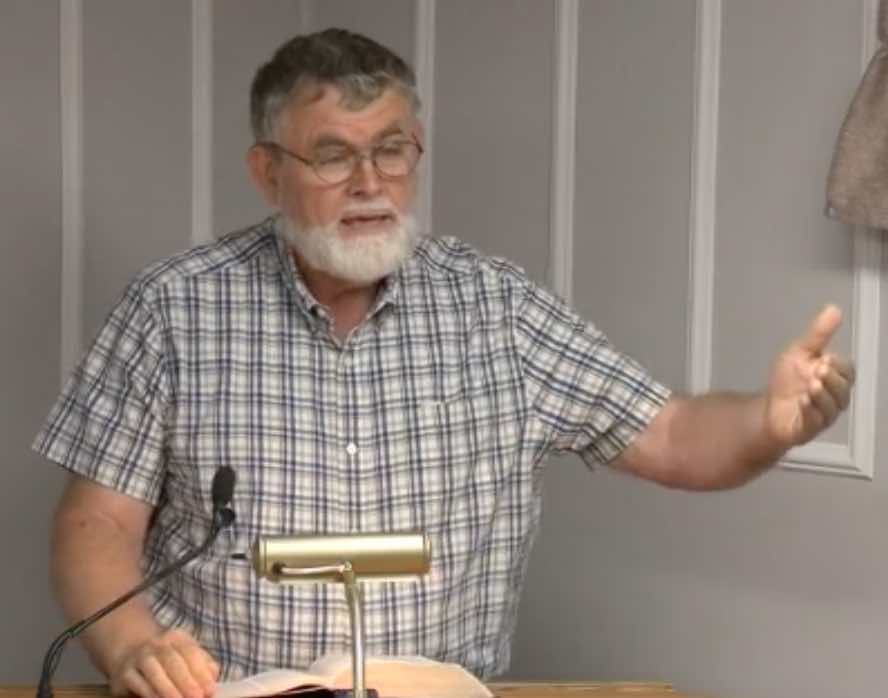
In the sermon "Do You Love Me?" by Mike McInnis, the main theological topic is the profound nature of human sin and the miraculous grace of God in redeeming sinners. McInnis argues that all humanity has sinned and forsaken God, as demonstrated by the collective abandonment of Jesus by His disciples during His trial. He uses Mark 14:50-72 to illustrate this, noting the ridicule of Christ and Peter's denial as reflections of mankind's unfaithfulness. The preacher highlights that while men are guilty, God's sovereignty orchestrates events for His divine purpose, emphasizing the Reformed doctrine of predestination and the necessity of repentance as a gift from God. The significance lies in the understanding that true recognition of sin and the receiving of grace result in a brokenness for sin, leading to a restored love for Christ who calls us to Himself.
“None stood with the Lord in this hour. Not the bold and boastful Peter, nor the rest of the disciples who all agreed with Peter that they would never deny the Lord. They all, as the scripture says, forsook him and fled.”
“Apart from the grace of God, we would be just like them. And we would have forsook the Lord had we been there.”
“Repentance is a gift from God. And for a man to be broken for his sin is not something that he can conjure up.”
“Oh, what a merciful Savior he is. That he does save sinners. That he saves those that call upon his name.”
The Bible shows that all the disciples forsook Jesus and fled, demonstrating human weakness in times of trial.
Mark 14:50-72
Repentance is a gift from God that brings about a true sorrow for sin and recognition of our offenses against Him.
Mark 14:72, Psalm 51:4
God's grace is sufficient for sinners because He offers forgiveness and restoration to those who repent and call upon His name.
Romans 10:13, Mark 14:72
The Bible affirms that God's sovereignty governs all actions, including those that result in human sin and evil.
Acts 2:23, Mark 14:61-64
Auto-generated transcript • May contain errors

Comments
Your comment has been submitted and is awaiting moderation. Once approved, it will appear on this page.
Be the first to comment!