Bootstrap
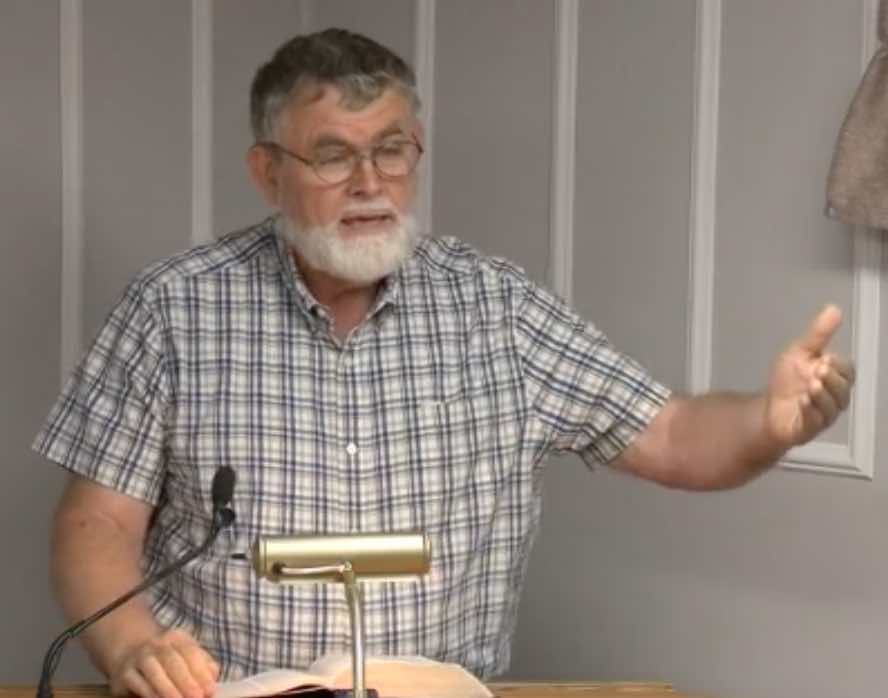
Mike McInnis

Who Is the Greatest?

Mark 9:30-50
Mike McInnis October, 9 2022 Audio
0 Comments
Mark Series

In the sermon "Who Is the Greatest?", Mike McInnis emphasizes the theological principle of humility and servanthood in the context of the Kingdom of God, as demonstrated in Mark 9:30-50. He illustrates how Jesus instructs His disciples, who are arguing about greatness, that true greatness is found in becoming last and serving all. This is supported by the Scriptures, particularly Jesus' declaration that "if any man desire to be first, the same shall be last of all and servant of all." McInnis also discusses the warning about causing harm to "little ones" who believe in Christ, emphasizing the seriousness of leading others astray. The practical significance of this sermon lies in its call for Christians to adopt a posture of humility and service, acknowledging their own insignificance before God while esteeming others above themselves, a core tenet of Reformed thought regarding the nature of sin and grace.

Key Quotes

“The man who would be the greatest must be the servant.”

“It's better for a millstone to be hanged about a man's neck and he cast into the sea than to offend one of these little ones.”

“Only the Lord can give a man such heart as that.”

“To be great in the kingdom of God, you must be the servant of all.”

Sermon Transcript

Auto-generated transcript • May contain errors

100%
Mark chapter nine and beginning in verse 30. I'm
gonna read to the end of the chapter there. And they departed
thence and passed through Galilee. And he would not that any man
should know it. For he told his disciples and
said unto them, the son of man is delivered into the hands of
men and they shall kill him. and after that he is killed,
he shall rise the third day. But they understood not that
saying, and were afraid to ask him. And he came to Capernaum,
and being in the house, he asked them, what was it that ye disputed
among yourselves by the way? But they held their peace, for
by the way they had disputed among themselves who should be
the greatest. And he sat down and called the
12 and said unto them, if any man desire to be first, the same
shall be last of all and servant of all. And he took a child and
set him in the midst of them. And when he had taken him in
his arms, he said unto them, whosoever shall receive one of
such children in my name receiveth me. And whosoever shall receive
me, receiveth not me, but him that sent me. And John answered
him, saying, Master, we saw one casting out devils in thy name,
and he followeth not us, and we forbade him, because he followeth
not us. But Jesus saith, Forbid him not,
for there is no man which shall do a miracle in my name that
can likely speak evil of me. For he that is not against us
is on our part. For whosoever shall give you
a cup of water to drink in my name because you belong to Christ,
verily I say unto you, he shall not lose his reward. And whosoever
shall offend one of these little ones that believe in me, it is
better for him that a millstone were hanged about his neck and
he were cast into the sea. And if thy hand offend thee,
cut it off. It is better for thee to enter
into life maimed than having two hands to go into hell, into
the fire that never shall be quenched. Where their worm dieth
not, and the fire is not quenched. And if thy foot offend thee,
cut it off. It is better for thee to enter
halt into life than having two feet to be cast into hell, into
the fire that never shall be quenched. where their worm dieth
not, and the fire is not quenched. And if thine eye offend thee,
pluck it out. It is better for thee to enter
into the kingdom of God with one eye than having two eyes
to be cast into hell fire, where their worm dieth not, and the
fire is not quenched. For everyone shall be salted
with fire and every sacrifice shall be salted with salt. Salt
is good, but if the salt have lost his saltness, wherewith
will you season it? Have salt in yourselves and have
peace one with another. Now there are some difficult passages here in this
these verses that I read, difficult to completely comprehend. And I don't claim to have any great
insight into them, except as the Lord has shown us and will
teach us, I believe, such things that he'd have us to know. And
so they passed through Galilee, and he would not that any man
should know it. You know the Lord, He hides things
from men and He reveals things to men. And He reveals things
to men as He sees fit to reveal them. And He hides things from
men as He sees fit to hide them. And who can say anything about
that? I mean you know we can't, often
men want to, they will say such things They will say such things as,
well, that wouldn't be fair if the Lord didn't show these people
the same thing that He shows another, or to give one an advantage
that He doesn't give to another. But I tell you, the Lord is His
creation. He can do with it as He pleases.
And whether we like it or not, it's his prerogative to do as
he wills with his creation. And so it pleased the Lord that
any man should not know of the place where he was going. And he told his disciples, he
often brought them aside because he wouldn't teach them with no
one else around. Because he had things to teach
them that he wouldn't teach to everybody else. And he told them
that the Son of Man was going to be delivered into the hands
of men and that he would be killed. And then he would rise again
the third day. Now we've already seen that they
had taken him to task to some extent about this. Peter had
said, Lord, this can't be that you're going to be crucified. I mean, this wouldn't fit in
with our plan of events here. This isn't how we understand
things to be, so you've got to be mistaken. How foolish that
was. But yet, he told them here once
again, very plainly, what was going to happen to him. And they
were puzzled by it. Said they didn't understand it
and they were afraid to ask him. Evidently his words carried with
them such a great solemnity that it struck fear into their hearts
and they didn't even want to broach the subject because they
were fearful of what this meant. Because again, I think that this
was not going according to their plan. This wasn't how they figured
things would be. And how often it is that we get
in our minds how things are going to be or how they ought to be.
And we get worried when things don't turn out just like we want
them to. But all things are in the hand
of God to bring to pass as He sees fit. But they understood
not that saying. And he came to Capernaum. And
being in the house, he said, what was that that ye disputed
among yourselves by the way? And they didn't say anything
because they were really ashamed of what they'd been disputing
about. I believe, you know, just his countenance when he said,
what were y'all talking about over there? Now, he knew what
they were talking about, did he not? I mean, it's obvious
he knew what they were talking about because of what he starts
teaching them. He didn't really say, well, y'all
ought not to be doing that. He just told them what the truth
was. And how often it is that you know you, we don't always
need for somebody to come along and tell us you ought not to
do that. The word of God will convict
his people, will it not? I mean the look of the Lord.
Peter brought him to tears after he had denied the Lord. The Lord
didn't need to look at him and say, see there, Peter, you denied
me. He just looked at him. Peter
knew because the Spirit of God brought the Word of God home
to his heart. And so it is as the Lord, you
know, when he teaches men, we don't necessarily have to always
have things spelled out to us. in Jot and Tittle. But the Spirit
of God will lead a man to know those things that the Lord would
have him to know. But they held their peace. And
then Mark tells us, because they had been disputing among themselves
who would be greatest. Now how foolish is that? You
know, it's like a bunch of ants on an anthill all getting into
a fight. over which one of the ants was
the greatest. And you've seen the anthills. I mean, when you
look at anthills, do you think of all these different ants?
No, they're just ants, aren't they? Now, you know, we are far
less significant in the glory and the things of God to God
than the ants are to us. I mean, we're all part of the
same creation. God created us all. And so in
a measure, we are insignificant. Now, I don't mean to say that
in a bad way, because we are significant, and I know that
we're significant unto the Lord because of what he did for us. Now, it's an amazing thing. I
mean, the psalmist said, oh Lord, what is man that thou art mindful
of him? And so it is that we need to
have a right understanding of who we are before the Lord. And
when we have that, it will give us conviction, will it not, when
we kind of exalt ourselves and get to thinking of ourselves
more than what we ought to think. See, don't let a man think of
himself above what he ought to think. Now, how ought we to think
of ourselves? Paul expressed it. He said, I'm
the chief of sinners. He knew he had nothing to offer
unto the Lord. And so in that way, as we come
together as brethren, we are to esteem one another not equal
with ourselves. See, our society and the Constitution
says we're all created equal. And of course what they mean
by that is we have some great standing. And it goes on to delineate
our rights. Now as men, I'm not trying to
get away from the fact that we have rights among men. I agree with all of that. But
yet, as believers in the Lord Jesus Christ, as he has taught
us, what rights do we actually have? You know, the only right
that we have is anything that God's pleased to give us. We
don't have anything. We can't come to the Lord and
say, well, we demand, Lord, that you give us this. And so as brethren,
when we come, when we consider one another, we are to esteem
one another above ourselves, not equal with ourselves, but
above ourselves. That's the most difficult thing
for a man to ever do. In fact, you can't do that. It's
impossible that you should, by nature, have such a consideration. Only the Lord can give a man
such heart as that. He taught it. He said if a man
sues you at the law to take away your coat, give him your cloak
also. He said if a man compels you
to go with him a mile, go with him twain. See, that's to esteem
others better than ourselves. But, you know, the natural thing
is to say, well, who does he think he is? I mean, why should
he do that to me? The Lord, when he was reviled,
he reviled not again. Now, he thought it not robbery
to be equal with God, but yet he humbled himself and became
obedient even to the death of the cross. He said, if any man
desire to be first, then shall he be the last of all and servant
of all. If you want to be great in the
kingdom, learn to be the servant of all. We sing that song sometimes,
we have sung it at least in the past. And what a truth that is. The man who would be the greatest
must be the servant. The Lord Jesus Christ demonstrated
that, did he not? Even at the last supper. as he
guarded himself with a towel as the meanest of men. And Peter
said, Lord, what are you doing? See, Peter still didn't, he didn't
get it. He didn't understand. The Lord said, you know, you
don't understand what I'm doing now, but afterwards you will.
Because you'll understand by the work of the Spirit of God
in you that to be great in the kingdom of God, you must be the
servant of all. And he took a child and set him
in the midst of them. And when he had taken him in
his arms, he said unto them, whosoever shall receive one of
such children in my name receiveth me, and whosoever shall receive
me receiveth not me, but him that sent me. Now, why did he
do that? Now, many have, thought, and
no doubt the Lord had some teaching, there is some truth in this,
but that the Lord was teaching that we ought to have great regard
to children. And I believe we should have
great regard to children. I mean, the greatest gift that
the Lord gives to men in this world is their children. That is a greater gift, carnally
speaking, of any gift that a man can have. The scripture says,
happy is the man that hath his quiver full of them. I mean,
the Lord has blessed us with children. And we have a grave
responsibility to our children to train them up in the way that
they should go. To teach them the truth of God.
All of these things are absolutely essential. for the children of
God, especially. But what he's speaking about
here is not specifically, he didn't bring this child up here
to teach them about the necessity of child evangelism, as I have
heard these verses used. But he brought these children
there to show them, to teach them something that was coming
up. They hadn't even gotten to that yet. And John answered and
said to him, saying, Master, we saw one casting out devils
in thy name, and we forbade him. Now see, the Lord's teaching
them a lesson before the issue ever arose in their mind. Forbid him not, he said. He said, these men aren't following
us. And so we need them to be rebuked. Now such is often the mindset
of many believers as they have their way of doing things and
they have their mind about who often they feel like that it's
their place to be setting and determining who the children
of God are. Now dear brethren, we can't determine
who the children of God are. Now the Lord said, by their fruits
ye shall know them. And indeed, there is an evidence
of fruit in some respects. But it's often not the fruit
we're thinking of, but it's the fruit that he has been pleased
to place in them. And so evidently there was some
out there casting out devils in the name of the Lord Jesus
Christ. And evidently they were doing this. Now how can, we've
talked about this before, how could they have cast out devils
in His name if He didn't give them the power to do so? So the Lord sometimes gives men
the power to do things that He didn't run by us. In other words,
He hasn't made you aware of everything that He's doing. And he may be
working over here in somebody that you never heard of. And
because you never heard of him doesn't mean that he hadn't taught
them the exact truth, perhaps, that he's taught you. Without
your help. Now sometimes that's disheartening.
A lot of preachers get upset about that. Because they don't
want to believe that anybody could possibly arrive at the
truth if they don't come at it from them. You know, if they
don't dot their I's and cross their T's exactly like they do,
then they couldn't possibly be walking in the truth. Now the
truth is the truth, and I'm not here saying that there's more
than one gospel. There's one gospel. There's one
Christ, there's one Lord, there's one baptism. And I'm not promoting
ecumenicalism. But I'm saying that we don't
know. who it is that God is working
in or how He's working in them. And because everybody is not
walking in the same light at the same point in time as you
are does not mean that the Lord has not sent them or that He
is not using them unto His glory. You know, I look back on my own
life, and there's plenty of times that, in my own life, that if
I, personally looking at myself, dissected it, I'd say, man, I
was in ignorance. And I still am. I mean, I'm not
lifting up here saying I'm not still in that great ignorance
in many things. But as I would look at myself
now, I would say, man, you was just way off. But yet, at the
same time, I will tell you, the same Lord that directed my steps
now, directed my steps then. And he brought me in the way
that he would have me to go. Now that wasn't a perfect way.
And it wasn't a way that I would recommend anybody else to go.
But by the grace of God, he brought me to the place where he wants
me to be. And so it is that when they said, Lord, we want you
to forbid them, he said, forbid him not, for there is no man
which shall do a miracle in my name that can lightly speak evil
of me. For he that is not against us is on our part. For whosoever
shall give you a cup of water to drink in my name, that's important. because ye belong to Christ. Verily I say unto you, he shall
not lose his reward. And whosoever shall offend one
of these little ones that believe in me, it's better for him that
a millstone were hanged about his neck and he were cast into
the sea. Now that causes us to, we need
to be mindful, dear brethren, how we treat those who come in
Christ's name. Now, what is it to come in Christ's
name? To come in His authority is to
come with no other desire than to magnify and glorify the name
of Jesus Christ. And there are many who may not
know the way of God perfectly, whom the Lord is pleased to draw
and to teach. And He may use you to help them,
even as Paul did help Now, I'm thinking of what was
the two people in Corinth that helped Apollos. They took him
aside and expounded to him the way of God more perfectly. Now,
what if they just said, well, Apollos, you can't preach. You
know, stop preaching now. You can't do it. No. You see,
by the grace of God, the Lord used them to help Apollos. That's bugging me. Aquila and
Priscilla, that's who it was, in Corinth. Now Paul had taught
Aquila and Priscilla, but Aquila and Priscilla were used of God
to help Apollos. They didn't forbade him from
doing what he was doing, they showed him the way of God more
perfectly. And how we ought to be mindful that, you know, there
are many of God's children out here who walk in darkness in
some measure, that the Lord may send us to help them, not to
condemn them, not to try to overwhelm them, but to help them. And that's
what he's saying here. that it's better, he said, for
a millstone were hanged about a man's neck and he were cast
into the sea than if he offends one. Oh, let's be tenderhearted
in our approach to the gospel and not just believing that everybody
who belongs to the Lord is gonna see things exactly like we do.
May the Lord help us in that. That needs discernment. And again,
I'm not saying that everybody that's going out here saying
they're preaching in the name of Christ is doing so. But there
are many who perhaps don't ever jot and tittle like we do that
are. And may the Lord give us discernment.
Because we do not want to be those that offend the children
of God. Now he said, if a man gives another a cup
of water to drink in my name, because he belonged to Christ. Verily I say unto you, he shall
not lose his reward. Now, there are many who when
they think about the word reward, Their immediate thing is they
think about, well, I'm gonna get something when I get to heaven. When I was growing up, that was
the main thing, buddy. They taught us that you need
to be obedient and do all these things because when you die and
you go to heaven, you're gonna get all these rewards. They just
stacked up up there for you if you've really done good. You're
gonna get it if you get there. Well, dear brethren, that's not
at all what the Lord's saying. You know, we don't serve the
Lord for reward. But the reward that we have is
serving the Lord. See, and he says here, if a man
gives another a cup of water in his name because you belong
to Christ, that man shall not lose his reward. What is the
reward? It's being able to do that. oh
what a blessing it is to give a brother a cup of water in Christ's
name. The Lord loveth the cheerful
giver. Why? What's a cheerful giver? A cheerful
giver gives without his right hand knowing what his left hand
is doing. You see the joy of giving is in the giving. It's
not in what you get as a result of it. Oh how juxtaposed is that
to the modern-day concept of doing things and getting things. You know, if you pray, you're
going to get this. And if you'll do this, you're
going to get that. If you're going to tithe, you'll get all
these blessings. I mean, that was another thing
when I was growing up. You know, they said, well, you
need to tithe. And then they'd have all these
people come in and say, you know, I was going along and this, that,
and the other, and I started tithing, and man, my finances
just got great. I mean, you know, because I was
faithful to the Lord, he just poured out the windows of heaven
to me and all that. Brother Ralph Barnard said that
if a man tithes, he's under the law. You see, if he doesn't tithe,
he's an outlaw. And so, you know, we don't, we
would not lay the burden of tithing upon people, but I'm telling
you the, upon the sons of God, but I'm telling you this, there's
no greater blessing to the sons of God than being able to give
unto the Lord. That is a great reward, dear
brethren. There's a blessing in giving
as unto the Lord. And those that bypass that, they
bypass that reward. They have no part in it. It's that they don't enjoy it.
They don't have a place. Oh, that Lord give us a cheerful
heart to give unto Him. And giving unto the Lord doesn't
mean you put money in the plate. You know, that was another thing.
I mean, I've been taught that that's the way you give money
unto the Lord. You put it in an offering plate.
Well, nothing wrong with putting money in the offering plate,
but there's many ways that you can give that don't have to do
with you putting the money in the offering plate. It's more
of a mindset than it is a place of what you do, but do what you
do as unto the Lord. And such a man will not lose
his reward. And then this is a difficult
passage. And if thy hand offend thee,
cut it off. It's better for thee to enter
into live maim than having two hands to go into hell, into the
fire that never shall be quenched. What's the Lord saying? Is he
saying if we, if our hand, if it moves over, if our hand steals
something, are we supposed to cut it off? I mean, was it your
hand that stole it? No, you see, your hand wasn't
what stole it, it was your heart. But the Lord is saying that this
is such a serious thing, a man ought to have consideration.
So much so that if his hand was offensive to him and would do
something to keep him from the kingdom of heaven, he'd rather
be cut it off than miss the Lord. What shall a man give in exchange
for his soul? What in this world is worth more
than having a place in the kingdom of God? So he said better to have your
hands cut off than having two hands go into fire that never
shall be quenched. Where the worm doth not, the
fire is not quenched. And he says that over and over
again. Again, if I foot offend thee, if I nigh offend thee. Now what is this place where there is fire that never
shall be quenched? We read about it in the book
of the Revelation. Scripture says a lake of fire
into which all who are not in Christ, death, hell, and everyone
whose name is not written in the Lamb's book of life shall
be cast into that lake. It's described here as a fire
that never shall be quenched. It's an everlasting fire. Now, many have said that the
term they're wormed I have not has to do with the conscience.
I'm not convinced of that, but I'm not going to stand here and
argue against it. I don't believe that the scripture
anywhere indicates that men in general have an immortal soul. Now, I know that might come as
a shock to some, but I'm telling you, you gotta look hard in the
scripture to find out where man has any immortality apart from
the gift of God to give him eternal life. Now, I'm not saying that
it's not outside of the Lord's realm to cause a man to immortally be tormented in the
fires of hell forever. And if he does so, that's his
business. We deserve that, every one of us. But I'm not certain,
personally, that when the Lord says, the worm dieth not, has
no conscience. Now, I know some people do believe
that, and that's fine. I believe what this whole thing
has reference to is to the everlasting nature of the fires of hell and
the destruction That takes place there. It's a place from which
a man cannot recover. I mean, that's a finality, is
it not? It's an awful thing. I mean, I would not want to be
cast into the lake of fire that burneth forever. I would not
want to be there. And so the Lord said that that's
the ultimate place where those who despise his word are placed. It's an awful thing. I've had
men accuse me of not believing in hell. I believe in hell. Hell's
an awful place. The Lord spoke of it. Scripture
plainly says it, that it is. And I don't know anything about
it and hope to never know anything about it. But I know this. that those who are outside of
Christ shall indeed be cast into the lake of fire. No question
about that. He says, for everyone shall be
salted with fire. Now I think he's speaking about
those who are outside of Christ. Those who walk on in their way,
they don't look at their sin as being a terrible thing. They
would rather keep their hands and their feet and their eyes
and be cast into hell than to have these things taken from
them. But you see, the people of God would rather be stripped
of all things than to be cast forever away from the Lord. Oh,
that He might give us such a mind and heart He said, for everyone
shall be salted with fire, and every sacrifice shall be salted
with salt. Now, that's a difficult passage
there, and I don't have a whole lot of insight into it, but I
believe this is true. As you look in the scripture
in Leviticus, I think it's 2.13, it speaks about every offering
must be offered with salt. And so that's what he has referenced
to here. And every sacrifice shall be
salted with salt. Now what is that? I believe that
this has to do with the matter of repentance. You see, a sacrifice is of no
use if it doesn't come with repentance. I mean, if a man just offers
up a sacrifice to the Lord, and he doesn't have a repentant heart,
what value is it? See, I mean, apart from having
a repentant heart, a sacrifice is of no use. I mean, if we come
here to the table of the Lord and we consider the Lord's sacrifice,
but we don't have a heart of repentance, well, what use is
it? Every sacrifice must be salted
with salt, even as the Lord commanded. And so it is this salt that the
Lord is pleased to give unto his people. He says, for everyone
shall be salted with fire. Now what's he speaking about
there? I believe he's speaking about those who have no conscience. They're gonna be salted with
fire. In other words, the repentance they're gonna have is the fires
of hell. Those who are outside of Christ.
And every sacrifice shall be salted with salt, because those
whom the Lord is pleased to give a repentant heart, they shall
be received unto him. And then he goes on to say, salt
is good, but if the salt hath lost its saltness, wherewith
shall ye season it? Have salt in yourselves, and
have peace one with another. Now he told them that ye are
the salt of the world, salt. You know, it was a valuable substance
in time past. We don't think much about it.
I mean, I bet everybody in here has probably got a whole carton
of salt at their house, if not more than one. And we think of
it as a light thing, but in time past, wars have been fought over
salt. People have killed one another.
over salt because it is a precious commodity, because it is a necessary
commodity, even though great abundance of it is not of good
use. They tell us the health problems
that are associated with eating a lot of salt. But salt is good,
he said, but if it doesn't have any salt, if it's not useful,
what good is it? And so salt is good. It's good
that a man have a repentant heart. But you know, if that repentance
is not genuine, what good is it? I mean, if you tell me I'm
sorry, but you don't, it's not pain in your heart, then how
much, what value is it if it's lost its saltness? Have salt
in yourselves and have peace one with another. Because as
the Lord is pleased to give men repentant hearts, Then they can
have peace one with another. Because when a man knows himself
to be a sinner, then he cannot exalt himself above somebody
else. Only a man like the Pharisee
can look and compare himself to others. Is that not the trait
of the Pharisee? To look and say, oh Lord, I'm
not like these others. No, the Lord will give his people
a heart to know themselves to be sinners. And it is with such
a mind, by his grace, that we come to
this table. Repent of the arts. The Lord gave it to us, not that
we might be sorrowful, but knowing that we are sorrowful. He gave us this to lift our spirits. But you see, a man can't rightly
come to this table without first being made to sorrow for his
sin. Because you can't know the glories of the redemptive work
of Christ apart from the agony of knowing yourself to be unworthy
of the least of the Lord's mercies. And so we come here to this table
with hearts of repentance. knowing ourselves to be sinners,
and knowing that these things that the Lord has given us, His
body and His blood, we're unworthy. There's not a man, a woman in
here that's worthy to take these elements. But the Lord didn't
say, don't take these elements. He said, if a man take them unworthily,
and what is it to take them unworthily? It is to have not a proper regard
unto what this is. To have no repentance in the
heart when one comes to this table. That's to take it unworthily.
And men that take this without repentance, they come here with
condemnation. Because they come here thinking
this is some religious ritual that they're gonna go through
and it's gonna somehow benefit them. No, we come here knowing
that it is Christ's blood, His righteousness that is our righteousness. We have none other than that. We're sinners. See, this is a
table for sinners. I've been told at times in my
life that this wasn't really a table for sinners, it was a
table for people that, you know, had examined their life and they
felt themselves didn't have any hidden sin in their heart or
this or the other, and so they were worthy to take the thing.
Well, that's not it. You're not worthy. It doesn't
make any difference what you've considered. You're not worthy
to take this table. But by the grace of God, He said,
but let a man eat this bread and drink this cup of the Lord, believing in what it represents,
the sacrifice of Christ in our behalf. May the Lord help us
and show us what a glorious sacrifice He's made. May He give us repentant
hearts and minds and hearts to understand His truth.
Mike McInnis
About Mike McInnis
Mike McInnis is an elder at Grace Chapel in O'Brien Florida. He is also editor of the Grace Gazette.
Broadcaster:

Comments

0 / 2000 characters
Comments are moderated before appearing.

Be the first to comment!

66
Joshua

Joshua

Shall we play a game? Ask me about articles, sermons, or theology from our library. I can also help you navigate the site.