Bootstrap
Mike McInnis

Redemption Deniers #963

Mike McInnis February, 16 2022 Audio
0 Comments

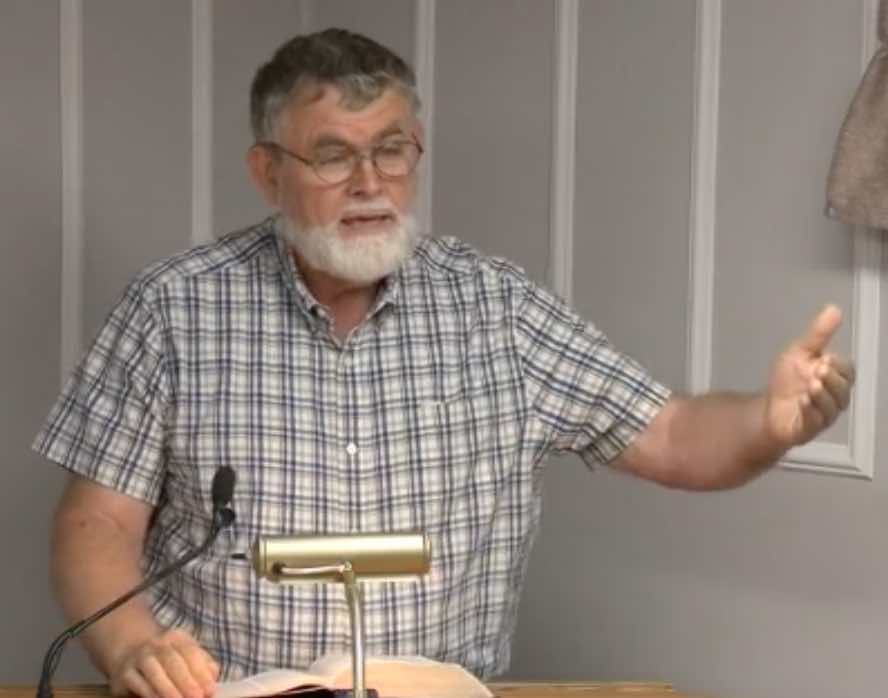
In the sermon "Redemption Deniers," Mike McInnis addresses the doctrine of limited atonement, asserting that Christ's redemptive work on the cross was definitive and specific for His elect rather than a mere possibility of salvation for all. He argues against the notion that Christ's sacrifice provides the opportunity for individuals to exercise their free will to come to faith—an idea he labels as a human invention. Scripture references such as Hebrews 9:12, Isaiah 53:10-11, and Romans 8:29-30 support McInnis’s claims, emphasizing the sovereign and effective nature of Christ’s atonement and the necessity of divine grace in regeneration and faith. The sermon underscores the significance of understanding Christ's work as complete and final, reinforcing the Reformed doctrine of God's sovereignty in salvation and the total depravity of humanity, thus eliminating any merit associated with human effort or decision.

Key Quotes

“There can be no middle ground on this matter. Either Christ paid the price for the sin of his people and they are saved thereby or he did not.”

“The blood of the only begotten Son of God has not been shed in vain, nor can one sin for which he is atoned remain to bring those for whom he died into condemnation.”

“Their believing does not precipitate the work of God to give them life, but rather it is the work of God which causes them to believe.”

“Do you believe on the only begotten Son of God?”

Sermon Transcript

Auto-generated transcript • May contain errors

100%
Welcome, friends, to another
broadcast of Morsels for Zion's Poor. There are many who claim
to be the followers of Christ who yet deny what He accomplished
on Calvary's cross. They would tell us that He merely
made salvation a possibility for all men by His sacrifice.
Yet the Scriptures plainly tell us that He purged our sins and
that He obtained eternal redemption. Never once do the Scriptures
speak of His redemption as being open-ended or producing a possibility
for men to be saved by joining their faith to His work. This
is a figment of the imagination of men who would glory in their
free will and their own ability to produce faith according to
that free will. There can be no middle ground
on this matter. Either Christ paid the price for the sin of
his people and they are saved thereby or he did not. This is
a matter of right and wrong which is determined by him who said
that he came to save sinners and not just to make it possible
for them to be saved by their own power. Thou shalt call his
name Jesus, for he shall save his people from their sins. Yet
it pleased the Lord to bruise him, yet put him to grief, when
thou shalt make his soul an offering for sin. He shall see his seed,
he shall prolong his days, and the pleasure of the Lord shall
prosper in his hand. He shall see of the travail of
his soul and shall be satisfied. By his knowledge shall my righteous
servant justify many, for he shall bear their iniquities. He maketh intercession for the
saints according to the will of God. And we know that all
things work together for good to them that love God, to them
who are the called according to His purpose. For whom He did
foreknow, He also did predestinate to be conformed to the image
of His Son, that He might be the firstborn among many brethren.
Moreover, whom He did predestinate, them He also called. And whom
He called them, He also justified. And whom He justified them, He
also glorified. The blood of the only begotten
Son of God has not been shed in vain, nor can one sin for
which he is atoned remain to bring those for whom he died
into condemnation. He has purchased that possession
which was given to him from before the foundation of the world.
His redemptive work is absolute in its purpose, and he has clearly
performed that which he came into the world to do. Religious
men rebel at this plain truth, and go about to present his finished
work as one which is really not finished, but depends upon the
creature to make it complete. They feel compelled to declare
his work in a message which they believe is more palatable to
the masses, and one which they think will have a broader appeal.
They conclude that men are justified by the act of believing, and
that they have power to persuade men to embrace it, and therein
believe and consequently be saved. Yet the Lord laid the axe to
the root of this concept in the simple message that he gave to
Nicodemus. Verily, verily, I say unto thee, except a man be born
again, he cannot see the kingdom of God. John describes for us
both the evidence and the origin of this new birth, which were
born, not of blood, nor of the will of the flesh, nor of the
will of man, but of God. The evidence of this birth from
above, that is to be born again, is the gift of faith, which is
found in all of those whom the Lord is pleased to call from
darkness to light. For by grace are you saved through
faith, and that not of yourselves, it is the gift of God, not of
works, lest any man should boast. For we are his workmanship, created
in Christ Jesus unto good works, which God hath before ordained
that we should walk in them. Their believing does not precipitate
the work of God to give them life, but rather it is the work
of God which causes them to believe. Thus we read in the book of Acts
that some believed and some believed not the word which Paul preached
unto them. The only difference between these
two camps of men is the grace of God. This is the stone which
was set in all of you builders, which has become the head of
the corner. Neither is there salvation in any other, for there
is none other name under heaven given among men whereby we must
be saved. Unto you, therefore, which believe,
he is precious. But unto them which be disobedient,
the stone which the builders disallowed, the same is made
the head of the corner, and a stone of stumbling, and a rock of offense,
even to them which stumble at the word, being disobedient,
whereunto they also were appointed. But ye are a chosen generation,
a royal priesthood and holy nation, a peculiar people, that ye should
show forth the praises of him who hath called you out of darkness
into his marvelous light, which in time past were not a people,
but are now the people of God, which had not obtained mercy,
but now have obtained mercy. Do you believe on the only begotten
Son of God? For a free CD containing 15 of
these radio broadcasts, send an email to forthepoor at windstream.net.
Mike McInnis
About Mike McInnis
Mike McInnis is an elder at Grace Chapel in O'Brien Florida. He is also editor of the Grace Gazette.
Broadcaster:

Comments

0 / 2000 characters
Comments are moderated before appearing.

Be the first to comment!

Joshua

Joshua

Shall we play a game? Ask me about articles, sermons, or theology from our library. I can also help you navigate the site.