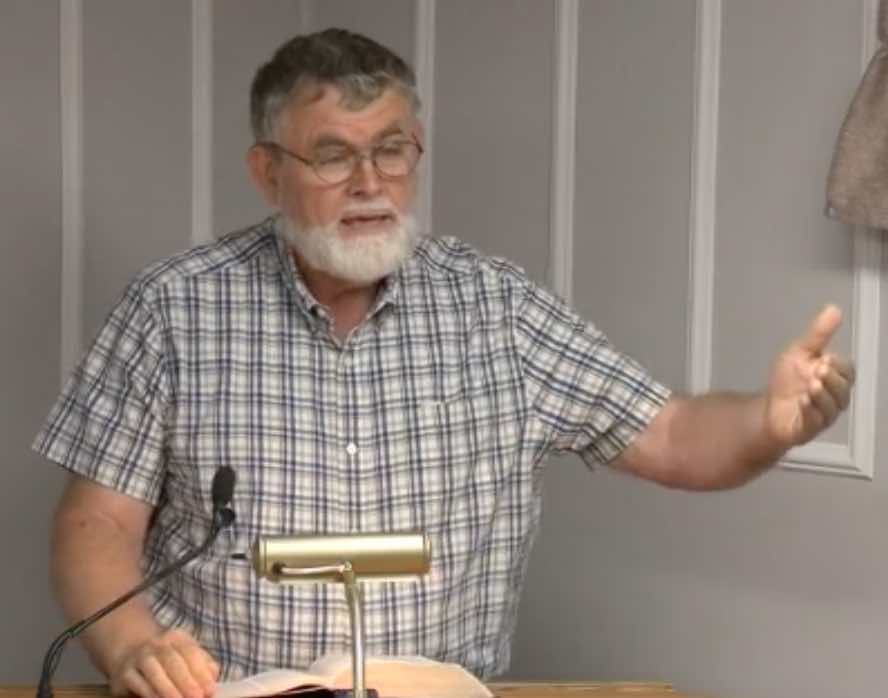
The sermon "Professors or Possessors" by Mike McInnis addresses the critical distinction between professing faith in Christ and genuinely possessing that faith. McInnis emphasizes the importance of self-examination as outlined in Scripture, particularly referencing 2 Corinthians 13:5, which calls believers to verify the authenticity of their faith. By illustrating the evaluation process through the analogy of testing for gold's purity, he underscores that a mere outward profession is insufficient without inner transformation and ongoing reliance on Christ for salvation. Furthermore, he articulates that true believers, indwelled by the Spirit, maintain a conscious desire for personal assessment and growth, contrasting this with the complacency of those who rely on external rituals or moral adherence. The practical significance lies in the call for believers to continuously scrutinize their faith against Scripture, affirming that genuine faith produces real obedience and sanctification.
Key Quotes
“It is one thing to be a professor of faith and quite another to be a possessor of faith.”
“Truth loves scrutiny, and that which is real should be subjected to a thorough examination.”
“To be relying on anything other than Christ alone will ultimately destroy the faith which we profess.”
“Do you examine yourself to see if you're in the faith once delivered to the saints? Or are you content to carry on with your religious profession and tradition?”
The Bible emphasizes the importance of self-examination to ensure genuine faith in Christ.
Scripture teaches that believers should actively examine their faith. As Paul instructs in 2 Corinthians 13:5, 'Examine yourselves, whether ye be in the faith; prove your own selves.' This self-examination is not just about having an outward profession but ensuring that Christ truly resides within us. True faith must stand up to scrutiny, allowing believers to confirm their regeneration and the indwelling of the Holy Spirit.
This constant examination is mirrored in the heart's cry of David in Psalm 139:23-24, asking God to search and know his heart. Such a request indicates a deep awareness of the need for divine assistance in understanding the authenticity of one's faith. The true believer, recognizing their total dependence on Christ, desires to ensure their faith aligns with the biblical definitions of saving faith.
Genuine possession of faith is evidenced by obedience and the presence of the Holy Spirit in one's life.
To genuinely possess faith in Christ is not merely about a verbal affirmation but is evidenced through a transformed life characterized by obedience. This is reflected in John 10:27 where Jesus states, 'My sheep hear my voice, and I know them, and they follow me.' If one claims faith yet displays no fruits, they must engage in earnest self-examination.
Obedience does not earn salvation but rather acts as evidence of it. As believers remain in Christ, bearing fruit becomes a natural outcome of their faith. Additionally, the Holy Spirit's presence in a believer's life creates a sincere desire to depart from sin, as seen in 2 Timothy 2:19, which reminds us that 'The Lord knows those who are His,' reinforcing that true believers will stand apart from iniquity.
Personal examination is crucial for Christians to affirm the authenticity of their faith and ensure they are following Christ.
Personal examination is vital for Christians because it helps believers distinguish between mere profession and true possession of faith. The necessity of self-scrutiny is echoed in the heart of the sermon, emphasizing how the truth of one's faith must withstand testing through the lens of Scripture. One's faith must reflect a life transformed through the work of Christ, manifesting in repentance and obedience.
Without regular examination, one may find themselves relying on an empty profession or following traditional religious practices devoid of spiritual life. The encouragement to examine is not for condemnation but for assurance, leading to a place where one can confidently affirm their status as a child of God. This ongoing process fosters a deeper relationship with Christ, relying on His grace and mercy throughout the believer's journey.
Comments
Your comment has been submitted and is awaiting moderation. Once approved, it will appear on this page.
Be the first to comment!
