Bootstrap
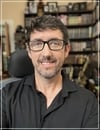
James H. Tippins

W28 Able To Teach? Elders pt2

1 Timothy 3:1-7
James H. Tippins June, 26 2022 Video & Audio
0 Comments
Continuing in the instruction to Timothy about the qualification of elders, we need to peek into the reality of what it means to be "able to teach". I believe culture and tradition has removed this requirement and that what is happening in most congregations is nothing more than just rhetorical idolatry.

The elder must know himself as a servant of God and God's church and thus expound on what God has already given in the manner required of him.

The sermon titled "W28 Able To Teach? Elders pt2" by James H. Tippins focuses on the qualifications and responsibilities of church elders, particularly their necessity to be able to teach. Tippins emphasizes that Christians obtain knowledge through various means, but only scriptural learning leads to truth and spiritual growth. He elaborates on 1 Timothy 3:1-7, which provides the qualifications for church overseers, highlighting that being able to teach is non-negotiable for elders. The sermon stresses the importance of elders teaching the full counsel of Scripture to protect the church from error and promote maturity and joy among believers. The practical significance lies in the church's flourishing under godly teaching, where elders receive accountability for their oversight, emphasizing that their foundation rests on the sufficiency of Scripture.

Key Quotes

“If we're not learning from the word in its context, we are not learning from God.”

“A teaching elder, and there is no other elder... a man who cannot teach, cannot oversee.”

“The teaching of the scripture to the church is authoritative because it is Christ's teaching, but it is done in such a way that actually edifies the church and builds it.”

“The elder must spend time praying and preparing his oversight through study, so that he can teach and train the church.”

Sermon Transcript

Auto-generated transcript • May contain errors

100%
people learn what they know.
And some of those things and some of those means through which
we learn things are profitable and are good and are an opportunity
to grow, but there are also ways that we learn that teach us wrongly,
but yet sometimes they feel the safest. Some of us have learned
a lot of things because we've been around people. We've just
gleaned certain opportunities, certain actions, certain ideas from those around us. Other things
that we know we have learned because we've looked for them.
We've gone after knowledge and wisdom. We've read encyclopedias
or newspapers or journals or opinions. We've gone on the World
Wide Web and we've found all sorts of connections. Sometimes
we learn things just through culture. Just because it's the
way things are here, therefore it must be the same there. Sometimes
we learn things through history. We say, well, that happened this
way, so why not us? And there's never going to be
an end to these learnings. We're always obtaining information,
hearing words, seeing things, thinking, contemplating, even
subconsciously acquiring ideas and philosophies and everything
else. The question is, are we learning
rightly? Are we learning truth? When it
comes to being a Christian, to being a follower of Christ, are
we learning what the gospel is and what the gospel does? Are
we learning about living our faith out in the community because
the scripture is teaching us or are we learning based on what
the world has shown us? Do we parrot or mimic the those
so-called quote strong Christians that we esteem because they seem
to stand for truth. Do we say we know what we know
concerning the truth of the Bible because we listen to our pastor? And sometimes we might even think
that that's silly to even contemplate. Why are you caring how we learn
as long as we're learning? Because beloved, if we're not
learning from the word in its context, we are not learning
from God. Now, there are people in the
world who believe that there is this amazing restrictive power
that God works in the lives of true regenerate people that keeps
them from ever learning error. That's not the case. Christians
are more susceptible to learning error than anyone because they're
going to be in the context of people who talk about their subject. They're going to be looking at
other ideas relating to the subject of faith. They're going to be
inundated by history and culture and examples all throughout faith
and they're going to learn by those who are in power, supposedly
in authority before them in the faith. And so we are most susceptible
to error unless we hold fast to the unchangeable scripture
and we are reading it, reading it. Just like Brother Armando
read a lot of passages today, and in the hearing of that word,
we were enriched and blessed and reminded and we were taught. But it's not sufficient for us
to come together on the Lord's Day and hear me talk if we're
not also eating and preparing for that instruction. Now, that's
not said newly for you. It's not something that I've
just decided to start talking about. It is the horse that I
beat that has died and rotted and come back to life. And I
will continue to beat that horse and beat that drum. Because if
you are not reading the word of God, there is very little
effect in what I teach to you. Elders, overseers are teachers. They must be able to teach. Chapter 3 of 1 Timothy says,
The saying is trustworthy, if anyone aspires to the office
of overseer, he desires a noble task. Therefore, an overseer
must be above reproach, the husband of one wife, sober-minded, self-controlled,
respectable, hospitable, able to teach, not a drunk, not violent,
but gentle, not quarrelsome, not a lover of money. He must
manage his own household well with all dignity, keeping his
children submissive. For if one does not know how
to manage his own home, how will he care for God's church? He
must not be a recent convert, or he may become puffed up with
conceit and fall into the condemnation of the devil. Moreover, he must
be well thought of by outsiders so that he may not fall into
disgrace, into the snare of the devil. Now I want us to remember
that Paul is writing to Timothy, a very young man who had spent
a lot of time with Paul in the mission field, who learned from
Paul directly. And now he is primarily the chief
elder of the city of Ephesus, which probably held thousands
of believers, thousands of believers. And there weren't buildings set
aside for the gathering of the saints. The gathering of the
saints oftentimes in Jewish communities happened in the synagogue and
then from there they went into the homes. They literally would
gather together in the Jewish center of religion. The same
thing would be true for 1st century Ephesus. They would gather together
in the open places because it's the only place they could fit.
And then from there, their ministry went into the homes. And when
persecution got harder, then they would begin to hide in underground
areas or hide in living rooms or dens as we would know them.
They didn't have living rooms and dens. Those weren't architectural
realities of the 1st century life. They didn't have rooms
set aside for that kind of stuff. But as we think about the first
church and we think about Paul instructing and commanding Timothy
as an elder, then this letter by God's purposes has been preserved
for the elders to know what they ought to be doing, especially
in the context of division, strife, false teaching, etc. When there
are problems in the body, this is what you need to know, Timothy.
Now, Paul was not teaching Timothy what he should do and how he
should be qualified. Timothy already knew those things.
Paul wasn't saying, Timothy, you need to check yourself. You
need to make sure that this is who you are. But Timothy is supposed
to be teaching the church. And he's supposed to be teaching
the church according to these qualifications. He's supposed
to be teaching the church to understand that no matter what
the culture says, that men and women alike have the equal opportunity
to learn the scripture. No matter what the culture says,
no matter what the ideologies of Jewish leadership might even
have taught, that every person in the body of Christ has the
right to learn the scripture and be a disciple of Christ.
And that the elders, the qualified men who are called by God to
be overseers of the church, one of their primary tasks, you'll
notice that, all these are character tasks, except for that one. They
must be able to teach. Now this is not an option. If
one is called to be an elder of the church, and he does not
have the gift of teaching from God, he cannot be an elder of
the church. He is completely disqualified permanently. These
other things we can work on, can't we? We can submit to the
scripture in the context of being self-controlled, respectable,
devoted to our lives, devoted to our homes, making sure that
we're not doing the ministry for greed, etc., etc. But we can't just say, well,
now you're a teacher. But then we ask ourselves, what
does it even mean to teach? To some people, teaching means standing
here and blabbing their mouths. So right now, I'm going to teach
you about teaching. Some people think teaching is
preaching. Two different things. You can preach on any subject.
Preaching includes an exhortation, a public proclamation, and it's
something that's been common from the very beginning of Jesus'
ministry when John the Baptist went out and proclaimed and preached
the gospel. You notice that when we hear
a lot of open air preachers in our culture today, we don't see
them using the scripture much in exposition, but they get out
there and repeat the same rerun for an hour, 20 times, without
any context. That's not teaching. It may be
preaching, but it's not preaching anything with substance. Preaching
must include teaching. But teaching is teaching. It
also is not something that must be done eloquently. Being able to stand in front
of a room and get people to listen and entertain them or have a
rhetorical presence is not something that's required. Paul himself,
the apostle to the apostles, the apostle to the Gentiles,
Paul himself would say to the Corinthians, you know, I didn't
come here with plausible speech and intelligence and philosophy
and great wisdom. He said, I came to you in weakness,
frailty, barely able to stand, stuttering, speaking softly,
weakly, in tears, so that the cross would not lose
its power. I came to proclaim the gospel. It doesn't matter
in the tenacity or the eloquence in which it is expressed. Now
don't get me wrong, as you learn to talk and teach, for those
of us who have ever taught anything, you do get better at it because
you're more comfortable with it. But it doesn't mean that
you have to be professional. Speaking softly, saying um after
um, every um, word um. It might be annoying to some,
but when it comes to teaching, the scripture is perfectly okay. May not be so if you're trying
to sell a big corporation something expensive, or if you're selling
a video for $3,000 on how to, you know, do finance. But when it comes to the Bible,
it doesn't matter. Those things aren't here. But
have we not learned through experience, exposure, history, tradition,
that pastors must have a stage presence? Have we not learned
that? I mean, after all, even what
is noted in history by some of the great pastors who taught
pastors and great in the context of their fame, not necessarily
their truth. One of them would even say that
a man has to have a certain size chest cavity so that he can be
heard. I remember the first time someone
told me that. After I was speaking without
a microphone and I was speaking loudly and clearly, this old
pastor came up to me and put his hand on my shoulder after
he says, I know you're a man called of God because the voice
that you have and how it moves is definitely a gift of God.
And I'm thinking, are you kidding me? I learned that from yelling
at my brothers. It's not about it. It's not about
it. The elder must be able to teach. And we can go to Ephesians. We
can see Ephesians 4. God gives gifts to the church.
We see what's happening there in the sense that God gives the
teachers and the pastors, the apostles, the prophets. He gives
the pastors and the overseers, those who teach the church, what?
He gives them to the church as a gift that they may build up
the church that they may know. That they may what? That they
may teach the church. to do what? Build itself up. See, that's a misapplication
of the role of elder. Everybody thinks that we're supposed to
be leaders and we are in certain areas, but not in everything.
That's absurd. We cannot do everything except
where we're gifted. So if we're not gifted in teaching,
we cannot be an elder. And teaching lends itself to
understanding, right? Sure, you can hand me an outline
on a subject and in four or five minutes I may be able to teach
what's written there, but it doesn't mean that I know the
subject. It doesn't mean that I can actually instruct you in
it. If I can't take questions from the floor, I don't know
the subject matter. If I can't say it in a different
way, I ought not be teaching it. I'm just a narrator. The elder who teaches is qualified
to teach by the Lord. He's gifted to teach by the Lord,
and it comes with a simple understanding of the authority and sufficiency
of Scripture alone. It is why we must always exhort
the body to be reading the Bible or listening to the Bible. It
does not take long to hear 1 Timothy read in a slow and stately manner. Six minutes, maybe? versus the
90 that it takes me to read aloud the Gospel of John, which I've
done many times in a week when I was teaching it. And so if we're learning together,
if we're growing together, the elders of the church are to look
after the growing and the maturity and the instruction of the church
so that it may build itself up in love, that it may build itself
up in submission to the word of God. So a teaching elder,
and there is no other elder, no other type of elder, I'm saying
that with emphasis, a man who cannot teach, cannot oversee,
But it doesn't mean that a man has to have the same ability
that I have to stand here. Because preaching is not a requirement
of an elder. You see the difference? The teaching
that I give to you all on the Lord's Day is definitely preaching. It's public. It's given from
this place, this risen platform so that you can all see when
you really just need to hear. But there are some brothers who
can oversee by teaching in the pews and oversee by teaching
in the conversations, but the teaching must be a gift of God. So it implies that they know
what they're doing. Paul will tell Timothy when we
get to the second letter, we will see that, you know, the
scripture is sufficient. It's sufficient for the man of
God to be successful in everything God's called him to do. The Scripture
alone. The Scripture alone. We don't
need any other text. We don't need any other textbook.
We don't need the Greek and the Hebrew text. Though it's incredible,
and it's fun, and it's interesting, and it does give us some depth
to the beauty of it, I believe brothers ought to know the English
first. You see? And I'm not knocking
it. I'm a very educated person. I'm
not anti-intellectualism. But I can tell you right now,
and I can attest before God and all, that there's not one thing
that I've learned in postgraduate studies and research that I did
not already know by reading the Word of God. But yet there's
a lot of things that I've learned pre-textually outside the bounds
of Scripture that have surely eaten my brain cells. That I
love with a passion. This week I've been reading a
lot of case law. Hours of it. Interesting. It's not from the
Word of God. Paul will tell Timothy to entrust
to reliable men the same thing that was entrusted to him, to
teach other men who are called to the eldership to learn the
word of God, to teach the word of God, to care for the flock,
to be a worker approved by God, to be ready to preach and proclaim
and teach and instruct with all authority and with all gentleness
and with all patience and with all love anyone who's willing
to sit and listen. But teaching is a very broad
term, isn't it? I don't know if any of you have
ever studied quantum physics. I have. I don't know if any of
you have ever studied any type of geometry. I have. It's just a hobby. But it doesn't
give me any real life application. If I study it, I just know some
stuff. So if I ever get that one card in Trivial Pursuit that
has something about that, I know that. It's like the first time I was
playing a game, and if you got the right answer, you won, and
I knew what a paradiddle was. How do you know that? Because
I'm a musician. I'm around drummers. Paradiddle,
paradiddle. We know it's a little pattern.
It's a rudiment. Basics of percussion. Does that
make me a drummer? Not at all. Not at all. You may know the parts of a gun,
but it doesn't make you a marksman. You may know the ins and outs
of the Bill of Rights, but it doesn't make you a constitutional
scholar or a lawyer. You may even know a lot about
neurosurgery, but you're not cutting on me. Even some doctors
that are neurosurgeons don't know much about neurosurgery. And we may know a lot about biblical
things and theological things and church things and elder things
and teaching things and preaching things because we have experienced
a whole plethora of these things, but it doesn't mean that we're
gifted in instructing God's people. What is the role of the elder
in teaching? I have answered this question.
I don't even want to guess. I've probably written about this
50 times in the last 20 years in emails and responses, and
I've probably had this conversation with people hundreds of times. What is an elder's role in teaching? Well, let's just look at the
scripture. You must be able to teach. 2 Timothy 4 says preach
the word. Be ready in season, out of season,
reprove, rebuke, exhort with complete patience and teaching. Instructure enemies with complete
patience and teaching. So what's the primary there?
What's the foundation? A handle of the word of God.
Rightly dividing the word of truth. A pastor who oversees,
teaches the church and thus feeds the church the necessary nutrients
and the food in order for the church to grow and mature and
then what? Build itself up in love. So a pastor feeds the flock in
this very way. Now a lot of people think that
this is a trivial issue. Okay, give us a sermon, give
us three points, let us fill it in, let's get out of here.
The point is in feeding the flock, we're actually encouraging you.
We're actually enriching you. It's not just a theological lecture.
I could sit here and talk about the qualifications of the elder
in about 15 minutes and get over with it, but now here I am in
the second week talking about this stuff. Why? Didn't Paul
just write it very quickly for Timothy? How many years did Paul
spend with Timothy? And how many years did Timothy
mull over this letter and then expand it and then extrapolate
its richness and then teach to other elders the same thing? And then one of the young men
say, well, what happens when somebody spits on me? Can I punch him
in the throat? No. You can't. That's part of the role of an
elder, of an overseer, of a pastor, of a teacher, to teach the young
man to simmer down a little bit, to give application in any type
of situation so that the church may grow itself up in love. Is
that loving? to punch your friend in the throat,
your enemy in the throat, your neighbor in the throat. No, don't
do it. An elder must not be given unto
violence, but must be gentle, correcting his opponents with
patience. And I believe that elders, and
I don't believe, the Bible instructs me in my patience as an elder
to make sure that before I ever answer any divisive things in
the church that I have prayerfully and contextually researched it. Don't just say, what? Yeah, I
know this. Boo! Heresy! And start slapping people around.
That's not what Paul says. Paul says, tell them all to hush,
tell them all to calm down and be subject to the teaching of
Scripture. If they won't do that, send them on their way. Why? Because we can't have people
causing division in the body. We have to take out their voices. Because that takes away the picture
of Christ and His humility and the unity of the gospel of peace.
It's not the gospel of chaos, it's the gospel of peace. So
here we understand that a pastor, shepherd, elder must feed the
flock. Why? Because teaching is good
for the church. Teaching and overseeing the church
is, you hear me say this a lot if you pay attention, for your
joy. See that's the stick of some
of the cults that ring our doorbells. Wouldn't you love to have peace
and joy? Absolutely. You're here to take all my kids?
I mean, you know, jokes. You want to have peace and joy?
Yeah, here's my husband. Take him right on. You hear it? I mean, everybody's looking for
joy. Like the old country music song,
looking for love in all the wrong places. We're looking for joy
in all the wrong places. We're looking for joy in everything
but where joy is. My joy I give to you and it is
not like that of the world. My peace I give to you, Jesus
says, and it is not like that of the world. The world does
not know it. It cannot know it. And the peace of Christ surpasses
all understanding. It surpasses logic. It surpasses
everything that's normative and rational and sane. Because it
is something that is granted to us by God the Spirit through
the hearing of the word. And that is one of the primary
functions of feeding the church is that we as elders oversee
the joy of the church. And anything that takes away
joy is probably unloving. or circumstantial or experiential,
in which we then guide people to rest at peace in the understanding
of God's sovereignty, and we provide for their needs, whether
they be physical or medical or psychological or spiritual or
relational, financial, as we're able. We edify through teaching, we
exhort, we admonish, we rebuke. Why? So that we may mature And
everything that the church is supposed to do learns and then
stays on task through the teaching of the elder. The feeding of
the church from the scripture. A church that is not fed the
full counsel of God's Word is a malnourished people. There
was a time when I was working in the grocery store right back
here. That's where the tenant of this
building moved just a block away. And I loved it. I cut meat, I
stocked shelves. 16 years old, it was great. And
every day when I got home from, I got out of school and I had
to go to work, the first thing I did is I got me a half, a quart,
is that a quart? Yeah, got a quart of milk and
a pack of Swiss cake rolls. Not a twin pack, a box. And I
ate the whole box and I drank the whole thing of milk and I
still was little. I loved it. I was never hungry
and I always had energy, but if that had been my sustenance,
I was certainly malnourished. Sometimes I think that's what
the teaching of a non-focused, non-trained, non-qualified
man does to the church. It makes it malnourished. So
much so that when someone hears the full counsel of scripture
and they get instruction that they think, oh, I'm not going
to be manipulated by him. No, you're being commanded by
Christ. It's always the claim of the
idiot who wants to be self-sufficient. That they're being manipulated
when they're actually being fed the word of God. And we're all
idiots when we don't want to listen. Isn't that right? I mean,
let's just use the terms that actually cut to the chase, right?
We're not being hard-headed or bullish. That sounds funny, bull-headed.
But when somebody calls me an idiot... Yeah, get a little closer
and say that. A little closer. Pray for you. Yeah, that's the point. And so
theological things are part of the teaching of Scripture and
part of the teaching of the church. And then the therefores, because
these things are true, we find our sustenance and our center
in the person of Christ, but then we live our lives in the
instruction of Christ. So to take away any of that is
to refuse Christ Himself. And so the doctrines of Christ
are all that the Scripture instructs. the teachings of His person,
the prophets, the apostles, and everything written there in the
Gospels from start to finish. The same people who would argue
against what I just said are the same ones who say, we don't
need systematic theology. Well, then why do you have one? Why do you have a systematic
theology called theological things only? Or why do you have a systematic
theology that call the doctrines of Christ just the tulip? Or
why do you have the systematic theology of saying it's only
about grace and redemption? Therefore... Folks, don't listen to every
man that spews a good gospel. Because if he's not standing
in here, he's not talking to you. He hasn't prayed for you. He hasn't thought the sermon
through for you. He's not been instructed by God
on your behalf. I've heard a lot of good teachings
through the years, but these people didn't know who I was
and surely weren't praying for me while I was watching those
VCR tapes or those DVDs. So why regurgitate what they
teach me without knowing me and then send it to you? What good
is that? I've heard a pastor tell me one time that when men get up and just have all sorts of things to say,
but they never teach the church anything, never apply anything,
that they're really not holding much weight. And I agree with
that to some degree because there is a growing process. But that
is why the elders of the church need to come through and from
the church. That's why the church needs to
affirm their elders. To be able to say, yes, this
man is called, this man is teaching, this man is discipling others
already, and he's qualified. Let's affirm him. So we feed
the flock. The second thing that I, and
there's not a number or a list, I've got nine in some things,
I've got five in others, I've got three in others, but you
know, you have to fight, you have to fend, you have to protect,
that's the word. We protect the flock from what? See, some people
would say, well, the pastors have to rule the church with
an iron fist and keep out the devils. Oh, come on, God is putting
the devils everywhere. God's got a sack of devils like
a salt shaker. You ever spilled salt? You're
not gonna get it all up. There's salt underneath your
stove that's been there since you moved in. At least a kernel. At least a grain. Is it a grain?
It's a grain. Speck. Dust. Don't believe me? Get under
there and lick. It'll be salty. Don't do that.
If you do, don't tell me. But we protect the flock. The
idea of protecting the flock is given to there. We are always
able and willing to teach in and out of season. That means
that it's not always going to be pleasant. It's not always
going to be positive. It's not always going to be received
or wanted. The last thing I wanted to do
when I had done something silly is for my mom or dad to sit me
down and talk about it. for somebody well-meaning to
call me up and go, yeah, I see you struggling. Let me tell you
something now. We're going to read the Bible together. I don't
want to hear that. Do you? No, that's out of season. Or it may
not even be good to hear. But who's the audience? Ultimately, God. We worship and we gather
for his sake and for his name. And he is glorified in the teaching
of his people. and the instruction of His people.
So we teach in order to protect the flock from false doctrine.
How do we do that? Let me tell you how you don't
do it. You don't teach false doctrine. Hey, I want everybody
to know that you could poison yourself if you drink this. I'm going to give everybody a
little taste so you know what it's like. It's going to kill
you, but only a little bit. You know what it tastes like.
Come here. That sounds like something, oh,
cool, from history. I tell you, you know, you got
to be careful. There's some kidnappers out there, children, and you
take your child and you throw him out in the back parking lot
of Walmart at 2 a.m. and you drive off. Oh yeah, I'm gonna follow the
kidnappers around and get my kid back. See, I just wanted you
to know how bad it was out there. You know what teaching, false
teaching, is? Teaching. False teaching. It's
instructing people in error. And you know what our flesh does,
Christian? We love that junk. We love that
stuff. Newspapers would go bankrupt
if they only printed the positive stories. Tabloids would not exist. Bat Boy and Elvis are still dead. Nothing. Social media would dry
up. Although cat pictures are still
the number one thing on the internet. I have proven that in the last
few weeks. Jesus Christ is God over all. Nations glorify Him. Praise Him for His mercy and
grace and love. Five likes. Here's my study,
buddy. Three million people. There's a cat sitting on my feet.
Well, I could go back and spiritualize that. No. We protect the flock by teaching
the truth. And we warn against false doctrine
by emphasizing the truth in the same manner that Paul would.
What was the false doctrine of Hymenaeus and Alexander? What
was the direct problem going on in some of these other things. You see the subject. You know what was happening with
the Judaizers because that was their stick. They had t-shirts with
circumcision things on it. Bumper stickers, you know. But Paul didn't get into all
that. The emphasis of shepherding people through teaching and preaching
is to emphasize the positive according to the scripture in
a manner that is congruent with learning. Now, yes, there is
a time, and I have done that. There is something inside the
body of Christ that we have to handle, and unfortunately, we
have to talk a little bit about other types of things. For example,
a comparison, or some of you have asked questions several
years ago about Arminianism and Pelagianism, so I did an entire
sermon on those things. But if every time I preach, all
I'm doing is rebuttals, I'm not teaching the counsel of Scripture.
And if I'm five years into shepherding the same congregation and you
still haven't gotten out the negative to put in the positive
to live according to the grace of God and the gospel, then we
got a bigger problem. So we protect the church from
false doctrine. We protect the church from heresies. We protect
the church from people who are cunning. People come in and are
law teachers and don't even know it themselves. Well, you're probably
not saved because you're not doing this. You're probably not
saved because you haven't said this. You're probably not saved
because you don't believe this this way. You know one of the beauties
of being born again is that faith is the granting of repentance,
which is a divine work of God. that changes the disposition
of the mind to stop pondering all the garbage that might get
us into righteousness and truly rest in the sure and steady anchor
of Jesus Christ alone. God has not called us in our
in his word to go back through and remember every false thing
or every wrong profession or every unconverted season of our
lives so that we might say, yes, I've repented of that. That is
Romanism. And that is a false gospel. We protect the church from these
things. the world would bring in, other pastors or other Christians
might suppose and impose on the church. Beloved, we're weak people and
we get feisty and frustrated. The shepherds of the church must
always keep the peace by first reminding the flock of the gospel
and fighting for the flock. We do not wrestle against flesh
and blood, Paul says, but against the principalities and the rulers,
the authorities and the cosmic powers of this present darkness,
against the spiritual forces of evil in the heavenly places.
And all of that, according to Paul in Romans, happens mostly
in the mind, doesn't it? A pastor must hold firm to the
trustworthy word as taught. He must protect and fight for
the flock in truth so that he may be able to give instruction
and sound doctrine and also rebuke those who contradict it. We've
already been seeing that. We're going to see that in 2
Timothy even more. We do rebuke those who contradict it. What
does that look like? That's not okay. Stop. This is
the truth. Yes, sir. All is well. That's as far as it goes, is
to correct. Or, I don't understand. Well,
look, you know what? I'll spend the next five years teaching
you patiently. Just don't teach that stuff.
Don't talk about that. Don't interject that stuff into the
body. Don't pass around the poison just because you think it's refreshing.
Matter of fact, hand me that poison. I'll put it in my cult
shelf. Don't read that anymore. Stay
off that. Just deactivate your Facebook account. That would
be my wisdom, young brother. Where are you getting this stuff? My neighbor? Stop. See, there's
always a source, isn't there? Good shepherding helps fend for
the flock, to protect it. We see Acts 20, 28-31, it says,
Pay careful attention to yourselves and to all the flock in which
the Holy Spirit has made you overseers, in order to care for
the church of God, which he obtained with his own blood. This is serious
stuff, y'all. So it's no light-hearted matter. I'm a pastor now, diggity-jig. I mean, no. It is grave. It is not a job because sometimes
it doesn't pay. It is not a career or a vocation,
even though vocation means divine call. It is not something that
you can just pop in and out of. It is something that God calls
you to until he doesn't call you to. Nobody's just sitting
at the house going, I think I'd like to do that. That's how we
start though, isn't it? And then we get in and go, I
don't like this. I don't like that. It's tough. Guys, it's
hard. You've got this command and this
divine call, and you've got humans. You've got humans to deal with.
You've got people to deal with. And you think, well, everybody
loves the Lord the same. No, they don't. How do you know? Because they
don't love each other. That's how you know they don't love the Lord. And so what do
you do? You unbelieving heretic! No.
Brother, you've got to calm down and love people. Here's an opportunity
to serve. Jesus Christ purchased the church
with His own life, with His blood. Paul says to these elders in
Acts 20 that I was reading, he says, I know that after my departure,
fierce wolves will come in among you, not sparing the flock. What is he telling them there?
Y'all gonna be divided. Y'all gonna be devoured. You're
gonna be set at odds. You're going to be chomped to
bits. Think about it for a second. A wolf doesn't come in and hang
out and pretend to believe the gospel for years and years and
years and then start licking behind the sheep. No, he comes
in and he's already got his eye on a target. A wolf comes in
to eat. And they want to eat the weak.
They want to eat those who aren't supposedly the way they think
they should be. And they're going to come in
and they're going to make blood. division, hatred, fear, animosity,
frustration, all these things, a wolf will stir it. And when
a wolf is rebuked, stop. You know it's a wolf because
it won't stop. It'll run across the street and keep barking. And from among your own selves,
Paul says, will arise men speaking twisted things in order to draw
away the followers of Christ after them. Therefore, be alert,
remembering that for three years I did not see Snyder Day to admonish
everyone with tears. That's the call of teaching.
is it's going to be in turmoil. It's not going to be everything's
great. It's going to be we've got to teach to correct. We've
got to do it in a way that's gentle. We want God to get the
credit and the glory for it. So we are the waiters bringing
the meal to the table. We're not preparing anything. So we protect the flock, we fight
for the flock. And this fight is not against
other people. It's against the principalities,
the powers of darkness. It is something that the spiritual
battle that's never going to end. It's a promise. I don't
like it. I've had seasons of ministry
that just say, you know, you've all been here. It's like, man,
this is the greatest thing ever. I could never see anything else
in life beyond this. There's nothing greater. And
then we have issues and we think, this is the worst thing I've
ever been a part of. This is the hardest thing I've
ever had to experience. I'm not going to survive. Have you ever
felt that? I'm not going to survive this faction. I'm not going to
survive this difference. I'm not going to survive this
person. The elders have a responsibility
to teach. To teach, to instruct, to lead. As I've recently started to understand
a little better, to coach. This is what's true. It's the
foundations. Here's our tools. Now let's get
it done. Let's do it. Feels better, doesn't
it? Feels different. It's not authoritative
in a dictatorial way. It's authoritative in a successful
way. It's authoritative. The teaching
of the scripture to the church is authoritative because it is
Christ's teaching, but it is done in such a way that actually
edifies the church and builds it, not tears it down that it
may fall into a certain mold. That's not biblical teaching.
But yet isn't that the case? Isn't it easier for me to just
pound the mess out of an adversary or out of a problem or out of
a cultural thing that we like or don't like to get the amens,
to get butts in the seats and dollars in the box? Isn't it
easier? Doesn't it feel better to have
a thousand people who do not know you to say, yeah, I'm with
you. But where are they? Who is really
with you, beloved? Your elders are with you in the
teaching. We ought to be with each other. As elders who teach, we are fighting
for the flock when we study the Word. We are fighting for the
flock when we pray. We are fighting for the flock
when we disciple others. In Hebrews chapter 13, the command
is given by Paul to the Hebrew Christians. Verse 17 says, Obey
your leaders and submit to them, for they are keeping watch over
your souls as those who will answer to God. That's a paraphrase. They will give an account of
what they've done to the sheep. You know who we don't give an
account to? It doesn't matter. We give an account to God. It's
not an easy thing. James chapter three, verse one.
Not many of you ought to be teachers, beloved. For those who teach
are held to a stricter judgment. And if you don't think that's
real, just say something doctrinally on the internet. Say something
politically on the internet. Say something other than post
a cat video. You're gonna be crucified by
somebody. Let the leaders, let the elders
do this with joy and not groaning, for that is of no advantage to
you. You know why? Because I cannot, I cannot feed
you and fend for you and fight for you if I cannot pray and
study effectively. And when my heart is destroyed,
when an elder feels constantly burdened and fearful, he can't
do his job. But he has to. Or quit. And that's
an option. It is okay to step out of the
ministry. It is okay to say, I've had enough.
Because when you're at the point where you don't care, or you're at the point where
you can't care, you can turn around and sit in
the pews. Preaching and teaching are acts
of war, spiritual tools given by God for power in the lives
of His people. Teaching is the point of the
gathering. And when someone is taught through
the scripture, they learn to do something. And in the case
of the church, we also learn to be a people for His glory. But elders in their teaching
must also follow Christ before the flock. I wrote some years
ago this paragraph related to that. It says the duties of a
pastor will cause him to display his faith and carry his church
where God has brought him personally. He should display the fruits
of the Spirit of God and all that he does by God's grace alone
knowing that he is nothing but a slave to righteousness. He
is not a divine leader who rules but a servant who dies. As I've
said already, a friend of mine, a mentor in the faith when I
was very young said to me that if a man has to say that
he is the leader, he's lost the privilege there to lead. He continued by saying that a
man that goes forth with no one following him is just, quote,
a man taking a walk. By the Lord's grace, by the pastor
and the elders of Grace Truth Church not fail in this duty.
Peter. chapter five of his first epistle. So I exhort the elders among
you as fellow elder and witness of the sufferings of Christ as
well as a partaker in the glory that is going to be revealed,
commandment, shepherd the flock of God that is among you, exercising
oversight, not under compulsion, but willingly as God would have
you, not for shameful gain, and that could be money, power, ego,
whatever, but eagerly. Not domineering over those in
your charge, but being examples of the flock. Imagine eager preaching
and shepherding. It is the hardest thing in the
world, but yet it's the most fulfilling experience of my life
is that no matter how hard and horrible and painful my morning
might be, all I ever want to do sometimes is hide and run
and avoid. but God and His power somehow
allows me to come and stand here. And I don't understand why. Be an example to the flock. No
matter what, we can continue in the faith. And in doing so, we fulfill our
call. The elder in teaching is fulfilling his call. And the success of the church
and the success of the qualified man who teaches the church and
oversees her joy and growth is not numbers. It is not baptisms. It is not professions of faith,
as the evangelical world likes to count, whatever that means
anymore. It is not that at all. It is
faithfulness. It is the faithfulness of Jesus Christ. To submit to
His command and His instruction about the faithfulness of Him
who kept quiet. The faithfulness of Him who subjected
Himself to the One who was faithful, the Father, 2 Peter. and the
faithfulness of His Word to do that which He intended for it
to do, which three weeks ago when we started this little journey,
we talked about that. My Word will not return to me
empty, but it will accomplish all that I have sent it to do. So when the elders and the congregation
don't see a lot of things taking place, a lot of maturing, a lot
of reconciliation, it is not because, if the scripture is
being used and people are held to its standard, it's not because
the Word of God has failed, it's because God is doing something
different in the ears of those who reject it. And no one who rejects the Word
of God has said, if they stay in the faith, have said, well,
I've rejected the Word. They don't do that. They reject
you. Or they reject me. But Jesus
says it this way. They're not rejecting you. They're
rejecting me. For if my cat meows out the Scripture,
we as God's children are subject to its authority. Not to the
cat, to the Lord. I'm just like a cat. Just a mouth. Just a tool. Just a servant of God. And I
pray that I'm effective. And if I do what I'm called to
do, I am. Future elders of this church
must rest here more than anything. Professionals can easily produce
the right numbers and manipulate the minds of man, but it is God
alone that produces the fruit of the labors of any ministry,
so that He alone gets the glory. God called Noah and Isaiah to
fruitless ministries according to the world's standards, but
yet God fulfilled His complete purposes in them all. Noah could easily say, We're the only household that
came on the boat. Look at all those people I didn't get on
the boat. He didn't say that. Because he knew that the measure
of the boat would only house eight. The elder must spend time praying
and preparing his oversight through study, so that he can teach and
train the church, so that he can train new teachers also to
continue the church. Now this type of teaching is
not very powerful, is it? Like today, learning about teaching.
It's like, I could have drawn something, or I could have been
someplace else. I could have just listened to
this. Love it, it's important. You need to know my job. You
need to know. what the elders of this church
are supposed to be doing. And you need to know what future
elders of this church must be doing. And then next week, not
next week, the week after, we'll get into deacons. And then soon
thereafter, as this year opens up, we'll have new elders and
new deacons by the mercies of God. Because
Christ has bought His church through His blood. And we need to understand that
the calling of teaching the church is not about intellectual theological
things. It's about life. It's about life that is in Christ
alone and life together that is for the sake of Christ alone.
This is not about us. It's not about me. God help me.
Wipe away the record of my teaching when I go. It's not necessary
for you when I'm gone. It's not necessary. The gospel
is not new. It has never changed. And God
will put his preachers. Amongst his church to show them
the truth in the scripture, beloved, I implore you, I beg of you. To be in the scripture. And thus
be intimate with Jesus Christ himself. Let's pray. Father, there are so many practical
things taught in this letter that are commanded to me through Paul's commands to Timothy
because your word is sufficient. So Father, most of all I pray
that you would give us peace and peace of mind. That we would
know what we ought to be in addition to what we already
are. Father, that we would never put hope in our maturity, that
we would never measure our eternal destiny by our growth, and that
we would never ever hold any of our brothers or sisters to
any other condition except that which is clearly taught in scripture.
And even when we do that, Father, we do it with humility, knowing
that it is only by your mercy and your love for your people
that you've granted us the mind to even understand these things. And so as we take up your table
today to remember the body and the blood of Jesus Christ, let
us remember that we do so because we are one body. Help us to pray for each other.
Those who are not able to be here today because of travel
and several families who are not well, we pray healing over
them. Healing of their feet and of their lungs and of their mind.
Father, some of their emotions and their fear. Father, help take away idols
in our lives. Idols of nationalism and rights
and liberties. Idols of talking points and everything
else. Father, idols of power and prestige
and honor and the glory that comes from man. Father, help
us take away these things. Help us put away these things
and just be in awe of the beauty of your Son, Jesus Christ, the
creator of all things, come to sacrifice himself for the sake
of his people, to give credit for his perfect righteousness
to us so that we are your children. not just in name, but by grace. And Lord, strengthen our faith,
strengthen our trust, strengthen our rest that we may not look
to ourselves to answer the questions and to make the changes. But
Father, truly just walk almost as if in saying in a place of
peace that our anxieties and fears and frustrations would
just cease. Lord, I pray for this church
and for the families therein. I pray for the elders and those
who will become elders and deacons, Lord, and for their households,
that you would protect us all and keep us focused on that which
is truth. Lord, I pray for those relationships
that are seeking reconciliation, Lord, for those who are seeking
a church family and father and all these things. We pray that
you would do your will and have it done. for the sake of your
name. In Jesus' name we pray. Amen.
James H. Tippins
About James H. Tippins
James Tippins is the Pastor of GraceTruth Church in Claxton, Georgia. More information regarding James and the church's ministry can be found here: gracetruth.org
Broadcaster:

Comments

0 / 2000 characters
Comments are moderated before appearing.

Be the first to comment!

Joshua

Joshua

Shall we play a game? Ask me about articles, sermons, or theology from our library. I can also help you navigate the site.