Bootstrap
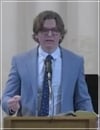
Gary Shepard

Will You Go With Me?

Genesis 24
Gary Shepard August, 25 2013 Audio
0 Comments
Gary Shepard
Gary Shepard August, 25 2013

In Gary Shepard's sermon titled "Will You Go With Me?", the main theological topic addressed is the typology of Christ and the church illustrated in Genesis 24. Shepard presents key arguments highlighting Abraham's servant, Eleazar, as a figure of the Holy Spirit, tasked with finding a bride for Isaac, representing Christ. The sermon discusses pertinent Scripture references, including Genesis 24:1-58 and various New Testament scriptures, emphasizing how Rebecca's willingness to leave her homeland parallels the believer's response to Christ's call. The practical significance of this message lies in the assurance that God's Spirit effectively draws His chosen people to Christ, revealing that salvation is grounded in God's sovereign grace rather than human decision or merit.

Key Quotes

“Will you go with me? ... It is mine to proclaim to you the Gospel. It is His to bring you.”

“The Spirit of God is in covenant agreement with both the Father and the Son to exercise the Father's choice and...bring all those given to the Son and redeemed by the Son unto Himself.”

“The bride of Christ, God's people, called by His preachers, servants...but even more so, mightily and effectually called by the Spirit.”

“As a matter of fact, when God reveals to His people the glory of Christ, there's no decision to be made.”

Sermon Transcript

Auto-generated transcript • May contain errors

100%
I invite you to turn with me
this morning to the book of Genesis chapter 24. I want to read a
few verses here and I hope that you will take the time to read
them all when you get home. Verse 1 begins, And Abraham was
old and well stricken in age, and the Lord had blessed Abraham
in all things. And Abraham said unto the eldest
servant of his house that ruled over all that he had, Put, I
pray thee, thy hand under my thigh, and I will make thee swear
by the Lord the God of heaven and the God of the earth, that
thou shalt not take a wife unto my son of the daughters of the
Canaanites among whom I dwell. But thou shalt go unto my country
and to my kindred and take a wife unto my son Isaac.' And the servant
said unto him, Her adventure the woman will not be willing
to follow me unto this land. Must thy needs bring thy son
again unto the land from whence thou camest? And Abraham said
unto him, beware that thou bring not my son thither again. The Lord God of heaven, which
took me from my father's house, And from the land of my kindred,
in which spake unto me, and that swear unto me, saying, Unto thy
seed will I give this land, he shall send his angel before thee,
and thou shalt take a wife unto my son from thence. And if the
woman will not be willing to follow thee, then thou shalt
be clear from this my oath, only bring not my son thither again.'
And the servant put his hand under the thigh of Abraham, his
master, and sware to him concerning that matter. The title of my message this
morning is a question. It is a question that I'll ask
to everyone who hears me. We are to preach the gospel to
every person we have opportunity to preach to. But it is particularly
a question to a people that God has given to His Son. And so our mission is not one
of a fool's errand, but it is rather a question particularly
to these individuals. My question is, will you go with
me? Will you? Go with me. And I'm a lot in my question
as Moses was in the book of Numbers when he spoke to Hobab, the son
of Ragul, the Midianite, Moses' father-in-law. He said, we are
journeying unto the place of which the Lord said, I will give
it to you. Come thou with us, and we will
do thee good, for the Lord hath spoken good concerning Israel."
He said, come thou with us. And my prayer would be this morning
that you might be enabled by the grace of God to confess from
your heart what Ruth confesses to Naomi. You see, this is not
part of a wedding vow as some have used it, but it is rather
Ruth's words to Naomi as she is about to go back to the land
of Bethlehem, Judah. She's told both of her daughter-in-laws,
who've lost their husbands, to just stay where they are. But Ruth says, Entreat me not
to leave thee, or to return from following after thee. For whither
thou goest, I will go. And where thou lodgest, I will
lodge. Thy people shall be my people,
and thy God my God. Where thou diest will I die,
and there will I be buried. The Lord do so to me, and more
also, if aught but death part thee and me. And not only would
I pray and desire that your Your hope and your attitude and your
desire would not only to be like Ruth, but also to be like a woman
that we'll read about in this text by the name of Rebecca. You see, at this point, Abraham
has become great in age, and he has just one son. whose name
is Isaac. Isaac is a picture and a type
of the Lord Jesus Christ. So in our talking here, we're
not simply talking about the man Isaac, or even, as I read
by some, a great lesson and example of a servant here. We're talking
about the Lord Jesus Christ. And Isaac, who has already been
taken up into Mount Moriah and offered to God as a sacrifice,
he, as a picture of Christ, has been taken to that mountain,
crucified, and then risen again. And he is grown. His hour has
come. And Sarah, His mother, is already
dead. I think that has something to
do with showing us the end of the law and also of that outward
earthly relationship with national Israel. Sarah is dead. And now has come the time that
there be a bride for this young man Isaac. And what we find in
this text What we see in the sequence of this text, we find
also in the teaching of the New Testament concerning Jesus Christ
and His people. If you look back in verse 2,
it says, And Abraham said unto his eldest servant of his house,
That is, he speaks here to his servant, the oldest of his house,
who ruled over all that he had. And this surely has to be a type,
this servant has to be a type of the Holy Spirit of God. and not simply of the Holy Spirit
of God, but to everyone that the Spirit of God sends forth
with the message of the gospel. He is a man by the name of Eleazar. He is a man that is from Damascus. And here is this man Abraham
entrusting in the hands of this man who would be a Gentile all
the things concerning his son and sets him forth to get a bride
for Isaac. Why would he do that? Why is
it so essential? Well, it is because he has no
heir except this one. He had complained to God in Genesis
15 about the fact that God had promised him this people, promised
him all these heirs, and he did not yet even have a son. And
he said, all I have is this man by the name of Eleazar, a servant
in my house. He'd have to be my heir. Here is this one now, this son
who has been born. Not one as the child of the flesh
as Ishmael was of Hagar, but here is that child, that son
of promise, who is to be truly, naturally, and spiritually the
heir of Abraham. And that's the way it is with
Christ. There has to be a bride for Christ. There has to be a bride because
He is the heir. And He must have His bride because
the Father in love has given to Him a bride, that is, a people. And because He has given Himself
for that bride. Read all of Ephesians 5. And because it is the will and
the purpose of God the Father for him to have this bride, there
can be no ifs or failures. And most especially because justice
now requires that he have this bride that he redeemed by his
blood hanging on that cross outside of Jerusalem. And even more than
that, the wedding has already been planned. The wedding is
already spoken of in Scripture as being a sure thing. Read over
in the book of Revelation. But note that the vow and pledge
is entered into by this method or by this ritual that was common
in the day. You see, it says that Abraham
says to his servant that ruled over all that he had. Put, I
pray Thee, Thy hand under my thigh, and I will make Thee swear."
There is a vow taken. There is a pledge made. by the
Lord, the God of heaven and the God of the earth, that thou shalt
not take a wife unto my son of the daughters of the Canaanites
among whom I dwell, but thou shalt go into my country and
to my kindred and take a wife unto my son Isaac." In other
words, she is to be taken from a people who have long been akin
to Abraham. And that is the way that it is
with Christ. These that make up the bride
of Christ, they are a people who have long been akin to Christ. They have long been given to
Christ by God in that everlasting covenant. They are His by divine
election. They are His as a gift of the
Father to the Son. They are His by redeeming grace. And not only that, they are described
in this way by this relation. In Matthew, the Lord owns all
His kindred in this way. Whosoever shall do the will of
my Father who is in the heaven. Mark also identifies them in
this way, "...whosoever shall do the will of God." And Luke
identifies them saying, "...those who hear the word of God and
do it." In other words, this is not what
they do in order to be akin to Christ. This is what the people
who are already akin to Him by grace, this is what they will
be found doing, because the Spirit of God will produce it in them. They will be the ones who hear. They will be the ones who believe. They will be the ones who do
the will of the Father, which is to trust the Lord Jesus Christ,
and not taken from a people who are yet under the curse. And furthermore, in this vow,
the Son must not be taken again to that land. In other words,
the Son, having already gone through everything, having already
died the death of the cross, having already accomplished a
perfect redemption by His blood, having already finished the work,
And therefore, having gone through death, hell, and the grave, he
is ascended up into heaven, seated at the right hand of the majesty
on high. And he never is in that role
as the one who came to die for the sins of his people. He never
ever will enter into that again. He is exalted. at the right hand
of the Father. And to take Him back again as
is pictured in the ceremonies of many religions who say that
even as they take of the bread and wine, that it becomes again
the blood and body of Christ. To do that is in this tithe just
exactly what the Father forbids. Listen to what the Scripture
says. He being exalted now will never
be brought down. He never can be lowered to the
foolishness of an offer. He never can be reduced in His
accomplishments to be held hostage by the will or the decisions
of men. He has finished the work. Now listen to what it says. Hebrews
says, "...neither by the blood of goats and calves, but by His
own blood He entered into the holy place once, once, having
obtained eternal redemption for us." Again in Hebrews. But now, once in the end of the
world, hath He appeared to put away sin by the sacrifice of
Himself. Once he did this, and then again,
so Christ was once offered to bear the sins of many, and unto
them that look for Him shall He appear the second time without
sin unto salvation." You're not to lower Him. You're not to shame
him by bringing him back to that land out of which God delivered
me? You're not to reduce him down
to less than he is? But notice what Eleazar says. In verse 5, it says, And the
servant said unto him, Peradventure, Or, as we are so often to say,
what if? What if? What if the woman will
not be willing to follow me unto this land? Must I needs bring
thy son again unto the land from whence thou camest? What if this bride, that you're
talking about. What if this woman that you desire
to be the wife of your only son, what if when I tell her these
things, she's not willing to come with me? What if? Well,
in the grace of the bride of Christ, In the case of everyone
that makes up his bride by nature, they will not be willing." There's
no question. They're going to be by nature
just like every one of the sons and daughters of Adam. And he
says to them, you will not come to me that you might have life. In other words, Eleazar, If it's
left up to the messenger, if it's left up to my power of persuasion,
if it's left up to my ability to convince you, she will not
come. Yet, here is Rebecca, and we
find her willing to leave her native land. Think about this. Here is this woman, who is now
found willing to leave her native land, willing to go to one that
is unknown to her, willing to leave her family and her friends,
led by one that she's never met before, to marry one who's totally
unknown to her. You think about that. If you
look over in verse 58, when they call Rebekah, it says, they call
Rebekah and said unto her, will thou go with this man? She said, I will go. That's quite an amazing thing. And she is shown as willing Because
though unwilling by nature to come to Christ, all God's church,
that word itself meaning a called-out assembly, all God's church will
be made willing by His Spirit. How do you know that, preacher?
I know that because that's what God says, not just to us. But because He said it first
to His Son, He said, Thy people. He could have said, Thy bride,
Thy church, Thy family. All these names by which we find
the people of God identified in Scripture. Thy elect, Thy
people shall be willing in the day of Thy power. Why was Rebecca willing? To leave the land of her birth? To leave the land of her family? To leave what appeared to be
most likely some family inheritance? The Spirit of God. The Spirit
of God. Look in verse 7 and 8. Abraham says, "...the Lord God
of heaven, which took me from my father's house, and from the
land of my kindred, and which spake to me, saying, and that
swear unto me, saying, Unto thy seed will I give this land. He
shall send his angel before thee, and thou shalt take a wife unto
my son from thence." What's Abraham saying? He's saying the same
God that made me willing at his command and call to leave the
land of my nativity, to leave my father's household, to leave
my gods and my religion as it was. He's the same God that'll
bring her. Abraham's father was a maker
of idols. Abraham was steeped in tradition. Abraham was probably looked upon
to take over the family business. But the Spirit of God brought
him out of nothing into something, out of idolatry unto the living
God. He was made willing like Rebekah
was made willing, and like all of God's people are made willing
in the day of God's power. You see, the Spirit of God is
in covenant agreement with both the Father and the Son to exercise
the Father's choice and to actually bring all those given to the
Son and redeemed by the Son unto Himself. And all you have to
do is listen to the words of our Lord. And I can tell you
this, if you're His, if you were loved with that everlasting love,
if you were put into that everlasting covenant of grace. If you were
given to the Lord Jesus Christ as His bride, He's going to have
you. He's going to draw you. He's
going to bring you out of all your false refuges, out of all
your old professions, out of all your family idolatry, whatever
it is, He's going to bring all His people to Himself. To Himself. He stood amongst those Jews of
which He had a people. He made reference to His people
that were among the Gentiles. He left that people whereby he
stood looking at, to those he thought about in the future,
and he says to them, and of the sheep I have, which are not of
this fold, them also I must bring." You see, it is mine to tell you
about Christ. It is mine to set forth before
you the Word of Truth. It is Mine to proclaim to you
the Gospel. It is Mine to tell you what the
Scriptures say that you are in yourselves, to tell you how God
is, to tell you how He saves sinners, to tell you about the
Lord Jesus Christ. But it is His to bring you. Will you go? You see, the Holy
Spirit uses the means of the gospel messenger and the gospel
message to accomplish this calling, this effectual bringing of the
bride to Christ. As a matter of fact, there's
another name given for God's people. They are described as
the call. You remember Romans 8, 28? Instead
of saying simply, all things work together for good, what
it says is, and we know that all things work together for
good to them that love God, to them that are the called according
to His purpose. And rather than looking as men
are want to do so often for the fairest of the fair, fairest
among women, the fairest best-looking girl that's around. Price looks for those like Gomer. You remember her? Wretched woman. I mentioned Ruth. She was a Moabitess
woman. He looks for sinners. That's
right. Christ Jesus came into the world
to save sinners. In due time, Christ died for
the ungodly, for the unrighteous. You see, Christ takes His bride
to Himself, though she is ugly and tainted with sin, and makes
her Beautiful. Makes her righteous. Adorns her
with everything necessary to make her perfect before God. Provides everything to cover
her and clothe her and wash her. Just read in Ezekiel 16. She's beautiful. And that's what
the message has to do with. God sending His servants out
to tell that people that Christ died for, that Christ loves with
an everlasting love, that Christ chose, that He has made them
beautiful by His hand. He has given them a part in this
inheritance. They will become all that God
requires and receive all that God gives by grace by virtue
of their being united to Him. You say, I don't know if to believe
that or not. Well, I can tell you this. Rebecca went with Eliezer. She didn't just go to travel
with him. She didn't go for a visit. She
went to live in Abraham's house. She went to marry Abraham's son. All on the basis of something
she heard. Is that right? All on the basis
of something that was told to her. Don't you imagine that as
beautiful as she most likely was, that she'd had other suitors
maybe, or that she'd had others to speak to her about the possibility
of marriage, or something like that? Why didn't she follow those
things? Because this is from the Word
of God. This has to do with the promise of God. This has to do
with the call and the purpose of God. She has to be Isaac's
wife. Paul, when he writes to the Thessalonians,
he says, We are bound to give thanks always to God for you,
brethren, beloved of the Lord. Because God hath from the beginning
chosen you to salvation through sanctification of the Spirit
and belief of the truth, whereunto He called you by our gospel to
the obtaining of the glory of our Lord Jesus Christ. Simply, no matter what she had,
where she was, No matter what she had as she was, it will pale
into utter significance to what she'll have in Isaiah. She will
be the bride. She will be in him a possessor
of all things. She will be with him joint heirs
with the Lord Jesus. All based on something she's
told by a man. And Rebecca, being called personally,
individually, and by means of having been told the glories
and the purpose and the riches and the will of Abraham and his
son, they said, will you go with this man? You wasn't going to
marry Eliezer. You're not going to marry me.
I don't want you to come to me, but I'm telling somebody this,
and that is to come to the Lord Jesus Christ. Look down at verse
34. I love these few verses. Eliezer
says, I am Abraham's servant. I'm not Abraham. I'm not Isaac. I'm just a servant. That's all
a gospel preacher is. That's what John said. I'm not
the light. The one I'm talking about, I'm
not worthy of lacing his shoelaces. He must increase, but I must
decrease. I'm Abraham's servant, and the
Lord hath blessed my master greatly. I'm just a servant, but I can
tell you this, the Lord, Jehovah God, has blessed my master, and
he has become great. He was already great being one
with the Father. But he has in the person of the
man Christ Jesus, he has achieved a greatness that exceeds all
that. He's highly exalted, given a
name above every name our Savior is. And He hath given Him flocks,
and herds, and silver, and gold, and menservants, and maidservants,
and camels, and asses. And Sarah, my Master's wife,
bare a son to my Master when she was old, and none to Him."
hath he given all that he hath." That's the most marvelous thing.
Abraham had given to Isaac, not just a big portion, he had given
to Isaac, his only son, all that he had. That's just exactly what
God has given his son. I'm not talking about looking
to Him and trusting in Him as one who has this piece or that
part or anything else, He's the one that the Scripture says is
all. He has all. All the treasures of wisdom and
knowledge are in Him. All the riches of God's grace
is in Him. All the eternal inheritance is
in Him. All of salvation is in Christ. All righteousness is in Christ. All forgiveness, all pardon,
all mercy. than Christ. And the amazing
thing is, in Him is more than you and I can even begin to imagine. All things. He has sent His Spirit,
Paul says, that we might know the things that are freely given
unto us of God. You'd think in our day to hear
preachers that they were calling upon men and women to be united
to somebody who's poorer than they are. Sometimes mothers have
told their daughters after their own experience that it'd be just
as easy for them to marry for riches as it would be for them
to marry for love. What I'm telling you is that
in this union there is both everlasting eternal love and perfect riches
which amount to all things that will really last. Christ said
The Spirit of truth, when He's come, He will guide you into
all truth. For He shall not speak of Himself,
but whatsoever He shall hear, that shall He speak. And He will
show you things to come. He shall glorify Me." I'm not
just talking about heaven. I'm not just talking about freedom
from pain or sin or anything else. I'm talking about Christ. I'm talking about the One who
is altogether lovely in His person, as God manifests in the flesh,
and perfect in all His work, everything He's done. Perfect.
"...He shall glorify Me, for He shall receive of Mine, and
shall show it unto you, all things that the Father hath are Mine. Therefore said I, that He shall
take of Mine, and shall show it unto you." You see, those
that the Lord brings, He shows them the brevity, the emptiness,
the consequences of all the things of this life. He shows them the
glory, the glory of His grace especially in the face of Jesus
Christ. The Spirit's call is always effectual. The bride and all her individual
members, everyone will come to Christ, and not one seat at the
wedding feast will be empty. He says, come unto me, all you
that labor and are heavy laden. He says, all that the Father
giveth me shall come to me, and him that comes to me I will in
no wise cast out. He says, "...and they shall all
be taught of God, and everyone that hath heard and hath learned
of the Father comes to Me." Look down in our text in Genesis 24
at verse 54, "...and they that eat and drink, He and the men that were with
him and tarried all night, and they rose up in the morning,
and he said, send me away unto my master. And her brother and
her mother said, let the damsel abide with us a few days, at
the least ten, after that she shall go. There is no hesitation
here. And he said unto them, Hinder
me not, seeing the Lord hath prospered my way. Send me away,
that I may go to my master. And they said, We will call the
damsel, and inquire at her mouth. And they called Rebekah, and
said unto her, Wilt thou go with this man? Jesus said, I'll go. I will go. "...And they sent
away Rebekah their sister, and her nurse, and Abraham's servant,
and his men. And they blessed Rebekah and
said unto her, Thou art our sister, be thou the mother of thousands
of millions, and let thy seed possess the gate of those which
hate thee. And Rebekah arose, and her damsels
And they rode upon the camels and followed the man. And the
servant took Rebekah and went his way. And Isaac came from
the way of the well of Laharoa, for he dwelt in the south country. And Isaac went out to meditate
in the field at the even time. And he lifted up his eyes and
saw, and behold, the camels were come." They had to come. And
Rebecca lifted up her eyes, and when she saw Isaac, she lighted
off the camel. For she had said unto the servant,
What man is this that walketh in the field to meet us? Now
he's still having to tell her everything about Isaac. And the
servant had said, It is my master. What's going to be her attitude?
Is she going to say, Well, I'm like a prize to him. He's mighty
fortunate to be marrying me. No, he covered her face. She took upon herself an act
of humility and reverence for him. And the servant told Isaac
all these things that he had done. And Isaac brought her into
his mother Sarah's tent, and took Rebekah, and she became
his wife, and he loved her. You know, instead of spending
66 books on family life and marriage, the Spirit of God directed the
Apostle Paul to sum it up by this one great example. He said,
love your wives as Christ loved the church and gave Himself for
it. Every woman loved by her husband
as Christ loved the church and gave Himself for it. That's a
happy wife. Every woman who reverences her
husband as Rebecca did Isaac, he's a happy She became his wife,
and he loved her, and Isaac was comforted after his mother's
death. You see, the bride of Christ,
God's people, called by His preachers, servants, as this one was, through
the gospel, but even more so, mightily and effectually called
by the Spirit." Two references in Scripture to this, I think.
In the one case, the master of the house sends out his servant,
and he invites them to come to the marriage feast of his son. But in a similar parable, it
says that he sends out his servant, And He goes out and says, compel
them to come. No man comes to the Father except
He draw him, bring him, causes him by His Spirit to see the
sinner's awful state. And that salvation is in Christ. It shows them that what we have
in ourselves is not only nothing, but it's negative nothing. And
what God gives in Christ is everything and more than everything. Like when David rose to the throne
and he said, is there not one in the house of Saul that I might
show a kindness to for Jonathan's sake? And they said, there's
one fellow. His name is Mephibosheth, which
means destroying shame. He lives in the land of Lodabar,
which means a land of no pasture. And it says, And David sent his
servant and fetched him. You see, the people of God, are
described as those that follow the Lamb with us wherever He
goes. And most especially as His sheep
or as His bride. He said, they hear my voice and
they follow me. Maybe some poor old Gentile servant
that the Lord uses to call His people. Ask them that question,
will you go with me? As all the Lord's people, will
you go with us? Will you flee to Christ, the
one refuge? Will you come and drink as a
thirsty sinner at the fountain of living water? Will you come
as a hungry sinner, eat of the bread of life? He said, will
you go with me? I'll tell you, we're not saved
by a decision. As a matter of fact, when God
reveals to His people the glory of Christ, there's no decision
to be made. Somebody asks you today, Would
you like to come to this banquet? It's gonna be this afternoon.
It'll be the finest food you've ever eaten, and everybody that
comes gets a million dollars cash. I don't even have to think
about it. Put me on the guest list. Will
you go with me? I'm just a servant. He's everything. The Lord has blessed my master
with everything. He's given to his son everything
he has. You get him. yet at all. I'm
not going to give an invitation because I don't want you to come
to me like I don't ever want you to come to me. But I hope
the Lord calls you. And as He calls, if He calls,
you'll surely come. Father, we pray this morning
that you would call out that people that you love, that Christ
died for, that the Spirit will make willing in the day of thy
power. May this be the day of thy power
to someone. You know them that are yours,
though we don't. And so we are sent to speak the
excellencies of Christ, that all salvation, all righteousness,
every gift of God is in him. Draw these to your son, and all
the honor and glory to yourself, for we pray in his name. Amen.
Gary Shepard
About Gary Shepard
Gary Shepard is teacher and pastor of Sovereign Grace Baptist Church in Jacksonville, North Carolina.

Comments

0 / 2000 characters
Comments are moderated before appearing.

Be the first to comment!

1
Joshua

Joshua

Shall we play a game? Ask me about articles, sermons, or theology from our library. I can also help you navigate the site.