Bootstrap
Thomas Boston

The wrath of God!

Thomas Boston September, 13 2008 Audio
0 Comments
Choice Puritan Devotional

The sermon by Thomas Boston addresses the theological doctrine of the wrath of God, emphasizing its attributes and the dire consequences faced by unrepentant sinners. Boston articulates the seven key characteristics of God's wrath: its irresistibility, insupportability, avoidance for the impenitent, power, penetrating nature, constancy, eternal duration, and inherent justice. Scripture references such as John 3:36 and Proverbs 29:1 are employed to underscore that God's wrath abides on the unrepentant and that the unyielding heart leads to inevitable destruction. The practical significance of this sermon lies in its call for urgent repentance and faith in Christ as the sole refuge from God's just and eternal wrath, reminding believers of the seriousness of sin and the holiness of God.

Key Quotes

“The wrath of God is irresistible. There is no standing before it.”

“Who shall dwell in devouring fire? who shall dwell with everlasting burnings?”

“O miserable soul, if you flee not from this wrath unto Jesus Christ, though your misery had a beginning, yet it will never have an end.”

“The judge of all the earth can do no wrong. Is God unrighteous to inflict wrath? Absolutely not.”

Sermon Transcript

Auto-generated transcript • May contain errors

100%
The Wrath of God by Thomas Boston The wrath of God abides on him. John 3 verse 36

1. The wrath of God is irresistible. There is no standing before it. Who can stand in your sight when once you are angry? Psalm 76, verse 7. Can the worm or the moth defend itself against him who designs to crush it? Can the worm, man, stand before an angry God? Foolish men, indeed, bid a defiance against God. But the Lord often, even in this world, opens such sluices of wrath upon them, as all their might cannot stop. They are carried away thereby, as with a flood. How much more will it be so in hell?

2. The wrath of God is insupportable. What a man cannot resist, he will try to endure. But who shall dwell in devouring fire? who shall dwell with everlasting burnings. God's wrath is a weight which will sink men into the lowest hell. It is a burden which no man can endure.

3. The wrath of God is unavoidable to those who continue impenitently and die in their sinful course. He who, being often reproved, hardens his neck, shall suddenly be destroyed, and that without remedy." Proverbs 29, verse 1. We may now flee from it, indeed, by fleeing to Jesus Christ. But those who flee from Christ will never be able to avoid it. Where can men flee from the avenging God? Where will they find a shelter? The hills will not bear them. The mountains will be deaf to their loudest supplications when they cry to them to fall on them and hide them from the wrath of the Lamb.

Number four, the wrath of God is powerful and fierce. Who can comprehend the power of your anger? Your wrath is as awesome as the fear you deserve. Psalm 90 verse 11. We are apt to fear the wrath of man more than we ought, but no man can apprehend the wrath of God to be more dreadful than it really is. The power of God's wrath can never be known to the utmost, for it is infinite, and, properly speaking, has no utmost limit. However fierce it is, either on earth or in hell, God can still carry it farther. Everything in God is most perfect in its kind, and therefore no wrath is so fierce as His. O sinner, how will you be able to endure that wrath which will tear you in pieces and grind you to powder?

5. The wrath of God is penetrating and piercing wrath. It is burning wrath and fiery indignation. There is no pain more intense than that which is caused by fire, And no fire so piercing as the fire of God's indignation, Which burns unto the lowest hell. The arrows of men's wrath can pierce flesh, blood, and bones, But cannot reach the soul. But the wrath of God will sink into the soul, And so pierce a man in the most tender part.

Number six, the wrath of God is constant wrath, running parallel with the man's continuance in an unregenerate state, constantly attending him from the womb to the grave. There are few days so dark, but the sun sometimes looks out from under the clouds. But the wrath of God is an abiding cloud on the objects of it. John 3 verse 36. The wrath of God abides on him who believes not.

Number seven. The wrath of God is eternal. O miserable soul, if you flee not from this wrath unto Jesus Christ, though your misery had a beginning, yet it will never have an end. Should devouring death wholly swallow you up, and forever hold you fast in the grave, it would be kind. But your body must be reunited to your immortal soul, and live again, and never die. that you may be ever dying in the hands of the ever-living God. Death will quench the flame of man's wrath against us, if nothing else does. But God's wrath, when it has come on the sinner for millions of ages, will still be the wrath to come. While God is, He will pursue the quarrel.

8. However dreadful it is, and though it is eternal, yet it is most just wrath. It is a clear fire, without the least smoke of injustice. The sea of wrath, raging with greatest fury against the sinner, is clear as crystal. The judge of all the earth can do no wrong. Is God unrighteous to inflict wrath? Absolutely not. Otherwise, how will God judge the world? Romans 3 verses 5 and 6.

The judge being infinitely just, the sentence must be righteous. Therefore, stop your mouth, O proud sinner. Still your clamor against your righteous judge.

This Puritan devotional has been brought to you by Grace Gems, a treasury of ageless Sovereign Grace writings. Please visit our website at www.gracegems.org, where you can browse and freely download thousands of choice books, sermons, and quotes, along with select audio messages. No donations accepted. Thank you.
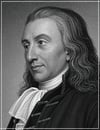
Thomas Boston
About Thomas Boston
Thomas Boston (1676–1732) was a Scottish Presbyterian minister and theologian known for his deep piety, pastoral care, and theological clarity. Educated at the University of Edinburgh, he ministered first in Simprin and later in Ettrick, where he served for the rest of his life. Boston was a key figure in the Marrow Controversy, defending the doctrines of grace and assurance found in The Marrow of Modern Divinity. His most famous work, Human Nature in Its Fourfold State, remains a classic of Reformed theology, outlining the spiritual conditions of man from creation to eternity. Boston's writings and ministry left a lasting legacy in Scottish Calvinism, emphasizing both doctrinal soundness and heartfelt devotion.
Broadcaster:

Comments

0 / 2000 characters
Comments are moderated before appearing.

Be the first to comment!

Joshua

Joshua

Shall we play a game? Ask me about articles, sermons, or theology from our library. I can also help you navigate the site.