Bootstrap
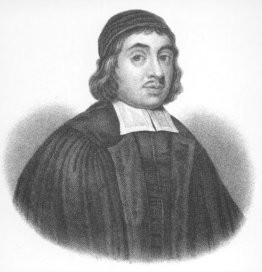
Thomas Brooks

Afflicted, tormented and destroyed

Thomas Brooks • August, 13 2008 • Audio
0 Comments
Choice Puritan Devotional

In his sermon "Afflicted, Tormented, and Destroyed," Thomas Brooks addresses the doctrine of suffering and persecution endured by early Christians. He articulates the severity and magnitude of their afflictions, providing a detailed account of the brutal methods of torture and execution they faced under Roman rule. The sermon utilizes historical instances to highlight the constancy of suffering for the faithful, implying that contemporary grievances often pale in comparison. Brooks encourages believers to adopt a proper perspective on their own suffering, grounding his reflections in Scripture's teachings on endurance and Christ's call to bear one’s cross (Luke 9:23). This message serves to exhort Christians to embrace their trials with humility and gratitude, recognizing the greater suffering endured by those who came before them.

Key Quotes

“What heart of stone can read over this list with dry eyes?”

“Take heed of making mohills into mountains, and of crying out, Is there any sorrow compared to my sorrow, or any sufferings compared to my sufferings?”

What does the Bible say about suffering for Christ?

The Bible teaches that suffering for Christ is a mark of faith and union with Him.

The Scriptures are replete with accounts of suffering endured for the sake of Christ. For instance, in Philippians 1:29, Paul states, 'For it has been granted to you that for the sake of Christ you should not only believe in him but also suffer for his sake.' This underscores that suffering is not only a possibility but a privilege given to believers, as it unites them with Christ's own sufferings. In addition, Romans 8:17 asserts that we are 'heirs of God and fellow heirs with Christ, provided we suffer with him in order that we may also be glorified with him.'

The early Christians faced unspeakable horrors as they adhered to their faith, demonstrating remarkable courage and fidelity to Christ amid persecution. Their willingness to endure extreme physical torment, such as being whipped or thrown to wild beasts, serves as a profound testimony to the truth of the Gospel. This historical perspective challenges our modern trivial complaints and reminds us that our sufferings pale in comparison to those endured by early believers, which helps to put our troubles into a proper context within the sovereignty of God.
How do we know the doctrine of suffering is true?

The doctrine of suffering is substantiated by Scripture and the historical experience of believers.

The doctrine of suffering is firmly rooted in the teaching of Scripture and the enduring experiences of Christians throughout history. Biblical texts such as 2 Timothy 3:12 state, 'Indeed, all who desire to live a godly life in Christ Jesus will be persecuted.' This reflects the notion that suffering is an expected outcome for believers seeking to follow Christ. Additionally, the historical accounts of early Christians, who faced brutal persecution and martyrdom, further validate this doctrine.

The faithfulness of these early martyrs serves as a testimony to the truth of the Gospel, emphasizing that endurance of suffering can be through God's providential care and grace. These accounts inspire believers today, affirming their own struggles and encouraging them that their suffering is part of a larger narrative of redemption and growth in faith. Ultimately, this understanding encourages a faithful response in the face of trials, knowing they share in the suffering that leads to glory.
Why is understanding Christian suffering important?

Understanding suffering is crucial as it deepens faith and prepares believers for trials.

Understanding the role of suffering in the Christian life is vital for several reasons. Firstly, it aligns our expectations as believers. In John 16:33, Jesus Himself warns that 'In the world you will have tribulation. But take heart; I have overcome the world.' This prepares believers for the inevitable struggles they will face, allowing them to approach hardship with hope rather than despair.

Furthermore, recognizing that suffering can lead to spiritual growth is a key component of Christian theology. James 1:2-4 teaches that trials produce endurance, and that endurance brings about spiritual maturity. Consequently, when believers experience suffering, they can view it through the lens of growth—an opportunity for drawing nearer to God and relying on His strength. This fosters a theology that does not shy away from pain but sees it as a divine tool for sanctification and deepening one's relationship with Christ.

Sermon Transcript

Auto-generated transcript • May contain errors

100%
Afflicted, Tormented, and Destroyed by Thomas Brooks Let me give you a little abridgment of the sufferings of some of the early Christians of whom the world was not worthy. 1. In the reign of Hadrian the Emperor, there were 10,000 Christians crowned with a crown of thorns, thrust into the sides with sharp lances, and then crucified. Others were so whipped that their entrails were seen, and afterwards they were thrown upon sharp shells, and then upon sharp nails and thorns. And after all this cruelty, they were thrown to wild beasts to be devoured. 3. Multitudes were banished. 4. Others were pulled apart with wild horses. 5. Some were beaten and racked with bars of iron. 6. Others were cast into loathsome dungeons. 7. Some were burnt in the fire. 8. Others were knocked down and had their brains beaten out with staves and clubs. 9. Some were pricked in their faces and eyes with sharp reeds. 10. Others were stoned to death with stones, as Stephen was. 11. Some were dashed in pieces against millstones. 12. Others had their teeth dashed out of their jaws and their joints broken. 13. Some were cast down from very high places. 14. Others were beheaded. 15. Some were tormented with razors. 16. Others were slain with the sword. 17. Some were run through with pikes. 18. Others were driven into the wilderness, where they wandered up and down, suffering hunger and cold, and where they were exposed to the fury both of wild beasts and also to the rage of the barbarous Arabians. 19. Some fled into caves, which their persecutors crammed up with stones, and there they died. 20. Others were trodden to death by the people. 21. Some were hanged on gibbets with a slow fire under them. 22. Others were cast into the sea and drowned. 23. Some were slain by being thrown in mines. 24. Others were hanged by their feet and choked with the smoke of a small fire, their legs being first broken. 25. Some were covered with oil and then roasted with a soft fire. 26. Others were hung by one hand that they might feel the weight of their whole bodies scorching and broiling over burning coals. 27. Some were shot through with arrows and afterwards thrown into stinking prisons. 28. Others were stripped stark naked and thrown out in cold frosty nights and burnt the next day. 29. In Syria, a company of Christian virgins were stripped stark naked to be scorned by the multitude, then shaved, and then torn in pieces and devoured by beasts. 30. Lastly, many women had the joints of their bodies pulled, and their flesh and sides clawed with talons of wild beasts to the bones, and their breasts seared with torches until they died. And thus you have an account of thirty different ways by which the precious sons and daughters of God have formerly been afflicted, tormented, and destroyed. What heart of stone can read over this list with dry eyes? And now tell me, sirs, whether your sufferings are worth a naming in that day. wherein the sufferings of the precious servants of God in the primitive times are spoken of? Oh no! Well then, take heed of making mohills into mountains, and of crying out, Is there any sorrow compared to my sorrow, or any sufferings compared to my sufferings? This Puritan devotional has been brought to you by Grace Gems, a treasury of ageless Sovereign Grace writings. Please visit our website at www.gracegems.org, where you can browse and freely download thousands of choice books, sermons, and quotes, along with select audio messages. No donations accepted. Thank you.
Broadcaster:

Comments

0 / 2000 characters
Comments are moderated before appearing.

Be the first to comment!

Joshua

Joshua

Shall we play a game? Ask me about articles, sermons, or theology from our library. I can also help you navigate the site.

0:00 0:00