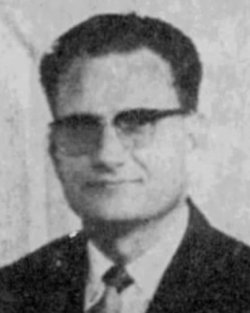
In Remembrance of Me, The Lord's Supper
1 Corinthians 11:17-34
The sermon titled "In Remembrance of Me, The Lord's Supper," delivered by Wilbur Elias Best, focuses on the Reformed understanding of the Lord's Supper as delineated in 1 Corinthians 11:17-34. Best argues against the Catholic view of transubstantiation, emphasizing instead the distinction between Christ's "real" and "bodily" presence during communion. He cites specific Scripture, particularly Paul's instruction regarding the observance of the Supper "in remembrance of me," to assert that participants must come with a proper understanding of the significance of Christ's body and blood and not as re-sacrifices. The doctrinal significance highlights that the Lord's Supper serves as a memorial of Christ's once-for-all sacrifice and a proclamation of His death until His return, thus rejecting notions of its efficacy in mediating grace or reinforcing a sacrificial framework.
“The real presence and the bodily presence are distinct. He is not bodily present... but His real presence is certainly experienced... where His Word is being proclaimed in its purity.”
“One brings judgment upon himself by unworthily observing the Lord's Supper. Careless participation leads to weakness among Christians in the local assembly...”
“Thus, baptism becomes a memorial followed by the Lord's Feast. Secondly, we proclaim, we declare the Lord's death.”
“You do not need to advise God of the death of His Son; we need to remind ourselves, to remind one another, that the Lord Jesus Christ died on our behalf.”
The Bible teaches that the Lord's Supper is a commemorative act proclaimed as a remembrance of Christ's sacrifice.
1 Corinthians 11:23-26
Christ's real presence is experienced spiritually among believers gathering in His name, but He is not bodily present.
Matthew 18:20
Remembering Christ's sacrifice reinforces believers' faith and commitment by recognizing His work on their behalf.
1 Corinthians 11:24-25
Auto-generated transcript • May contain errors

Comments
Your comment has been submitted and is awaiting moderation. Once approved, it will appear on this page.
Be the first to comment!