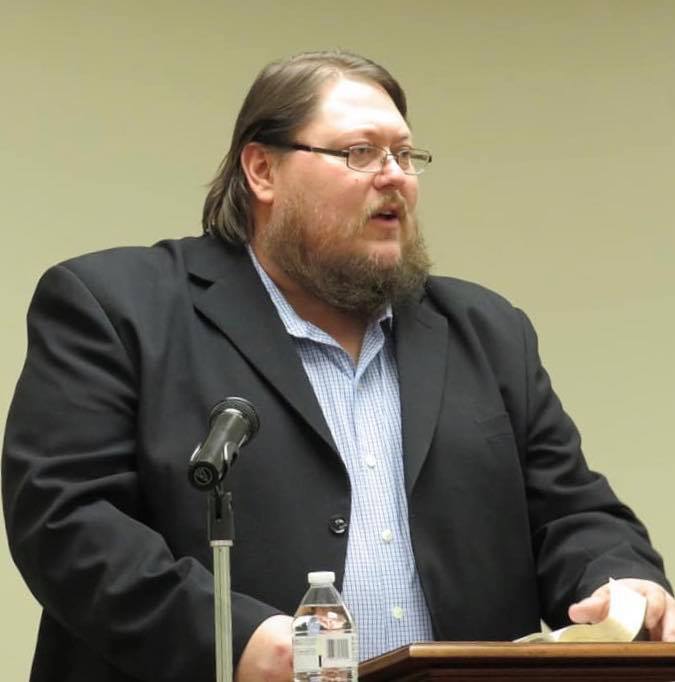
The sermon by Mikal Smith primarily addresses the doctrine of regeneration and the necessity of the new birth as essential for salvation. He articulates that true believers are not reborn through their own will or merit but rather by the sovereign act of God. Smith supports his argument with Scripture, particularly John 1:12-13 and John 3:1-8, which emphasize that spiritual rebirth is solely an act of God's will, countering notions of free will or decisionism in salvation. The practical significance of this teaching is rooted in Reformed theology, highlighting total depravity and irresistible grace, thus assuring believers that their salvation rests entirely on God's initiative rather than human effort.
Key Quotes
“They were born not of blood, nor of the will of the flesh, nor of the will of man, but of God.”
“You must be born again... There is no other way a man can see the kingdom of God except being born again.”
“No man can accept God... and without that act of God, no man could, can, would, will.”
“All those for whom Christ died for, all those who are in the kingdom of God, were born again, not of the will of the flesh, nor the will of man, but of the will of God.”
The Bible teaches that being born again is a work of God, not of man, as seen in John 1:12-13.
The concept of being born again is central to Christian doctrine, illustrated in John 1:12-13, where it states that those who receive Christ are given the power to become sons of God. This process of spiritual rebirth is not the result of human will or effort; rather, it is the sovereign act of God. Jesus emphasizes this in John 3, stating that unless one is born again, they cannot see or enter the kingdom of God. It is only by the will of God that anyone is spiritually reborn, shunning any human attempts to achieve this through works or lineage.
John 1:12-13, John 3:3-5
Salvation is by God's will as it is stated in John 1:13, emphasizing that we are born of God, not of human effort.
The doctrine of salvation by God's will is well-founded in scripture, particularly in John 1:13, which clarifies that those who are born again do not owe their new life to bloodlines or human will but to the will of God. This underscores the belief in total depravity, where humans, in their unregenerate state, lack the ability to choose God. The natural man cannot comprehend spiritual things, reinforcing that it is through divine intervention and not human decision that one comes to faith. The work of salvation is initiated and completed solely by God, who has chosen and called His elect from before the foundation of the world.
John 1:13, Ephesians 1:4-5
Irresistible grace assures that those whom God calls will inevitably come to faith.
Irresistible grace is a foundational aspect of Reformed theology that assures believers that God's call to salvation is effectual. In John 3, Jesus indicates that faith and understanding of spiritual truths come through the new birth wrought by the Holy Spirit. Those who are chosen by God will come to believe in Christ inevitably because the divine initiative ensures that their hearts are changed, enabling them to respond to His call. This doctrine removes any notion of human resistance leading to salvation; instead, it emphasizes God's sovereignty and the transforming power of His grace in the believer's life. Through irresistible grace, Christians can find assurance that their salvation is secure, grounded in God's unchanging purpose.
John 3:8, 1 Corinthians 2:14
Comments
Your comment has been submitted and is awaiting moderation. Once approved, it will appear on this page.
Be the first to comment!
