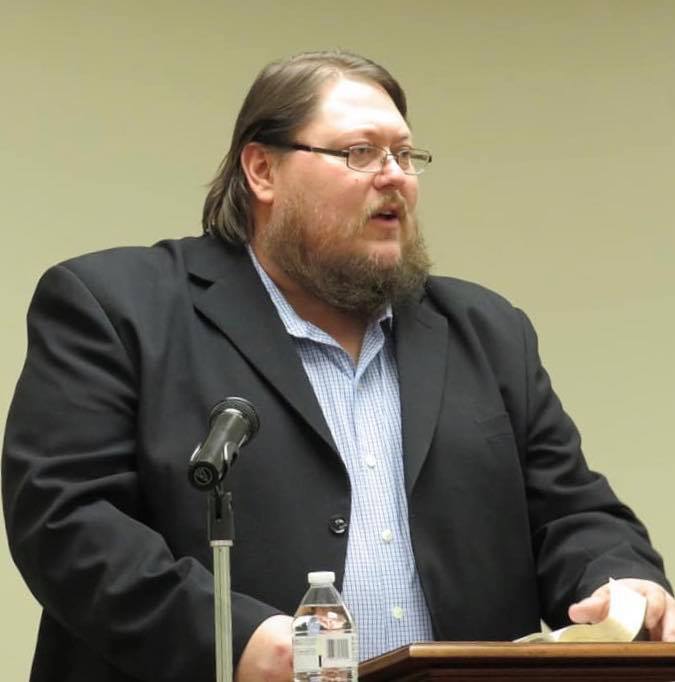
Mikal Smith’s sermon on the nature of the church, particularly focusing on the term "Ekklesia," argues for its understanding as a local and visible assembly rather than a universal or invisible entity. He emphasizes the etymology of "Ekklesia," illustrating its historical context as a gathered congregation intended for conducting defined purposes within a community, specifically the kingdom of God. Throughout the sermon, key passages from Acts, such as Acts 2:47 and Acts 8:1, are discussed to demonstrate that the New Testament consistently refers to specific local congregations rather than a singular, universal church. The practical significance of this view lies in reinforcing the authority and function of local churches in worship, discipline, and community identity, distinguishing the Reformed perspective from other theological interpretations that assert a universal church concept.
“The term or the nature of the church is a local and visible assembly.”
“We cannot trust men, just because faithful men write confessions doesn’t mean that they’re infallible.”
“Let God be true and let every man be a liar. If that puts you in a class all to yourself and nobody else stands with you, so be it.”
“Every word counts. Even the small, tiny words have meaning.”
The Bible describes the Church, or Ekklesia, as a local and visible assembly of believers called out to conduct the business of God's kingdom.
Matthew 16:18, Acts 2:47
Evidence from Scripture consistently shows that the Church is described as local and visible, with specific congregations mentioned in various texts.
Acts 5:11, Acts 9:31, Acts 13:1
Recognizing the Church as local and visible emphasizes community, accountability, and the active participation of believers in worship and ministry.
Matthew 18:15-17, Acts 2:42-47
Auto-generated transcript • May contain errors

Comments
Your comment has been submitted and is awaiting moderation. Once approved, it will appear on this page.
Be the first to comment!