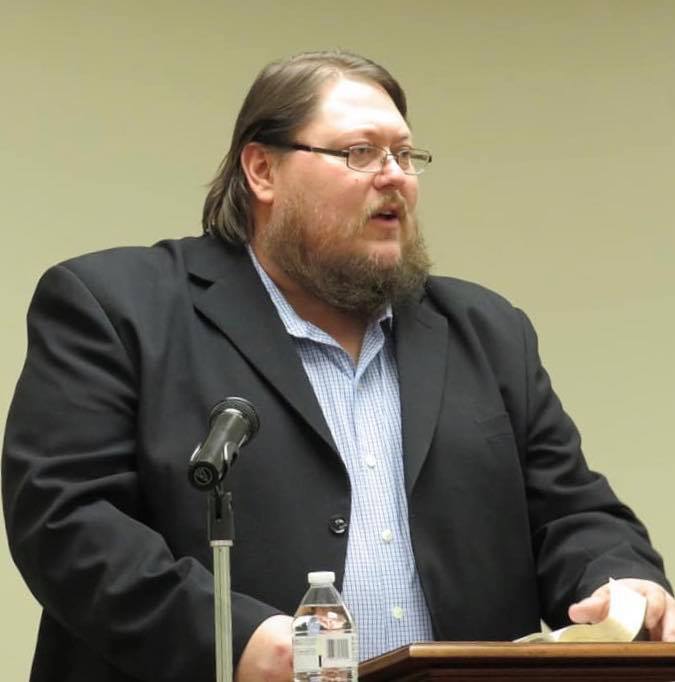
In the sermon titled "Particular Redemption 6," Mikal Smith primarily addresses the doctrine of particular redemption, emphasizing its vicarious and efficacious nature as articulated in Hebrews. He argues that Christ's atonement was not a mere possibility for salvation but an assured reality that secured eternal redemption for the chosen. Smith cites Hebrews 9:12, where it states that "by His own blood He entered in once into the holy place, having obtained eternal redemption," to support the idea that Christ's sacrifice is definitive and final, requiring no additional efforts from individuals for salvation. He underlines the significance of this doctrine for believers, affirming that Christ's blood remits sin entirely, and, therefore, Christians can have assurance of their eternal inheritance as a direct effect of Christ's redemptive work.
“His blood obtained an eternal redemption. It didn't make an eternal redemption possible.”
“Why go back to anything else? Why look to anything else?”
“Christ's blood was what was put before God in the Holy of Holies... before anything else had ever been done.”
“Jesus is a Savior. Not a potential Savior, and not a weak Savior. He is a Savior."
The Bible teaches that Christ's atonement is both efficacious and vicarious, providing eternal redemption through His blood.
Hebrews 2:17, Hebrews 9:12
Scripture affirms that Christ's blood secured an eternal redemption, not a potential one, and this is affirmed by the context of Hebrews.
Hebrews 9:12, Hebrews 10:10
Imputed righteousness is crucial as it signifies that believers are declared righteous before God solely because of Christ's sacrificial work.
Romans 3:22, 2 Corinthians 5:21
Auto-generated transcript • May contain errors

Comments
Your comment has been submitted and is awaiting moderation. Once approved, it will appear on this page.
Be the first to comment!