Bootstrap
George Ella

Anne Bradstreet (1612-1672): Poet of Purity

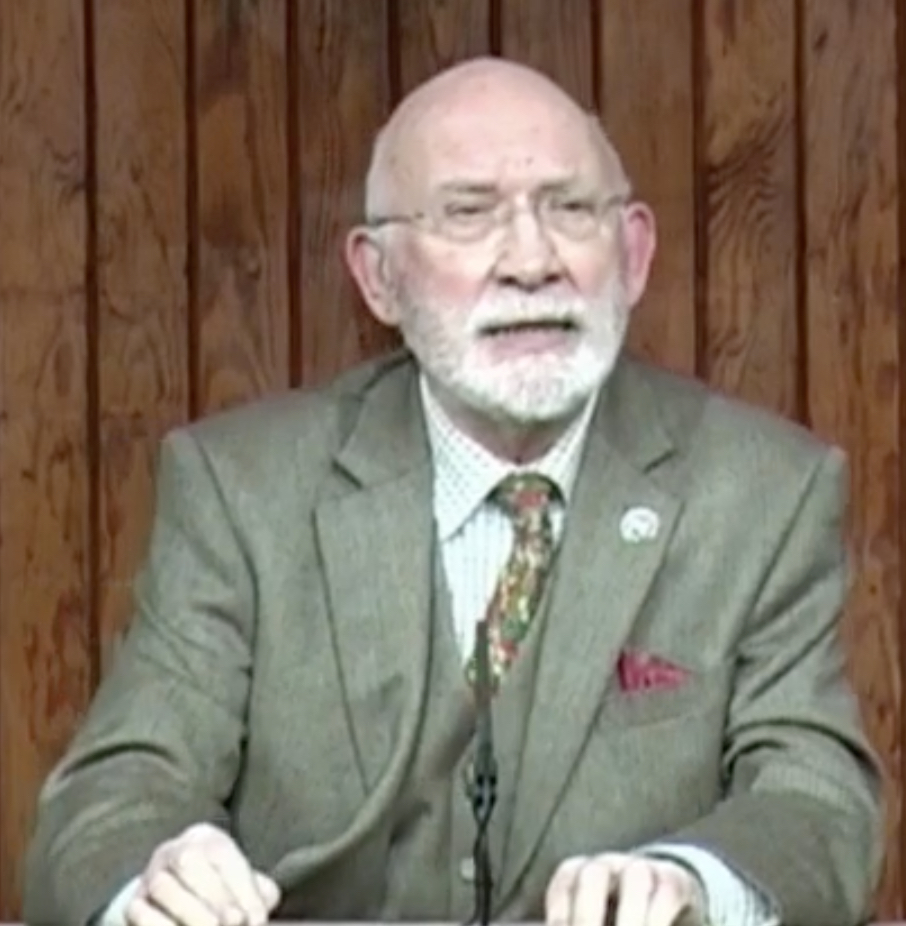
George Ella July, 15 2009 Audio
0 Comments
Dr. George Ella Lecture Series

Sermon Transcript

Auto-generated transcript • May contain errors

100%
...in Christ and those who have
come this evening to find that love which only Christ can offer
them. I left Germany, my home, full
of anticipation and perhaps rather worried unnecessarily, and I
flew like God's sparrow over that great duck pond which divides
us and I landed here in Gadsden, Alabama and immediately I found
myself just 100% at home it was as if there was no duck
pond between us and I'm very, very happy to be with you and
to fellowship with you as your brother in Christ and no stranger,
no foreigner but a member with you in God's precious family
and I'd like to speak to you this evening about Anne Bradstreet
and I was going to call her the poet of the Puritans but I think
it would be better to call her the poet of Purity and Anne Bradstreet
lived from 1612 to 1672 now she was a poet who helped you to
find goodness not just to feel good. It is an ancient maxim in literary
criticism that all poets are liars and poetry provides an
escape from the humdrum reality of life into the fantasies of
never, never land. Such critics have obviously not
studied Anne Bradstreet who ranks with Milton, Herbert and Cooper
as a poet of pure joy in contemplating God's amazing grace vouchsafed
to believers in order to combat the lies and errors of fallen
mankind. Few poets are as uplifting as
Anne Bradstreet because few poets have encountered and shared in
spiritual truths as much as she. Thus Puritan John Norton is not
exaggerating in the least when he says that if Virgil had been
privileged to read the Seraphic poems of Anne Bradstreet he would
have committed his own efforts in soul harmony to the flames. Han Bradstreet had the one thing
needed to fit a human poet out for the divine task of speaking
the unfallen language of Eden. This writer can heartily recommend
his readers and hearers who are longing for God to curl up in
a corner in a moment of prayerful relaxation with a volume of Bradstreet's
in their hands. they will soon find themselves
thinking it is good to be here as this sweet, hardworking mother
of eight children describes her amazement at God's revelation
to her in his word As Anne Bradstreet shares her husband, children,
adopted grandchildren and household chores with the Lord, she points
to the goodness which is found solely in Christ. Whoever says,
cast your burden upon me and I shall sustain you. Now, Anne
Dudley was an offspring of Reformation pioneers. She was the daughter
and the offspring of the famous Dudleys who had played such a
great role in the history of the English Reformation and Elizabethan
settlement. Her father, Thomas Dudley, was
a sincere believer and had captained a company of 80 volunteers in
the Protestant wars on the continent. Thereafter he became steward
to Theophilus, the Earl of Lincoln and the close friend of John
Cotton, one of America's earliest and greatest Christian pioneers. Thomas was married to Dorothy,
described as a gentle woman of good family and estate. Anne was born in Northampton,
England around 1612. and early took a stand for Christ
and was thrilled with the stories of the opportunities given Christians
in the new world. She had the best tutor and mentor
humanly possible in her father. Thomas Dudley was a brilliant
scholar and lover of edifying literature, history and poetry. Cotton Mather, in his multifaceted
history of North America, writes of Anne's father, in books, a
prodigal, they say, a living encyclopedia of histories, of
church and priest, a full compendium, at least, a table talker rich
in sense and witty without wits, pretence. Thomas Dudley put his own affairs
into the capable hands of Simon Bradstreet, son of a Puritan
Lincolnshire minister. Simon was only a child when his
father died and so Thomas Dudley took care of him and trained
him both in the ways of the Lord and in business and land management. When Anne was 16 years of age,
Simon, nine years her senior, proposed to her and was accepted. Anne was then struck down with
smallpox and faced with the prospect of losing her great beauty and
possibly her betrothed through ugly scars. She turned to the
Lord in agony. Anne later confessed sadly and
humbly when I was in my afflictions I besought the Lord and confessed
my pride and vanity and he was entreated of me and again restored
me but I rendered not to him according to the benefit received
now true love whose course ran smooth on Ann's recovery the
couple were wed and embarked on a life of deep love and mutual
understanding. And it was through her most romantic
and spirit-filled marriage that Anne first took up her pen to
praise God in poetry, composing to my dear and loving husband. If ever two were one, then surely
we If ever man were loved by wife, then thee. If ever wife
was happy in a man, Compare with me, ye women, if you can. I prize thy love more than whole
mines of gold, Or all the riches that the east doth hold. My love
is such that rivers cannot quench, Nor ought that love from thee
give recompense. Thy love is such, I can no way
repay. The heavens reward thee manifold,
I pray. Then while we live in love, let's
so persevere, that when we live no more, we may live ever. Persevere is the old pronunciation
of persevere, which in the old days rhymed with ever. Persevere ever. Shortly after
their marriage in 1630, Anne and Simon joined Thomas and Dorothy
Dudley and their friend John Winthrop and sailed in the Arabella
to set up a plantation colony along the coast of Massachusetts
Bay. Winthrop was appointed Governor,
Dudley Deputy Governor and Bradstreet Chief Administrator. Dudley was
to succeed Winthrop as governor in 1634 and he also became the
colony's first major general. He in turn was succeeded by Simon
Bradstreet, Anne's husband, but this was after Anne's death. The journey to the new world
was a terrible ordeal. I just flew over that duck pond
in comfort, but that sea voyage was horrible in those days and
took weeks and weeks. Storms accompanied the vessel
almost all the way. Scurvy broke out and many pilgrims
died. When land was reached the charleston
and tents set up bad weather, lack of food and continued attacks
of scurvy plagued the colonialists the death toll reached all families
and over a hundred previous settlers decided that they had had enough
and returned dejected to England on the Arabella even Dudley disappointed
but not beaten by a long way wrote to England complaining
that all the talk about the new promised land had been greatly
exaggerated. There must, however, have been
some pleasant moments in the long journey to the new world. Times of grace when the sun shone
and hopes were raised. Thinking of such times and their
temptations, Mrs Bradstreet wrote later to advise Simon, her son,
he that is to sail into a far country although the ship cabin
and provisions be all convenient and comfortable for him yet he
hath no desire to make that his place of residence but longs
to put in at that port where his business lies a Christian
is sailing through this world unto his heavenly country and
here he hath many conveniences and comforts, but he must beware
of desiring to make this his place of abode, lest he should
meet with such tossings that may cause him to long for shore
before he sees land. We must therefore be here as
strangers and pilgrims, that we may plainly declare that we
seek a city above, and wait all the days of our appointed time
till our change shall come excuse me, getting very dry now Anne's life tore between
two worlds Anne was repulsed at the new world at first but
with her husband and her parents she could not believe that God
had deserted them. They pressed on living from hand
to mouth and helped constitute a new congregation at Boston. Yet they still talked of our
Britain, though realizing that they were perhaps cut off from
old friends and relations for the rest of their lives. Anne,
however, was struck down by a serious illness for the second time and
became paralyzed in all her joints. By now, however, she had grown
very much in grace and merely said of her great infirmities,
I fell into a lingering sickness like a consumption, together
with lameness, which correction I saw the Lord sent to humble
and try me and do me good. And it was not altogether ineffectual. Both Simon and Anne were very
industrious and despite ill health soon had a fine house built and
prosperous affairs to manage. Anne's husband was appointed
Secretary of the Colonies Company and Commissioner of the United
Colonies. Though Anne was often ill she
managed to bear and raise a large family so that one day she could
thankfully write I had eight birds hatched in the nest, Four
cocks there were, and hens the rest. I nursed them up with pain
and care, For cost nor labour did I spare, Till at the last
they felt their wing, Mounted the trees and learnt to sing. Anne Bradstreet's affections
for England often troubled her as, though she praised the faith
of the new militant Puritans under Cromwell, she was compelled
to condemn their politics and attitude to other believers. In her long poem, The Four Ages
of Man, the Puritan lady looks back over her life from the failed
Romanist attempt to kill James I and his entire Parliament to
the foul murder of King Charles the First and writes, I've seen
from Rome an ex... an ex... oh sorry, I've seen
from home an execrable thing, a plot to blow up nobles and
their King. I've seen designs at Roux and
Cadiz crossed and poor Palatinate, forever lost. Palatinate was
the large reformed German province which was lost to the Roman Catholics.
I've seen a prince to live on others' lands, a royal one by
arms from subjects' hands. I've seen base men advance to
great degree and worthy ones put to extremity. but not their
prince's love nor state so high could once reverse their shameful
destiny I've seen one stabbed another lose his head and others
fly their country through their dread I've seen and so have ye
fortis that late the desolation of a godly state plotted and
acted so that none can tell who gave the counsel but the Prince
of Hell that was Anne Bradstreet's comment on the Cromwell regime
thinking of the golden age of the church in Elizabeth's reign
she could write but happy England which had such a Queen oh happy,
happy had those days still been now for more trials and testing
not only poor health caused Mrs Bradstreet to grow closer to
God that many a material plight which would have caused others
to ask why God had forsaken them after building a spacious house
for the large family Mrs Bradstreet was awakened one night by a terrible
roar a huge fire blazed around her and she could hear the pitiful
cries of her terrified children all dashed out but no worldly
goods could be saved. The fire devastated every chair,
table and chest that they had possessed. Finding herself briefly
cast down at this great loss, Mrs Bradstreet quickly took heart
and wrote, after describing the terrible scenes in her verses
upon the burning of our house, Then straight I gann my heart
to chide, And did thy wealth on earth abide? Didst fix thy
hope on mouldering dust? The arm of flesh didst make thy
trust? Raise up thy thoughts above the
sky, That dunhill mists away may fly. Thou hast an house on
high erect, Framed by that mighty architect. With glory richly
furnish'd, Stands permanent, though this be fled, It's purchas'd
and paid for too, By him who hath enough to do. A price so
vast as is unknown, Yet by his gift is made thine own. There's wealth enough, I need
no more, Farewell my pelt, farewell my store, the world no longer
let me love, my hope and treasure lie above." Anne had to go through times
of great loneliness and longing because her husband was always
on the move looking after the affairs of the colony. Simon
Bradstreet's diligence promoted him regularly and he climbed
rapidly up the administrative and political ladder. He was
now often away from home on diplomatic journeys or on tour through the
colony as its faithful steward. At times, Anne Bradstreet was
very lonely in spite of her children because she missed Simon dearly. their honeymoon days never waned.
However, Dudley had a large library and amidst household chores,
gardening, acting as sick nurse and caring for a seemingly ever-growing
crowd of children, Mrs Bradstreet found time to read, learn and
inwardly digest the literary and spiritual treasures of her
father. The history of Britain and the
ancient East thrilled her, as did works on science and medicine. No student ever devoured such
literary food as eagerly as Mrs Bradstreet. Few students were
so strengthened in spirit and instructed in mind by such a
repast. nevertheless the periods of parting
from her husband forced her to express her love for him in verse
as she followed him from place to place with her thoughts and
prayers daily seeing her husband's looks and mannerisms in her children
Mrs Bradstreet writes in this dead time alas what can I more
Then view those fruits which through thy heat I bore, Which
sweet contentment yields me for a space, True living pictures
of their father's face. O strange effect, now thou art
southward gone, I weary grow, the tedious day so long. that when thou art northward
to me but when thou northward to me shalt return I wish my
son would never set but burn within the cancer of my glowing
breast the welcome house of him my dearest guest wherever ever
stay and go not thence till nature's sad decree shall call thee hence
flesh of my flesh bone of thy bone I here, thou there, yet
both but one. and Bradstreet's mentors in literature
and poetry would surprise and even shock those thuddy-duddies
who believed blindly that the early American Puritans had no
thought for beauty in either expression or art. No longing
for the romantic, but an unholy fear of expressing emotion. They weren't like that at all.
Mrs Bradstreet's favourite reading was the work of Sir Philip Sidney,
one of my childhood heroes, but so often denigrated by modern
would-be Puritans for writing about human love in its reflection
of divine affection. This sadly is also the lot of
John Donne, whose love poetry opens many windows to heaven. Even Anne Bradstreet's biographer,
James Anderson, who often eulogizes his subject, has no sympathy
for her when she writes of the great French soldier poet, Dubartas. Amongst the happy wits this age
hath shown, great, dear, sweet Bartas, thou art matchless. No, excuse me. Oh, all right, thank you. Now
Anne Bradstreet becomes a public figure. Anne Bradstreet had written
her poetry as an expression of the secret feelings of her heart
and had no intention of making them public. Though in 1642 she
did distribute a number amongst her family with a dedication
to her father concluding it with the words from her that to yourself
more duty owes than waters in the boundless ocean flows however
John Woodbridge a minister married to Mrs Bradstreet's sister Mercy
copied and collected Anne's poems as secretly as she wrote them
on travelling to London in 1650 he had them published and even
wrote in a preface that his sister-in-law had no idea what he was doing
and would have forbidden him if she had known Woodbridge's
lame excuse was that if he did not publish his sister-in-law's
verse someone else would and thus make a worse job of it though
we must chide the over-enthusiastic minister for his indiscretion
Ann Bradstreet's poetry became a bestseller in Britain and proved
a means of great blessing to many. Here was a woman of deep
faith and high learning who used the vehicle of poetry so often
discredited by worldly scribblers in rhyme to reveal what is honest,
true, pure, lovely and edifying to the reader and honouring to
God Though now a public figure, Mrs. Bradstreet did not change
her way of life one bit. Now, something about Mrs. Bradstreet's prose and her famous
book, Meditations. Anne Bradstreet is mostly remembered
for her poems of experience. Yet she was a master of prose,
though little of it has been preserved. Simon her son asked
his mother to leave him a greater inheritance than wealth at her
death indicating that he wished her to draw together all the
good advice she had given him as a child and young man the
result was Mrs Bradstreet's meditations compiled from her own writings
and put together during March 1664 The work is a box of precious
jewels. Here are but a few of them. The finest bread hath the least
bran, the purest honey the least wax, and the sincerest Christian
the least self-love. Downy beds make drowsy persons,
but hard lodging keeps the eyes open. A prosperous state makes
a secure Christian but adversity makes him consider. Diverse children
have their different natures. Some are like flesh which nothing
but salt will keep from putrefaction. Some again like tender fruits
that are best preserved with sugar. those parents are wise
that can fit the nurture according to their nature a low man can
go upright under a door where a taller is glad to stoop so
a man of weak faith and mean abilities may undergo a cross
more patiently than he that excels him in gifts and graces Few men
are so humble as not to be proud of their abilities, and nothing
will abase them more than this. What hast thou, but what thou
hast received? Come, give an account of thy
stewardship. Iron, till it be thoroughly heated,
is incapable to be wrought. So God sees good to cast some
men into the furnace of affliction, and then beats them on his anvil
into what frame he pleases that town which thousands of enemies
without have not been able to take have been delivered up by
one traitor within and that man which all the temptations of
Satan without could not hurt have been foiled by one lust
within God hath by his providence so
ordered that no one country hath all the commodities within itself
but what it wants another shall supply that so there may be a
mutual commerce through the world as it is with countries so it
is with men there was never yet any one man that had all excellencies
Let his parts, natural and acquired, spiritual and moral, be never
so large, yet he stands in need of something which another man
hath, perhaps meaner than himself, which shows us perfection is
not below, as also that God will have us beholden one to another."
Now, finally, the weary pilgrim rests in peace. Shortly after
becoming well known in both the old and new worlds, Mrs. Bradstreet,
seldom a healthy woman, became terminally ill with tuberculosis. When her daughter, Dorothy Cotton,
married to Seaborne, John Cotton's son, died Rather than allow this
to increase her sorrow, Mrs. Bradstreet rejoiced to know that
she would soon join her in their father's mansion. Viewing death
with fearless faith and looking back over all the hardships her
family had endured through God's grace in the past, Anne Bradstreet
continued her poem, The Weary Pilgrim, now at rest, with the
words A pilgrim I on earth perplexed, With sins, with cares, and sorrows
vexed, My age and pain brought to decay, By age and pain brought
to decay, And my clay house mouldering away, O how I long to be at rest,
And soar on high amongst the blessed! This body shall in silence
sleep, Mine eyes no more shall ever weep, No fainting fits shall
me assail, Nor grinding pains my body frail, With cares and
fears, ne'er comfort be, Nor losses know, nor sorrows see. What though my flesh shall there
consume, It is the bed Christ did perfume. And when a few years
shall be gone, This mortal shall be clothed upon, A corrupt carcass
down it lies, A glorious body it shall rise, In weakness and
dishonour sown, In power tis raised by Christ alone. then soul and body shall unite
and of their maker have the sight such lasting joy shall there
behold as ear ne'er heard nor tongues e'er told Lord make me
ready for the day then come dear bridegroom come away Simon now
a qualified physician realized that his mother, though only
60 years of age, had run her course and her goal was in sight. Though but skin and bone and
in great pain due to the merciless illness, Anne Bradstreet remained
in full assurance of faith and was more concerned in comforting
her dear ones than feeling any need for comfort herself. When her eyelids closed in death,
Simon wrote, O that the Lord would give me and mine a heart
to walk in her steps, considering what the end of her conversation
was, that so we might one day have a happy and glorious greeting. Throughout her poetry, Anne Bradstreet
had always been fascinated by the interplay of eternity on
time. The closing words of her long
poem Contemplations on the Death and Burial of a Christian serve
as a fitting epitaph to her own eternal life always longing whilst
in her time span to be freed from her earthly burden. O Time Thou fatal rack of mortal
things, That draws oblivion's curtains over kings, Their sumptuous
monuments men know them not, Their names without a record
are forgot, Their parts, their ports, their pomps, all laid
in the dust, Nor wit, nor gold, nor buildings scape time's rust. that he whose name is gravered
in the white stone shall last and shine when all of these are
gone." Ann Bradstreet has certainly a message for today and for every
day. John Fiske, in his important
and oft-praised work, The Beginnings of New England or The Puritan
Theocracy in its Relation to Civil and Religious Liberty,
pulling, as it were, a drawer out of the cupboard of history,
briefly says of Anne Bradstreet that she was a woman of quaint
learning and quainter verse, which her contemporaries admired
beyond measure. he then shuts the drawer and
continues in his praise of Mrs Bradstreet's husband after telling
his readers that Anne Bradstreet merely inherited her gifts from
her father thus the greatest poet the English Puritan colonies
ever produced and one of their finest illustrations of faith
triumphing over every human difficult difficulty, sorry, is squeezed
as a tiny aside into an account relating the political feats
of two men who had so much relied and built on Anne Bradstreet's
faith, comfort and Christian exhortation. Both Thomas Dudley
and Simon Bradstreet certainly would not have been the men they
were if Anne Bradstreet had not been the woman she was. Far more
objective is Cotton Mather in his insistence that whatever
Dudley's merits, his daughter was his crown, and poetry a monument
for her memory beyond the stakeliest marbles. Mather also reminds
men who believe that their sex monopolizes the muses that they
have due cause to blush with shame when faced with Mrs. Bradstreet's accomplishments.
He then joins Benjamin Woodbridge, the first graduate of Harvard,
in putting such men in their place. In your own arts, confess
yourselves outdone. the moon hath totally eclipsed
the sun not with her sable mantle muffling him but her bright silver
makes his gold look dim sadly our school history books paint
a sable-mantled muffled picture of their imagined dark and dismal
puritans depicting them as a fog-covered sun set to rise no more. How necessary it is to balance
this artificial picture with Mrs. Bradstreet's brave, colourful,
cheerful, entertaining and uplifting verse. Her words reflecting her
experience of life give a true and lasting picture of the spirit
of Puritan men and women who sought to build heaven on earth
against great odds. Her never-dying verse reflecting
her deep taste of God's eternal love is still fully equipped
to lead and accompany modern mankind on the way to heavenly
bliss. It is a great pity indeed that
her complete works are scarcely known and have not been reprinted
for generations. May her memory not be allowed
to die in her bodily death, but be kept ever living amongst us
until we meet her face to face in glory. So be it. Thank you. recording going for just a few
moments. Brother George told me when I
picked him up at the airport yesterday that he had not spoken
English on a daily basis in over 40 years. And he apologized for being rusty. And a few words, just a few tonight
that he had to repeat. I think he did exceptionally
well. He has been in conversations. He's been here. It's amazing.
Would you be willing to entertain questions? Oh, yes. All right. I wasn't expecting
any, but... I understand. And if you don't
have enough strength, that would be understandable. But I'm sure
some of the citizens may have some questions of brothers, too.
Oh, I must apologize for my weakness. I'm still suffering under jet
lag and other things. I feel rather tired, but shoot
away. Perhaps I might even have some
answers. Would you repeat the question
for the sake of the recording, please? Oh, yes. I didn't realize
I was being recorded. Why do you think her work did
not get published? Yes, why have Anne Bradstreet's
works not been published for generations? Well, I think the
plain truth is that her message is not welcome. Here we have
a mother of eight children virtually slaving away in her household
but producing such wonderful literature and she doesn't fit
in with the modern picture of a rather worldly career woman
and motherhood is seen nowadays, unfortunately, as a sort of second
career and People aren't as interested in the Gospel as they were in
those days. I said she had the one thing
needed. Well, this one thing is more
needed today than ever. And if these people could have
the patience and understanding and the motives to read Anne
Bradstreet, they too would experience this one thing needed. Don't be as shy as I am. Would you like to see it? Oh, no, I'm leaning. There are
two people who look as though they're going to ask questions.
Could you tell us a little bit about yourself and what your background
is? Oh, well, Anne Bradstreet is my theme tonight, not George
Ella. Yes, oh excuse me, I couldn't
answer that one. Yes, oh there's the lady first
and then the gentleman in front. And since you mentioned that
her works have not been reprinted, is it difficult to find her works today? Is it?
Sorry, I didn't catch that. Is it difficult to find her works? Oh yes, extremely difficult.
And that's why I believe that some Christian ought to reprint
those works. I don't know what your own connections
are in that field, but I have the interest in doing
that, but not the financial capacity or the means of popularising
such a work. I think it should be done by
a younger person full of energy and full of the love of Christian
poetry and full of evangelistic zeal. and also one who has the
financial ability to set up, to reprint such a book. But with
supply, with publications by demand today, the possibilities
are there. because you just send a disk
to the printer and you phone him and say well I want two copies
or I want three and then a few weeks later when the demand comes
I want three more and in this way perhaps private people on
low income could finance such a project. Sir? historical question in, you said
that she supported, or that she looked back fondly on Elizabeth
I. Yes. And that she did, it did
not sound like that she supported the Puritans in the English Civil
War against the British Royalists. No, she didn't. Actually it didn't. The picture of the civil war
or the great rebellion or the usurpation as it used to be called
has altered radically since those days. After the restitution the general
idea was that Charles I had died a Christian martyr and that Cromwell
had more or less usurped the government. And then in the 19th
century there was a growth of Presbyterianism and there was
a new look at the problem and new theories were developed. I myself am fully of Anne Bradstreet's
persuasion. and I am reading now all the
Westminster minutes which have never been published and there
are four volumes of them in the John Ryland Library in Manchester
and some of us are hoping to publish them but they do show
a rather dark, well they do tell a rather dark story, that's my
own humble opinion. When Charles I died he wrote
a book called, just before he died in prison, he wrote a book
called The King's Sighs and there he expressed his thoroughly reformed
faith and prayers for his executioners and this became a bestseller
amongst the Puritans and this led eventually to the restitution
or the coming back of Charles II. But Charles II didn't win the
support that people would have liked and so The revolution continued
throughout his reign. He wanted union between the Anglicans
and the Presbyterians but certain political forces were not interested. And there was the Monmouth Rebellion
and things like that. You're nodding so you know all
about that. So any more questions? Yes sir? Not that I'm aware of. I'm biased. I think she was the first among
many, and just as the first hasn't been really acclaimed as she
should be, the many haven't been acclaimed at all. But of course Cotton Mather was
also a poet, and Increase and Nathaniel and Cotton Mather,
they were great men of literature. Cotton Mather could write in
half a dozen languages and did do and publish many books, children's
books too, and even books of funny stories. So there were
writers, of course, Jonathan Edwards too started when he was
in his teens, some people say earlier, and wrote great works. But poetry, I think we'll have
to wait until which year, who not all would accept as a Christian
poet, but then a Longfellow, people like that, but their days
were still to come. You are correcting the popular
idea of Puritanism as being stark and dreary with another view. There were different kinds of
Puritans and the English Puritans tended to be more poetically,
more literally, more musically minded than the very staunch
Scottish Presbyterians. But you see, the Presbyterians
in Scotland, they believed they were suffering under a foreign
power. And so their opposition was really
greater than the English Puritans. And most of the English Puritans
left Presbyterianism anyway and they became independent or returned
to the Anglican fold. But before the revolution, There
were more Anglican Puritans really than Presbyterian or Independent
Puritans. But we forget that because Cromwell
has become so famous and we believe these stories that Charles I
was so evil and Cromwell was so good But that's a black and
white picture that can't stand the test of history at all. And to me, as a Christian, revolution is the last possible thing that
a Christian should be thinking of. Sorry, I don't want to get
into politics. Who would have been some of the
theologians that influenced Anne Bradstreet in particular? Do you have any
idea? Oh yes, John Cotton, Anne Vermeefers
most definitely, and Perkins. She doesn't talk about Perkins
as far as I remember, but the ideas behind her and she was
obviously very much reformed in her theology. But America
at that time had a great many very good theologians. They started off amongst the
Presbyterians but gradually the American colonies became more
and more under the the independents and they were far more tolerant
than the Presbyterians. Thomas Goodwin for example was
a great independent Puritan and some of the old English Anglican
Puritans like Hall were still alive and Featley died in prison
but he was the greatest theologian of his day and when the Presbyterians wanted
to defend themselves against the Roman Catholics, they went
to Featley's prison cell and asked him to write a defence,
but because he was a prisoner they would only allow him three
books at a time to do his research on. and then he produced his
great defense against the Roman Catholic Church whilst in prison
and in prison he died. He died because he was a member of the Church
of England and a supporter of King Charles but not in a political
way. Oh, those were terrible times.
The accomplishment of Anne having so many children and so many
domestic duties Do you think that because of
her station, did she have nursemaids and assistants? We've seen examples
in Charleston, South Carolina, where a lady had a number of
children, but she had one nurse for every child. and Bradstreet at the beginning
they had to build their houses themselves and they had to tend
the crops, look after the animals And I'm sure that there were
some kind-hearted women who supported her because that was a very tightly committed church. You see, the people were going
to the promised land. and they were full of the joys
of the Lord and they were prepared to experience all these hardships
and they pulled together. So, you didn't really build your
own house, the whole community came and helped you. So, of course,
wherever Anne Bradstreet would have been with her eight children,
there'd have been kind-hearted ladies helping her. But she doesn't
seem to have had, you know, a nursemaid for each child, and a cook, and
a bottle washer, and everything like that. Not at all. Although they were the governing
families, they seem to have led very humble lives, and very hard-working
lives. Yes, sorry. It was taking her
life before she became paralyzed for most of her children beyond where they, at the age where
they. I think Anne Bradstreet's children could never take care
of themselves. They loved their mum so well
and she was so much wiser than they. So, especially Simon too. Until her death, they were her
tiny tots. But she had had several children
then. But the family ties in the Bradstreet
family were very tight and they had a wonderful family experience. Did she recover from the 4 hours? Oh yes, yes she did. But then
the tuberculosis set in. But she did, she recovered from
the smallpox, she had no scars, she was still as beautiful as
ever. and she recovered from the lameness
too. So she had experienced nine miracles
in her life. Well, I'll be here for another
two weeks. Shall we?

Comments

0 / 2000 characters
Comments are moderated before appearing.

Be the first to comment!

Joshua

Joshua

Shall we play a game? Ask me about articles, sermons, or theology from our library. I can also help you navigate the site.