Bootstrap
George Ella

Children and Youth Session

George Ella July, 18 2009 Video & Audio
0 Comments
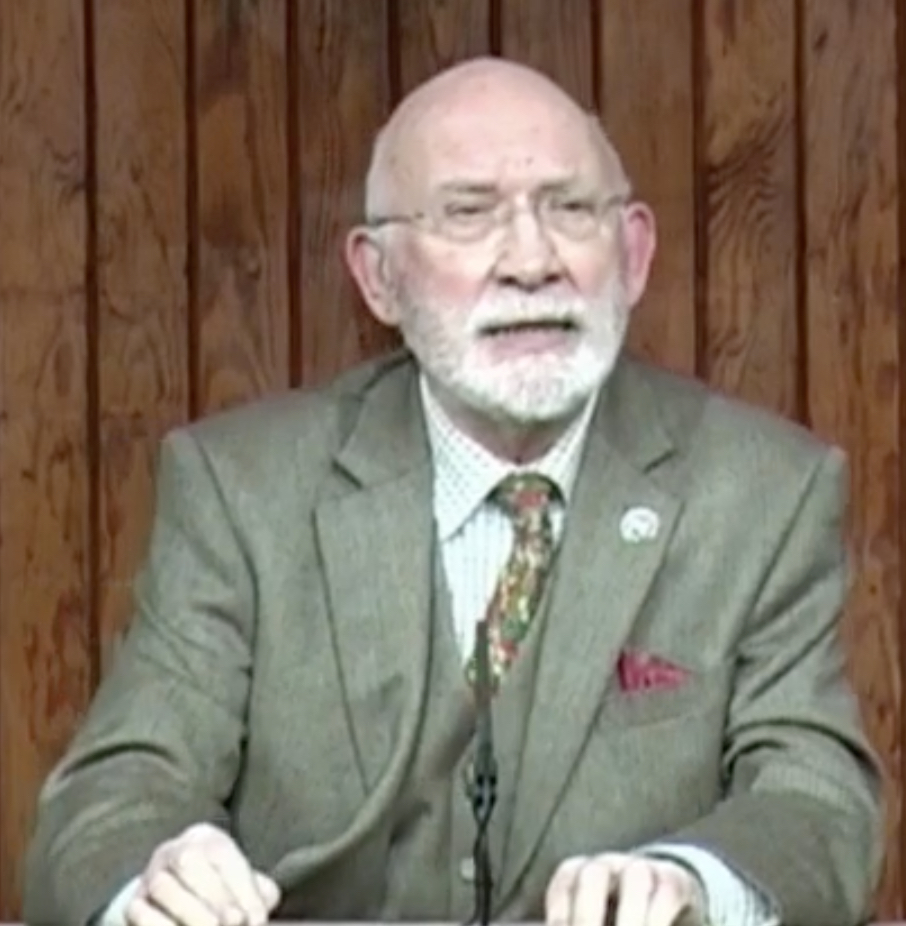
A special lecture by Dr. George Ella for the children and youth.

Sermon Transcript

Auto-generated transcript • May contain errors

100%
Right, dear pals. Now, who knows
what a pal is? A friend? A friend, that's right. Which language does that come
from? Is that English? Well, there are people in America
who have the word pal as their native language. But I'm a language
teacher, so I'll tell you very quickly. A pal is a gypsy word. And it means friend. And the
gypsy life is called Romani Rai. So what's the gypsy life called?
Romani Rai. And what's the gypsy word for
a friend? Pal. So you all speak fluent
gypsy language. So whenever you meet a gypsy,
call him your pal, and he'll be very honoured, and ask him
about Romani Rai. So, so easy is it to learn languages. Now, we've been learning about
men who have translated the Bible, and have you noticed most of
them had a long, long beard? Who's got a long, long beard
here? Yes, well, I put a short, short
beard, but most of them had long, long beards. But would you believe
it, two of the most important people in the Reformation in
Europe were children. Now, you don't believe a word
I'm saying, do you? Do you believe me? Uh-uh, no. Do you believe me? Well, I am
telling you the truth. Many years ago, when the Reformation
was in progress, we had a king called Henry VIII. He was a big
man, almost seven foot tall. And when he walked down the streets,
you could hear him half a mile away. And he had a tiny son. called Edward. And he became
Edward the Sixth. Who's called Edward here? No
Edwards, no Teds. Well, he was called Edward, Edward
the Sixth. And his father died when he was only a child of about
nine or ten. That's a horrible thing, isn't
it? If your father dies and you're only nine or ten. But this little
child started the Reformation in England where people left
the very evil Roman Catholic Church and began to read the
Bible and they began to trust in the Lord Jesus Christ. And
it started very gradually. When Edward was nine years of
age, who's nine here? Who's under nine? Under nine? Oh, so many. Well, he was just
a bit older than you. And he had a friend in the palace,
because he was a king's son, and his friend wanted to get
a book from the shelves, way up there. Well, what would you
do to get that book? You wouldn't have known how to.
Would you have jumped? I get a stool. I get a stool. You get a? A stool. A stool. Oh yes, that's
a very good idea. What would you do? A ladder. A ladder. That's almost as good,
isn't it? Well, perhaps it's better if
you get higher and higher. Yes? Give my friend a boot. What would you do? Give my friend
a boot. Oh yes, you mean like that. Great. Well, Edward's friend
got hold of a big Bible and put it on the floor and climbed up
on it with his dirty boots. I presume they were dirty because
they'd been playing outside and had just come in. Well, Edward
said, please don't do that. nobody will trample on the word
of God in my palace and so his friend had to say oh I'm very
very sorry Prince Edward because he was only a prince then but
when his father died although he was still not in his teens
he wasn't 13 or 14 he was younger he had to become King of England,
Scotland and Ireland. And so the men of the court came
to him and said, Oh King, live forever, you are going to be
crowned tomorrow. And Edward thought, Oh dear,
what does that mean? And they said, You are going
to march through the church to have your crown put on your head,
and you are going to have three swords carried before you. Now this is a true story. Three
swords? Why three swords? I told you
who he was king of, so what would the three swords mean? No, I told you who he was king
of, Yes, the three countries. And do you know what Edward said?
And he was only a tiny chop when he said it. He said, oh, you're
wrong. So he told the old men of the
court that they were wrong. He said, I'm not having three
swords carried before me. I'm having four swords. Now this
is in all the history documented. It's quite true. What do you
think the fourth sword was? Yes, it was the sword of the
Spirit, the Word of God. So, when Edward was crowned,
one person went before everybody else with an open Bible. And
then a man came afterwards carrying three swords. the Sword of Scotland,
Ireland and England. And then young King Edward came. And this young man started to
write about his faith. And he wrote three books on the
Christian faith. And you would have thought he
was a man of 45 or more. Yes, sir? Why didn't they carry
the fourth story before him too? Yes, because the word of God
must go before all other things. And so the word of God was carried
before, open in the hands on a cushion. And then, yes sir, Yes, I think Edward would have
made a good friend to you. Right, well, things went on because
in England people thought that in the Lord's Supper they rang
a little bell. and they rang a little bell to
tell the people that the bread and the wine had become the very
flesh and blood of Jesus. So on the table there was a piece
of Jesus, as it were, in meat form. Now, young Edward, when
he was 13, he says, this is crazy. In Germany, you go like this.
You do that in America, when you think somebody's crazy, you
go like this. So Edward thought, yes. And the, you go like this too,
yes, or if you go like that, you take off like a helicopter. Well, one day, who would come
marching down the hall but the Archbishop of Canterbury. He was called Mr. Cranmer. And little Edward said,
come here Archbishop, come here, I won't bite you, don't be frightened. And the Archbishop came up to
him and he said, Archbishop, don't you know that you're silly?
You believe that the bread is the very body of Christ, but
people are celebrating the Lord's Supper all over the world. So
there's a piece of Jesus all over the world on the altar.
He said, no, Jesus is with us in our hearts. and he's present
with all those who believe on him in a spiritual form. And so Cranmer began to believe
in the Protestant truth, that when we celebrate the Lord's
Supper, we celebrate it in remembrance of Christ. But we certainly do
not put a piece of meat on the altar and eat it like cannibals. Now, during the reign of Edward,
he only reigned for a very few years, until 1552. but England produced a Protestant
and Reformed service in the churches and articles of faith which we
still use, or they still use, in England. And through this
little boy, the Reformation came into England. Henry VIII had
really nothing to do with it at all, but Edward had a lot
to do with it. And then when Edward was 19 years
of age, he suddenly died. People believed that it was the
Roman Catholics who had poisoned him. Wasn't that awful? And then
we had a terrible woman who came on the probe and she was called
Mary. And do you know what people called
her? Say it loud. Bloody Mary. Yes,
she was called Mary the Bloody or Bloody Mary because she got
hold of all the reformers and 280 of them. And what did she
do with them? Yes, and worse, not just, and
that she burnt them to ashes. So you see, it's not always easy
being a Christian. You've got to prepare to suffer
for the Lord's sake. So we leave Edward because you
say, oh, but he was a boy and we're all, well, most of you
here are young ladies. What about the ladies? Oh, I'll
tell you about the ladies. I was in Lapland doing missionary
work. Where is Lapland? No one knows? Well, I'm happy
that the lads know at least. But don't American children know
where Lapland is? I'll tell you. It's in the very
icy regions of Russia and Finland and Sweden and Norway. And those are countries to the
north of Europe, miles away from America. But there live the lads. They're very tiny people and
they have very decorative clothing and they have bells around their
knees. So when they walk, they go cling-a-ling-a-ling,
cling-a-ling-a-ling, cling-a-ling-a-ling, cling-a-ling-a-ling. Why do they
do that? Telling people where they're from? Pardon? Telling
people where they're from? Oh, I didn't understand that. Can anyone say that in other
words? Oh, people should notice them.
I'm awfully sorry. That's right. You see, in Lapland,
there's lots of snow. and it's a bit foggy and you
easily get lost and you're absolutely right. They all have bells on
their knees so that people can hear them far away and if they're
looking for somebody they listen to the bells and then they go
over and they found them. In Switzerland they put bells
around the cow's necks just for the same task. there was a girl
called Mary and she wasn't Mary the bloody she was Mary the good
because she found out about the Lord Jesus Christ and so she
thought I must go to see the Queen the Queen was called Mary
then too but the Queen lived almost a thousand miles away
right in the South of Sweden She said, I must go to see the
Queen, to ask her to send us teachers, so that we shall know
more about the Lord Jesus Christ. And I've spoken so much, I'm
so dry, I'll take a drink. So, 12-year-old Mercy journeyed
all the way down through Sweden. This was about 1345. And at last she came to the palace
and knocked at the door and the guards came and said, give the
password. So she would get in. And she
said, oh I don't know the password but I've come to learn about
the Lord Jesus Christ. And so the men of war were so
fascinated by this little lab girl in a beautiful coloured
clothing, so they allowed her to go and see Mary the Queen. And she said to Mary the Queen,
who wasn't a very intelligent person at all, she said, we need
missionaries to come to Lapland and help the children and the
adults to find Jesus. So, do you know what she did?
She got hold of a piece of paper and a pen, gave it to her archbishop
and said, now you write, I, Mary the Queen of Sweden, Norway and
Denmark, do hereby proclaim that Lapland has become a Christian
nation. And she got men to go out into
all the villages in Lapland and read this proclamation. Now,
what do you think of that? Do you think all the Laps became
Christians overnight? No, of course not. So it didn't
work. So she had another idea. She
sent 12 bishops, this is history, 12 bishops up to Lapland Ah,
with twelve sacks. The sack in American word too?
Big bag. And these bishops went up to
Lapland and laid wait for stray children running around and put
them in the bag. And then they went down to Lund
where the palace was and they thought if we educate these children
whom they just kidnapped and send them back as missionaries
to Lapland, they will all become Christians. Do you think that
worked? A Christian is a person who believes
in the Lord Jesus Christ and loves him very dearly, because
Christ loves you too very dearly. See? So if you know that you
need the Lord Jesus Christ in your life, then you tell him
so. And if people say to him, I want
you, dear Saviour, then If Jesus is of the same opinion, I mean,
he's the Lord, then you will become a Christian. Now, you
know that didn't work, did it? It didn't work at all. The children
learnt to be Swedes, and when they went back to that land,
they thought, oh, these dirty pagan laps, I don't want anything
to do with them. But then Mary still persisted. This time she was a young woman. And she found people who were
translating the Bible. And she told these people who
were translating the Bible that Lapland needed Bibles so that
they might read of the Lord Jesus Christ. And these people sent
Bibles and distributed them all over Lapland. Yes, sir? I'd forgotten what you were going
to say too, so I'll continue. Now, do you think that worked?
People reading the Bible in their own language and searching for
Christ. Do you think they found him?
Somebody's nodding, yes. Many lads became Christians and
they were able to evangelize Sweden from the North. and very
many of that became missionaries for the Lord's sake. So here
we have a young fellow from 9 to 19, he was 19 when he died and
here we have a young girl from 12 to about 25 and these were
the people who helped England with her vast areas and Sweden
with her vast areas to become Christians. So, don't think that
every missionary is a man with a long beard. It can be you,
or you, or you. Right, have I taken too long? No, just a few minutes. Now, I have some prizes here,
and I suppose you're all so good, all will win the same book, which
is difficult. But who can tell me a couple
of things about Wycliffe? You can? The Morning Star. Right. Good. That's for you. Now, are we a musician here? Ah, you were first. Do you know
the hymn, How Great Thou Art? Yes? How does it go then? Oh, yes, that's enough. We know
you know it. So, here is the story of how
great thou art. And there's, it was a Swedish
hymn. And it went to Russia, and a
man who I knew personally, called Stuart Hine, brought it from
Russia to Europe. And it became a very much beloved
hymn. So that's the story. Now, I've got a very valuable book
here, and the gentleman who said he wanted to go for it, oh, he's
sitting over there. We'll have to show what he knows
now, because this is the very New Testament that Beezer translated
in the 16th century. And this book is over 200 years
old, and it's the Latin text of Beezer. Now, who can stand
up and recite a whole verse in Latin or tell me something in
Latin? Yes, well, you were first and
I thought you were going to be quicker at this because you said
you'd like to go in for it. Now, tell me something in Latin. I have to come near you because
I'm hard of hearing. Yes. Who knows what that means? I know what it means. You know
my name. No? No? Say it again, louder. That's one of the most beautiful
words in the Bible. Yes, sir, you know. Yes, that's right. So, treasure
that all your life, because it's... I mean, I say treasure it all
your life, but if you're ever poor and need some money, well,
you get a month's dinners at least out of that. And so it
will have blessed you. Right. Now... Right, well we've been talking
about the Latin Vulgate and this is your chance, sir, and this
is a new volume of the Latin Vulgate with all the saucers
underneath, all that small print. And I'd like somebody else to
tell me something in Latin. Well, I've helped you,
haven't I? Really, I should keep it because
I helped you. But never mind, I'm feeling generous
today. Yes, right. Now speak louder
so that everybody can hear and tell you what it means. Yes, now what does that mean?
Sanctus you know, and Pax you know. What's Pax? Peace, that's
right, not a peace of something, but peace when you have liberty
and freedom and your heart is most comfortable. Right, and
Sanctus? Yes, that's the word we have
in sanctity. That's right. So, sir, you've
got this. Now, is my time up? Oh, yes. Right. Now, who can give me a sentence
in German? This is the famous Heidelberg
Catechism, which was the first truly reformed catechism that
all the reformed churches used. It's in German. Now, who's going
to have a go? So when nobody wants to try... Mike, I'll leave it with you
and then... Oh, right, so I'll have to come
over Gesundheit, yes! Right, health! Well, I didn't tell her how many
words she had to say, did I? So, what do you think? Has she
deserved it? Now, who speaks French? Apart from me. Oh, vous parlez
le français, n'est-ce pas? Je parle un peu d'espagnol, un
peu de german. Yes, not French. Ce n'est pas
Francais. Thank you, Shirley. Thank you very much in German.
Yes, anyway, you've got one prize. You can't be greedy. Yes. Je
ne sais pas. Je ne sais pas. Right. What does
je ne sais pas mean, the adults? I don't know. Yeah, I don't know.
Right. So, let's live a bounce. Now, who can speak some words
of German? No, no, not. Try again in a couple of years.
Some words in German. If the children don't know, we'll
have to ask the parents. Last chance. So, right, the parents. Sprechen Sie Deutsch? Oh, that's Trinity German. Right, sir. That's the New Testament
of the Psalm in German. So, was that the lot? Oh, I've got some special patches
and badges here from Vance Airport. Vance Airport is the airport
which trains America's top jet pilots and AVAC reconnaissance
pilots. And a general there, very kindly,
when I visited the Vance airport and tried out their simulators,
and I flew at twice the speed of sound, he gave me these patches
from his officers. So if you come to me privately
and tell me why you would like one of these, I'll give you those.
And now we'd better shut up and stop.

Comments

0 / 2000 characters
Comments are moderated before appearing.

Be the first to comment!

Joshua

Joshua

Shall we play a game? Ask me about articles, sermons, or theology from our library. I can also help you navigate the site.