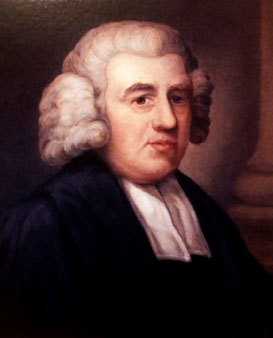
John Newton expounds on Romans 15:7, arguing that mature Christians must balance zealous defense of Gospel truth with humble compassion toward those who err. He contends that true Christian conduct is patterned after Christ's gracious acceptance, wherein believers, conscious of their own spiritual frailty and dependence on God's multiplied forgiveness, extend tenderness and patience toward the weaknesses and mistakes of others. Newton distinguishes between accommodating non-essential matters for the sake of peace and remaining immovably firm on foundational Gospel doctrines (referencing Galatians 2:5 and 2 Corinthians 4:2), asserting that the Christian should never soften or disguise the core truths of God's grace but instead boldly proclaim Christ crucified as the only means of reconciliation with God.
What does the Bible say about accepting one another?
The Bible instructs Christians to accept one another just as Christ accepted us, emphasizing gratitude and humility.
The act of acceptance is not only a demonstration of Christlike behavior but also a means to glorify God. By treating others with the compassion we have received, we bear witness to the transformative power of the Gospel in our lives. Moreover, this acceptance enables Christians to create an atmosphere of peace and unity, crucial for a healthy church community, while also committing to uphold and defend the truth of the Gospel amid differing opinions and weaknesses.
Romans 15:7, Galatians 2:5
How do we know God's grace is sufficient?
God's grace is sufficient as we are reminded of His mercy and our continuous need for forgiveness.
By understanding and embracing our frailty, we are encouraged to live by grace and be patient with ourselves and others. As Christians witness God’s merciful conduct in their own lives, it becomes a model for how they should extend grace towards fellow believers. This realization fosters humility and a desire to support and encourage one another rather than judge harshly, knowing that we all stand in need of grace.
2 Corinthians 12:9
Why is humility important for Christians?
Humility is vital for Christians as it allows us to recognize our shortcomings and extend grace to others.
Moreover, humility encourages Christians to avoid harsh judgments against others, reflecting the compassionate nature of Christ Himself. As we learn to accept our own faults and the faults of our brothers and sisters in Christ, we become better equipped to offer genuine support and encouragement within the church community. This mutual support not only glorifies God but also cultivates a more unified and loving environment where spiritual growth can flourish.
Romans 15:7, Ephesians 4:2
"Accept one another, then, just as Christ accepted you, in order to bring praise to God." - Romans 15:7
The Christian, especially he who is advanced and established in the life of faith, has a fervent zeal for God—for the honor of His Name, His Word and His Gospel. The honest warmth of zeal which he feels, when God's Word is broken, His Gospel is despised, and when the great and glorious Name of the Lord his God is profaned, would, by the occasion of his infirmities, often degenerate into anger or contempt towards those who error—if he was under the influence of zeal alone.
But his zeal is blended with benevolence and humility; it is softened by a consciousness of his own frailty and fallibility. He is aware, that his knowledge is very limited in itself, and very faint in its transforming power in his own life; that his attainments are weak and few, compared with his deficiencies; that his gratitude is very disproportionate to his obligations; and that his obedience is unspeakably short of conformity to his prescribed rule; that he has nothing but what he has received, and has received nothing but what, in a greater or less degree, he has either misapplied or misimproved. He is, therefore, a debtor to the mercy of God—and lives upon His multiplied forgiveness.
The Christian also makes the gracious conduct of the Lord towards himself—a pattern for his own conduct towards his fellow-worms. He cannot boast of himself—nor is he anxious to censure others. He considers himself, lest he also fall. And thus he learns tenderness and compassion to others, and to bear patiently with those mistakes, blemishes and faults in others—which once belonged to his own character; and from which, as yet, he is but imperfectly freed.
He therefore acts in character, as the follower of Him who was compassionate towards the infirmities and mistakes of His disciples, and taught them gradually, as they were able to bear it—and not everything at once.
But then, the same considerations which inspire him with meekness and gentleness towards those who oppose the truth—strengthen his regard for the truth itself, and his conviction of its importance. For the sake of peace, which he loves and cultivates—he accommodates himself, as far as he lawfully can, to the weaknesses and mistakes of other sincere Christians; though he is thereby exposed to be censured by 'bigots' of all parties, who deem him flexible and wavering, like a reed shaken with the wind.
But there are other fundamental points, essential to the Gospel, which are the foundations of his hope, and the sources of his joy. For his firm attachment to these, he is content to be treated as a 'bigot' himself! For here he is immovable as an iron pillar; nor can either the fear or the favor of man prevail on him to yield the truth of the Gospel, no not for an hour! (Galatians 2:5). Here his judgment is fixed; and he expresses it in simple and unequivocal language, so as not to leave either friends or enemies in suspense, concerning the side which he has chosen, or the cause which is nearest to his heart.
Knowing that the Gospel is the wisdom and power of God, and the only possible means by which fallen man can obtain peace with God—he most cordially embraces and avows it. Far from being ashamed of it—he esteems it his glory. He preaches Christ Jesus, and Him crucified. He disdains the thought of distorting, disguising, or softening the great doctrines of the grace of God, to render them more palatable to the depraved taste of the times (2 Corinthians 4:2). And he will no more encounter the errors and corrupt maxims and practices of the world, with any weapon but the truth as it is in Jesus—than he would venture to fight an enraged tiger with a paper sword!

Comments
Your comment has been submitted and is awaiting moderation. Once approved, it will appear on this page.
Be the first to comment!