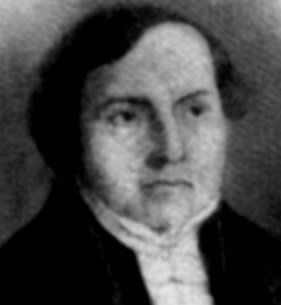
In Alexander Carson's article, "Moses Raised up by Providence as a Deliverer to Israel," the main theological topic addressed is the doctrine of divine providence and its active role in the life of Moses. Carson presents a series of key points demonstrating how circumstances surrounding Moses' upbringing, including the actions of his mother and Pharaoh's daughter, illustrate God's sovereignty in orchestrating events for the purpose of delivering Israel from bondage. He cites Exodus 2:1-15 to show how Moses' adoption and education were providentially timed to prepare him for his future role as a deliverer, emphasizing that these were not mere coincidences but rather orchestrations by God. The significance of this doctrine lies in its assurance that God is actively involved in the affairs of believers, guiding and equipping them for His purposes, thereby encouraging trust in His plan amidst uncertainties.
Key Quotes
“What a happy chance! What a wise Providence Moses is providentially excited to visit his brethren.”
“Man cannot hide what God would reveal.”
“How wonderfully does Providence overrule in all the accidents and in all the occurrences in the lives of his people.”
What does the Bible say about Moses being raised as a deliverer?
The Bible indicates that Moses was providentially protected and prepared by God to be a deliverer for Israel.
Exodus 2:1-10, Exodus 2:11-15
How do we know God's providence is real in Moses' life?
God's providence is evident in the miraculous events surrounding Moses' upbringing and preparation for his role as a deliverer.
Exodus 2:1-10, Exodus 2:11-15
Why is the concept of providence important for Christians?
The concept of providence assures Christians that God is sovereignly in control, guiding their lives for His glory.
Romans 8:28, Exodus 2:1-10, Exodus 2:11-15
By the faith of his parents, Moses was not destroyed at his birth, and by a providential scheme he was brought up in the court of Pharaoh. What put it into the mind of his mother to form such a wish of saving him? Why is it suggested to her to make an ark of bulrushes, and put her child into it on the Nile? How many things, in such a situation, were more likely to destroy him than to save him? Why did Pharaoh's daughter come down so seasonably to the river to bathe? Why did she think of mercy, contrary to her father's orders? Why did she think of mercy to this child more than to the thousands that were perishing? And if compassion now touched her heart, why is she not contented with simply saving the child? Why does she adopt it as her own? Must compassion make her a mother? This might be whim or fancy, but it was the Lord's doing, and it is wondrous in our eyes. Moses must be educated in all the wisdom of the Egyptians: he must be brought up in the house of Pharaoh. The daughter of Pharaoh, then, must not only save the life of the child, but must adopt him as her own son.
But it is not enough that Moses should be adopted by the daughter of Pharaoh. It must be in circumstances that will preserve to Moses the knowledge of his descent. The child, then, was by Providence put into the hands of his own mother as his nurse.
Moses must be put to his work as the deliverer of Israel. The people of God must be delivered, not by interest at court, but by the strong hand of the Almighty. Moses, then, must be first brought out of the house of Pharaoh. Behold the circumstance which led to this event. "And it came to pass in those days, when Moses was grown, that he went out unto his brethren, and looked on their burdens: and he spied an Egyptian smiting an Hebrew, one of his brethren. And he looked this way and that "way, and when he saw that there was no man, he slew the Egyptian, and hid him in the sand. And when he went out the second day, behold, two men of the Hebrews strove together: and he said to him that did the wrong, Wherefore smitest thou thy fellow? And he said, Who made thee a prince and a judge over us? intendest thou to kill me, as thou killedst the Egyptian? And Moses feared, and said, Surely this thing is known. Now -when Pharaoh heard this thing, he sought to slay Moses. But Moses fled from the face of Pharaoh, and dwelt in the land of Midian: and he sat down by a well."—Exod. ii. 11-15. What a happy chance! What a wise Providence! Moses is providentially excited to visit his brethren. Why at that time more than any other time? At that time an Egyptian was smiting an Israelite. Moses chanced to see it: Providence placed it before him. He slew the Egyptian. Why did he act so imprudently? It was of God. He was a wise, and a meek man, yet he here acted rashly, and in anger. He took every precaution to conceal the matter, yet it was known. Man cannot hide what God would reveal.
But Moses must find out that this affair is not secret. Providence, then, ordered it that he went out a second time, and that, on that occasion, two Hebrews should be contending, and that he should behold them. He reproves the injurious person, and, instead of thankful submission, he is reminded of the death of the Egyptian. Pharaoh is in wrath: Moses flies, and remains in Midian, till the time that the Lord should call him to his work. How wonderfully does Providence overrule in all the accidents, and in all the occurrences in the lives of his people!

Comments
Your comment has been submitted and is awaiting moderation. Once approved, it will appear on this page.
Be the first to comment!