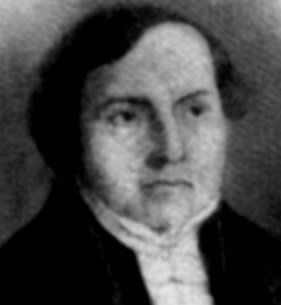
The main theological topic addressed in Alexander Carson's article "The Lot Fell Upon Jonah" is the doctrine of divine providence, specifically in the context of decision-making by lot. Carson argues against two errors: one is the denial of God's providential governance over all events, which leads to a worldview that ascribes occurrences to mere chance; while the other is the misinterpretation that divine approval is intrinsically linked to outcomes decided by lot. Scripture references, notably Proverbs 16:33 ("The lot is cast into the lap, but its every decision is from the Lord") and Acts 1:15-26 (the choosing of Matthias as apostle), illustrate God's sovereign control over decisions made by lot. The practical significance of this teaching is that believers should rely on Scripture and prayer for guidance rather than seek divine will through chance methods, as misapplying lots can lead to misunderstandings and potential errors in interpreting God's will.
Key Quotes
“To deny the agency of God in the casting of the die... is to lead away the mind from seeing God in the government of the world.”
“Though the lot is always disposed by God yet it may spoil the righteous man and enrich the unjust.”
“It is obvious then that if God has not appointed the lot to determine between truth and error... lays himself open to deception and delusions.”
“The decision by lot or the voice of an overruling power is found among heathen nations... it was a tradition founded on God's appointment to his people.”
What does the Bible say about God’s sovereignty in casting lots?
The Bible teaches that even in the casting of lots, God is sovereign over the outcome, guiding the decisions according to His divine will.
Proverbs 16:33, Jonah 1:7, Acts 1:26
How do we know God's providence is true?
God's providence is evidenced throughout Scripture, where He is shown to govern all events for His glory and the good of His people.
Genesis 50:20, Romans 8:28
Why is understanding providence important for Christians?
Understanding providence helps Christians trust God's plan, leading to faith and assurance amid life's uncertainties.
Romans 8:28
"The lot is cast into the lap," says Solomon, "but the whole disposing thereof is of the Lord." This is true, and in every instance true: true as to the smallest matters, as well as to matters of the utmost importance,—as true in gambling, as in the choice of an apostle. But this does not import that God always answers to the appeal by lot, or in this way distinguishes the righteous from the unrighteous cause. Here, then, there are two opposite errors: one excludes Providence, and sees nothing but atheistic chance,—the other by lot appeals to Providence, and expects the event to be the oracle of the Divine judgment. Both errors are dishonourable to God, and dangerous in their practical influence. To deny the agency of God in the casting of the die, even in folly and in sin, is to deny the existence of Providence, and to lead away the mind from seeing God in the government of the world. To pledge God to the approbation of the decision by lot, is to mistake the true nature of the doctrine of Providence, and to make the Just and Holy One the abettor of sin. Though the lot is always disposed by God, yet it may spoil the righteous man, and enrich the unjust. God determines the fall of the lot, but he does not determine the justness of the cause by that fall. Providence even rules the lot, when it is unwarrantably employed, to accomplish its own purposes. But it gives the issue no sanction.
I speak this with regard to the lot, in cases where it is employed without the Divine command. For God has on different occasions commanded decision by lot; and in these not only is the fall of the lot by the disposal of the Lord, but the decision has his approbation. In such cases God speaks as really as he did on Mount Sinai. In casting the lots with respect to the scape-goat, the Lord chose the animal that was to die, as truly as if he had declared his choice by a voice from heaven. So also with respect to the inheritance of the children of Israel in Canaan. In their battles, also, the children of Israel, when it was not necessary for the whole host to attack, weDt out by lot against the enemy. In like manner, the Lord pointed out Achan by lot, in this way declaring him the guilty person, as truly as if he had named him. Even in the case of Jonathan, when the conduct of his father was rash and sinful, the appeal was solemnly made to God, and God answered it. Jonathan was pointed out as the offender, though in ignorance. In many other things the Israelites determined by lot, when the decision was the Lord's decision.
In the New Testament also, after the fall of Judas, an apostle was chosen by lot. Two reasons induce some interpreters to reject the authority of this choice. On the supposition they cannot hare the exact number of twelve apostles. But is it so necessary always to keep up this number of apostles, that men should on that account venture to bring such a charge against the apostles, and against the inspiration of the Scriptures? The number twelve might be necessary for the apostles on their setting out, without the necessity of keeping up that number. In fact, that number was not always kept up. The breach made by Judas was filled up, because he was a false apostle, and not a true foundation stone. But the vacancy by the death of James was not filled, nor any other vacancy to the death of John. Besides, what will be done with Barnabas on this supposition? Paul, then, may have been, and was an apostle as truly as Peter, though he was supernumerary, or as one born out of due time. The mystical number was at first necessary, to correspond with what is written in the Scriptures. But there was no need to keep always exactly to that mystical number. I think the same observation will apply to the ten horns of the beast, if the necessity of facts demands its aid. Another reason induces some to reject the authority of this decision, on the apprehension that the allowance of its Divine inspiration will sanction all appeals to the decision of God by lot. But let consequences be what they may, we must not reject Scripture truth on the authority of theory. Hence, I do not look on the objection as valid. This lot was in the choice of an apostle, and nothing like it can ever occur. God only could choose an apostle, and an appeal to him in a way of his own might be necessary on that occasion, without giving a sanction to appeals of that nature on any other occasion. When we have to choose an apostle, let us choose him by lot, for we have no rule or guide for our choice. That Matthias was a divinely appointed apostle appears quite evident. The proposal of choosing an apostle in the room of Judas was made by Peter, and coincided in by all the rest of the apostles. That they had the authority to act as they did should not be doubted. Had they not already received their commission? And from the moment of receiving that commission, were they not fit to discharge all the duties of the office as far as they were necessary? Even after his nomination, did not Jesus again renew their commission, giving them power to fulfil it ?" As my Father," says he, "sent me, even so send I you. And when he had said this, he breathed on them, and saith unto them, Receive ye the Holy Ghost. Whosesoever sins ye remit, they are remitted unto them; and whosesoever sins ye retain, they are retained." Are they not, then, from this moment, invested with all authority to act for Christ? Was Christ's breathing on them a mere ceremony? Had they not now the Holy Spirit to guide them in a matter as important as the choice of an apostle, even in declaring the way of salvation? They had not yet, indeed, received the gifts of the Spirit on the day of Pentecost, but that was a distinct thing from the inspiration by which they had preached the gospel. If there is truth in the words of Jesus, the apostles are now empowered and fitted to act for Christ in every thing necessary for the time. Farther gifts might be necessary or useful for the evidence and confirmation of their office, and the truths which they promulgated. But now they want no apostolic authority. The day of Pentecost gave them no additional commission.
Let us now take a glance at Peter on this occasion. "And in those days Peter stood up in the midst of the disciples, and said, (the number of the names together were about an hundred and twenty,) Men and brethren, this scripture must needs have been fulfilled, which the Holy Ghost by the mouth of David spake before concerning Judas, which was guide to them that took Jesus. For he was numbered with us, and had obtained part of this ministry. Now this man purchased a field with the reward of iniquity; and falling headlong, he burst asunder in the midst, and all his bowels gushed out. And it was known unto all the dwellers at Jerusalem; insomuch as that field is called in their proper tongue, Aceldama, that is to say, The field of blood. For it is written in the book of Psalms, Let his habitation be desolate, and let no man dwell therein: and his bishoprick let another take. Wherefore of these men which have companied with us all the time that the Lord Jesus went in and out among us, beginning from the baptism of John, unto that same day that he was taken up from us, must one be ordained to be a witness with us of his resurrection. And they appointed two, Joseph called Barsabas, who was surnamed Justus, and Matthias. And they prayed, and said, Thou, Lord, which knowest the hearts of all men, shew whether of these two thou hast chosen, that he may take part of this ministry and apostleship, from which Judas by transgression fell, that he might go to his own place. And they gave forth their lots; and the lot fell upon Matthias; and he was numbered with the eleven apostles."—Acts i. 15-26. Is not Peter here the inspired Peter? How unlike he is to himself! He had from the first strong and clear faith in Jesus as the Messiah. But verily, till after his commission, he would have made a bad expounder of Scripture. Had Peter, before his inspiration, made such a progress in knowledge as to interpret the Scriptures in this authoritative manner? Did he know that David, in the passage referred to, spake of Judas? This of itself would decide the matter with me. Peter's exposition of the Psalms referred to is the work of the Holy Spirit. God has spoken by Peter, as much as he spoke by David in the Psalm interpreted. Why does Peter confine the choice to those who had associated with them from the beginning? What did uninspired Peter know of this matter? Why does he say "must one be ordained?" What does uninspired Peter know of this necessity? Did not the assembly, which acted on this occasion, act as for the Lord? If they had no authority, they must have been the greatest fanatics, or the most presumptous antichrists. Every line of the document contributes to impress me with the conviction that the choice of Matthias was the Lord's choice.
Let not the Lord's people be rash in adopting the crude interpretations of God's word by men who are guided by their presumptuous theories ; and for the sake of avoiding difficulties in their system, will not scruple to advance principles that degrade the word of God, and tend to bring doubt and suspicion upon every page of Holy Writ. The same boldness that rejects the inspiration of this choice, may at pleasure make havoc of every part of the divine word, which stands in the way of their theories. It is no light matter to charge the apostles of Christ with acting beyond their commission, after they received that commission. To me the crime is not less than blasphemy against the word of the living God.
The decision by lot, or the voice of an overruling power, is found among heathen nations. No doubt, like other things, it is a tradition founded on God's appointment to his people. A striking instance of this we have in the proposal of the sailors on the occasion of the storm, related in the account of Jonah. More wise than many philosophers, they saw a Providence in the tempest; and though every tempest is not to discover a Jonah, yet every tempest is from the Lord, and has in view some purpose. God's people should not shut their eyes against that which was visible to ignorant heathens. They thought that the violence of the tempest indicated that there was on board some notorious transgressor who must be cast out. In this they were in ignorance. They were right in viewing the tempest as sent by a superior power. They believed beyond evidence, when they judged that this was an indication, that vengeance demanded some one to be cast into the sea. But God made use of their ignorance to effect his purpose. It would be wrong in a storm at sea to imitate the conduct of the sailors with Jonah. But God employed their view of the lot to find out Jonah. On this occasion it was God's lot. On all occasions God decides the lot; but if men would attempt to find out a murderer, or any other violator of justice, by lot, they would often destroy the innocent. God, when he pleases, may make the lot to fall on the guilty, but he may make it fall on the innocent when it serves his purpose. It would be as sinful and unwarrantable to decide on criminals by lot, as it would be to judge them by the laws of phrenology. Let it never be forgotten, that though God decides the falling of the lot, he does not decide the cause at issue. The lot is guided by the Lord, yet it may condemn the righteous, and save the guilty, in all cases in which it is not appointed by the Lord.
But in the case of Jonah, an unerring band guided the lot, even when used not according to divine appointment. God here directs the expedients of superstition to effect his purpose. How wonderful is the wisdom of God in the government of the world! He makes ignorance and knowledge, tyranny and good government, cruelty and compassion, crime and virtue, fulfil his will. "And they said every one to his fellow, Come and let us east lots, that we may know for whose cause this evil is upon us. So they cast lots, and the lot fell upon Jonah."
We have a similar instance of divine interference in regulating the lot cast by Hannan for the destruction of the Jews. Pur was the devil's oracle, but, like the persons possessed by demons, it was obliged to speak for God. Balaam intends to curse, but he is obliged to bless.
One great use of the lot, according to Solomon, it might still serve, even although it should not be considered as in its decision involving an appeal to God. "The lot causeth contentions to cease, and parteth between the mighty." In dividing an estate between heirs, the most perfect skill and impartiality may not be able to make both sides equally eligible. Who, then, is to have his choice? There is no ground of preference, and neither has a right to yield to the other. Let the lot decide. This will cut away all ground for complaint. Yet this decision is not to be looked on as involving God's approbation of the division. In other words, it is not God's lot, as in the division of Canaan. It is a human expedient useful to prevent disputes. God casts the lot, but does not pledge himself for the righteousness of the result. And may not the lot often effectually part between the mighty? In the dispute with regard to the boundary between Great Britain and America, some part of territory it might be impossible with certainty to adjudge to either party. Who is to yield? Let the lot decide. Yet who will say that the decision implies that God pledges himself that justice is on the side of the successful lot? In reality, the just title might be on the other side, while the lot has been disposed by the Lord. But the Lord has given the territory by his Providence. And would not such a settlement be better than strife? Many persons would fear to make such a decision, because they consider the lot as a religious ordinance. But as a religious ordinance, it is not, as appears to me, in use. And in such instance, it does not pretend to be the oracle of God in declaring right. It decides the matter only as the will of Providence, not as the divine declaration of right.
Right views of this subject are of great practical importance; and error with respect to it has led to absurdities and evils. Some have appealed to God by lot, in order to determine between truth and error. There can be no more effectual engine of Satan than this. God has given us his word to direct ns in all our conduct and faith; and his Spirit instructs us in the truths and duties of Scripture only by enabling us to understand them. We are sanctified by the Spirit through the truth, only as far as it is understood. Even should we confess the truth without understanding it, we are neither justified nor sanctified. To know the will of God, it is his appointment that we search the Scriptures, and receive all truth and duty as we perceive them to stand on the divine testimony. We ascertain the mind of God, not by a lazy appeal to lot, but by a diligent search of his word, relying on the guidance of the Spirit of truth. It is obvious, then, that if God has not appointed the lot, to determine between truth and error, whoever uses this mode of decision lays himself open to deception and delusions.
Some make the Bible itself a sort of lottery book, by opening it at random, and taking as God's answer to their object of inquiry whatever passage first strikes their eye. This is absurd, fanatical, dangerous. God has not appointed this mode of consulting him, and he who employs it may be left to fall into the most serious delusions. He may be falsely comforted, or falsely discouraged. God answers his people through his word, not by a random appeal to it by lot; but by its true import, interpreted according to the laws of language. It is as unlawful to use the Scriptures in this manner, as to attempt to cure diseases by making an amulet of a portion of John's gospel.
Dr. Haweis, in his Continuation of Milner's Church History, observes, that the "frequent appeal to the lot seems the peculiar characteristic of the Moravian Church." Their missionaries have their stations assigned by lot, and the lot must sanction their marriages. The historian observes, that, notwithstanding this, "no where fewer unhappy marriages are found than among the brethren." Nothing, however, can warrant a restraint that God has not imposed, and that amiable body, to whose zeal all the friends of the gospel are so much indebted, would prosper not the less to rid itself of this unscriptural bondage. God does, indeed, direct his people in marriage; but he does not answer the appeal by lot. If their marriages are generally happy, it is not owing to this peculiarity. It is easy to misinterpret Providence. When Rachel had a son by her handmaid, whom she had given as a wife to her husband, she said, " God hath judged me, and hath also heard my voice." God might answer her prayer of faith, though he did not sanction what she had done. She misinterpreted his Providence, and claimed what was given to her faith as a sanction to that which was her sin. It is, indeed, a most comfortable truth, which may be drawn from this passage, that God blesses what he approves in his people, even though what is approved is mixed with much that is evil.
Leah also is under a similar mistake. "God," said she, "has given me my hire, because I have given my maiden to my husband." She was not justified in giving her maiden to her husband, yet we are expressly told, that "the Lord hearkened unto Leah." If our prayers were never heard until our faith and conduct are without mixture, we need never pray at all.
"I confess," says Dr. Haweis, " I can see no Scripture order or warrant to countenance such appeal, nor any such practice adopted in the apostles' days, or in the primitive church. The single instance, Acts i. 26, where the sacred college was to be filled up by one of the two persons chosen by the church for the office of apostle, is no precedent, nor sanctions any similar appeal to the lot."
Luther himself, in a most important concern, acted on a similar misinterpretation of Providence. After he had denied the divine right of the pope, for a time he consented to acknowledge his superiority over all bishops, among other reasons, on the ground that," unless it had been the will of God, the popes could never have attained so great and durable a dominion." This does not distinguish between what is the will of God to exist, and what is sanctioned by God. On the same ground, he might have defended subjection to Satan. It was God's appointment that the Man of Sin should exist, but it was not his command to submit to him. The prosperity of a cause is no proof of a divine sanction.
In like manner, divine judgments are sometimes looked on as marking" their objects as sinners beyond the rest of mankind. Divine judgments are always on account of sins. But the victims in them are not always the worst of mankind. Many very wieked people may escape ; sometimes the righteous may fall. Were it otherwise, we would walk by sight, not by faith. But in all instances of divine judgment, by pestilence, by famine, by the sword, the people of God have a right to trust in'him, with the assurance that he will glorify himself, and bless them in what happens to them. If it is not for his glory and their good, a hair of their head will not fall. And, in general, the Lord remarkably preserves his people. When it is otherwise, the wisdom and kindness of the dispensation of sovereignty should not be questioned.
Our Lord corrects this general mistake in interpreting this work of Providence. "There were present at that season some that told him of the Galileans, whose blood Pilate had mingled with their sacrifices. And Jesus answering said unto them, Suppose ye that these Galileans were sinners above all the Galileans, because they suffered such things? I tell you, Nay: but, except ye repent, ye shall all likewise perish. Or those eighteen, upon whom the tower in Siloam fell, and slew them, think ye that they were sinners above all men that dwelt in Jerusalem? I tell you, Nay: but, except ye repent, ye shall all likewise perish."—Luke xiii. 1-5. The instances to which our Lord refers were the visitations of Providence. They were not accidental, but by divine appointment. They were in judgment. Our Lord does not question this. He denies only that those judgments marked out the sufferers as the greatest of sinners. Many greater sinners meet with no visible displays of judgment. Jesus does not affirm that the sufferers did not suffer in judgment, but that the judgment did not import that they were peculiarly sinners. He declares that without repentance all will also perish. This does not acquit the sufferers, but with them condemns all the rest of mankind who did not repent.
We often hear expressions of admiration that the earth does not open and swallow great transgressors, or that the thunders of the Almighty do not strike them dead. But though God occasionally does give witness to his own existence and government by the display of his immediate judgment, yet, in general, he waits his appointed time of vengeance. It is the will of God to give scope for the manifestation of the guilt and depravity of human nature, and the manner of his Providence is adapted to this purpose. If God would on the spot strike down every blasphemer, every perverter of his word, and, in general, every open transgressor, we would have a world of decent hypocrites, but we would not have a world less at enmity with God. It is the Divine wisdom, then, to allow opportunity for man to show what he is. Were it not for this, man would be thought to be less wicked in his nature than the word of God asserts him to be. It is, then, in every view, of great importance to understand the ways of God in his Providence, as well as in his grace.
The absurd and murderous custom of dueling was originally founded on an appeal to Providence. It was thought that God would defend the right. At no remote period the judicial combat was known to the law, as well as trial by jury is known now to us. Various other appeals are made to Providence on the principles of the lot, in attempting to discover guilt, or manifest innocence. As might be expected, this misinterpretation of Providence was the cause of much misery to society; and Satan reigned under an appearance of giving honour to God. Even Sir John Oldcastle, Lord Cobham, a man of God in the fifteenth century, proposed such an appeal to Providence. When accused of heresy, he begged to be permitted to vindicate his innocence by the law of arms. He said he was ready, "on the ground of his faith," to fight for life or death with any man living—the king and the lords of his council being excepted. Lord Cobham was a brave soldier. But his proposal was evidently not confidence in his own prowess and skill in arms. It was a reliance on Divine interposition. In no other view could he have challenged to fight any man living. This, then, is to be viewed, not as a modern challenge, but as a relic of ignorance that in many things may be found in God's people. Modern duelists, who have no such opinion of appeal to Providence, have not the excuse of the good Lord Cobham.
A misinterpretation of Providence of a similar nature is the opinion, that what Providence puts in our power, God warrants us in doing. When a man finds his enemy under his hand, he too often interprets it as the language of Providence, that punishment should be inflicted. So judged not David. When Saul was repeatedly in his power, and though his own life was constantly in imminent danger, he always refused to kill him. How opposite to the conduct of David was that of Archbishop Laud! When Dr. Leighton, one of the Puritans, was, by the Archbishop's instigation, condemned in the Star Chamber, and sentence was pronounced in court, Laud, pulling off his cap, and lifting up his eyes to Heaven, gave thanks to God who had enabled him to behold this vengeance on his enemies. Dr. Leighton, as recorded by the archbishop himself, was punished in the following manner: 1. He was severely whipt before he was set in the pillory. 2. Being set in the pillory, he had one of his ears cut off. 3. One side of his nose was slit up. 4. He was branded on the cheek with a red hot iron, with the letters S. S. On that day sennight [one week later], his sores on his back, ear, nose, and face, being not yet cured, he was whipped again at the pillory in Cheapside, cutting off the other ear, slitting the other side of his nose, and branding the other cheek—See Haweis, C. Hist. And this is the thing that the infamous Laud ascribes to Providence! Providence, indeed, did appoint the thing for his own glory, and trial of the faith of his suffering servant. But Providence did not approve the actors: a righteous God will find the whole guilt in the inhuman perpetrators. God calls his people to suffering for his sake; but not to them who are the authors and abettors of their suffering. Good for them they had never been born. Deep and mysterious are thy ways, Lord Jehovah! Thou reignest as an absolute Sovereign over all the earth: yet sin and misery now abound; and with many will abound for ever. Let us bow with submission. We know the Lord God will always do righteously.

Comments
Your comment has been submitted and is awaiting moderation. Once approved, it will appear on this page.
Be the first to comment!