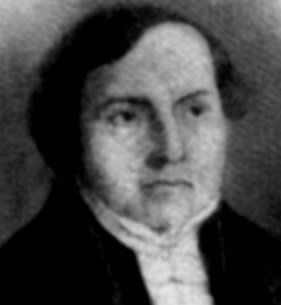
In the article "Paul's Cloak Left at Troas," Alexander Carson addresses the doctrine of biblical inspiration, arguing against theories that categorize parts of Scripture as less inspired or merely human. He contends that every detail in Scripture, including Paul's request for his cloak, is significant and divinely inspired, emphasizing that no aspect of the text is devoid of the Holy Spirit's influence. Carson references 2 Timothy 4:13, where Paul expresses his need for the cloak and parchments, to illustrate that even mundane inquiries serve a greater theological purpose in revealing human dependency and humility. The practical significance of this doctrine highlights the importance of recognizing the entire Scripture as equally inspired, thereby encouraging a comprehensive study of God's Word that does not overlook its richness.
Key Quotes
“It did not indeed require inspiration to acquaint Paul that he had left a cloak with Carpus at Troas.”
“The service of God is no cover for indolence thoughtlessness waste or inattention.”
“Accurate views of the Scripture doctrine of inspiration are of immense importance for the discovery of what the Scriptures contain.”
“The phenomena not included in the division...are likely to be overlooked.”
What does the Bible say about inspiration of Scripture?
The Bible claims that all Scripture is given by inspiration of God (2 Timothy 3:16).
2 Timothy 3:16
How do we know the doctrine of inspiration is true?
The unity and transformative power of Scripture confirm its divine inspiration.
2 Timothy 3:16
Why is understanding Scripture's inspiration important for Christians?
Understanding Scripture's inspiration is crucial for recognizing its authority in our lives.
2 Timothy 3:16
"The cloak that I left at Troas with Carpus, when thou comest, bring with thee, and the books, but especially the parchments." Did Paul need any inspiration to inform him that he left his cloak with a certain person at Troas? Did he need inspiration to enable him to express this request to Timothy about the cloak? Is it not absurd, then, to suppose that every thing in Scripture is inspired, especially that all things are equally inspired? Human wisdom has reasoned in this way; and theories of inspiration have been invented to enable us to distinguish in Scripture between the things that are inspired and the things which need no inspiration, and to regulate the different kinds and degrees of inspiration which different things in Scripture require. The message about the cloak has been degraded from all kinds of inspiration, as a mere matter of worldly business, which admitted no interference of the Spirit of God.
But all such theories of inspiration directly contradict the testimony of the Holy Spirit, which attests that all Scripture is given by inspiration. The meaning of this testimony must be ascertained by grammar and the use of language—not by theory. To speak of settling the meaning and extent of inspiration by theory is as absurd as to call the verdict of a jury the theory of the jury. The men who have invented these theories, and those who adopt them, show themselves unacquainted with the fundamental laws which regulate the investigation of truth, and trespass against the philosophy of evidence, as well as against the testimony of the Spirit of God.
It did not, indeed, require inspiration to acquaint Paul that he had left a cloak with Carpus at Troas. It did not require inspiration to inform him that he now needed the cloak. But as his letter was the work of the Holy Spirit, such a message could not have found a place, except it was for the use of the people of God. It must convey some useful lesson, else it would not stand where it is. And do we not learn from it the humble circumstances of the apostle, and the attention that it was necessary for him to give to his worldly concerns even in small matters? We learn also the propriety and duty of attending to worldly concerns even in the most devoted men. The service of God is no cover for indolence, thoughtlessness, waste, or inattention. It shows us also that Paul did not set a value on exposing himself, without necessity, to cold or hardships. But, above all, this message appears to have been designed to manifest the petulance of human wisdom in the things of God. Paul providentially left his cloak at Troas, that occasion might be given for this message, in the words of the Holy Spirit. It is a gin and a snare to those who do not, like little children, submit implicitly to the testimony of Scripture. In the wisdom of God, the enmity of the human heart to the ways of God is detected. The truth revealed before the eyes, in this plan of revelation, lies hid from the wisdom of this world.
Accurate views of the Scripture doctrine of inspiration are of immense importance for the discovery of what the Scriptures contain. All theories which dispense with inspiration in some things, or modify it in others, tend to hide many things which the Scriptures reveal. What Dr. Thomas Brown, in his Philosophy of the Human Mind, says of these divisions of the mental phenomena, which he charges as leaving out some qualities which belong to it, is entirely applicable to this subject. The phenomena not included in the division, or which are included only by force, are likely to be overlooked. "A new classification, therefore," says he, "which includes, in its generic characters, those neglected qualities, will, of course, draw to them attention which they could not otherwise have obtained; and the more various the views are which we take of the objects of any science, the more just, consequently, because the more equal, will be the estimate which we form of them. So truly is this the case, that I am convinced that no one has ever read over the mere terms of a new division in a science, however familiar the science may have been to him, without learning more than this new division itself, without being struck with some property or relation, the importance of which he now perceives most clearly, and which he is quite astonished that he should have overlooked so long before." This observation is just, and profoundly philosophical. It applies to our subject as fully as to that of the philosopher. Those theorists that deny inspiration to some parts of Scripture, or which modify it, keep people from searching the Scriptures as the word of God, and from discovering much of the riches contained in them.

Comments
Your comment has been submitted and is awaiting moderation. Once approved, it will appear on this page.
Be the first to comment!