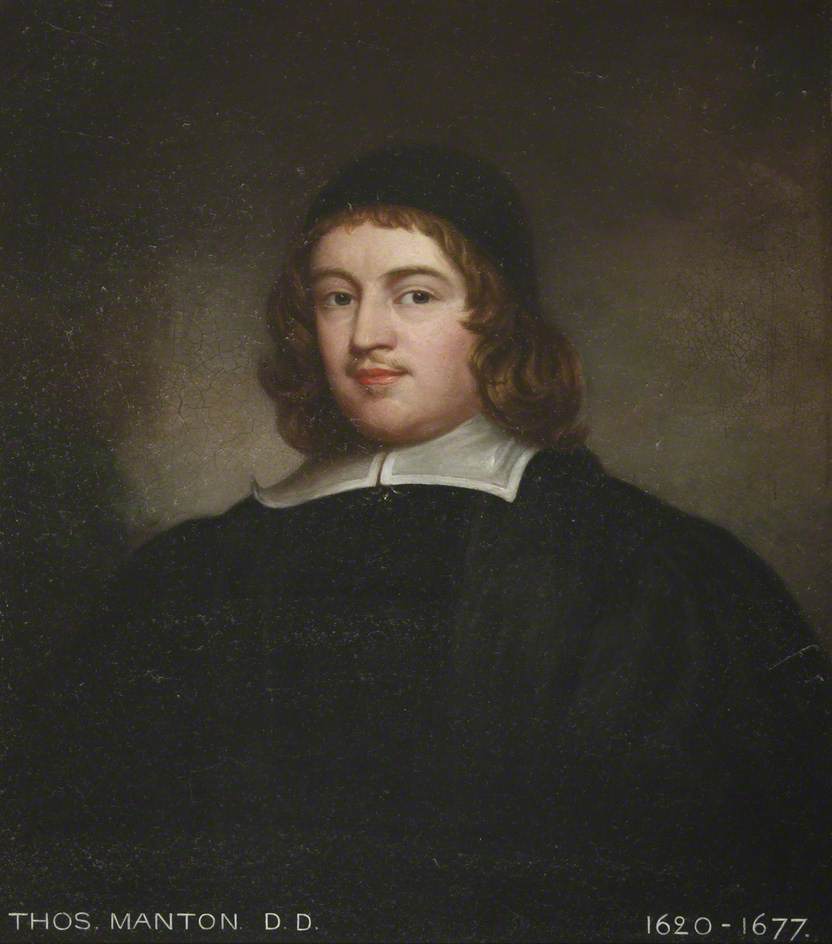
The main theological topic addressed in Thomas Manton's commentary on James 1:26 is the significance of controlling one's speech as a demonstration of true religion. Manton articulates several key arguments, emphasizing that failing to rein in one's tongue leads to self-deception and renders one's religion worthless. He supports his conclusions with various Scriptural references, notably from James and 1 John, highlighting the intrinsic link between love for God and love for neighbor, as well as the dangers of hypocritical speech. The practical significance of Manton's exposition lies in its call for self-examination, urging believers to reflect on the authenticity of their faith as evidenced by their words and actions, thus tying obedience to the moral implications of their profession of faith.
Key Quotes
“Your religion is worthless if you do not keep a tight rein on your tongue.”
“Censuring is a trick of the devil which excuses indignation against their own sins.”
“Out of the overflow of the heart the mouth speaks.”
“Hypocrites come at length to deceive themselves.”
What does the Bible say about controlling the tongue?
The Bible emphasizes the importance of controlling the tongue; failing to do so renders one's religion worthless (James 1:26).
James 1:26, Matthew 12:34, Ecclesiastes 9:2
How do we know that controlling our speech is crucial in Christianity?
Controlling our speech is crucial in Christianity as it reflects our heart and sincerity in faith (James 1:26).
James 1:26, Matthew 12:34, 1 John 4:20
Why is loving others through our speech important for Christians?
Loving others through our speech is essential for Christians as it reflects their love for God (1 John 4:20).
1 John 4:20, James 1:26
What are the consequences of a loose tongue according to the Bible?
The Bible warns that a loose tongue leads to self-deception and makes one's religion worthless (James 1:26).
James 1:26, Galatians 6:1
Ifanyoneconsidershimselfreligiousandyetdoesnotkeepatightreinonhistongue,hedeceives himself and his religion is worthless.
The apostle, having shown the blessedness of those who are doers of the Word, now shows who are only listeners and do not put the Word into practice—people who allow themselves any known sin—and he gives as an example the evils of the tongue.
Question. Before I comment on the words any further, I will inquire why James places so much weight on this one thing. It seems so insignificant in itself and seems to have so little reference to the context.
Answer. (1) This is a main reason for our respect for our neighbor. True love for God will be manifested in love for our neighbor. God said, “You shall love God,” and he also said, “You shall love your neighbor.” The apostles often used this argument to unmask hypocritical arguments, as in 1 John 2:9, “Anyone who claims to be in the light but hates his brother is still in the darkness.” See also 1 John 3:17-18, “If anyone has material possessions and sees his brother in need but has no pity on him, how can the love of God be in him? Dear children, let us not love with words or tongue but with actions and in truth.” How can you imagine that those who are open to the love of God could be merciless towards other people? So 1 John 4:20 says, “Anyone who does not love his brother, whom he has seen, cannot love God, whom he has not seen.”
(2) There is a natural inclination in us to cause offense with the tongue. Censuring is a pleasing sin that goes very well with our nature. The more natural corruptions are, the more care should be taken to suppress them: “I will watch my ways and keep my tongue from sin” (Psalm 39:1). As you watch, so you should pray and desire God to watch over your watching: “Set a guard over my mouth, O Lord; keep watch over the door of my lips” (Psalm 141:3). Being in awe of God is a great restraint.
(3) It was the sin of that age. This is apparent from the frequent references to it. See verse 19, all of chapter 3, 4:11, etc. It is a bad sign to be carried away by the evil of the times. Wicked people are described as following “the ways of this world” (Ephesians 2:2; the original Greek says “according to the age”). So also Romans 12:2 says: “Do not conform any longer to the pattern of this world”; this means, do not wear the clothes of the times.
(4) Because this seemed to be such a small sin, and having set aside bigger sins, they practiced it all the more. They were not adulterers or drunkards, and so they congratulated themselves on their apparent holiness. Note that indulgence in the smallest sin cannot coexist with grace. Your religion is worthless if you do not keep a tight rein on [your] tongue.
(5) This is usually the hypocrite’s sin. Hypocrites, of all people, are least able to bridle their tongue. Those who seem to be religious are the most free in censuring others. They are aware of the guilt of their own spirits and so are most prone to suspect others. Censuring is a trick of the devil, which excuses indignation against their own sins. Gracious hearts reflect most on themselves. They do not look for things to reprove in others but things to lament in themselves. When a man is aware of his own failings, he is very sympathetic in reflecting on the weaknesses of others: “You who are spiritual should restore him gently” (Galatians 6:1).
(6) There is such a quick interchange between the tongue and the heart; that, says the apostle, is why their religionisworthless—they cannot keepatightreinon their tongues. Seneca said, “Speech is the express image of the heart,” and someone greater than he said, “Out of the overflow of the heart the mouth speaks” (Matthew 12:34). The quality of many people’s religion can be discerned by the intemperateness of their language. Words are the overflow of their wickedness.
With these reasons in mind, the opening of this verse is easier to understand.
Ifanyoneconsidershimselfreligious—if he seems religious to himself or others, by the practice of a few things in worship.
Yetdoesnotkeepatightreinonhistongue. That is, he does not abstain from the evils of the tongue, such as reviling and censuring.
He deceives himself. This may be understood in two ways:
(1) He has too good an opinion of himself. Self-love is the ground of hypocrisy. They do not search themselves or suspect themselves of any evil. Judas last of all asked, “Master, is it I?” They are too easy on themselves but too severe on others.
(2) The other sense may be that he comes at last to flatter himself, to deceive his own soul.
Hisreligionisworthless. That is, either he makes the good things that are in him to be vain and unprofitable, or his religion is a pretense.
Notes on Verse 26
Note1. Considershimselfreligious. Religion may be only a pretense. Consider “the man who thinks he knows something” (1 Corinthians 8:2)—that is, who flatters himself on his knowledge. “If anyone thinks he is something when he is nothing, he deceives himself” (Galatians 6:3).
Note2. Doesnotkeepatightreinonhistongue. It is a major part of religion to bridle the tongue. There are several evils that must be restrained—lying, swearing, cursing, ribaldry. I will speak about these four.
(1) Lying. Beware of this in all its varieties. The devil—that is, the accuser—is called the liar too.
(2) Cursing. There is corruption at the heart when the tongue is so loose. There is seldom any blessing for those who are given over to cursing.
(3) Swearing. The righteous are afraid to take oaths (see Ecclesiastes 9:2).
(4) Ribaldry. This is “filthy language” (see Colossians 3:8) or “coarse joking” (Ephesians 5:4).
Note3. Hedeceiveshimself. Hypocrites come at length to deceive themselves. A liar, by repeating his lies, begins to believe them.
Note4. Hisreligionisworthless. Pretended religion will be fruitless. Of all things, a man cannot endure his serious actions being in vain and to no purpose. This will be no small part of one’s torment in hell, to think that all his profession has come to this.

Comments
Your comment has been submitted and is awaiting moderation. Once approved, it will appear on this page.
Be the first to comment!