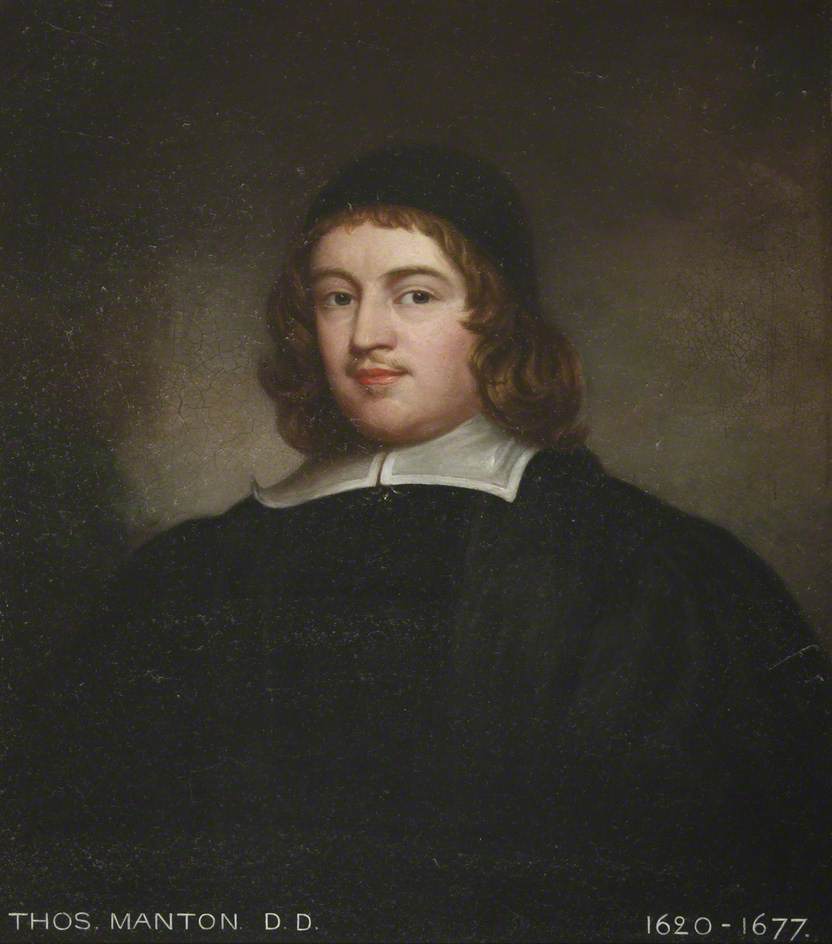
The article addresses the theological significance of the tongue and its capacity for both blessing and cursing, as explored in James 3:5-9. The key arguments emphasize the tongue’s small size yet immense potential for harm—comparable to a spark that ignites a great forest fire. Manton offers several Scriptural illustrations, including Proverbs and Psalms, detailing how the tongue can corrupt the whole body and lead to sin, demonstrating its powerful influence over human conduct. He underscores the necessity of self-control and the humility required to recognize the tongue's dangers, fostering a life aligned with biblical principles. The practical significance revolves around the call for believers to exercise diligent restraint over their speech, reflecting God’s image in their interactions with others.
Key Quotes
“The tongue is like a bridle and rudder small in size and yet very useful.”
“A little sin does a great deal of harm and a little grace has great efficacy.”
“No man can tame the tongue; it is a restless evil, full of deadly poison.”
“Cursing man made in God's image is hypocrisy.”
What does the Bible say about the power of the tongue?
The Bible emphasizes the tongue's immense power, indicating that it can either bless God or curse others.
James 3:5-10, Proverbs 18:21
How do we know that controlling the tongue is important in Christianity?
Control of the tongue is vital because it reflects one's spiritual state and can either honor or dishonor God.
James 3:2, James 3:5, Proverbs 21:23
Why should Christians avoid boasting?
Boasting is discouraged in Christianity as it serves pride and undermines true humility before God.
James 3:5-6, Proverbs 14:3
How does sin affect our speech according to the Bible?
Sin contaminates our speech, leading to words that can harm others and undermine our witness.
James 3:6-8, Luke 6:45, Colossians 4:6
Likewisethetongueisbutasmallpartofthebody,butitmakesgreatboasts.Considerwhata great forest is set on fire by a small spark.
Likewisethetongueisbutasmallpartofthebody,butitmakesgreatboasts. Here the simile is repeated; the tongue is like a bridle and rudder, small in size and yet very useful. Makes greatboasts is indeed the proper meaning of the Greek word. From the context James could have said, “does great things,” for what was shown was that someone who can control his tongue can control his whole body. To support such a proposition, James gives two illustrations that show that little things through good management may be very useful. From this he could have inferred that the small part of the body, the tongue, can do great things if it is under control. But James repeats the main proposition to support a different argument. It is as if he had said, “The tongue witnesses for itself; for by it people trumpet their presumptions and boast that they can do great things.” He gives the example of boasting because:
(1) It is the usual sin of the tongue. This is the part of the body that most serves pride.
(2) It is usually the sin of those who have no control over their spirits and actions. Hypocrites and vain men are proud boasters. “Flattering lips” and “every boastful tongue” are linked together (Psalm 12:3). And in Proverbs 14:3 we read, “A fool’s talk brings a rod to his back.” True grace humbles; false grace puffs up.
Considerwhatagreatforestissetonfirebyasmallspark. Another simile, showing that great disasters come from the abuse of so small a thing. You would think that words, which pass away with the breath in which they are uttered, would not have such a deadly influence; but, says the apostle, asmallspark kindles much wood. Small things should not be neglected in nature, art, religion, or providence. In nature, important things grow from small beginnings. Nature loves to have the seed of everything small; a little yeast works through the whole batch of dough.
Notes on Verse 5
Note 1. A frequent sin of the tongue is boasting. Sometimes the pride of the heart comes from the eyes; therefore we read about “haughty eyes” (Proverbs 6:17). But usually it is displayed in our speech. The tongue trumpets it in these ways:
(1) In bold boasting. See Isaiah 14:13, where the king of Babylon threatens to fight against God himself, and then against his people. See also Hannah’s resolve in 1 Samuel 2:3.
(2) In proud ostentation of our own worth. First we entertain our spirits with whispers of vanity and suppositions of applause; and then the rage of vainglory is so great that we trumpet out our own shame. It is wrong for a man to promote his own cause. In the Olympic Games the wrestlers did not put crowns on their own heads. What is justifiable praise on another’s lips is boasting on our own.
(3) In contemptuous challenges of God and man. Of God: as Pharaoh challenged in effect, “Who is the God of the Hebrews, that I should let you go?” Consider also Psalm 12:4, “We will triumph with our tongues; we own our lips—who is our master?” Of man: provocative speeches are recorded in the Word. Solomon says, “A fool’s lips bring him strife” (Proverbs 18:6).
(4) In bragging promises, as if they could accomplish great matters beyond the reach of their gifts and strength: “I will pursue, I will overtake them. I will divide the spoils” (Exodus 15:9).
Note2. Take notice of small things. We must not consider only their beginning but their end. A little sin does a great deal of harm, and a little grace has great efficacy: “At the beginning his words are folly; at the end they are wicked madness” (Ecclesiastes 10:13). At first people argue for fun but later break out into furious passion, and so from folly go on to madness. “Starting a quarrel is like breaching a dam; so drop the matter before a dispute breaks out” (Proverbs 17:14). It is easy to let out the water, but who can call the floods back? Strife is sometimes compared to fire, sometimes to water; both are treacherous elements once they are let loose. At first heresy is a small matter, but it spreads like gangrene from one place to another until it has destroyed the whole body. Arius, a small Alexandrian spark, kindled all the world in a flame. Providence too begins great matters in a small way. Luther’s reformation was occasioned by opposing pardoners. Christ’s kingdom was despised at first as a poor, tender branch. Later it “filled the whole earth” (Daniel 2:35).
So then:
(1) Learn not to neglect evils that are small in their inception; resist sin early on (see Ephesians 4:27); give no place to Satan. Look out for the first sign of error. “We did not give in to them for a moment,” says the apostle (Galatians 2:5).
(2) Do not despise the humble beginnings of providence and deliverance; there is a “day of small things” (Zechariah 4:10). Philpot said the martyrs in England had kindled such a light in England as should not easily go out.
Thetonguealsoisafire,aworldofevilamongthepartsofthebody.Itcorruptsthewholeperson, sets the whole course of his life on fire, and is itself set on fire by hell.
Here James applies the simile of a little fire to an evil tongue. I shall comment on the most difficult phrases.
Aworldofevil. “A world” is how we commonly express things that abound. It implies that the power of the tongue to hurt is very great; as the world is full of all kinds of things, so the tongue is full of all kinds of sin.
Itcorruptsthewholeperson. Ephraim Syrus thinks this is an allusion to the punishment of leprosy with which Miriam and Aaron were afflicted for the abuse of their tongues. But that does not fit the context. It means that it infects the whole man with sin and guilt. Sin, though it starts in the soul, is carried out by the body. One infected part of the body defiles another, and the tongue taints every part of the body.
Sets…onfire. James shows the effect of this tongue-fire: it not only blackens but devours and destroys. James uses the phrase sets…onfire because the effects of the tongue, which are usually unjust passion, anger, rage, and violence, are contrary to the “cool spirit” that Solomon says is in the prudent man. Be sure to watch over your spirit when it starts to be furious and inflamed.
Thewholecourseofhislife. Some translate this, “the wheel of our nativity,” meaning the whole course of our lives. There is no action, no age, no state that can escape its influence. The Syriac interpreter has, “all our generations,” as if the sense were that all ages of the world are conscious of the evils of the tongue and can produce instances of it. But the word means our natural course, or the wheel of human life.
Isitselfsetonfireinhell. James shows where the tongue gets all this malice and mischief: from hell, that is, from the devil, who is the father of lies, the author of malice, and by lies and slander sets the world on fire.
Notes on Verse 6
Note 1. There is a similarity between an evil tongue and fire:
(1) In its heat. It is the instrument of wrath and contention, which is the heat of a man—a boiling of the blood around the heart. Solomon says, “A man of understanding is even-tempered” (Proverbs 17:27). Hot water boils over, and passions in the heart overflow into words. Of the ungodly man it is said, “his speech is like a scorching fire” (Proverbs 16:27).
(2) In being dangerous. It kindles a great fire. The tongue is a powerful means to kindle divisions and strifes. You know we need to be careful with fire. It is a bad master and a good servant. Where it is let loose, it soon turns houses into a wilderness; and you have as great a need to watch the tongue. Solomon says, “Like a madman shooting firebrands or deadly arrows is a man who deceives his neighbor and says, ‘I was only joking!’” (Proverbs 26:18-19). We spread fire, scalding words, and do not think about the danger.
(3) It burns. Reproaches penetrate like fire. David compares them to “burning coals of the broom tree” (Psalm 120:4), which burn the hottest and the longest; they may be kept burning for a whole year. The Septuagint has, “desolating coals.” Fire is a most active element and leaves a great pain. So do reproaches.
(4) It is kindled from hell, as the end of the verse says. Zeal is a holy fire that comes from heaven, but this fire is from hell. Isaiah’s lips were touched “with a live coal … from the altar” (Isaiah 6:6); and the Holy Spirit descended in “tongues of fire” (Acts 2:3). But the fire in this verse is from below. So work for an even temper. A tongue that is setonfirebyhell will be set on fire in hell. Hot words of wrath, strife, and censure come from Satan and lead to Satan. When you feel this heat on your spirit, remember from what hearth these coals were gathered. God’s Word was like fire in Jeremiah’s bones, and wrath is often like fire in ours. Even when wrath boils, keep anger from being a scorching fire in your tongues. See Psalm 39:3.
Note2. There is a world of sin in the tongue. It is an instrument of many sins. By it we induce ourselves to evil; by it we seduce others.
Note3. Itcorrupts. Sin is a defilement and a blot. Sin “contaminates [the] body” (2 Corinthians 7:1). Scandalous sinners are the stain of their society. When you hand yourselves over to sin, you defile yourself. It will be your own disgrace; it will be to your eternal disadvantage: “Nothing impure will ever enter [the heavenly city]” (Revelation 21:27). In short, sin is so impure that it is ashamed of itself. It seeks to hide itself from those who love it most, and it disguises itself as a virtue. No other argument is needed to make it odious but to see it in its own colors.
Note4. Sins of the tongue defile greatly. We either spread evil to others by ungodly suggestions or provoke them to evil by our passion.
Note5. Thewholeperson. An evil tongue has great influence on other parts of the body. When someone speaks evil, he will commit it. When the tongue has the boldness to talk of sin, the rest of the body has the boldness to act it. First we think, then we speak, and then we act. People will say it is only talk. Do not be deceived; an evil tongue infects other parts of the body.
Note6. Thewholecourse (or “wheel”) ofhislife. Man’s life is like a wheel. It is always in motion; we are always turning and rolling to our graves. This also shows the uncertainty of any worldly state; the spokes are now up and then down, sometimes in the dirt and sometimes out of it. The bishops of Mentz have a wheel as their emblem. This is also the emblem of our lives; when you see a wheel, take the opportunity to meditate.
Note7. The evils of the tongue have universal influence. There is no faculty that the tongue does not poison. No calling is exempt. The tradesman in his shop uses his tongue for gain: “A fortune made by a lying tongue is a fleeting vapor and a deadly snare” (Proverbs 21:6). Ministers in the pulpit often preach for gain (see Ecclesiastes 5:1). No one is so meek and humble that they may not be perverted. Holy Moses, the meekest man upon earth, was angry at the waters of Meribah and fell into a rage (“Rash words came from Moses’ lips,” Psalm 106:33). David prays well: “Set a guard over my mouth, O Lord” (Psalm 141:3). So, none of us should think these exhortations unnecessary.
Note8. A wicked tongue originates in hell; the prophets’ fires were kindled from heaven. The devil is “a liar” (John 8:44), and he accuses the brothers and loves to make others like himself. Learn, then, to abhor reviling, contention, and reproach, as you would hell-flames. These are just the eruptions of an infernal fire; slanderers are the devil’s slaves and instruments. Again, if blasted with rude contempt, learn to slight it; who takes notice of the suggestions of the father of lies? The murderer is a liar. In short, what comes from hell will go back there: “Anyone who says, ‘You fool!’ will be in danger of the fire of hell” (Matthew 5:22). Wrath is here expressed in a word of reproach, and you see how deadly and grievous it is.
Allkindsofanimals,birds,reptilesandcreaturesoftheseaarebeingtamedandhavebeentamed by man, but no man can tame the tongue. It is a restless evil, full of deadly poison.
Having shown the cursed influence of the tongue, James shows how difficult the cure is. Wild beasts are more tractable and may be brought to hand sooner than an evil tongue; it is wilder than the wildest beast.
All kinds of animals, birds, reptiles and creatures of the sea. The list is long so that he can show how far human skill has reached. Stories abound of how lions have been tamed and used to hunt like dogs or draw a chariot like horses (see Pliny in his NaturalHistory) and about how birds have been tamed and so on. In short, nothing is so wild in nature that human skill and hard work has not made it serve human use. This is a fruit of the dominion God gave man over the creatures in the beginning. Through an instinct in their nature everyone obeyed him and served him. But man rebelled and lost his command over himself and over the creatures. Even over his tongue, asmall part of his body, he has no dominion. That is the purpose of this illustration.
Arebeingtamedandhavebeentamedbyman. It is as if he said, “It not only has been done in ancient times, but we still see it done today.” He uses this distinct expression to show that he not only means the subjection of the creatures before the fall, or some miracles such as the great fish not hurting Jonah (Jonah 2) or the lions and Daniel in their den (Daniel 6), but also what is ordinary and is frequently experienced.
Butnomancantamethetongue. The old Pelagians read this as a question, as if the sense were: “Man can tame all other things; can he not then tame himself?”—implying that man can surely do this. This is quite contrary to the apostle’s intention, which is to show how unruly the tongue is. Others, to avoid the apparent harshness of the sentence, say James is speaking about other men’s tongues—who can stop them?—as if it were a saying similar to Psalm 120:3, “What will he do to you, and what more besides, O deceitful tongue?” That is, how shall I stop it? But this also does not agree with the apostle’s intention; he does not say how we should bridle other men’s tongues but our own. The meaning is, then, that no one can do it by himself.
Itisarestlessevil. Some take this causally: it is the cause of sedition and unruliness. But I think it means what was formerly expressed: it is an evil that cannot be controlled. It is a metaphor taken from animals that are kept in cages or chained. God has, in the structure of the mouth, made a double barrier of teeth and lips and through grace laid many restraints upon the tongue, and yet it breaks out.
Fullofdeadlypoison. This is an allusion to poisonous creatures. The tongue is as deadly, and has as much need to be tamed, as venomous beasts. Besides, some beasts carry their poison in their tongues, as the asp does in a sac under the tongue, which, when they bite, is broken, and then the poison comes out. That is why it is said, “They make their tongues as sharp as a serpent’s” (Psalm 140:3).
Notes on Verse 7
Note1. Observe the tractableness of the animals to man, and the disobedience of man to God. Wild animals are tamed, snakes are charmed by our skill, but we are not charmed by all the enticements and allurements of heaven: “Their venom is like the venom of a snake, like that of a cobra that has stopped its ears, that will not heed the tune of the charmer, however skillful the enchanter may be” (Psalm 58:4-5). The ox, a creature of great strength, is obedient to man, a weaker creature; but we kick our heel against God, as the prophet says: “The ox knows his master, the donkey his owner’s manger, but Israel does not know, my people do not understand” (Isaiah 1:3). Fallen man may learn mildness and obedience from the animals, and yet God has more power to subdue, and we have more reason to obey.
Note2. Observe the greatness of man’s folly and impotence in ruling his own soul. Though he tames other things, he does not tame himself. We seek to recover our loss of dominion over the creatures, but who seeks to recover the power that he once had over his own soul? How can we look to have our dominion over inferior creatures when through our wrong desires we make ourselves like one of them? We all want sovereignty but not holiness. Men seek to conquer others but not themselves. Solomon says, “Better … a man who controls his temper than one who takes a city” (Proverbs 16:32); that is the nobler conquest, but we do not achieve it. It was Augustine’s complaint that we do not tame the beasts in our own hearts. The evil tongue is the worst snake.
Note3. See the depth of human misery. Our own skill is able to tame the fiercest animals and make them useful—animals as strong as lions and elephants, as well as birds and snakes. But alas, there is more rebellion in our affections; sin is stronger, and our will cannot tame it. We may teach animals to do things contrary to their natural dispositions—elephants to crouch, horses to dance; but man is “a beast that will not easily come to hand,” as Plato said.
Note 4. Skill in subduing creatures is a relic of our old superiority. The heathen discerned that we once had dominion, and the Scriptures plainly assert it: “Let us make man in our image, in our likeness, and let them rule over the fish of the sea and the birds of the air, over the livestock, over all the earth, and over all the creatures that move along the ground” (Genesis 1:26). Next to God’s glory, they were ordained for man’s service and benefit. All the animals were to come to Adam and receive their names, which was a kind of formal submission to his rule. To maintain this rule, God gave man wisdom, and instinct in the creatures through which they obeyed him. But ever since the fall this right was forfeited, and the creatures rebelled against obeying man. But the elect have a new right in Christ, which reinstates them to absolute rule over the creatures. Then the creation will be freed from the bondage of corruption and will be subject to the children of God (see Romans 8:19-22). But for the present this dominion is exercised in a much more inferior way than it was in innocency.
Notes on Verse 8
Note1. The tongue is barely subdued for any good use. And in this life God does not give absolute grace to avoid every idle word. This refutes the idea of the power of free will alone; we cannot tame one part of the body. Consider the offenses of the tongue and you will see that you must walk humbly with God. If it cannot be tamed, what shall we do? Why do you tell us to bridle it? I answer:
(1) Though we have lost our power, God must not lose his right. Weakness does not exempt us from duty; we must bridle the tongue, though we cannot do this ourselves.
(2) Even if we cannot bridle it, God can. “It is hard for a rich man to enter the kingdom of heaven … but with God all things are possible” (Matthew 19:23, 26). Difficulty and impossibility as to the creature’s endeavors are established, that we may fly to God. The horse does not tame himself, nor the camel himself; man tames the beast, and God tames man. You tame a lion, and you did not make it; but God made you, and shall he not tame you?
(3) To those who attempt it and do what they are able, God will give grace; he never fails a diligent, waiting soul. Our first desires come from him, and so does their accomplishment; offer yourselves to do his work.
(4) Though we are not altogether without sin, we must not stop resisting sin. Sin reigns where it is not resisted; it only remains in you where it is opposed.
But you will say, what is our duty? I answer:
(1) Come before God humbly; bewail the depravity of your nature, manifested in this uncontrolled part of the body. This was one of the sins that Augustine confessed; he said his tongue was always an Etna throwing out fire. Tell God about it.
(2) Come earnestly. This was one of the occasions when Augustine in his Confessions sobbed, “Lord, give what you command, and command what you wish.” He said this about lust and about the evils of the tongue. Cry for help—“Set a guard over my mouth, O Lord” (Psalm 141:3).
Note2. Restlessevil. There is an unbridled license in the tongue. When the mind is full of ideas, the tongue is keen to utter them. Therefore, we should use not only spiritual care but a holy restraint: “I will put a muzzle on my mouth” (Psalm 39:1). You need to look to the heart. Humble the heart into sweet submission.
Note3. Fullofdeadlypoison. A wicked tongue is venomous and hurtful. As Bernard observes, it kills three things at once: the person who is slandered (his reputation, from bad reports) and the person to whom it is told (he believes a lie) and himself (with the sin of defamation). Bless God when you escape those deadly bites; nothing but innocence will keep you safe. But if this is your lot, bear it with patience; there is a resurrection of reputations as well as of persons.
WiththetonguewepraiseourLordandFather,andwithitwecursemen,whohavebeenmadein God’s likeness.
Here James shows the good and bad use of the tongue: the good, to bless God; and the bad, to curse men—as well as the absurdity of doing both with the same tongue. You use the same part of your body for the best and worst purposes.
I will explain the phrases in the notes.
Notes on Verse 9
Note 1. The correct use of the tongue is to bless God: “O Lord, open my lips, and my mouth will declare your praise” (Psalm 51:15). Since God gives the gift of speech, he must have the glory; we owe it to him. This is the advantage we have over creatures, that we can be explicit in praising God. “All you have made will praise you, O LORD; your saints will extol you” (Psalm 145:10). The whole creation is like a well-tuned instrument, but man makes the music. Speech, being the most excellent faculty, should be consecrated to divine uses: “Nor should there be obscenity, foolish talk or coarse joking, which are out of place, but rather thanksgiving” (Ephesians 5:4). So then, go away and say, “I will extol the LORD at all times; his praise will always be on my lips” (Psalm 34:1). This brings heaven on earth. Some birds sing in winter as well as in spring. Stir up one another (Ephesians 5:19), just as one bird sets a whole flock singing.
Note 2. Our Lord and Father. That is, Christ (see 1:27). We bless God most cheerfully when we consider him as a father. Thoughts of God as a judge do not bring comfort. Our meditations on him are sweet when we look on him as a father in Christ. But not everyone can learn the Lamb’s new song (Revelation 14:3). Wicked men can howl, though they cannot sing. Pharaoh in his misery could say, “The LORD is in the right” (Exodus 9:27).
Note3. Andwithitwecursemen. The same tongue should not bless God and curse men; this is hypocrisy. Acts of piety are empty when acts of charity are neglected: “God says, ‘What right have you to recite my laws or take my covenant on your lips? … You use your mouth for evil and harness your tongue to deceit. You speak continually against your brother and slander your own mother’s son’” (Psalm 50:16, 19-20). Hypocrites are the most censorious, but true piety makes people meek and humble. Some people can curse and bless at the same time: “With their mouths they bless, but in their hearts they curse” (Psalm 62:4); other people curse, pretending to be pious. The evils of the tongue, where they are not restrained, are inconsistent with true piety. With this tongue I have been speaking to God, and shall it presently be set on fire by hell?
Note4. Man is made after God’s own image: “Let us make man in our image, in our likeness” (Genesis 1:26). We may catch glimpses of God in his works, but in man we see God’s very image and likeness. God’s image in man consists in three things:
(1) In his nature, which was rational. God gave man a rational soul, simple, immortal, free in its choice; indeed, in the body there were some rays of divine glory and majesty.
(2) In those qualities of “knowledge” (Colossians 3:10), “upright[ness]” (Ecclesiastes 7:29), and “true righteousness and holiness” (Ephesians 4:24).
(3) In his state—all inward and outward blessings combined, as he enjoys God, exercises power over creatures, etc.
But this image is defaced and can only be restored in Christ. This was the great privilege of our creation—to be made like God; the more we resemble him, the more happy we are. Remember your original height. We urge people to walk worthy of their origins. Plutarch says of Alexander that he used to strengthen his courage by remembering that he came from the gods. Remember that you were made in the image of God; do not deface it in yourselves or make it open to contempt by giving others opportunity to revile you.
Note5. We are dissuaded from slandering and speaking evil of others when we consider that they are made in God’s image. I shall inquire how this can be a motive and wherein its force lies.
(1) How can this be a motive, since the image and likeness of God is defaced and lost by the fall? I answer:
a. He is speaking about new creatures especially, in whom Adam’s loss is repaired and made up again in Christ: “[You] have put on the new self, which is being renewed in knowledge in the image of its Creator” (Colossians 3:10). “Put on the new self, created to be like God in true righteousness and holiness” (Ephesians 4:24). God is sensitive about his new creatures; intemperance of tongue against saints is dangerous. As the centurion asked, “What are you going to do? This man is a Roman citizen” (Acts 22:26), so take care what you say: these are Christians, created in God’s image, choice pieces whom God has restored out of the common ruins.
b. He may be speaking about all people, for there are a few relics of God’s image in everyone: “Whoever sheds the blood of man, by man shall his blood be shed; for in the image of God has God made man” (Genesis 9:6). There would be no force in this reason if there were nothing of God left in man after sin, though much deformed. So this saying in James argues that there still remains in people some resemblance to God, such as the simplicity and immortality of the soul; some moral inclinations instead of true holiness; ordinary evidences of the nature and will of God instead of saving knowledge. Although these cannot make us happy, they serve to leave us without excuse. There is also some preeminence over other creatures, as we have a mind to know God, being capable of divine illumination and grace.
(2) Wherein lies the force of the argument—cursing man made in God’s image? I answer:
a. God has made man his deputy to receive love and common respect. Higher respect of trust and worship are to be reserved for God alone, but in other things Christians, even the poorest of them, are Christ’s receivers. “He who rejects you rejects me” (Luke 10:16). “Whatever you did not do for one of the least of these, you did not do for me” (Matthew 25:45).
b. God himself is wronged by the injury done to his image, just as among men contempt and spite for the king’s image or coin is done to the king himself. In Matthew 23:18 to swear by the altar, which was the symbol of God’s presence, was to swear by God.
c. This is the fence God has placed against injury: “for in the image of God has God made man” (Genesis 9:6). This is referred not to the murderer, as if he had sinned against those common ideas of justice and right in his conscience, but to the victim, who is the image of God. God has honored this lump of flesh by stamping his own image on him; and who would dare to violate the image of the great King? To speak evil against him is to wrong the image of God. All God’s works are to be looked on and spoken of with reverence, and much more his image.
So then, in your behavior toward people let this check any injury or impropriety of speech: this person is in God’s image. Though images are not to be worshiped, yet the image of God is not to be splattered with reproaches, especially if they are new creations: these are vessels of honor. Consider who the sin is against: it is spiting God himself, because it is done to his work and image. Solomon says, “He who mocks the poor shows contempt for their Maker” (Proverbs 17:5).

Comments
Your comment has been submitted and is awaiting moderation. Once approved, it will appear on this page.
Be the first to comment!