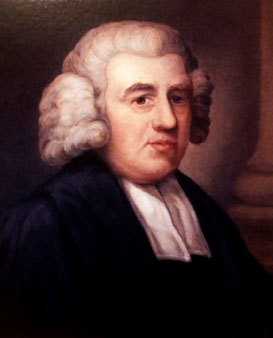
In "Sermon 29: Gifts Received for the Rebellious," John Newton explores the profound theological concept of grace as it relates to the ascension of Christ and His provision of gifts for rebellious humanity. Newton argues that just as Joseph, despite his brothers' mistreatment, became a source of restoration, so Christ, having suffered rejection, has ascended and bestowed gifts upon those who once stood as enemies against Him. Specific Scripture references, including Psalm 68:18 and Ephesians 4:8, underscore the idea that God predominately works through Christ to restore and dwell among those deemed unworthy, highlighting His grace over judgment. The sermon emphasizes the substantial significance of divine grace in the Reformed tradition, centering on the believer's union with Christ and the transformative work of the Holy Spirit, ultimately meant to bring God's presence back to His creation.
Key Quotes
“To bestow gifts upon the miserable is bounty but to bestow them upon rebels is grace.”
“He who has thus obeyed on earth ascended on high... as their representative He received gifts to bestow upon them.”
“If they sometimes acknowledge themselves to be sinners, they still presume that they are able to procure His favour by their own performances.”
“He who died arose and ascended on high that He might receive gifts for rebels of this spirit and disposition.”
What does the Bible say about the gifts received for the rebellious?
The Bible states that Jesus received gifts even for the rebellious, showcasing His grace and mercy toward those who opposed Him.
Psalm 68:18, Ephesians 4:8, Romans 3:25
How do we know God's grace is for the ungodly?
God's grace extends to the ungodly, as evidenced by His willingness to offer redemption through Christ's sacrifice.
Romans 5:6, John 16:7
Why is the ascension of Christ important for Christians?
The ascension of Christ is vital because it signifies His exaltation and ongoing intercession for believers.
Hebrews 9:24, Ephesians 2:6, John 12:26
Psalm 68:18: Thou hast ascended on high, thou hast led captivity captive: Thou hast received gifts for men; yea, for the rebellious also, that the LORD God might dwell among them.
When Joseph exchanged a prison for the chief honour and government of Egypt, the advantage of his exaltation was felt by those who little deserved it (Genesis 45:4, 5) . His brethren hated him, and had conspired to kill him. And though he was preserved from death, they were permitted to sell him for a bond-servant. He owed his servitude, imprisonment and sufferings to them; and they were afterwards indebted to him for their lives, subsistence, honour and comfort; God in a wonderful manner overruling their evil conduct, for future good to themselves. Thus Jesus was despised, rejected and sold; and He was actually slain. But He arose, and ascended. The man of sorrows took possession of the throne of glory, and not for Himself only. His honour is the source of happiness to those who were once His enemies, and rebellious against Him. For the sake of such He lived and died.
For their sakes He lives and reigns. He fought, conquered, and triumphed over their enemies. As their representative, He received gifts to bestow upon them. Such gifts as their necessities required, derived from the relation He was pleased to stand in to them, and from the value and dignity of His engagements on their behalf. Such gifts as He alone could communicate, and which alone could restore them to the favour of God, and revive His image in their hearts; so as to make it suitable to His holiness and truth, for the Lord God to return to His polluted temples, and to dwell in them, and among them.
I formerly observed [sermon XXVI, second paragraph] that this Psalm, and the 24 th , were probably composed and first published on the memorable occasion when David, having obtained the victory over his numerous enemies, and settled his kingdom in peace, removed the ark, which till then had no fixed residence, into Zion.
The Apostle's application of this passage (Ephesians 4:8) authorizes us to consider that transaction as typical of our Lord's ascension. Jesus is the true ark. The holy law of God was in His heart; His obedience unto death was fully commensurate to the demands of the law (Romans 3:25) ; as the mercy seat, or propitiation, which covered the ark, was exactly equal to its dimensions. He who had thus obeyed on earth, ascended on high; the everlasting gates unfolded, and He entered the holy place not made with hands, there to appear in the presence of God for us (Hebrews 9:24) . In this state He is highly exalted upon a throne of glory, and administers all power in heaven and in earth. From hence is the honour, safety, and happiness of those who believe in Him. They have nothing to plead for themselves. But, unworthy as they are, He is not ashamed to own them; and He assures them that all He did, and that all He has received, so far as they are capable of sharing in it, is for them.
The clauses, as they lie in the text, suggest a convenient method for our meditation, and will lead me briefly to consider four points:
I. His ascension;
II. His victories;
III. The gifts He received for men;
IV. And the great end for which He bestows them.
I.
Thou hast ascended on high . God formed man originally for Himself, and gave him an answerable capacity, so that no inferior good can satisfy and fill his mind. Man was likewise, by the constitution and will of his Maker, immortal, provided he persevered in obedience. But sin degraded and ruined him, shut the gates of Paradise, and the gates of Heaven against him. Man destroyed himself; but wisdom and mercy interposed for his recovery. A promise was given of the seed of the woman, who should bruise the serpent's head, defeat his policy, destroy his power, and repair the mischiefs he had introduced by sin. MESSIAH fulfilled this promise. And when He had finished all that was appointed for Him on earth, as the second Adam, the Head and Representative of His people, He ascended on high, and opened the Kingdom of Heaven to all believers. As an illustrious proof to the universe, that God is reconciled: that there is forgiveness with Him for sinners who implore His mercy: one in our nature, and in our behalf, has taken possession of the Kingdom.
The series of texts in this part of the Oratorio recalls this subject frequently to our thoughts; nor can we think of it too often. It is the foundation of our hopes, the source of our most sublime joys, and the sufficient, the only sufficient answer to all the suggestions by which guilt, fear, unbelief and Satan, fight against our peace. Surrounded as we are with enemies and difficulties, we plead against every accusation and threatening, that our Head is in heaven; we have an Advocate with the Father, a High Priest upon the Throne, who, because He ever lives to make intercession, is able to save to the uttermost. This is all our plea, nor do we desire any other. His ascension on high, is a sure pledge that His servants shall follow Him (John 12:26) . And even at present, by faith they ascend and are seated with Him in heavenly places (Ephesians 2:6) . They behold invisibles with the eye of their mind; they realize the glorious scene, from which they are separated by the veil of flesh and blood. They know that, even now, day and night, day without night, myriads of golden harps and happy voices resound His praise. The Babe of Bethlehem, the Man who once hung dead and forsaken upon the cross, is now the Lord of glory. In the thought of His glory they greatly rejoice, because they love Him, and because they expect shortly to be with Him.
II.
Thou hast lead captivity captive. The expression is emphatic. He has conquered and triumphed over all the powers which held us in captivity, so that captivity itself is taken captive. The spirit and force of it is destroyed, and His people, when released by Him, and walking in His ways, have no more to apprehend from those whose captives they were, than a conqueror has to fear from a prisoner in chains. The energy of the phrase is not unlike that of the Apostle which we are hereafter to consider -- death is swallowed up in victory. Man by nature is a captive, in a state of confinement and bondage, from which he cannot escape by any address or effort of his own.
He is captive to sin; a sinful state is a state of bondage; and this, notwithstanding the sinner is a willing captive, speaks swelling words of vanity, and boasts of liberty while he is the servant, the slave of corruption. He is not always, and in every sense, a willing captive. Conscience sometimes remonstrates, fills him with fears and forebodings, which make him struggle to be free. And there are many sins, which, besides being offences against the law of God, are directly contrary to the sinner's present interest and welfare; and would be so upon his own plan, and if he was wholly his own master, and had no account to render of his conduct. Persons enslaved to habits of lewdness or drunkenness, need not be told from the pulpit, that the courses they pursue are injurious to their health, their business, or substance, their reputation and their peace. They know it and feel it, without a monitor. There are seasons, when the ill consequences they bring upon themselves, make them sick of the drudgery, and excite some effort towards a reform. But in vain. The next return of temptation, bears down all their resolutions like a torrent, and, after every attempt to amend, they usually become worse than before. For none can escape, unless the Son makes them free. His grace can overcome the most obstinate habits of licentiousness, and implant the contrary habits of purity and temperance. But they, who are not delivered by Him, must die in their chains.
III.
Thou hast received gifts, even for the rebellious. To bestow gifts upon the miserable, is bounty ; but to bestow them upon rebels, is grace . The greatness of the gifts contrasted with the characters of those who receive them, displays the exceeding riches of the Redeemer's grace. He came to save not the unhappy only, but the ungodly . He gives pardon, peace, and eternal life to His enemies; whose minds are so entirely alienated from Him, that unless He makes them willing, in the day of His power, their minds are determined against accepting any favour from Him. They live long in contempt of the law and authority of God; and though justly obnoxious to His displeasure, while left to themselves, they despise and reject the proposals of His mercy. If they sometimes acknowledge themselves to be sinners, they still presume that they are able to procure His favour by their own performances. They strangely imagine they have a sufficient ground of hope, so long as it appears to themselves that they are not altogether so bad as others. And when, by the Gospel, the Lord treats them as sinners already justly condemned by the tenor of His holy laws, and informs them of the exigency of their case; that nothing less than the resources of His infinite wisdom, and the most expensive exertion of His unspeakable love, can possibly save them from destruction; the pride of their hearts rises against His declarations. His wisdom, in their view, is folly; and His love provokes their enmity and scorn. He says of MESSIAH, This is My beloved Son, in whom I am well pleased, hear ye Him; but the language of their hearts is, we will not have Him to reign over us (Luke 19:14) . They revile and oppose the messengers of His grace, account them as enemies, charge them as troublers of their peace, and as those who turn the world upside down: and when not restrained by the Providence of God, inflict reproaches, stripes, imprisonments, tortures, and death upon them, besides. If their dearest friends, and those who are connected with them by the nearest ties of relation, submit to the testimony of God, and yield themselves to the appointed Saviour, they are treated as apostates from the general opinion. This defection from the common cause, is often sufficient to cancel the strongest obligations, to dissolve the closest intimacy, to raise a person foes in his own household, and to excite envy, hatred, and malice, in those who once professed esteem and love.
Can the spirit of rebellion rise higher, than when they who have insulted the authority, defied the power, and resisted the government and will of the great God, proceed at length to trample upon His tenders [offers] of reconciliation, and to affront Him in that concern, which of all others, is dearest to Him, the glory of His grace in the person of His Son? Yet this is no exaggerated representation. Such is the disposition of the heart of man towards God. Such were some of us. And such, I fear, some of us are to this hour. I do not say that this enmity of the carnal mind acts with equal rage and violence in every person who is not subject to the grace of God. In a land of light, liberty, and civilization, like ours, a variety of circumstances may concur to set bounds to its exercise; education, a natural gentleness of temper, and even interest, may keep it within limits of decorum, especially towards some individuals; but I affirm, or rather the Scripture declares, that enmity against God, a disaffection to His Gospel, no less than to His law, and a dislike to those who profess and obey the truth, are principles deeply rooted in our nature, as fallen: and however they may seem dormant in some persons, for a season, would operate vigorously, if circumstances were so to alter, as to afford a fair occasion. For, as of old, he that was born after the flesh, persecuted him that was born after the Spirit, even so it is now (Galatians 4:29) . And it is still true, as in the Apostle's days, that all who will live godly in Christ Jesus, shall, in one degree or form or another, suffer persecution , from those who will not (II Timothy 3:12)
Thus men are characterized in the Word of God. Rebel and enemies have a neck of iron, to denote their obstinacy; a brow of brass (Isaiah 48:4) , to express their insolence and presumption; and a heart of stone (Ezekiel 36:26) , insensible to the softest methods of persuasion; incapable of receiving tender, kind, and generous impressions, though they are wooed and besought by the consideration of the mercies of God, of the dying agonies of MESSIAH; unless that mighty power be displayed in their favour, which brought forth streams of water from the rock in the wilderness.
MESSIAH died, arose, and ascended on high, that He might receive gifts for rebels of this spirit and disposition. The one grandest gift I shall specify, is, indeed, comprehensive of every other good. The gift of the Holy Spirit. He said to His sorrowing disciples, It is expedient for you that I go away; for if I go not away, the Comforter will not come unto you; but if I depart, I will send Him to you (John 16:7) . Soon after His ascension, this promise was fulfilled. The disciples were filled with the Holy Spirit (Acts 2:4-37) , and the people who had slain the Lord, were pricked to the heart, repented of their sin, received faith in Him whom they had pierced, and expressed joy and peace in believing.
That the Gospel is preached upon earth, by a succession of ministers, called and furnished for that service; and that the Gospel, when preached, is not rejected by all, as it is by many, is wholly to be ascribed to the agency of the Holy Spirit, whose office and covenant engagement it is, to convince the world of sin, of righteousness, and of judgment (John 16: 9, 11) , and to glorify MESSIAH. He opens the eyes of the understanding, subdues the stubborn will, softens, or rather, removes, the heart of stone, and gives a feeling, tender heart, a heart of flesh. Then the rebels relent and sue for mercy. Then they obtain faith, repentance, remission, a full and free salvation, and all the gifts which MESSIAH has received for them.
IV.
His ultimate design, in favour of rebellious men, the great final cause of His mediation, and particularly of His bestowing on them the gift of the Holy Spirit, is, that the Lord God may dwell among them. Man was created in the image of God, who formed him for Himself. But he sinned, and was forsaken. God withdrew His light and love from him, and man sank into darkness and misery. Sin and Satan took possession of the heart, which was originally designed to be the temple of the living God. But the Lord had a merciful purpose, to return in a way worthy of His perfections. Without Him, the souls of men, and the whole human race, as to their proper happiness, are like what the earth would be without the sun --dark, cold, fruitless, and comfortless. But the knowledge of MESSIAH, like the sun, enlightens the world, and the heart.
When in the day of His power, by the revelation of His light and love, He destroys the dominion of sin, and dispossesses Satan, He reclaims His own, and takes possession for Himself. The heart, sprinkled with the blood of Jesus, and anointed with the holy unction, becomes a consecrated temple of the Holy Ghost. This persuasion, though now deemed by many to be the essence of enthusiasm [fanaticism], (yet who have not renounced the name of Christian), was once thought essential to Christianity; so that the Apostle speaks of it as an incontrovertible fact, with which no Christian could be unacquainted. Know ye not that your body is the temple of the Holy Ghost? (I Corinthians 6:19) . Again, he speaks of Christ dwelling in the heart (Ephesians 3:17) Christ in you, the hope of glory (Colossians 1:27) . And in another place, Ye are the temple of the living God, as God hath said, I will dwell in them, and walk in them (II Corinthians 6:16) ; agreeably to His promise by the prophets. He lives in them, as the principle of their life, wisdom, and power; therefore the Apostle says, I live, yet not I, but Christ liveth in me (Galatians 2:20) . There is a mutual indwelling between the Lord and His people. They in Him as the branch in the vine; and He in them as the sap in the branch. He in them as in His temples; they in Him as in their strong tower of defence. And from hence we infer the duration of their life of grace; that it shall continue and spring up into everlasting life; since it is properly not their own, but His; and since He has said, Because I live, ye shall live also.
He dwells likewise among His people in their collective capacity. His whole Church, comprising all the members of His mystical Body, built upon the foundation of the apostles and prophets, form a building fitly framed together, a palace, a holy temple for the Lord the great King. He dwells likewise in every particular society who walk by His rule, and adorn the profession of His truth by a conversation becoming the Gospel. He is a wall of fire round about them, and a glory in the midst of them (Zechariah 2:5, 10) . When they meet together in His name, He is there. He walks in the midst of the golden candlesticks. It is His presence that gives life and efficacy to all His ordinances, and communicates a power to His Word, by which the minds of His worshipping people are enlightened, strengthened, healed, and comforted. Here He manifests Himself to them, as He does not to the world; and they can adopt the words of the Psalmist, A day in Thy courts, is better than a thousand. To His presence they owe their peace and increase, their union and protection. And if He withdraws, Ichabod [ the glory is departed ] may be written upon their solemn assemblies (I Samuel 4:21) ; for even His own appointments can afford them neither profit nor pleasure, unless they are animated by His glory. Their graces languish, their harmony is interrupted, strife and dissension takes place, evil roots of bitterness spring up to trouble and defile them (Hebrews 12:15) ; men arise from among themselves, speaking perverse things, and fierce wolves break in, not sparing the flock (Acts 20:29, 30) , if the good Shepherd suspends His influence and presence.
I trust He dwells and walks in the midst of us. He is here as an observer, and as a gracious benefactor. He sees who draw near Him with their lips, while their hearts are far from Him; and He likewise takes notice of them that fear and love Him, and who esteem the light of His countenance to be better than life. The high and lofty One who inhabits eternity, who dwells in the high and holy place, dwells likewise with those that are of a contrite and humble spirit (Isaiah 57:15) , to revive and bless them.

Comments
Your comment has been submitted and is awaiting moderation. Once approved, it will appear on this page.
Be the first to comment!