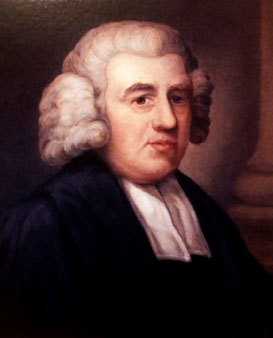
John Newton's article "Reading the Bible" emphasizes the centrality of Scripture in the Christian life, positing it as the primary source of wisdom and spiritual nourishment for believers. Newton argues that human writings, while potentially valuable, can never replace or match the purity and clarity of biblical truth. He cites Jeremiah 15:16 to illustrate the transformative joy found in God's Word, asserting that the Bible provides comprehensive insight into true religion, which is often obscured by human doctrinal systems. By encouraging consistent and prayerful reading of the Scriptures, Newton highlights the importance of personal engagement with the text, advocating for a methodical approach to reading that fosters deeper understanding and spiritual growth. The doctrinal significance of Newton's argument is rooted in Reformed theology’s affirmation of sola Scriptura, which underscores Scripture as the sole ultimate authority in matters of faith and practice.
Key Quotes
“The Bible is the fountain from whence every stream that deserves our notice is drawn.”
“The chief and grand means of edification... are the Bible and prayer—the Word of grace and the Throne of grace.”
“A frequent perusal of the Bible will give us an enlarged and comprehensive view of the whole of true religion.”
“I know not a better rule of reading the Scripture than to read it through from beginning to end.”
What does the Bible say about reading the Scripture?
The Bible emphasizes the importance of reading Scripture as the primary means of grace and spiritual growth.
Moreover, Scripture encourages believers to read it consistently for deeper understanding. Newton advises that reading the Bible from cover to cover not only enriches our knowledge but also illuminates previously unread passages, enhancing our grasp of the truths within. This practice, coupled with consistent prayer for understanding, fosters spiritual growth and fortifies the believer’s faith against distractions and errors inherent in human teachings.
Jeremiah 15:16
How do we know the Bible's teachings are true?
The truth of the Bible's teachings can be affirmed through its consistency, divine inspiration, and transformative power in the lives of believers.
Believers experience the transformative power of the Bible firsthand, which lends credibility to its claims. Through consistent engagement with Scripture, one can witness a profound change in personal faith and behavior influenced by divine truths. This interplay between the Holy Spirit and the believer—engaged in the Word—serves as a powerful verification of the Bible's truthfulness, ensuring that, despite human frailty in interpretation, the core messages remain accurate and vital.
Why is reading the Bible important for Christians?
Reading the Bible is crucial for spiritual growth, guidance, and understanding God's plan for salvation.
Moreover, consistent reading of the Bible equips believers to discern truths from false teachings and fosters a deeper relationship with Christ. Newton advises that regular perusal of Scripture not only enlightens one's understanding but also cultivates a heart that treasures God's Word. This practice not only serves to illuminate one’s spiritual journey but also protects against the distractions of worldly philosophies. Ultimately, reading the Bible regularly can illuminate a path toward sanctification and spiritual maturity.
by John Newton
"Your Words were found, and I ate them. Your Words became a delight to me and the joy of my heart!" Jeremiah 15:16
Books and letters written in a proper spirit, may, if the Lord is pleased to smile upon them, have their use. Indeed, the truths essential to the peace of our souls are so simple, and may be reduced to so few heads, that while each of them singly may furnish a volume drawn out at length, they may all be comprised in small compass.
But an awakened mind which thirsts after the Savior, and seeks wisdom by reading and praying over the Scripture, has little occasion for a library of human writings. The Bible is the fountain from whence every stream that deserves our notice is drawn; and, though we may occasionally pay some attention to the streams—we have personally an equal right with others to apply immediately to the fountain-head, and draw the water of life for ourselves! The purest streams are not wholly freed from the tinge of the soil through which they run; a mixture of human infirmity is inseparable from the best human composition. But in the fountain—the truth is unmixed!
Again, men teach us by many words; and if they would give us their full views of the subject, require us to read a whole volume, the life and substance of which is perhaps expressed with greater force and greater advantage in the Scripture by a single sentence—which is rather diluted than explained, by our feeble expositions. A volume may be easily written upon the grace of humility, and to show the evil and folly of a self-seeking spirit. But if the author should introduce this subject with our Savior's words, "The Son of Man came not into the world to be ministered unto, but to minister, and to give his life a ransom for many;" whoever was duly impressed with that short introduction, would have no great occasion to read the rest of the book!
The preaching of the Word of God being an instituted means of grace, ought to be thankfully and frequently improved. And human books that have a savor and unction may likewise be helpful, provided we read them with caution, compare them with the Scripture, and do not give ourselves implicitly to the rules or decisions of any man or set of men—but remember that one is our Master and infallible Teacher, even Christ. But the chief and grand means of edification, without which all other helps will disappoint us, and prove like clouds without water—are the Bible and prayer—the Word of grace and the Throne of grace. A frequent perusal of the Bible will give us an enlarged and comprehensive view of the whole of true religion—its origin, nature, genius, and tendency—and preserve us from an over-attachment to any system of man's compilation.
The fault of the several doctrinal systems, under which, as under so many banners, the different denominations of Christians are ranged, is, that there is usually something left out which ought to have been taken in—and something admitted, of supposed advantage, not authorized by the Scriptural standard.
A Bible Christian, therefore, will see much to approve in a variety of forms and parties; the providence of God may lead or fix him in a more immediate connection with some one of them—but his spirit and affection will not be confined within these narrow enclosures. He insensibly borrows and unites with which is excellent in each, perhaps without knowing how far he agrees with them, because he finds all in the written Word of God.
I know not a better rule of reading the Scripture, than to read it through from beginning to end; and, when we have finished it once, to begin it again. We shall meet with many passages which we can make little improvement of, but not so many in the second reading as in the first, and fewer in the third than in the second—provided we pray to Him who has the keys to open our understandings, and to anoint our eyes with his spiritual eye-salve! The course of reading today, will give some light for what we shall read tomorrow, and throw a farther light upon what we read yesterday. Experience alone, can prove the advantage of this method, if steadily persevered in. To make a few efforts, and then give up—is like taking a few steps and then standing still, which would do little towards completing a long journey. But, though a person walked slowly, and but a little way in a day—if he walked every day, and with his face always in the same direction, year after year—he would in time travel over the globe! By thus traveling patiently and steadily through the Scripture, and repeating our progress—we would increase in Scriptural knowledge to the end of life!
The Old and New Testament, the doctrines, precepts, and promises, the history, the examples, admonitions, and warnings, etc. would mutually illustrate and strengthen each other—and nothing that is written for our instruction would be overlooked. Happy would I be, could I fully follow the advice I am now offering to you. I wish you may profit by my experience. Alas, how much time have I lost and wasted, which, had I been wise—I would have devoted to reading and studying the Bible! But my evil heart obstructs the dictates of my judgment, I often feel a reluctance to read this book of books, and a disposition to hew out broken cisterns which afford me no water, while the fountain of living waters are close within my reach!

Comments
Your comment has been submitted and is awaiting moderation. Once approved, it will appear on this page.
Be the first to comment!