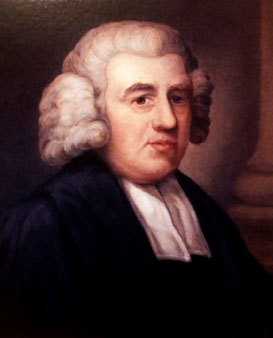
John Newton's article "The Call to the Ministry" addresses the theological doctrine of ministerial vocation, exploring what constitutes a genuine call to ministry. He articulates three essential elements of this call: (1) a fervent desire to serve God and His people, which should emerge from spiritual humility; (2) the development of appropriate gifts and knowledge over time, as God equips those He calls; and (3) a clear providential opening that indicates the right timing and circumstances for ministry engagement. Newton supports his arguments with Scripture's emphasis on the Spirit's guidance and the need for patience, cautioning against premature action based on zeal alone. The practical significance of this article lies in its encouragement for those aspiring to ministry to seek spiritual growth and clarity, trusting in God's timing and preparation for their future roles.
Key Quotes
“The man who is once moved by the Spirit of God to this work will prefer it if attainable to thousands of gold and silver…”
“The main difference between a minister and a private Christian seems to consist in these ministerial gifts which are imparted to him not for his own sake—but for the edification of others.”
“He who believes shall not make haste.”
“Avoid what looks like preaching and be content with being a learner in the school of Christ for some years.”
What does the Bible say about the call to the ministry?
The Bible indicates that a call to ministry includes a deep desire to serve, spiritual gifts, and providential guidance.
1 Timothy 3:1
How do we know if we are called to the ministry?
A call to the ministry is evidenced by a sincere desire to preach, spiritual gifts, and confirmation through circumstances.
1 Timothy 3:1, Ephesians 4:11-12
Why is patience important when pursuing a call to ministry?
Patience is crucial in ministry preparation, allowing for spiritual growth and proper timing according to God's plan.
Isaiah 40:31, Ecclesiastes 3:1
March 7, 1765.
Dear Sir,
Your letter of February 19th came to me yesterday. I have read it with attention, and very willingly sit down to offer you my thoughts. Your case reminds me of my own—my first desires towards the ministry were attended with great uncertainties and difficulties, and the perplexity of my own mind was heightened by the various and opposite judgments of my friends. The advice I have to offer is the result of painful experience and exercise, and for this reason perhaps may not be unacceptable to you. I pray our gracious Lord to make it useful.
I was long distressed, as you are, about what was or was not a proper call to the ministry. It now seems to me an easy point to solve—but perhaps will not be so to you until the Lord shall make it clear to yourself in your own case. I have not room to say so much as I could. in brief, I think it principally includes three things:
1. A warm and earnest desire to be employed in this service. I apprehend, the man who is once moved by the Spirit of God to this work, will prefer it, if attainable, to thousands of gold and silver; so that, though he is at times intimidated by a sense of its importance and difficulty, compared with his own great insufficiency (for it is to be presumed a call of this sort, if indeed from God, will be accompanied with humility and self-abasement), yet he cannot give it up. I hold it a good rule to inquire in this point—whether the desire to preach is most fervent in our most lively and spiritual frames, and when we are most laid in the dust before the Lord? If so, it is a good sign. But if, as is sometimes the case, a person is very earnest to be a preacher to others, when he finds but little hungering and thirstiness after grace in his own soul—it is then to be feared his zeal springs rather from a selfish principle—than from the Spirit of God.
2. Besides this affectionate desire and readiness to preach, there must in due season appear some competent sufficiency as to gifts, knowledge, and utterance. Surely, if the Lord sends a man to teach others—he will furnish him with the means. I believe many have intended well in becoming preachers, who yet went beyond or before their call in so doing. The main difference between a minister and a private Christian seems to consist in these ministerial gifts, which are imparted to him, not for his own sake—but for the edification of others. But then I say, these are to appear in due season. They are not to be expected instantaneously—but gradually, in the use of proper means. They are necessary for the discharge of the ministry; but not necessary as pre-requisites to warrant our desires after it. In your case, you are young, and have time before you. Therefore, I think you need not as yet perplex yourself with inquiring if you have these gifts already. It is sufficient if your desire is fixed, and you are willing, in the way of prayer and diligence, to wait upon the Lord for them—as yet you need them not.
3. That which finally evidences a proper call—is a correspondent opening in Providence, by a gradual train of circumstances pointing out the means, the time, the place—of actually entering upon the work of the ministry. And until this concurrence arrives, you must not expect to be always clear from hesitation in your own mind. The principal caution on this head is, not to be too hasty in catching at first appearances. If it be the Lord's will to bring you into his ministry—he has already appointed your place and service; and though you know it not at present—you shall at a proper time. If you had the talents of an angel—you could do no good with them until his hour has come—and until he leads you to the people whom he has determined to bless by your means.
It is very difficult to restrain ourselves within the bounds of prudence here, when our zeal is warm, a sense of the love of Christ upon our hearts, and a tender compassion for perishing sinners is ready to prompt us to break out too soon—but "he who believes shall not make haste". I was about five years under this constraint. Sometimes I thought I must preach, though it was in the streets. I listened to everything that seemed plausible, and to many things that were not so. But the Lord graciously, and as it were insensibly, hedged up my way with thorns; otherwise, if I had been left to my own spirit, I would have put it quite out of my power to have been brought into such a sphere of usefulness, as he in his good time has been pleased to lead me to. And I can now see clearly, that at the time I would first have gone out, though my intention was, I hope, good in the main—yet I overrated myself, and had not that spiritual judgment and experience which are requisite for so great a service.
I wish you therefore to take time; and if you have a desire to enter into the Established Church, endeavor to keep your zeal within moderate bounds, and avoid everything that might unnecessarily clog your admission with difficulties. I would not have you hide your profession, or to be backward to speak for God; but avoid what looks like preaching, and be content with being a learner in the school of Christ for some years. The delay will not be lost time; you will be so much the more acquainted with the Gospel, with your own heart, and with human nature. The last is a necessary branch of a minister's knowledge, and can only be acquired by comparing what passes within us, and around us—with what we read in the Word of God.
I am glad to find you have a distaste both for Arminian and Antinomian doctrines—but let not the mistakes of others sit too heavy upon you. Be thankful for the grace which has made you to differ; be ready to give a reason of the hope that is in you with meekness and fear; but beware of engaging in theological disputes, without evident necessity, and some probable hope of usefulness. They tend to eat out the life and savor of religion, and to make the soul lean and dry. Where God has begun a real work of grace, incidental mistakes will be lessened by time and experience; where he has not, it is of little signification what sentiments people hold, or whether they call themselves Arminians or Calvinists.
I agree with you, that there is time enough for you to think of Oxford yet; and that if your purpose is fixed, and all circumstances render it prudent and proper to devote yourself to the ministry, you will do well to spend a year or two in private studies. It would be further helpful, in this view, to place yourself where there is Gospel preaching, and a spiritual people. If your favorable opinion of our church should induce you to come here, I shall be very ready to give you every assistance in my power. As I have trod exactly the path you seem to be setting out in, I might so far perhaps be more serviceable than those who are in other respects much better qualified to assist you. I doubt not but in this, and every other step, you will entreat the Lord's direction; and I hope you will not forget to pray for me.

Comments
Your comment has been submitted and is awaiting moderation. Once approved, it will appear on this page.
Be the first to comment!