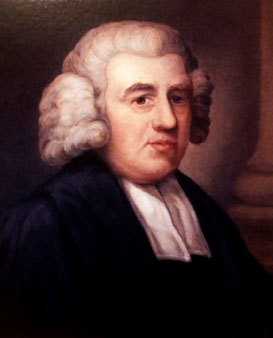
John Newton's "Letters to William Bull" presents a rich tapestry of pastoral wisdom, theological reflection, and personal correspondence highlighting the intricacies of Christian friendship and ministry. The main theological theme throughout the letters is the sovereignty of God in both personal suffering and communal trials, illustrated through Newton’s correspondence with Bull regarding church issues, personal afflictions, and the broader societal challenges of their time. The letters emphasize the importance of prayer and dependence on God's providence amidst life's uncertainties, drawing from Scripture for support; for instance, Newton references Psalm 71:9, pleading not to be forsaken in old age, and 1 Corinthians 15:10, attributing his transformation and calling to divine grace. The practical significance of these letters lies in its heartfelt expressions of Christian unity and exhortations toward steadfastness in faith, illustrating how the doctrine of providence can comfort and guide believers in tumultuous times.
Key Quotes
“Behold how good and how pleasant it is for brethren to dwell together in unity.”
“The Lord reigns. He governs the world and let men contrive and plot as they will; they are all instruments in his hand.”
“Blessed are the dead who die thus in the Lord; they rest from their labors and conflicts and are now before the throne.”
“Let us not be weary in doing or suffering the Lord's will for in due season we shall reap.”
What does the Bible say about friendship in the Christian life?
The Bible emphasizes the importance of deep, sincere friendships, reflecting God's love and grace among believers.
Hebrews 10:24-25, Psalm 133:1
Why is humility important for Christians?
Humility is crucial for Christians as it reflects the character of Christ and fosters a genuine walk with God.
Philippians 2:3-4, 1 Peter 5:5-6
How does God's providence work in the lives of Christians?
God's providence ensures that all events in a Christian's life are under His sovereign control for their ultimate good.
Romans 8:28, Proverbs 16:9
How can Christians effectively care for one another?
Christians can care for one another through acts of love, encouragement, and bearing each other's burdens.
Galatians 6:2, 1 Thessalonians 5:11
Mr. Bull became pastor of the Independent church at Newport Pagnell about the same time that Mr. Newton came to Olney. (The two places were but five miles apart.) The acquaintance between these friends did not commence until some time after this. No sooner, however, did they come really to know each other than this acquaintance speedily ripened into a very intimate, and, as it proved, a life-long friendship. In his Diary, at this time, Mr. Newton speaks again and again of the high esteem in which his friend was held. Thus he says: "I find few with whom I can converse with equal advantage, whose manner of thinking is so deep and solid." Again: "He has just called and spent an hour with me. I could sit silent half a day to listen to him, and am almost unwilling to speak a word for fear of preventing him." Once more: "I admire Mr. Bull; so humble, so spiritual, so judicious and so savory . . . I think he will be my most profitable companion in these parts."
The fellowship between Mr. Newton and Mr. Bull, as may be well supposed, was very frequent, so long as the former resided at Olney; and when he removed to London, there was abundant opportunity for its renewal, as Mr. Bull was in the habit, for many years, of preaching for several sabbaths at the Tabernacle and at Tottenham Court and Surrey Chapels. The flame of their affection burnt brightly to the last; for, as Mr. Newton writes in 1800, when to write had become a task, "If two needles are properly touched by a magnet, they will retain their sympathy for a long time. But if two hearts are truly united to the Heavenly Magnet, their mutual attraction will be permanent in time and to eternity. Blessed be the Lord for a good hope, that it is thus between you and me. I could not love you better if I saw or heard from you every day."
Mr. Bull was pastor of the church at Newport for fifty years; a church which he was enabled, by the blessing of God, to raise from a very low condition to a state of great prosperity. For a considerable portion of this time be also presided over a theological institution, in the formation of which Mr. Newton took a very active part, and the special design of which was to train suitable young men of evangelical sentiments for the Christian ministry, without regard to denominational distinctions.
"Behold, how good and how pleasant it is for brethren to dwell together in unity!" Psalm 133:1
Dear Sir,
At present it is January with me — both within and without. The outward sun shines and looks pleasant — but his beams are faint, and too feeble to dissolve the frost.
So is it in my heart! I have many bright and pleasant beams of truth in my view — but cold predominates in my frost-bound spirit, and they have but little power to warm me!
I could tell a stranger something about Jesus, which would perhaps astonish him. Such a glorious person, such wonderful love, such humiliation, such a death! And then, what He is now in Himself, and what He is to His people. What a Sun! what a Shield! what a Life! what a Friend!
My tongue can run on upon these subjects sometimes, and could my heart keep pace with it — I would be the happiest fellow in the country!
Stupid creature! to know these things so well, and yet be no more affected with them!
Indeed, I have reason to be upon ill terms with myself. It is strange that pride should ever find anything in my experience to feed upon; but this completes my character for folly, vileness, and inconsistency — that I am not only poor — but proud! And though I am convinced I am a very wretch, as nothing before the Lord — I am prone to go forth among my fellow-creatures as though I were wise and holy!
You wonder what I am doing — and well you may. I am sure you would, if you lived with me. Too much of my time passes in busy idleness, too much in waking dreams. I aim at something — but hindrances from within and without make it difficult for me to accomplish anything. I have written three or four pages since you was here, in the little book I showed you. It is to be but about the size of a shilling pamphlet; and if I go on as I have begun, it may be finished before Christmas! I dare not say I am absolutely idle, or that I willfully waste much of my time. I think I could complete my book in five or six days, if I had nothing else to do; but I have seldom one hour free from interruption. Letters come that must be answered—visitants that must be received—business that must be attended to. I have a good many sheep and lambs to look after — sick and afflicted souls dear to the Lord; and therefore whatever stands still — these must not be neglected. Among these various avocations, night comes before I am ready for noon, and the week closes when, according to the state of my business, it should not be more than Tuesday! Oh precious irrecoverable time! Oh that I had more wisdom in redeeming and improving you! Pray for me, that the Lord may teach me to serve him better.
Mrs. Newton has been one week confined to her chamber through illness — but is pretty well again. We abound in mercies and causes for gratitude; but what a shame and pity to make such poor returns to the Author of them! I long to come to Newport to see you — but I believe I must wait for that pleasure until the days are a little longer. In the meantime you will be as welcome to us here, if you will trot over — as a new guinea to a miser's pocket.
I am very affectionately yours,
John Newton
January 27, 1778
Naughty Sir,
To keep me at home four afternoons upon the tip-toe of expectation — and not come near me at last. If you cannot send me a certificate, signed by the doctor and church-warden, specifying that you were too ill to travel, I have reason to be angry with you! But to show my forgiving spirit, if you will come over on Monday To dinner, I will give you something to eat, and your certificate of pardon.
I am to preach (if I can) three times on Fast-day — but have at present fixed only upon one text, which, for a certain reason, I shall not mention to you at present. I send you, however, according to order, a text and a plan which I found among my old papers. I preached it about sixteen years ago to a congregation of about twelve, in my own house, sometime before I was brought into the public ministry. I have not time to read it over; but if it may put any hints in your way, it is at your service. I cannot send you my present thoughts upon another text, for a plain reason, namely, that I am not able yet to think for myself; and I must receive — before I can communicate. It would be mocking you to offer you drink — out of an empty vessel.
Since I have begun to write, I have thought perhaps one of my texts will be either Psalm 97:1, or Psalm 19:1. The whole system of my politics is summed up in that one sentence, "The Lord reigns!" I wish you would send me, by the bearer, some hints towards a sermon on it. It would be a good text if I knew how to manage it.
The times look awfully dark indeed; and as the clouds grow thicker, the stupidity of the nation seems proportionally to increase. If the Lord had not a remnant here, I would have very formidable apprehensions. But he loves his children; some are sighing and mourning before him, and I am sure he hears their sighs, and sees their tears. I trust there is mercy in store for us at the bottom; but I expect a shaking time before things get into a right channel, before we are humbled, and are taught to give him the glory.
The state of the nation, the state of the churches — both are deplorable. Those who should be praying — are disputing and fighting among themselves! Alas! how many professors are more concerned for the mistakes of government, or of the Americans, than for their own sins! When will these things end?
Love me, and pray for me, and come to see me — for I cannot come to you. With my love and Mrs. Newton's to you and Mrs. Bull,
I remain, your obliged friend,
John Newton Olney, 24 Feb., 1778.
Dear Sir,
I am so monstrous busy, I have hardly time to tell you how sorry I am for my disappointment, and your illness, which was the cause of it. Indeed, I am as sorry for both, as a Calvinist ought to be. It was the time you and I appointed for meeting; had it been the Lord's time — nothing could have prevented you. I wish he may give you permission to come next Monday, or any day after tomorrow which you please, only send word. What do you think of it? I have a double motive for wishing to see you now, because, besides having your company, it would be a proof that you were better.
Last Sunday afternoon we had a great personage with us at church. I endeavored to persuade all the congregation to kiss Him. But though I talked a whole hour about it, few would comply. Alas! it was because they did not know him; and though I told them who he was, they would not believe me.
Dear Sir,
When I found the morning coaches came in without you, I was not much disappointed. I know how difficult it is to get away from Northampton if you are seen in the street after breakfast. The horseleech has three daughters, saying, Give, give! The cry there is, Preach, preach. When you have told them all, you must tell them more, or tell it them over again. Whoever will find tongue — they will engage to find ears. Yet I do not blame this importunity. I wish you were teased more with it in your own town; for though undoubtedly there are too many both at Northampton and here whose religion lies too much in hearing — yet, in many, it proceeds from a love to the truth, and to the ministers who dispense it. And I generally observe that those who are not willing to hear a stranger (if his character is known) are indifferent enough about hearing their own minister.
I beg you to pray for me. I am a poor creature, full of needs. I seem to need the wisdom of Solomon, the meekness of Moses, and the zeal of Paul — to enable me to make full proof of my ministry. But, alas! you may guess the rest.
Send me "The Way to Christ"! I am willing to be a debtor to the wise and unwise, to doctors and shoe-makers, if I can get a hint, or a Nota Bene from anyone, without respect to parties.
When a house is on fire, Churchmen and Dissenters, Methodists, Papists, Moravians, and Mystics — are all welcome to bring water. At such times nobody asks, "Dear friend, what church do you worship at?" Or "What do you think of the five points?"
Love and thanks to Mrs. Bull, etc,
John Newton
28th April, 1778.
Dear friend,
My dear wife has been quite ill. Her head was ill when at your house — but she can carry it off pretty well, if not quite bad, for her spirits are naturally very good, which is a great mercy. Sickness is a bitter pill to the flesh — but good natural spirits sweeten the pill, if I may so say, and make it rather more palatable.
The Lord is good; he knows what we need, and when we need it; and then have it we must and shall — whether it be sweet, bitter, or sour, for he will withhold no good thing from those who fear and love him. He weighs the mountains in scales, and the hills in a balance; with equal accuracy he adjusts all that concerns us. Worms as we are, he is attentive to everything that relates to our peace and welfare, as though we, each of us singly, were the sole objects of his providential care. At the same time, he is providing for the lions and ravens, supporting all the ants and worms that creep upon the earth; at the same time he upholds and enlightens the inhabitants of the heavenly world. His eye and his heart are attentively fixed upon you and worthless me. Well may we say, "Who is a God like unto you!"
Affectionately yours,
John Newton Olney 1st July, 1778.
July 7, 1778
My dear friend,
I don't know that I have anything to say worth the postage, though perhaps, had I seen you before you set off, something might have occurred which will not be found in my letter. Yet I write a line, because you bid me, and are now in a far foreign country. You will find Mr. **** a man to your tooth—but he is in Mr. W****'s connection. So I remember Mr. Bede, after giving a high character of some contemporary, kicks his full pail of milk down, and reduces him almost to nothing, by adding in the close to this purpose; "But, unhappy man—he did not keep Easter our way!" I don't care a fig for all such religious connections! Therefore I venture to repeat it, that Mr. ****, though he often sees and hears Mr. W****, and I believe loves him well, is a good man—and you will see the invisible mark upon his forehead, if you examine him with your spiritual spectacles.
I do pity you in London! I see you melted with heat, stifled with smoke, stunned with noise! Ah! what a change from the brooks, and bushes, and birds, and green fields—to which you lately had access. Of old they used to retire into the deserts for contemplation and meditation. If I was to set myself a moderate penance—it might be to spend two weeks in London in the height of summer! But I forget myself. I hope the Lord is with you—and then all places are alike. He makes the dungeon and the stocks comfortable, Acts 26. Yes, even a fiery furnace, and a lion's den! A child of God in London—seems to be in all these trying situations—but Jesus can preserve His own people. I honor the grace of God in those few (comparatively few, I fear,) who preserve their garments undefiled in that Sardis! The air is filled with infection; and it is by God's special power and miraculous preservation, that they enjoy spiritual health—when so many sicken and fall around them on the right hand and on the left. May the Lord preserve you from the various epidemic soul diseases which abound where you are—and may He be your comfort and defense from day to day.
Last week we had a lion in town. I went to see him. He was wonderfully tame; as friendly with his keeper, as docile and obedient as a pet dog. Yet the man told me he had his surly fits, when they dared not touch him. No looking-glass could express my face more justly—than this lion did my heart. I could trace every feature—as wild and fierce by nature; yes, much more so—but grace has in some measure tamed me. I know and love my Keeper, and sometimes watch his looks that I may learn his will. But, oh! I have my surly fits too! Seasons when I relapse into the savage again, as though I had forgotten all.
July 13, 1778
My dear friend,
As we are so soon to meet, as I have nothing very important to communicate, and many things occur which might demand my time; I have no other plea to offer, either to you or myself, for writing again—but because I love you.
I pity the minister with whom you talked this morning. But we must take men and things as we find them—and when we fall in company with those from whom we can get little other good, it is likely we shall at least find occasion for the exercise of patience and charity towards them, and of thankfulness to him who has made us to differ. And these are good things, though perhaps the occasion may not be pleasant. Indeed, a Christian, if in a right spirit, is always in his Lord's school, and may either learn a new lesson, or how to practice an old one—by everything he sees or hears, provided he does not willfully tread upon forbidden ground. If he were constrained to spend a day with the poor creatures in Newgate prison, though he could not talk with them of what God has done for his soul, he might be more sensible of God's mercy, by the contrast he would observe around him. He might rejoice for himself—and mourn over them—and thus perhaps get as much benefit as from the best sermon he ever heard!
It is necessary, all things taken together, to have interaction more or less, with narrow-minded people. If they are, notwithstanding their prejudices, civil to us—they have a right to some civility from us. We may love them, though we cannot admire them; and pick something good from them, notwithstanding we see so much to blame. It is perhaps the highest triumph we can obtain over bigotry—when we are able to bear with bigots themselves. For they are a set of troublesome folks, whom Mr. Self is often very forward to exclude from the comprehensive love and tenderness which he professes to exercise towards those who differ from him.
I am glad your present home (a believer should be always at home) is pleasant; the rooms large and airy; your host and hostess kind and spiritual; and, upon the whole, all things as well as you could expect to find them, considering where you are. I do not wish you to live there, for my own sake as well as yours—but if the Lord should so appoint it—I believe he can make you easy there, and enable me to make a tolerable shift without you. Yet I certainly shall miss you; for I have no person in this neighborhood with whom my heart so thoroughly unites in spiritual things, though there are many whom I love.
Conversation with most Christians is something like going to court; where, except you are dressed exactly according to a prescribed standard, you will either not be admitted, or must expect to be gaudily stared at. But you and I can meet and converse without pretense, without fear of offending, or being accounted offenders, for a word out of place, and not exactly in the right mode.
I think my sentiments and experience are as orthodox and Calvinistic as need be; and yet I am a sort of speckled bird among my Calvinist brethren. I am a mighty good Churchman—but pass among them as a secret Dissenter. On the other hand, the Dissenters (many of them I mean) think me defective, either in understanding or in conscience, for staying where in the church. Well! there is a middle party, called Methodists—but neither do my dimensions exactly fit with them. I am somehow disqualified for claiming a full brotherhood with any party. But there are a few among all parties who bear with me and love me—and with this I must be content at present. But so far as they love the Lord Jesus, I desire, and by his grace I determine (with or without their permission) to love them all. Church denomination walls, though stronger than the walls of Babylon, must come down in the general ruin, when the earth and all its works shall be burnt up, if no sooner!
My dear friend,
I thought that it pleased your very heart to see so much simplicity and spirituality in a lady of fortune. It is not wealth — but the love of it, and the pride of it, which are hurtful to professors. I know several people of distinction, who are as eminent for humility and devotedness to God — as for their rank in life. And, through mercy, I have no intimacy with any in a line of life above me, but what I think are such. It is the triumph of grace — to make the rich humble, and the poor thankful.
Oh, the gospel is an admirable expedient, a cure-all, equally suited to every condition of life, a universal cordial, a sovereign antidote! Those who truly receive it, are qualified to live in every situation to which the Lord in his providence appoints them. Though the air is infected, and thousands fall around them — they shall flourish, for the grace of their Lord is always sufficient for them, and the truths upon which they feed keep them from being either elated by prosperity, or depressed unduly by trials. Everywhere, and in all things, they are instructed. They hear the voice of their Beloved, are guided by his eye, animated by his example, and cheered by his presence!
I love you a little better than I did, because you know and love Dr. Conyers. I am not fond of making comparisons between ministers, and yet am almost constrained to set him at the head, as the first of "the first three" of our line. But I should not do so, upon the account of his gifts as a minister, if I did not know he is little in his own eyes. I estimate a minister's character from combining what he is in the pulpit — with what he is when out of it; and they stand highest upon my scale, whose conduct is most expressive of the doctrines they preach.
If we cannot attain to "the first three," or to be ranked among "the thirty," still it is a mercy to be on the Lord's side, and to be honored with an employment in his family, though in a lower place, so we may but be enabled to say, "I do a little for him, and to feed a few of the weakest and poorest of his children, for his sake."
Especially ought I to think so, who was before a blasphemer and a reviler! That I, who once deliberately renounced him, despised his blood, and crucified him afresh, that I should be redeemed and saved from the wilds of Africa, and put in trust with the blessed gospel — this was mercy indeed. I am ready to say —
"The first archangel never saw
So much of grace before."
And yet I am not duly affected with it. Oh stupid, cold creature, to be no more humbled, no more thankful!
I am sincerely yours,
John Newton Olney, 18th July, 1778.
July, 1778
My dear friend,
I was glad to hear that you were again within a few miles of me; and I praise the Lord, who led you out and brought you home in safety, and preserved all in peace while you were abroad, so that you found nothing very painful to embitter your return. Many go abroad in health—but return no more. The affectionate wife, the prattling children, listen for the well-known sound of papa's foot at the door—but they listen in vain! A fall or a fever has intercepted him, and he is gone—far, far away. Some leave all well when they go from home—but how changed, how trying, the scene when they come back! In their absence, the Lord has taken away the desire of their eyes with a stroke! Or perhaps ruffians have plundered and murdered their family in the dead of the night—or a fire has devoured their habitation!
Ah! how large and various is the list of evils and calamities with which sin has filled the world! You and I have escape them. We stand, though in a field of battle, where thousands fall around us—only because the Lord is pleased to keep us. May He have the praise—and may we only live to love and serve him.
My wife has been very ill, and my heart often much pained while you have been absent. But the Lord has removed his hand—she is much better, and I hope she will be seen in his house tomorrow. I have few trials in my own person—but when the Lord afflicts her, I feel it. It is a mercy that he has made us one—but it exposes us to many a pain, which we might have missed if we cared but little for each other. Alas! there is usually an ounce of the golden calf, of idolatry and dependence, in all the warm regard we bear to creatures! For this reason, our sharpest trials usually spring from our most valued comforts.
I cannot come to you; therefore you must come hither speedily. Be sure to bring Mr. B**** with you. I shall be very glad to see him, and I long to thank him for binding my book. It looks well on the outside, and I hope to find it sound and savory. I love the author, and that is a step towards liking the book. For where we love—we are generally tender, and favorably take everything by the best handle, and are vastly full of candor. But if we are prejudiced against the author, the poor book is half condemned before we open it. It had need be written well; for it will be read with a suspicious eye, as if we wished to find treason in every page.
I am glad I profited you by calling myself a speckled bird. I can tell you, such a bird in this day, that wears the full color of no sect or party, is a rare breed; if not quite so scarce as the phoenix—yet to be met with but here and there. It is impossible I should be all of one color, when I have been a debtor to all sorts; and, like the jay in the fable, have been indebted to most of the birds in the air for a feather or two. Church and Dissenter, Methodist and Moravian, may all perceive something in my coat taken from them. None of them are angry with me for borrowing from them—but then, why could I not be content with their color, without going among other flocks and coveys, to make myself such a motley figure? Let them be angry; if I have culled the best feathers from all, then surely I am finer than any!
I am sincerely yours,
John Newton
Dear Mr. Bull,
When you are with the King, and are getting good for yourself, speak a word for me and mine. I have reason to think you see him oftener, and have nearer access to him than myself. Indeed, I am unworthy to look at him, or to speak to him at all — much more that he should speak tenderly to me; yet I am not wholly without his notice: he supplies all my needs, and I live under his protection. My enemies see his Royal arms over my door, and dare not enter. Were I detached from him for a moment, in that moment they would make an end of me.
I am, as I ought to be, your affectionate and obliged,
John Newton
My birthday, 4th August, 1778.
August, 1778
Dear friend,
If the Lord affords health; if the weather be tolerable; if no unforeseen change takes place; if no company comes in upon me tonight, (which sometimes unexpectedly happens,) with these provisos, Mr. S **** and I have engaged to travel to **** on next Monday, and hope to be with you by or before eleven o'clock!
In such a precarious world, it is needful to form our plans at two days' distance, with precaution and exceptions, James 4:13. However, if it be the Lord's will to bring us together, and if the purposed interview is for his glory and our good, then I am sure nothing shall prevent it. And who in his right wits would wish either to visit or be visited upon any other terms? O! if we could but be pleased with his will, we might be pleased from morning to night, and every day in the year.
Pray for a blessing upon our coming together. It would be a pity to walk ten miles to pick straws, or to come with our empty vessels upon our heads, saying, "We have found no water!"
My dear friend,
I was unwilling not to leave a line to tell you that we sympathize with you and Mrs. Bull in your severe trial. (The death of an infant.) But, at the same time, I rejoice exceedingly in the Lord's goodness, enabling you to be resigned and satisfied with his will, despite all the feelings and pinchings of flesh and blood. Had the child lived, the warmest desires of a parent's heart for him could only have been, that he might at last have arrived to that rest and happiness, to which the Lord has now brought him by a shorter cut. Saving thereby him from many troubles, and you from some occasional heartaches, which must otherwise have been experienced. If you can now believe and say, "He does all things well" — with what transport would you say it, if the whole plan of his wisdom and love was unfolded to your view? He will condescend to unfold it to you hereafter, and it will fill you with admiration. Your tender plant is now housed, out of the reach of storms. It is an affliction, to be cordially rejoiced in, when the Lord, who cares for us, intimates his will by the event.
What a blessing to be a Christian — to have a hiding place and a resting place always at hand! To be assured that all things work for our good, and that our compassionate Shepherd has his eye always upon us, to support and to relieve us. The flesh will feel the sharp affliction — but faith and prayer will lighten the burden, and heal the wound. Daily your sense of the Lord's goodness will increase, and the sense of pain will abate, so that you will have less sorrow, and more joy, from day to day.
The Lord favored us with a tolerable day yesterday, and I hope he was in the midst of us — yet, upon the whole, we have but slack times. Oh for a revival, a day of Pentecost, a visible accomplishment of that gracious promise, Ezekiel 34:6! I trust my soul desires it; but, alas! my desires are faint and cold. My subjects yesterday were, forenoon, Psalm 142:1,2; afternoon, 1 Corinthians 10:12, a watch word. In the evening, a hymn about the sheep and the Shepherd, how he dwells among them, and they lie around in safety at his feet. They are surrounded by wolves, visible and invisible — these growl and thirst for blood; but the Shepherd's eye controls them. He stands and feeds his sheep in the midst of their enemies, who grudge and snarl — but cannot prevail against the sheep, helpless as they are, because the Lord is their Shepherd.
Pray for your poor friend and brother,
John Newton
Olney, 7th Sept., 1778, Monday.
October 27, 1778
My dear friend,
I have been witness to a great and important revolution this morning, which took place while the greatest part of the world was asleep. Like many state-revolutions, its first beginnings were almost indiscernible—but the progress, though gradual, was steady—and the event decisive. A while ago darkness reigned. Had a man from space then dropped, for the first time, into our world—he might have thought himself banished into a hopeless dungeon. How could he expect light to rise out of such a dark state? And when he saw the first glimmering of dawn in the east, how could he promise himself that it was the forerunner of such a glorious sun as has since arisen! With what wonder would such a new-comer observe the bounds of his view enlarging, and the distinctness of objects increasing from one minute to another; and how well content would he be to part with the twinkling of the stars, when he had the broad day all around him in exchange! I cannot say this revolution is extraordinary, because it happens every morning—but surely it is astonishing, or rather it would be so—if man was not astonishingly stupid!
We were once such strangers! Darkness, gross darkness, covered us. How confined were our views! And even the things which were within our reach—we could not distinguish. Little did we then think what a glorious day we were appointed to see; what an unbounded prospect would before long open before us! We knew not that there was a Sun of Righteousness, and that he would dawn, and rise, and shine upon our hearts. And as the idea of what we see now—was then hidden from us, so at present we are almost equally at a loss how to form any conception of the stronger light and brighter prospects which we wait and hope for. Comparatively we are still in the dark—at the most, we have but a dim twilight, and see nothing clearly—but it is the dawn of immortality, and a sure presage and earnest of glory.
Thus, at times, it seems a darkness that may be felt broods over your natural spirits—but when the day-star rises upon your heart, you see and rejoice in his light. You have days as well as nights; and after a few more vicissitudes, you will take your flight to the regions of everlasting light, where your sun will go down no more. Happy you, and happy I—if I shall meet you there, as I trust I shall. How shall we love, and sing, and wonder, and praise the Savior's name!
Last Sunday a young man died here of extreme old age, at twenty-five. He labored hard to ruin a good constitution, and unhappily succeeded—yet amused himself with the hopes of recovery almost to the last. We have a sad multitude of such poor creatures in this place, who labor to stifle each other's convictions, and to ruin themselves and associates, soul and body!
How industriously is Satan served! I was formerly one of his most active under-tempters! Not content with running down the broad way which leads to destruction by myself—I was indefatigable in enticing others! And, had my influence been equal to my wishes—I would have carried the whole human race to hell with me! And doubtless some have perished, to whose destruction I was greatly instrumental, by tempting them to sin, and by poisoning and hardening them with principles of infidelity. And yet I was spared! When I think of the most with whom I spent my ungodly days of ignorance, I am ready to say, "I alone have escaped alive!"
Surely I have not half the activity and zeal in the service of Him who snatched me as a brand out of the burning—as I had in the service of His enemy! Then the whole stream of my endeavors and affections went one way; now my best desires are continually crossed, counteracted, and spoiled, by the sin which dwells in me! Then the tide of a corrupt nature bore me along; now I have to strive and swim against it.
The Lord has cut me short of opportunities, and placed me where I could do but little mischief—but had my abilities and opportunities been equal to my heart desires—I would have been a monster of profaneness and profligacy! A common drunkard or profligate is a petty sinner—compared to what I once was. I had unabated ambition, and wanted to rank in wickedness among the foremost of the human race! "O to grace how great a debtor—daily I'm constrained to be!" "By the grace of God—I am what I am!" 1 Corinthians 15:10
But I have rambled. I meant to tell you, that on Sunday afternoon I preached from "Why will you die?" Ezekiel 33:10-11. I endeavored to show poor sinners, that if they died—it was because they would; and if they would—they must. I was much affected for a time. I could hardly speak for weeping, and some wept with me. From some, alas! I can no more draw a tear or a serious thought, than from a millstone!
November 27, 1778
My dear friend,
You are a better expositor of Scripture than of my speeches—if you really inferred from my last that I think you shall die soon. I cannot say positively you will not die soon, because life at all times is uncertain. However, according to the doctrine of probabilities, I think, and always thought, you bid fair enough to outlive me. The gloomy tinge of your weak spirits—led you to consider yourself much worse in point of health than you appear to me to be.
In the other point I dare be more positive, that, die when you will—you will die in the Lord. Of this I have not the least doubt; and I believe you doubt of it less, if possible, than I, except in those darker moments when the evil humor prevails.
I heartily sympathize with you in your illnesses—but I see you are in safe hands! The Lord loves you—and He will take care of you. He who raises the dead—can revive your spirits when you are cast down. He who sets bounds to the sea, and says "Hitherto shall you come, and no further," can limit and moderate those illnesses which sometimes distresses you. He knows why He permits you to be thus exercised. I cannot assign the reasons—but I am sure they are worthy of His wisdom and love, and that you will hereafter see and say, "He has done all things well!"
I do not like to puzzle myself with second causes, while the first cause is at hand, which sufficiently accounts for every phenomenon in a believer's experience. Your constitution, your situation, your temper, your distemper, all that is either comfortable or painful in your lot—is of his appointment! The hairs of your head are all numbered. The same power which produced the planet Jupiter—is necessary to the production of a single hair! Nor can one your hairs fall to the ground without His notice—any more than the stars can fall from their orbits! In providence, no less than in creation—He is the absolute Sovereign and Ruler.
Therefore fear not—only believe. Our sea may sometimes be stormy—but we have an infallible Pilot, and shall infallibly gain our port!
My dear friend,
I have heard of Mr. Palmer's dismissal from this state of sin and pain. Though old people must die, the stroke will be felt by near friends whenever it comes. But the loss of those who die in the Lord should not be long or deeply mourned. They are gone a little before us — and we hope to meet them soon again, and upon far better terms, when there will be no abatement of joy, and when joy shall have no end. I hope Jesus, the everlasting Father, who never dies, will comfort and bless his wife under all changes and events.
I hope your weak spirits, strengthened by the great and good Spirit of the Lord, have happily surmounted what you have lately had to go through, and that you rejoice to think that in less than a hundred years your turn will come to go and see your Beloved, and that in the mean time you will preach, and act, and speak for him as much as possible. When will you come and tell me something about him? Let me expect you on Friday, or any day but Wednesday, because I shall then be at Weston. My dear wife is tolerably well at present — but sometimes complaining a little; I should say, ailing; for I hope she is sensible she has no reason to complain. I write in great haste. Adieu; may the Lord bless you.
I am yours entirely,
John Newton
October, 1778
My dear friend,
Your letters are always welcome; the last doubly so, for being unexpected. If you never heard before, of a letter of yours being useful, I will tell you for once, that I get some pleasure and instruction whenever you write to me. And I see not but your call to letter-writing is as clear as mine, at least when you are able to put pen to paper.
I must say something to your queries about 2 Samuel 14. I do not approve of the scholastic distinctions about inspiration, which seem to have a tendency to explain away the authority and certainty of at least one half of the Bible. Though the penmen of Scripture were ever so well informed of some facts, they would, as you observe, need express, full, and infallible inspiration, to teach them which things the Lord would have selected and recorded for the use of the church, among many others which to themselves might appear equally important.
However, with respect to historical passages, I dare not pronounce positively that any of them are, even in the literal sense, unworthy of the wisdom of the Holy Spirit, and the dignity of inspiration, Some, yes, many of them, have often appeared trivial to me—but I check the thought, and charge it to my own ignorance and temerity. It must have some importance, because I read it in God's book. On the other hand, though I will not deny that they may all have a spiritual and mystical sense, (for I am no more qualified to judge of the deep things of the Spirit, than to tell you what is passing this morning at the bottom of the sea,) yet if, with my present quota of light, I would undertake to expound many passages in a mystical sense—I fear such a judge as you would think my interpretations fanciful and not well supported. I suppose I would have thought the Bible complete, though it had not informed me of the death of Rebekah's nurse, or where she was buried. But some tell me that Deborah is the law, and that by the oak I am to understand the cross of Christ—and I remember to have heard of a preacher who discovered a type of Christ crucified in Absalom hanging by the hair on another oak. I am quite a mole when compared with these eagle-eyed divines; and must often content myself with plodding upon the lower ground of accommodation and allusion; except when the New-Testament writers assure me what the mind of the Holy Spirit was, I can find the Gospel with more confidence in the history of Sarah and Hagar, than in that of Leah and Rachel; though, without Paul's help, I should have considered them both as family squabbles, recorded chiefly to illustrate the general truth—that vanity and vexation of spirit are incident to the best men, in the most favored situations.
And I think there is no part of Old Testament history from which I could not (the Lord helping me) draw observations, that might be suitable to the pulpit, and profitable to his people. But then, with the Bible in my hands, I go upon sure grounds. I am certain of the facts I speak from, that they really did happen. I may likewise depend upon the springs and motives of actions, and not amuse myself and my hearers with speeches which were never spoken, and motives which were never thought of, until the historian rummaged his pericranium for something to embellish his work. I doubt not, but were you to consider Joab's courtly conduct only in a literal sense, how it tallied with David's desire, and how gravely and graciously he granted himself a favor, while he professed to oblige Joab; I say in this view, you would be able to illustrate many important scriptural doctrines, and to show that the passage is important to those who are engaged in studying the anatomy of the human heart.
I have said enough or too much. I could, after all, preach very willingly upon God's devising means to bring his banished home again, and take occasion to lisp my poor views of that mysterious and adorable contrivance, without taking upon me to say that either Joab or the woman of Tekoa thought of the gospel when they cooked up that affair between them, or that even it was the express design of the Holy Spirit, in the place. These points are always true, and always to be remembered, asserted, and repeated:
1st. That man, by the entrance of sin, is a banished creature, driven far away from God, from righteousness, from happiness.
2nd. That he must have remained in this state of banishment forever, if God had not devised to bring him home again.
3rd. That these means are worthy the Divine contriver, full of glory, holiness, wisdom, and efficacy.
4th. Man, who was far off, is by faith actually restored and brought near by Jesus Christ.
Had it not been for Joab's courtly conduct, we would not have been favored with this expression, so apt and suitable for the basis of a gospel sermon; nor could I have been gratified with your thoughts upon the subject, or have had the pleasure of presenting you with mine.
I am sorry for your bodily complaints — but hope I may ascribe a part of them to low spirits; I am therefore unwilling to think you so bad as you think yourself. We are pretty well. Love to Mrs. Bull.
Believe me most sincerely yours,
John Newton
Dear Sir,
I shall expect you with earnestness on Tuesday, and I hope the weather, and especially illness, will not prevent you; and I beg you not to listen too much to that lowness of spirits which would persuade you, I suppose, to confine yourself always at home; because I am satisfied, that when you can muster strength to withstand this depressing, discouraging solicitation, and force yourself to ride and chat with some friend, you take the best course for relief; and, among all the friends you may think of treating with your company on such occasions, be sure none will be more glad to receive you than your friend at the Olney Vicarage!
I think my feelings will warrant me to make that line my own. The Lord has been pleased to put some grains of sympathy into my constitution; and the difficult turns of life I have passed through, have not been unuseful to give me some apprehension what impression afflictions make upon other people. It is true, I have not been much exercised with nervous complaints myself — but my situation here has afforded me a sort of second-hand experience of this kind, for I have lived almost fourteen years among a people dear to my heart, many of whom, to their other various trials, have that of a delicate and agitated nervous texture superadded, (owing in great measure, I suppose, to their sedentary and confined occupations,) which has given much scope to my observation and compassion.
I understand something of your complaint, and know how to pity you; but, since you say all is well, and shall be well — since you are in the wise and merciful hands of One who prescribes for you with unerring wisdom, and has unspeakably more tenderness than can be found in all human hearts taken together — I shall sorrow for you as though I sorrowed not; and I hope you will do the same for yourself. He weighs all your painful dispensations with consummate accuracy, and you shall not have a single grain of trouble more, not for a single moment longer — than he will enable you to bear, and will sanctify to your good.
As to our death — let it suffice us that it is precious in his sight. The how, the when, the where — every circumstance, is already planned by infinite wisdom and love. Satan may suggest that the hour will be terrible; but Jesus promises to be with us to lead us through the dark valley; and when we come to the brink of the river, I trust we shall find the ark there before us, to keep the waters down.
I have been preaching from a text tonight which I recommend as a suitable cordial for you in your present situation, Isaiah 41:17, "When the poor and needy seek water," etc. May the Lord himself apply and fulfill it to your comfort. Meditate upon it until you come, and then tell me more of it than I have been able to speak about it, which you may easily do, for I have only skimmed upon the surface and edge — of what has neither bottom nor bound.
I am running on as if you were on the other side of the Atlantic, or as though I had given up the hope of seeing you so soon as Tuesday. Come, if possible. I will endeavor to be alone, and will no more blab my expectation of your company, than I would if I had found a pot of honey, and was afraid of my neighbors breaking in upon me for a share.
Mrs. Newton joins in love, and will be glad to receive you, and will excuse you if you should feel but poorly. Our respects to Mrs. Bull. The rest when we meet. May the Lord come with you, then it will be a good visit.
I am affectionately and sincerely your friend, brother, and servant,
John Newton
Olney, 18 Dec, 1778, nine in the evening.
My dear friend,
You say you hate controversy — so do I; and therefore I beg nothing that passes between you and I, in our friendly researches after truth, may be included under so frightful a name. You and I may propose, debate, and sometimes differ — but I think it unlikely that we should ever dispute.
I am glad your fever is gone. I hope that all dark, unpleasant thoughts will vanish like mists before the midsummer sun, and that you will have a cheerful Christmas, a comfortable close of the old year, and a happy entrance upon the new.
I have not yet time to think of Christmas texts for this year — but I send you two old ones, if you can pick a hint or two it is well — and I and my hints will be honored.
My dear wife was very ill, indeed, last Wednesday night. After suffering about eight hours, the Lord relieved her. It seemed to me as if it might have been fatal in a few more hours. What a mercy to have an infallible Physician always within call, always in the house! Oh! what a precious present help in trouble! Help us to praise him. She is tolerable — but has not yet recovered the shock. She thanks you and Mrs. Bull for your love and returns it.
Adieu, in great haste — but always your most affectionate,
John Newton
Dear Sir,
Thank you for the savory dish which you sent me in your last post, I hashed it up my own way, and set it before my people on Christmas morning, and hope some of them fed heartily upon it. In the evening I preached from John 10:10.
What have you for New Year's day? I am not yet provided for the old folks in the forenoon. To the youth in the evening I think to preach from Jeremiah 3:19. Chiefly to resolve the difficulty which occurs among the children, considering them
1. as guilty
2. as obstinate.
Sovereign grace alone could surmount these difficulties. Grace has provided a Savior to take away the guilt, and the agency of the Holy Spirit to overcome the obstinacy, to give ground, liberty, and power to call God, Father: then all is easy. This is the principal thought I have in view. Pray for me, that I may open my mouth to speak boldly, plainly, affectionately, and successfully. We are tolerably well.
We wish you, and Mrs. Bull, a comfortable close of this year, and a happy entrance upon the next. And so with our joint love we bid you hearty farewell.
Yours in the best bonds,
John Newton
29th Dec.
My dear Mr. Bull,
My dear wife is ill again, a most violent pain in her head has lasted about thirty hours and, still continues. Pray for her; I wish you not to expect me either Tuesday or Wednesday. Mr. Scott and his wife are both very ill of a putrid fever. He caught it by attendance on the sick poor. A noble wound! Shall soldiers risk their lives, and stand as a mark for great guns, for sixpence a day, or for worldly honor? and is it not worth venturing something in imitation of Him who went about doing good, and when the good we aim at is for his sake? However, by his illness, and while it remains, I shall be confined at home that I may be within his call.
Love to Mrs. Bull. I am in great haste, and with great sincerity,
Your affectionate
John Newton
February 23, 1779
My dear friend,
On Saturday I heard you had been ill. Had the news reached me sooner, I would have sent you a letter sooner. I hope you will be able to inform me that you are now better, and that the Lord continues to do you good by every dispensation he allots you. Healing and wounding are equally from His hand—and are equally tokens of His love and care over us! "The Lord gives—andthe Lord takes away. Praise the name of the Lord!" Job 1:21.
I have but little affliction in my own person—but I have been oftened chastened of late by proxy. The Lord, for his people's sake, is still pleased to give me health and strength for public service. But, when I need the rod — he lays it upon my dear wife! In this way I have felt much—without being disabled or laid aside. But he has heard prayer for her likewise, and for more than a two weeks—she has been comfortably well. I lay at least one half of her sickness to my own account. She suffers for me, and I through her. It is, indeed, touching me in a tender part. Perhaps if I could be more wise, watchful, and humble—it might contribute more to the re-establishment of her health, than all the medicine she takes!
The last of my sermons was a sort of historical discourse, from Deut. 32:15; in which, running over the leading national events from the time of Wycliffe, I endeavored to trace the steps and turns by which the Lord has made us a fat and thriving people; and in the event blessed us, beyond his favorite Jeshurun of old, with civil and religious liberty, peace, honor, and prosperity, and Gospel privileges. How fat we were when the war terminated in the year 1763, and how we have kicked and forsaken the Rock of our salvation of recent years! Then followed a sketch of our present state and spirit as a people, both in a religious and political view. I startled at the picture while I drew it, though it was a very inadequate representation. We seemed willing to afflict our souls for one day, Isaiah 58:5. But the next day things returned into their former channel. The sermon seemed presently forgotten, except by a few simple souls, who are despised and hated by the rest for their preciseness, because they think sin ought to be lamented every day in the year.
Who would envy Cassandra her gift of prophecy upon the terms she had it—that her declarations, however true, should meet with no belief or regard by here hearers? It is the lot of all Gospel ministers, with respect to the bulk of their hearers. But blessed be the grace which makes a few exceptions! Here and there, one will hear, believe, and be saved. Everyone of these converts is worth a world! Our success with a few—should console us for all our trials.
Come and see us as soon as you can, only not tomorrow, for I am then to go to T****. My Lord, the Great Shepherd, has one sheep there, related to the fold under my care. I can seldom see her, and she is very ill. I expect she will be soon removed to the pasture above. Give our love to your dear wife.
John Newton
August 19, 1779
My dear friend,
Among the rest of temporal mercies, I would be thankful for pen, ink, and paper, and the convenience of the postal system, by which means we can waft a thought to a friend when we cannot be with him. My will has been to see you—but you must accept the will for the deed. The Lord has not permitted me.
I have been troubled of late with the rheumatism in my left arm. Mine is a sinful, vile body, and it is a mercy that any part of it is free from pain. It is virtually the seat and subject of all diseases—but the Lord holds them, like wild beasts in a chain, under a strong restraint. Was that restraint taken off, they would rush upon their prey from every quarter, and seize upon every limb, member, joint, and nerve—at once. Yet, though I am a sinner, and though my whole body is so frail and exposed, I have enjoyed for a number of years, an almost perfect exemption both from pain and sickness. This is wonderful indeed, even in my own eyes.
But my soul is far from being in a healthy state. There I have labored, and still labor, under a complication of diseases; and—but for the care and skill of an infallible Physician, I must have died long ago. At this very moment my soul is feverish, dropsical, paralytic. I feel a loss of appetite, a disinclination both to food and to medicine—so that I am alive by miracle. yet I trust I shall not die—but live, and declare the works of the Lord. When I faint he revives me again. I am sure he is able, and I trust he has promised to heal me—but how inveterate must my disease be, that is not yet subdued, even under his management!
Well, my friend, there is a land where the inhabitants shall no more say, "I am sick." Then my eyes will not be dim, nor my ear heavy, nor my heart hard! One sight of Jesus as he is—will strike all sin forever dead!
Blessed be his name for this glorious hope! May it cheer us under all our present uneasy feelings, and reconcile us to every cross. The way must be right, however rough, that leads to such a glorious end!
O for more of His gracious influence, which in a moment can make my wilderness-soul rejoice and blossom like the rose! I want something which neither critics nor commentators can help me to. The Scripture itself, whether I read it in Hebrew, Greek, French, or English, is a sealed book in all languages, unless the Spirit of the Lord is present to expound and apply it to my heart! Pray for me. No prayer seems more suitable to me than that of the Psalmist. "Bring my soul out of prison, that I may praise your name."
John Newton
April 23, 1779
My dear friend,
May I not style myself a friend, when I remember you after the interval of several weeks since I saw you, and through a distance of sixty miles? But the truth is, you have been neither absent nor distant from my heart for even a day. Your idea has traveled with me; you are a kind of familiar, very often before the eye of my mind. This, I hope, may be admitted as a proof of friendship.
I know the Lord loves you, and you know it likewise. Every affliction affords you a fresh proof of it. How wise is his management in our trials! How wisely adjusted in season, weight, continuance, to answer his gracious purposes in sending them! How unspeakably better to be at his disposal—than at your own! So you say; so you think; so you find. You trust in him, and shall not be disappointed. Help me with your prayers, that I may trust him too, and be at length enabled to say without reserve, "What you will, when you will, how you will." I had rather speak these three sentences from my heart, in my mother-tongue, than be master of all the languages in Europe.
August 28, 1779
My dear friend,
I want to hear how you are. I hope your illness is not worse than when I saw you. I hope you are easier, and will soon find yourself able to move about again. I would be sorry, if, to the symptoms of the kidney stone, that you would have the gout in your right hand—for then you will not be able to write to me.
We go on much as usual; sometimes very poorly, sometimes a little better—the latter is the case today. My rheumatism continues—but it is very moderate and tolerable. The Lord deals gently with us, and gives us many proofs—that he does not afflict willingly.
The days speed away apace! Each one bears away its own burden with it—to return no more. Both pleasures and pains which are past—are gone forever. What is yet future will likewise be soon past. The final end will soon arrive! O to realize the thought, and to judge of things now in some measure suitable to the opinion we shall form of them, when we are about to leave them all! Many things which now either elate or depress us—will then appear to be trifles as light as air!
One thing is needful—to have our hearts united to the Lord in humble faith; to set him always before us; to rejoice in him as our Shepherd and our portion; to submit to all his appointments, not of necessity, because he is stronger than us—but with a cheerful acquiescence, because he is wise and good, and loves us better than we do ourselves; to feed upon his truth; to have our understandings, wills, affections, imaginations, memory—all filled and impressed with the great mysteries of redeeming love; to do all for him, to receive all from him, to find all in him. I have mentioned many things—but they are all comprised in one, a life of faith in the Son of God. We are empty vessels in ourselves—but we cannot remain empty. Except Jesus dwells in our hearts, and fills them with his power and presence, they will be filled with folly, vanity, and vexation.
My dear friend,
I have been at the great house.* I could have wished for a more favorable account of your illness — but you are in the Lord's hand — in the hand of Him who loves you better than I do — better than you can love yourself! He will therefore order all things concerning you, and give you strength according to your day. This great Physician can support and heal — when other physicians are found to be of no value.
I am waiting with suspense for a further account of the war-fleets. If the news proves unfavorable, it will come soon enough to us all. Now perhaps is the crisis, or perhaps before now the blow is struck. My soul, wait only upon God — he directs the storm, and he can hush it into a calm. He loves his people, and numbers the hairs of their head. Whatever may be his purpose towards the nation, he says to his own people — it shall be well with them.
Here I was interrupted by a visit from Mrs. Foster; she has just left us, and I am just going to the great house and therefore cannot fill up my paper as usual. I wish the bearer may bring me a better account of you. May the Lord fill you with his peace. We join in love to you and Mrs. Bull. I am constrained to subscribe myself in haste,
Affectionately yours,
John Newton
Olney, 7 Sept. 1779.
* What is called the great house, was an ancient mansion, then unoccupied, and now pulled down, in which Mr. Newton rented a room, where meetings were held for prayer, and exposition of the word of God. In this room Mr. Bull sometimes preached for Mr. Newton. I have by me a list of names, in the hand-writing of Mr. Newton, of these letters, of the people who engaged in prayer; and it is interesting to observe among them the frequent recurrence of the name of the poet William Cowper, from the year when he came to reside at Olney, to the year 1773, when a dark cloud came over his mind, and peculiar views of himself unhappily prevented him from entering a place of worship to the end of his days. So strictly conscientious was this interesting man, that I have frequently seen him sit down at table when others have risen to implore a blessing, and take his knife and fork in hand, to signify, I presume, that he had no "right to pray." "Prove to me" (he writes) "that I have a right to pray, and I will pray without ceasing, even in the belly of this hell, compared with which Jonah's was a palace, a temple of the living God." — Southey's "Cowper," vol. iv. p. 235.
My dear friend,
I wish you may be able to send us word by the bearer, that your illness is removed, or at least abated. If not, still I hope He favors you with soul peace and resignation to his will.
My race at the Olney church is nearly finished. I am about to form a connection for life with a church in Woolnoth, London. I hope you will not blame me; I think you would not if you knew all circumstances. However, my conscience, through mercy, is clear; and my path, in my own view, and in the judgment of several of my most spiritual friends, is plainly the path of duty. I hope and beg you will pray for me.
Indeed I am not elated at what the world calls preferment. London is the last situation I would have chosen for myself. The throng and hurry of the business world, and noise and party contentions of the religious world — are very disagreeable to me. I love woods and fields, and streams and trees; to hear the birds sing, the sheep bleat. I love retreat and rural life, such as I have been happy here for more than fifteen years. I thank the Lord for his goodness to me here. Here I have rejoiced to live; here I have often wished and prayed that I might die. I am sure no outward change can make me happier — but it does not befit a soldier, to choose his own post.
On Tuesday we purpose going to Northampton, and to return by Newport on Thursday, take a bit of dinner, and change a few expressions of love with you and Mrs. Bull, and home early in the afternoon, because I am to preach in the evening.
It is a weeping time with us at Olney — my people feel each one for themselves; but I must and do feel for them all. But I trust the Lord will provide them a pastor after his own heart.
Adieu. Pray for us. May the Lord bless you, both you, and your children.
I am most affectionately yours,
John Newton
Olney, 25 Sept. 1779.
My dear friend,
Do not say, do not think, that I have forgotten you. I have waited to tell you some news, until I can wait no longer. The Lord gave us a safe and comfortable journey, and my dear wife has been comfortably well since we came here. I delivered my presentation to the bishop's secretary on Friday last, and on Sunday I received notice that a caveat was lodged against my institution by some person or people who pretend to dispute Mr. Thornton's right of presenting. This counter-claim causes a delay or suspense — but, it is thought, will soon appear to be groundless.
However, through mercy, your poor friend feels himself very easy about the event. The affair is where I would have it — in the Lord's hand. If He fixes me here — I humbly hope and believe he will support me, and it shall be for good. If He appoints otherwise, I trust it will be no grief of heart to me to return to Olney, where I shall be within five miles of dear Mr. Bull. I am, however, glad I accepted the offer, whatever the outcome may be.
Noisy London, and its unsettled, hurrying kind of life — is not quite to my tooth! I believe if I settle in London, I shall entreat Him, in whose hands all my affairs, the greatest and the smallest, are, in his good providence — to prepare me a habitation somewhere about the outskirts of the town, where I may enjoy some measure of privacy, fresh air, and see the green fields and trees at no great distance from me. This will be the more feasible, as the parsonage house is occupied by the post office, which seems to furnish me with a fair excuse for not residing in the parish.
Though many things will occasionally force themselves upon my thoughts, I trust, in answer to your prayers for me, the Lord will help me to remember that one thing is needful — and, comparatively speaking, one only. It matters little whether I live and die in Olney or London — in the city or the suburbs — provided I am where He would have me be, favored with his light and grace and consolation — and qualified, by his holy anointing — to honor, love, and serve him, in whatever circumstances his wisdom may appoint.
Mr. Foster is now at Olney, and I have entered upon his services, which amount to eleven sermons in a two weeks. Upon my first coming there — I preached from 1 Thessalonians 5:25, "Brethren, pray for us;" when, after giving them some account of the difficulties and trials attending the ministerial office in general, I endeavored to engage the prayers of many in my behalf, with respect to the new prospect before me. Surely I shall need a singular communication of divine wisdom, zeal, meekness, and fortitude, in a London situation.
Brother, pray for me, and may the Lord enable you to pray in faith. My weaknesses are many. I am but a child to go in and out before a great people, and to stand in a conspicuous and important post. But the Lord is a good and all-sufficient Master, and I would wrong his goodness and faithfulness — were I to question his promise of strength according to my day. Should this relocation take place, I hope the outcome will show it is the Lord's doing. Had not the proposal come to me unexpected, unsolicited, I think I may honestly add, undesired — and so circumstanced, that neither my own judgment, nor the advice of some of my most spiritual friends would permit me to decline it, without a fear of opposing His will — I say, could I not view it in this light, I would be uneasy, and afraid of the experiment. But now I can trust that if God brings me hither — his presence will be with me. My poor mistaken people, by their hasty refusal of Mr. Scott, have given me a pain which I did not expect. But I cannot help it. May the Lord overrule it for good, and provide better pastor for them than they can expect.
While we can meet daily at a throne of grace, and exchange a letter when we please — let us not think ourselves far asunder. Your company has been pleasing and edifying to me, and I shall sensibly miss it. But our friendship will be inviolable. You have a near and warm place in my heart, and will retain it as long as life continues. I confidently expect the same on your part. I long to hear how you do — shall be thankful to know you are getting better, and especially to be told that all your painful dispensations are evidently sanctified, and that you have that peace which can exist and flourish in affliction. My dear wife joins in love to you and Mrs. Bull, and your two young plants. May the Lord make them plants of renown; may they increase in wisdom as in years, and grow up to his praise and your comfort.
Adieu. Send me a letter soon. And believe me to be most affectionately your faithful friend and brother,
John Newton
14th October, 1779.
October 26, 1779
(Mr. Newton refers to a severe trial through which Mr. Bull had passed three days before, in the sudden death of a dear child, five years old, after he had been bereaved of four other children, one only surviving.
The following is an extract from Mr. Bull's letter, dated Oct. 23, announcing this painful event:
Dear sir, pray for me. My bodily pain is great, the sorrow in my heart is real; but the love of the Lord is the same. Oh! how I rejoice in him this day, while I grieve in self. I seem to long to be where my dear Polly is; and, blessed be my God, I shall go there some day, perhaps soon. My dear lamb has revealed a peculiar sweetness of temper these three or four months, and a fondness for reading quite remarkable. For five or six weeks she had got up before me in the morning to read a Scripture chapter to me while I was dressing; and one day she cried very much because I got up before her. She gave me great delight by this practice, and it was her own. This is a pleasant tale to me, and you can excuse it. The lamb looks exceedingly beautiful now she is laid out; but, oh! my faith sees her spirit in the hands and heart of God my Savior, and that delights me. My dear wife is very poorly; and poor lonely Tommy is tolerable, and is kept for some future trial.
I wish that I may silently rejoice in my Savior for cutting off all sources of comfort, but himself. Indeed it does look as if he would have my whole heart, and would make everything else taste bitter that he may taste the sweeter. As lately as yesterday, my dear child read me Psalm 25 before I was up. Oh! how little did I think affliction and death were so near!)
My dear friend,
I feel for you a little in the same way as you feel for yourself. I bear a friendly sympathy in your late sharp and sudden trial. I mourn with that part of you which mourns—but at the same time I rejoice in the proof you have, and which you give, that the Lord is with you in truth. I rejoice on your account, to see you supported and comforted, and enabled to say, "He has done all things well!"
I rejoice on my own account. Such instances of his faithfulness and all-sufficiency are very encouraging. We must all expect times of trouble in our turns. We must all feel in our concernments, the vanity and uncertainty of creature comforts. What a mercy is it to know from our own past experience, and to have it confirmed to us by the experience of others—that the Lord is good, a stronghold in the day of trouble, and that he knows those who trust in him.
All creatures are like candles; they waste away—while they afford us a little light, and we see them extinguished in their sockets one after another. But the light of the sun makes amends for them all. The Lord is so rich that he easily can, so good that he certainly will—give his children more than he ever will take away! When his gracious voice reaches the heart, "It is I—do not be afraid! Be still—and know that I am God!" when he gives us an impression of his wisdom, power, love, and care—then the storm which attempts to rise in our natural passions is hushed into a calm; the flesh continues to feel—but the spirit is made willing, and something more than submission takes place—a sweet resignation and acquiescence, and even a joy that we have anything which we value, to surrender to his call.
Love and best wishes to you and Mrs. Bull from your most affectionate friend,
John Newton
My dear friend,
How are you? and what are you about? I am afraid that either your spirits are grown weak, or your memory fails you a little. Pluck up your courage; then remember how much you are beloved by a local sojourner, and send Dr. Ford a letter, or at least a note; if it be but three lines, he will gladly pay three-pence for them to the post-man.
The church in Woolnoth and I are not yet married. I told you somebody forbade the plans, and the prohibition is not yet taken off. Nothing has been done, or attempted to be, within these two days; but I believe we shall soon hasten into the midst of things. The Lord still enables me to abide by the surrender I made of the affair into his hands, and I wait the event with a tranquility almost approaching to indifference. However, in my private judgment, it appears much more probable that the bar will be removed, and the match take place, than the contrary. But until it is determined, I wish to consider it as an uncertainty.
To wed the church in Woolnoth — is in some respects pleasing; but then to be divorced from Olney — will be in many respects painful. Again, to leave Olney will free me from many known and sharply felt inconveniences; but then, to live in London may expose me to other trials, which though at present unknown, may be equally sharp to my feelings. What a comfort this, that when "I am in a strait between two, and what to choose I know not," the Lord will mercifully condescend to choose for me! What a comfort that when we are quite dead as to consequences — He has promised to see for us, with his infinite and unerring eye!
Tell Mrs. Bull we love you both, have felt for you both, and shall be glad to hear that you are both pretty well. The Lord loves you likewise — and therefore he afflicts you. He has given you grace — and therefore he appoints you trials, that the grace he has given may be preserved and manifested to his praise. He has made you a good soldier, and therefore he appoints you a post of honor. You are not merely to walk about in a soldier's coat, at a distance from the noise and danger of war, and to brandish your sword without any risk of meeting an enemy; but he sends you down to the field of battle. You feel as well as hear — that our profession is a warfare; and you feel as well as hear, likewise — that the Lord is with you, fights for you, and supports you with strength, and covers your head in the day of conflict.
Accept this love token, and pay me in kind. I have not time to enlarge. I wish you a good night and a good morrow. Tomorrow! It is the Lord's day. May we be in the Spirit. I think to be a hearer in the forenoon at the Brethren's Chapel — to hear Mr. Latrobe, if he preaches. In the afternoon (if I do not alter my mind), I shall say something myself about a treasure — and the earthen, worthless, brittle vessels the Lord is pleased to put it in, even into such a foul piece of clay as your very poor — but very affectionate friend,
John Newton
London, Nov. 20th, 1779.
My dear friend,
I must write a short letter today, for many of my friends will expect to hear the outcome of my long waiting in town. The Lord's hour came in due time, and yesterday the Bishop gave me the pastorate of St. Mary Woolnoth, and tomorrow I am to be inducted — that is, put into possession of the key and the bell-rope, and thereby installed in all the rights, uses, and profits of the employment. So the curate of Olney is now transplanted and placed in the number of the London rectors. How little did I think of this when I was living, or rather starving — when a slave in Africa!
"The sport of slaves,
Or, what's more wretched still, their pity."
But the Lord is Sovereign and Almighty. He chooses and does what is well-pleasing in his sight. Whom he will — he slays; whom he will — he keeps alive. What cause for praise, that it pleased him to extend his mercy to you and I.
Many wish me joy. You, I believe, will pray and wish for me — that I may have much grace, and be favored with wisdom, fidelity, zeal, and meekness suited to the demands of my new and important situation. Through mercy, I feel little in this new situation to elate me. I hope I see the Lord's hand and call in it, and so far it pleases me. My concern at leaving many whom I love dearly at Olney, and my solicitude about them — will in a good measure qualify things in the changes which otherwise are not disagreeable to flesh and blood. But I need not repeat this in a short letter, when I believe I have written to the same purpose already.
Thank you for your letter. Not having it with me, I cannot answer it particularly. In general I know you are afflicted — and comforted; sick — and well; sorrowful — yet always rejoicing. This checker-work will last while life lasts — but it will not last always. Deliverance is approaching, and in the meantime we know all things are dispensed to us by infinite wisdom — in number, weight, and measure — with a far greater accuracy than any doctor can adjust his medicines to the state and strength of his patients. My dear wife has a head-ache today — but I hope she will be better. When I tell her that I have joined her love with mine — to you and Mrs. Bull and Tommy, I am sure she will confirm it.
I hope to see Newport and Olney next week. I am in all places, and at all times, most affectionately yours,
John Newton
Dec. 1, 1779.
My dear friend,
Many an eager look I darted through my study-window this morning, in hopes of seeing you and your grey horse. I need not tell you I was sorry to miss my expected pleasure; but I was more sorry to learn the cause of your not coming, though I suspected it before I received your note. I long with a great longing to have you here — yet not so as to wish you should make the attempt at the price of pain and inconvenience to yourself. Supposing the Lord relieves you, and you are pretty well tomorrow, what do you think of coming — and returning when you have quite enough of us for one time? If I should be weary of you first, I will tell you so.
Until then I have two thoughts to comfort me:
1st, that we love each other;
2nd, that though we do we are not necessary to each other, your Lord and mine is equally near to us both; and a visit from him is sufficient to comfort either of us, though we were in the solitary situation of Robinson Crusoe.
Indeed, supposing you really have the stone, and that your pains are sharp and frequent, I would rather encourage you to submit to the operation, than dissuade you from it. But I understood that since you had changed your medicine, you were, in general, free from pain. I would hope that He whom you serve, would support you under the operation, and bring you safely through it. If you judge it expedient, therefore, come to London, and consult an able surgeon; but by no means commit yourself to a country practitioner.
I hope soon to be in town. How glad shall I be to visit you in your confinement, daily, if possible; at least, often! You will ask counsel at the throne of grace, and then do as the Lord shall determine your mind. If it be his will, you need not regard the expense or consequences. The Lord will provide!
My dear wife sends love to you, and Mrs. Bull and Tommy. She is doing poorly; so that though we talk of a speedy removal, we as yet can make no preparations for it. I believe I must return to London without her; for I promised to be there before the 16th, and must keep my word if possible. The paper bids me leave off — but I will not until I have once more assured you that I am very sincerely and affectionately yours,
John Newton
Olney, Jan. 3, 1780
My dear friend,
I must send this messenger to inquire after your welfare, to inform you of my own, to thank you for all your love, and to charge you to believe that you have a warm place in my heart.
Through mercy, I am well and comfortable; feel a little left-handed and awkward for lack of my dear wife, as I usually do in her absence.
'Tis true, I have cause enough for grief and humiliation for what passes within my heart; but then I have a friend, a rich, compassionate, powerful, unchangeable Friend; and the thought of him — who he is, where he is, what he has done, and what he is doing — somehow composes my mind and maintains my peace. Could he be taken from me, or my expectations founded upon him fail — I would instantly sink to the bottom of the bottomless pit of despair!
My entrance to St. Mary Woolnoth is hitherto as favorable as I could expect; indeed, more so. Some of my new parishioners are rather pleased, and some who do not quite relish what I say, seem to believe that — at least I speak from my heart and mean well. In my next parcel to Mrs. Newton (tomorrow), I will endeavor to send you my first address to them. I sent one of them to every house. It was in general well received, though the printer made a mercenary blunder, by printing them for sale — when I did not intend one should be sold, and fixing the price at sixpence for a single sheet, worth at the most but two-pence. We shall divide the spoil between us; he will get the money — and I shall get the blame. It will furnish a handle to some for representing me as very ostentatious in publishing my first sermon, and very mercenary for fixing the price so high! What cannot be cured — must be endured. The Lord knows my intention in printing it, and he is able to secure my character. I have endeavored to clear myself to a few, chiefly those in my own parish; but I cannot run about to tell everybody, nor is it needful. Mr. Self has been not a little mortified — but I tell him to sit still, and leave his cause in the Lord's hands.
I know not when my dear wife will come up — but I hope it will be in the Lord's best time. I would willingly hope to see her on Friday — but I hardly expect it. I hope you have been, or will go to see her, if you are pretty well, and she stays after you receive this. If not, I wish you to treat her with a little letter by Friday's post. She desired me to ask you to write to her — but I forgot it. She loves to see you, and to hear from you.
Write to me, and if you can tell me you are pretty well, and free from pain — I shall rejoice; if you say you are coming to town, I shall rejoice more. I expect, however, you will inform me that the Lord stands by, and strengthens and comforts you; this will, or should rejoice me most of all.
My time is expended; I am going to the church prayer-meeting, if any people come — frequently there is not one. I will try them a while, and if they do not attend, I shall give up the Friday prayer-meeting and preach a sermon on Wednesday. I shall do so by and by — but not yet.
I must make no hasty innovations. You know that if a man has but a horse to break, he does not jump immediately upon his back, and make him feel the spur the first time he sees him. He begins softly, strokes him, feeds him, shows him the bridle before he attempts to put it on, and brings him forward by degrees. Poor sinners, and especially poor sinners that are rich — are at least as intractable and wild as horses and mules — and must be humored a little in matters where conscience is not directly concerned. I know that you will pray for me — that the Lord may give me true wisdom and humble boldness.
"With hearty love to Mrs. Bull and little Tommy,
I remain, my dear friend,
Your most affectionate,
John Newton
19th January, 1780.
My dear friend,
I once thought to defer writing a little longer, for the pleasure of telling you, that I sent you the very first letter I wrote in my new habitation; but then I must have waited another post, and possibly you are sufficiently angry with me already. If you have been in cheerful spirits, I knew your candor would prompt you to make large allowances for the unsettled state in which I have been; but if your thoughts have been of the gloomy cast, then my silence has appeared to you through an unfavorable medium, and bore, in your view, a strong resemblance to those frightful figures, apathy and ingratitude.
Prone as we are to indulge hard thoughts of the Lord — we have no right to be offended if our fellow-worms, even our dear friends, think hard of us, and therefore I forgive you, unasked, and beforehand, all the peevish and ill-founded surmises which may at any time have found a place in your peri-cranium concerning me, as if I did not dearly love you, or greatly care for you, or set a high value upon your letter — because I have not yet answered it.
Nay, I cannot answer it now, for I cannot find it! It is in some of my books, or boxes, or drawers, of which yesterday deprived me. For then, and about that time, some people came, and took all belongings, and lodged them in a house in Charles' Square; and there it seems I must go after them, if I intend to have any further use of them. At the same place and day there arrived a wagon from Olney (larger, I believe, than any of the wagons sent to Jacob from Egypt) accompanied with a cart, both full of my baggage. This is amazing, as several years ago, I could have carried all my belongings in my pocket, from Dan even to Beersheba! Those words, "With my staff I came over this Jordan, and now I am become two bands," suit me almost as well as they suited him who first spoke them. I wish I could use them with equal sensibility.
My relocation, indeed, should affect me with double thankfulness, if compared with his; for I had no angry Laban to harass my rear, nor threatening Esau, to dispute my passage, and terrify me in front. All has been made as easy as possible. Our new Bethel (for it is already consecrated to be God's house) bids fair to be a pleasant and convenient abode. Perhaps we shall sleep in it tonight. When I write next I hope to be able to tell you that your room is fitted up for your reception, and then you must come and take possession of it as soon as possible. I have lately seen somebody who lately saw you, and had the pleasure of hearing that you were pretty well.
I forwarded you yesterday, a letter from Mrs. Weber. In a former letter to Mr. Foster, she says, the gaiety and dissipation of Petersburg can hardly be conceived of, by those who are only acquainted with such a faint expression of them as can be observed in London. I hope the grace of our Lord will make her a very salamander, for it seems she is to live in the midst of the fire. I both fear and hope for her. I know that God is able to over-power all the glare of the world, by one glance of the light of his countenance; but how few are able to exist, much more to thrive and grow in such a worldly situation!
Through mercy I feel myself quite at home there; and though I consider the state of my auditory, and avoid as much as I can giving unnecessary disgust, I am enabled to speak very plainly to them. Some hear with patience, some I think with attention, some refuse to hear any more at present. Of these, a part go elsewhere, and a part nowhere — but the Lord can bring them again. I hope my heart longs for their salvation — but the means are my part, success is in the Lord's hands. I wish to be earnest — but not anxious.
I shall hope to hear a good account of your health, as I trust we are united in the strongest bands. I often think of you. We join in hearty love to you, and Mrs. Bull, and Tommy. Pray for us; pray for Olney and Woolnoth. The Lord bless us all.
I am, your very affectionate, obliged brother, servant, and scholar,
John Newton
My dear friend,
Come magnify the Lord with me, and let us exalt his name together. Be it known to you and Mrs. Bull, that I am very well, though on Tuesday morning I had a fall, and dislocated my shoulder. It was soon reset, and since the operation I have my arm in a sling, and have kept house hitherto — but hope to be at St. Mary Woolnoth's tomorrow.
Many leagues I have traveled by land and by water, many falls I have had, and many vain fears have I felt in apparent danger — but at this one time of my receiving hurt, danger was quite out of sight and out of thought. I was standing at my own door, put my foot carelessly back against a stone, which tripped me up, and threw me over a short post. I rose instantly, had no other hurt, bruise, or strain, only the arm had slipped out of the socket. A surgeon was with me presently, and after being sometime pulled about by four men, the Lord mercifully recalled and guided the bone to its proper station, and I have felt no pain since — but eat, sleep, and converse as usual. When you have thanked the Lord for his goodness to me, add your prayers, that this and every other dispensation may be sanctified to us.
Thanks are due likewise on my dear wife's account. I felt and feared more for her than for myself. She was much alarmed, especially as I was, while under the surgeon's hands, before she could see me or know what hurt I had received. You know what frightful pictures imagination can draw in an hour of suspense — and how it stands aghast at its own portraits! But the Lord supported her, and she is now pretty well.
I do not mean to compliment you by calling myself your scholar. The Lord can teach by whom he pleases — and I am sure none can teach me without him. Nay, I doubt not but he can teach even you, and even by me. His power makes all instruments much upon a par; and Balaam's donkey was as well qualified to reprove his master, as Moses himself could have been. However, this I know, that I am, or ought to be, thankful that my acquaintance with you was renewed, and for every opportunity of smoking a pipe with you since that time. Let the advantage and pleasure of friendship be ours, let the praise for every benefit received be wholly given to the Lord, for we can only be to each other what he is pleased to make us.
I can write no more at present — but our love to Mrs. Bull and Tommy, and request your prayers for me, and my dear, and my people.
I am most affectionately yours,
John Newton
15 April, 1780.
My dear friend,
Either you or I are a little faulty. I hope it is you, and I chide you for it — but very gently, for fear the chiding should properly belong to myself. However, I must and will chide you, for supposing (which I will not allow without proof) that you wrote last. You might have written again before this time. You have not such a multiplicity of subjects and objects to engross you as I am beset with.
The Bibles you received probably came from me; or rather from the Lord, through my hands. And, if he sent them, I trust you will find he sends a blessing with them. He will, likewise, direct you how to dispose of them.
The cure of my arm happily advanced without interruption, and it is now in a manner well; a little stiffness only remains, and it answers the purpose of a barometer, to give me notice of change of weather. Some tell me this will be an abiding infirmity, and I need not be sorry for a little occasional pain, if it should, at the same time, remind me of the Lord's goodness in preserving me from worse consequences. Mrs. Newton has comfortable health in her new situation. She sends her love with mine to Mrs. Bull and Tommy. I am sorry to say that we have not yet got our spare bed up — but I hope before long to inform you it is ready for you. I write this to go by Mr. Wilkinson, who purposes seeing Olney with his bride on Thursday. He is settled within about a hundred yards of me, which is a very agreeable circumstance.
We go on quietly and comfortably here at Woolnoth. I feel myself at home here, and have lately set up my Sunday evening lecture. My stated service now is three weekly sermons, and one monthly. I believe my parishioners make the smallest part of my auditory — but at this time of the year most of the principal folks are in the country. But I stand upon my post, and the Lord can persuade them to hear me whenever he pleases. In the mean time, the church is tolerably well filled without them.
I feel the loss of my retired rural walks at Olney — but I hope I am where I ought to be; and He whom I serve can compensate all seeming inconveniences. I have less time and less opportunity for secret waiting upon Him than formerly — but he is pleased to keep me in some measure alive. I would learn to count nothing as an interruption, because if I am broken in upon from morning until night when at home (as is frequently the case), I have reason to believe nobody comes to me — but those whom God sends; and I wish to be in such a frame of spirit as to feel myself equally present with him, and engaged in his service, whether at home or abroad, alone or in company.
This is the true secret of piety — not to wish that incidents and events were at our own disposal — but to have wisdom to improve them as they arise; and, like the mariner, so to suit my sails, as to avail myself to the utmost of every wind that blows. Oh for more of that simplicity and singleness of intention, which, like the much talked of alchemist's stone, turns all to gold, and sanctifies and converts every action of common life, into a part of that pious service which we owe to Him who bought us with his blood!
Excepting the lack of woods, and streams, and walks, where I may hide myself from the noise and throng of men, my situation is very comfortable. A good convenient house, a tolerably open place, not much enveloped in the smoke of London. A walk of a mile or more to church is rather healthful than otherwise. I have exercise enough with an evil heart — but the enemy is not permitted greatly to harass me. I have seen some tall cedars sadly shaken, and almost overturned, by the storms of temptation which frequently blow here; but, I, though a shrub — am still sheltered and preserved.
The last of this month is fixed for the publication of the infidel book so much talked of. I feel a sort of trembling for its appearance. Much has been attempted to prevent its coming abroad — but in vain. The world are expecting it with an air of triumph. Let us pity and pray for the author. He ran well in time past, though now, alas! hindered and turned aside. Let us fear and pray for ourselves. We are not so wise but we may be misled, nor so strong but we may be thrown down — if left to ourselves. If the Lord maintains in us a humble, dependant spirit — we shall cry to him to hold us up, and so we shall be safe — but not otherwise. For my part, I dare not throw a stone at anyone — but may well take occasion, from the fall of others — to admire the grace which has hitherto preserved me from making shipwreck of faith and a good conscience. I am shocked and wearied with what I hear from time to time of the advantages Satan gains over great professors.
Blessed be God, though your spirits are weak, and your health infirm — you have not given occasion for the way of truth to be evil spoken of. Oh, it is better to be sick, or lame, or dead, or burned alive, than to be of the number of those through whom offences come. Pray for us, and be assured that whether I write or not, I always feel myself to be your obliged and affectionate friend and servant,
John Newton
22nd May, 1780.
My dear friend,
Your kind, though brief inquiries, must be answered speedily, and, therefore, almost as briefly as you propose them. We have had a terrible storm — but our infallible Pilot has supported and brought us, thus far, safely through. The winds and waves have likewise subsided at his mighty command; and now all is tolerably calm. We have a war-like sort of peace. The city is full of soldiers; but the discipline and decency of conduct they observe, is truly admirable, beyond what I could have conceived possible to be maintained by so large a body of men.
Charles Square was full of people on Monday the 5th — but they behaved peaceably, made a few inquiries, and soon went away. We were apprehensive of their return, as there was a house in the square inhabited by a foreigner, and they were once afterwards at the corner of the next street. But He who has a hook and bridle in the mouths of those who think themselves their own masters — was pleased to turn them another way. We were preserved safe, and only suffered by sympathy with others, from what we heard with our ears and saw with our eyes, together with apprehensions of still more dreadful consequences, if the Lord did not interpose.
The devastations on Tuesday and Wednesday nights were horrible. We could count from our back windows six or seven terrible fires each night, which, though at a distance, were very affecting. On Wednesday night and Thursday, the military arrived and saved the city, which otherwise I think would, before this time, have been in ashes, from end to end. So soon, so suddenly, can danger arise; so easily, so certainly, can the Lord set bounds to the wickedness of man, in the height of its rage, and say, "Hitherto shall you come, and no further."
I believe multitudes went to St. George's fields, in the simplicity of their hearts, not aware of the consequences, not aware that many, with very different views, would avail themselves of the occasion, and meet with them. So children sometimes play with gunpowder, and think themselves safe, until a spark sets all in a flame about their ears. The Lord permitted it, and he is wise and just and good, and knows how to bring good out of seeming evil. Mrs. Newton was marvelously supported while things were at the worst — but the incessant dangers we were in, had some effect, and she began to droop, when the greatest danger was over. Through mercy, she is now revived, and pretty well again; as, likewise, Sally and Peggy, who, poor things! were little prepared for such awful scenes.
I preached on Wednesday, and had a tolerable auditory; but I cannot describe the consternation and anxiety which were marked on the countenance of almost every person I met in the streets that day. I hope never again to see so strong an exemplification of many descriptions in the prophecies of Jeremiah. All faces gathered blackness indeed. Through mercy, I did not fear much for myself — but I felt for my little family, my neighbors, and especially for the public. The impression made upon my mind is not yet worn off, and, indeed, I ought not to wish I could quite forget it.
I preached on Sunday forenoon from Lamen. 3:22. "It is of the Lord's mercies we are not consumed." In the evening, from Psalm 46:10, "Be still, and know that I am God."
I hope your next letter will tell us that you are better. We are glad to hear Mrs. Bull and Tommy are well. We join in love to them and to you. Can you contrive to show this to Mr. Scott, for I have not time to write to him at present? Thank you for your prayers; I hope you will continue them. The Lord bless and keep you and yours.
Believe me to be your affectionate friend,
John Newton
Charles Square, London, June, 1780.
My dear friend,
Your letter came last night, and while I was reading it, Mr. Self, who is sometimes a little cross, as well as sly, whispered in my ear, "You would not have heard from him now, if it had not been for the occasion mentioned in the letter." But I snubbed him, and let him know that I would not admit any insinuation against Mr. Bull — that I would thank you for writing to me at all: I was determined not to stand upon punctilios.
I left your letter with Mr. Thornton, and having read it but once, my memory does not present any part of it that requires a particular answer. From the whole, I learn that you are better and worse as formerly; that if you are afflicted — you find it good to be so; if you have a cross — you are supported under it; and, if your cross is doubled — your strength is proportionately increased. You are enabled to trust the Lord, and you find him faithful. You prefer his wish to your own, and experience proves that he chooses better for you than you could choose for yourself. Thus all is well.
I now invite you to London. The storm I hope is past — the tumults over and gone. The executions which justice and a regard to the public tranquility demand, will soon be finished. Come, for the bed and parlor and all things are now ready. Come, and see our us in our house, which, by dint of a warm imagination, we make to resemble Olney as much as possible. It is the same within doors, for we are the same people. The same Sir and Madam to receive you. The back parlor looks into a garden; and there is a field with cows in it.
We sometimes meet people in the street, whose features remind us of some whom we know in the country; but such a resemblance of you will not suffice. I must have your original identical person — therefore take a place, and come up as soon as possible; and may the Lord bless you upon the road, and come himself with you. Persuade Mrs. Bull to come likewise. I long for the time. How snugly shall we sit and smoke our pipes, while we settle the affairs of the state and of the churches!
Do you not rejoice in the prospect of peace and union with America again? How sudden — how seasonable was the turn! how unexpected, at least by me! Indeed I am a shallow politician. But let the wise men say what they will, I say it was the Lord's doing, and we had but little reason to expect so favorable an outcome. It was the Lord — but the praise is given by many to the instruments. Oh, wretched people! when afflicted — we murmur; when relieved — we boast. It is well there are a praying few among us, or we should be given up to ruin.
Could you send me three or four of my letters to you, (if you have not burnt them,) to stand among those which are now gone to the press? One of your youths might transcribe such extracts as you might think fit to mark off, free from such trifles as would be quite unfit for the public eye: none should be later than the close of last year, and they must come soon if at all. The Lord Jesus be with you, and with us all. Love to Mrs. Bull and Tommy. May he increase in grace and wisdom, as in years and stature. Adieu.
I am yours sincerely, affectionately, and obliged,
John Newton
Charles Square, July, 1780.
My dear friend,
Being resolved to keep you in my debt, I write immediately to inform you that your acceptable letter, with the packet of my own letters, came safe to hand last night.
My dear wife has what I call a comfortable measure of health — a few needful mementos of frailty — yet permitting her to eat, sleep, and converse with friends. The Lord is very good, and I have still a favored lot. Peace in the heart, in the parlor, in the kitchen, and in the house of God. Our whole little household love you, and desire to be remembered to you and by you.
I find you have still pains and indispositions — but as they are sanctified and sweetened, your case makes me both sorry and glad in the same breath. I am not so apprehensive of your constitution breaking up, as you seem to be; I hope you will live to a good old age, and your lips still feed many. If you are still doing quite poorly — come and try the air of Charles Square. I think it would do you good, and that even the journey would be of service to you. I would talk to you, my dear wife would nurse you, and you shall have Orinoco as much as you please and as often.
However, I can venture to promise you — that you shall live until your work is done, and I am pretty sure when the time of dismissal comes, you will rejoice in the summons. The Lord will smile upon you, and then you will smile upon death; for when death has lost his sting, he has an angel's face! We are going where we shall all know each other at first sight.
My dear wife sends her love to you, and Mrs. Bull and Tommy. "We beg many prayers.
I am yours most affectionately,
John Newton
Charles Square, 19th July, 1780.
My dear friend,
I am just come from Clapham, and it is now past two o'clock. I ought to sit down, and smooth and sort my thoughts, which are usually tumbled about by a two or three days absence from home, so that my heart upon a return, is something like a country shop on the evening of a fair day, and needs a deal of setting right. But then your letter says to please write, and my heart feels as if I ought to answer you. And, therefore, I must let my shop still be disheveled, until I have chalked you out a short answer to your inquiries.
Though in haste to satisfy you, I am in no haste for rectifying the minister's mistake, in what he thought proper to assert. I remember when I would have flown like a lapwing from house to house, from town to town, to justify my own dear self's character. But of late I have in some measure learned, one may be tolerably at ease, though other people say more than they ought. And if conscience is on my side — if the matter affirmed is not true — I sit quiet, and do not think myself bound to make everybody as wise as myself.
We are pretty well, and join in love to you and Mrs. Bull and Tommy. Adieu, love us and pray for us.
I am, yours affectionately,
John Newton
Charles Square, 12th August, 1780.
My dear friend,
If you will neither come nor write, you must please yourself, for I am sure you will not please me. Now that you are grown into a great letter writer, I must be shut out of your correspondence I suppose. Perhaps your spirits are sunk into your shoes again, and you think you are not able to write. Try, however, as soon as possible, for I want to hear about you. If not, this is the last threepence you will have to pay for letters from me for a good while to come.
Watchman, what of the night? I think it a long one, and I cannot yet see a streak of dawn. All parties are contriving to prolong a war which they are all weary of. Some attempt is on foot towards peace — but I fear it will not succeed. Sin prevails, and requires a scourge, and therefore war continues, though the voice of personal interest no less than humanity, calls loudly for peace. When either we or our opponents seem to droop, some unexpected advantage revives hope again. When either they or we presume to boast, as though success were almost within reach, some disaster comes to damp the vain confidence, and to show that the battle is the Lord's. These changing events insensibly draw on both sides farther and farther into mischiefs, and make them more and more heedless of consequences. In the meanwhile, an increase of stupidity and hardness at home, keeps pace with the increase of danger from abroad. And though it is now evident to all here that London was within a few hours of being reduced to ashes, and its preservation was little less than miraculous; that alarming crisis is now almost forgotten, not only by profane but by professor — and things go on much as they might do if there was no war, no danger, or if we had no signal mercies or deliverances to record. I must include myself in this censure.
The mischiefs and abominations attendant on a general election will now be superadded to our habitual course of national sin. Oh, what a train of riot, debauchery, and perjury, is upon the march to overspread the land! What an idea must an American savage form of Christians and Christianity — if he were to visit us at such a time as this!
Well, we must sojourn a time in this Vanity Fair — but, blessed be God, it is not our home. We are traveling to another country, and are taught another language, which the people of the fair do not understand. They stare at us as outlandish people, and are displeased because we will not adopt their maxims and customs. They are highly affronted if we presume to pity them. And much the same sort of treatment we might expect if we ventured to pity some people in Bedlam, and to say to their faces, Alas; poor men — you are mad! No, though he mistakes his cell for a palace, his chains and straw for ensigns of royalty — he would insist that he is in his sober senses, that you are the mad person, and for your pity he returns you pity mixed with scorn! Of course, we are glad to get away from such unreasonable people, and all they can say does but the more confirm us, that they are insane
To be shut up with the mad folks in Bedlam would be a great trial — how is it we are no more affected with our situation in this great Bedlam, the world? There is hardly an instance of insanity within those dreary walls, which we may not find parallels to among our acquaintance who are permitted to walk at large. Their imaginations are so disordered, that they call evil good, and good evil; they are fond of their enemies, and startle at the sight of a true friend. They boast of liberty — while they are tied and bound with the chain of sin. They delight in mischief, scattering firebrands and arrows, and say, Am not I in sport? Some are groaning under the weight of a straw; and others in rapturous admiration, viewing bubbles which successively disappear as fast as they can blow them up. Oh, it is a mad world indeed! The Lord quicken our longings for that land where all are in their right minds — and where we, likewise, shall be quite in our senses. For, indeed, the insanity around us is epidemic, and there are few of the soberest but give proof enough they are not quite free from the general infection.
We both unite and send our love to you, Mrs. Bull, and Tommy, with one heart. I hope you continue to pray for us. The Lord keeps me alive. I wish I could say lively. But it is a miracle I am no worse, considering the hurry in which I live. The little leisure I have for retirement indisposes me for the improvement of that little.
Affectionately yours,
John Newton
Charles Square, 8 Sept. 1780.
My dear friend,
Behold, happy is the man whom God corrects! As I hope the fever has by this time left you — I congratulate you on its coming, because I take it for granted, that it brought a blessing with it, and will leave a blessing behind it. I am glad, however, that the information of your being better came at the same time with the news of your having been ill; for though my judgment is well satisfied that the Lord does all things well — yet I am capable of feeling no small anxiety when those whom I love are in jeopardy and affliction. May the Great Physician give a blessing to every means, give you health and ease, and reveal to you the abundance of peace and truth.
I hope this fever will not retard, much less prevent, the pleasure we propose in receiving you under our peaceable roof. What a mercy to have a peaceable roof to rest under! Preserved in outward peace by the kind, protecting, providential arm of the Lord, and favored with internal peace by the blessing of his good Spirit. This is our present mercy. He makes us of one mind in the house, he is about our bed and dwelling by night, and about our path by day. I am wonderfully favored with peace, likewise in the business of His house. I have as yet met with no incident to try either my faith or my patience as a minister — but all hitherto wears an encouraging aspect.
Whatever the parishioners, or any of them, think, they give me no disturbance. I could wish, indeed, that I had more access to them, and that more came to hear. I was invited to dine with one of them yesterday. It was the first invitation I had received from any who were not professedly serious. They behaved well. I behaved poorly, for I could not at the first meeting introduce the best subject. This is often a hindrance to me; but the Lord can give me farther opportunity, and put a word in my mouth some time.
Ah! it is a shame to seem so earnest and pressing in the pulpit — and then to be so cold and mealy-mouthed at table! But I have not the talent of happily introducing the most profitable topics where I am a stranger. Often when I am in company — if what I have said were written down and brought to me afterwards — how should I — at least, how ought I — to blush, if I were constrained to read it!
Our love to Mrs. Bull and Tommy; bring him with you, by all means. The Lord bless and keep you all.
I am your affectionate friend,
John Newton
25 Sept. 1780.
My dear friend,
Two letters for one — how kind! I thank you. I would send you one every week if I had time. This you know, and therefore accept the will for the deed.
I have not yet fixed on my texts for Christmas day. The two candidates which at present seem disposed to offer, are Genesis 49:10-12, for the morning, and John 9:39, for the evening. If they shall resolve to stand, and no powerful competitor interpose, it is probable they may both carry the election, especially the latter. I preached on it one Christmas evening, and have the notes by me. If the Lord pleases to give me new thoughts to fill up this old plan, and breathe his good Spirit upon the whole, then I may bring forth things new and old to his praise.
"Jesus said, For judgment I have come into this world, so that the blind will see and those who see will become blind." John 9:39
Why did Christ come?
I. For judgment. Two senses of the word: purpose — or appointment; and manifestation — or trial, Luke 2:35. The gospel calculated to give sight to the blind, and to prove that they are stark blind who pretend to see without it, Luke 2:53, Matthew 11:25.
II. The blind see. The Spirit, by the gospel, makes the blind both see and feel their guilt and misery; then shows them pardon, life, and happiness in a Savior.
III. They who pretend they see — are made blind. These are of two sorts.
1. Such as absolutely reject the truth because it does not suit what they call their reason. Many of the most important doctrines, the more they are examined by fallen proud reason — will appear the more unreasonable. Instance in —
First, The Deity of Jesus, will be absurd to those who feel not the need of an Almighty Savior. So that 1 Corinthians 12:3.
Second — Justification by the righteousness of another will be thought absurd.
Third — That God, in point of acceptance, pays no more regard to men's best actions than their sins, is deemed another absurdity.
Fourth — Even to assert that he has a right to do what he will with his own, is accounted another hard and unreasonable point; though they claim such a right for themselves in their own concerns.
Thus the gospel reveals the thoughts of their hearts. Their boasted morality (if they have any) is found destitute of the love of God, and of truth. They profess to see — but are quite dark, yes, the light that shines around them increases their darkness.
2. Such as receive the gospel in the notion, and value themselves upon it — but are destitute of the power; none make a greater parade of seeing than these, none more fatally blinded. They smile at a self-righteousness founded upon works — but are themselves in the very spirit of the Pharisee. An acknowledgment of the doctrines which they misunderstand and abuse, serves them for a righteousness; and, trusting to this, they despise all who are stricter than themselves, and dislike close and faithful preaching as they would poison. A minister may preach in general terms, and have their good word; but, if he deals faithfully and plainly with conscience — if he bears testimony, not only against dead works — but against dead faith, they will think they do God service by censuring and reviling him. Awful case! to be blinded by the very truths they profess and believe. Yet I fear it is too common.
We are past the solstice, and shall soon perceive the peep, at least the forerunners of spring. Come, May! come, June! that we may trot down to Olney, Weston, Newport, Bedford. Ah, wretched creature I am! Will I dare to wish the time away? Rather wish every minute was an hour, while you have so much to do, and can so poorly improve the little space allotted to do it in. Well, I wish to wait patiently. May I improve the interval!
But though we shall be happy together, we are not necessary to each other, and that's a mercy. The Lord is sufficient. I wish to leave it with him, where, or what, or how — I am to be next June, or tomorrow. If he is mine — all is well; and if his will is done — all is right.
My dear wife is pretty well. The Lord seldom afflicts us all together — but in our turns we are taught to feel for and help each other. Mr. Barton is her doctor, under the great Physician, who, I hope, condescends to take her case in hand. He wounds — and he heals; he does both at the best time. Your cough, I hope, will be silenced and melted away before long, and you will join with all the spring birds in hymning the praises of the great Shepherd. Yes, let us love, and sing, and wonder, and go singing and wondering on through life, until we join the songs and admiration of the blessed before the throne.
Adieu, your very true friend,
John Newton
December 24th, 1780.
My dear friend,
These are horrid times indeed! Worse and worse, and I fear they will be worse still. But we know who is at the helm. What a mercy to know this! Reynolds says somewhere, "Jesus will either be your pilot in the ship, or your plank in the sea." This is good news, and therefore we need not fear for ourselves; for should we see a general shipwreck we shall survive it, and get safe to land. While we cleave to such a plank — we cannot sink.
But the connection and union is much nearer still. He is the Head — we the members. Now a man cannot drown while his head is above water. The members of Christ are in floods and depths; waves and billows roll over them — but the Head is on high, their life is hid and secure in him, and in good time the Lord will draw out the members after it.
If I were as I wish to be, I would not fear at all for myself. I would say, "My all is in the Lord's hands, and there I leave it. He undertakes to manage and care — and I have only to sit still and admire his wisdom."
But I would wish to be much affected for others. Oh, the distresses and calamities which sin occasions! Sin has excited, and it still continues, the war. Ah, what a devouring sword! how many fatherless and widows has it made! how many has it plunged into eternity! What fruitful fields are drenched with blood, and become wildernesses! Sin raised the late terrible hurricanes. What a desolation! Yet we (as a people) are stupid and insensible still, and his hand is stretched out still.
There is a fast-day coming. I shall preach two sermons, if the Lord pleases, and think to print one of them. I thought to have printed a fast-day sermon at Olney, and I have it by me written at length. With some refurbishing and alterations it will do for the present time; and I think my situation here rather requires and calls upon me for a public testimony.
Let us hear from you very soon. Tell Mrs. Bull and Tommy, that we send our love and our prayers that the grace of a gracious Savior may fill all our hearts, Amen.
John Newton
Jan. 20th, 1781.
My dear friend,
I do not envy you of your pleasure of reading one hundred and fifty pages of academics in Latin. It would have taken me a year, instead of a month, to wade through. I have lost my acumen for such 'learned disquisitions' — and perhaps I am as well without it.
How many hundreds, yes thousands, of pages have I read — of which there is now hardly any trace in my memory! I do not, however, account it all lost labor. Without doubt, many ideas which now occasionally offer themselves as my own — have been borrowed from others, though I have ungratefully forgotten the very names of my benefactors! But at my time of life, I wish to be like Mary — to sit at the feet of Jesus, and to make a transition from commentators — to that Great Teacher, who alone can influence the heart!
While I was writing — enter Dr. Barton. We never meet I believe — but we talk more or less of our friend at Newport. He tells me that he has prescribed something to good effect, and that your pains have retreated before his medicines. If it is for your good — I wish them never to return; but if the Lord makes them messengers of grace and blessing to you — I dare not shut the door against them, were I able.
I heard on Tuesday that the Bishop of Lichfield was to preach the sermon to the Society for Propagating the Gospel. Yesterday I purposed to be there — but when the hour came, I forgot it. Ah, such a head! The town rings of his sermon. Many dissenters I am told were there. He charmed away their prejudices, and sent them home full of commendations. His text was Hebrews 13:8. His sermon upon it admirable for sense, composition, and elocution, and the whole strain evangelical. I hear it is to be printed. His point was, as I am informed, to show that Jesus Christ is in all ages — today, yesterday, and forever, the same. He displayed Jesus in his personal glories, in his work of redemption, in his government and law. What a foolish head was mine to forget the appointment!
I am glad my book of letters, Cardiphonia is at hand, to put you often in mind of me. You see me there in my best — and in my worst. Or, rather, you see what I am — and you may guess what I would be. It seems likely to sell and spread, which I shall be glad of, if the Lord is pleased to accompany them with his blessing. If my letters are owned to comfort the afflicted, to quicken the careless, to confirm the wavering — I will rejoice. I prefer being useful to one soul — to the applause of twenty nations and ages. The hour is coming when the united commendation of all mankind will be of no more value than the playful words of a few dirty boys in the street. I would, if possible, set no more value upon it now — than I shall then; but there is much tinder in my heart; and vile, ignorant, and insufficient as I know myself to be, I can but just manage the compliments that have been hinted in my hearing. How foolish, as well as wicked, is this self-delight!
If a man commended a coin which I called mine — it would not work much upon my pride, for I neither coined it, nor made the die; and if I am enabled either to write or to speak to the purpose, neither I, nor the sin which dwells in me, have any right to praise.
Company prevented finishing my letter before dinner, and now that I have dined — I am stupid, and half asleep; which you would soon perceive, without my telling you, if I do not hasten to subscribe myself,
Your affectionate
John Newton
Feb. 17, 1781.
My dear friend,
Your letter has been with me about two weeks, and must be answered, let who will, wait. You threaten me and frighten me with your suspicions; though, when you apprehend that the glow of my friendship turns pale and languid, from a just consciousness of my own feelings, I attribute it rather to the illness in you, than to any change in myself, in hope to convince you, in defiance of all your surmises, that I love you dearly. I know your make, and therefore forgive you. For your other apprehensions and admonitions, I trust my heart thanks you.
My situation here in London is ensnaring, indeed. There is a littleness, a weakness, a wickedness in my mind — which makes me liable to be carried away like a dead fish down the stream, by the things you mention. If I am kept holy — it is surely by that Power which can preserve a spark alive in a tempest, or in the ocean. But, to the praise of His grace, I am not conscious of my spirit being greatly hurt hitherto.
Though the slavery I was reduced to in Africa made no profitable impression upon my mind at the time — I hope the Lord has made the recollection of it useful to me since; and I may praise him that it is seldom, if ever, one whole day out of my thoughts. It occurs to me almost hourly, that the rector, the author, the hymn-maker, who is admitted to the notice of 'my lord this', and 'my lady that' — was redeemed from abject slavery — the lowest state of human wretchedness. If it is hinted to me that I have written or said something pretty or pertinent on pious subjects, I am reminded that the hand which wrote it, and the mouth which spoke it, were once employed by Satan — that I was a most horrid blasphemer of the Savior, whom I now commend.
Nor is this all. The whole of my experience, since I began to know the Lord, has been graciously suited to keep me from forgetting myself altogether. Ah, what a series of inconsistency and perverseness am I conscious of! Can I be proud of pointing out rules to others — which I so sadly deviate from myself? However, it is true, that notwithstanding all I have seen and known, and felt, and said, and done — such a heart as mine would soon be proud — if Almighty Power did not keep it down.
I have heard of a playwright who put copies of his comedy into the hands of four friends to revise. When he came to collect the copies afterwards, he found one scene struck out here and there by one, another by another, so that among them they had demolished the whole play.
The lot of my Cardiphonia seems the reverse of this. You speak favorably of all the letters — but think those to the nobleman inferior to the rest. A gentleman of some eminence for name, taste, and literature, at Bristol, writes me his approbation of the whole — but gives a peculiar preference to the nobleman's. Some of them, as you observed, are rather essays, because the subjects were given me, and I was desired to treat them something at large, and because such parts of those letters which had not a reference to the subject were excluded. There is, likewise, a sort of deference when a little man writes to a great man, which will not admit quite so much familiarity as between people on a par. Yet some of them, I think, are as much epistles as any in the volumes. However, it matters not whether they are essays, dissertations, sermons, or letters — so that they may be useful. If you could tell me which letters the Lord is pleased to make most acceptable and serviceable to the readers, I would soon tell you which are the best letters in the volumes.
I allow that the address to Mr. ___ is vexatious to the curiosity of a reader. But you are sensible it would have been improper to print the names. Some of the people are unknown to you, and when that is the case, it seems indifferent whether they were written to John Nokes, or Thomas Styles; however, you shall have a key to the most. Some of them would not wish to be known, and I shall, therefore, leave them, as they are, to exercise your sagacity.
I have a fast-day sermon in the press, which you will see in good time. My dear wife is better and worse — at present tolerably well. Betsy and I are quite well. We all love you, and unite in love to Mrs. Bull and Tommy. Believe me yours, not in a languid but in a glowing degree,
John Newton
5th March, 1781.
My dear friend,
I am pleased that you approve my fast-day sermon; but I ought to be sorry such a picture of the state of the nation, (or rather a sketch, for it is no more,) is so palpably true, that you cannot charge me with over-exaggerating the features. I ought to be sorry, likewise, that I am so little affected myself with the subject. I am too little impressed either with the sight of abounding sin — or the apprehension of approaching judgment. I live in the midst of a polluted people, and I am, alas! a sharer in the general pollution; yet do I not lay either the one or the other sufficiently to heart!
A voice at length is heard from the East Indies. The Lord has begun to plead with us there, and I shall not wonder if the cries of the oppressed at length prevail, for an extirpation out of that quarter of the globe. To an eye of sense, a cloud, portending an awful storm, appears over us — but faith sees the hand that guides its motions, and relies on the promises by which wisdom and love have engaged to bring light out of the darkness. Let us believe, and we shall see the salvation of God.
There is a certain day, which, for reasons unknown to me, is the best and fittest in the whole year for me to go to visit you. But I am not almanac-maker sufficient to pick this day out from the rest, by my own skill. I know not whether it is in May, June, or September. But there is One who knows all things, who bids me trust to him, and he will direct my steps — not by an audible voice from heaven — but by the movements of his providence. Something shall still hinder and delay until the right time comes, and then all hindrances shall give way; and bolts and locks, though made of brass, shall fly open of their own accord, without any need of my contriving to pick them with false keys. There is a previous question, whether the Lord sees it proper I should go at all to Olney this year? Mr. Self eagerly says "Yes, I hope so." But Mr. Self can give no sufficient reason why he should not be mortified and disappointed, for he knows he deserves no better.
My love to Miss Myers, if still with you. May the Lord make and keep her peaceful, humble, spiritual, and give her large amends in grace and comfort for all that her profession has cost her.
I am glad to hear you continue tolerably well. I hope the barometer of your spirits is rather up than down, and that you will bestow a placid smile upon my letter when you read.
I have not yet seen Mr. Madan's pernicious book, nor am I eager for it. It would have been better for some people if they had never learned to read or write! Ah, what are talents — if not consecrated to the Lord's service, and under the influence of his Spirit! They are but like a sword in the hands of a madman, with which he indiscriminately wounds his enemies, his friends, and himself.
You pity me; I almost pity myself. I could like a little more leisure; but if I am where I ought to be — imagination could not place me better. Yesterday I wandered an hour in the most retired parts of Hyde Park, and I thought it pleasant. My dear wife's health is variable, like the weather — which is saying, she is not very ill, or long ill at a time. The Lord is good. Love to Mrs. Bull and Tommy. Farewell. Pray for Hoxton.
John Newton
21st April, 1781.
My dear friend,
We would be glad to have you with us — but must be content with talking of you. I hope your Best Friend will be with us, and then we can make a good shift without this or the other particular person. I suppose the apostle John was secluded from his friends when at Patmos, and I suppose he hardly missed them. Creatures are candlelight comforts: when they are put out, or burn out, the sun can well supply the place of them all. You are often upon my mind; or, to say it better, you are always in my heart. This is a truth which does not at all depend upon my coming or my not coming to Newport to see you.
The above was written on Thursday; it is now Saturday morning. We are returning home, and shall have the pleasure of Mrs. Wilberforce and Dr. Conyer's company to dinner. I meant to fill my paper — but the naughty pen will not write. I have had pleasant company, and some outwardly pleasant walks about the park and heath; but something has been lacking. My soul is too much like Gideon's fleece — dry; though I can perceive the dew falling around me.
We join our love to Mrs. Bull and Tommy, and to Miss Myers, if still with you. As I shall hardly have time to write more today, I subscribe myself now most affectionately yours,
John Newton
Greenwich, 12th May, 1781.
Dear Sir,
When I returned on Saturday, Miss Myers called, and brought me a little strip of paper. She said she was feeling poorly; made but a short stay, and I have not seen her since. We were glad to hear that though you had been ill, you were then better.
I have reason to be thankful that Cardiphonia seems acceptable among the Lord's people. It has been much called for — but I hear nothing of a new edition being wanted yet. Most of the letters are so desultory, that it would be difficult to find a title to each which would comprise the whole subject; but more of this when we meet. I shall sit in silence, to hear any remarks you make, in hopes of profiting by them.
We hope to travel to Bedford on Monday. My thoughts run much upon the interview with my old friends — if the Lord preserves them and us with health and peace, and especially if he is pleased to meet us, and to cause our hearts to burn within us. Otherwise we shall only yawn, and trifle away our precious time. If a group of empty pots should meet together, with the charitable design of filling each other, they would all be disappointed; but place them by a fountain, or under a running pipe, there they might first receive, and then communicate. You will pray, therefore, for us — first, that we may have a safe and prosperous journey to you; and secondly, that we may not come in vain, or alone.
Company is come, and dinner is coming, so no more at present, (but love to Mrs. Bull and Tommy.)
From your affectionate friend, and so forth,
John Newton
May 26, 1781.
Dear friend,
If I had your leisure, and you had my inclination, we would exchange letters more frequently. You seem determined not to write first, and I am hardly able to write at all. But, if the Lord is with you, and you are pretty well, why should you puzzle yourself about folks that are fifty miles distant?
The Lord is very gracious to us. My dear wife is still favored with very tolerable health. Preaching six or seven times per week agrees wondrously well with me, in this hot weather. I eat heartily, sleep soundly, and I believe continue to grow fat. I am often favored with liberty in public, which sometimes amazes me — when I consider what I am conscious of in private.
My late visit to Bedford, Newport, and Olney, left a pleasant savor upon my mind; and the recollection of incidents which, by the Lord's blessing, may be profitable, remains upon my mind. I was glad to find and leave you so well, for you seemed to me better than at any time since I have known you. I hope you will continue mending, until you are as sound and hearty as an oak. I mean, if so much health may be good for you. But if illnesses, etc., are means by which the Lord designs good for your soul, then I must consent that you be afflicted. It is better to be sick or cast down, than to be proud or careless, or to do foolish things, to make the church weep, and the world laugh.
Public affairs look darker still, expectation is on tiptoe, waiting for hourly news from all parts abroad — but foreboding that the news whenever it comes, or from whatever quarter, will be distressing. I am afraid what we next hear from America will not be pleasing. That unhappy country is still likely to be a scene of desolation. In the West Indies, Tobago is gone, and perhaps by this time some other of our islands. And the cry of oppression in the East Indies seems at length to have awakened judgment there. I think of the words, "In those days the Lord began to cut Israel short." He seems about to cut us short on all sides. Yet the spirit of our nation seems like the thoughtless mariner asleep on the top of the mast, heedless of the danger, which is increasing every day.
Yet still I hope there is mercy. The gospel spreads — grace reigns — the number of praying souls are upon the increase, and their prayers I trust will be heard. We are sure that the Lord reigns, that the storm is guided by the hands which were nailed to the cross, and that as he loves his own — he will take care of them. But they who have not an ark to hide themselves in, will probably weep and wail before the indignation is past.
Blessed be God for the prospect of an eternal land of peace, where sin and every sorrow will be excluded. There we shall have a day without cloud and without night. The sun shall go down no more, the voice of war shall be heard no more. The inhabitants shall feel pain no more, shall weep no more, shall go out no more. Then, no more unsanctified desires — and therefore no more unsatisfied desires. Oh what a state of love, life, and joy — when we see Jesus as he is! and by beholding, are changed into his image, and made (according to the utmost capacity of our natures) perfectly like him.
Well it shall, it will come, it approaches nearer every hour!
My love to Mrs. Bull, Tommy, Mr. Fordham, not forgetting Mr. Goode, when you see him.
I am your sincere friend and brother, servant, and fellow pilgrim, etc.,
John Newton
26th July, 1781.
My dear friend,
It is not for you and I who know that the Lord does all things, and believe that he does all things well — it is not for us to shake our heads and say, Alas! alas! I wish it was otherwise. I trust he has adjusted the time of your coming to London to answer important purposes, and then I ought to be well pleased, though my own humor and feelings are crossed by it. We thank you for your kind intention of spending some of your first days with us, and glad we shall be to have you "from morn until noon, from noon until dewy eve."
Give our hearty love to Mrs. Bull and Tommy, and tell Mrs. Bull that so sure as you come in our way, we will do all in our power to take care of you, and make you easy.
I am affectionately yours,
John Newton
September 1, 1781.
My dear friend,
Yes, dear Mrs. Barham is gone home. She lived honorably, and died peaceably. Were I to preach a funeral sermon, I would say but little about her; but I would make the people stare, if I could, by telling them what a wonderful Friend she had; one who paid all her debts, and who was so attentive to her, that his eye was never off her by night or day for a long number of years; one who, by looking at her, could sweeten her pains, renew her strength, and fill her with wisdom, grace, and peace. It was to his praise, and not to hers, that she filled up every character and relation of life with propriety, endured pain with cheerfulness, and gave an edifying and memorable example to all around her. It was this kind Friend who first introduced me to her, and I was honored with her friendship because she believed I loved her Friend. Well, she is gone, and I am a loser; but I do not wish her back again. She is gone to see her best Friend; and I hope, one day, to see her with him. If she could speak to us now, she would say, "Be not slothful — but followers of them, who through faith and patience inherit the promises!"
I love to see and notice God's providential hand in every circumstance of domestic life. Trivial as they may seem singly, they are often of great importance to us in their consequences; and therefore He, in whose sight all the nations of the earth are but as the drop of a bucket, condescends to direct them.
We are insensibly slipping into the winter season. By-and-bye, we expect frost, snowstorms, and rain; short, lowering days, and long, gloomy nights. A few weeks or months of these inclement changes will prepare us (if we live) to value and welcome the return of spring, which will soon pass away to make room for summer, autumn, and then winter again. Thus things go round and round — but every season brings us a stage nearer to an eternal year of perpetual spring — a day without night, where our sun shall be clouded or go down no more. Happy prospect! We shall not always be as we are now. We are now at school, learning to sing the song of redeeming love, and, before long, we shall be translated to sing it before the throne of God!
Your poor friend,
John Newton
13 Oct. 1781.
Dear Sir,
I am not surprised that a little of the gloom of November should tinge your spirits; but I hope as the weather is bright again, your barometer will stand higher when you read my letter than when you wrote your own. However that be, I shall venture to address you with the Angel's salutation, "Hail, you that are highly favored! The Lord is with you." You live in a strong city, which has salvation itself for walls and bulwarks; your frequent changes are numbering off apace, and the last when it comes (I hope a good round number of years hence) will introduce you to a state of unchangeable and endless peace and joy! With such a home in view, the trials we may meet upon the road are of no great comparative importance. Let us not be weary in doing or suffering the Lord's will, for in due season we shall reap.
I have printed, very privately, a letter to my parishioners, and sent one under cover and seal to every housekeeper. I would have sent you one, if I had a frank. The next time you ride to Mr. Cowper's, you may see it. With our love to Mrs. Bull and Tommy,
I remain most sincerely yours,
John Newton
Nov., 1761.
My dear Mr. Bull,
If I was strictly to do nothing by partiality, I would not answer your letters within six months, having some, and from people whom I love, lying by me, of a still longer date than that. But if I have a strong predilection in your favor, I cannot help it, and I hope it is not sinful to indulge it, so as to take you out of course.
The great State Ship seems to be getting apace into shoal water, and I fear will be aground soon. Things go on from bad to worse; and repentance seems as little thought of as ever. But though she should, (like Paul's ship), be broken all to pieces, the Lord's people on board her shall get safe to the heavenly shore. We need not, we ought not, to fear for ourselves; but who can help being affected with the case of the many, who have no ears to hear the Lord's voice, no eye to see his hand, in the awful calamities our sins have brought upon us! May I not rather say, Who is sufficiently affected? I am sure I am not.
Trade is much at a stand-still — bankruptcies increase — the distresses of the poor are likely to be great, especially if the new year should bring us, (as I expect,) a hard frost.
Oh, what a mischievous thing is sin! how does it fill the world with a variety of woe! But our Lord says to his people, Do not let your hearts be troubled. He will take care of us while here, and by and by we shall be removed to a better soil and a better climate, where we shall never be disturbed by the din of war.
The Lord reigns! He governs the world, and let men contrive and plot as they will, they are all instruments in his hand, and shall in the end bring nothing to pass — but what is worthy of his wisdom and goodness to appoint or permit. Even the wrath of men shall praise him. And what man in his wrath or ambition would do if he could, if it be not a part of the Lord's wise plan — shall fail and evaporate. Pharaoh, Sennacherib, and other boasters, who expected to carry everything before them according to their own wills — had their bounds and commissions, beyond which they could not pass. When they attempted it, they quickly found a hook and bridle in their jaws, and were stopped, turned, and confounded.
It is just so in modern times: when mortals speak proudly, the Lord is above them. He takes the wise in their own craftiness. He blows upon their schemes, and they break like a bubble upon the waters. Let us rejoice that this God, who pours contempt upon princes, is our God. Whatever storms and floods arise, we are in the ark — which is under the protection and the pilotage of Him that loved us, and gave himself for us.
My dear wife is sometimes poorly — but, upon the whole, pretty well; we live in peace, and do tolerably well. Our little girl and myself are favored with good strong health. We all send our love to you, love to Mrs. Bull and Tommy. I hope you pray often, and earnestly, for us. You are seldom long out of my mind. In particular, it is usual with me to pay you a mental visit on a Saturday evening, when I suppose you are thinking about the business of the morrow.
My texts on Christmas-day were Hebrews 2:14, 15; and in the evening, John 9:39. I shall need two sermons for New-year's day — but am not yet provided. The hour of prayer and supper is just at hand (nine o'clock), and therefore I must bid you a good night. The Lord bless you,,
John Newton
28th Dec. 1781.
My dear Sir,
I found your letter last night after I came home, thank you for it.
This was my text on New Year's day, "Do not cast me away when I am old; do not forsake me when my strength is gone." Psalm 71:9
I am drawing nearer and nearer to the season which David either expected or felt. I observe that the aged believer has no additional claim upon the Lord, who might have rejected him when he first came, and now at last might justly cast him off, as to any plea he can offer for himself; for his services have been all defective or defiled, and he must confess himself unprofitable and unfaithful. But his plea, in the name of Jesus, is strong and sure.
Many reasons teach the aged believer the need of this prayer. As his graces are still imperfect, so his powers are feelingly upon the decline. It was but little he could do, at his best — and now less and less.
He feels other props and comforts dropping off apace. When he was young he had warm spirits and pleasing prospects; but now what a change of the friends in which he once delighted! In some he has found inconstancy — they have forsaken and forgotten him; and others have been successively taken away by death. They have fallen like the leaves in autumn — and now he stands almost a naked trunk. If any yet remain, he is expecting to lose them likewise, except he himself is taken from them.
Old age abates, and gradually destroys, the relish of such earthly comforts as might be otherwise enjoyed. Pains, infirmities, loss of sleep and appetite, the failure of sight, hearing, and all the senses — are harbingers, like Job's messengers, arriving in close succession to tell him that death is upon his progress, and not far distant!
If youth has no security against death — then old age has no possibility of escaping the grim monster. But though friends fail, cisterns burst, gourds wither, strength declines, and death advances — if God does not forsake me — then all is well. "Do not cast me away when I am old; do not forsake me when my strength is gone." Psalm 71:9
This subject does not directly suit you at present; but if you live long enough, you will be old in time, and therefore I sent you a little sketch of my sermon.
I wish poor old England had a heart suited to this prayer. The nation has had a time of manhood, strength, and bloom. But it is now gray-headed, weak, and doting; and, alas! its grey hairs are not found in the ways of righteousness. Yet I have a good hope the Lord will not utterly cast off this sinful nation, so as to abandon it to the will of his enemies. He has a remnant, and a work among us, and I hope the word is, 'Destroy it not, for a blessing is in it.' We must be brought down, impoverished, and put to shame. His glory requires it; and if we love his name, we must not be greatly sorry for those dispensations which are necessary to convince the nation and the world that the Lord is God. The bulk of a people called Christian, do not know that the Lord is God; but it is a truth they must learn, whatever the acquisition may cost.
I wish I could feel as I ought — for myself — for the churches — for the nation. I do not wonder that our plans have been wrong, and all our expectations defeated. But SIN is the cause. If we had not provoked the Lord, he would have presided in our councils; and so far as war had been necessary and right, he would have given our commanders wisdom, union, fidelity, and success. Still it shall be well with those who sigh and mourn before him, and whose eyes affect their hearts.
May the Lord make this new year a good and happy one to you and Mrs. Bull and Tommy. We join in love.
I am sincerely yours,
John Newton
3 Jan 1782.
My dear Gentle Bull,
I Hope Tommy has lost his fever, and Mrs. Bull continues well. Love to both from both your poor friends here. Peggy was so well as to visit us on Saturday; but when I returned her visit on Monday, she was very doing poorly again.
All the illnesses in the city Hospital are but feeble types of the various symptoms of that worst of diseases, sin. The best earthly physicians are still men — feeble emblems of Him who heals soul and body with a word. His name is Jesus. He comes to the poor — as readily as to the rich; he takes no fees; and no case ever miscarried in his hand. To him I commend you, and all your soul illnesses.
I am your most affectionate
John Newton
January 24, 1782.
My dear Sir,
They say the chameleon assumes a variety of colors, according to the color of different objects near him. Thus changeable are my feelings often when I am reading your letters. One paragraph makes me look bright, for you are pretty well, and in good spirits. Perhaps the very next is almost filled with the words pain, weakness, dejection, and the like; then my heart puts on a sable hue, and assimilates itself to your complaints. But, perhaps, before the letter closes, your complaints are forgotten, your spirits revive, and mine likewise, of course. Upon the whole, cheerfulness predominates with me, because I consider your comforts as real and abiding, and your complaints as rather imaginary and transitory.
We were glad to hear that you and Sir Thomas had a safe and good journey home, and that Mrs. Bull was in less pain than when you left her. My wishes for her are,
1st, that her affliction may be sanctified; and then,
2nd, that, if the Lord pleases, it may be relieved and removed.
He is the best physician; he can make the lame walk, and heal a wound, whether it be in the leg or in the heart; yes, he wounds only to heal, and afflicts us that he may thereby take occasion to comfort us. I trust she feels herself safe in his merciful hands, and believes that he will surely do her good. If we suffer, it shall neither be in vain, nor for a long time. Yet in a little while, and he will change these vile bodies, and fashion them according to the pattern of his own glorious body. What a thought is that! Could we have dared to hope for so much, if he had not promised it? No; it would have been presumption; but, now God has promised it, it were presumption to question his word.
It seemed high time for me to write — and yet I find nothing at hand to fill up the paper. Shall I touch upon politics? We have revolutions and changes — but the newspapers (my chief sources of intelligence) have told you all the Lord is doing, and will do something worthy of himself; this we may be sure of. As to the particulars, we must await the openings of his Providence; and, since we already know that the sum total will be — all is right, we may wait with patience and confidence. At present, we seem to have some distant prospect, at least, of peace; a blessing which appears to me of such great importance, that I am not very solicitous as to the terms by which it may be attained. It seems, the outs are now to be the ins, and the ins the outs; and I suppose a new party will be attended with a new opposition; for these things, among us, seem to be as much of course, as that a shadow should be inseparable from the body.
In the meantime, my part, as a Christian, is to be quietly subject to "the powers that be;" for they are all (whether they intend it or not) busy in accomplishing the will of my Lord. In the great ship of the nation, I am only a passenger; the mariners will never consult me about the course they should steer, nor regard my advice if I should give it them unasked. If I have any office on board, it is, at most — but that of a chaplain, who, though he has no hand in the navigation, is doubtless engaged, by both character and interest, to pray for a good voyage; and that He, who has the wind and weather at his disposal, may, in mercy, bring the poor tempest-tossed vessel safely through the storm.
"Certainly, man walks about like a mere shadow. Indeed, they frantically rush around in vain, gathering possessions without knowing who will get them!" Psalm 39:6
What a bustle are most men in, about the momentary concerns of the present life! They are like children playing blind-man's bluff! And while the blindfold hinders them from seeing that they are upon the edge of a precipice, in the midst of their eager play — they slip, they fall in succession one after the other — and they are inevitably, irrevocably gone!
But others crowd in to fill up their vacancies — and the game still goes on!
With what a mixture of compassion and indignation, may we conceive the holy angels have, as they behold what is transacting upon the earth!
Forever adored, be the gracious Savior, who took the blindfold from our eyes, withdrew us from the dangerous brink — to sit in peace and safety at his feet. "For He has rescued us from the kingdom of darkness — and transferred us into the Kingdom of His dear Son, who purchased our freedom and forgave our sins!" Colossians 1:13-14. "Satan, who is the god of this world, has blinded the minds of those who do not believe!" 2 Corinthians 4:4
Now, if we are wise to know our privilege, all the commotions around us need not affect us any more (as to our own personal concernments) than the rattling of the storm against the wall, when we are sitting snug within doors by the fire-side. Yet it befits us to pity those who are found in the street exposed without shelter to the fury of the tempest.
Love from us both to Mrs. Bull and Mr. Tommy. Continue to pray for us, and may the Lord bless you and yours.
I am your affectionate friend,
John Newton
23rd March, 1782.
My dear friend,
Thanks for your letter, and I will thank the Lord for putting out the St. Anthony's fire, for relieving Mrs. Bull, and for removing Tommy's fever. He is a tender plant; I can conceive something of your feelings when he is threatened. I hope he will be spared for your comfort, and am sure he will if it be upon the whole best; if otherwise, I doubt not but He who has supported you under former trials, would still give you proofs of his all-sufficiency, and enable you to acquiesce in the appointments of his wisdom.
Mr. Clayton lately called upon me, to tell me, that many people are seriously thinking of establishing a new academy for preparing young men for the ministry — in which the greatest stress might be laid upon truth, life, spirituality; and the least stress possible upon modes, forms, and non-essentials — that it must be at a moderate distance from London — that, in fact, Newport was the place fixed upon, for the sake of one Mr. Bull, who lives there, and who it was hoped would accept the superintendency. He said some talked of a much larger sum — but that he himself made no doubt but so far as 500 pounds per annum would be readily subscribed to promote so good a design.
He then said it was his request, and the desire of many of his friends, that I would draw up a plan for the forming such an academy, and likewise that I would write to you upon the subject.
The design met my hearty approbation, as it stood connected with Mr. Bull, who I said appeared to me the most proper person I could think of, to undertake it. As to my drawing up a plan, I half promised to write my thoughts of it — that is, I mean to tell Mr. Clayton, by letter, how I would sketch out such an institution, if I lived in Utopia, and could have the management of things my own way. If they can pick any hints worthy of notice from such an attempt, they shall be welcome to them; but to draw a formal plan how an academy should be regulated in this enlightened age and country, and to hit such a medium as might unite and coalesce the respectable Dissenters and Methodists, who seem willing to promote this academy, might savor too much of presumption in one who was never either at university or academy himself — but rather spent the time which other young men employ in study, in the wilds of Africa!
However, feeling myself rather awkward as to the service assigned me, I told Mr. Clayton I would wish to hear from you first, expecting that a sketch from you would, in a measure, illuminate me, and qualify me for the undertaking.
I wish, therefore, to know something of your mind and views, and the sooner the better. It is a service I have long wished to see you more fully engaged in, and am not willing to see that time which might be better employed, taken up in the instruction of young Christian pastors.
There is much thirst for the gospel in Lancashire: people willing to hear, and actually more congregations formed than preachers can be procured for. A Mr. Gardiner, from Lancaster, has been long in town. He seems a lively, understanding man. A part of his business is to procure preachers, if he can; but the situation is so distant, and the service not over pleasing to flesh and blood. Grace, humility, zeal, self-denial, and extempore speaking — are requisites. He says there are now two congregations, in particular, that afford a good prospect: in the one — if the minister can live upon 100 pounds per year; in the other — if he can live by faith in the promises. He desired me to ask if your Mr. Fordham is ready to take the field; if he would like such a service; if you think it would suit him, etc. I must just add, Love, love, love, and wish you all a good night.
I am always and very much your
John Newton
11th April, 1782.
Monsieur, dear friend,
My little portion of retired time is so much engrossed by the academy business, that I can hardly afford ten minutes to write a line by Mrs. Wilberforce. Yet I would wish you to know that I am not unmindful of you. My work grows upon my hands, and is likely to be a volume; and, after all, not what Mr. Clayton asked for — an academy for England — but for Utopia. But if the Lord enables me to drop some hints that may be useful to the design, I shall be thankful. Some people may perhaps think it a satire upon present academies — but this was not my intention. I think one more writing forenoon may bring me to a conclusion; but then I must transcribe it. For though my first thoughts are usually my best, in the main — yet it is so carelessly and badly written, with so many mistakes, so many words interlined, and scratched out, and put one for another — that few people but myself can cleverly decipher it! I will go on, with my best speed: indeed, I must, for I cannot comfortably attend to anything else until it is finished.
I know that we love you, and Mrs. Bull, and Tommy, and that I must hasten to subscribe myself,
Yours, affectionately,
John Newton
2nd May, 1782.
My dear friend,
I finished the task Mr. Clayton assigned to me about ten days ago, and put it into his hands. I understand it has passed from him, and is passing into other hands. Your curiosity to see it, I am told, is upon tip-toe; but it must wait awhile. I suppose it will not return to me for some time.
I have had the pleasure of pleasing my employer, at least; and perhaps a few of every party may like it; but I expect many of all the parties concerned, will not much admire my plan. I have given my sentiments undisguised and at large, without much caring who is pleased or displeased; for as I live in Utopia, it is of no importance to me what the people who live at such a distance as London are pleased to think of me.
The most flattering sentiment I form of my performance is, that though I have filled seven sheets of post paper with very close writing, I have a good hope there will hardly be found a single period which will meet with your disapprobation. Your good opinion is of more consequence to me than that of others, because you are a nearer neighbor to me; for you live, or at least frequently reside, in Utopia as well as myself. Though you and I are both originals in our way — we have our separate and distinct peculiarities, and, consequently, cannot be exactly alike. Yet it appears to me, that I have the honor to think more with you, upon the whole circle of our professional subjects, than with any minister I know; and accordingly, I expect that you will approve in a manner of the whole and every part of my plan; whereas I can hardly think of any other friend of mine who may not find something to object to here and there. But if I should be disappointed in this my optimistic expectation, and have not come so near your views as I think, you must let me down as softly as you can, for fear the mortification should hurt me, and I should feel too much when constrained to say, Ah my misery!
The scene of my play is laid in Utopia; the acts, or heads, are four:
I. The situation, why not too near the metropolis, nor too far from it — but about a moderate day's journey of fifty or so miles.
II. The choice of the tutor. I will not tell you that it is your picture drawn from the life. It is sufficient if I have hit off a general idea of what you wish to be.
III. The choice of pupils. Why they must be serious, capable, and having desires already towards the ministry upon just and solid grounds.
IV. Their studies and line of conduct. What they are to learn and do; and what they are not to learn nor do. If this part should be thought a satire upon some academies, I can honestly say I did not intend it as such. I do not mean to meddle with anybody's affairs but my own, I set out with a simple desire of tracing the clue of truth wherever it might lead me.
It is an important subject, and I care not who knows my opinion of it, as I seemed providentially called to it. That a Dissenting minister should be sent by Dissenters to me for a plan of an academy seemed so extraordinary, that after a few fears lest my shoulders should be too weak for the burden, I complied with readiness, almost as if Gabriel had been sent to set me to work.
Tell Mrs. Bull and Tommy that we love them. My dear wife is at present but poorly. Miss Newton, as we sometimes call her, and her Papa are, through mercy, in full health.
Praise the Lord for his goodness to us, and pray him to sanctify our comparatively light crosses.
Believe me always and affectionately yours,
John Newton
25th May, 1782.
My dear friend,
I set about the task Mr. Clayton gave me with good spirits, from a persuasion that though you and I might possibly differ about some subordinate parts of my plan, I would in some good degree meet your idea upon the whole, otherwise I would not have attempted it. I am glad of your approbation, because I hoped for it, and aimed at it. I believe as you say, that I think more nearly with you on the subject, than with any other person I am acquainted with.
Mr. Clayton and Mr. John Wilson my neighbor are now both out of town. The latter is expected home tomorrow. I understand the present tutors of the Evangelical Academy have proposed to resign their charge, and I believe some of the supporters of that institution thought of you as the properest person to undertake it. But my plan will not suit with their design, which seems to be chiefly to give a little assistance to people who have already begun to preach. But Mr. Wilson told me, that he did not doubt but there were people enough, both willing and able, to carry my scheme into execution; that is, to give a number of promising young men a regular education, and that there was not a doubt but you were the proper person to engage in it.
Here the matter must rest at present, until his return, and for a few weeks afterwards. If it should proceed, it will be perhaps desirable to print a few copies of the Utopian plan, not for publication — but to distribute among friends, as it would take a long time to circulate a single manuscript. If it should be printed, you will of course have a copy among the first. If not, I will endeavor to send it you again, that you may get it transcribed, if you think it worth while. I have done my part, and you have done yours, by signifying your willingness to listen to the proposal, if it should be made to you. The rest is in the Lord's hands; if it is agreeable to his will, and a service which he will deign to smile upon, he will bring it forward. If not, we are but where we were, and I trust we do not wish to see anything brought forward — but under his auspices and influence.
This will seem an awkward business all round to some people. What apology can Mr. Clayton make to many Dissenters for applying to a clergyman for a plan of an academy? And what can the poor cleric say to some people in his line, for chalking out the plan of a dissenting methodist academy? How will the staunch Tabernacle folks like my innuendos against some of their popular, loud, powerful preachers? I think this poor speckled bird will be pecked at by fowls of every wing. But it is well, that though he does not wish to offend any of them, he is mighty indifferent as to their censures. If we act with a single eye, and are desirous to serve and please the Lord — we may be easy as to consequences. When the conscience is clear and the heart simple — neither the applauses nor the anathemas of worms are worth two-pence per bushel.
Your letter is a curiosity in its kind, for you have not found room for a single line respecting either health or sickness. From which I am willing to infer, that you were not very ill, or in very great pain, when you wrote it; or you would not have omitted a subject so familiar to your pen. I was indisposed a few days — but not confined or stopped in my public work.
I have some reason to think of the apostle's words, "As poor — yet making many (at least some) rich." I seem to preach with liberty, and to be heard with acceptance and profit by the congregation. I cannot but hope the Lord enriches some of my hearers by my ministry — but, at the same time, it is certain I feel very poor to myself. If they are feasted — it is otherwise with me. Through mercy I have just bread enough to keep me alive — and this is more than I deserve.
In the pulpit, and while the eyes of my fellow-creatures are upon me — I seem to be in earnest, and talk big! Perhaps some who hear me think, 'You lead a happy life!' But if they knew how and what I am at home — they would pity me. Ah, what a poor cold, confused, inconsistent creature! I am a poor servant, indeed! and my only comfort springs from thinking (which yet I do too seldom and faintly) what a wondrous Master I serve.
We join in hearty love to you, Mrs. Bull, and Tommy. I trust you believe me to be your very affectionate friend and servant,
John Newton
20th June.
My dear friend,
Mr. John Wilson is now returned. He is my intimate friend, warmly disposed to forward our Utopian plan, and for his character, connections, his ability, and generosity — he is a proper person to move in it. Thus far we have made a good beginning. He is the only one with whom I have talked about it, except Mr. Clayton, who will not be at home until the end of next week. In the mean while, Mr. Wilson wishes the plan may be printed just as it is, not published; and I mean soon to send it to the press, and take off two hundred and fifty copies, to be distributed among those who may be expected will promote the design.
The only preliminary we have as yet settled, and which is the sine qua non of the whole business, is that Mr. Bull is to be the tutor.
But Mr. Wilson thinks we had better form the actual plan, before the affair is publicly talked of. He says, if otherwise, a number of people are called together to consult about it, each one will probably have some proposal or nostrum of his own; the aggregate of which may diverge so far from the original scheme as to overturn it, and render it unworthy either of your acceptance, or of our endeavor to promote it; whereas, if the plan is previously fixed, in such a manner that no just objections can lie against it — it may go down the more glibly, and save abundance of labor.
The good opinion we have of you, makes us desirous that you should be under as little control as possible. The whole management will be left to yourself: yet this power must be delegated to you by some proper authority; and those who support you in it, will have a right to know how it is exercised, and likewise to be occasionally consulted.
A principal difficulty that occurs to us, is concerning the admission of students. We would not have any forced upon you, or to continue with you — if you find that their temper, conduct, or lack of capacity or industry, should render them improper people. On the other hand, if the negative or the exclusion should rest wholly upon you, it will put you in an invidious situation. Those who are excluded will, of course, think themselves injured; and it is probable the fathers, mothers, brothers, and cousins, and so on, of such aggrieved people will rise up against you, as an austere and unreasonable man. We must have your thoughts upon the best method or medium for obviating this difficulty.
My plan, you will observe, proposes a certain annual stipend for the tutor, whether the pupils be more or fewer, with a reasonable allowance for the board of each beside. It takes for granted, that the laborer is worthy of his hire, on the one hand; and, on the other, that the tutor, for the sake of serving the Lord, and training up a number of youths for the ministry, who are to be supported by subscription — that is, by charity — will, by the proposals he makes, show an unselfishness worthy of the cause he serves, and of the character he bears in Utopia. You might probably make more money from half the number of students, if you confined yourself to the sons of gentlemen who can afford to pay handsomely. On this point, I must get you to speak for yourself, and propose your own terms — as I believe your friends would rather you should mention what you think right, than undertake to judge for you.
I request you, therefore, according to the hints which I have dropped, to take a good pen, good black ink, then light your pipe, and write me such a letter, expressive of your views and wishes, as will be proper for me to show to any people whom it may concern. After all, both you and I may have our labor for our pains; but this I know, that if the thing is of the Lord — it shall prosper. Some great affairs have grown from as small beginnings; and, at the worst, whether He is pleased to bring this about or not, when we mean simply and humbly to serve him, he will graciously accept of the intention.
I saw Mr. Monk at church today, and invited him to come to see me. There is, it seems, an honesty about him which I like. Poor, wise, foolish, evangelical, self-righteous people of Olney! Too many there seem more solicitous that the minister should preach the gospel, than to profit by the gospel themselves.
Our love to Mrs. Bull and Tommy.
I am much and always yours,
John Newton
3rd July, 1782.
I showed Mr. Wilson this letter. He approves all but what I say of him. He thinks you will overrate his consequence. His personal good-will and service you may depend upon — but he says his influence is not worth mentioning.
Dear Sir,
I believe something will come of our Utopian plan, that a proposal will be made to you, such as I judge, from your letters, you will not refuse. But, as yet, things are in embryo, and not sufficiently ripe for particularizing. I was lately sent for unexpectedly by some gentlemen, with whom I had not exchanged a word upon the subject, excepting with Mr. Clayton, who was present; but the invitation did not come from him (he is but just returned from Scotland). There will be a second meeting in less than a two weeks, when I may perhaps be able to tell you more.
It seems generally agreed upon, that you are to be the man. As to Newport, the only objection (which yet may be overruled) is to the distance. Some think a subscription will languish — if the academy is so far off, and especially that no committee will undertake to travel so far. For these reasons a situation within twenty miles of London would be preferable. I expect the question will be asked, "Can Mr. Bull be prevailed on to relocate to some place within these limits?" If you would put an answer into my mouth, you must write in the course of the week. You will ask the Lord, and he will tell you what to say. It should seem you could hardly go to a place where your ministry would be less regarded than where you are. But notwithstanding this, you will not go without his permission. If it is his will — he will prepare both your mind and your way.
You know the Lord does all things right, and not a hair of his children's heads, falls to the ground without him. You know he can bring light out of darkness, and has wise reasons for all that he does, and for all he permits to be done. Dwell a minute upon these thoughts before you read further.
Now you are prepared, I proceed to tell you, that a friend of yours and mine was grievously hurt by an ox on Monday last. Mr. Sharp and two other surgeons attend him. They tell me there are no symptoms at present to forbid the hopes of a recovery, though they have not been without fear of a fracture in his skull. But from present favorable appearances, they hope it is not so. Our friend lives not far from Barbican, and his name is Barton.
I am with him every day. He is perfectly sensible, and spoke yesterday very comfortably. I shall see him again by and by. Mrs. Barton is very composed and comfortable.
A single ox, you see, can hurt the shell of a believer; but, blessed be God — all the bulls of Bashan, if collected, cannot touch his kernel. He is safe, for his life is hid with Christ in God.
I know three Bulls at Newport, which I believe are all very harmless, and therefore I send my love, and Mrs. Newton's, to them.
Yours,
John Newton
21th July, 1782.
Monsieur Mon Cher Ami —
Mr. Barton showed me your letter, and desired me to inform you, that though he does not think himself competent for writing — yet he hopes he is in a fair way of doing well, and gets forward daily, though slowly. I can tell you that his situation has been highly precarious — but the Lord watched over him. A small addition to the momentum with which the ox struck him, must have fractured his skull: as it was, it put his head so much out of sorts, that he was at first, for a time, senseless, then delirious for another period, and so confused and mazy for a long time, that he could hardly think at all; his eyes, likewise, were affected — he could scarcely bear the light. But when your letter came he was able to read it. He is now cheerful, can smile, and smoke a pipe; has been abroad in a coach several times. I hope to see him about the streets, as usual, in a fortnight's time. But Mr. Sharp wishes him to come forward very gently. I believe, nay, I more than believe, the Lord has been with them both. Mrs. Barton has been wonderfully supported, so as to sit up with him (when needful) night after night. I visited them daily; she was always the same — composed, resigned, and speaking only of the Lord's goodness. They send their love to you.
You will soon receive an official letter from the chairman of the Utopian Society, inviting you to London. I hope you will come up as soon as you can, and fix the time in your official answer. We had but one additional member last night — but I think the Lord sent him — a man of weight, both of character and fortune. He offered hearty concurrence and assistance, upon two conditions:
1. That the academy might not be fixed nearer than thirty miles to London (if fifty, he thought so much the better). That the number of students might be small, not exceeding twelve; and, to make short of it, he moved that it was desirable the proposed academy should be formed as near as may be upon the plan lately printed and signed Omicron — this was carried.
2. That Mr. Bull be asked to undertake it. Two resolves to this purpose will be transmitted to you in form; the next meeting will depend upon your coming to meet with them. Now put yourself in the Lord's hand, and make no unnecessary delay to come over and help us.
My brother and sister are with us, and it is uncertain how long they will stay, therefore we cannot lodge you; but shall be glad of as much of your company as you can afford. Your city friends will be glad to take you in, and your business will now lie in the city.
I have not time for more at present — but love to Mrs. Bull and Tommy from my dear wife, and from your affectionate
John Newton
21 August. 1782.
Dear Professor Bull, Doctor of Utopia,
Mr. Vanity has been hinting to me your impatience and uneasiness; how you have been watching the post, and counting the days, and thinking it a vast while since you heard from me. But I say, how can vanity be so vain? However, though I ought to suppose you can make a good shift without me, I am not willing to be forgotten by you, and therefore I will just enclose you a line of thanks for your last post.
I hope all your complaints are subsided — that you will not die but live, and declare the works of the Lord to the Utopians. I suppose Mr. Clayton told you how, and how far, we went on at the last meeting. It therefore had an auspicious beginning, the subscription was tolerable, considering the number present; and the mode of admitting students, etc., was settled in a way which I hoped would be satisfactory to you. Next Tuesday a little abridged account of the design is to be agreed upon, to be printed, as a sort of bill to put into the hands of inquirers, which will save the trouble of telling the same thing over and over. I was asked to draw up something, and I have it ready to lay before them. I have little doubt but the subscription will soon be sufficient for the support of the first four, if we knew where to find them.
I went last time to withdraw, now that I had seen the society formed, and the business actually on foot; but just before we broke up, a motion was made, and passed without a negative, that I be asked to attend the next meeting. I seem to be hooked in, and perhaps shall not be able to force myself out, without breaking through proprieties; if not, I shall stay and make myself as easy as I can. Some of the wags have called us the Utopian Society; and I believe we shall assume it as our own voluntary description, and wear the reproach (if it was so intended) as our honor. But indeed I cannot complain of reproaches or persecution in this business. Having had only civil things said to me about it hitherto. Even a friend of ours, not far from Tooke's Court, thanked me for the plan, which he said he much approved in the main. I did not expect he could approve that part which glances upon church order — but he showed no disposition to dispute about it.
Mr. Webb, pastor of the Independent church, is gone — fully ripe I doubt not, like a shock of corn in due season. I loved and respected him greatly, and thought him among the first, if not the very first, of his denomination. I speak not of him as a scholar or divine. He probably was not inferior to his brethren in these characters. I knew him chiefly as a Christian; as such I thought him — eminent, solid, humble, spiritual, peaceful in himself, and of course a friend of peace. Grace reigned in his heart, and out of the abundance of his heart — his mouth spoke. He seemed to have no leisure to speak much of other subjects, and there was a savor in all that he said. His manner of speaking showed that he knew himself. I knew no man who had less of what I call the don about him. He shone without affecting to blaze or sparkle; and while others considered him as a teacher — he seemed to consider himself as a learner.
In his last illness he did not speak of any remarkable consolations — but expressed an edifying, encouraging example of a calm, unshaken confidence in Jesus Christ crucified, as the sole and sufficient ground of his hope. I have lost for a season, a valuable friend — but I hope by and by to see him again. Blessed are the dead who die thus in the Lord, they rest from their labors and conflicts, and are now before the throne.
We are much as usual; upon the whole pretty well; what we chiefly lack is more gratitude and sensibility to the Lord of our life. I trust, however, the desire of my heart is towards him. We join in love to you, Mrs. Bull, and Tommy. Pray for us, and believe me to be yours,

Comments
Your comment has been submitted and is awaiting moderation. Once approved, it will appear on this page.
Be the first to comment!