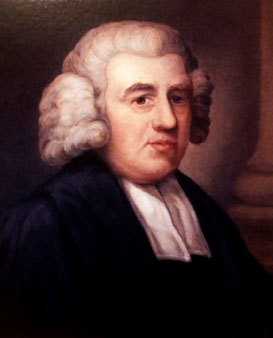
John Newton’s "Seven Letters to a Pastor" addresses the theological principle of humility and dependence on God within ministry and personal spirituality. The letters articulate key ideas such as the necessity of acknowledging one's sinfulness and weakness, the power of grace amidst struggle, and the importance of relying on God rather than personal abilities in ministry. Scripture references such as Psalm 103:14 and 2 Timothy 4:7-8 support the argument that God knows human frailty and extends grace accordingly. Newton emphasizes that true effectiveness in ministry arises not from knowledge or eloquence but from a humble heart that recognizes its dependence on divine grace, which has significant implications for pastoral care and spiritual growth within the church community.
Key Quotes
“More good might be expected from a broken discourse delivered in such a frame than from the most advantageous display of knowledge and gifts without it.”
“The heart is deceitful and desperately wicked; destitute of good and prone to evil.”
“If sin abounds in us, grace abounds much more in him.”
“A broken and contrite spirit... is the highest attainment we can reach in this life.”
What does the Bible say about humility in ministry?
The Bible emphasizes humility as essential for effective ministry, as demonstrated in James 4:10, which states that 'humble yourselves before the Lord, and he will exalt you.'
Additionally, this humble posture fosters a connection with congregants who face their own struggles. Ministers who walk in humility can empathize with those they serve, offering genuine compassion and guidance stemming from their own experiences of grace. Therefore, humility not only aligns with God's commands but enriches the ministerial journey through the shared experiences of sin and grace, allowing the work of the Gospel to flourish in the hearts of believers. Ultimately, the call to humility is a call to trust in the Lord fully, recognizing that apart from Him, we can do nothing (John 15:5).
James 4:10, 2 Corinthians 12:9, John 15:5
How do we know the doctrine of sin is true?
The doctrine of sin is affirmed in Scripture, describing the human heart as 'deceitful above all things' (Jeremiah 17:9) and illustrating mankind’s inherent sinful nature.
Furthermore, the acknowledgment of sin and its implications fosters a deeper understanding of grace. The more a person grasps the depth of their sin, the more they can appreciate the grace offered through Christ. The recognition that we are all in need of a Savior who deals with sin decisively on the cross is integral to the Gospel message. Through recognizing our sin, we become aware of our need for redemption, contributing to a richer understanding of the Christian faith and the love of God demonstrated in Jesus Christ.
Jeremiah 17:9, Romans 3:23
Why is dependence on God important for Christians?
Dependence on God is vital for Christians as it acknowledges our limitations and allows divine strength to work through our weaknesses (2 Corinthians 12:9).
In 2 Corinthians 12:9, Paul recounts the Lord’s response to his pleas, declaring, 'My grace is sufficient for you, for my power is made perfect in weakness.' This interaction highlights that our limitations are venues through which God can demonstrate His power, ultimately leading to greater glorification of Him. This divine dependence not only encourages personal depth of character and spiritual maturity but also fosters authentic relationships within the body of Christ as believers support one another in their reliance on God.
Moreover, this attitude cultivates humility, reminding believers to seek and expect God’s interventions in their lives. The more we depend on God, the more we recognize His sovereignty and goodness, allowing our faith to deepen, and enabling us to extend grace and love to others, encouraging them to rely on Him as well. This cycle of dependence nurtures a resilient faith that propels believers toward a life characterized by trust in God's promises and provisions.
John 15:5, 2 Corinthians 12:9
LETTER 1
Dear Sir,
The Lord is pleased, in a measure, to show me the suitableness and necessity of a humble, dependent frame of heart. A ceasing from self, and a reliance upon him in the due use of appointed means, I am far from having attained—but I hope I am pressing, at least seeking after it. I wish to speak the word simply and experimentally, and to be so engaged with the importance of the subject, the worth of souls, and the thought that I am speaking in the name and presence of the Most High God, as that I might, if possible, forget everything else. This would be an attainment indeed! More good might be expected from a broken discourse, delivered in such a frame, than from the most advantageous display of knowledge and gifts without it. Not that I would undervalue propriety and pertinence of expression; it is our duty to study to find out acceptable words, and to endeavor to appear as workmen that need not be ashamed; but those who have most ability in this way, have need of a double guard of grace and wisdom, lest they be tempted to trust in it, or to value themselves upon it. Those who trust in the Lord shall never be moved; and those who abase themselves before him, he will exalt. I am well persuaded that your conduct and views have been agreeable to these sentiments; and therefore the Lord has supported, encouraged, and owned you; and I trust he will still bless you, and make you a blessing to many. He who walks humbly—walks surely.
LETTER 2
August 14, 1770.
My Dear Sir,
I know not that I ever had those solemn views of sin which you speak of; and though I believe I should be better for them, I dare not seriously wish for them. There is a petition which I have heard in public prayer—Lord, show us the evil of our hearts. To this petition I cannot venture to set my Amen; at least not without a qualification: Show me enough of yourself to balance the view, and then show me what you please. I think I have a very clear and strong conviction in my judgment—that I am vile and worthless; that my heart is full of evil, only evil, and that continually. I know something of it too experimentally; and therefore, judging of the whole by the sample, though I am not suitably affected with what I do see, I tremble at the thought of seeing more.
A man may look with some pleasure upon the sea in a storm, provided he stands safe upon the land himself; but to be upon the sea in a storm, is quite another thing. And yet, surely, the coldness, worldliness, pride, and twenty other evils under which I groan, owe much of their strength to the lack of that feeling sense of my own abominations, with which you have been favored. I say favored; for I doubt not but the Lord gave it to you in mercy, and that it has proved, and will prove, a mercy to you, to make you more humble, spiritual, and dependent, as well as to increase your ability for preaching the Gospel of his grace. Upon these accounts, I can assure you, that, upon a first reading, and until I stopped a moment to count the cost, I was ready to envy you all that you had felt. I often seem to know what the Scripture teaches both of sin and grace—as if I knew them not; so faint and languid are my perceptions, I often seem to think and talk of sin without any sorrow—and of grace without any joy.
Some people say that they are spiritually awakened by dreams. I do not think, that, strictly speaking, that dreams are able to awaken a dead soul. I suppose people may be terrified by them, and made thoughtful—but they awakened only by the Word. The dreams either sent them to hear the Gospel, or roused them to attend to it; but it was the knowledge of the truth brought home to the heart, which did the business of conversion.
Two people here, who lived like heathens, and never came to church, were alarmed by some terrifying dreams, and came out to hearing forthwith. There the Lord was pleased to meet with them. One of them died triumphing; the other, I hope, will do so when her time comes. Whatever means, instruments, or occasions he is pleased to employ, the work is all his own; and I trust you and I are made willing to give him all the glory, and to sink into the dust at the thought that he should ever permit us to take his holy name upon our polluted lips.
LETTER 3
June 13, 1772.
My dear Sir,
You say that your experience agrees with mine. It must be so, because our hearts are alike. The heart is deceitful and desperately wicked, destitute of good, and prone to evil. This is the character of mankind universally, and those who are made partakers of grace are renewed but in part; the evil nature still cleaves to them, and the root of sin, though mortified, is far from being dead. While the cause remains, it will have effects; and while we are burdened with the body of this death, we must groan under it.
But we need not be swallowed up with over-much sorrow, since we have, in Jesus—a Savior, a Righteousness, an Advocate, a Shepherd. "He knows our frame, and remembers that we are but dust." If sin abounds in us—grace abounds much more in him. Nor would he allow sin to remain in his people—if he did not know how to over-rule it, and make it an occasion of endearing his love and grace so much the more to their souls.
The Lord forbid, that we should plead his goodness as an encouragement to sloth and indifference! Humiliation, godly sorrow, and self-abasement, befit us; but, at the same time, we may rejoice in the Lord. Though sin remains in us—it shall not have dominion over us; though it wars in us—it shall not prevail against us. We have a Mercy-seat sprinkled with blood; we have an Advocate with the Father; we are called to this warfare, and we fight under the eye of the Captain of our salvation, who is always near to renew our strength, to heal our wounds, and to cover our heads in the heat of battle.
As ministers, we preach to those who have like passions and infirmities with ourselves; and by our own feelings, fears, and changes, we learn to speak a word in season to those who are weary, to warn those who stand, and to stretch out a hand of compassion towards those who are fallen; and to commend it to others, from our own experience, as a faithful saying, "that Jesus came to save the chief of sinners." Besides, if the Lord is pleased to give us some liberty, acceptance, and success in preaching the Gospel, we should be in great danger of running mad with spiritual pride—if the Lord did not permit us to feel the depravity and vileness of our hearts, and thereby keep us from forgetting what we are in ourselves.
With regard to your young people, you must expect to meet with some disappointment. Perhaps not every one of whom you have conceived hopes, will stand; and some who do truly belong to the Lord are permitted to make sad mistakes, for their future humiliation. It is our part to watch, warn, and admonish. We ought likewise to be concerned for those slips and miscarriages in others, which we cannot prevent. A minister, if faithful, and of a right spirit, can have no greater joy than to see his people walking honorably and steadily in the truth; and hardly anything will give him more sensible grief, than to see any of them taken in Satan's wiles!
Yet still the Gospel brings relief here. He is wiser than we are, and knows how to make those things subservient to promote his work, which we ought to guard against as evils and hindrances. We are to use the means—he is to rule the whole. If the faults of some are made warnings to others, and prove in the end occasions of illustrating the riches of Divine grace—this should reconcile us to what we cannot help, though such considerations should not slacken our diligence in sounding an alarm, and reminding our hearers of their continual danger.
LETTER 4
January 26, 1775.
Dear Sir,
I lately read a sermon of Richard Baxter (in the fifth volume of the Morning Exercises), on Mat. 5:16. My mind is something impressed with the subject, and with his manner of treating it. Some of Mr. Baxter's sentiments in divinity are rather cloudy; and he sometimes, upon that account, met with but poor quarter from the staunch Calvinists of his day. But, by what I have read of him, where he is quiet, and not ruffled by controversy, he appears to me, notwithstanding some mistakes, to have been one of the greatest men of his age; and perhaps, in fervor, spirituality, and success, more than equal, both as a minister and a Christian, to some twenty, taken together, of those who affect to undervalue him in this present day. There is a spirit in some passages of his Saint's Rest, and his Dying Thoughts, and other of his practical treatises, compared with which, many modern compositions, though well written and well meant, appear to me to a great disadvantage.
But I was speaking of his sermon. He points out the way at which we should aim to let our light shine in the world, for the glory of God, and the conviction and edification of men. The perusal suggested to me some instruction—and much reproof. Alas! my friend, are we not too often chargeable with a sad, shameful selfishness and narrowness of spirit—far, very far different from that activity, enlargement, and generosity of soul, which such a Gospel as we have received, might be expected to produce! For myself, I must plead guilty. It seems as if my heart was always awake and keenly sensible to my own concerns, while those of my Lord and Master affect me much less forcibly, at least only by intervals.
Were a stranger to judge of me by what I sometimes say in the pulpit, he might think that, like the angels, I had but two things in view—to do the will of God, and to behold his face. But, alas! would he not be almost as much mistaken, as if, seeing Mr. G. in the character of a tragedy hero, he should suppose him to be the very person whom he only represents! I hope Satan will never be able to persuade me that I am a mere hypocrite and stage-player; but sure I am, that there is so much hypocrisy in me, so many littlenesses and self-seekings insinuating into my plan of conduct, that I have humbling cause to account myself unworthy and unprofitable, and to say, "Enter not into judgment with your servant, O Lord."
I have some idea of what a Christian ought to be; and it is, I hope, what I desire to be. A Christian should be conformable to Christ in his spirit and in his practice. That is, he should be spiritually minded, dead to the world, filled with zeal for the glory of God, the spread of the Gospel, and the good of souls. He should be humble, patient, meek, cheerful, and thankful under all events and changes. He should account it the business and honor of his life--to imitate Him who pleased not Himself, who went about doing good. The whole deportment of a Christian should show that the saving knowledge of Jesus, affords him all he could expect from it--a balm for every grief, an amends for every loss, a motive for every duty, a restraint from every evil, a pattern for everything which he is called to do or suffer, and a principle sufficient to constitute the actions of every day, even in common life--as acts of piety. He should make every event through which he passes, subservient and subordinate to his main design--the glory of Christ.
Gold is the worldly man's god, and his worship and service are uniform and consistent, not by fits and starts—but from morning to night, from the beginning to the end of the year, he is the same man. He will not slip an opportunity of adding to his pelf today, because he may have another tomorrow—but he heartily and eagerly embraces both; and so far as he carries his point, though his perseverance may expose him to the ridicule or reproach of his neighbors, he thinks himself well paid!
LETTER 5
January, 1776.
Dear Sir,
I may learn (only I am a sad dunce) by small and common incidents—as well as by some more striking and important turns in life, that it is not in man to direct his steps. It is not for me to say, Today or tomorrow I will do this or that. I cannot write a letter to a friend without God's permission and help, for neither opportunity nor ability are at my own disposal. It is not needful that the Lord should raise a mountain in my way, to stop my purpose; if he only withdraws a certain kind of imperceptible support, which in general I have, and use without duly considering whose it is—then, in a moment, I feel myself unstrung and disabled, like a ship which has lost her masts, and cannot proceed until he is pleased to refit me and renew my strength. My pride and propensity to self-dependence render frequent changes of this kind necessary to me, or I would soon forget what I am, and take the praise to myself.
Therefore, upon the whole, I am satisfied, and see it best that I should be absolutely poor and pennyless in myself, and forced to depend upon the Lord for the smallest things—as well as the greatest. And if, by his blessing, my experience should at length tally with my judgment in this point—that without Him I can do nothing; then I know I shall find it easy, through him, to do all things; for the door of his mercy is always open, and it is but ask and have. But, alas! a secret persuasion (though contrary to repeated convictions) that I have something in myself, too often prevents me going to him for it; and then no wonder I am disappointed. The life of faith seems so simple and easy in theory, that I can point it out to others in few words. But in practice it is very difficult; and my advances are so slow, that I hardly dare say I get forward at all. It is a great thing indeed to have the spirit of a little child, so as to be habitually afraid of taking a single step without God's leading.
I am glad to know the Lord is still with you; I trust he has not withdrawn wholly from us. We have much call for thankfulness, and much for humiliation. Some here are evidently ripening for glory, and now and then we have a new inquirer. But the progress of wickedness among the unconverted here is dreadful. Convictions repeatedly stifled in many, have issued in a hardness and boldness in sinning, which I believe is seldom found but in those places where the light of the Gospel has been long resisted and abused. If my eyes suitably affected my heart, I should weep day and night upon this account; but, alas! I am too indifferent! I feel a woeful defect in my zeal for God and compassion for souls; and when Satan and conscience charge me with cowardice, treachery, and stupidity—I know not what to reply! I am generally carried through my public work with some liberty; and because I am not put to shame before the people, I seem content and satisfied. I wish to be more thankful for what the Lord is pleased to do among us—but, at the same time, to be more earnest with him for a farther out-pouring of his Spirit. Assist me herein with your prayers.
As to my own private experience, the enemy is not allowed to touch the foundation of my faith and hope; thus far I have peace. But my conflicts with indwelling sin, are very distressing. I cannot doubt of my state and acceptance with God; and yet it seems no one can have more cause for doubts and fears than myself, if such doubtings were at all encouraged by the Gospel; but I see they are not. I see that what I desire and hope for, the Lord promises to do, for his own Name's sake, and notwithstanding all my vileness and perverseness! I cannot question but he has given me (for how else could I have it?) a thirst for that communion with Him in love, and conformity to his image, of which as yet I have experienced but very faint and imperfect beginnings. But if he has begun, I venture, upon his Word—that he will not forsake the work of his own hands.
On public affairs I say but little. Many are censuring men and measures; but I would lay all the blame upon sin. It appears plain to me—that the Lord has a controversy with us; and therefore I fear what we have yet seen is but the beginning of sorrows. I am ready to dread the event of this summer; but I remember that the Lord reigns. He has his own glory and the good of his church in view, and will not be disappointed. He knows how, likewise, to take care of those who fear him. I wish there was more sighing and mourning among professors, for the sins of the nation and the churches!
LETTER 6
Dear Sir,
No very considerable alteration has taken place since I wrote, except the death of Mrs. L, who was removed to a better world in September. The latter part of her course was very painful; but the Lord made her more than conqueror, and she had good cause to apply the Apostle's words, 2Ti. 4:7-8. She repeated that passage in her last illness, and chose it for her funeral text. She was a Christian indeed—her faith was great—and so were her trials. Now she is above them all—now she is before the Throne! May the good Lord help us to be followers of those who through faith and patience, have attained to the blessed hope set before them.
The number of professors still increases with us; and a greater number of people affords a greater variety of cases, and gives greater scope to observe the workings of the heart and Satan. For seven years I had to say, that I had not seen a person of whom I had conceived a good hope, to go back into the world. But I have met with a few disappointments since. However, upon the whole, I trust the Lord is still with us. The enemy tries to disturb and defile us; and if the Lord did not keep the city—the poor watchman would watch in vain. But the Eye that never slumbers nor sleeps has been upon us for good; and though we have cause of humiliation and sorrow—we have likewise much cause of thankfulness.
My health is still preserved; and I hope that the Lord does not allow my desires of personal communion with him, and of usefulness in the ministry, to decline. He supplies me with fresh strength and matter in my public work. I hear now and then of one brought to inquire of the way of salvation. Christ's presence is at times made known to many in the ordinances.
To combine zeal with prudence is indeed difficult. There is often too much SELF in our zeal—and too much of the fear of man in our prudence. However, what we cannot attain by any skill or resolution of our own, we may hope in measure to receive from him who gives liberally to those who seek him, and desire to serve him. Prudence is a much abused word; but there is a heavenly wisdom, which the Lord has promised to give to those who humbly wait upon him for it. It does not consist in forming a bundle of rules and maxims—but in a spiritual taste and discernment, derived from an experimental knowledge of the truth, and of the heart of man, as described in the Word of God. Its exercise consists much in a simple dependence upon the Lord, to guide and prompt us in every action. We seldom act wrong, when we truly depend upon him, and can cease from leaning to our own understanding. When the heart is thus in a right tune and frame, and his Word dwells richly in us—there is a kind of immediate perception of what is proper for us to do in present circumstances, without much painful inquiry—a light shines before us upon the path of duty. And if He permits us in such a spirit to make some mistakes, he will likewise teach us to profit by them; and our reflections upon what was wrong one day, will make us to act more wisely the next.
At best, we must always expect to meet with new proofs of our own weakness and insufficiency; otherwise, how would we be kept humble, or know how to prize the liberty He allows us of coming to the Throne of Grace, for fresh forgiveness and direction every day? But if He enables us to walk before Him with a single eye, He will graciously accept our desire of serving Him better if we could; and his blessing will make our feeble endeavors in some degree successful, at the same time that we see defects and evils attending our best services, are sufficient to make us ashamed of them.
LETTER 7
January 11, 1777.
Dear Sir,
We all need, and at the seasons the Lord sees best—we all receive, chastisement. I hope you likewise have reason to praise him, for supporting, sanctifying, and delivering mercy. The coward flesh presently shrinks under the rod, hut faith need not fear it; for it is in the hand of one who loves us better than we do ourselves, and who knows our frame that we are but dust, and therefore will not allow us to be overdone and overwhelmed.
I feel as a friend should feel for Mr. B. Were I able, I would soon send him health. If the Lord, who is able to remove his illness in a minute, permits it to continue, we may be sure, upon the whole—that it will be best for him. It is, however, very lawful to pray that his health may be restored, and his usefulness prolonged. I ask you to give my love to him, and tell him that my heart bears him an affectionate remembrance; and I know the God whom he serves will make every difficult dispensation supportable and profitable to him.
If, as you observe, the Song of Solomon describes the experience of his church, it shows the dark as well as the bright side. No one part of it is the experience of every individual at any particular time. Some are in his banqueting-house, others upon their beds. Some sit under his banner, supported by His arm; while others have a faint perception of him at a distance, with many a hill and mountain between.
In one thing, however, they all agree—that He is the leading object of their desires, and that they have had such a discovery of his person, work, and love—as makes him precious to their hearts. Their judgment of him is always the same—but their sensibility varies. The love they bear him, though rooted and grounded in their hearts, is not always equally in exercise; nor can it he so. We are like trees, which, though alive, cannot put forth their leaves and fruit without the influence of the sun. They are alive in winter as well as in summer; but how different is their appearance in these different seasons! Were we always alike—could we always believe, love, and rejoice—we would think the power inherent, and our own. But it is more for the Lord's glory, and more suited to form us to a temper befitting the Gospel—that we should be made deeply sensible of our own inability and dependence, than that we should be always in a lively frame.
I am persuaded, that a broken and a contrite spirit, a conviction of our vileness and nothingness, connected with a cordial acceptance of Jesus as revealed in the Gospel—is the highest attainment we can reach in this life. Sensible comforts are desirable, and we must be in a spiritual declension when they do not appear so to us; but I believe there may be a real exercise of faith and growth in grace, when our sensible feelings are faint and low. A soul may be in as thriving a state when thirsting, seeking, and mourning after the Lord—as when actually rejoicing in him; as much in earnest when fighting in the valley—as when singing upon the mount. Nay, dark seasons afford the surest and strongest manifestations of the power of faith. To hold fast the Word of promise, to maintain a hatred of sin, to go on steadfastly in the path of duty, in defiance both of the frowns and the smiles of the world, when we have but little comfort—is a more certain evidence of grace—than a thousand things which we may do or forbear when our spirits are warm and lively.
I have seen many who have been, upon the whole—but uneven walkers, though at times they have seemed to enjoy, at least have talked of, great spiritual comforts. I have seen others, for the most part, complain of much spiritual darkness and coldness, who have been remarkably humble, tender, and exemplary in their spirit and conduct. Surely, were I to choose my lot, it would be with the latter.
Letter 1
January 16, 1775.
Dear friend,
I can sympathize with you in your troubles—yet, knowing the nature of our calling, that, by an unalterable appointment, the way to the kingdom lies through many tribulations, I ought to rejoice, rather than otherwise, that to you it is given, not only to believe—but also to suffer. If you escaped these things, whereof all the Lord's children are partakers, might not you question your adoption into his family? How could the power of grace be manifest, either to you, in you, or by you, without afflictions? How could the corruptions and devastations of the heart be checked, without a cross? How could you acquire a tenderness and skill in speaking to those who are weary, without a taste of such trials as they also meet with? You would only be a hearsay witness to the truth, power, and sweetness of the precious promises, unless you have been in such a situation as to need them, and to find their suitableness and sufficiency.
The Lord has given you a good desire to serve him in the Gospel, and he is now training you for that service. Many things, yes, the most important things, belonging to the Gospel ministry, are not to be learned by books and study—but by painful experience. You must expect a variety of difficult trials—but two things he has promised you—that you shall not be tried above what he will enable you to bear, and that all shall work together for your good!
Were we to acquire no other knowledge of the Christian warfare, than what we could derive from cool and undisturbed book study, instead of coming forth as able ministers of the New Testament, and competently acquainted with the with the devices, the deep-laid devices and stratagems of Satan—we would prove to be worthless. But the Lord will take better care of those whom He loves and designs to honor. He will try, and permit them to be tried, in various ways. He will make them feel much affliction in themselves, that they may know how to feel much for others.
This painful discipline is necessary to enable us to take the field in a public capacity with courage, wisdom, and success, that we may lead and animate others in the fight! It is equally necessary for our own sakes, that we may obtain and preserve the grace of humility, which He has taught you to set a high value upon. Indeed, we cannot value it too highly; for we can be neither comfortable, safe, nor habitually useful, without sincere humility! The root of pride lies deep in our fallen nature, and, where the Lord has given great abilities—pride would grow apace, if He did not mercifully watch over us, and suit His dealings with us, to keep it down.
Therefore I trust He will make you willing to endure hardships, as a good soldier of Jesus Christ. May He enable you to behold Him with faith holding out the prize, and saying to you, "Fear none of those things that you shall suffer! Be faithful unto death, and I will give you a crown of life!"
We sail upon a turbulent and tumultuous sea—but we are embarked on a good vessel, and in a good cause. We have an infallible and almighty Pilot, who has the winds and weather at his command, and can silence the storm into a calm with a word, whenever he pleases. We may be persecuted—but we shall not be forsaken; we may be cast down—but we cannot be destroyed. Many will molest us that we may fall—but the Lord will uphold us!
I am sorry to find you are quite alone at Cambridge; for I hoped there would be a succession of serious students to supply the place of those who are transplanted to shine as lights in the world. Yet you are not alone; for the Lord is with you, the best counselor and the best friend! There is a strange backwardness in us (at least in me) fully to improve that gracious intimacy to which he invites us. Alas! that we so easily wander from the fountain of life—to hew out broken cisterns for ourselves; and that we seem more attached to a few drops of his grace in our fellow-creatures, than to the fullness of grace that is in himself! I think nothing gives me a more striking sense of my depravity, than my perverseness and folly in this respect. Yet he bears with me, and does me good continually.
Letter 2
March, 1776
Dear friend,
It gave me particular pleasure to hear that the Lord helped you through your difficulties, and succeeded your desires. And I have sympathized with you in the complaints you make of a dark and mournful frame of spirit afterwards. But is not this, upon the whole, right and beneficial, that, if the Lord is pleased at one time to strengthen us remarkably in answer to prayer—that he should leave us at another time, so far as to give us a real sensibility that we were supported by his power, and not our own?
Besides, as you feel a danger of being elated by the respect paid to you, was it not a merciful and seasonable dispensation which made you feel your own weakness, to prevent your being exalted above measure? The Lord, by withdrawing his smiles from you, reminded you that the smiles of men are of little value, otherwise perhaps you might have esteemed them too highly. Indeed, you pastors that know the Lord, are singular instances of the power of his grace; for (like the young men in Daniel 3.) you live in the very midst of the fire!
Your mathematical studies in particular have such a tendency to engross and fix the mind to the contemplation of cold and uninteresting truth, and you are surrounded with so much intoxicating applause if you succeed in your researches, that for a soul to be kept humble and alive in such a situation, is such a proof of the Lord's presence and power—as Moses had when he saw the bush unconsummated in the midst of the flames! I believe I had naturally a turn for the mathematics myself, and dabbled in them a little way; and though I did not go far, my head, sleeping and waking, was stuffed with diagrams and calculations. Everything I looked at that exhibited either a right line or a curve, set my wits a wool-gathering. What then must have been the case—had I proceeded to the study of speculative geometry? I bought my namesake's geometry book—but I have reason to be thankful that I left it as I found it, a sealed book, and that the bent of my mind was drawn to something of more real importance before I understood it. I say not this to discourage you in your pursuits. they lie in your line and path of duty; in mine they did not.
As to your academics, I am glad that the Lord enables you to show those among whom you live, that the knowledge of his Gospel does not despoil you either of diligence or acumen. However, as I said, you need a double guard of grace, to preserve you from being either puffed up or deadened by those things, which, to preserve your rank and character in the University while you remain there, are, if taken in the aggregate, little better than splendid trifles!
If my poor people could form the least conception of what the learned at Cambridge chiefly admire in each other, and what is the intrinsic reward of all their toil, they would say, "What a foolish waste of time!" How gladly would some of them, if such mathematical and metaphysical lumber could by any means get into their heads, how gladly would they desire to get it out again! How many perplexities are they freed from, by their happy ignorance, which often pester those to their lives' end—who have had their natural proneness to vain reasoning sharpened by academic studies!
Letter 3
May 18, 1776.
Dear friend,
Though I wished to hear from you sooner, I put a candid interpretation upon your silence—but felt no disposition to anger. Let our correspondence be free from fetters. Write when you please, and when you can. I will do the like. Apologies may be spared on both sides. I am not a very punctual correspondent myself, having so many letters to write, and therefore have no right to stand upon punctilios with you.
I sympathize with you in your sorrow for your friend's death. Such things are very distressing! But such a case might have been our own. Let us pray for grace to be thankful for ourselves, and submit everything in humble silence to the sovereign Lord—who has a right to do as He pleases with His own.
We feel and grieve for any deaths in our own little circles; but O, the dreadful mischief of sin! Human death is as frequent as the hours, the minutes, perhaps the moments of every day. And though we may be impacted by but one death in a million—the souls of all others have an equal capacity for endless happiness or misery!
I congratulate you upon your admission into the ministry, and pray God to favor you with a single eye to his glory, and a fresh anointing of his Holy Spirit, that you may come forth as a scribe well instructed in the mysteries of his kingdom, and that his Word in your mouth may abundantly prosper.
I truly pity those who rise early and study late, and eat the bread of worry, with no higher prize and prospect in view—than the obtaining of academic honors! Such pursuits will before long appear (as they really are) as vain as the foolish games of children! May the Lord impress them with a noble ambition of living to and for him. If these scholars, who are laboring for pebbles under the semblance of goodly pearls, had a discovery of the Pearl of great price, how quickly and gladly would they lay down their admired attainments, and become fools—that they might be truly wise!
Friend, what a snare have you escaped! You would have been nothing but a scholar—had not God visited your heart and enlightened you by His grace! Now I trust you account your former academic gains, but loss—compared to the surpassing greatness of knowing Christ Jesus. What you have attained in the way of learning, will be useful to you—if sanctified, and chiefly so by the knowledge which you have of its insufficiency to any valuable purpose in the great concerns of life—knowing God and walking with Him!
I am pleased with your fears lest you should not be understood in your preaching. Indeed, there is a danger of it. It is not easy for people of quick minds—duly to conceive how amazingly ignorant and slow of apprehension, the bulk of our congregations generally are. When our own ideas are clear, and our expressions proper—we are ready to think we have sufficiently explained ourselves; and yet, perhaps, nine out of ten (especially of those who are destitute of spiritual light) know little more of what we say—than if we were speaking Greek!
A degree of this inconvenience is always inseparable from written sermons. They cast our thoughts into a style, which, though familiar to ourselves, is too remote from common conversation to be comprehended by narrow capacities of our hearers; which is one chief reason of the preference I give to extemporary preaching. When we read to the people, they think themselves less concerned in what is offered—than when we speak to them point-blank.
It seems a good rule, which I have met with somewhere, and which perhaps I have mentioned to you—to fix our eyes upon some one of the congregation whom we judge of the least mental capacity. If we can make him understand, we may hope to be understood by the rest of our hearers.
Let those who seek to be admired for the exactness of their compositions, enjoy the poor reward they aim at. it is best for Gospel preachers to speak plain language. If we thus singly aim at the glory of our Master and the good of souls—we may hope for the accompanying power of his Spirit, which will give our discourses a weight and energy, that the golden-mouthed Demosthenes had no conception of!
I can give you no information of a pastorate in a better situation. But either the Lord will provide you one, or I trust he will give you usefulness, and fullness and a competency of health and spirits where you are. He who caused Daniel to thrive upon vegetables and water, can make you strong and cheerful even in your bad situation—if he sees that best for you. All things obey him, and you need not fear but he will enable you for whatever service he has appointed you to perform!
This letter has been a week in hand—many interruptions from without, and indispositions within. I seem to while away my life, and shall be glad to be saved upon the footing of the thief upon the cross, without any hope or plea—but the power and grace of Jesus, who has said, I will in nowise cast out! Adieu.
Letter 4
Sept. 10, 1777.
Dear friend,
I was glad to hear from you at last, not being willing to think myself forgotten. It seems, by your account, that you are far from well—but I hope you are as well as you ought to be—that is, as well as the Lord sees it good for you to be. I say, I hope so—for I am not sure that the length and vehemence of your sermons, which you tell me astonish many people, may not be rather improper and imprudent, considering the weakness of your constitution; at least, if this expression of yours is justly expounded by a report which has reached me, that the length of your sermons is frequently two hours, and the vehemence of your voice so great that you may be heard far beyond the church-walls.
I would be unwilling to dampen your zeal—but I feel unwilling likewise, that by excessive, unnecessary exertions, that you should wear away very soon, and preclude your own usefulness! This concern is so much upon my mind, that I begin with it, though it makes me skip over the former part of your letter—but when I have relieved myself upon this point, I can easily skip back again.
I am perhaps the more ready to credit the report, because I know that the spirits of some high-strung people are highly volatile. I consider you as mounted upon a fiery steed, and provided you use due management and circumspection, you travel more pleasantly than we plodding folks upon our sober, stolid horses—but then, if instead of pulling the rein you plunge in the spurs, and add wings to the wind—I cannot but be in pain for the consequences. Permit me to remind you of an old adage—the end of speaking is to be heard; and if the person farthest from the preacher can hear, he speaks loud enough.
Upon some occasions, a few sentences of a discourse may be enforced with a voice still more elevated—but to be uncommonly loud from beginning to end—is hurtful to the speaker, and in no way useful to the hearer. It is a fault which many inadvertently give into at first, and which many have repented of too late—when the harmful practice has rendered it habitual, it is not easily corrected. I know some think that preaching very loudly—and preaching with power—are synonymous expressions. But your judgment is too good to fall in with that false sentiment.
There is a quotation from Homer, where he describes the eloquence of Nestor, and compares it, not to a thunderstorm or hurricane—but to a fall of snow, which, though pressing, insinuating, and penetrating, is soft and gentle. I think the simile is beautiful and expressive.
Secondly (as we say), as to long preaching. There is an old-fashioned instrument called an hour-glass, which in days of yore, before clocks and watches abounded, used to be the measure of many a good sermon, and I think it a tolerable stint. I cannot wind up my ends to my own satisfaction in a much shorter time, nor am I pleased with myself if I greatly exceed it.
If an angel was to preach for two hours—unless his hearers were angels likewise—the greater part of them wish that he had preached for a much shorter time! It is a shame it should be so—but so it is! Partly through the weakness and partly through the wickedness of the flesh—we can seldom stretch our attention to spiritual things for two hours together without cracking it, and hurting its spring! When weariness begins—edification ends! It is better to feed our people like chickens—a little and often—than to cram them like turkeys, until they cannot hold one more mouthful!
Besides, overlong sermons break in upon family concerns, and often call off the thoughts from the sermon—to the pudding at home, which is in danger of being over-boiled! Long sermons leave likewise but little time for secret or family religion, which are both very good in their place, and are entitled to a share of each Sunday.
Upon the preacher they must have a bad effect, and tend to wear him down before his time. I have known some, by over preaching at first, have been constrained to sit still and do little or nothing for months or years afterwards. I recommend you to this wise advice: Set out at such a pace—that you may hold out to your journey's end.
Now, if Fame with her hundred mouths has brought me a false report of you, and you are not guilty of preaching either too long or too loud, still I am not willing my remonstrance may go for nothing. I desire you to accept it, and thank me for it as a proof of my love to you, and likewise of the sincerity of my friendship; for if I had wished to flatter you—I could easily have written on another subject.
I have one more report to trouble you with, because it troubles me; and therefore you must bear a part of my burden. Assure me it is false, and I will send you one of the handsomest letters I can devise by way of thanks. It is reported, (but I will not believe it until you say I must), that you stand upon your tiptoes, upon the point of being whirled out of our vortex, and hurried away, comet-like, into the regions of eccentricity! In plain English—that you have a hankering to be an itinerant. But to be serious—for it is a serious subject; let me beg you to deliberate well, and to pray earnestly before you take this step. Be afraid of acting in your own spirit, or under a wrong impression, however honestly you intend—you may be mistaken. The Lord has given you a little charge; be faithful in it, and in his good time he will advance you to a greater—but let his providence evidently open the door to you, and be afraid of moving one step before the cloud and pillar.
I have had my warm fits and desires of this sort in my time—but I have reason to be thankful that I was held in with a strong hand. I wish there were more itinerant preachers. If a man has grace and zeal, and but limited abilities, let him go and diffuse the substance of a dozen sermons over as many counties. But you have natural and acquired abilities, which qualify you for the more difficult, and, in my judgment, not less important, station of a church minister. I wish you to be a burning, shining, steady light. You may perhaps have less popularity; that is, you will be less exposed to the workings of self and the snares of Satan, if you stay with us—but I think you may live in the full exercise of your gifts and graces, be more consistent with your voluntary engagements, and have more peace of mind, and humble fellowship with God—in watching over a flock which he has committed to you, than, by forsaking them, to wander up and down the earth without a determined scope.
Letter 5
Dear friend,
If you have not actually passed the point of no return concerning going into an itinerant ministry—if there is yet room for deliberation, I once more entreat you to pause and consider. In many respects I ought to be willing to learn from you—but in one point I have a little advantage of you. I am some years older, both in life and in experience; and in this difference of time perhaps I have learned something more of the heart, the world, and the devices of Satan, than you have had opportunity for. I hope I would not dampen your zeal—but I will pray the Lord to direct it into the best channel for permanent usefulness. I say permanent. I doubt not that you would be useful in the itinerant ministry—but I more and more observe great inconveniences follow in that way. Where you make a gathering of people, others will follow you; and if they all possessed your spirit, and had your unselfish views, it might be well. But, generally, an able preacher only so far awakens people to a desire to hear, as exposes them to the incursions of various winds of doctrine, and the attempts of injudicious pretenders, who will resemble you in nothing but your eagerness to post from place to place. From such measures, in time, proceed errors, parties, contentions, offenses, enthusiasms, spiritual pride, and a noisy ostentatious form of godliness—but little of that power and life of faith which shows itself by humility, meekness, and love.
A parochial minister, who lives among his people, who sees and converses with them frequently, and exemplifies his doctrine in their view by his practice, having knowledge of their spiritual states, trials, growth, and dangers—suits himself to their various states, and, by the blessing of God, builds them up, and brings them forward in faith and holiness. He is instrumental in forming their experience; he leads them to a solid, orderly, Scriptural knowledge of Divine things. If his name is not in so many mouths as that of the itinerant—it is upon the hearts of the people of his charge. He lives with them as a father with his children. His steady consistent behavior silences in some measure the clamors of his enemies; and the Lord opens him doors of occasional usefulness in many places.
I now wish I had taken larger paper, for I have not room for all I would say. I have no end to serve. I am of no party. I wish well to itinerants who love and preach the Gospel. I am content that they should labor that way, who have not talents nor gifts to support the character, and fill up the office of a parochial minister. But I think you are qualified for more important service. We are hasty, like children—but God often appoints us a waiting time. Perhaps it requires as much or more grace to wait—than to be active; for it is more trying to SELF. After all, whatever course you take, I shall love you, pray for you, and be glad to see you.

Comments
Your comment has been submitted and is awaiting moderation. Once approved, it will appear on this page.
Be the first to comment!