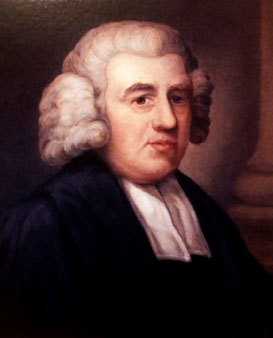
John Newton's article "Preaching the Gospel With the Power and the Spirit" emphasizes the significance of genuinely powerful preaching as a means of effectively conveying the gospel. Newton argues that true preaching is not merely the transfer of theological knowledge or truths but rather the delivery of the gospel in a manner that is accompanied by the Holy Spirit's transformative power. He supports this notion by referencing Peter's preaching in Acts 2, where the early church experienced the Holy Spirit's presence, and also Paul's words to the Thessalonians, highlighting the need for the gospel to be received "not in word only, but also in power" (1 Thessalonians 1:5). Newton warns against superficial preaching that may captivate audiences without igniting spiritual changes, urging preachers instead to have a profound personal experience of the gospel that resonates with listeners. The practical significance of this approach underscores the essence of Reformed theology, which stresses the sovereignty of God in the salvation process and the necessity of sincere reliance on the Holy Spirit for transformative preaching that impacts the hearts and minds of believers.
Key Quotes
“The gospel is the power of God unto salvation... and this gospel is preached when it is accompanied with some due degree of that demonstration and power from on high.”
“Merely to declare the truths of the gospel is not to preach it.”
“The grand principle of gospel oratory is simplicity. Affectation is displeasing in all people but in none is it so highly disgusting as in a preacher.”
“If you wish to preach the gospel with power, pray for a simple humble spirit... to proclaim the glory of the Lord whom you profess to serve.”
What does the Bible say about preaching the gospel with power?
The Bible asserts that preaching the gospel is accompanied by the power of the Holy Spirit, which is essential for true impact on the hearts of listeners (1 Thessalonians 1:5).
1 Thessalonians 1:5, Romans 10:14
How do we know the doctrine of the gospel is true?
The truth of the gospel doctrine is affirmed by its transformative power in the lives of believers, alongside the faithful witness of Scripture.
Romans 1:16, Ephesians 1:13-14
Why is it important for Christians to preach the gospel?
Preaching the gospel is essential for fulfilling the Great Commission and spreading the message of salvation to a lost world (Matthew 28:19-20).
Matthew 28:19-20, Romans 1:16
Dear sir,
I congratulate you on your ordination. The Lord has now, by his providence, opened to you a door into His vineyard, and has called you to a scene of service, in which I hope the abilities he has given you will be faithfully employed, and your desire of usefulness will be abundantly gratified. You now bear the high and honorable title of a minister of the gospel--I call it high and honorable, because I am sure those who who truly deserve it, will find it to be so at last; though at present perhaps they may meet with much opposition and contempt, for the sake of him whose they are, and whom they serve.
I wish you, upon your entrance into the ministry, to have a formed and determinate idea, what the phrase, preaching the gospel, properly signifies. The gospel is the power of God unto salvation; and this gospel is preached when it is accompanied with some due degree of that demonstration and power from on high, which is necessary to bring it home to the hearts and consciences of the hearers. Thus the apostle Peter informs us, "that it was preached in the beginning, with the Holy Spirit sent down from heaven;" and Paul reminds the Thessalonians, "that they had received it not in word only--but also in power, and in the Holy Spirit, and in much assurance."
From these passages, I think we may warrantably conclude, that merely to declare the truths of the gospel, is not to preach it. The knowledge of it as a 'system of truth' may be acquired, and of course recited by those who have no portion or tincture of that inward conviction of its important certainty, which is necessary to impress a correspondent conviction upon others. Though the Lord himself is the only effectual Teacher, and that change of disposition which is frequently produced by the preaching of the gospel, must be ascribed wholly to his agency--yet in the means he has instituted, and by which he has ordinarily pleased to work, we may observe a suitableness to the nature of man, considered as a rational intelligent creature, whose inward feelings are excited by external causes, in a manner agreeable to the general laws of his constitution in the present state. I may particularly notice on this subject, the wonderful and well known effects of what we call sympathy, by which we often see the emotions of anger, pity, terror, and the like, with which one person is affected, when strongly expressed by his words or actions, suddenly and almost irresistibly awaken similar sensations in those who observe him.
Many of the great truths of the Scripture may be represented by a man of a warm and lively imagination, in such a manner as considerably to affect the imaginations and natural passions of an audience, even though he should not himself believe a word of the subject. This would be an effect of no higher kind, than is produced upon the stage. The exertions of a skillful actor first drawn forth by the sight of the spectators, and a desire to please them, act upon them reciprocally, and give him an ascendancy over their feelings. When his attention seems to be fixed, when he appears to enter into the distresses of the character which he represents, he fixes their attention likewise, they also are distressed--and, while he weeps or trembles--they weep or tremble with him, and though at the same time both he and they are very sensible that the whole representation is a fiction, and consequently when the play is finished, the emotions cease. This is all very natural, and may easily be accounted for.
It is not so easy to account for the presumption of those preachers, who expect, (if they can indeed expect it,) merely by declaiming on gospel subjects, to raise in their hearers those spiritual perceptions of humiliation, desire, love, joy, and peace, of which they have no impression on their own hearts. I premise, therefore, that there is one species of popularity which I hope will rather be the object of your dread--than of your ambition. It is a poor affair to be a stage-player in divinity, to be able to hold a congregation by the ears, by furnishing them with an hour's amusement, if this is all. But the man who is what he professes to be, who knows what he speaks of, in whom the truth dwells and lives, who has not received the gospel from books, or by hearers only--but in the school of the great Teacher, acquires a discernment, a taste, a tenderness, and a humility, which secure to him the approbation of the judicious, qualify him for the consolation of the distressed, and even so far open his way to the hearts of the prejudiced, that, if they refuse to be persuaded, they are often convicted in their own consciences, and forced to feel that God is with the preacher.
When Philip preached, the Eunuch rejoiced; when Paul preached, Felix trembled. The power of the truth was equally evident in both cases, though the effects were different. One criterion of the gospel ministry, when rightly dispensed, is, that it enters the recesses of the heart. The hearer is amazed to find that the preacher, who perhaps never saw him before, describes him to himself, as though he had lived long in the same house with him, and was acquainted with his conduct, his conversation, and even with his secret thoughts! 1 Cor. 14:24-25. Thus, a single sentence frequently awakens a long train of recollection, removes scruples, satisfies doubts, and leads to the happiest consequences; and what we read of Nathaniel and the woman of Samaria, is still exemplified in the conversion of many; while others, who willfully resist the evidence, and turn from the light, which forces itself upon their minds, are left without excuse.
If, therefore, you wish to preach the gospel with power, pray for a simple, humble spirit, that you may have no allowed end in view--but to proclaim the glory of the Lord whom you profess to serve, to do his will, and for his sake to be useful to the souls of men. Study the Word of God, and the workings of your own heart, and avoid all those connections, friendships and pursuits, which, experience will tell you, have a tendency to dampen the energy, or to blunt the sensibility of your spirit. Thus shall you come forth as a scribe, well instructed in the mysteries of the kingdom, a workman that needs not to be ashamed, approved of God, acceptable to men, rightly dividing the Word of truth. Thus your trumpet shall not give an uncertain sound, nor shall you appear like a cloud without water, to raise and disappoint the expectations of your hearers. A just confidence of the truths you speak, a sense of the importance of your message, a love to precious souls, and a perception of the divine presence--will give your discourses a solidity, a seriousness, a weight, which will impress a sympathetic feeling upon your hearers--and they will listen, as to one who speaks with spirit, demonstration, and power.
Allow me, before I conclude, to caution you against some too prevalent mistakes upon this subject. There are methods sometimes used to fix the attention of an audience, it is hoped, with a design to their benefit, which are very different from preaching with power, and seldom produce any lasting effect upon a sensible hearer--but an unfavorable idea of the preacher.
Beware of affecting the orator. I do not advise you to pay no regard to a just and proper elocution; it deserves your attention, and many a good sermon loses much of the effect it might otherwise produce, by an awkward and uncouth delivery. But let your elocution be natural. Despise the little arts by which men of little minds endeavor to set themselves off; they will blast your success, and expose you to contempt. The grand principle of gospel oratory, is simplicity. Affectation is displeasing in all people--but in none is it so highly disgusting as in a preacher. A studied attitude, a measured motion, a close attention to cadences and pauses, a mimicry of theatrical action, may be passable in the recital of a school lecture--but is hateful in the pulpit. Men never do, never can, speak thus, when they speak from the emotion of their hearts.
How is it possible then for a man who professes to speak for God, who addresses himself to immortal souls, who discourses upon the most important subjects, the love of Christ, the joys of heaven, or the terrors of the Lord; how is it possible for this man to find time or disposition for such pompous trifling, if he really understands and believes what he says? The truly pious will weep for his ill-timed vanity. And if any seem pleased, it is chiefly because this manner of preaching seldom disturbs the conscience, for it cannot be expected that God will vouchsafe the testimony of his Spirit, even to his own truths, when the poor worm who delivers them, is visibly more solicitous for the character of an eloquent speaker, than for the success of his message.
Sometimes vociferation seems to be considered as a mark of powerful preaching. But I believe a sermon that is loud and noisy from beginning to end, seldom produces much good effect. Here again, my friend, if you are happily possessed of simplicity, it will be a good guide. It will help you to adjust your voice to the size of the place or congregation, and then to the variations of your subject. When the explanation of the text and the application of the sermon are both in the same boisterous tone, I am led to consider it rather as a proof of the lack of power, than otherwise. It seems impossible for a preacher to be equally affected in every part of his discourse, and therefore, if he appears to be so, his exertion, in some parts at least, must be constrained and artificial, and this thought will often bring a suspicion upon the whole. Especially if his voice is as vehement in prayer as in preaching. We doubt not--but if he were with the King of England, that a certain composure and modesty of air, would indicate that he considered whom he was speaking to, and those who speak to God, would certainly give tokens of a reverence and awe upon their spirits, if they really felt it; very loud speaking is far from being a token of such a frame. At the best, very loud preaching is the effect of a bad habit; and though it may be practiced by good men and good preachers, I am persuaded it is neither sign nor cause of the Word being received with power by the hearers. People are seldom, if ever, stunned into the love of the truth.
There is another strain of preaching, which, though it wears the garb of zeal, is seldom a proof of any power but the power of self. I mean angry and scolding preaching. The gospel is a benevolent scheme, and whoever speaks in the power of it, will assuredly speak in love. In the most faithful rebukes of sin, in the most solemn declarations of God's displeasure against it, a preacher may give evidence of a disposition of good-will and compassion to sinners, and assuredly will, if he speaks under the influence of the power of truth. If we can indulge invective and bitterness in the pulpit, we are but gratifying our own evil tempers, under the pretense of a concern for the cause of God and truth. A preacher of this character, instead of resembling a priest bearing in his censer hallowed fire taken from God's altar, may be compared to the madman described in the Proverbs, who scatters at random firebrands and arrows and death, and says, Am not I in sport? Such people may applaud their own faithfulness and courage, and think it a great attainment that they can so easily and constantly set their congregation at defiance; but they must not expect to be useful, so long as it remains a truth, that the wrath of man works not the righteousness of God.
But the limits of a letter constrain me to stop here, only adding my prayers and best wishes for your comfort and success.
I am your sincere friend,
(John Newton had no children of his own. These twenty-one letters were written his adopted daughter Betsy, when she was away at school.)
Letter 1
September 8, 1779
My dear child,
I was glad of your letter, for we were just thinking of you, as it seems you were of us, that it was a long time since we heard from you. When you want a letter from me, you must write—if I send you one for one, I think it will be pretty well.
Richard died about two weeks ago, and I buried him and three others within a week. All four were rather young people, that is, about thirty years of age. Last Sunday evening I preached a funeral sermon for Richard; the text was Genesis 49:19, "Gad will be attacked by marauding bands, but he will attack their heels." That short verse contained his history; and I hope it contained yours likewise. The first part is sure to you if you live; you will meet with many troops of sins, fears, cares, and troubles, which will fight against you, and seem at times almost to overcome you—yes, overcome you they certainly would, if you were to fight them in your own strength. If you do not seek and love the Lord Jesus, you would be destroyed by them. But I cannot bear to entertain such a thought; surely you must, you will love him!
You hear a great deal of his beauty and goodness; believe it, for it is true; and that a great deal—is but little of what ought to be said of him. But pray him to show himself and his own love to your heart; then you will love him indeed! All the world would love him—did they but rightly know him. Well, if you love the Lord Jesus, you will certainly overcome at last; and then you shall have the crown of life, and all the happiness which is contained in the promises made to those who overcome, in the second and third chapter of Revelation. My dear child, pray to him, and never be content or satisfied until you feel your desire and love fixed upon him. Nothing less will content me for you. If you should behave to me and your mamma with the greatest tenderness, affection, and attention as you grow up, (as I hope you will, and you yourself are sensible you ought,) still I would weep over you, if I saw you negligent and ungrateful towards the Lord. We love you, and would do much to show it—but we could not, we dare not, be crucified for you. This was such love as Jesus only could show; judge what a return it calls for from you. Not to love the Lord Jesus—is the height of wickedness and the depth of misery! "If anyone does not love the Lord, that person is cursed!" 1 Corinthians 16:22
Believe me to be yours.
Letter 2
October 22, 1779
My dear child,
You may well expect to hear from me; but you will hardly expect a long letter, if you remember what little leisure time I have in London. Almost every day loads me with debt to you—and brings me letters which I am not able to answer; but my dear Betsy is never forgotten. We have been here two weeks; the Lord gave us a pleasant and safe journey. Your mamma has been, upon the whole, comfortably well. I need not tell you that we are situated in the midst of so much noise and smoke. But here I can have no garden; no pretty walks among trees and fields; no birds but such as are prisoners in iron cages, so that I pity them, for all their singing.
But the same sun that shines there, is often to be seen at London; and the Lord Jesus, like the sun, is in all places at once. Go where we will, we are not far from him, if we have but eyes to see him, and hearts to perceive him. My dear child, when you look at the sun, I wish it may lead your thoughts to him who made it, and who placed it in the sky, not only to give us light—but to be the brightest, noblest emblem of himself. There is but one sun, and we need no another—so there is but one Savior; but he is complete and all sufficient, the Sun of Righteousness, the Fountain of life and comfort; his beams, wherever they reach, bring healing, strength, peace, and joy to the soul. Pray to him, my dear, to shine forth, and reveal himself to you. Oh, how different is he from all that you have ever seen with your bodily eyes! he is the Sun of the soul, and he can make you as sensible of His presence—as you are of the sun-shine at noon-day; and, when once you obtain a clear sight of him, a thousand little things, which have hitherto engaged your attention, will in a manner disappear.
As by the light of opening day,
The stars are all concealed;
So earthly beauties fade away,
When Jesus is revealed.
I entreat, I charge you, to ask him every day to show himself to you. Think of him as being always with you; about your path by day, about your bed by night, nearer to you than any object you can see, though you see him not; whether you are sitting or walking, in company or alone. People often consider God as if he saw them from a great distance—but this is wrong; for, though he is in heaven, the heaven of heavens cannot contain him; he is as much with us as with the angels; in him we live, and move, and have our being; as we live in the air which surrounds us, and is within us, so that it cannot be separated from us a moment. And whatever thoughts you can obtain of God from the Scripture, as great, holy, wise, and good, endeavor to apply them all to Jesus Christ, who once died upon the cross, for he is the true God, and eternal life, with whom you have to do; and, though he is the King of kings, and Lord of lords, and rules over all—he is so condescending and compassionate, that he will hear and answer the prayer of a child. Seek him, and you shall find him; whatever else you seek, you may be disappointed—but he is never sought in vain.
Your very affectionately
Letter 3
April 8, 1780
My dear child,
I have heard of you several times since I received your letter, which I wished to answer before. I would be thankful that you are well, and I hope you are happy, that is, in the common sense of the word; for, strictly speaking, happiness is not to be found here. I hope, however, you are cheerful, thankful, and, in some degree, satisfied with your lot. And, in order to this, I would wish you to look round you, and see how many children are sick, while you are well; poor and destitute, while you are provided, not only with the necessities—but the comforts of life. How many, again, are exposed to hard and unkind treatment, whereas you are noticed and caressed, and have kind friends abroad and at home. Once more, consider how many are brought up in ignorance and wickedness, have nothing but evil examples, and, it is to be feared, will go from bad to worse as they grow up; while you have the advantage of good education and good examples, and are placed where you can hear the precious gospel, by which the Lord gives faith and salvation to those who seek him.
Then ask yourself how it is, or why you are better off than they? And I hope there is something within you that will tell you, whatever the reason may be—that it is not because you are better in yourself, or deserve better things than others. Your heart is no better; you likewise are a sinner; you were born with a sinful disposition, and, though you are a child, you have sinned against the Lord; so that, had he been strict to mark what is amiss, he might justly have cut you off long ago. The only reason why you are so favored, must be the Lord's mercy and goodness. He pitied you when you did not know how to pity yourself; and in His providence he removed you from a place where you would probably have remained ignorant of him; and he placed you under our care, and made you dear to us, that we might feel a pleasure in doing everything in our power to promote your welfare. And I hope that you and we shall have reason to thank him that you came to us.
The days are growing long, the summer is coming, and among the many pleasant days of summer, there is one which I hope will bring you home. I believe you to be glad to come, and we shall be glad to see you—I hope you will like the house. There are green trees in front, and a green field backwards, with cows feeding in it; so that it has some little resemblance of the country.
Your mamma sent you a cake, which I hope you received; and, if you did, I suppose it is all gone by this time—for they say, you cannot eat your cake and have it. It is a true saying, and full of meaning. Look at all that appears good and pleasant in this world; could you call it all your own, it would last but a little while, and when you go into another world, the remembrance of what you had in this world, will be but like remembering you once had a cake—but it is gone, quite eaten up. But it is not so, my dear child, with respect to that feast which Jesus prepares for poor sinners. The pleasures which he gives are repeated from time to time, and are pleasing even when we reflect on them. And, in the other world, when earthly pleasures will be quite ended, those who love him shall have pleasure without interruption and without end, rivers of pleasure at his right hand for evermore! May the Lord bless you, and keep you. It is one of my pleasures while here to think of you, to feel for you, and to write to you as
Your affectionate.
Letter 4
August 3, 1780
My dear child,
You may be sure your mamma and I were very glad to hear that the Lord preserved you from harm, and that you were safe and well at ___. I wish you to have a deep impression on your mind, that your safety, whether abroad or at home, or the continuance of your health from one hour to another, is not a matter of course—but the effect of the care and goodness of him who knows we are as helpless as sheep, and condescends to act the part of a shepherd towards us. May you learn to acknowledge him in all your ways, to pray to him for his blessing, and to praise him daily for his mercies; and then you will do well.
This is a great privilege, which distinguishes us from the beasts of the field—they likewise owe their preservation to his providence; but then they are not capable of knowing him or thanking him. There are many young people who are contented to live without God in the world; but this is not only their sin—but their shame likewise. They thereby renounce the chief honor they are capable of, and degrade themselves to a level with the beasts! But let it not be so with you. Pray to the Lord to teach you to love him; and, when you think of him, fix your thoughts upon Jesus Christ, upon him who conversed on earth as a man. The great God has manifested himself in a way suited to us, as weak creatures and poor sinners. God is everywhere present; but only those who look to him in Christ—can love, trust, or serve him aright. When you read our Savior's discourses in Scripture, pay attention as if you saw him with your own eyes standing before you. And when you pray, assure yourself, before you begin, that he is actually in the room with you, and that his ear is open to every word you say. This will make you serious, and it will likewise encourage you, when you consider that you are not speaking into the air, or to one who is a great way off; but to One who is very near you, to your best Friend, who is both able and willing to give you everything that is good for you.
My advice to you will be chiefly with respect to your religious concerns and your moral conduct. But there are other things belonging to your mamma's province. She wishes, as you grow up, you may not appear to a disadvantage when compared with other young women; and, indeed, if you should be everything she wishes you to be, you will do honor to the school you come from.
I think you are in general willing to oblige her, and I am persuaded a little care and resolution on your part, would soon make it easy and familiar to you to follow the example she sets you, as well as the advice she gives you. I hope therefore, for her sake, for mine—and especially for your own sake, that you will endeavor to be notable. It was a grief to me that my time was so unavoidably taken up, that I could spare but little to converse with you; but we agreed, you know, to make it up by letters. It is now your turn to write, and I shall be glad of a long letter from you soon, in which I wish you to open your mind, to tell me what you think, feel, hope, fear, or desire, with the same freedom as if you were writing to one of your school-fellows.
The Lord bless you, my dear child, and give you to increase in wisdom and grace, as you increase in years. Always think of me as
Your very affectionate father.
Letter 5
November 1, 1780
My dear child,
I congratulate you that you are now within a month of December, when you will begin to count the days, and to see the vacation peeping over the head of a short interval. I may congratulate your mamma, and myself likewise, (provided you come to us improved as we wish you,) for we long to see you, and have done so every day since you left us.
Your mamma is often indisposed—but seldom very ill, at least not long together; but both she and I have many feelings with which we were not acquainted when we were young like you. The advantages of youth and health are seldom rightly known at the right time. It is indeed a mercy if, when we are growing old, we have some proper sense of the folly and vanity we indulged in early life, and can be ashamed as we ought, to think how many opportunities we neglected; how many talents we mis-improved. Yet, repentance cannot recall the day which is past. It is my frequent prayer that you may be wiser than I was at your time of life; that you may have grace to remember your Creator and Redeemer while you are yet young. Depend upon it, my dear, whenever you really know the Lord, you will be sorry you did not know him sooner; whenever you experience that pleasure which is only to be found in loving and serving him, you will wish you had loved and served him (if possible) from your very cradle.
I have no news to tell you; but one thing I can assure you, which, though you have often heard, I hope the repetition will be always pleasing to you, I mean, that I am your very affectionate friend, and feel for you as if I was really and truly your father.
Letter 6
January 10, 1781
My dear child,
I tell many of my friends abroad, that my time is so much taken up, they must not expect me to write to them; and yet I have offered to begin a new correspondence with you, though you are in the same house with me. I would have you take notice, and I believe you will, of this, among many other circumstances by which, as occasions offer, I take a pleasure in showing you that I dearly love you, and long to contribute everything in my power to your improvement and to your satisfaction; and I persuade myself of the hope I form of a suitable return of love and attention from you, will not be disappointed. The Lord, in his good providence, gave you to me, as a gift, and committed you to me as a trust; at the same time, he gave me a great love for you; and, whatever we do for those we love, we do with pleasure.
I thank you for your letter of yesterday. It encourages me to hope that the gracious Savior is knocking at the door of your heart. I doubt not but you write what you think and feel—yet there is more meaning in your expressions, than either you or I can fully comprehend. You are, as you say, a sinner—a young sinner, and yet a great sinner. It is not your case alone, we are all born in sin; but to be sensible that you are a sinner, is a mercy afforded but to few children at your age. May the Lord keep the persuasion alive in your heart. But the word sinner includes so much, that a whole long life will hardly suffice to give you a full sense of it. Thus much I hope you know already, that a sinner needs a Savior; and that Jesus is the Savior of all sinners who seek him. I commend you to him; if he has taught you a little, he will teach you more. Put yourself simply into his hand, and wait patiently his time; he works powerfully—but for the most part gently and gradually. You know the sun does not break out upon us all at once in the dark night; there is first a glimmering dawn in the sky, which gives us notice that he is coming, and prepares us for his appearance. By degrees that faint light grows brighter; we see clearer and further; it becomes broad day, and after that the sun rises.
Your part is to pray to him, to hear his Word, and to listen with attention when you hear it preached. I trust you will find your light increase, and your difficulties abate—I wish you to be as cheerful as possible. Cheerfulness is no sin, nor is there any grace in a sullen countenance. On the other hand, I would not have you light or giddy with levity; it will hurt your own spirit, and hinder you from the pursuit of what, in your serious moments, you most desire. I know your natural spirits are changeable; sometimes they are highly volatile—I would have you correct them by thinking you are a sinner. Sometimes you are grave enough; but, if you feel uneasy, then try to think what a Savior you read of. Be sure you do not indulge a hard thought of him, as though he were severe, and stern, and ready to harm you. Form your ideas of him from the accounts the evangelists give you, that he was meek and lowly when upon earth, full of compassion and gentleness, ready to pity, to heal, to help, and to teach all who come to him; and they will tell you that he had in particular a great love for children. He tells you so himself. You read how he took them in his arms, put his hands on them, and blessed them. When you think of this, shake off gloomy thoughts, speak to him in your heart, and say, Lord, bless me too!
One of the best methods of keeping free from uneasy, troublesome thoughts, at least of lessening them, is to be always employed. Strive and pray against indolence, look upon it as a hurtful, yes, a sinful thing. Read in English and French, write and work. Your mamma and I will be both willing you should diversify these employment's as may be most agreeable to your own inclination; but we wish not to see you idle. Now is the time of life for you to acquire useful knowledge, that you may make yourself agreeable, and that you may be useful and qualified to fill up that station in the world which the Lord may allot you. I will gladly assist you as much as I can, in what falls under my department; but you know I have but little time. God has given you a good capacity, and therefore the less assistance will be necessary, if you are not lacking to yourself.
You may depend on our doing what we can to make you happy. If we seem to cross your wishes sometimes, or not to comply with your desire—you may be sure we have some reason for it. You shall go out with us, as often as we think it will be proper and right; and we shall not leave you at home for our own pleasure—but because it would not be good for you to be too much abroad. We expect and hope you will be ruled by a hint or a word; and then you will find us studious in contriving how to make everything as agreeable as possible to you. Because you desired a letter soon, I have written thus much, although I had other things to do, and it is preaching morning. I shall hope for a letter from you very much. May the Lord bless you.
I am, my dear child, your affectionate father.
Letter 7
October 17, 1781
My dear child,
I send you the first letter—in the future you must not expect me to write but in answer to yours. We wish to hear soon that you are well, and that you like your situation. I do not wish you to like any place so well as home—on one account you ought not; for it is impossible any people should ever love you so well as your mamma and I do; and therefore you are bound to love us dearly, and that will make you love home; and the more you love home, the more diligent you will be in the improvement of your time at school. For your return to us must, in a great measure, depend upon yourself; it is no pleasure to us to send you abroad. I thought for a day or two the house looked awkward without you, and I miss you a little every day still; but we are forced to part with you for your own good.
I cannot bear the thoughts of your growing up like a tall weed; I want you to appear like a pretty flower; and it is observable that the best of flowers in a garden would in time degenerate into tawdry weeds if they were not cultivated—such is the importance of education to children. The Lord has been good to you; he has given you good understanding and natural abilities—and much that is engaging in your disposition. It would be a great pity that, with all these advantages, you should prove only a weed. To prevent it, I was obliged to transplant you from London to H___, where I hope you will thrive and flourish, increasing in wisdom and favor as you increase in stature.
I have written you many letters in a religious strain, which I hope you have preserved, and will now and then read them over, the more willingly perhaps, because your papa wrote them. I would not overdo you upon this subject; though the truth is, this is my chief desire for you, that you may know the Lord and love him; if not, though you were accomplished and admired beyond any of your age, and though you could live in all the splendor of a queen, I would weep over you! I would lament your birth, and the day when you first came under my care. But I know that I cannot make you truly pious, nor can you make yourself so. It is the Lord's work, and I am daily praying him to bless you indeed. But he has a time; until then, I hope you will wait upon him according to your light, in the use of his appointed means, that you will make conscience of praying to him, and reading his Word, and hearing when you have opportunity. I hope he will enable you to behave obediently and affectionately to your governess, and in a kind manner to all around you, so as to gain their love and esteem. I hope you will likewise carefully abstain from whatever you know to be wrong, thus far I may hope you can go at present; but I do not wish you to affect more of piety in your appearance, than you are really conscious of. There is some danger of this in a family where a religious profession is befriended. Young people are apt to imitate those about them, and sometimes (which is abominable) to put on a show of religion in order to please, though their hearts have no concern in it. I have a good hope that the Lord will teach you, and guide you, and that the many prayers and praises I have offered on your behalf will not be lost.
When I began my letter, I did not mean to write half so seriously, I rather thought to find something to divert you; but you are very near my heart, and this makes me serious. I long to come and see you; but it cannot be yet, nor can I say when—but I shall bounce in upon you some day when perhaps you are not thinking of me.
I am, my dear, your very affectionate.
Letter 8
November 10, 1781
My dear child,
When your mamma and I come to see you, it must be on a Monday, for more reasons than one; which it is not necessary for you to know—and, as there is but one Monday in a week, something or other may prevent oftener than I wish. However, I promise to think of you when I cannot see you. Sometimes we talk of you. "Christmas will soon be here; then we shall have her at home, and then who knows but she will be so improved, and behave so nicely, that we shall be sorry to part with her again." When we talk thus, I hope you will make good what we say.
Lately, for about a week, I was attacked by a company of pains. Some seized my face and teeth, some took possession of my back, and some got into my sides; but they are all gone now, and they did me no harm. You know little about pains and cares yet. You are now at the time of life when you are especially called upon to remember your Creator and Redeemer, and have the greatest advantages for doing it. But, if your life is spared, to you likewise the days will come when you will say, "I have no pleasure in them." But I hope long before they come, you will have some experience of pleasures which do not at all depend upon youth or health, or anything that this world can either give or take away. Seek the Lord, and you shall live; and you have not far to seek for him—he is very near you; he is all around you; about your bed by night, and your path by day. He sees, he notices all you say and do. But I do not wish you to conceive of him so as to make the thought of him uneasy to you. Think of him according to the account the evangelists give of him when he was upon earth; how gracious, compassionate, and kind he was.
If he were upon earth now, would you not wish that I should lead you to him, that he might lay his hands upon you and bless you, as he did the children which were brought to him? If he were here, and I could go with you and say, "Lord, bless my child likewise!" I am sure he would not frown at you and say, "Take her away, I will have nothing to do with her." No, my dear child, he has promised, them that come to him he will never cast out. Go to him yourself; though you cannot see him, it is sufficient that he sees and hears you. Tell him, that you hear and believe he is a Savior to many, and beg him to be your Savior too. Tell him it was not your own choice—but his providence, that removed you from C___, and put you under my care, which gave you an opportunity of knowing more of his goodness than you would otherwise have done; and beg of him to give you his grace, that the advantages you have had may not aggravate your sins—but lead you to his salvation; and do not let a day pass without thinking on his sufferings in Gethsemane, and on Mount Golgotha. Surely his love to poor sinners, in bleeding and dying for them, will constrain you to love him in return; and, if once you love him, then everything will be easy, and you will account it your greatest pleasure to please him.
I thank you for your letter. I conceive a hope from it, that you will improve in your writing. I wish you not only to write a good hand—but a good letter; and the whole art is to write with freedom and ease. When you take your pen in hand, pop things down just as they come to your mind; just as you would speak of them without study. Tell me something about the fowls in the yard, or the trees in the garden, or what you please, only write freely. May the Lord bless you, I love you dearly, and wish you to believe me to be
Your affectionate father
Letter 9
My dear child,
Mrs. ___ died on recently, and was buried yesterday. I had often visited her during her illness, and was at her funeral. She was well a few months ago—but a consumption soon brought her down to the grave. But, though she was young, she was not sorry to leave such a poor world as this. I always found her happy and cheerful, though her illness was very painful. She suffered much by cold sweats; but she said, a few days before her death, that it would be worth laying a thousand years in a cold sweat, for one hour's such happiness as she then felt. "Oh," she said, "if this is dying, what a pleasant thing dying is!"
I think my dear child has told me, that you are often terrified at the thoughts of death. Now, if you seek the Lord, as Mrs. ___ did, while you are young, then, whenever you come to die, you will find that death has nothing terrible in it to those who love the Lord Jesus Christ. He has disarmed death, and taken away its sting; and he has promised to meet his people and receive them to himself, when they are about to leave this world, and everything they loved in it, behind them. You have the same advantages that Mrs. ___ had; like her you are placed under the care of those who wish well to your soul; the Scriptures, which made her wise to salvation, are put into your hand likewise, and you also have the opportunity of hearing the gospel. She was exhorted and encouraged from a child, to pray to the Lord for his grace—and so are you. I hope you will do as she did; and the Lord who was gracious to her, will be gracious to you; for he has promised that none who seek him, shall seek him in vain.
Your conscience tells you that you are a sinner—and that makes you afraid. But, when the Lord gives you faith, you will see and understand, that the blood of Jesus Christ cleanses from all sin. Then you will love him; and, when you love him, you will find it easy and pleasant to serve him; and then you will long to see him who died for you! And, as it is impossible to see him in this world—you will be glad that you are not to stay here always; you will be willing to die, that you may be with him where he is.
In the mean time, I hope you will pray to him, and wait for His time to reveal himself to you; endeavoring to avoid whatever you know to be wrong and displeasing to him; and sometimes, I hope, you will feel your heart soft and tender, and serious thoughts and desires rising in your mind; when you do, then think, "Now is the Lord calling me!" And say as Samuel did, "Speak, Lord, for your servant is listening." He does not call with all audible voice—but he speaks to the heart in a way not to be described by words. When we are grieved and ashamed for our sins; when we are sincerely affected with what we read and hear of him, of his love, his sufferings, and His death; when we see and feel that nothing but his favor can make us happy—then we may be sure the Lord is near.
I believe you have too much sense and honesty to make a profession of religion, further than your heart is really engaged, in order to please your fellow-creatures. But, on the other hand, I would not have you backward to open your mind to me on religious subjects. I know you are not without convictions, and though all convictions are not right—yet true religion always begins with convictions. We must know we are sick, before we can prize a physician. If I live to see you a partaker of the grace of God, one of the chief desires of my heart will be gratified; this would please me more than to have your weight in gold, and therefore you may be sure I often pray for you.
I am your affectionate father.
Letter 10
August 1, 1782
My dear child,
Do not think we forget you; our love would reach you were you a hundred times further from us than you presently are; but we are very much taken up. Monday your mamma was ill in bed all day; she is pretty well now—but P ___ is very bad indeed—worse I believe than ever you saw her, and we can hardly attend to anything but her. Then again poor Mr. B ___ was hurt by a mad ox, about ten days since; his life has been in great danger—but now we hope he will recover. I visit him every day, and that takes up a good deal of my time.
I am thankful that the Lord preserves you in health and safety. I hope you are thankful too. When you see anybody sick, or hurt or lame—I would have you think it is of the Lord's goodness, that their case is not yours.
Sin has filled the world with sorrow; all the calamities you read or hear of, or see with your eyes—are the fruits of sin! And, as you are a sinner, you might suffer what others do! It is only the Lord's mercy that preserves you, and provides you good things which many others have not.
You know many children are brought up in poverty, meet with evil treatment, and have no parents or kind friends to take care of them. But, though the Lord removed your parents before you were old enough to miss them—He took care to provide you a home with us; He inclined us not only to receive you—but to love you; and now your needs are all supplied. And, besides this, you have been and are instructed and prayed for every day. You have great reason to be thankful indeed, and I hope you will pray to the Lord to give you a thankful heart—for you cannot have it—unless He gives it to you. I hope you will say from your heart—
Not more than others I deserve,
Yet God has given me more.
Oh, it is a great blessing to be sensible that we deserve nothing from God but eternal misery—and that all the good we receive is from His wondrous mercy, and then to know that all this mercy we owe to the Lord Jesus, who died for us, that we might live and be happy.
There's never a gift his hand bestows,
But cost his heart a groan.
When you understand this, you will love him, and then you will be happy indeed; then it will be your pleasure to please him, and then, putting your trust in him, you will be preserved from anxiety and evil.
Your affectionate father
Letter 11
August 10, 1783
My dear Betsy,
How vain are all things here below! "Vanity of vanities!" says the preacher. And you, and I, and your mamma, may say so likewise; for we all counted upon seeing you last Sunday. We listened at the door—and peeped out of the window—but no Betsy came! Now we will venture to expect you next Sunday.
Indeed, it is not amiss that you should now and then meet with a hindrance—that you may learn, if possible—not to count too much on what tomorrow may do for you—and that you may begin to feel the impossibility of being happy, any further than your will is brought into submission to the will of God. In order to learn this—you must have your own will frequently crossed. And things do and will turn out, almost daily in one way or other—contrary to our wishes and expectations.
When such disappointments happen—most people fret and fume! They are angry and impatient! But others, who are in the Lord's school, and desirous of being taught by Him—get benefit by these things, and sometimes find more pleasure in yielding to His appointments, though contrary to their own wills—than they would have done, if all had happened just as they had desired!
I wish for you my dear child, to think much of the Lord's governing providence. It extends to the minutest concerns. He rules and manages all things; but in so secret a way, that most people think that He does nothing. When, in reality—He does ALL!
He appointed the time of your coming into the world. And the day and hour of your coming home from school to us—totally depends upon Him likewise! Nor can you safely travel one step of the road—without His protection and care over you!
It may now seem a small matter to you and I, whether you came home last Sunday—or are to come home next Sunday. But we know not what different consequences may depend upon the day—we know not what hidden danger you might have escaped by staying at school last Sunday. The Lord knows all things! He foresees every possible consequence! Often what we call disappointments, are really mercies from Him to save us from harm!
If I could teach you a lesson, which, as yet, I have but poorly learned myself—I would teach you a way to be never be disappointed. This would be the case—if you could always form a right judgment of this world, and all things in it.
If you go to a bramble-bush to look for grapes—you must be disappointed; but then you are old enough to know that grapes never grow upon brambles. So, if you expect much pleasure here in this world—you will not find it. But you ought not to say you are disappointed, because the Scripture plainly warned you beforehand, to look for crosses, trials and hindrances, every day. If you expect such things—you will not be disappointed when they happen!
"The LORD does whatever pleases Him—in the heavens and on the earth, in the seas and all their depths!" Psalm 135:6. "At this, Job got up and tore his robe and shaved his head. Then he fell to the ground in worship and said: Naked I came from my mother's womb—and naked I will depart. The Lord gave—and the Lord has taken away! May the name of the Lord be praised!" Job 1:20-21
Letter 12
October 15, 1782
]My dear child,
It is rather to your disadvantage that I have lately corrected a mistake I had made. I thought you were but twelve years old last birthday; but I read in a blank leaf of the great Bible, that my child was born June 22, 1769; consequently you are now in your fourteenth year. Therefore, to keep pace with my ideas and wishes, you ought to be a whole year more advanced in improvements of every kind than you are, a whole year wiser. Some things which I might think very tolerable in my child, supposing she was but twelve years old, will seem but rather so, when I know she is thirteen; and some things of another sort will be quite unsuitable at the age of thirteen, which might be more excusable if you were but twelve. You see, my dear child, you must use double diligence to fetch up this year, which we have somehow lost out of the account. You have a year less for improvement, and are a year nearer to the time in which you will begin to appear like a young woman than I expected. I know not but I should have been pleased to find that I had made a mistake on the other side, and that you were a year younger than I had supposed you.
As it is, I shall hope the best—I do not complain of you. As I love you dearly, so I have much comfort in you—and I trust you will pray to the Lord for yourself, as I do for you, that he may give you his grace, and wisdom, and blessing—then I know you will do well. But sometimes, when I consider what a world you are growing up into, and what snares and dangers young people are exposed to, with little experience to help them, I have some painful feelings for you.
The other day I was at the harbor, and saw a ship launched—she slipped easily into the water; the people on board shouted; the ship looked clean and mirthful, she was freshly painted, and her colors flying. But I looked at her with a sort of pity, "Poor ship!" I thought, "you are now in port and in safety; but before long you must go to sea. Who can tell what storms you may meet with hereafter, and to what hazards you may be exposed; how weather-beaten you may be before you return to port again, or perhaps you may return at all!" Then my thoughts turned from the ship to my dear child. It seemed to be an emblem of your present state—you are now, as it were, in a safe harbor; but by and by you must launch out into the world, which may well be compared to a tempestuous sea. I could even now almost weep at the resemblance. But I take courage, as my hopes are greater than my fears. I know there is an infallible Pilot, who has the winds and the waves at his command. There is hardly a day passes, in which I do not entreat him to take charge of you. Under his care I know you will be safe. He can guide you, unhurt, amidst the storms, and rocks, and dangers, by which you might otherwise suffer—and bring you, at last, to the haven of eternal rest!
"He got up and rebuked the wind and the raging waters; the storm subsided, and all was calm!" Luke 8:24
"Who is this? He commands even the winds and the water—and they obey Him!" Luke 8:25
I hope you will seek him while you are young, and I am sure he will be the friend of all whom seek him sincerely; then you will be happy, and I shall rejoice. Nothing will satisfy me but this; though I should live to see you settled to the greatest advantage in temporal matters, except you love him, and live in his fear and favor, you would appear to me quite miserable. I think it would go near to break my heart; for, next to your dear mamma, there is nothing so dear to me in this world as you. But the Lord gave you to me, and I have given you to him again, many and many a time upon my knees, and therefore I hope you must, and will, and shall be his.
I hardly know any accomplishment I more wish you to attain, than a talent of writing free and easy letters—and I am ready to think, if you could freely open your mind to me, you might inform me of something I would be glad to know, or you might propose to me some things which now and then trouble your thoughts, and thereby give me an opportunity of attempting to relieve, encourage, or direct you. For these reasons, I have requested of your governess to permit you now and then to seal up your letters to me and your mamma without showing them to her. I have asked this liberty for you only when you write to us; nor even then always—but at such times as you find yourself disposed to write more freely than you could do if your letters were to be seen before you send them. I have likewise told her, that I would desire you to be as careful in writing as if she was to see your letters, and not send us pot-hooks and hangers, as they say, because you know she will not inspect your writing. Under these restrictions she has promised to oblige me; and I take it as a favor, for I am well aware that, in general, it is by no means proper that young people at school should write letters from thence without the knowledge of their governess. But yours has so good an opinion of you and of I, that she is willing to trust us, and I hope we shall neither of us make an improper use of her indulgence.
I am, with great tenderness, my dear child, your very affectionate father
Letter 13
January 27, 1783
My dear child,
Lack of leisure time, and not lack of inclination, prevented my writing; and I now take the first opportunity that has offered since you went from us. If I had no more correspondents than you have, you would hear from me very often; nor can I expect to hear from you so often as I wish, because I consider that you likewise have your engagements; and though, perhaps, I am not willing to allow that your business is so important as some of mine, it must, and ought, for the present, to take up a good deal of your time. You have not only reading, and writing, and arithmetic to mind—but you work sprigs and flowers, and maps, and cut bits of paper to pieces, and learn a strange language, so that you are very busy to be sure; for idleness and sauntering are very great evils, and doors by which a thousand temptations and mischiefs may enter.
Your mamma and I are very well pleased with you, on the whole; your affection is not lost upon us; we think we can perceive an improvement in you, and we believe the things in which you yet fail, proceed rather from inattention than from the lack of a desire to please us; and we have a good hope that, as you grow older, you will outgrow that heedlessness which you sometimes discover. You are not yet a woman—but neither are you a child; you are almost fourteen, and at that age a certain degree of thought and foresight may be hoped for, which it would have been unreasonable to expect from you some few years ago. It has pleased God to give you a capacity for improvement; and, as you see we are so situated, that neither your mamma nor I can bestow that time and attention upon you, when you are at home, which we would wish—that I hope you will make the best use you possibly can of the opportunities you have at school. It is no pleasure to us, that you should live so far from us, for we love you dearly, and love your company; but it is what we submit to, for your education.
You desired me to send you news, when I should write; but I have little to tell you. The public news you will hear, I suppose, from twenty people—it is very important. The Lord is about to give us the blessing of peace. Neither you nor I can tell the value of this blessing, because we have not known the lack of it. It is true, we have heard much talk of war, and we have heard of the calamities which war has occasioned; but we have heard of them as things which have happened at a distance—had we lived in America we would probably have seen and felt them! We would have seen towns, villages, and houses in flames! We would have heard the groans of widows and orphans around us! We would have had everything we call our own—torn from us, and perhaps have been glad to hide ourselves in the woods to save ourselves! Such has been the lot of thousands in the course of the war. If you remember the chaos, confusion, and terror, which prevailed at the time of the riots, it may give you some apprehension of the case of those who live in a country which is the seat of war. Our apprehensions were over in a few days; but they live in such alarms, or greater, from the beginning to the end of the year.
I hope, therefore, you will be thankful to God, if he is pleased to sheath the sword of war, and to put a stop to the devastations and the slaughters which have so long prevailed. Though you yourself have not been a sufferer, I wish you to cultivate a sympathetic and benevolent spirit, a disposition to compassionate, if you cannot relieve—the distresses of others. This, next to the grace of God, is the brightest ornament of human nature; or rather, when genuine, it is one of the best effects and proofs of grace. It was the mind of Jesus the Savior—and those who love him, will in a degree resemble him, and they only. A hard-hearted, unfeeling, selfish Christian is a total contradiction!
When you think what multitudes of mankind are suffering by war, famine, sickness, storms, earthquakes, and other calamities, let it lead your thoughts to the evil of sin, which brought all these other evils into the world. But what is sin? I endeavored to tell you last Sunday, from Jer. 2:11. Sin is presuming to do our own will—in opposition to the will of God, who is our Creator, Lawgiver, and Benefactor. By sin we attempt independence from our Creator, affront the authority of our righteous Lawgiver, and are guilty of base and horrid ingratitude against our greatest and kindest Benefactor!
If you could form a 'little creature' and make it live—and if it hated you and opposed you, slighted your kindness, and took a pleasure in displeasing you—would you not soon be weary of it, and, instead of feeding and taking care of it, be provoked to tread it under your feet? But, oh, the patience of God—though He could destroy rebellious men much more easily than you could kill a loathsome spider—yet He waits to be gracious, and has so loved them as to send his own Son to die—that they may live!
Sin has not only filled the world with woe—but it was the cause of all the woe that Jesus endured. He groaned and wept, and sweat blood, and died upon the cross—only because we had sinned! May I live to see you duly affected with the evil of sin—and the love of Jesus! There is nothing more that I desire for you!
I am, my dear child, your most affectionate father
Letter 14
March 8, 1783
My dear child,
It would please me if I could either visit you or write to you, or both every week. But it cannot be; I am behind-hand with everybody. Yet I think I send you six letters—for your one letter. You stare at that; but if you please count the lines in one of your epistles, and the letters in every line, and then compare it with one of mine—you will find that you receive many more words and letters than you return!
You say that you are afraid of death—and I do not wonder why. For you are a lost sinner! But I hope to see you a believer, and then you will not greatly fear death, while it is at a distance; and, whenever it comes very near, you will not fear it at all. Mr. ___ is gone, and so is Mr. ___ , and neither of them was more afraid of death than you would be afraid to board a coach that stopped at your gate to take you home to us. Jesus died to make death safe and comfortable to us. Balaam was an evil man— but he spoke well when he said, "Let me die the death of the righteous!" Make that prayer for yourself; it is a good one, though short. Entreat the Lord to number you among the righteous, that you may live their life; then your death will be like theirs.
The Scripture in many places speaks of the righteous and the wicked, as the only two classes of people—which divide and comprehend all mankind. And yet it tells us that there is none righteous, no not one! That is, there are none righteous by nature—sinners are made righteous by the grace of God. The grace of God teaches them to understand what they read in Scripture, of the Savior, and of their own need of a Savior. When they put their trust in him, their sins are forgiven them for his sake; and, when they rightly consider his love to them, and his dying for their sakes—they learn to love him in return.
All who love him, must and will hate what is evil. They learn to resemble him, and study to please him; and thus they are not only accepted as righteous in the Beloved—but they are really made so; the love of righteousness is implanted in their hearts; they believe what the Lord says, they heartily strive to obey his commands, to avoid what he forbids; they place their happiness in his favor, and in doing his will. They cannot but speak of their Savior, and what he has done for them; they love to hear others speak of him, and they love to hear those ministers who preach much concerning him.
But their religion does not all consist in talking and hearing; they are upright, gentle and loving; they imitate him who went about doing good. The evil tempers of self-will, impatience, pride, envy, anger, and malice, are fought against; they cannot allow themselves in such things; if they feel the rising of such things in their hearts, they are grieved and ashamed, and are glad to fly to the throne of grace for mercy and help against them. On the other hand, they no longer seek pleasure in the vanities and follies of the world—they have better things to mind. These trifles they lay aside; as we forsake, when we grow up, the play-things which pleased us while we were children.
But you must not expect all this at once. Look at a great tree—an oak, for instance. How tall it is! how wide its branches spread! and if you were to dig, you would find it has deep and wide-spreading roots in proportion! Yet this great tree sprang from a little acorn; but not like a mushroom, in a single night—it has been years in growing! And had you watched it every day, you would hardly have perceived that it grew at all. May I not hope that there is at least a little seed of a gracious desire already put in your heart? If so, may the Lord, who alone could plant it, water it with his blessing, and cause it to increase! If not, it is my daily prayer, that it may be so; and I hope it is your prayer for yourself. I pray that you may live and die with the righteous—it is said of them, They have hope in their death; and that, when they see him approach, they shall say, "Oh, death! where is your sting?"
Your mamma and I love you dearly, and hope we shall always have reason to love you more and more.
I am your affectionate father
Letter 15
May 12, 1783
My dear Betsy,
I have just now received your short and sweet letter; and, having nothing to prevent me, I begin my answer to it immediately.
The snow does not often cover the ground in the neighborhood of London so late as the 8th of May; but it has been so sometimes. One reason you were surprised at the sight is, because you are young, and this is the first instance, perhaps, in the few years you have been able to take notice. You will meet with many other things as you grow up, which will surprise you for the like reason; for lack of experience, you will not expect them. We expect flowers on the ground in May, and not snow—so those pleasures, the prospects of which present themselves to your mind, and appear at a distance as beautiful as we usually conceive a May morning to be, when we talk of it in winter, will not always answer expectation. When the time comes, something which you did not think of, unseasonable as snow in May, will come with it, and you will be surprised and disappointed; especially at first, and until you are used to these changes. By the time you are as old as I am now, you will not wonder so much; and I hope, long before that, the Lord will teach you to profit by such things.
It is necessary that we should find all to be uncertain and unsatisfying in the present world, or we would be contented with it, and not think of the eternal world. One reason why young people are but seldom serious is, because the world appears so pleasing and so promising. They expect roses without thorns, and May without snow. The Lord make you wise early, that you may remember and seek him now in the days of your youth, before the evil days come, (for come they will,) when you will find no pleasure in them.
Such days have come very early to Miss B ___ . I wish, if it were practicable, that all the misses in all the schools in London could see her. What are the pleasure and gaiety which the most are thinking of, now to her, shut up as she is, in the bloom of life, unable to move herself, and with pain her constant companion day and night! I have been much affected with looking at her; but I believe I shall not see her long. Within these three days she has been much worse. I was with her twice yesterday; and I have been with her again this morning. The doctors think she cannot live many days; and she thinks so too. I am glad to find that she is not unwilling to die. If her affliction has been sanctified to lead her heart to the Lord, then, instead of greatly pitying her—we shall rejoice in her behalf. It is better to be sick or lame, or full of pain, and seeking after him—than to live what is commonly deemed a happy life, without God in the world.
Cannot you contrive to put your lines in a little closer together? Your paper looks like a half-furnished room. I want a good long letter; I care not what it is about—just so that you write easily. You read sometimes; cannot you find something in your books to tell me of? You walk sometimes, and without doubt look about you. Take notice of anything that strikes your eye; make some reflection or observation upon it, and then put up your thoughts very safely in a corner of your memory, that you may send them to me the next time you write. I love a long letter, especially from you, because I love you a great deal.
Adieu! May the Lord bless you, is the prayer of your affectionate father
Letter 16
May 19, 1783
My dear child,
If you drop a tear or two when you are informed that your aunt C ___ is removed from this world of sin and sorrow—I have no objection; but I do not wish you to shed many, nor is there just cause for it. If we could see her now, she would surely say, "Weep not for me—I am fully happy!" Yes, she knew and loved the Lord; she lived in his faith and godly fear, and died in his peace and favor; and now she is before the glorious throne! She had her share of trials in this life—but they are all over now—she fought the good fight—and the Lord made her more than conqueror. Now she has received the conqueror's crown, and is singing the conqueror's song.
Methinks, as dearly as I love you, I could bear to part with you likewise—if I was sure that the Lord had set his seal of love upon your heart, and thereby marked you for his own. If he has not done this already, I hope he will. If he has not yet taken full possession of your heart, I hope you are sensible that he is standing, as it were, at the door, and knocking, waiting to be gracious to you. The door of the heart is not easily opened. The love of sin, of self, and the world, are so many bolts, which are too strong for us to remove by our own power. Yet he can open it easily, (because all things are easy to him,) and, by a sweet constraint of love, force himself an entrance. I hope you are willing that he should do this; and that you are not willing to do anything on your part that may grieve him, and cause him to withdraw and leave you to yourself. You cannot do much—you can, indeed, do nothing spiritually of yourself. Yet there is something for you to do; you are to wait, and pray, and long for his blessing. You are to read his Word, and to endeavor to make it the rule of your conduct, so far as you understand it. You are to attend to his voice in your conscience, and not willfully allow yourself in what you know to be wrong. This is the path in which my heart's desire and prayer is that you may walk at present; and then in due time the promise shall be fulfilled to you which says, "Then shall you know—if you follow on to know the Lord!" Hos. 6:3.
We had some weeping at home upon this occasion. But the Lord is very good. Your mamma has been supported, and is pretty well.
I long to see you, and especially now, that we may read Mr. Gray's Elegy together. I hope we shall be permitted to be with you on the famous exhibition day, and I please myself with the thought, that you will appear to advantage. I wish for your own sake, that you could get the better of that trepidation which discomposes you when the eyes of company are upon you. But it is a fault on the right side, and much better than a bold, pert, self-confident carriage, which is very disgusting in some young people; but there is a medium which I wish you to aim at.
I am your affectionate father
Letter 17
June 11, 1783
My dear child,
I thank you for your last letter, which pleased me and your mamma very much. We thought it well written, and well expressed. Take as much care as you please, how you write; and use as little study as you please, what to write. When you are surrounded with the beauties of nature, you need not puzzle yourself with thinking what to say first; but set down first what first occurs to your mind—when you have written that, something else will offer. Try to write just what you think, and write as often and as largely as your many important businesses will allow; for nothing but practice will give you a habit of writing easily—and practice will do it. We could fill up as large a sheet as you, with repeating how much we love you; I hope and believe there is no love lost on either side. Love will make you desirous to please and oblige us, and love will prompt us to do everything in our power to oblige and please you; and so I hope we shall go on loving and pleasing as long as we live.
We often think of Monday night, when we hope to come and see your exhibition. I would like to come over and read the Elegy with you once more; but I know I shall not be able, and I believe it will not be necessary. I doubt not but you will do it very well, especially if you can get the better of your fear and trepidation. But I had much rather see you a little timid, than see you assuming and affected, as some young people are. I could wish you to have just so much feeling when you begin, as might intimate a respect for the company; and then that you should enter into the spirit of the poem, so as in a manner to forget everybody present, until you have finished. There is a great beauty in the cadence and melody of the verse, if you can hit it off without over-doing it. If you understand and can feel the subject—you will express it properly.
I hope the Elegy will likewise lead you to some profitable reflections for your own use, and which may excite your thankfulness to the Lord. To him you owe your capacity, and to him likewise you are indebted for the advantages you have of cultivation. It is possible, that among the children we meet half naked in the streets, there may be some who might have been amiable and admired in life, if they had been favored with the helps which the good providence of God has afforded you. But they grew up, poor things, in ignorance and wickedness, after the example of those among whom they live. And though you would not have been like these—yet it is probable you would not have been, as you now may, and I hope will be, if the Lord had not sent you to us. Though you were deprived of your own parents when you were very young, perhaps no child, in such a case, has had less cause to feel the loss; because the Lord not only made us willing to take care of you—but gave us, immediately on our receiving you, a tender affection for you, as if you had been our own child; and from that time your welfare has been a very principal object with us. You have been guarded against the follies and vanities which might otherwise have taken an early possession of your mind; and you have been acquainted with the means of grace, and the blessed gospel. I trust the Lord has a gracious design to lead you to himself, by all these favorable circumstances in which he has placed you; for, without this, everything you can learn or attain, would be but of little worth. I wish, indeed, to see you possessed of every accomplishment you can acquire at school; but nothing will satisfy me for you, but the saving grace of God.
I am your very affectionate father
Letter 18
July 29, 1783
My dear Betsy,
You seem to take it for granted, that I must always write first; and you see I very readily submit, in hopes that when your great and many important businesses will permit, you will at least oblige me with an answer—for it will give your mamma and me, and your cousin, pleasure to know that you are well.
While you were a little girl, we used to place you with your back against the wall, by the fire-place in the parlor, and compare you with your former marks, that we might notice how much taller you grew from one half year to another. According to present appearances, you are likely to be sufficiently tall, and to shoot up apace. I need not measure, for I can perceive by a glance of the eye, that you are grown every time you return to us.
But I am watching your growth in another sense with more attention —I wish I could say with more satisfaction. I wish to see you outgrow a certain childishness, which once looked very pretty in you—but is by no means so pleasing in a person of your years, and of your size; I think I may add, of your sense too, for I know the Lord has given you a good measure of understanding and natural abilities; so that with a proper degree of attention and application, you are very capable of attainment suitable to your gender, and your situation in life. I love to call you my dear child, and shall probably call you so as long as I live, because there is something to me in the sound of the word child, expressive of the tenderness and affection I feel for you; but I would not always have you a child in the common sense of the word. I hope you will not think I am angry with you, and I hope you will not be angry with me, for giving you this hint.
I love to see you cheerful, and a little occasional volatility in a young person favored with health and full of spirits, is very tolerable; but then I would have you remember, that it is high time that a measure of thought, and steadiness, and attention, should begin to mark your general deportment. Your dear mamma, at your age, was capable of superintending the affairs of the family, and was actually called to it; and you are now old enough, if you will do yourself justice, to take a great deal of care off from her hands when you are at home; you have it in your own power to shorten the term of your living away from us. I am glad that though you like your school very well—yet you like your home better; and I am sure we shall be glad when we can think it no longer necessary to keep you abroad, for we love your company, and it is principally for your own sake that we are constrained to part with you. But they say, a word to the wise is enough, and therefore I shall add no more in this strain.
You heard several of my sermons on Mary and Martha. Last Sunday night, I finished the subject by speaking on "Only one thing is needful!" This is a sentence which I pray the Lord to write upon your heart. Many things are necessary in their places; but one thing is absolutely needful. It is right that you should be diligent at school, obedient and obliging to your governess and teachers, and endeavor, by a kind and gentle behavior, to gain the esteem of your school-fellows and of the whole family—a regard to the one thing needful is very consistent with all this. But though you were beloved by everybody that knows you—you cannot be happy except you know and love the Lord.
The one thing needful, therefore, is to seek him, and his favor, which is better than life; and if you seek him, he will be found by you. You are a sinner, and need forgiveness. You have many needs, which he alone can supply;. You are growing up in a world which is full of sins, snares, troubles, and dangers. Will you not cry to him then, "My Father, you are the Guide of my youth!" You have encouragement to seek him, for he himself both invites and commands you to do it; and if obligations and gratitude can prevail, there is no friend like him, whose mercies are new every morning, and who died upon the cross to redeem us from misery. I commend you to his blessing.
Your cousin is much as she was; she sends her love to you. I believe she loves you dearly, and I believe you love her. I hope you will both love each other as long as you live upon this earth; and that afterwards you will meet in the kingdom of love, and be happy together in heaven forever. Mamma sends her best love. I am often thinking of you, and praying for you, and always desirous to show my love in deed and in truth.
Your affectionate father
Letter 19
October 16, 1783
My dear child,
I hope you will now be able to rest yourself; for you have had a very busy time since mid-summer. So much visiting and running about has, I hope, given you a right relish for the retirement and regularity of school. What a pretty place you are in, and what a pretty time of life it is with you, if you can but think so, before trouble and care have received commission to disturb you.
I could wish that all my letters might afford you both pleasure and profit—I would make you smile sometimes, and always endeavor to do you good. At present I must write a little upon the subject of temper. I do not think your temper a bad one. Your mamma and I are always ready to give you a good character, and it pleases us that we can say that you are, in the main, affectionate and obliging. But we sometimes observe that in you, which we could wish nobody took notice of but ourselves; or rather, that you would strive to get quite the better of it, that we, who love you so dearly, might be no more grieved. It is a certain self-willed impatience, which disposes you, when your inclinations are overruled, or when anything is desired of you which does not exactly please you—to pout, frown, and alter your countenance, so that you often appear to a disadvantage in company. You do not seem to find, or to think of finding, a pleasure in giving up a thing to please your mamma—but had rather have your own way. Now if you sit down and consider how much we love you, and study to oblige and please you, I hope you will strive against this impatient temper. I call it so, because I do not believe it is owing to a lack of affection and gratitude on your part—but rather the effect of a something in your natural temper, which, if you strive against, I hope you will be enabled to overcome.
Besides what you owe to our love and tenderness, I can give you a further reason why you should attend to this point. I have told you repeatedly, and I tell you again, that your cousin's coming to live with us, will not make the slightest alteration in our love for you. You are still, and will be, our own dear child; we have love enough for you both. But in the outward expression of our love, something must, of course, depend upon behavior. We are sometimes obliged, though with reluctance, to reprove and contradict you; now we cannot reprove her, because she never gives us an opportunity. In the seven months she has been with us, I never once knew her to argue with us, nor have I once seen a cloud upon her brow for a single moment. She watches our looks, and if she perceives the slightest hint that anything she proposes is not quite agreeable to us, she is done with it in a moment, and gives it up with a smile; which shows that it costs her nothing—but that she really prefers pleasing us—to the pleasing herself. Now you must allow, my dear, that this behavior is very engaging. I wish you to be equally engaging, and not to seem to come short of her in anything.
Have you heard of your good friend, Mrs. ___ 's, illness? They have no expectation of her recovery; nay, perhaps she is dead before this time. How well she seemed when we dined there but lately! So uncertain is life—even young people have no assurance of continuing here; but I hope you will pray as David did, "Show me, O Lord, my life's end and the number of my days; let me know how fleeting is my life." Psalm 39:4, and that the Lord will hear your prayer. When you come to know him as your Lord and Savior, you may sing Simeon's song. And we cannot enjoy life with true comfort, until we are delivered from the fear of death.
I am your very affectionate father
Letter 20
October 23, 1783
My dear child,
When I showed my last letter to your mamma, I thought she looked as if she was almost unwilling that I should send it; but she did not say so, and therefore it went. She is unwilling to give you pain, and so am I. But I persuaded myself you would take it (as I meant it) as a proof of my love. Now and then I must gently give you a word of advice—but it will always be much more pleasing to me to commend, than to find fault. Your welfare is very near my heart, and I feel a warm desire that your behavior, in every respect, should be such as to engage the esteem and affection of all who know you. I remember, when you were a little girl at Northampton school, I once told you, in a letter, that when the Lord, in his providence, sent you to my care, I received you as his gift; and in the pleasing hope of being an instrument in his hand of doing you good, I found such affection for you, that I would not part with you for your weight in gold. And though you are much heavier now than you were then, I can say the same still.
Mrs. W ___ had been ill some days before I heard of it, and then I was told she was at the point of death. This information, with some hindrances and difficulties in the way, prevented my going to ___, so that I did not see her. She was an old and kind acquaintance, and though of late years I was not often in her company, I feel that I have lost a friend whom I loved.
Such is the state of this world. If we live long in it, we must expect to see our friends drop off one after another, as the leaves at this season of the year fall from the trees. But the pain which Christians feel at parting with their Christian friends, is alleviated by two considerations:
first, that now that they are gone, they are much more happy than they could be here; and secondly, we hope before long to be with them again, and to share in their songs and joys before the throne of God.
This, my dear child, is the desire of my soul for you, that while you live, and when you die, you may be the Lord's. Nothing but this will satisfy me. And for this I often pray. My thoughts and prayers are often employed for you, when perhaps you are asleep. I cannot make many very particular requests for you, because I know not what is best for you; but when I pray that you may have wisdom and grace to seek and know the Lord, and that he will be graciously pleased to be your Savior and Shepherd, and the Guide of your youth—I am sure I do not ask amiss. I have a cheerful hope that he will put you among his children, guide you through this wilderness world by his counsel, and afterwards receive you to his glory; and that he sent you to me, that you might have the benefit of those means of grace and instructions, which by his blessing will be effectual to make you wise unto salvation.
Though he alone can work in you to will and to do according to his good pleasure—yet there is something incumbent on you. He has said, "Those who seek me—shall find me." You must therefore seek him; and he is not far from you. He is about your bed, and about your path. Yes, he is still nearer. I hope there are seasons when you can perceive him knocking, as it were, at the door of your heart. Do not you at times perceive something within you bearing witness to the truths of his Word; warning you of the evil of sin, reminding you of death and eternity, and stirring up your desires towards himself? At such times you may be sure the Lord is near. He made the heart, and he knows how to affect it.
Such warnings and calls from his good Spirit, I can recollect when I was a child younger than you; I can remember getting into corners by myself, and praying with some earnestness, before I was eight years old. Afterwards, alas, I proved rebellious, I cast off his fear, and would have my own way; and thereby I plunged myself into abundance of sin and misery. But I hope you will be more obedient. Think of him as often as you can; make a point of praying to him in secret, remembering that when you are most alone, he is still with you. When you pray, endeavor simply to express your needs and feelings just as if you were speaking to me. Fine words and phrases, some people abound in; but true prayer is the genuine language of the heart, which the Lord understands and accepts, however brokenly expressed. The woman of Canaan only said, "Lord, help me!" The publican's prayer was almost as short, "God, be merciful to me a sinner!" And both were heard!
The Bible, or the New Testament, is frequently used at school, as a school-book; and children often think no more of it than just to read their appointed lesson. But I hope you will consider it as God's book, and when you take it in hand, open it with reverence, and read with attention, as you think you would if you expected to hear him speak to you with an audible voice from heaven. The plainest and most affecting part of the Bible, is the history of our Savior in the evangelists—read it often, that you may be well acquainted with it. I pray him to enable you to understand what you read. Surely when you read who he is, what he did, what he suffered—and what he has promised to poor sinners—you will, you must, love him! And if you once love him, you will study to please him. The Lord bless you. Give our love to your governess, and all friends.
Believe me to be your very affectionate father
Letter 21
October 30, 1783
My dear child,
Though I lately sent you a long letter by the post, which I hope you received on Tuesday, I must write again. I take a new pen and a sheet of gilt paper, that I may, in the best manner I can, make you a return for your letter which I received yesterday. I would not delay long to let you know how much your mamma and I were pleased with it. It is a great happiness to us that we are well assured of your desire and intention to oblige us; and we hope not to be behind-hand with you.
We are very far from thinking your temper is bad; the manner of your answer is a proof to the contrary. You may sometimes need a word of advice or admonition; I believe even this will not be often necessary; and when there is occasion, my affection will prompt me to offer it with so much tenderness, that it shall look as little like reproof as possible—and I hope and expect to find many more occasions for commending than for reproving you.
Should it please the Lord to spare your cousin, a time will come when you will live together, and, I believe, love each other dearly. I would certainly wish you to imitate her in anything that you see is commendable; and there will be other things, I trust, in which you may be a pattern to her. Thus you may be mutually useful to each other; and we will love you both, and rejoice in you both. We shall not love you a hair's breadth the less than we would have done—if we had never seen her.
Indeed, I cannot be sufficiently thankful to the Lord, that when he was pleased in his providence to put two children under my care, they should be both of such an amiable, affectionate disposition, as would win my love if they had been strangers, and not so nearly related as you and your cousin are to us. And though I consider you both now as my own children—yet you are still my eldest, and my having a second, will be no prejudice to your birth-right.
I have not a bit of news that I can think of to send you. Your mamma is pretty well, and your cousin likewise; but she is much confined, for if the weather is either wet or cold, we cannot venture her abroad. She does not seem to want to go out, except to church. When we are going there, it is some trial to her to be left behind; but she is satisfied, because she thinks her aunt is the most proper judge whether she can go with safety or not.
You, my dear, are favored with health, and I hope you will be thankful for it. Your cousin, and twenty other young people I could name, know the value of health—by the lack of it. The Lord can make sickness a blessing when he is pleased to send it; but still a good state of health is a great privilege. If your life should be prolonged, it may be a good while before increase of years makes a sensible change in your constitution—but you will feel it at last. When you see an old woman tottering about with a stick, consider that she was once as young as you are now, and probably her spirits as lively, and her limbs as agile as yours. Suppose it may be fifty years before you are like her—such a space, which seems long before-hand, will seem very short when it is past, and there is hardly one in fifty of your age, that will be alive fifty years hence.
Dangers stand thick through all the ground,
To push us to our tomb;
And fierce diseases wait around,
To hurry mortals home.
How just, therefore, and important is that advice, "Remember your Creator in the days of your youth, before the evil days come!"
And whom should we remember—if we forget him? Our Creator is our Redeemer! Isaiah 54:5. He is the Savior, the Lover of souls, who assumed our nature, that he might be capable of dying for us. Shall we not remember him who endured agonies, and sweat blood, and hung upon the cross—that we might escape the misery we have deserved, and be made the children of God?
I commend you to his love, and pray him to write his name upon your heart. We all join in love to you.
Believe me to be your affectionate father
Letter 1
To Mr. B.
May 1, 1780
My dear sir,
I blame myself, and ask your pardon, for not writing sooner. My sickness occasioned me so many visits from kind friends, that it added little to my usual time of leisure. As the news of your illness and your amendment came together, my sympathy was concern mixed with pleasure; and, having as much that seemed to require immediate attention as I could well find time for, I believe the hope of seeing you soon in town, made me the more easy to let your letter be by unanswered.
My arm, I believe, is nearly, if not quite, well, excepting a stiffness in it, from being so long confined in one position. I have it now as much out of the sling as in it. I have been able to wear my coat for a week past; the surgeon, however, thinks it prudent, though not necessary, to keep on my bandage for a few days longer. I believe the arm has advanced as happily, as speedily, and with as little pain, as possible.
My spirit has been peaceful; it is a small thing to say resigned, for I have seen it a dispensation full of mercy, and have not been permitted to feel a wish that it had been otherwise. Especially as, through the Lord's mercy, my wife felt no abiding ill effect from the great terror she was at first seized with, and which I feared might have brought a return of all her nervous complaints. But He is very gracious to us, and she is remarkably well.
I think you must have suffered more than I have done of late. Be assured that our faithful and good Shepherd affords us strength according to our day. He knows our frame, and will lay no more on us than He will enable us to bear. Yes, no more than He will cause to work for our good—He delights in our prosperity. Our comforts of every kind come free and undeserved. But, when we are afflicted, it is because there is a need-be for it. He does not afflict willingly. Our trials are either beneficial medicines, or honorable appointments, to put us in such circumstances as may best qualify us to show forth His praise. Usually he has both these ends in view.
We always stand in need of correction; and, when He enables us to suffer with patience, we are then happy witnesses to others of the truth of his promises, and the power of His grace in us. For nothing but the influence of God's Spirit can keep us, at such times, either from despondency or impatience. If left to ourselves in trouble, we shall either sink down into a sullen grief—or toss and rebel like a wild bull in a net!
Our different posts are, as you observe, by the Lord's wise appointment; and therefore must be best for us respectively. Mine is full of trials and difficulties! Indeed, I would soon make sad work of it—without His continual help; and would have reason to tremble every moment—if He did not maintain in me a humble confidence, that He will help me to the end.
He bids me, "fear not!" and at the same time He says, "Happy is the man who fears always." How to fear, and not to fear, at the same time, is, I believe, one branch of that secret of the Lord which none can understand but by the teaching of his Spirit.
When I think of my deceitful heart, of the treacherous world, of the malicious powers of darkness—what a cause of continual fear—I am on an enemy's ground, and cannot move a step but some snare is spread for my feet! But, when I think of the person, grace, power, care, and faithfulness of my Savior—why may I not say, "I will trust and not be afraid, for the Lord Almighty is with us, the God of Jacob is our refuge!"
I wish to be delivered from anxious and unbelieving fear, which weakens the hands, and disquiets the heart. I wish to increase in a humble jealousy and distrust of myself, and of everything about me; I am imperfect in both respects—but I hope my desire is to him who has promised to do all things for me.
Your desire for the mortification of self, is, I hope, mine likewise. Yet I would regulate it by the Word of God, so as not to expect more than is promised. I cannot properly expect a perfect exemption from conflict, because I believe it is the will of God I should have something to conflict with while I am here. To be sensible of the motions of sin in me, watchful against them, humbled for them, this I desire; and I believe the more I advance in grace, the more feelingly I shall say, "Behold, I am vile!"
But, desirable and precious as sanctification is, it is not, I trust it will never be, the ground of my hope. Nor, were I as sinless as an angel in glory, could I have a better ground of hope than I have at present. For my acceptance with God, I rely, (oh, that I indeed did,) simply, wholly, and solely, upon the obedience unto death of my Substitute. Jesus is my righteousness, my life, and my salvation. I am still a sinner; but he who knew no sin was made sin for me, that I might be the righteousness of God in him. This right to eternal life, by believing in the Son of God, is, in my view, equal in all who do so believe, and as perfect and sure when they first believe, as at the last moment of life; as perfect and sure in the thief on the cross, as in an apostle or martyr.
An infant is as truly alive as a grown person, though all his members and faculties are in a state of weakness. Therefore, with respect to my acceptance, I would put my graces as much out of the question as my actual sins. That Word suited me at first, and will suit me at the end, "To him who works not—but believes on him who justified the ungodly."
This morning (May-day) I preached for Mr. R ___ a sermon to young people; it reminded me a little of my annual new-year's sermon at ___; but, though I had some liberty, I feel a difference between speaking to one's own children, and those of another. They were my own proper charge, and the concern of their souls was laid upon me with a peculiar weight.
Letter 2
December 3, 1780
My dear sir,
The Lord is risen indeed. This is his day, when we are called to meet in his house, and (we in this branch of his family) to rejoice at his table. I meant to write yesterday—but could not. I trust it is not unsuitable to the design and privilege of this day, to give you a morning salutation in his name; and to say, "Come, magnify the Lord with me, and let us exalt his name together!"
If I am not mistaken, I have met you this morning already. Were you not at Gethsemane? Have you not been at Golgotha? Did I not see you at the tomb? This is our usual circuit, yours and mine, on these mornings, indeed every morning; for what other places are worth visiting? what other objects are worth seeing? Oh, this wonderful love! this blood of sovereign efficacy! the infallible antidote which kills sin, cures the sinner, gives sight to the blind, and life to the dead! How often have I known it turn sorrow into joy.
O you Savior and Sun of the soul, shine forth this morning, and cheer and gladden all our hearts! Shine upon me and mine, upon all whom I love, and on all who love you! Shine powerfully on my dear friends at ___, and let us know, that, though we are absent from each other—that you are equally near to us all.
I must go to breakfast, then dress, and away to court. Oh, for a sight of the King; and, oh, to hear him speak; for his voice is music, and his person is beauty! When he says, "Remember Me!" and the heart hears, what a train of incidents is at once revived!—from the manger to the cross, what he said, what he did, how he lived, how he loved, how he died; all is marvelous, affecting, humbling, transporting! I think I know what I would be, and what I would do—if I could. How near would I get, how low would I fall, how would I weep and sing in the same breath; and with what solemn earnestness would I recommend him to my fellow-sinners. But, alas, when I would do good, evil is present with me. Pray for me, and help me likewise to praise the Lord; for his mercies are new every morning, and every moment.
Letter 3
January 8, 1781
My dear sir,
I understand your views and feelings so well, that my letter will not have such an air of condolence as some people might expect on a like occasion. The first thing that strikes me respecting your personal concern in the late awful calamity, calls rather for congratulation. I see your beloved son preserved in the midst of general ruin; in his preservation I see the immediate, the wonderful hand of the Lord stretched out; I consider it as an answer to your prayers; I humbly hope it is a token of further good respecting him, and that the restraining word, 'Destroy it not, for a blessing is in it,' is applicable to his case. I find, likewise, that but one life was lost on your estate; which, to a mind like yours, I am sure is an alleviating circumstance. For the rest, I am sure you have lost nothing but what he, if he sees it good, can restore with a large increase; nothing that is directly necessary to your peace and comfort, even in the present life; nothing that is worth naming when compared to that which you love above all.
You may still, and I trust you will, find the Lord as near and as gracious; and the light of his countenance as sweet and as cheering as ever. You have an estate in a kingdom which cannot be shaken, out of the reach of earthquakes, hurricanes, and enemies. Indeed, you do not think you have lost anything, in strictness of speech, because you have been taught of God not to consider anything you possess as properly your own. You feel yourself the Lord's servant and steward, and whether he is pleased to enlarge or abridge the talents he has entrusted to your care; your chief solicitude in either case, is to be faithful to every intimation of his will. I believe, that, if the whole produce of Jamaica centered in your warehouses, the Lord would not permit you to forget that you are a stranger and pilgrim upon earth; and I believe, if you were not to receive a pepper-corn from it in future, he would still make you happy in himself.
I judge thus for what he has done for you already—he has given you a taste and a desire which nothing but himself can satisfy; he has shown you the secret of his holy religion; and, by leading you to fix your dependence upon him, has raised you to a noble state of independence with regard to creatures and contingencies, which are all in his hand, and can do us neither good nor harm but of his bidding.
Barbados and Martinico, it seems, have suffered still more. It is observable, that, during the whole summer, while we and the French had large fleets in those seas, the Lord would not permit them to do any considerable harm on either side. He was pleased to take the business into his own hands, and has shown us how easily he can strike such a blow as shall constrain even enemies to commiserate each other.
Mr. P ___ told me this morning, that it is supposed Jersey is taken. Thus the cloud grows darker. The flames of war are still spreading wider, and difficulties seem increasing on every side. The Lord's hand is lifted up; men will not see—thus far the prophecy is fulfilled. I tremble at what may further concern us in the following clause, "But they shall see!" If he undertakes to make this insensible nation know that he is the Lord, he will certainly accomplish his purpose. What it may cost us before we learn the lesson, who can say? But he will be mindful of those who fear him. That word, "It shall be well with the righteous!" cannot be broken. Hitherto the nation is in a deep sleep, and professors, I am afraid, are sadly slumbering. I can hardly find anywhere around me, (alas, that I cannot find in myself!) a spirit of humiliation and prayer, in any degree answerable to the state of the times. Oh, that the Lord would graciously revive us! We have, indeed, abundance of preaching and abundance of hearers; there are, doubtless, many individuals alive and in earnest; but the bulk of those who avow an attachment to the gospel are too little affected either for themselves or others.
My wife is pretty well; she has had but little complaint since P ___ has been ill, who likewise is now getting better. The child scalded her foot on new-year's day, through mercy but slightly—it was a gentle memorial to us how entirely dependent we are on his protection for safety in our smoothest hours. We are frail and feeble creatures, it is not needful to raise a hurricane to destroy us—were he only to withdraw his arm for a moment, some unthought-of evil would presently overwhelm us. It did not prevent her hearing my sermon to young people that night; but she has been confined to the house since. My health continues firm, and I am enabled to preach with apparent liberty, with what effect God only knows; but I am sometimes afraid there is more sound than power. I am well attended, and encouraged to hope that I do not labor wholly in vain.
May the grace of our good Shepherd be with us all. Let us praise him for what is past, and cheerfully trust him for what is to come. He knows where and what we are, and numbers the very hairs of our heads.
I am, most affectionately, your much obliged, etc.
Letter 4
March 13, 1781
My dear Miss M ___,
If wishes and purposes were always effectual, I would not have been so long three letters in debt to your house—I would answer all if I could—but perhaps it will take the leisure time of two or three mornings to answer one, and the first must be to you, because it is so seldom I have one from you to answer.
I saw Mr. ___ yesterday; he informed me of Mr. ___ 's death. Indeed, the suddenness of it struck me. The uncertainty of life has been a theme for declaration in all ages—but by how few is it practically laid to heart. Happy are those who know whom they have believed, and are waiting with desire his recall home to himself, that they may see him as he is. I am bound to pray that this bereaving stroke may be sanctified to his family.
But Mr. ___ told me something that affected me still more nearly—he says that Mrs. B ___ has been worse this past two weeks. I believe I am foolish and inconsistent—but I cannot help it. When the Lord has taken her to himself, I hope I shall say, "Your will be done!" I hope I shall follow her with my thoughts, and feel some satisfaction in thinking—Now she is out of the reach of pain and sorrow forever! Now she sees her Savior's face without a veil, and sings his praise without the interruption of a single sigh! Now she is a pillar of the heavenly temple, and shall go no more out. But at present, and while she is continued with us, I feel an anxiety and a desire, which I fear are wrong; I feel unwilling too lose such a friend; and I am sure I feel for those who are more nearly interested in her than myself.
Tell her, that my wife and I are not willing to think any but her own children can exceed us in love and sympathy; that we shall be thinking of her, speaking of her, and, I hope, praying for her daily, and for you all. Well, let the flesh say what it will, we know that all is well. We cannot love her so well as he who bought her with his blood. And, ah, how faint is our tenderness compared with his! He will not let his children feel one pain too many, or too sharp! He will enable them to glorify him even in the fire, and he will soon wipe away every tear.
I am glad to find that the Lord leads you further and deeper into the mysteries of his salvation. As a theory, it may be expressed in a few words—but to live a life of faith on the Son of God as our wisdom, righteousness, and strength, considered as a matter of experience, is what we usually attain to by slow degrees, and at best but imperfectly. We are always capable of further advances, and are frequently obliged to learn over again that which we thought we had learned already. My sentiments on this point seem tolerably clear—but in practice I fall sadly short, and feel that the principles of self and unbelief, are still deeply rooted in me. However, I trust I am in the school of the great Teacher, and I humbly hope he will carry on the work he has begun.
What I want, what I pray for—is a simple dependent spirit, to be willing to put myself entirely into his hands, to follow him without asking questions, to believe him without making objections, and to receive and expect everything in his own time, and in his way. This is the course we take when we consult an earthly physician; we consult him—but we do not pretend to direct him. Thus would I give myself up to my heavenly infallible Physician; but this is one branch of the good, which, when I would do, I find evil is present with me. But it is likewise one part of the sickness I groan under, and which He has in mercy undertaken to cure; and therefore, though I am very sick indeed, I trust I shall not die—but live and declare his wonderful works.
I long aimed to 'be something'. I now wish I was more heartily willing to 'be nothing'. A cipher, a round 0 is by itself a thing of no value, and a million of them set in a row amount to no more than a single cipher. But, place a significant figure before the row, and you may soon express a larger number than you can well conceive. Thus my wisdom is 0, my righteousness is 0, my strength is 0. But, put the wisdom, power, and grace of Jesus before them, let me be united to him, let his power rest upon my weakness, and be magnified in it, in this way I shall be something. Not in and of myself—but in and from Him.
Thus the apostle speaks of being filled with all the fullness of God. What an amazing expression! Thus, so far as we die to self, Christ lives in us. He is the light by which we see; He is the life by which we live; He is the strength by which we walk; and, by his immediate virtue and influence, all our works and fruits are produced. We have no sufficiency in ourselves—but we have all-sufficiency in Him! At one and the same time—we feel a conviction that we can do nothing—and an ability to do all things that fall within the line of our calling. When I am weak—then I am strong.
I am, your very affectionate and obliged servant.
Letter 5
April 12, 1781
My dear Miss M ___ ,
Accept my sincere, though rather tardy thanks for your letter of the 11th of February. I beg you likewise to accept my assurance, that, if time and opportunity were with me in any proportion to my inclination, your letters would be very speedily answered.
I knew you would be a favorable reader of Cardiphonia. Your kind partiality to the writer would dispose you to put the best construction on what you read; and your attachment to the design and principal subject of the letters, would make them welcome to you. We can put up with smaller faults, when a person is disposed to praise those who we dearly love. I trust my pen is chiefly devoted to the praise of Jesus your beloved, and so far as I succeed, I am sure what I write will be acceptable to you.
How can I not praise Him—since He has snatched me as a brand from the burning, and quenched the fire of my sins in His own blood! How can I not praise Him—since He has given me a glance of His excellency? If any do not love Him—it is surely because they do not know Him. To see Him but once with the eye of the soul—is to be convinced that He is the chief among ten thousand, and altogether lovely! His person is glory, His name is love, His work from first to last is grace. The moment the sinner is enabled to behold Him—he is seized with greater admiration than the queen of Sheba felt when brought into the presence of Solomon! Those alone are happy, who, as children and servants in His family—stand continually before Him, to wait upon Him, admire Him, and hear His wisdom.
But, all—how faint are my conceptions; how little do I know of him; and how little of that little which I deem my knowledge, is realized to my heart! What trifles are sufficient to hide him from my view, and to make me almost forget that he is nearer to me than any object that strikes my sense? Is it so with you? Let us at least rejoice in prospect of the promised hour, when veils, and clouds, and walls shall be removed, and we shall see him as he is; so see him, as to have all our desires satisfied in him, and fixed upon him, and will be completely transformed into his image.
My mind frequently anticipates the pleasure I propose in a visit to B___, but it is not likely to take place as soon as I wished. I had hoped to leave London soon soon—but circumstances are likely to forbid it. My times are in the Lord's hand, and, if he sees it best for me to be gratified, he will make it practicable, and his providence will likewise determine the fittest season. I wish not to be impatient—but to refer myself to him. This is certain, when he opens the door, and says, 'Go!' I shall set off with alacrity, for I long to walk upon that lawn, and to sit in that chair, and to converse with those dear friends who have deservedly so much of my heart.
Thank Miss M ___ for her letter. We rejoice to hear that your dear mamma is better. I believe I think of her daily, and often in the day; and this not only for the love I bear her—but for my own relief. My wife is often ill, sufficiently so to awaken my feelings for her. But, when I reflect how the power, grace, and faithfulness of our Lord and Savior, support under much severer trials, it disposes me in some measure to submission, thankfulness, and confidence. He can make those trials that appear to be heaviest, tolerable.
I shall certainly write before I come, when I can fix the time, and then, except something extraordinary interferes to require it, I shall not easily alter my plan; for, if we cannot be with convenience in the same house, it will be worth something to be in the same town, and just to look at Mrs. B. a few minutes occasionally, if she can bear to receive us, and if she can bear no more. For I believe another interview with her, before the Lord sends his chariot and angels to remove her from this land of sorrow—will be the principal and most interesting object of our journey. Our other friends, if we are spared, we may hope to see at some future time. I consider her as in the situation of the apostle when he wrote 2 Timothy 4:6-7 "For I am already being poured out like a drink offering, and the time has come for my departure. I have fought the good fight, I have finished the race, I have kept the faith."
I am preparing materials for two more volumes of Cardiphonia. My present thought is, to have them ready for publication at a time when my pen will no longer be able to move. Whether any circumstances may send them abroad sooner, I know not; but, at my time of life, I ought to consider that period as not likely to be at a very great distance. I do not wish to be impatient for its arrival; but I do wish my willingness to live longer here, was more simply and solely from a desire of promoting my Lord's service, and the edification of his children—I hope this is not out of my mind—but I am afraid it is shamefully debased by an undue attachment to earthly things, and a lack of spirituality.
Letter 6
June 8, 1780
My dear madam,
I sympathize with my fiends at ___, under the afflictive dispensations with which the Lord has been pleased to visit the town. He has a merciful design—even when he afflicts, and I hope the rod will be sanctified to those who were too negligent under the public means of grace. I am not sorry for your friend's death, as you say she died in the Lord, for she had but little prospect of temporal comfort. Her death affected me more on account of her husband and family, to whom I hoped she would have been a comfort and a blessing. But we are sure the Lord does all things wisely and well. The moment in which he calls his people home—is precisely the best and fittest season. Let us pray (and we shall not pray in vain) for strength proportioned to our day, then we may have only to wait with patience, as our time likewise will shortly come. The bright, important hour of dismissing from this state of trial is already upon the wing towards us, and every heartbeat brings it nearer. Then every wound will be healed, and every desirable desire be fully satisfied.
My wife has some degree of the head-ache today—but her complaints of that kind are neither so frequent nor so violent as when at His mercies to us are great, and renewed every morning.
I have still a quarter of an hour for you; but now, when opportunity presents, a subject is not at hand, and I have no time to ruminate. I will tell you a piece of old news. "The Lord God is a sun and shield," and both in one. His light is a defense; his protection is cheering. He is a shield so long, and so broad, as to intercept and receive every arrow with which the quiver of divine justice was stored, and which would have otherwise transfixed your heart and mine. He is a shield so strong, that nothing now can pierce it, and so appropriately placed that no evil can reach us, except it first makes its way through our shield. And what a sun is this shield! When it breaks forth, it changes winter into summer, and midnight into day, in an instant. He is a sun, whose beams can not only scatter clouds—but the walls which sin and Satan are aiming to build in order to hide it from our view.
Public affairs begin to look more pleasing, just when they were most desperate. Affairs in America are in a more favorable train. A peace with Spain is supposed. I would hope for some halcyon days after the storm—but for the awful insensibility which reigns at home. But, if the Lord revives his people—we may hope he will hear their prayers.
This is a changeable world. The ins and the outs, being fastened upon the same rolling wheel, have each their turn to be uppermost. Really, one is tempted to smile and constrained to weep in the same breath. The Lord bless you and keep you.
I am most affectionately yours.
Letter 1
September 6, 1708
Dear sir,
The prospect of corresponding with you gives me great pleasure, as I know you will kindly dispense with my neglect of forms, and bear with me and assist me, while I simply communicate such thoughts as may occasionally and without premeditation occur. Among a thousand mercies with which I am indulged, I often distinctly enumerate the use of the pen, and the convenience of the post; but especially that the Lord has given me so many friends among those who fear his name, without which, in my present sequestered situation, the pen and the post would be useless to me, (for I know but one subject on which it is much worth my while either to read or write.) I hope you will not be angry with me for my promptness in adding your name to my list of such friends.
I had a safe and pleasant journey home, though the roads were disagreeable enough. But the pleasure of my visit would have made me amends, had the difficulties of the way been greater. You have been often in my thoughts since I saw you, and the topics of our conversation have not been forgotten. The patience with which you heard me differ from you, and the dispassionate desire you expressed to search out truth for its own sake, affected me much. Such a disposition is to me a sure evidence of the finger of God; for your learning, your years, and your rank and character in the University, would have the same effect on you, as the like considerations have on too many—if the grace of God had not taught you, that, notwithstanding any distinctions and advantages which are admired among men, we are all naturally upon a level as to the perception of divine truths; and can receive nothing that is valuable in the sight of God, unless it be given us from heaven.
When we begin to know ourselves, and to feel the uncertainty and darkness which are inseparable from our fallen nature, how comfortable and encouraging is it to reflect, that God has given us his infallible Word, and promised us his infallible Spirit, to guide us into all necessary truth; and that in the study of the one, and in dependence upon the other, none can miss the way of peace and salvation, who are sincerely desirous to find it. But we are cautioned to keep our eye upon both; and the caution is necessary, for we are too prone to separate what God has joined together, Isaiah 8:20, 1 Cor. 2:10-11.
What strange mistakes have been made by some who have thought themselves able to interpret Scripture by their own abilities as scholars and critics, though they have studied with much diligence! Unless our dependence upon divine teaching bears some proportion to our diligence, we may take much pains to little purpose. On the other hand, we are directed to expect the teaching and assistance of the Holy Spirit only within the limits, and by the medium of the written Word. For he has not promised to reveal new truths—but to enable us to understand what we read in the Bible—and if we venture beyond the pale of Scripture, we are upon enchanted ground, and exposed to all the illusions of our imagination. But an attention to the Word of God, joined to humble supplications for his Spirit, will lead us to new advances in true knowledge.
The exercises of our minds, and the observations we shall make upon the conduct of others, and the dispensations of God's providence, will all concur to throw light upon the Scripture, and to confirm to us what we there read concerning ourselves, the world, and the true happiness revealed to sinners in and through Jesus Christ. The more sensible we are of the disease, the more we shall admire the great Physician; the more we are convinced that the creature is vanity, the more we shall be stirred up to seek our rest in God. And this will endear the gospel to us; as in Christ, and in him only, we can hope to find that righteousness and strength, of which we are utterly destitute ourselves.
I observe in many newspapers, the attestations of people who have been relieved in diseases by the medicines which they have tried, and therefore recommend to others from their experience. Innumerable cases might be published to the honor of the great Physician; none more memorable perhaps than my own. I was laboring under a complication of disorders; fired with raging madness, possessed with many devils, (I doubt it not,) bent upon my own destruction; but he interposed, unsought, undesired. He opened my eyes, and pardoned my sins; broke my fetters, and taught my once blasphemous lips—to praise his name. Oh, I can, I do, I must commend it as a faithful saying, That Christ Jesus is come into the world to save sinners; there is forgiveness with him; he does all things well; he makes both the dumb to speak, and the deaf to hear.
I remain, with due respect, dear sir, your most obedient servant.
Letter 2
November 1, 1768
Dear sir,
By this time I suppose you have received and perused Mr. B ___ 's book. In point of fact, I think he has unanswerably proved that the sense of the Articles, and the sentiments of the most eminent men in our church, until about Bishop Laud's time, are expressly in favor of what is called Calvinism. How far you may be satisfied with his endeavors to establish those points from Scripture, particularly the doctrine of the 17th Article, I know not; nor am I very anxious about it. The course you are taking to read the Scripture for yourself, in a humble dependence upon the promised teaching of the Holy Spirit, will, I doubt not, lead you into all necessary truth.
The best of men are permitted to retain some differences in sentiment upon less essential points. I remember the time when the doctrines of election and predestination were all offence to me; and, though now Scripture, reason, and experience concur to establish me not only in one or two—but in all the particulars of Calvinism—yet I believe several people whom I love and honor will not receive them with the same satisfaction. But the longer I live, the more I am constrained to adopt that system which ascribes all the power and glory to the grace of God, and leaves nothing to the creature—but sin, weakness, and shame. Everyone must speak for themselves; and for my own part, I cannot ascribe my present hopes to my having cherished and improved an inward something within me; but, on the contrary, I know I have often resisted the motions and warnings of God's Spirit; and, if he had not saved me by sovereign grace, and in defiance of myself—I must have been lost! Nay, to this hour I feel an evil principle within me, tempting me to depart from the living God. I have no inherent stock of goodness upon which I can hope to hold out hereafter—but stand in need of a continual supply, and emphatically understand our Lord's words, "Without me you can do nothing." For I find I am not sufficient of myself so much as to think a good thought.
I have had opportunity of reading but a few pages of Dr. Smith's Select Discourses. He is very learned, sensible, and ingenious. I could admire him as a philosopher—but I cannot approve him as a divine. A sentence or two in his ninth page seems to me explanatory of his whole system; where, speaking of our Lord Christ he says, "His main scope was to promote a holy life, as the best and most compendious way to a right belief." If this sentence were exactly inverted, it would speak the very sentiment of my heart. That by our own industry and endeavor, we shall acquire a qualification to enable us to a right faith, seems to me as improbable, as that any cultivation which can be bestowed upon a bramble-bush will enable it to produce figs.
I believe human nature is totally depraved; blind as to any spiritual understanding, dead as to any spiritual desires; and until we have received faith, though tempers, inclinations, and circumstances occasion a great variety of appearances and outward characters among men—yet the description of the carnal mind, as enmity against God, will equally suit us all. And I believe that, when God is about to show mercy to any person, he begins by enlightening the understanding to perceive something of the wisdom, grace, and justice revealed in the person of Christ crucified, and thereby communicating that principle of living faith which is the root of every gracious temper, and the source of every action that can be called good in a spiritual sense; John. 3:6. Matthew 12:33-35. Ephesians 2:1-9. Titus 3:3-7. I believe that, on the double account of inward depravity and actual transgression, we are (considered as in our natural state) liable to the curse of the law; from which, only faith in Jesus, as the proper atonement for sin, can set us free; John. 3:18, John. 3:36, and John. 8:24; and that the moment we truly believe, we are justified from all things, Act. 13:39, and delivered from all condemnation; Romans 8:1. In a word, that Christ is the all in all in a sinner's salvation; that we have no righteousness in the sight of God—but in his name; and we have no spiritual power—but so far as we are ingrafted in him by faith, as branches deriving sap and influence from the true vine; John. 15:1. Isaiah 45:24. 1 Cor. 1:30. Upon these principles I find that I cannot have satisfaction or comfort in the mystical writings, notwithstanding they say many excellent things occasionally, which may be very useful when understood in a gospel sense.
It would be impertinent to offer an apology for expressing myself with freedom, after the liberty you gave me. However, I wish you to believe, that I would not at any time, and especially when writing to you, betray a dogmatic spirit. In every other point I hesitate and demur, (and it befits me to do so,) when I differ from people of learning and years superior to my own. But, with respect to the grounds of a sinner's acceptance in the sight of God—it is only by the sufficiency, the all-sufficiency, the alone-sufficiency of Jesus Christ to do all for, in, and by, those who believe on his name. I think that the views which constrain me to dissent from Mr. Law, Dr. Smith, and many other respectable names, would embolden me to contradict even an angel from heaven, if I should hear him propose any other foundation for hope than the person, obedience, sufferings, and intercession of the Son of God. Upon this subject, even my phlegmatic spirit will sometimes catch a little fire.
The dryness of spirit you speak of, though not pleasant, is beneficial. Such thirsting and longings as are expressed in the hundred and forty-third Psalm, are certainly from God, and will certainly be answered; for to whom did he ever say, "Seek my face in vain"?
I commend you to the keeping of the great Shepherd, and remain, dear sir, your obedient humble servant.
Letter 3
January 11, 1769
My dear sir,
It is true, I am obliged to plead business in excuse for my lack of punctuality to some of my correspondents; but I should be ashamed to make such a plea to you. The most pleasing parts of our employment bid fairest for our attention; and I shall expect to spend few hours of my leisure with more satisfaction to myself—than when I am answering your obliging letters; especially, as you encourage the freedom I have already used, and give me hope that the thoughts I offer are not unsuitable to the tenor of your inquiries into the truths of God. The Lord, on whom we both desire to wait for instruction, can make us mutually helpful to each other; and I trust he will, for it is his own work. I can easily say, I am nothing; I wish I could more truly feel it, for he will not disappoint the feeblest instrument that simply depends upon him, and is willing to give him all the glory.
Our preliminaries are now settled. What you say in your last letter is so satisfactory, that it would be impertinent in me to trouble you any further either about Mr. Law or Mr. Calvin. Whatever portion of truth is in either of their writings, was drawn from the fountain which we have in our own hands; and we have the sure promise of divine assistance to give success to our inquiries.
I trust the defect of memory of which you complain, shall be no disadvantage to you; for you are not seeking a polemical system—but an experimental possession of truth; and, with respect to this, if you had all your faculties in full vigor, and could recall in a moment to all that you have ever been master of—you would still stand upon a level with the meanest of mankind. In this respect, what Elihu says, "God is exalted in his power. Who is a teacher like him?" Job 36:22, is emphatically true, There is none who teaches like him. That heavenly light with which he visits the awakened mind, (like the light of the sun,) requires only eyes to see it. And a single sentence of his Word, when explained and applied by his Spirit to the heart, will have more effect than the perusal of many books. There is a majesty, authority, and power in His teaching, which is equally suited to all capacities. The wisest renounce their wisdom when he interposes; and the weakest are made wise unto salvation; Jer. 9:23-24. Isaiah 35:8.
I have somewhere read an acknowledgment of the great Selden to this purpose— "I have taken much pains to know everything that was esteemed worth knowing among men—but, of all my disquisitions and readings, nothing now remains with me to comfort me at the close of life—but this passage of Paul, 'It is a faithful saying, and worthy of all acceptance, that Christ Jesus came into the world to save sinners.' To this I cleave, and herein I find rest." You may be well assured, dear sir, that he who has taught your heart to say, "Your face, Lord, will I seek," will be undoubtedly found by you; for when did he say to the seed of Jacob, "Do you seek my face in vain?" Though, as you have more to give up in point of those abilities and attainments which are highly esteemed among men than many others in the lower sphere of life, he may perhaps lead you in such a way, as to give you a full conviction, that these advantages can contribute nothing to spiritual wisdom and the peace which passes understanding.
If I had the pleasure (as I hope one day to have) of receiving you here, I could show you exemplifications of the same grace in a very different light. Here the poor and the weak, and the despised of the world, rejoice in the light of his salvation. Some who have hardly bread to eat, are content and thankful as if they possessed the whole earth, and can trace the hand of God in directing their petty concerns, and providing their daily food, as clearly as we can in the revolutions of a kingdom. Some who know no more of what passes without the bounds of the parish, than of what is doing beyond the Ganges River, and whose whole reading is confined to the Bible, have such a just understanding of the things of God, and of the nature and difficulties of the Christian life—that I derive more instruction from their conversation, (though none think themselves less qualified to teach,) than from all my books. I doubt not but you would be pleased with their simplicity. We live in much harmony, and are out of the noise of disputes, being, through mercy, of one judgment and of one heart. I speak now of the serious people, whom I consider as my own peculiar charge. As to the bulk of the parish, it is too much like other places.
Indeed, the great points of immediate concernment may be summed up in a few words. To have a real conviction of our sin and unworthiness; to know that Jesus is the all-sufficient Savior, and that there is no other; to set him before us as our Shepherd, Advocate, and Master; to place our hope upon him alone; to live to him who lived and died for us; to wait in his appointed means for the consolations of his Spirit; to walk in his steps, and copy his character; and to be daily longing for the end of our warfare—that we may see him as he is. All may be reduced to these heads—or the whole is better expressed in the apostle's summaries, Titus 2:11-14, and Titus 3:3-8. But, though the lessons are brief, it is a great thing to attain any good measure of proficiency in them; yes, the more we advance, the more we shall be sensible how far we fall short of their full import.
Next to the Word of God, I like those books best which give an account of the lives and experiences of his people. Gillies's Gospel History contains a valuable collection of this sort, especially the first volume. Some of the letters and lives in Fox's Acts and Monuments, in the third volume, have been very useful to me. But no book of this kind has been more welcome to me than the Life of Mr. Brainerd, of New England, re-published a few years since at Edinburgh, and I believe sold by Dilly, in London. If you have not seen it, I will venture to recommend it, (though I am not fond of recommending books,) I think it will please you.
I suppose you have read Augustine's Confessions. In that book I think there is a lively description of the workings of the heart, and of the Lord's methods in drawing him to himself. It has given me satisfaction to meet with experiences very much like my own, in a book written so long ago. For both nature and grace have been the same in every age.
I make no apology for the miscellaneous manner of my letters. I sit down to give you my thoughts as they arise, without reserve and without study. I beg a remembrance in your prayers.
I am, very respectfully, your most affectionate and obliged servant.
Letter 4
February 11, 1769
My dear sir,
Though, by the Lord's mercy, I have not, since the years of my miserable bondage in Africa, been much subject to a depression of spirits, I know how to sympathize with you under your present complaints; but, while I am sorry for your trials, I rejoice much more to observe the spirit of submission and dependence with which you are favored under them. Whatever may be the immediate causes of your troubles—they are all under the direction of a gracious hand, and each, in their place, cooperating to a gracious end. I think the frame of your spirit is a sure evidence that God is with you in your trouble; and, I trust, in due time, he will fulfill the other part of his promise—to comfort and deliver you, because he has given you to know his name; Psalm 91:14-15. It will be always a pleasure to me when a letter comes with your superscription; but, while writing is so painful to you, I shall be willing (since you are pleased to receive mine so favorably) to send you two or three for one, rather than expect a punctual return of answers, until your health and spirits shall enable you to gratify me without inconvenience to yourself.
Your saying that, "If I have never been in the like circumstances, it is impossible for me to conceive the uncomfortableness of them," reminds me of one admirable peculiarity of the gospel, which seems a fit topic for a paragraph in a letter to you at this time. I mean, the encouragement it affords us to apply to our great High Priest, from the especial consideration of his having felt the same sorrows which we also feel. Though he is now exalted above all our conceptions and praises, is supremely happy in himself, and the fountain of happiness to all his redeemed; yet he is still such a one as can be touched with a feeling of our infirmities; Hebrews 4:15-16. He has not only a divine knowledge—but an experimental perception of our afflictions, "In all their suffering, He suffered" Isaiah 63:9. And, as Dr. Watts well expresses the thought—
Touched with a sympathy within,
He knows our feeble frame;
He knows what sore temptations mean,
For he has felt the same.
You complain of a dejection of spirits, which I apprehend nearly expresses the sense of Mark 14:33, "He began to be deeply distressed and horrified" which is one out of many of those emphatic words the evangelists use to give some apprehension of that depression, agony, and consternation of spirit which filled the soul of Jesus when he entered upon the great work of atoning for our sins. All that he endured from the hands of wicked men was probably very light—in comparison of what he began to suffer in the garden, when he was exposed to the fierce conflicts of the powers of darkness, and when the arrows of the Almighty drank up his spirits, and it pleased the Father to bruise him! Zech. 13:7. How different the cup he drank himself—from that which he puts into our hands! His was unmixed wrath and anguish; but all our afflictions are tempered and sweetened with many mercies. Yet we suffer, at the worst, unspeakably less than we deserve; but he had done nothing amiss.
Now let our pains be all forgot;
Our hearts no more repine;
Our sufferings are not worth a thought,
If, Lord, compared with Thine.
But what I chiefly intend is, that, having suffered for us—he knows how to pity and how to relieve us, by an experimental sense of the sorrow which once filled his own soul, (yes, all his life long he was acquainted with grief,) even as we (if it is lawful to compare great things with small) are prompted to pity and to help those who are afflicted in the same way as ourselves. May he be pleased, by the power of his Holy Spirit, to reveal, with increasing guidance and power in your soul this mystery of redeeming love. Here is the source of consolation, that Jesus died for us, the just for the unjust, to bring us to God. The knowledge of his cross, like the branch which Moses cast into the spring, Exo. 15:25, sweetens the bitter waters of afflictions, and sanctifies every dispensation of providence, so as to render it a means of grace.
A comfortable hope of our acceptance and reconciliation in him, is, I apprehend, that "preparation of the gospel of peace," which, for its continual use and application, the apostle compares to shoes, which, whoever wears, shall walk safely and surely through the thorny and rugged paths of our present pilgrimage, Ephesians 6:15. Deu. 33:25. Though there may be many tribulations—yet, since there can be no condemnation to those who are in Christ Jesus; since in the path of sufferings—we may see his footsteps before us; since it is the established law of the kingdom, Act. 14:22; since the time is short, and the hour coming apace, when all tears shall be wiped from our eyes, and his grace engaged to be sufficient for us in the interim; why may we not say with the apostle, "None of these things move me, neither count I my life dear, so that I may finish my course with joy!"
There is no proportionate ground for comparison between the sufferings of the present life—and the glory that shall be revealed in us; Romans 8:18. So the apostle thought; and no man seems to have been better qualified to decide upon the point; for, on the one hand, his outward life was full of what the world calls misery, 1 Cor. 4:10-14. 2 Cor. 6:4-10, and 2 Cor. 11:23-28. And, on the other hand, he had been caught up into the third heavens, and had seen and heard more than he could disclose in mortal language.
I shall be glad when you are able to inform me that your health and spirits are better, which I shall pray and wait for. The Lord has an appointed time for answering the prayers of his people. While his hour is not yet come, we can do nothing but look and wait at his mercy-seat. But, though he seems to tarry, he will not delay beyond the fittest season. Though he causes grief—he will have compassion. Weeping may endure for a night—but joy comes in the morning. In the mean time I commend you to those most gracious and comfortable promises, "Don't be afraid, for I am with you. Do not be dismayed, for I am your God. I will strengthen you. I will help you. I will uphold you with my victorious right hand. " Isaiah 41:10, and "Do not be afraid, for I have ransomed you. I have called you by name; you are mine. When you go through deep waters and great trouble, I will be with you. When you go through rivers of difficulty, you will not drown! When you walk through the fire of oppression, you will not be burned up; the flames will not consume you. For I am the Lord, your God, the Holy One of Israel, your Savior!" Isaiah 43:1-3, which, I trust, will be your present support, and the subject of your future praises.
I am respectfully, dear sir, your obedient and affectionate servant.
Letter 5
March 21,1769
Dear sir,
In my last I engaged to write again before long, though I should not have one of yours to answer. And I hope soon after you receive this, that your leisure and spirit will permit you to write, at least a few lines, to inform us of your welfare. My anxiety on your account would be greater—but that I know you are in the hands of him who does all things well, and conducts his most afflictive dispensations to those who fear him, with wisdom and mercy. As I am not fit to choose for myself, so neither can I choose for my friends.
The Lord knows what is best for you! When there is an especial need-be for your being in the furnace—He knows how to support you; and at what season, and in what manner, deliverance will best comport with His glory and your good-. These are the two great ends which He has in view, and which are inseparably connected together.
He knows our frame, and of what we are made. His pity exceeds that of the most tender parent. And though He causes grief—He will have compassion. Your afflictions which at present are not joyous but grievous, shall, when you have been duly exercised by them—yield the peaceable fruits of righteousness. I trust the Lord gives you a measure of patience and submission to His holy will. If so, everything shall be well. And when He has fully tried you—you shall come forth as gold!
The thoughts of what we have deserved at His hands—and what Jesus suffered for our sakes—when applied by his Holy Spirit, have a sovereign efficacy to compose our minds, and enable us to say, "Not my will—but may Yours be done!" How unspeakably better is it to be chastened by the Lord now—than to be left to ourselves for a season, and at last condemned with the world.
The path of affliction is sanctified by the promise of God, and by the consideration of our Lord Jesus, who walked in it Himself, that we might not think it too much to tread in His steps. Yes, it has been a beaten path in all ages; for the innumerable multitudes of the redeemed who are now before the eternal throne, have entered the kingdom by no other way. Let us not then be weary and faint—but cheerfully consent to be the followers of those who, through faith and patience, are now inheriting the promises!
If, after much tribulation, we stand accepted before the Lord in His glory, we shall not then think much of the difficulties we met in our pathway to glory. Then sorrow and sighing shall cease forever—and songs of triumph and everlasting joy shall take their place! Oh, happy transporting moment, when the Lord God Himself shall wipe every tear from our eyes!
Until then, may the prospect of this glory which shall be revealed, cheer and comfort our hearts! Hitherto the Lord has helped us. He has delivered us in six troubles—and we may trust him in the seventh. Yes, if he was pleased to deliver us when we thought little of him, much more may we assure ourselves of his help—now that he has taught us to come to his throne of grace, and given us encouragement to come with boldness, that we may obtain mercy and find grace to help at the time of need.
The newspapers (which in this retired place are the chief sources of our news) give us but a dark view of what is passing abroad. A spirit of discord is spreading in the nation, and we have hints and items respecting ecclesiastical matters, which I hope are premature, and without sufficient ground. But, whatever storms may arise, we have an infallible and almighty Pilot, who will be a Sun and a Shield to those who love Him! I endeavor to answer all fears respecting political matters with the sure declarations of the Word of God. Such as Psalm 99:1, Psalm 29:10-11, Isaiah 8:12-14, Isaiah 51:12-13, John 3:35, etc. Jesus is King of kings, and Lord of lords! He is King of the church, and King in the nations; who does his pleasure in the armies of heaven, and among the inhabitants of the earth. Therefore by faith in him, we may adopt the triumphant language of Psalm 2:1-12, Psalm 27:1-14, Psalm 46:1-11, and 118, for the Lord is good, a stronghold in the day of trouble, and knows how to deliver them that trust in him.
Oh, sir, what a light does the gospel of Christ throw upon the world when our eyes are open to receive it! Without it, all would be uncertainty and perplexity; but the knowledge of his person, blood, and righteousness; of the love he bears us, the care he exercises over us, and the blessings he has prepared for us—this knowledge gives peace and stability to the soul, in the midst of all changes and confusions. And, were it not for the remaining power of unbelief in our hearts, which fights against our faith, and dampens the force of divine truth, we should begin our heaven even while we are upon earth. We have need to adopt the apostle's prayer, and to say, "Lord, increase our faith!"
Believe me to be, with great respect, your most obedient and affectionate servant.
Letter 6
June 12, 1770
Very dear sir,
I make haste to answer your obliging favor of the 31st; the contents gave me much pleasure. I am glad to find that, though you have your share of trials in different ways, the Lord is pleased to support you under them, and do you good by them. So I trust you shall find it to the end. That valuable promise, "Your shoes shall be iron and brass; and as your days—so shall your strength be." Deuteronomy 33:25, intimates, that we must not expect a path strewed with flowers, or spread with soft carpets—but rather a rough and thorny path, otherwise such shoes would be unnecessary. But it is sufficient if strength is given according to our day, and if the Lord is pleased to be with us. Though we should be led through fire and water—neither the flame shall kindle upon us, nor the floods drown us—his presence and love shall make us more than conquerors, and brings us at length into a wealthy place.
Our friend's conversion, if it could be generally known and understood, would be more effectual than many volumes of arguments to confirm what the Scriptures teach concerning the author, the nature, and effects of that great change which must be wrought in the heart of a sinner, before he can see the kingdom of God.
His natural and acquired abilities were great; his moral character, as it is called, unblemished; he was beloved and admired by his friends, and perhaps had no enemies. To see such a man made willing in an instant to give up all his supposed righteousness; to rank himself with the chief of sinners; and to glory only in those self-denying truths which a little before were foolishness to him; and to see him as suddenly possessed of a solid peace, reconciled to the thoughts of death, and rejoicing in a hope and an eternal happiness of which he had not the least idea until then—this is indeed wonderful.
But, though such an instance bears the impression of the immediate finger of God, no less evidently than the miracles wrought in Egypt—yet it cannot be perceived or understood in its full extent, by any person whose mind has not been enlightened by the same divine influence. And I doubt not—but if the Lord had spared his life, he would by this time have been either pitied or scorned in the university—as much as he had formerly been admired.
I think you may be well assured, sir, that the pleasure you feel, and the tears you shed, when you peruse the account, are the effects of your having yourself received the same Spirit. I trust that your prayer, that the Lord will be pleased to stretch out the arm of his mercy in like manner to you also, shall be fully answered as to the main point; but it is by no means necessary that it should be just in the same manner as to the instantaneous and inexpressible clearness of the discovery. The Lord sometimes shows us how he can finish his work in a short time, and therefore some of the objects of his mercy do not receive the light of his salvation until towards their last hours. But perhaps, if Mr. ___ had been appointed for life and usefulness in this world, he would have been taught these things in a more gradual manner.
"The soil produces grain—first the blade, then the stalk, and then the ripe grain on the stalk." Mark 4:28. The Lord compares the usual method of growth in grace—to the growth of grain, which is perfected by a slow and almost imperceptible progress. The seed is hidden for a time in the soil; and, when it appears, it passes through a succession of changes—the blade, the stalk, and lastly the ripe grain. And it is brought forward amidst a variety of weather: the dew, the frost, the wind, the rain, the sun—all concur to advance its maturity, though some of these agents are contrary to each other, and some of them, perhaps, seem to threaten the life of the plant! Yet, when the season of harvest returns, the grain is found ready for the sickle.
Just so, is His work of grace in the soul. Its beginnings are small, its growth for the most part slow, and, to our apprehensions, often precarious. But there is this difference in the resemblance: frosts and blights, drought or floods, may possibly disappoint the gardener's hopes. But the great Gardener of the soul—will not, and cannot be disappointed. What He sows—shall flourish in defiance of all opposition! And, if it seems at times to fade—He can and He will revive it!
This is his usual method; but he has not bound himself by rules; and therefore, to show his manifold wisdom, he exhibits some special cases, like that of our late friend, to quicken our attention, and to convince us that he is very near us, that his Word is truth, and that he can do what he pleases.
For the most part, his people are exercised with trials and sharp temptations; for it is necessary they should learn not only what he can do for them—but how little they can do without him. Therefore he teaches them not all at once—but by degrees, as they are able to bear it. I can say as you do, that I am much a stranger to those extraordinary manifestations of God in my soul; however, if the Lord has given us to see the necessity, the worth, the suitableness, and wisdom of that method of salvation which is revealed in the gospel; if Christ is made precious and desirable to us, and we are willing to account all things but loss for the excellency of the knowledge of Jesus the Lord—though there may be a difference in circumstances, the work is the same. And we have as good a right humbly to appropriate to ourselves the comfort of his promises, as if an angel were sent from heaven (as to Daniel) to tell us that we are greatly beloved.
I am respectfully, dear sir, your obedient and affectionate servant.
Letter 7
November 27, 1770
My dear friend,
I believe it is a considerable time since I wrote last—but much longer since I heard from you. I hope your silence has not been occasioned by illness, or at least, that if you have beer afflicted, that you have found your trials so sweetened, and so sanctified, by the divine blessing, that you have been enabled to rejoice in them. My affection prompts me to wish my friends an uninterrupted course of health and peace—but, if different dispensations are appointed them, it gives me comfort to think, that their trials come from his hand, who loves them better than I can do. And my better judgment tells me, that the afflictions of those who fear God, are on his part tokens of his love and favor; and with respect to themselves, necessary means of promoting their growth in faith and grace.
When Moses came to inform Israel that the time was at hand, when the Lord would put them in possession of the good land he had promised to their fathers, he found them in a state of great affliction; and had it not been so, they would have been little disposed to receive his message with pleasure. For they had a great natural love to Egypt; they hankered after it—even in the wilderness! If, therefore, Moses had come to them, and proposed an exodus from Egypt, while they were in a prosperous and happy situation, they would probably have been very unwilling to have left it! The Lord, therefore, who knew their weakness and their undue attachment to a country which was not to be their rest, was pleased first to embitter Egypt to them, and then the news of a Canaan provided for them, was welcome. And thus he deals with his people still.
Our affections cleave inordinately to the present world. Notwithstanding the many troubles we meet with, sufficient, as it should seem, to wean us from such a state of vanity and disappointment, we can but seldom feel ourselves, in good earnest, desirous to be gone! How much less should we be so—if everything went smoothly with us? It is happy for us if we have suffered enough to make us desire a better country, that is, a heavenly one; but surely all the painful experiences we have hitherto met with, have not been more than sufficient to bring us into this waiting posture.
As long as we live, new trials will be needful. It is not that the Lord delights in grieving us and putting us to pain; on the contrary, He rejoices in the prosperity of His servants. No, it is not for His pleasure—but for our profit, that we may be made partakers of His holiness!
Perhaps you may have observed a bird, in a hedge, or upon the boughs of a tree; if you disturb it—it will move a little higher—and thus you may make it change its place three or four times. But if it finds, after a few trials, that you continue to follow it, and will not allow it to rest near you—it takes wing at last, and flies away!
Thus it is with us! When the Lord drives us from one creature-rest, we immediately perch upon another! But He will not allow us to stay long upon any. At length, like the bird, we are sensible that we can have no safety, no stable peace below! Then our hearts take flight and soar heavenwards, and we are taught by His grace to place our treasure and affections out of the reach of earthly vanities. So far as this end is accomplished, we have reason to be thankful and say, happy rod—that brought me nearer to my God!
Blessed be God for that gospel which has brought life and immortality to light; which reveals a Savior, who is the Way, the Truth, and the Life; who is both able and willing to save to the uttermost all who come unto God by him. The desires we feel towards him, faint and feeble as they are—are the effect of his own operation on our hearts; and what he plants—he will water. He does nothing by halves. Far be it from us to think that he should make us sensible of our need of him, teach us to pray for his assistance, make so many express promises for our encouragement, and then disappoint us at last. What then would become of his honor and his truth, since he has already declared, "Him that comes unto me—I will never cast out!" To harbor a doubt either of his power or compassion, is to dishonor him. Men often disappoint our expectations; either their purposes change, or their power falls short, or something intervenes which they could not foresee; but to God—all things are known, all things are easy, and his purposes are immutable. He came into the world to save all sinners who put their trust in him. This was the joy set before him; for this he bled, for this he died. Having redeemed us by his blood, and reclaimed us in our wandering state by his Word and Spirit; having made us willing to commit ourselves unto him—he will not leave us to perish along the way, or allow any power to pluck us out of his hands!
My pen has run at random; one line has followed another without study or reserve. I sat down with a desire to fill the sheet—but knew not what I would say. Thus I usually write (without form or constraint) to those whom I love. If the Lord shall be pleased to make anything I have offered a word in season to you, I shall be glad.
I am, with great respect, your affectionate and obliged servant.
Letter 8
July 7, 1771
My dear friend,
Having no letter of yours to answer, I must fill up my paper as I can. It would be a shame to say, I have no subject. There is one which can never be exhausted—the love of Christ! He the fountain from whence all our spiritual blessings flow—the ocean to which they tend. The love of God towards sinners, is in Christ Jesus our Lord. It is treasured up in him; it is manifested in him; it is communicated through him. Permit my pen to enlarge a little upon this thought.
The love of God is treasured up in Christ. He is the Head of his church; and all spiritual and eternal blessings are given in him, and for his sake alone—Ephesians 1:3-4. The promise of life is in him; and to him we are directed to look, as he in whom alone the Father is well pleased—Matthew 3:17. God beheld our lost, miserable condition, and designed mercy for us; but mercy must be dispensed in a way agreeable to his holiness, justice, and truth. Therefore, in the covenant of grace, sinners are no further considered than as the people who are to reap the benefit; but the whole undertaking, both as to the burden and the honor of it, was transacted with, and devolved upon, Jesus Christ the Lord, who freely engaged to be their Savior and Surety.
The manifestation of the love of God to sinners, is in Christ Jesus. His goodness and forbearance are, indeed, displayed in every morsel of food, and in every breath we draw; but his love to our souls is only revealed in Christ. And, oh, what love was this, to give his own only Son! In this gift, in this way of redemption, he has commended his love to us, set it forth to the highest advantage possible, so that neither men nor angels can fully conceive of its glory, Romans 5:8; and the apostle there emphatically styles it "His own love:" love peculiar to himself, and of which we can find no shadow or resemblance among creatures.
The effects of his love are communicated only through Christ Jesus. He is made of God unto us, wisdom, righteousness, sanctification, and redemption. "All fullness is in him." He has received, and he bestows, every good and perfect gift. He gives grace, and he will give glory. All our springs of life, strength, peace, and comfort, are in him; and without him we can do nothing.
I trust, my dear sir, in expressing my own sentiments on this point—I express yours also. That Jesus, who was once a man of sorrows, who now reigns the Lord of glory in that nature in which he suffered, is your hope and your joy. Yes, the Lord who has given you many seeming advantages, as he did to Paul, has enabled you, like him, to sacrifice them at the foot of the cross, and to say, The things which were once gain to me, I count loss for Christ—yes, doubtless, and I count all things but loss for the excellency of the knowledge of Jesus my Lord! Phi. 3:5-10. This is to build upon a rock, to build for eternity, to rest upon a plea, which will overrule every charge in life, at death, and at judgment. Those who put their trust in him, shall be like Mount Zion, which cannot be moved. And other way of attaining stable peace, or receiving power to withstand and overcome the world, there is none.
Believe me to be, dear sir, your obliged and affectionate humble servant.
Letter 9
January 9, 1773
My dear sir,
Your own sentiments, which you are pleased to favor me with, afford me likewise great satisfaction. The Lord, who has given you a heart to seek and follow him, will, I trust, lead you on from strength to strength; and, if there is anything yet remaining, the knowledge and experience of which would add to your comfort and progress in the divine life—he will show it to you in his good time. He is the only effectual Teacher; and he communicates instruction to those who simply seek him, at such seasons and in such degrees as he in his sovereign wisdom sees best.
I have too great a respect for your character and years, as well as too clear a sense of the little good that is done by controversy, to attempt to dispute with you. I shall be happy and honored if I should ever drop a sentence that God may be pleased to make useful to you; and I hope I am equally desirous to learn of you, and profit by you. The Scripture warrants us both not to call any man 'master'. Christ alone is the Lord of conscience; and no man's teaching is to be regarded but his. Men are to be followed so far as we can see they speak by his authority; the best are defective; the wisest may be mistaken. Yet truth can be but one. The more uncertainty and division we find in the judgments of our fellow creatures, the more need have we to rely upon the Word and authority of the only infallible Judge. He permits those whom he loves to differ in some things, that there may be room for the exercise of love, meekness, mutual forbearance, and compassion; but when men presume to take his chair, to intrench upon his work, and think themselves qualified and authorized to enforce their own sentiments by noisy arguments, and to prescribe themselves as a standard to others—though they may mean well—they seldom do good. They set out (as they think) in the cause of God; but it is soon leavened by unsanctified tempers, and befits their own cause; and they fight more for victory than for edification. When the Lord enables any to avoid these evils, and they can freely, simply, and in a spirit of love, open their minds to each other, then his blessing may be humbly hoped for.
I hope I love true candor; but there is a candor falsely so called, which I pray the Lord to preserve me from. I mean that which springs from an indifference to truth, and supposes that people who differ most widely in sentiment, may all be right in their different ways, because they seem to mean well. But the gospel is a standard by which all men are to be tried, and a doctrine which must not be given up as a point of indifference because many people of respectable characters do not approve it. Paul observed no such "toleration" with those who would introduce another gospel. There is a great difference between those who maintain erroneous systems, and those who, though they are mistaken in some things, are faithful to the light they have already received, and are honestly seeking more from the Lord. To the latter I would show all possible candor; as to the former, candor, or rather Christian charity, requires me to be tender and compassionate to their persons—but to give no place to their principles, no not for an hour. The question is not, what I should think or hope if left to my own judgment—but what the unerring Word of God determines. By this I must abide.
I remain, begging an interest in your prayers, your affectionate and obliged servant.
Letter 10
February 22, 1776
My dear sir,
I have longed to tell you, that the prospect of our correspondence being revived, gave me very great pleasure. I attributed its discontinuance sometimes to the gout, with which I knew you were often afflicted; then I began to think, perhaps you were removed to a better world; but, when I understood you were still living, I apprehended you saw no utility in the friendly debates we were formerly engaged in, and therefore chose to drop them. It was this suspicion that prevented me writing again; for, had I been sure your silence was not owing to this cause, you would have heard from me again and again, for with you I would not have stood upon the terms of letter for letter.
I ought not, however, to have indulged such a suspicion, nor to have imputed your silence to a cause so contrary to the spirit of your letters; for in them you have always showed yourself gentle, candid, and patient, and not disposed to break off the fellowship merely for difference in sentiments. Some difference in our sentiments there has seemed to be all along; but I believe with you, that we essentially agree, and I cordially join you in the hope and persuasion that the difference, whatever it may be, will not abate my respect and regard for you, nor your kindness to me.
I desire to praise God in your behalf, that he has graciously supported you under your long affliction and confinement, and now given you a prospect of going abroad again. It is the prayer of my heart, that all your crosses and comforts may be sanctified to you, and that you may suffer no more than a gracious God sees needful to answer his beneficial purposes in favor of those who love him—to manifest, exercise, and strengthen your graces, and to give you an increasing sense that his power, wisdom, goodness, and faithfulness are engaged to promote your best happiness, and to ripen you for his kingdom and glory.
My leading sentiment with respect to the divine life is, that it is founded in a new and supernatural birth. In this I know that we agree. Mankind are miserably divided and subdivided by sects, parties, and opinions; but in the sight of God there are but two sorts of people upon earth—the children of his kingdom, and the children of the wicked one. The criterion between them (infallibly known only to himself) is, that the former are born from above, the others are not. If a person is born again, notwithstanding any incidental mistakes or prejudices from which perhaps no human mind in this imperfect state is wholly free—he is a child of God and an heir of glory. On the other hand, though his professed opinions are quite conformed to the Scripture; though he be joined to the purest church; though he seem to have all gifts and all knowledge, the zeal of a martyr, and the powers of an angel; yet if he is not born of God, with all the splendid apparatus, he is but a tinkling, (or, as I should rather choose to render the word,) a stunning cymbal.
From this new birth, a new life, new perceptions, and new desires, take place in the soul! Sin, which was one delighted in—becomes his chief burden. And God, who before was little thought of—is sought after as our chief good. The need of his mercy is felt and acknowledged, and Jesus is approved and sought as the only way and author of salvation. These things I believe are never truly and experimentally known—but by the teaching and operation of the Holy Spirit; and, as he is God and not man, unchangeable in purpose, and almighty in power—when once he begins his work—he will in his own time accomplish it. I believe hatred of sin, thirst after God, poverty of spirit, and dependence upon Christ, are sure tokens and evidences of salvation; and whoever may have them I would esteem my brethren and my sisters, regardless of what church they belong to.
Yet, I believe, some thus far wrought upon, may be, and are, entangled with errors dishonorable to the grace of God, and detrimental to their own peace. There is much remaining darkness upon the mind; many people are greatly hindered by a reasoning spirit, and numbers are kept down by their attachment to a favorite system, sect, and author—so that perhaps they are long strangers to that steadfast hope and strong consolation which the gospel truth, when simply received, is designed to afford us; and which depends upon the sense we have that we are nothing, and that Christ is all in all, and that our best graces and services are, and always will be in this life, defective and defiled, and that the sole exclusive ground of our hope and rejoicing is Jesus Christ, as made unto us of God, wisdom, righteousness, sanctification, and redemption. "All of us have become like one who is unclean, and all our righteous acts are like filthy rags; we all shrivel up like a leaf, and like the wind our sins sweep us away!" Isaiah 64:6
I desire to be more a partaker with you in that sense which the Lord has given you of the deficiency you find in your own graces, dispositions, and tempers, and the lack of due conformity to the mind that was in Christ. If you have cause of humiliation on these accounts, surely I have more. At the same time it is my prayer, that he may comfort you with those views of the freeness and riches of his grace, which enable me to maintain a hope in his mercy, not withstanding I feel myself polluted and vile. For, when my state and acceptance with God is the point in question, I am in a measure helped not to judge of it—by what he has done in me, so much as by what he has done for me. I can find no peace but by resting in the blood of Jesus, his obedience to death, his intercession and fullness of grace; and, so claiming salvation, under him, as my Head, Surety, and Advocate, answer all objections which conscience or Satan interpose, with the apostle's arguments in Romans 8:33-34. Were I to hesitate in this important matter until I feel nothing contrary to that image to which I hope I thirst after, a growing conformity, I might wait forever. I should spend my life in perplexity, and at last should die in terror. But I believe I am already justified freely by his grace, through the redemption that is in Jesus.
That the Lord may be your Guide and Comforter, is the sincere prayer of, your affectionate and obliged servant.
Letter 11
July 30, 1776
My dear sir,
As you agree with me in the main points of what I offered in my last letter, I should think myself to blame, to weary you with dialog on the single article of perseverance. Though I believe this sentiment to be true, I am persuaded a man may warmly fight for it, and yet himself fall short! And I trust you will attain the end of your hope, even the salvation of your soul, though you should continue to differ with me in judgment upon this head. I shall only say, The belief of it is essential to my peace. I cannot take upon me to judge of the hearts and feelings of others; but, from the knowledge I have of my own, I am reduced by necessity to take refuge in a hope which, through mercy, I find strongly encouraged in the Scripture: that Jesus, to whom I have been led to commit myself, has engaged to save me, absolutely, and from first to last. He has promised not only that He will not depart from me—but that He will put, keep, and maintain His fear in my heart, so that I shall never finally depart from Him! And if He does not do this for me—I have no security against my turning apostate! For I am so weak, inconsistent, and sinful; I am so encompassed with snares; and I am so liable to such assaults from the subtlety, vigilance, and power of Satan—that, unless I am "kept by the power of God," I am sure I cannot endure to the end!
I do believe that the Lord will keep me while I walk humbly and obediently before Him; but, were this all—it would be cold comfort! I am prone to wander—and need a Shepherd whose watchful eye, compassionate heart, and boundless mercy—will pity, pardon, and restore my backslidings!
For, though by His goodness and not my own, I have hitherto been preserved in the path of holiness; yet I feel those evils within me, which would shortly break loose and bear me down to destruction, were He not ever present with me to control them.
Those who comfortably hope to see His face in glory—but depend upon their own watchfulness and endeavors to preserve themselves from falling, must be much wiser, better, and stronger than I am! Or at least they cannot have so deep and painful a sense of their own weakness and vileness, as daily experience forces upon me. I desire to be found in the use of the Lord's appointed means for the renewal of my spiritual strength—but I dare not undertake to watch a single hour, nor do I find ability to think a good thought, nor a power in myself of resisting any temptation! My strength is perfect weakness—and all I have is sin.
In short, I must sit down in despair, if I did not believe that He who has begun a good work in me, will carry it out to completion.
Had I the pleasure of conversing with you, I think I could state the texts you quote, in a light quite consistent with a hundred other texts which appear to me to assert the final perseverance of the saints in the strongest terms—but it would take up too much room in a letter.
Volumes of controversy, as you observe, have been written upon these subjects—but no man can receive to his comfort and edification, any gospel truth, unless it be taught and given to him from God. I do not think my sentiments would add to your safety—but I believe they would to your comfort; but not if you received them as my sentiments—there is no more life and comfort in the knowledge of a gospel truth—than in the knowledge of a proposition in Euclid, unless we are taught it by the Lord himself. I therefore dismiss the subject by referring you to Phi. 3:14-15.
I must begin my next paragraph with an apology, with entreating your candid construction, and assuring you that nothing but a sense of duty towards the Lord, and friendship for you, would put me upon what (if I had not these motives to plead) might be deemed highly bothersome and brash.
I have heard you speak of living in ___. Your situation in college confines you much from it; and, now years and infirmities are growing upon you, it is probable you will not be able to visit it so often as formerly, nor to do what you wish to do, when you are there. Will you excuse me asking you how your are supported? Perhaps I only give you the opportunity of affording me pleasure by telling me, that you have taken care to provide them with a faithful curate, who have your views of the gospel, though not mine, and, with a zeal for God and a warm desire of usefulness to souls, are laboring to impress your people with a sense of divine things, to warn them of the evil of sin, and to invite them to seek Jesus and his salvation. I would be ready to take it for granted this is the case, only that I think such a minister would be noticed and talked of in that part of the country, as we hear no more or less of the effects of the gospel when it is preached throughout the kingdom; and nothing of the kind has yet reached my ears from ___. If it should be otherwise, permit me to hint, that, though you are past the ability of laboring much among your people personally—yet, if the Lord prolongs your life, you have a probability of being greatly useful in a secondary way, by affording your sanction and appointment to a proper man who would feed and watch over your flock. And I hope the Lord committed that place to your charge in his providence, that the people there might in his time have the Word of life preached to them; and, if they heard it thankfully and improved it, I am sure it would add much to your comfort. I shall not enlarge—but rather conclude as I began, with entreating you to excuse my freedom. Indeed, I ought not to suspect you will be displeased with me for it, after the proofs you have given me of your candor and kindness. Yet I shall be glad to be assured from yourself, that you take it as I mean it.
I am, dear sir, your affectionate and obliged servant.
Letter 12
December 5, 1778
My dear sir,
The kind and affectionate terms in which you write, coming from a person whom I so greatly love and respect, cannot but be highly pleasing to me. I am glad to find likewise, that what you say of yourself, that the Lord favors you with patience and resignation to his will under those infirmities which you find increasing as you advance in years; and that your hope for time and eternity is in Jesus, the Friend of sinners.
But I must confess, that, though the former part of your letter gave me great pleasure, the latter part gave me no small pain. It appears, to my grief, that, during the intermission of our correspondence, the difference between us in sentiment is considerably increased. You ask me, however, to open my mind to you freely, and the love I bear you constrains me to avail myself of the liberty you allow me—yet I feel a difficulty in the attempt. After the many letters we have exchanged, I hope it is needless to tell you that I am not fond of controversy! I have no desire to prescribe my judgment in every point of doctrine—as a standard to others; yet a regard to the truth, as well as to you, obliges me to offer something upon the present occasion. But I hope the Lord will not permit me to drop a single expression unsuitable to the deference I owe to your character and age.
You state two points as fundamental truths of the Christian religion; the first of which, I apprehend, is so far from deserving the title of a fundamental truth, that it is utterly repugnant to the design and genius of the gospel, and inconsistent with the tenor of divine revelation both in the Old and New Testament. And, however you may think it supported by a few detached texts, I am persuaded you would never have drawn it yourself from a careful perusal of the Scripture; namely, "That our righteousness is as truly and properly derived into us by a spiritual birth from the second Adam, as our corruption by a natural birth from the first."
Our sanctification indeed is so—but righteousness and sanctification are by no means synonymous terms in the language of Scripture; otherwise the apostle, when he says, Jesus is appointed to us of God, wisdom, righteousness, sanctification, and redemption, would be guilty of gross tautology. The Scripture declares we are all by nature, and, until partakers of the faith which is the gift and operation of God—spiritually dead. And this in a two-fold sense—dead in law, for he who believes not is condemned already; and dead in trespasses and sins. Christ is our life in both these senses. By his atonement he delivers those who believe in him from the curse of the law; by his whole obedience, including all he did and suffered, (for his death was an act of obedience,) he cleanses and justifies them from all guilt and penalty. And, as the spring and pattern of their sanctification by the power of his Holy Spirit, he forms them anew, communicates to them and maintains in them a principle of spiritual life, and teaches them and enables them to love and walk in his footsteps, and to copy his example in their tempers and conduct.
But this their personal obedience, the fruit of that holy principle which he has implanted in them, is too imperfect and defiled to constitute their righteousness; it will not answer the strict demands of that law under which our nature is constituted. So far, indeed, from bearing the examination of that God who is glorious in holiness, they can find innumerable flaws and evils in it themselves. And, therefore, no one who is really enlightened to understand the purity, strictness, and unchangeableness of the law; and the holiness, justice, and truth of the God with whom we have to do—can possibly have any abiding peace of conscience, or assurance of salvation, until he is weaned from grounding his acceptance, either in whole or in part, upon what Christ has done in him, and taught to rest it wholly upon what he did for him when he obeyed the law on the behalf of man, and was made sin for us who knew no sin, that we might be made the righteousness of God in him.
Though the scheme of the Quakers as set forth with some supposed improvements by Mr. Law, is in your view very amiable, to me it appears much otherwise. I cannot think it either honorable to God, or safe for man. I apprehend it was invented to relieve the mind of some who would be wise, under the prejudices and vain reasoning which arise against the express and reiterated declarations of God's sovereignty in the great business of salvation with which the Scriptures abound. I am often reminded of Job's question, "Shall mortal man be more just than God?" Poor mortal worms, who are unable to account for the most obvious appearances around them, are afraid that the Judge of all the earth will not act right, if he should act as he has solemnly assured us he will; and therefore hypotheses are framed, salvos provided and scriptures are strained—to account for his conduct in a way more suited to our limited apprehensions.
For I allow, in some respects, and upon a superficial view, that Mr. Law's scheme may appear more agreeable to what we call reason and the fitness of things than Paul's. But this to me is an argument against it, rather than for it. The Lord tells me, in his Word, that his thoughts and ways are as far above mine as the heavens are higher than the earth. And, if I did not find many things in the Bible proposed rather to my faith, than to my reason—I could not receive it as a revelation from God, because it would lack the grand characteristic impressions of his majesty, and what the apostle calls the "unsearchable and untraceable of his counsels and proceedings." And, after all, the proposed relief is only to the imagination; for, in defiance of hypothesis, these things will remain certain from Scripture, experience, and observation:
First, That a great part of mankind, perhaps the far greatest part of those who have lived hitherto, will be found at the left hand of the Judge in the last day.
Secondly, That a multitude of those who are saved, were for a course of time as obstinately bent upon sin, and did as obstinately resist the call of God's Spirit to their hearts, as those who perish.
Thirdly, That the means of grace which the Scripture declares necessary to salvation, Romans 10:13-14, have been hitherto confined to a small part of the human race. I know indeed, in order to evade this, it is supposed, from a misunderstanding of Peter's words, Act. 10:34, that men in all nations may be saved in their several dispensations, without any knowledge of Jesus or his Word; and accordingly Mr. ___ gives us Gentilism, that is idolatry, as one kind of dispensation of the gospel. Alas! what may not even well-meaning men be driven to, when they leave the good Word of God, the fountain of living waters, to defend the broken, corrupt cisterns of men's inventions! Indeed, I am grieved at these bold assertions; it is but saying that men may be saved without either faith, love, or obedience.
I do not wonder, my dear sir, that, though you are persuaded God will not fail on his part and forsake you first—yet you have sensible fears and apprehensions lest you should forsake him. The knowledge you have of your own weakness, must make your system very uncomfortable; while it leaves your final salvation to depend (as you express it) entirely upon yourself. Nay, I must add, that either your heart is better than mine, or at least that you are not equally sensible of its vileness—or your fears would be entirely insupportable; or else, which I rather think is the case, the former part of your letter, wherein you speak so highly of the throne of grace, and confess so plainly that without the grace of Christ you can do nothing, is your experience, and the real feeling and working of your heart—while the latter part, wherein you approve the plan which leaves sinners to depend entirely upon themselves, is but an opinion, which has been plausibly obtruded upon you, and which you find at times very unfavorable to your peace. It must, it will be so.
The admission of a mixed gospel, which indeed is no gospel at all, will bring disquiet into the conscience. If you think you are in the same circumstances, as to choice and power, as Adam was, I cannot blame you for fearing lest you should acquit yourself no better than he did. Ah! my dear sir, Jesus came not only that we might have the life which sin had forfeited, restored unto us—but that we might have it more abundantly; the privileges greater, and the tenure more secure—for now our life is not in our own keeping—but is hid with Christ in God. He undertakes to do all for us, in us, and by us—and he claims the praise and honor of the whole, and is determined to save us in such a way as shall stain the pride of all human glory, that he who glories—may glory in the Lord.
I long to see you disentangled from the scheme you seem to have adopted, because I long to see you happy and comfortable. It is good to have our hope fixed upon a rock, for we know not what storms and floods may come to shake it. I have no doubt but your soul rests upon the right foundation—but you have incautiously admitted wood, hay, and stubble into your edifice, which will not stand the fiery trial of temptation. I would no more venture my soul upon the scheme which you commend, than I would venture my body for a voyage to the East Indies in a London row boat!
I know you too well to suppose you will be offended with my freedom. However, in a point of such importance, I dare not in conscience disguise or suppress my sentiments. May the Lord, by his Holy Spirit, guide us both into the paths of peace and truth.
I am, dear sir, your affectionate and obliged servant.
Letter 13
June 5, 1779
My dear sir,
Though I love to write to you—I am not willing to take up your time with controversy. We see, or think we see, some points of importance in a different light. And where our sentiments differ, I think I have the advantage of you, or I would, of course, accede to yours. But I am ashamed to insist upon notional differences with a person from whom, as to the spirit and influence of those things wherein we agree, I ought to be glad to learn. The humility, meekness, and spirituality which your letters breathe, sufficiently evince that you are taught of God; and wherein we are otherwise minded, I trust he will, in his due time, reveal to us both what may be for his glory and our comfort to know distinctly.
I cannot retract the judgment I passed upon Mr. Law's scheme; but I was then, and still am persuaded, that, notwithstanding your favorable opinion of that author, his scheme is not properly yours. If you fully entered into the spirit of his writings, you would soon be weary of my correspondence. I believe, indeed, your acquaintance with his writings has led you something about, and exposed you to embarrassments which would not have troubled you, if, with that humble spirit which the Lord has given you, you had confined your researches more to his holy Word, and paid less regard to the dictates and assertions of men; and I believe if we could all be freed from an undue attachment to great names and favorite authors, and apply ourselves more diligently to draw the water of life from the pure fountain of the Scripture, our progress in divine knowledge would be more speedy and more certain.
I am ready to think that much of the difference between us, may be in the modes of expression we use. If you mean no more by what you advance—than that every justified person is also regenerate and sanctified, and that no supposed acknowledgment of the death and atonement of Christ is available without a new birth in the soul, and the inhabitation of the Holy Spirit—there remains little to dispute about, for surely I mean no less than this. Yet still it appears to me necessary, for our comfort, when we know what is in our hearts, and necessary likewise to give the Redeemer the glory due to his name, that we be sensible that our sanctification is not the cause—but the effect, of our acceptance with God.
I conceive that by nature we are all in a state of condemnation; that, when we are by the Holy Spirit convinced of this, the first saving gift we receive from God is faith, enabling us to put our trust in Jesus for a free pardon, and a gratuitous admission into the family of God's children; that those who receive this precious faith, are thereby savingly interested in all the promises respecting grace and glory. They resign and devote themselves to the Savior; he receives and accepts them, takes possession of them, and engages to care and provide for them, to mortify the principle of sin in their hearts, to carry on the work he has begun, and to save them to the uttermost. But the precise reason why they are saved, is not because they are changed—but simply and solely because He lived and died for them, paid the ransom, and made the atonement on their behalf. This is their plea and hope when they first come to him, John 3:14-15, when they have finished their course upon earth, 2 Timothy 1:12, and when they appear in judgment! Romans 8:34.
If you mean by a rigid Calvinist, one who is fierce, dogmatic, and censorious, and ready to deal out anathemas against all who differ from him—I hope I am no more such a one than I am a rigid Papist! But, as to the doctrines which are now stigmatized by the name of Calvinism, I cannot well avoid the epithet rigid, while I believe them—for there seems to be no medium between holding them and not holding them; between ascribing salvation to the will of man, or the power of God; between grace and works, Romans 11:6; between being found in the righteousness of Christ, or in my own, Phi. 3:9. Did the harsh consequences often charged upon the doctrine called Calvinistic really belong to it, I would have much to answer for if I had invented it myself, or taken it upon trust from Calvin; but, as I find it in the Scriptures, I cheerfully embrace it, and leave it to the Lord to vindicate his own truths and his own ways, from all the imputations which have been cast upon them.
I am, dear sir, your affectionate and obliged.
Letter 14
September 1, 1779
My dear sir,
Methinks my late publication comes in good time to terminate our friendly debate. As you approve of the hymns, which, taken altogether, contain a full declaration of my Christian sentiments, it should seem we are nearly of a mind. If we agree in rhyme, our apparent differences in prose must, I think, be merely verbal, and cannot be very important. And, as to Mr. Law, if you can read his books to your edification and comfort, (which I own, with respect to some important points in his scheme, I cannot,) why should I wish to tear them from you? I have formerly been a great admirer of Mr. Law myself, and still think that he is a first-rate genius, and that there are many striking passages in his writings deserving attention and admiration. But I feel myself a transgressor, a sinner—I feel the need of an atonement, of something to be done for me, as well as in me. If I was this moment filled by the mighty power of God with the Spirit of sanctification in a higher degree than Mr. Law ever conceived; if I was this moment as perfectly holy as the angels before the throne, still I should lack security with respect to what is past. Hitherto I have been a sinner, a transgressor of that holy law which says, "The soul that sins—it shall die." Therefore I need an atonement in the proper sense of the word; some consideration of sufficient importance to satisfy me that the holy and just Governor of the world can, consistently with the perfections of his nature, the honor of his truth, and the righteous tenor of his moral government—pardon and receive such a sinner as I am. And, without some persuasion of this sort, I believe the supposition I have made to be utterly impossible, and the least degree of true holiness utterly unattainable.
The essence of that holiness I thirst after, I conceive to be love and devotedness to God—but how can I love him until I have a hope that his anger is turned away from me, or at least until I can see a solid foundation for that hope? Here Mr. Law's scheme fails me—but the gospel gives me relief. When I think of the obedience unto death of Jesus Christ in my nature, as a public person, and in behalf of sinners, then I see the law, which I could not obey—completely fulfilled by him; and the penalty which I had incurred sustained by him. I see him in proportion to the degree of faith in him, bearing my sins in his own body upon the tree; I see God well pleased in him—and for his sake freely justifying the ungodly. This sight saves me from guilt and fear, removes the obstacles which stood in my way, emboldens my access to the throne of grace, for the influences of his Holy Spirit to subdue my sins, and to make me conformable to my Savior.
But my hope not is built—upon what I feel in myself—but upon what he felt for me; not upon what I can ever do for him—but upon what has been done by him upon my account. It appears to me befitting the wisdom of God to take such a method of showing his mercy to sinners, as should convince the world, the universe, angels, and men—that his inflexible displeasure against sin, and his regard to the demands of his truth and holiness, must at the same time be equally displayed. This was effected by bruising his own Son, filling him with agonies, and delivering him up to death and the curse of the law, when he appeared as a surety for sinners.
It appears to me, therefore, that, though the blessings of justification and sanctification are always joined together, and cannot be separated in the same subject, a believing sinner—yet they are in themselves as distinct and different as any two things can well be. The one, like life itself, is instantaneous and perfect at once, and takes place the moment the soul is born of God; the other, like the effects of life, growth, and strength, is imperfect and gradual. The child born today, though weak, and very different from what it will be when its faculties open, and its stature increases, is as truly, and as much, alive as it will ever be; and, if an heir to an estate or a kingdom, has the same right now as it will have when it becomes of age, because this right is derived not from its abilities or stature—but from its birth and parents. The weakest believer is born of God, and an heir of glory; and the strongest and most advanced believer, can be no more.
I remain, my dear sir, your most obedient servant.

Comments
Your comment has been submitted and is awaiting moderation. Once approved, it will appear on this page.
Be the first to comment!