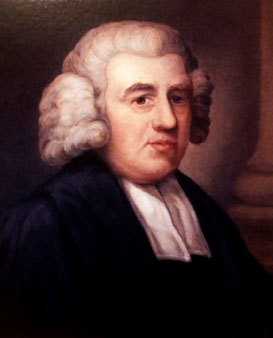
In "Five Letters to a Young Lady," John Newton addresses key theological themes centered on the experience of spiritual dryness, dependence on divine grace, and the importance of communion with God. He reflects on the believer's tendency to seek comfort in earthly relationships rather than in the Lord, warning against the danger of spiritual complacency and idolatry. Newton emphasizes how true spiritual strength comes from a continual reliance on Christ, as he illustrates through personal experiences and supportive biblical references, such as Isaiah 1:10 and Hebrews 12:2. The practical significance of Newton's letters is profoundly rooted in Reformed doctrine, particularly emphasizing grace's sufficiency, the need for humility, and the assurance of salvation for those who trust in Christ alone.
Key Quotes
“A few drops of grace in my fellow-worms endear them to me exceedingly.”
“The darkness of sin and sloth, not the occasional darkness of an exercised soul, is the real peril against which we must guard.”
“Remember your exalted privilege—you have the Bible in your hands and are not bound to follow books or preachers any farther than what they teach agrees with the Oracles of Truth.”
“The life of faith is to be continually waiting on Him, receiving from Him, rendering to Him, resting in Him, and acting for Him.”
What does the Bible say about God's grace and mercy?
The Bible teaches that God's grace and mercy are abundant, forgiving iniquity and providing salvation through faith in Christ.
Exodus 34:6-7, Romans 5:8, Ephesians 2:4-5
How do we know that salvation is by grace alone?
Salvation by grace alone is evident in passages such as Ephesians 2:8-9, which state that it is a gift from God, not a result of works.
Ephesians 2:8-9, Romans 3:23-24
Why is the doctrine of total depravity important for Christians?
Total depravity underscores humanity's complete inability to rescue themselves from sin, emphasizing the need for God's grace.
Romans 3:23, Romans 5:12, John 6:44
Letter 1
August, 1772.
My dear Miss,
The Lord brought us home in peace. My visit to **** was agreeable, and I shall often think of it with pleasure; though the deadness and dryness of my own spirit, a good part of the time I was there, proved a considerable abatement. I am eager enough to converse with the Lord's people—when at the same time I am backward and indisposed to communion with the Lord himself!
The two evils charged upon Israel of old—a proneness to forsake the fountain of living waters, and to trust to broken cisterns (which can do me no good unless he supplies them), run through the whole of my experience abroad and at home. A few drops of grace in my fellow-worms endear them to me exceedingly. If I expect to see any Christian friends, I count the hours until we meet. I promise myself great benefit—but if the Lord withdraws his influence—the best of them prove to me but clouds without water.
It was not, however, wholly so with me all the time I stayed with my friends—but I am slow in learning to depend upon the Lord alone. I have been at this lesson many a long year—but am so poor and dull a scholar, that I have not yet made any tolerable progress in it.
I received some instruction where I little expected it, at Mr. Cox's Museum. The efforts of his ingenuity amazed me—while at the same time I was struck with their insignificance. His fine things were curious beyond all I had any idea of; and yet what are they better than toys and amusements, suited to the taste of children! And notwithstanding the variety of their motions, they were all destitute of life. There is unspeakably more wisdom and skill in the mechanism of a butterfly or a bee which flies unnoticed in the fields—than in all his fancy apparatus put together! But the works of God are disregarded, while the feeble imitations of them which men can produce gain universal applause!
If you and I could make self-moving lions and elephants, what would it profit us? Blessed be God, that he has given us some glimpses of his wisdom and love! by which our hearts, more hard and lifeless by nature than the stones in the street—are constrained and enabled to move upwards, and to seek after the Lord. He has given us in his Word a greater treasure than all that we ever beheld with our eyes, and a hope which shall flourish when the earth and all its works shall be burnt up! What will all the fine things of men's devising be worth in that day?
I think the passage you refer to in Mr. **** justly exceptionable. His intention is good, and the mistake he would censure very dangerous—but he might have explained himself more clearly. I apprehend he and you do not mean the same thing by being in the dark. It is not an uncomfortable—but a careless frame, which he would censure. Those who walk in darkness and see no light, and yet are exhorted to stay themselves upon God, (Isaiah 1:10), are said to hearken to the voice of his servant. Though they cannot see the Lord, they are seeking and mourning after him, and waiting in the use of means, and warring against sin. Mr. **** had another set of people in view, who trust in the notions of Gospel truth, or some past convictions and comforts; though at present they give no evidence of spiritual desires—but are worldly in their spirit and conversation. They talk of trusting in the Lord; account it a weakness to doubt of their state, and think all is well, because they profess to believe the doctrines of grace. In a word, it is the darkness of sin and sloth, not the occasional darkness of an exercised soul, against which his observation is pointed. Or if, indeed, he meant more than this, we are not obliged to believe him.
Remember your exalted privilege—you have the Bible in your hands, and are not bound to follow books or preachers any farther than what they teach agrees with the Oracles of Truth. We have great reason to be thankful for the instructions and writings of spiritual men—but they are all fallible—even as ourselves. One is our master, even Christ—what he says, we are to receive implicitly—but we do not owe implicit subjection to the best of our fellow-creatures. The Bereans were commended because they would not implicitly believe even the Apostle Paul—but searched the Scriptures to see whether the things which he taught were true. May the Lord give us a spirit of humility and discernment in all things.
Letter 2
May 4, 1773.
My dear Miss,
Methinks it is high time to ask you how you do, to thank you for your last letter, and to let you know, that though necessity makes me slack in writing—yet I can and do often think of you. My silence has been sometimes owing to lack of spare time; and sometimes when I could have found leisure, my harp has been out of tune, and I had no heart to write. Perhaps you are ready to infer, by my sitting down to write at last, that my harp is now well tuned, and I have something extraordinary to offer—beware of thinking so, lest you should be sadly disappointed. Should I make myself the subject, I could give you at present but a mournful ditty.
I suppose you have heard I have been ill—through mercy, I am now well. But indeed I must farther tell you, that when I was sick—I was well! And since the Lord has removed my illness—I have been much worse. My illness was far from violent in itself, and was greatly sweetened by a calm submissive frame the Lord gave me under it. My heart seemed more alive to him then than it has done since my cough, fever, and deafness have been removed.
Shall I tell you another bit of a riddle? That, notwithstanding the many spiritual fluctuations which I pass through—I am always the same! This is the very truth: "In me, that is, in my flesh—dwells no good thing!"
So that if sometimes my spirit is in a measure humble, lively and holy—it is not that I have grown better than I was—but the Lord is pleased to put forth His gracious power in my weakness!
And when my heart is dry and stupid, when I can find no pleasure in waiting upon God—it is not because I am worse than I was before—but only because the Lord sees it best that I should feel—what a poor creature I am.
My heart was once like a dungeon, beyond the reach of the sun, and always dark. Yet the Lord by His grace has been pleased to make this dungeon into a room, by putting windows in it. But I need not tell you, that though windows will transmit the light into a room, they cannot supply the lack of light. When the day is gone—the windows are of little use. When the day returns, the room is enlightened by them again. Thus, unless the Lord shines, I cannot retain today—the light I had yesterday! And though His presence makes a delightful difference, I have no more to boast of in myself at one time than another. When He is with me—all goes on pleasantly. When He withdraws—I find I can do nothing without Him.
I need not wonder that I find it so; for it must be so of course, if I am what I confess myself to be—a poor, helpless, sinful creature in myself. Nor need I be over-much discouraged, since the Lord has promised to help those who can do nothing without Him—and not those who can make a tolerable shift to help themselves.
In His great mercy, He does not so totally withdraw, as to leave me without any power or will to cry for His return. I hope He maintains in me at all times—a desire for His presence. Yet it befits me to wait for Him with patience, and to live upon His faithfulness, when I can feel nothing but evil in myself.
In your letter, after having complained of your inability, you say you converse with many who find it otherwise, who can go whenever they will to the Father of mercies with a child-like confidence, and never return without an answer—an answer of peace. If they only mean that they are favored with an established faith, and can see that the Lord is always the same, and that their right to the blessings of the covenant is not at all affected by their unworthiness, I wish you and I had more experience of the same privilege. In general, the Lord helps me to aim at it—though I find it sometimes difficult to hold fast my confidence. But if they speak absolutely with respect to their spiritual frames, that they not only have something to support them under their changes—but meet with no changes that require such support—I must say it is well that they do not live here; if they did, they would not know how to pity us, and we would not know how to understand them!
We have an enemy here—that fights against our peace, and I know not one among us but often groans under the warfare. I advise you not to be troubled by what you hear of other folk's experience—but keep close to the written Word, where you will meet with much to encourage you, though you often feel yourself weary and heavy-laden. For my own part, I like that path best which is well beaten by the footsteps of the flock, though it is not always pleasant and strewed with flowers. In our way we find some hills, from whence we can cheerfully look about us—but we meet with deep valleys likewise, and seldom travel long upon even ground.
Letter 3
1775.
My dear Miss,
I am satisfied with your answer to my question. we are not proper judges of each other's circumstances; and I am in some measure weaned from judging hastily—that what would not be good for me—must therefore necessarily be wrong for another. However, my solicitude for your welfare made me venture to drop a hint, as I was persuaded you would take it in good part. Indeed all situations and circumstances (supposing them not sinful in themselves, and that we are lawfully placed in them) are nearly alike.
How often, when I am what I call alone—may my mind be compared to a puppet-show, a fair, a bazaar, or any of those scenes where folly, noise and wickedness most abound? On the contrary, sometimes I have enjoyed sweet recollection and composure where I would have hardly expected it. But still, though the power be all of the Lord, (and we of ourselves can do nothing), it is both our duty and our wisdom to be attentive to the use of appointed means on the one hand, and, on the other, watchful against those things which we find by experience have a tendency to damp our fervor, or to dissipate our spirits.
A comfortable intimacy with a fellow-worm cannot be maintained without a certain discretion and caution, a studiousness in improving opportunities of pleasing, and in avoiding what is known to be offensive. For though love will make large allowances for involuntary mistakes, it cannot easily brook a deliberate slight. We act thus as it were by instinct towards those whom we dearly love, and to whom we feel ourselves greatly obliged. And happy are they who are most influenced by this sentiment in their walk before the Lord.
But, alas! here we are chargeable with such inconsistencies, as we would be greatly ashamed of in common life. It is well for us, that His thoughts and ways are above ours—and that He is infinite in mercy as well as in power! For surely, our dearest friends would have been weary of us, and have renounced us long ago—had we behaved towards them as we have too often done towards Him! Yet, being infinite in patience, He remains gracious to us—though we have too often trifled with Him! Surely we may well say with the prophet, "Who is a God like unto You—who pardons iniquity!" His tenderness and forbearance towards His own people (whose sins, being committed against His love and mercy, are more aggravated than others) is astonishing indeed! But, oh! may the times past suffice to have grieved Him; and may we be enabled from henceforth to serve Him with a single eye and a simple heart, to be faithful to every intimation of His will, and to make Him our All in all!
Mr. **** has been here, and I have been with him at **** since his return. We seem glad to be together when we can. When I am with him, I feel quite at home and at ease, and can tell him (so far as I dare tell a creature) all that is in my heart; a plain proof, that union of spirit depends no more upon an exact uniformity of sentiment, than on a uniformity of prayers. For in some points of doctrine we differ considerably—but I trust I agree with him in the views I have of the excellency, suitableness, and sufficiency of the Savior, and of his right to reign without a rival in the hearts of his redeemed people.
An experimental knowledge of Jesus, as the deliverer from sin and wrath, and the author of eternal life and salvation to all who are enabled to believe—is a sufficient ground for union of heart. In this point, all who are taught of God are of one mind. But an eager fighting for or against those points which are usually made the subjects of controversy, tends to nourish pride and evil tempers in ourselves, and to alienate our hearts from those we hope to spend an eternity with. In heaven we shall neither be Dissenters, Moravians, nor Methodists; neither Calvinists nor Arminians—but followers of the Lamb, and children of the kingdom. There we shall hear the voice of controversy no more.
We are still favored with health and many temporal blessings. My spiritual walk is not so smooth as my outward path. In public, I am mercifully supported; but in secret, I most sensibly feel my own vileness and weakness—and through all, the Lord is gracious.
Letter 4
January 10, 1775.
My dear Miss,
There is hardly anything in which the Lord permits me to meet with more disappointment, than in the advantage I am ready to promise myself from creature-converse. When I expect to meet any of my Christian friends, my thoughts usually travel much faster than my body. I anticipate the hour of meeting, and my imagination is warmed with expectation of what I shall say, and what I shall hear; and sometimes I have had seasons for which I ought to be more thankful than I am. It is pleasant indeed when the Lord favors us with a happy hour, and is pleased to cause our hearts to burn within us while we are speaking of his goodness. But often it is far otherwise with me, I carry with me a dissipation of spirit, and find that I can neither impart nor receive blessing. Something from within or from without crosses my schemes, and when I retire I seem to have gained nothing but a fresh conviction, that we can neither help nor be helped—unless the Lord himself is pleased to help us. With his presence in our hearts, we might be comfortable and happy if shut up in one of the cells of a prison—without it, the most select company, the most desirable opportunities, prove but clouds without water!
I have sometimes thought of asking you, whether you find that difference between being abroad and at home that I do? But I take it for granted that you do not; your connections and intimacies are, I believe, chiefly with those who are highly favored of the Lord, and if you can break through or be upon your guard against the inconveniences which attend frequent changes and much company—you must be very happy in them. But I believe, considering my weakness, the Lord has chosen wisely and well for me, in placing me in a state of retirement, and not putting it in my power, were it ever so much my inclination, to be often abroad. As I stir so seldom, I believe when I do—that it is not, upon the whole, to my disadvantage; for I meet with something more or less upon which my reflections afterwards may, by his blessing, be useful to me; though at the time my visits most frequently convince me how little wisdom or skill I have in improving time and opportunities.
But were I to live in London, I know not what might be the consequence. Indeed I need not puzzle myself about it, as my call does not lie there—but I pity and pray for those who do live there; and I admire such of them as, in those circumstances which appear so formidable to me, are enabled to walk simply, humbly, and closely with the Lord. They remind me of Daniel, unhurt in the midst of lions; or of the bush which Moses saw, surrounded with flames—yet not consumed, because the Lord was there. Some such I do know, and I hope you are one of the number.
This is certain—that if the light of God's countenance, and communion with him in love, afford the greatest happiness we are capable of—then whatever tends to indispose us for this pursuit, or to draw a veil between him and our souls—must be our great loss. If we walk with him, it must be in the path of duty, which lies plain before us when our eye is single; and we are waiting with attention upon his Word, Spirit, and providence. Now, wherever the path of duty leads—we are safe; and it often does lead and place us in such circumstances as no other consideration would make us choose. We were not designed to be mere recluses—but have all a part to act in life. Now, if I find myself in the midst of things disagreeable enough in themselves to the spiritual life—yet if, when the question occurs, What are you doing here? my heart can answer, I am here by the will of God; I believe it to be, all things considered, my duty to be here at this time, rather than elsewhere.
If, I say, I am tolerably satisfied of this, then I would not burden and grieve myself about what I cannot avoid or alter—but endeavor to take all such things up with cheerfulness, as a part of my daily cross; since I am called, not only to do the will of God—but to suffer it—but if I am doing my own will—rather than his, then I have reason to fear, lest I should meet with either a snare or a sting at every step! May the Lord Jesus be with you!
Letter 5
April 13, 1776.
Dear Madam,
I am of the last to present my congratulations to you and Mr. **** on your marriage—but I have not been unmindful of you. My heart has repeatedly wished you all that my pen can express, that the new relation in which the providence of God has placed you may be blessed to you in every respect, may afford you much temporal comfort, promote your spiritual progress, and enlarge your sphere of usefulness in the world and in the church.
By this time I suppose visits and ceremonies are pretty well over, and you are beginning to be settled in your new situation. What an important period is a wedding-day! What an entire change of circumstances does it produce! What an influence it has upon every day of future life! How many cares, inquietudes, and trials, does it expose us to, which we might otherwise have avoided! But those who love the Lord, and are guided by his Word and providence, have nothing to fear; for in every state, relation, and circumstance in life—he will be with them, and will surely do them good. His grace, which is needful in a single life—is sufficient for a married, life. I sincerely wish you and your husband much happiness together; that you may be mutually helpers, and assist each other in walking as fellow-heirs of the hope of eternal life. Your cares and trials I know must be increased; may your comforts be increased proportionally! They will be so, if you are enabled heartily and simply to entreat the Lord to keep your heart fixed near to himself.
All the temporal blessings which God provides to sweeten life, and make our passage through this wilderness more agreeable, will fail and disappoint us, and produce us more thorns than roses—unless we can keep sight of his hand in bestowing them, and hold and use the gifts in some due subserviency to what we owe to the Giver. But, alas! we are poor creatures, prone to wander, prone to admire our gourds, cleave to our cisterns, and think of building tabernacles, and taking our rest in this polluted world! Hence the Lord often sees it necessary, in mercy to his children, to embitter their sweets, to break their cisterns, send a worm into their gourds, and draw a dark cloud over their pleasing prospects. His Word tells us, that all here below is vanity, compared with the light of his countenance; and if we cannot or will not believe it upon the authority of his Word, we must learn it by painful experience.
May he enable you to settle it in your hearts, that creature-comforts are precarious, insufficient, and ensnaring; that all good comes from his hand, and that nothing can do us good—but so far as he is pleased to make it the instrument of communicating, as a stream, that goodness which is in him as a fountain. Even the bread which we eat, without the influence of his blessing, would no more support us than a stone! But his blessing makes everything good, gives a tenfold value to our comforts, and greatly diminishes the weight of every cross.
The ring upon your finger is of some value as gold—but this is not much. What makes it chiefly valuable to you is, that you consider it as a pledge and token of the relation you bear to him who gave it to you. I know no fitter emblem of the light in which we should consider all those good things which the Lord gives us richly to enjoy. When everything we receive from him is received and prized as a fruit and pledge of his covenant-love; then his bounties, instead of being set up as rivals, and idols to draw our hearts from him—awaken us to fresh exercises of gratitude, and furnish us with fresh motives of cheerful obedience every hour.
Time is short, and we live in a dark and cloudy day, when iniquity abounds, the love of many waxes cold; and we have reason to fear the Lord's hand is lifted up in displeasure at our provocations. May he help us to set loose all below, and to be found watching unto prayer—for grace to keep our garments undefiled, and to be faithful witnesses for him in our places! O! it is my desire for myself and for all my dear friends, that while too many seem content with mere profession, a mere name to live, and an outward attachment to ordinances and sentiments and parties—we may be ambitious to experience what the glorious Gospel is capable of effecting, both as to sanctification and consolation, in this state of infirmity; that we may have our loins girded up, our lamps burning, and, by our simplicity and spirituality, constrain those who know us—to acknowledge that we have been with Jesus, have sat at his feet, and drank of his spirit!
Letter 1
To Miss M****.
September 10, 1760
Dear Madam,
I address my letter to you, but consider myself as writing to the whole of the little society I had the pleasure of meeting at your house, and at Miss K****'s. I still reflect with pleasure on the opportunities I was favored with among you; and if, as I hope, my little visits were not unacceptable to each or any of you, let us not lose a moment in apologies or compliments to each other, but refer the whole praise where it is wholly due.
Salvation, in its whole extent, and in each particular step, is of the Lord. Though we can but lisp a little word about his goodness—yet when he is pleased to be near us, his presence and blessing can work by the smallest instruments, and cause our hearts to burn within us. On the other hand, when he withdraws, we can no more help each other than we can help ourselves: then, the very best of us prove miserable comforters, fruitless teachers, and blind guides! Could I bring my heart to this point, to regard myself as insufficient to think one good thought, or to speak one profitable word, any further than is influenced by that enlivening Spirit which Jesus is exalted on high to bestow, I would be well; but, alas! I am often hurt by a fond desire of being or doing something considerable, and this, so often as it prevails, like a sudden fatal blast, spoils my fairest blooming prospects of comfort and usefulness.
It is a great point to be constant and diligent in the use of all appointed means, and yet to have our souls waiting only upon God, in a deep persuasion that neither the best means, nor the closest attendance upon them, can do anything for us in themselves; and that nothing short of renewed communications from him, can either satisfy or sanctify our hearts!
The best advice I can send, or the best wish I call form for you, is, that you may have an abiding and experimental sense of those words of the apostle, "LOOKING UNTO JESUS!" The duty, the privilege, the safety, the unspeakable happiness, of a believer, are all comprised in that one sentence!
Let us first pray that the eyes of our understanding may be opened and strengthened; and then let us fix our whole gaze upon Him! But how are we to behold Him? I answer, in the looking-glass of his written Word! There He is represented to us in a variety of views. The wicked world can see no loveliness in the portraiture He has given of Himself; yet, blessed be God, there are those who can "behold His glory as the glory of the only begotten Son of God, full of grace and truth!" And while they behold it, they find themselves, changed into His image," by the transforming influence of His Spirit.
In vain we use reasonings, and arguments, and resolutions, to beat down our corruptions, and to silence our fears. A believing view of Jesus is the only effectual means!
When heavy trials in life are appointed us, and we are called to give up, or perhaps to pluck out, a right eye—it is an easy matter for another to say, "Be comforted;" but this is totally useless. Only a believing view of Jesus will sustain us! When we can fix our thoughts upon Him, as submitting, for our sakes, to drink our whole bitter cup of the wrath of God to the very dregs; and when we further consider, that He who thus suffered in our nature, who knows and sympathizes with all our weakness, is now the Supreme Disposer of all that concerns us, that He numbers the very hairs of our heads, appoints every trial we meet with in number, weight, and measure, and will allow nothing to befall us but what shall contribute to our real good—this view, I say, is a medicine suited to every disease, and powerfully reconciles us unto every affliction.
So when a sense of sin prevails, and the tempter is permitted to assault us with dark and dreadful suggestions, it is easy for us to say, "Do not be afraid;" but those who have tried, well know that looking to Jesus is the only and sure remedy in this case—if we can get a sight of him by faith, as he once hung between the two thieves, and as he now pleads within the veil, then we can defy sin and Satan, and give our challenge in the apostle's words, "Who is he who condemns? It is Christ who died, yes, rather, who is risen again; who also makes intercession for us!" (Romans 8:34.)
Again, we are afraid of being swallowed up by our many restless enemies; or are weary of our long pilgrimage through such a thorny, tedious, barren wilderness. A sight of Jesus, as Stephen saw him, crowned with glory—yet noticing all the sufferings of his poor servants, and just ready to receive them to himself, and make them partakers of his everlasting joy—this will raise the spirits, and restore strength; this will animate us to hold on, and to hold out! This will do it, and nothing but this can!
So, if obedience is the thing in question, looking unto Jesus is the object that melts the soul into love and gratitude, and those who greatly love, and are greatly obliged, find obedience easy. When Jesus is upon our thoughts, either in his humbled or his exalted state, either as bleeding on the cross, or as worshiped in our nature by all the host of heaven, then we can ask the apostle's question with a befitting disdain, "Shall we continue in sin that grace may abound? God forbid. What! Shall I sin against my Lord, my Love, my Friend, who once died for my sins, and now lives and reigns on my behalf; who supports, and leads, and guides, and feeds me every day? God forbid. No! rather I would wish for a thousand hands and eyes, and feet, and tongues, for ten thousand lives—that I might devote them all to His service: he should have all then; and surely he shall have all now! "Looking unto Jesus the author and finisher of our faith!" Hebrews 12:2
Alas, that in spite of myself, there still remains something that resists his will! But I long and pray for its destruction; and I see a day coming when my wish shall be accomplished, and I shall be wholly and forever the Lord's!
I am your affectionate servant.
Letter 2
To Miss M****.
November 2, 1761
My dear sister,
Your letter was welcome and comfortable. I praise the Lord on your behalf, and shall not cease to pray, that you may be filled with his will in all wisdom and spiritual understanding; that you may go on to adorn the doctrine of God our Savior in all things; and that a sense of his presence and power, who so loved us as to wash us from our sins in his own blood—may be your establishment, and strength, and comfort continually. You have reason, indeed, to praise him, and so have I. O what a wonder of grace, that he should say to those who were children of wrath, "Behold, I go to my Father—and to your Father; to my God—and to your God." "Henceforth I call you not servants—but friends," and as a proof of it, "Ask what you will—and it shall be done unto you." Here are words sufficient either to raise our souls up to heaven, or to bring heaven down into our souls, according to that glorious promise which to many is fulfilled even in our day. "Now the dwelling of God is with men, and he will live with them. They will be his people, and God himself will be with them and be their God. He will wipe every tear from their eyes. There will be no more death or mourning or crying or pain, for the old order of things has passed away." Revelation 21:3
Let us not be greatly discouraged at the many tribulations, difficulties, and disappointments which lie in the path which leads to glory. Our Lord has foretold us, that "in this world, you will have many trials and sorrows." Yet he has also made a suitable provision for every case we can meet with; and is himself always near to those that call upon him—as a sure refuge, an almighty strength, a never-failing, ever-present help in every time of trouble! "God is our refuge and strength, an ever-present help in times of trouble. Therefore we will not be afraid, though the earth trembles and the mountains topple into the depths of the seas!" Psalm 46:1-2
Seeing likewise that he himself was a man of sorrow, and acquainted with grief for our sakes. He drank the whole cup of unmixed wrath for us; shall we then refuse to taste of the cup of affliction at his appointment; especially when his wisdom and love prepare it for us, and proportions every circumstance to our strength; when he puts it into our hands, not in anger—but in tender mercy, to do us good, to bring us near to himself; and when he sweetens every bitter draught with those comforts which none but he can give? Let us rather say, None of these things move us, neither do we count anything on this side eternity dear, so that we may finish our course with joy, and run with patience the race which is set before us.
The time is short—and the world is passing away! All its troubles and all its vanities will soon be at an end! In a little while, "we shall see Him as He is!" Every veil will be taken away, every seeming frown will be removed from His face—and every tear wiped away from ours! We shall also be like Him! Even now, when we contemplate His glory as shining in the looking-glass of the Gospel—we feel ourselves, in some measure, transformed into His image! What a sudden, wonderful, and abiding change we shall then experience, when He shall shine directly, immediately, and eternally upon our souls, without one interposing cloud between! We likewise shall shine forth as the sun, in our Savior’s brightness! Then shall we sing with understanding those glorious songs, Isaiah 12:1-6, Isaiah 61:10, Revelation 5:9, and Revelation 7:10, without one jarring note, or one wandering thought forever.
"Because we have these promises, dear friends, let us cleanse ourselves from everything that can defile our body or spirit, perfecting holiness in the fear of the Lord!" "Let us lay aside every weight." "Let us not be slothful," but followers of that cloud of witnesses who in every age have set their word to the truth and power of God. They were once as we are now—they had their afflictions and their fears, their enemies and temptations; they were exercised with a wicked heart, and a wicked world; and I doubt not but many of them, in a fit of unbelief, have been ready to conclude, "I shall one day perish by the hand of Saul," but, at length, the "blood of Jesus, and the word of his testimony, made them more than conquerors, and now, their warfare is finished, they are before the throne of God and the Lamb, and shall go no more out." While we are sighing, they are singing; while we are fighting, they are triumphing; but their song, their triumph, their joy, will not be complete, until we are called up to join them. The Lord prepare us for, and hasten, the happy hour.
The strain of your present experience requires you, above all others, to be humble and watchful, and I trust you are so. However, it is our duty to exhort one another daily. One of the greatest contradictions in human nature, and the very strongest proof of our depravity, is, that the communication of extraordinary measures of divine comforts, which in their own nature have a direct tendency to humble—has, through our corruptions, sometimes a contrary effect; not in the present moment, indeed that is impossible—but afterward. Paul himself was liable to danger in this matter, see 2 Corinthians 12:7. You will do well, therefore, to entreat the Lord to give you a double guard on this side, to keep you in continual remembrance what you were by nature, and what you still are in yourselves. We are often forced to learn this hard lesson by bitter experience.
Again, be watchful—many eyes are upon you. Satan envies you. Oh! he hates to see any people, especially young people, walking very closely with God; so far as he is permitted, he will spread snares for your feet every hour! He desires to have you, "that he may sift you as wheat." Farther, the world observes you; many would rejoice at your halting; and a little slip in you, would give them more pleasure and advantage in opposing the truth, than a greater slip in some others who are content to plod on in the common way. Nay, it is well if there are not some even among yourselves, professors and members, who would be glad to see you brought down to a level with themselves—since they cannot persuade themselves to join and imitate you. These things you know without my telling you, and I do not mention them to discourage you. No, were every leaf upon the trees, and every blade of grass a sworn enemy to our souls, we are safe under the shadow of our great Rock: the blessing is his, and he will not withhold it; but the appointed means are our part, and it is our wisdom and happiness to be found waiting on him in the use of them.
Letter 3
To Miss M****
April 5, 1761
Dear madam,
I desire to praise God on your behalf, and frequently to remember you both at the throne of grace; I may say each of you, for I understand Miss S**** is now returned to Y—-, I consider her as a part of my correspondence. I hope the Lord is with her likewise, and that she can, by sweet experience, set her seal to that comfortable truth—that all things, both shall, and do, work together for the good of those that love God!
Things continue much with us as they were when I wrote last. For myself, I every day have proof that the Lord is gracious, merciful, and kind. I hope my experience in some measure corresponds with yours; I say, in some measure; for I think you rather describe what I would be—than what I am. Blessed be his name for a taste, though it be but a taste, of the water of life! I long for fuller draughts, and I trust he has given me that hungering and thirsting after his righteousness, which shall at length be satisfied, and which cannot be satisfied with anything short of his love! Often I cry out, "Oh! remember me with the favor you bear to your own people." I know there are heights and depths in communion with God, to which many of his dear children are admitted, which are far beyond my present attainments. But this rather encourages me than otherwise; for they (even the very best of them) were once as poor as myself; and have nothing now any more than I, that they can call their own. And he who has done so much for them, is rich enough to do as much for me! The fountain of grace, though ever-flowing, is ever full. And as the sun shines as easily and powerfully on ten thousand, as upon a single person—so the Sun of Righteousness can enlighten and comfort all his children with one single glance of his love. I desire to praise his name for what he has already shown me, and to hope in His mercy that I shall yet "see greater things than these."
As I have nothing particular to impart of my own, I shall transcribe part of a letter I lately received from a young woman, a relation of mine, in London. She is not a member of a congregational church—but a hearer of Mr. Jones. She used to make herself merry at my expense—for being what she called a Methodist. After the Lord awakened her, she walked three years in the valley of the shadow of death, almost without a glimpse of hope. How it is with her now, I shall give you in her own words. She writes thus, among other things, for I have not time to give you the whole:
"All the glory to himself who is worthy! I find the Lord better to me than all my hopes, and all my fears. Though I am often beset with temptations of various kinds, from without as well as from within—yet my gracious Lord gives me to wrestle with him until he gets the better for me, for it is not in me. I know, and blessed be the Lord for teaching me—that I am but a poor, weak, helpless creature—but he strengthens me, and blesses me, and gives me to rejoice in him almost all the day long. Though I have not always love, and joy, and peace alike—yet I have not let him go since I wrote to you last. I can hold him fast, and I pray, and hope, and trust I ever shall. I believe 'my Beloved is mine—and I am his.' From what I have found already, I dare not doubt his love or his power; though, to my shame be it spoken, I too often wander from my God, if not in word or deed—yet, alas, my heart too often betrays me! I find the Lord to be a jealous God, who will not accept of a divided heart; and, indeed, if I know anything of myself, it is the whole desire of my soul to give up all and everything, myself, my soul, my body, my health, my strength, my friends, my all—as a willing sacrifice into his hand. I bless my God for such a disposition, and often find the sweetness of it; and I always find that the more watchful I walk, the more comfortable I am."
She then adds: "I believe it is a month since I wrote the above; and thanks and praises to my dear Lord, I have had much of his presence and love in my heart ever since. I find that stupidity and deadness which I have had much of in times past, greatly removed. The Lord has kept my soul so open to prayer, that I can pray and praise all the day long. I never find anything keeps me so low at the throne of grace, as a sense and feeling of the loving-kindness of the Lord to my soul: it makes me nothing, it so empties me of self. It is not a sense of sin without the love of God, -which will humble me; I think that only makes me peevish and dissatisfied. But when the Lord lifts up the light of his countenance upon me, then it is that everything in me falls low at his foot stool. I have found such power lately as I never had before; I used to be as ready to yield to temptation—as the devil was to tempt! But now (all the glory be to him who gives me this power) I find that word to be faithful and true, 'Resist the devil—and he will flee from you.' When temptation besets me, instead of reasoning with the enemy until I lose all the Lord has given me, I flee to Christ, and tell him how it is with me, and cry mightily to him—until he makes me more than conqueror."
I hope this little extract from my cousin's letter will be acceptable. I have several from her in the same strain, for she is not now in what is called the warmth of her first love—but has been walking comfortably in the Lord's way three or four years past; I think, indeed, every letter reveals a growth upwards in knowledge and love—and downwards in humility! May the Lord enable us so to do.
Letter 4
To Miss K****.
June 1, 1761
Dear Miss K.,
I frequently reflect with pleasure on our little interviews the last year. I trust the Lord was with us in truth. Surely my heart burned within me, and I have, and shall have, much reason to bless the Lord for those sweet and unexpected opportunities. The remembrance of them has exceedingly engaged my heart to you both. I think a sight of the very ground we walked over together, would bring to my mind much of what occurred in our conversation. May the same gracious Lord enable me so to write, and you to read—that we may experience a fellowship in spirit, and may drink plentifully of the refreshing streams of His love and grace.
It gives me much pleasure to hear that the Lord leads you into the green pastures of his love, so that you are constrained to cry out, "How great is his goodness! How great is his beauty!" May he show you yet greater things than these, and make your soul fresh and flourishing as a tree planted by a continual stream. Then am I sure you will love, and serve, and praise him; you will not be ashamed of his name and cause; you will not be backward to speak for him; you will not find fault with any of His dispensations. In a word, then your life and conversation will be a proof of your heavenly calling, and all who behold you will be constrained to acknowledge that you have been with Jesus indeed!
This is the way, and there is no other, to glorify him in the world. We know, from experience, how little reading, and hearing and resolving—can do for us, when the Lord is absent, and our hearts in a hard and stupid frame. Alas! how can we render to God—unless we first receive from him? But, oh, when His spirit and power is with us, what a delightful surprising charge! then, old things become new, hard things easy; and out of weakness—we are made strong! Then our enemies attempt in vain to bind and ensnare us; he enables us to run through their troops, to leap over their walls, to esteem their darts and swords as straw, and to go forth in his strength conquering and to conquer. I hope my letter will find you in this experience, with your bow abiding in force, and your enemies under your feet, and may it long continue. This is a privileged, glorious slate indeed; but it calls for much watchfulness and prayer. The Lord expects a particular closeness and obedience from those whom he thus delights to honor, and Satan watches with envy and rage to find an opening by which to assault such a soul.
I hope you will remember, that all your comfort and prosperity depends upon keeping near to him who is the sun, the shield, the life of his poor children, and that neither experiences, knowledge, nor attainments, can support us, or maintain themselves, without a continual supply from the fountain. This supply is to be kept up by constant prayer, and prayer will languish without continual watchfulness. I trust you will bear me to put you in mind of these things, though you know them. We are yet in an enemy's country, and are directed to exhort one another daily, lest we be surprised by some stratagem and scheme of our bitter adversary, who has many thousand snares and instruments to employ against us, and well knows how to use them to the most advantage, and to avail himself of our weak side. Yet we need not fear him, if we take, and keep, and use, the whole armor of God, and remain under the shadow of that Rock which is higher than ourselves.
As to me, the Lord deals gently with me—my trials are few and not heavy; my experiences run in a kind of even thread; I have no great spiritual enlargements, and am seldom left to great darkness and temptations. I am often wandering away—but the Lord seeks me out, and brings me back from time to time, much sooner than I could expect. I am enabled, through grace, to keep myself from the evil of the world, so that I have not been left to bring a blot on my profession. But, alas! my heart is a filthy, defiled heart still. It is well that he alone knows what is within me—and how to bear with me. My comfort is comprised in this one sentence, "I know whom I have believed,"—I know that Jesus is mighty to save; I have seen myself lost in every view—but the hope of his mercy; I have fled to him for safety; I have been preserved by him thus far; and I believe he will keep that which I have committed to him even to the end. Blessing and honor, and glory and praise, be to his name, who has loved poor sinners, and washed them in his most precious blood! Amen.
For the rest, alas! alas! I am unfaithful and unprofitable to a degree you would hardly believe; yet, vile as I am, I taste of his goodness every day, and live in hope, that in his own time he will enable me to show forth his praise. I have been much exercised with respect to the ministry; my heart is led that way—but the Lord's hand keeps me in; I need much humbling; there is that in me which seeks great things, though I am, as I said, sadly unfaithful in small ones; therefore, for my pride, I am set aside for the present. I hope you will help me with your prayers; entreat the Lord to empty me of all creature-dependence, that I may live to him alone.
I am your unworthy servant.
Letter 5
To Miss M****.
May 25, 1762
My dear madam,
How can I begin better than with the apostle's words; "Blessed be the God and Father of our Lord Jesus Christ, the Father of mercies, and God of all consolation, who, according to His abundant mercy, has begotten us again to a lively hope, by the resurrection of Jesus Christ from the dead." What a fountain of life, and joy, and praise is here! that the God and Father of our Lord Jesus Christ should condescend to be our Father, our God; that he who is the source of all mercy and consolation, should direct the streams of his fullness to flow into our souls; that, when we were dead in sins, he should look upon us and bid us to live; that, when we were sunk into the depth of despair—he should send his Word and raise us to a lively hope; that he should give us such a bright prospect, and such a sweet foretaste of the exceeding riches of his glory. Oh! who can say which is the most wonderful part of this wonderful subject—that he should provide such a happiness for such hell-deserving wretches, and that he should commend His great and undeserved love to us in such a wonderful way, as to give his own and His only Son to be born, to be buffeted, to be crucified for us!
Alas! alas! for our stupidity, that we can write, or hear, or speak of these things, with so little feeling, affection, and fruitfulness. Oh! that the power of God would set my heart and pen at liberty while writing, and fill your hearts while reading—that we may rejoice with joy unspeakable and full of glory. Oh, this unbelief! Why can we not pierce through the veil of flesh and blood, and by faith behold the humble worship of heaven? What countless multitudes have gone before us in the path that leads to that kingdom! They were, in their time, followers of an unseen Savior, as we are now; but now they see him as he is, face to face, in all His glory, and in all his love; with them are joined the innumerable hosts of angels. Angels and saints, however distinguished, are joined in one happiness, and one employment. Even now, while I write, and while you read, they are praising the Lamb that was slain, and casting their crowns at his feet.
Perhaps this scene is not so far distant as we imagine. Where is heaven? Is it some millions of leagues from us—far beyond the sun and the fixed stars? What have immortal spirits to do with space and place? Who knows but a heaven-born soul, who is freed from the clog of this vile body, and filled with all the fullness of God, may pass as easily and quickly from one verge of the creation—to the other; just as easily as our thoughts can change and fly from east to west, from the past to the future? Perhaps, even now, we live in the midst of this glorious assembly.
Heaven is where our God and Savior displays himself; and do not you feel him near you, nearer than any of his visible works? Perhaps there is nothing but this thin partition of flesh and blood between us and those blessed spirits that are before the throne; if our eyes were open, we perhaps would see the mountains around us covered with chariots and horses of fire; if our ears were unstopped, we would hear the praises of our great Immanuel resounding in the air, as once the shepherds heard. What a comfortable meditation is this—to strengthen our weak faith in such a dark declining day as this, when sense would almost persuade us that we are left to serve God alone.
When we are wearied with looking on careless sinners, and backsliding professors, let us remember that we have invisible friends present in our assemblies, our conferences, and our closets; who watch over us, and, in ways which we cannot possibly conceive, are helpers of our joy, and witnesses of our conflicts. They are with us now—and we shall soon be with them. Ah! how little does the vain world think of the privileges and the company in which a believer lives! And, what is worse, how faintly do we think of these things ourselves! and this is the reason we are so full fears and complaints, so prone to distrust the Lord's methods of dealing with us, and so easily drawn aside to seek for something to rest upon in creatures like ourselves.
With respect to my own experience, I have little now to add to what I have formerly offered; at least, little variety—for, in one sense, every new day is filled up with new things: new mercies on the Lord's part—and new ingratitude on mine; new proofs of the power of sovereign pardoning grace—and new instances of the vileness of my nature; new hills of difficulty, new valleys of humiliation—and now and then (though, alas! very short and seldom) new glimpses of what I would be, and where I would be. The everlasting love of God; the unspeakable merits of Christ's righteousness; and the absolute freeness of the Gospel promises—these form the threefold cord by which my soul maintains a hold of that which is within the veil.
Sin, Satan, and unbelief, often attempt to make me let go and cast away my confidence—but as yet they have not prevailed; no thanks to me, who am weaker than water—but I am wonderfully kept by the mighty power of God, who is pleased to take my part, and therefore I trust in him that they never shall prevail against me. A vile sinner, indeed, I am; but, since God, who alone has a right to judge, is pleased to justify the believer in Jesus, who is there that shall dare to condemn? I bless the Lord for that comfortable portion of the Scripture, Zech. 3:1-5. When the Lord is pleased to pluck a brand out of the fire to save it from perishing, what power in heaven or earth shall presume or prevail to put it in again? No! He has done it, and who can reverse it? He has said it—and His Word shall stand. And I humbly believe, (Lord, help my unbelief,) that not one good thing shall fail of all that the Lord my God has, in his Word, spoken to me of.
Yet, alas! I must still charge myself with a great want of watchfulness and diligence; the enemy cannot destroy my foundation—but he spreads many nets for my feet, to weaken me, and to interrupt my peace; and, to my shame I must confess, he too often prevails. The Lord in great mercy preserves me from such sins as would openly dishonor my profession; and a mercy I desire to esteem it, for I can infer from my heart what my life would be, if I were left to myself. I hate sin; I long to be delivered from it—but it is still in me, and works in me. "Oh, wretched man that I am! who shall deliver me?" I bless God for Jesus Christ my Lord. To his grace I commend each of you.
Letter 6
To Miss M****.
September 18, 1762
Dear madam,
I rejoice to find that the Lord prospers his work in your hearts, and that you can say from experience, He is a faithful and good Shepherd. Oh! happy they who are in such a case, who know for themselves how good it is to draw near unto him, to sit down and rest under his refreshing shadow, and feast upon his pleasant fruits
Through grace I also continue waiting on him after my feeble measure; and I trust in his love, that through I sometimes faint, I shall not utterly tall; though I too often step aside, he will not suffer me to wander quite away
There is, indeed, an evil heart of unbelief that would lead me I know not where; but, oh, what a precious mercy to be walled in on every side by everlasting love and free grace! Do not your hearts rejoice in that word, "The eternal God is your refuge, and underneath are the everlasting arms?" And if He is pleased and engaged to uphold us, what power or policy can force us from him? No; we may rejoice in it as a certain truth, let Satan and unbelief say what they will to the contrary, that the Lord's afflicted people on earth are as safe, though not so quiet, as his glorified people in heaven. They are embarked on a troubled sea, the tempests often roar around them, and the waves seem ready to swallow them up; but they have an anchor within the veil, sure and steadfast, which can neither be broken nor removed. They have a Pilot, a Guardian, whose wisdom and power are infinite, and who, of his own good pleasure, has engaged his truth and honor, that He will bring them safe through all, to the haven of eternal rest. Let us therefore trust, and not be afraid; let us rejoice, and say, "The Lord Jehovah is my strength and my song, and he also is become my salvation."
How happy should we be, could we always believe the glorious things which are spoken to us as children, in the Word of him who cannot fail of accomplishing his promise. But are we not fools and slow of heart in this matter? at. least, I am, and hence proceed my many complaints. Alas! what a hard heart have I, that can doubt, and repine, and limit the Lord, after all the great things he has shown me! Wretched heart, that can stand it out still, against oaths, and promises, and blood. Methinks I may sum up all my wants and prayers in one sentence—Lord, give me faith! Oh, if faith was in daily exercise, how little would the world, and the things of time and sense, seem in my eyes! What a dreadful thing would sin appear, that spilt my Savior’s blood! And how would my very heart rejoice at the sound of Jesus' name? If I had faith to pierce within the veil, and see what is going forward in yon blessed world, how earnestly should I long to be dissolved, that I might join in worship there; and how willingly should I spend and be spent for the Gospel's sake. However, though it is not with us as we would wish, we have reason to bless God it is so well with us as it is; that we are not altogether dead in trespasses and sins, strangers and enemies to the glorious Gospel of the blessed God. We have reason to be thankful that we know something of our disease and our Physician. He who has taken our case in hand will, in his own time, perfect the cure. An hour is coming on when we shall no more say, I am sick; we shall see him as he is; we shall be like him; we shall weep no more, all tears shall be wiped from our eyes, and the days of our mourning shall be ended
Having, therefore, such promises, let us be animated to run the way of the Lord's commandments with an enlarged heart. Let the joy of the Lord be our strength. Opposition, temptation, affliction, we must expect; these things lie in the path-way to glory; but we may remember him who has trod the path before us, leaving us an example that we should follow his steps. I say, tempted and opposed we may be; but it is not probable that we shall be spit upon, buffeted, and crucified for him, as he was for us.
We shall have but a taste, at the most, of that bitter cup which he drank off to the dregs. And he is near us to support us in our distresses, to carry us through, to make us more than conquerors, and then to put the crown of righteousness and victory on our heads with his own hands. Let us then go forth without the camp, bearing his reproach; let us not hang down our heads like bulrushes—but rather count it all joy if we are called to the honor of suffering disgrace, or any kind of inconvenience, for his name's sake. Above all, let us pray to have our conversation as befits the Gospel of Christ; that those who speak evil may be ashamed and put to silence, when they behold our meekness, humility, and Christian carriage
May the grace of our Lord Jesus Christ be with you all. Remember to pray for your unworthy friend.
Letter 7
To Miss M****.
March 22, 1763
My dear madam,
I gladly embrace the first opportunity that has offered of writing post-free since I was favored with your last letter. It gives me great pleasure to hear from you; and, if our correspondence is made mutually profitable and pleasant, I trust we shall join in giving all the praise to him who has taught us to lisp something of the gracious truths of his Gospel. He is pleased to hide these things from the wise and prudent, and to reveal them unto babes. We have, indeed, something whereof to glory—but not in ourselves; the right hand of the Lord has been exalted in our behalf; the right hand of the Lord has brought mighty things to pass. When we were utterly helpless and hopeless—he saw and pitied us, and bid us "live!" He did not cut us off in the midst of our sins, (as is the case of thousands,) but waited to be gracious; and, when His hour was come, his time of love, he revealed himself as our mighty Savior, he poured oil and wine into our wounds, he gave us beauty for ashes, the garments of praise for the spirit of heaviness; he opened our blind eyes, he unstopped our deaf ears, dispossessed the legion of demons, and brought us to sit at his feet clothed, and in our right minds. What a wonder of mercy is this, considered in itself!
But much more if we think of the means by which it was effected; that, in order to bring about this blessed change, that mercy and truth might meet together in our salvation, and the righteousness of God harmonize with the sinner's peace—the Lord Jesus, who was rich, humbled himself to become poor; to live an obscure and suffering life, in the form of a servant, and to die a shameful, painful, and accursed death—that we, through his poverty, might be made children and heirs of God; that we might receive grace to serve him here, and dwell with him in glory forever. For this end he willingly endured the cross, and despised the shame; he hid not his face from shame and spitting, he gave his back to the smiters, his cheeks to those who plucked off the hair, he submitted to wear a crown of thorns, to be nailed by the hands and feet to the accursed tree, to endure the fiercest assaults of Satan—yes, to drink the full cup of the wrath of God when "it pleased the Father to bruise him, and to make his soul an offering for sin!"
The apostle well knew the force of his argument to a believing soul, when he said, "I beseech you, therefore, brethren, by the mercies of God." Surely nothing can be more reasonable, than that we should live to him—who thus died for us. Shall we, we who are redeemed from hell at such a price—shall we continue in sin? God forbid! Shall we not rather say, "The love of Christ constrains us" to devote ourselves, our all, to him alone; to abstain from all appearance of evil; to hate every false way, and to know, study, desire, and love nothing but Jesus Christ and him crucified, that we may feel the power of His resurrection, have fellowship in his sufferings, and be made conformable to his death.
What you observe of the way in which the Lord makes his precious promises food to his children's faith, namely—by inclining their hearts to watchfulness and diligence in all his appointed means, and enabling them to walk unspotted from the vanities and pollutions of the world, waiting for the consolations and teaching of his Holy Spirit—is, I hope, the very sense of my soul. The promises were not given to slacken our endeavors—but to animate us to earnestness. An evangelical dependence on the Lord for righteousness and strength, and an evangelical obedience to his commands, are well suited to each other; they are, indeed, inseparable, and in equal proportion; where one declines, the other cannot flourish. Too many, as you say, are for separating what God has joined together. But let their mistakes humble and warn us, and show us the necessity of keeping close to the Lord. We must not presume; for our hearts are as deceitful as others. Yet we need not be terrified; for the Lord whom we serve is able to keep us from falling, and to preserve us from every evil.
We live in dangerous times—the work of the Lord is greatly on the revival in many places, and therefore errors and offences abound; for, where the good seed is plentifully sown, the enemy will always find means to sow his tares. But our Lord will keep his own children that wait upon him for strength and direction every day. He will give us to grow in grace, and in the knowledge of his truth; and, by the words of his lips, we shall be kept from the paths of the destroyer.
Let us further comfort ourselves with the prospect of a future time, when every evil and infirmity shall cease. You know who has said, "Surely, I come quickly." And do not our hearts echo to his words? Do not the Spirit and the Bride agree? Yes, "Amen. Even so come, Lord Jesus!" Come, and put an end to our fears and failings! Come, and deliver us from this scene of strife and confusion! We are weary of living in the tents of Mesech. We are weary of ourselves. Oh! we can hardly bear to pass day after day with such faint unworthy apprehensions of your beauty and your goodness. We are weary and ashamed of our holy things. So much coldness and wandering in prayer, in reading the Word, in your public ordinances, that we cannot but say, 'Oh, that I had wings like a dove—that I might fly far away from this vain ensnaring world!' When will this conflict cease? When shall all our tears be wiped away? When shall we see you as you are, and be formed into your complete resemblance? Well, the time is short, and passing fast away. Hold out, faith and patience, a little longer, and he who shall come—will come, and will not tarry. In the mean time, may we have grace to improve the present, as the only opportunity we can have of glorifying our Lord and Savior in a sinful world. When we get safely home, we shall not think we have done and suffered too much along the way.
Letter 8
To Miss M****.
June 11, 1763
Dear madam,
Since my return from Yorkshire, I have had but little leisure to recollect all I have seen, and heard, and been partaker in, for nearly these two months past. These occasional opportunities are now at an end for a season; and my principal fellowship must be with him who is always near. Oh! for grace to improve this high privilege aright; then I shall have no need to regret the defects or loss of creature-converse.
The Lord has led me to many pleasant streams; but I desire especially to rejoice in liberty to draw near to the fountain. Methinks my heart joins with the desire of those who said, "We would see Jesus!" When we come to heaven, without doubt we shall find great pleasure in communion with the "general assembly of the church of the first-born;" but the very heaven of all—will be to behold him who, for our sakes, was crowned with thorns, and nailed to the cross! All the rest would be but poor company—if he were absent. And thus proportionably I find it to be on earth. I delight in his people; but they can only profit me so far as I am enabled to see him in them, and to feel his presence in my own soul. My whole study and desire is comprised in this short sentence, "To walk with God,"—to set the Lord always before me; to hear his voice in every creature, in every dispensation, ordinance, and providence; to keep him in view as my Portion, Sun and Shield; my Strength, Advocate and Savior.
All my complaints may be summed up in this one—a proneness to wander from him. This is too frequently the case with me, I hardly know how or why. Through mercy, I am in a measure delivered from the love of this present evil world; the desire of my heart is towards God; I account his loving-kindness to be better than life, and esteem all his precepts concerning all things to be right, and just, and good. I do not even wish for a dispensation to admit any rival into my heart; he richly deserves it all, and I am willing and desirous to be his alone—and to be wholly conformed to him. Yet still I find the effects of a depraved nature; and, not withstanding all my struggles against inward and outward evil, I am too often carried away from the point of simple faith and dependence.
The lively experience of a Christian is not hard to be described; neither is it hard to say much about it. But, to feel what we say, to sit down under the shadow of the tree of life, to abide in Christ, to feed on him in my heart by faith with thanksgiving, this I find a rare attainment, easily lost, and not so soon regained. I know enough of it to make me desirous of more, and yet so little, that I have frequent cause to cry out, My leanness, my leanness! and to lie low in the dust before God. A remaining root of pride and self-righteousness often springs up and interrupts my peace. Indeed, as to the ground of my hopes and acceptance, I am mercifully kept from doubts and fears; I trust in him who has wrought out a perfect righteousness for my justification, and has stretched out an everlasting arm for my salvation. I see the honor of the divine attributes effectually secured, and that God is not only merciful and good—but faithful and just, in saving an unworthy believing sinner. But what I want, is not only to expect a heaven hereafter—but to experience a heaven begun below, to live up to the privileges of the Gospel, to have enlarged desires after holiness, and those desires abundantly answered. I want more of the influences of the Holy Spirit under His various characters, as the Teacher, Quickener, Comforter, and Sealer of the people of God. I want to know more clearly what the apostle desired for his friends, in those two comprehensive prayers, Ephesians 1:17-20, and Ephesians 3:16-19. How little do I understand of that height and depth, and breadth and length, he there speaks of! How faint are my ideas of the glorious hope of his calling, and the exceeding greatness of his mighty power! Well, blessed be God for the little I have; I trust it is a pledge of more; he has given me to hunger and thirst after righteousness, and he has said I shall be filled.
I remember the time when I was easy enough about these things; the language of my heart was, "Depart from me!" Yes, I resisted his Spirit, despised his mercy, and counted the blood of the covenant as an unholy thing. But, oh, he "was found by me—who sought him not!" He passed by me, and bid me "live!" He saved me in spite of myself; he would not give me up; be appeared in the hour of my distress, snatched the prey from the hand of the mighty, and delivered the lawful captive. And ever since, how good has he been to me! How gently has he led me! How often has he restored me when wandering, revived me when fainting, healed my breaches, supplied my needs, heard my prayers, and set up a seasonable standard against my enemies, when they have been coming in upon me like a flood! And even now he is with me, he is never weary of doing me good, and I believe he will be with me, even to the end, until at length he brings me home to his kingdom to be near him forever.
Hence, indeed, arises a great part of my grief—to think that I should be so cold, and barren, and unprofitable, under such amazing displays of undeserved love! O Lord, touch the rocky heart—and cause the waters to flow; soften and inflame my heart, that I may at length become your disciple indeed!
I trust you will continue to prize the means of grace, and to watch against every appearance of evil. Take heed lest either of you be hardened through the deceitfulness of sin. Beware of that worst of evils—spiritual pride. Pray earnestly for a deep sense of your own insufficiency. I did not thoroughly approve the question that was proposed concerning a power in ourselves, though I believe you understand it in a good sense; but let us beware of trusting in any other power than the power of Christ received continually by faith. I know carnal minds will abuse this principle, and so they will every other doctrine of the Gospel; but let it suffice us that he who knows us best has said, "Without me you can do nothing."
I am your affectionate and obliged servant.
Letter 9
To Miss M****.
January 3, 1764
Dear madam,
It is a time of trial among your friends here; nor have I wholly escaped. My dear wife has been confined in her chamber more than ten weeks; and we see no present prospect of her recovery. Her illness is a fever, attended with a illness in her head and stomach, which medicines seem insufficient to remove. Through mercy, her illness has not often risen to a very high degree; but, continuing so long, it has rendered her very weak and feeble.
I sympathize for my friends, and I feel for myself. But, blessed be God, I do not mourn as those who have no hope. I know it is not an enemy has done this. It is the Lord who has saved me out of all afflictions, he who gave me all my good things, he to whom I have surrendered myself and my all; he it is that has laid this trial on me for my good. I believe it to be necessary, because he is pleased to appoint it; and, though at present it is not joyous—but grievous, I trust that in the end he will cause it to yield the peaceable fruits of righteousness. I desire to submit to his will in all things; and though I feel the depravity of my nature too often—yet, upon the whole, he enables me to trust to him, and leave all in his hands. I pray that her health may be restored when he sees best—but especially that her sickness may be sanctified to both our souls. In this we hope and desire the concurrence of your prayers.
At such times as these, the unspeakable blessing of having a hope in God according to the Gospel, appears with double evidence. Faith in Jesus prepares us for every event. Though he puts forth his hand, and seems to threaten our dearest comforts—yet when we remember that it is his hand, when we consider that it is his design, his love, his wisdom and his power—we cannot refuse to trust him. The reluctance we feel is against our judgment; for we are sure that what he chooses for us must be best. Then again, to think how much less our sufferings are than our sins have deserved; how many mercies we still enjoy on every hand; how much heavier burdens are the portion of many around us; to compare the present momentary affliction with the exceeding weight of glory which shall be revealed; to recollect that the time is short, and the hour is swiftly approaching when the Lord shall wipe away all tears, and constrain us with wonder and joy to sing, "He has done all things well." Such considerations as these, together with the remembrance of what he suffered for us, are always at hand to compose our souls under troubles, and will be effectual according to the degree of faith.
Our faith also is strengthened by affliction; we learn more of our own insufficiency, and the vanity of all things about us; and we discover more of the power, faithfulness, and nearness of a prayer-hearing God. Upon this ground, Habakkuk could sit down and rejoice under the loss of all. He could look at the blasted fig-tree and the withered vine, see the herds and flocks cut off, and every creature-comfort fail; yet, says he, "I will rejoice in the Lord, and joy in the God of my salvation." Oh, the name of Jesus, when we can speak of him as ours—this is the balm for every wound, cordial for every care; it is as ointment poured forth, diffusing a fragrance through the whole soul, and driving away the hurtful fumes and fogs of distrust and discontent!
I am, affectionately yours.
Letter 10
To Miss M****
Dear madam,
I am afraid before this, you have charged me with neglect and unkindness. I confess I have delayed too long—but can truly say, my affection for you and all my dear friends at Y— remains unaltered and unabated. Let my various removals, and the necessary new engagements they have brought upon me, plead my excuse, especially as I have not been often faulty in this way; and I hope I shall not in future give you so just reason of complaint.
The Lord has at length brought me into the ministry according to my desire, and beyond my hopes placed me in a fruitful part of his vineyard, where his Gospel is known, loved, professed, and possessed by many. I have a large congregation, and a comfortable prospect of usefulness. This, I doubt not, will rejoice you, and stir you up to praise him on my behalf, and to pray for me—that I may devote my all to his service, and, in a deep sense of my own insufficiency, depend continually upon him for wisdom, strength, and grace to help in time of need. I can justly ask this of you, as I am sure you have a constant place in my heart, and a frequent remembrance in my prayers.
I long to know how you go on—I hope, comfortably. I hope you still find that the joy of the Lord is your strength, that his service is perfect freedom; that it is good to wait upon him, and that you daily enjoy His presence both in public and in private. Are you not often filled with admiration and love—at the thought of his distinguishing grace in calling you out of darkness into light? And when you are enabled by faith to view Jesus as dying for sin, and now pleading for sinners before the throne, are not your hearts melted into godly sorrow, and inflamed with a holy zeal to hate every false way, and to cleave to him with full purpose of heart? These are sure signs that you are walking in the good old way, that you are savingly interested in the blessings of the everlasting covenant, and you may be confidently assured, that he who has begun the good work in you—will perform the same unto the day of Christ Jesus.
We must expect to meet with many trials and troubles in our progress up the narrow path that leads to eternal life; but this one consideration outweighs them all—the Lord is on our side; and, if he is for us, none can be against us to harm us. In all these things we shall be more than conquerors, through him who has loved us. Afflictions, though not in themselves joyous—but grievous—yet when sanctified, are among our choice mercies! In due time they shall yield the peaceful fruits of righteousness; and even at present, they shall surely be attended with seasonable and sufficient supports.
One great desire of the believer, is to understand the great Word of God more and more; and one principal means by which we advance in this knowledge is, the improvement we are enabled to make of our daily trials. The promises are generally made to an afflicted state; and we could not taste their sweetness, nor experience their truth—if we were not sometimes brought into the circumstances to which they relate. It is said, "I will be with them in trouble;" but how could we know what a mercy is contained in these words, unless trouble was sometimes our lot? It is said to be the believer's privilege to glory in tribulation. But we never could know that this is possible, unless we had tribulation to glory in. However, this is matter of joy and glory indeed—to find peace and comfort within—when things are disagreeable and troublesome without. Then we are enabled to set to our seal that God is true; then we learn how happy it is to have a refuge which cannot be taken from us; a support which is able to bear all the weight we can lay upon it; a spring of joy which cannot be stopped up by any outward events.
A great part of the little we know of our God, his faithfulness, his compassion, his readiness to hear and to answer our prayers; his wisdom in delivering and providing when all our contrivances fail; and his goodness in overruling everything to our soul’s good; I say, much of what we know of these things—we learned in our trials, and have therefore reason to say, It was good for us to be afflicted!
And, as the Lord has brought us safely through thus far, we have good ground to trust him to the end. We know not what is before us. Perhaps we may meet greater difficulties along the way, than we have ever yet seen; but, if we keep in mind who delivered us from the lion and the bear, we may face the Philistine also without terror. God will be with us, and strengthen us with strength in our souls. Only it is our wisdom to keep close to him, that, when the evil day comes—we may have confidence before him in all our troubles. When afflictions overtake us in a careless frame, and find guilt upon the conscience, then they are doubly troublesome!
Letter 11
To Miss M****
July 20, 1768
My dear sister,
We agreed to exchange a letter once every three months—but we both began in the same week. I have been waiting ever since for yours; and perhaps our letters may cross upon the road again. If so, we shall be still puzzled; but, if you have not yet written, let me have an answer to this within one month, and then you may expect one from me about a quarter of a year afterwards. Indeed, some things I have lately engaged in, will oblige me to drop a great part of my correspondence; but I cannot prevail with myself to give up yours, because, both present and absent, the Lord has helped and comforted me by you; and so long as I can remember some precious seasons I have enjoyed at Y—-, so long will you have a special place in my heart. However, you must not expect two for one.
I wish you all could (the more the better,) come and see us at Olney. So I told you when I saw you; so I tell you again. I think you would like to spend a little time with us. Through mercy, we continue to go on very comfortably; our society has been enlarged by several additions; and all in general are in a thriving way. Soon after I returned from Yorkshire, I began to expound the Pilgrim's Progress in our meetings on Tuesday evenings; and, though we have been almost seven months traveling with the pilgrim, we have not yet left the house Beautiful; but I believe shall set off for the Valley of Humiliation in about three weeks. I find this book so full of matter, that I can seldom go through more than a page, or half a page at a time. I hope the attempt has been greatly blessed among us; and for myself, it has perhaps given me a deeper insight into John Bunyan's knowledge, judgment, and experience in the Christian life, than I would ever have had without it.
The Lord is pleased to supply me still in public service, and to continue my acceptance with his people. But with regard to what passes between him and my own soul, there is, for the most part, a very awful distance. I mourn under such a deadness and barrenness in secret duties, as I believe very few, who are in any measure alive, are exercised with. It puts me often to a stand, and affords the enemy a handle to present the most distressing doubts and fears as to my own state. I dare not plead in answer to his suggestions, that I must be right, because the Lord is pleased to assist and own me in the work of the ministry; because the apostle plainly supposes, a man may speak like an angel to others and be but sounding-brass himself; he may speak to good effect to them, and be himself a cast-away. But, though I dare not rest upon this plea, the Lord affords me a better; and has been pleased to give me such a view of the all-sufficient righteousness of Jesus, and the certainty of the promises in Him, that these doubts seldom pierce more than skin-deep; and, at the bottom of my dry, complaining frames—he is pleased to maintain a stable peace. I trust I am safe; but I am sure I am not comfortable.
I have everything to make me so that this world can afford; but I hope the whole of this world would not satisfy me without the light of his countenance, and a more cheerful ability to love, serve and praise him. For this I sigh, for this I pine. After all, he knows what is best for me, to humble the pride of my heart, and to maintain in me a spirit of dependence and self-abasement. Perhaps he sees I am not fit to be trusted with spiritual comforts, especially when my outward path is in all respects so very smooth. I hope his grace is in a measure with me, otherwise I would grow quite careless, or the evils I feel in my heart would break out to the observation of others; neither of which, I hope, is at present the case. To him, and not to me, be the praise; for, if He did not hold me up continually, I am sure I would soon woefully fall.
I rejoiced to hear it was well with you—yes, it is well; you have a good Shepherd who is able to keep you from falling, and to supply all your needs, to shield you from all dangers, to feed you with heavenly manna and living water; and, before long, you shall see his face without a veil, and shine like the sun in his kingdom forever. May I not address you with the angel's salutation, Hail, you who are highly favored; the Lord is with you; blessed are you among women. I need not tell you, that it befits you to be deeply humbled, you know it, and desire it. It befits you likewise to be highly thankful. Complain not of crosses along the way; who was ever spiritually-minded without them? These are among the evidences that you are children; and the Lord will make a rich amends for all. Then we shall weep—we shall sin no more!
Your truly affectionate brother and servant.
Letter 12
To Miss M****.
March 1, 1769
Dear madam,
I now write a little before the time appointed, lest some hindrance should again make you think me forgetful.
I was glad to find you were all living, as I had some apprehensions concerning Miss M****, and especially glad to find that you are all alive in the very best sense, even to God. We have need enough to mourn over our unfruitfulness; but let us remember that it is a special mercy of God—to be enabled to hold fast our profession. For we live in perilous times, when there are such dreadful falls of professors as might well shake and terrify us, if we were not, indeed, founded upon a rock. But the Lord knows those who are his, and he will keep them; yes, he teaches them to improve the miscarriages of others, as motives to stir them up to greater watchfulness, and to show them the necessity of crying daily to him, "Hold me up—and I shall be safe!"
I suppose you have heard the unhappy case of a man whom I loved as a friend, and honored as an eminent believer—how often have his letters made me ashamed! His dreadful fall has affected me more than anything of the kind I ever met with, since the Lord gave me acquaintance with his people. Oh, how great is the deceitfulness of the heart, of sin, and Satan! How should the apostle's words be laid to heart, "Let him who thinks he stands, take heed lest he fall? 1 Corinthians 10:12. However, as I said, those who feel their weakness, whose dependence upon Jesus is scriptural; such a dependence as makes them diligent in the use of appointed means, and desirous of being kept from the appearance of evil; these shall be preserved.
That is a gracious and supporting promise, (to those who feel they can do nothing for themselves, are jealous over their own hearts, and see the snares that are continually spread for their feet,) which the Lord makes to all his faithful people, "Since you have kept my command to endure patiently, I will also keep you from the hour of trial that is going to come upon the whole world to test those who live on the earth." Revelation 3:10. Alas! unless he keeps the city—the watchman wakes but in vain. But faith in His name and promise, gives us confidence and encouragement to aim at that watchfulness on our parts, to which his Word exhorts us. The Lord does not keep his people by teaching them so to rest in the promises of his care, as to sit down secure and careless in themselves. But he preserves them from falling away from him, and into sin—by putting his fear in their hearts, by making them sensible of their dangers, and drawing them to come boldly to his throne of grace, that they may obtain mercy, and find grace to help in every time of need. And when his Spirit bears witness with our spirits, that we are thus looking to him in the way of duty, weak and unworthy as we are, we may triumph in his salvation, and be firmly persuaded, that neither the world nor Satan shall be able to separate us from his love.
Great is the consolation provided for humble souls in what the Scripture declares concerning the power, grace, offices, faithfulness, and compassions of the Redeemer. These things are always equally true in themselves—but not always equally evident to us; for we cannot comfortably apply them—but in proportion as his Spirit is with us. It is therefore wisely and mercifully appointed, that if we grow slack and careless, our comforts and peace should decline, that we may perceive in time that we are getting out of the right path, and cry to the Lord to restore us again.
While those who are always alike, who can talk of assurance and perseverance while they are evidently indulging a trifling and careless spirit, and expect the promises will be accomplished in another way than that path of diligence, humiliation, and prayer which the Lord himself has marked out; these people, I say, always give cause to fear, that they know very little of what they are talking about.
My paper is almost full, and all that I have written is quite beside my first intention. But it may not be the worse for that; I love to give up my heart and pen, without study, when I am writing. The Lord knows the state of my friends, their present temptations, etc. and I look to him to give me a word in season.
Things with us are as usual. The great Shepherd is still pleased to guard our fold, so that the enemy has not yet been allowed to distract us with errors and divisions, nor has one turned back after having fully joined us. Our number increases every year, though not very fast. As to myself, I am much exercised with a deadness of spirit in secret, which makes me often groan. But, through grace, I can say, that, as I never saw more of my own vileness—so, I think, I never saw Jesus more precious and desirable, or was more clearly sensible of the vanity of everything without him, than I have of late. "None but Jesus!" is my motto. All wisdom, righteousness, holiness, and happiness, which does not spring from and center in him, I renounce.
May the Lord bless each of you with an abiding sense of his precious love, that your hearts may burn, and your lives shine!
Letter 13
To Miss M***B.
Dear madam,
I duly received your letter of the 15th of December, and am very willing still to include Mrs. H**** in our correspondence. I hope she finds in every change of life, that Jesus is still the same, gracious and precious to her soul; and my prayer is, that neither the comforts nor cares of a married state—may dampen the frame of her spirit towards him. The heart is deceitful, the world ensnaring, the enemy subtle and powerful; but we know who has said, "My grace is sufficient for you." He is able to keep us, not only safe as to the end—but also lively, faithful, and dependent along the way, in every circumstance and station to which his providence calls us.
I observe your last is written in a more complaining style than usual. Causes of complaint are, indeed, innumerable; but remember, "the joy of the Lord is your strength."
Do not be surprised that you still find the effects of indwelling sin—it must and will be so. The frame of our fallen nature is depraved throughout, and, like the leprous house, it must be entirely demolished, and raised anew. While we are in this world, we shall groan, being burdened. I wish you to long and breathe after greater measures of sanctification; but we are sometimes betrayed into a legal spirit, which will make us labor in the very fire to little purpose. If we find deadness and dryness stealing in upon us, our only relief is to look to Jesus—to His blood for pardon—to His grace for strength; we can do nothing of ourselves. To pore over our own evil hearts will not cure them; but He who was typified by the brazen serpent is ever present, lifted up to our view in the camp; and one believing sight of Him will do more to restore peace to the conscience, and life to our graces, than all our own lamentations and resolutions!
Farther, we must expect changes. Were we always the same—we would dream that we had some power or goodness inherent in ourselves; he will therefore sometimes withdraw, that we may learn our absolute dependence on him. When this is the case, it is our part humbly to continue seeking him in his own appointed means, and patiently to wait his promised return.
It is a point of great wisdom to know our gospel liberty, and yet not abuse it; to see that our hope stands sure and invariable, distant from all the changes we feel in our experience, that we are accepted, not because we are comfortable or lively—but because Jesus has loved us, and given himself for us; and yet, at the same time, to be longing and thirsting for the light of his countenance, and a renewed sense of his love upon our hearts.
Two things we should always guard and pray against; that the knowledge of our acceptance may not make us secure and careless; and likewise, that our endeavors after conformity to his revealed will, may not subject us to a spirit of bondage. The apostle, who well knew the nature of our warfare, exhorts us to "rejoice in the Lord always." He knew what conflicts we would meet with from afflictions, imperfections, temptations, and desertions; yet he says, always; which can only be practiced by those who see and keep in mind that they are complete in Christ; that he is all in all to them; their Righteousness, Wisdom and Strength; their Sun and Shield; their Friend and Representative before the throne; their Shepherd and their Husband. If I may speak my own experience, I find that to keep my eye simply upon Christ, as my peace, and my life, is by far the hardest part of my calling. Through mercy, he enables me to avoid what is wrong in the sight of men—but it seems easier to deny self in a thousand instances of outward conduct, than in its ceaseless endeavors to act as a principle of righteousness and power.
John Bunyan, in his advanced years, took notice of the abominations that had still too much place in his heart; one of them was, he says, a secret cleaving to the covenant of works. I am sure this is no small abomination in a believer; but, alas! it cleaves as close to me as my skin, and costs me many a sigh.
Letter 14
To Mrs. H****.
September 21, 1770
Dear Madam,
As the engagements you lately have entered into have not separated you from each other, I can, as formerly, write to you both at once. I would be glad to hear that the third in our correspondence was as comfortably settled in H——likewise. However, I beg you will mention my love to her when opportunity offers, and tell her, that I hope to be always mindful of her. Your being both removed from Y— must doubtless be a great trial to her; but I trust she will find an all-sufficient God always near to make good every change and every loss.
I congratulate Mrs. C**** on her marriage, and Mrs. H**** on the Lord's goodness in preserving her life, and giving her a living child; for the rest I may speak to you without distinction. The grace of God enabled you both to walk honorably in a single life; I trust the same grace will enable you to adorn your profession in the married state. I need not tell you, that both the sphere of your comforts and your trials is now enlarged. Your opportunities for usefulness will be increased; so likewise will the snares and temptations in the path of duty. I take it for granted that you are very happy, that you are united to your husbands, not only by marriage—but by mutual affection, and, what is better still, by mutual faith; and that, as you sought the Lord's direction before the marriage was formed, so you came together evidently by his blessing. What then shall I say to you? Only, or chiefly this—Beware of being too happy—beware of idolatry. Husbands, children, possessions, everything by which the Lord is pleased to afford us contentment or pleasure—are full of snares. How hard is it to love a creature just as we ought; and so to possess our temporal blessings—as neither to over value nor undervalue them! How rare is it to see a believer go on steadily, and in a lively, thriving spirit, if remarkably favored with prosperous circumstances! It is hard—but it is not impossible—impossible, indeed, it is to us; but it is easy to him who has said, "My grace is sufficient for you."
My desire is, that you may be both witnesses of the Lord's faithfulness to this his good promise. I wish you health, peace, and prosperity; but, above all, that your souls may prosper; that you may still prefer the light of God's countenance to your chief joy; that you may still delight yourselves in the Lord; be daily hungering and thirsting after him, and daily receiving from his fullness, even grace for grace; that you may rejoice in his all-sufficiency, may taste his love in every dispensation; that every blessing of his common providence may come to you as a fruit and token of his covenant-love; that the frame of your spirits may be heaven-ward, your conduct exemplary, and your whole conversation may breathe the meekness, simplicity, and spirituality, which befit the Gospel of Christ. I have strong confidence in the Lord for you, my dear friends, that it shall be even thus. And it will rejoice my heart to hear that it is so.
However the Lord may be pleased to indulge us with comforts and mercies here in this world, still this is not—and cannot be, our rest. Indwelling sin, the temptations of Satan, changing dispensations, and the vanity which is inseparably entwined with every earthly connection, will more or less disturb our peace. But there is a brighter world, where sin and sorrow can never enter; every moment brings us nearer to it! Then every imperfection shall cease, and our best desires shall be satisfied beyond our present conceptions—then we shall see him whom having not seen we love—we shall see him in all his glory, not as now—but face to face, without a veil. We shall so see him, so as to be completely transformed into his perfect image. Then likewise we shall see all his redeemed, and join with an innumerable multitude of all nations, people, and languages, in singing the triumphant song of Moses and the Lamb forever! Then we shall look back with wonder on all the way which the Lord led us through this wilderness, and shall say, "He has done all things well!" May this blessed hope comfort our hearts, strengthen, our hands, and make us account nothing dear or hard—so that we may finish our course with joy. Pray for us; and believe me to be.
Your affectionate friend and servant.
Letter 15
To Mrs. C****.
May 2, 1771
Dear madam,
I spent about five weeks at London lately, which has occasioned me to delay answering your letter something longer than usual. But I have not forgotten you. The change of your situation, will probably change the methods of Satan in his unwearied attempts to disturb the peace of those who love the Lord; for he knows how to suit himself to our circumstances, whatever they be. It may likewise draw forth the weakness of indwelling sin, in ways different from your former experience, and give you new views of the evil and deceitfulness of the heart. But, as I trust, you had an eye to the Word, Spirit, and Providence of God—when you entered into the marriage relation, and sought his blessing by repeated prayer—you need not fear but his grace will be sufficient for you.
The more the Lord blesses you in earthly things, the more sensible you will be (if your heart is kept alive) that true happiness is only to be found in himself; for sin and vanity are closely connected with everything beneath the skies! In this view I trust he will enable you to number your troubles among your mercies, as necessary to keep your soul from cleaving to the dust, and to quicken your prayers and desires heavenwards. Our necessary relationships in this life, especially those which are most pleasing, are attended with many snares. May the Lord keep you sensible of the danger, that you may be continually crying, "Hold me up—and then I shall be safe!" and be watchful against the first appearances of a decline in the power of the life of faith. I am, however, fully persuaded that a due attention to the concerns of our relative duties and callings in this world, can never be properly hindrances to us, of walking with God. These earthly things may require some of our thoughts, and much of our time; but if we can manage them in obedience to His will, and with a reference to his glory, they are then sanctified, and become pious actions. And I doubt not but a believer, acting in a right spirit, may be said to worship God in the shop or kitchen, no less than when waiting on him in prayer and Scripture meditation.
But he must teach us to do this, for we have no sufficiency of ourselves; yes, he must teach us and strengthen us continually, for we cannot live by past experience, without a new supply of grace from hour to hour—and this he has promised, see Isaiah 27:3. It is not the action, (if lawful,) but the spirit with which it is performed, which the Lord regards. We are naturally desirous to do some great thing; but all the law is fulfilled, evangelically, by love. A person called by providence to sweep the streets, if he does it to the Lord, performs as acceptable a service as another who should preach the Gospel to thousands!
As to cares and anxieties which are unnecessary, and therefore sinful, you will not be wholly without them while there is any unbelief and sin remaining in the heart. Your great mercy will be to be humbled for them, and to take occasion from all that you feel amiss, to adore the free grace of God, to rejoice in the perfect work, boundless compassion, and prevailing intercession of Jesus. He knows our frame, and remembers that we are but dust. And though many evils arise in our hearts which are new to us, they are not new to him. He knew what we were, and what we would be, before he called us; and yet it pleased him to make us his people!
I am sorry to hear that you have uneasiness and differences in your church—for, through mercy, I wish well to all the Lord's assemblies without respect to names and parties. I shall be glad to hear that the Healer of breaches is pleased to settle you comfortably again. In the mean time, I trust you will account it a privilege that you live in a place where the preaching of the Gospel is not confined to one denomination.
I bless God, we are still favored with peace here. May we prize it—it is that to the soul, or to a church, which health is to the body. There may be life—but there can be no comfort without it. While Satan can prevail to break a church's peace, there is usually a full stop put to edification. There may be preaching, and hearing, and praying; but everything will be weak and languid. For the Holy Spirit, whose emblem is the peaceful dove, will not dwell in the midst of strife and contention. It is an awful token that he is withdrawn already, when these evils are greatly prevalent. When ordinances are powerful, and both ministers and people taste that the Lord is gracious, things may arise, through human infirmity and Satan's subtlety, to threaten the continuance of peace; but then it will be as at the breaking out of a fire, where everyone exerts himself to extinguish it before it can get to a head. We have many combustibles in our hearts, and the enemy will throw sparks upon them to set all in a flame; but happy are those who so value peace, as to be willing to give up anything but truth to preserve it. We join in love to you both. Pray for us.
I am affectionately yours,
Letter 16
To Mrs. C****.
February 11, 1772
Dear madam,
I find by the date of your last letter, that I have not been so punctual to answering as formerly. Indeed, business of one kind or another so grows on my hands, that I am in arrears to many.
I hope the Lord, who has mercifully given you children, will enable you to bring them up in his fear, and accompany your endeavors with his blessing; and make them in due time partakers of his grace, that they may know and love the Lord God of their parents.
Your spiritual warfare, it seems, still continues; and it will continue while you remain here in this world. But he is faithful who has promised to make us more than conquerors in the last conflict—then we shall hear the voice of war no more forever. Whatever we suffer along the way—the end will make amends for all. The repeated experience we have of the deceitfulness of our own hearts, is a means which the Lord employs to make us willing debtors to his free grace, and teach us to live more entirely upon Jesus. He is our peace, our strength, our righteousness, our all in all. And we learn from day to day, that, though diligence and watchfulness in the use of appointed means is our part—yet we are preserved in life, not by our care—but his. We have a watchful Shepherd, who neither slumbers nor sleeps; his eyes are always upon his people; his arm underneath them; this is the reason that their enemies cannot prevail against them. We are conscious to ourselves of many unguarded moments, in which we might be surprised and ruined if we were left without his almighty defense. Yes, we often suffer loss by our folly; but he restores us when wandering; revives us when fainting; heals us when wounded; and, having obtained his help—we continue to this hour; and he will be our Guard and Guide even unto death. He has delivered, he does deliver; and in him we trust that he will yet deliver us.
We have had but few changes here, since my last letter; only that of late the Lord has been pleased to give His Word a more convincing power than for some time before. We have had several awakened within these few months, who appear to be truly in earnest. Upon the whole, though we have many causes of humiliation, I hope it is with us in some measure according to that pleasing description, Act. 9:31. Help us to praise the Lord for his goodness to us.
As to myself, there is little variation in my path. The law of sin in my members distresses me; but the Gospel yields relief. It is given me to rest in the finished salvation, and to rejoice in Christ Jesus as my all in all. My soul is athirst for nearer and fuller communion with him. Yet he is pleased to keep me short of those sweet consolations in my retired hours which I could desire. However, I cannot doubt, but he is with me, and is pleased to keep up in my heart some sense of the evil of sin, the beauty of holiness, my own weakness, and his glorious all-sufficiency. His I am, and him I desire to serve. I am, indeed, a poor servant; but he is a gracious Master. Oh! who is a God like unto Him—who forgives iniquity, and casts the sins of his people into the depths of the sea? I shall not always live at such a poor rate—the land to which we are going is far different than this wilderness through which he is now leading us. Then we shall see his face—and never, never sin!
If either of you or your's should come towards London, we shall be glad to see you; but, if not here, we hope to meet in glory. There is but little probability of my seeing you in Yorkshire. We may meet however at present, as I hope we do—at a throne of grace. I entreat a frequent remembrance in your prayers, both for me and mine. This is the best proof we can give of our love to our friends, to bear them upon our hearts before the Lord. Afford me this, and I will pay you in kind as the Lord shall enable me.
Yours in the best friendship.
Letter 17
To Mrs. C****.
June 5, 1776
My dear friends,
I might apologize for my long silence—but you set me the example; so let us exchange forgiveness. You are busy—and I can assure you I have but little leisure time. However, I can say with you, that my regard remains. I still remember with pleasure past times, in which we have taken sweet counsel together; and I look forward to the happy period of all interruptions, when I trust we stall meet to spend an everlasting Sabbath in praise to Him who has loved us, and washed us from our sins in his blood.
My wife and I are still, by the Lord's mercy, spared to each other. She joins me in love to you both, and to your husbands. We are not only spared—but highly favored with health, peace, and an abundance of temporal mercies. I am still supported, and in some measure owned, in the pleasing service of preaching the glorious Gospel to my fellow sinners; and I am still happy in an affectionate, united people, Many have been removed to the better world—but others have been added to us; so that I believe our numbers have been rather increased than diminished from year to year. But most of our old experienced believers have finished their course, and entered into their rest. Some such we had, who were highly exemplary and useful ornaments to their profession, and very helpful to the young of the flock. We miss them; but the Lord, who has the fullness of the Spirit, is, I hope, bringing others forward to supply their places.
We have to sing of abounding grace, and at the same time to mourn over the abounding of sin; for too many in this neighborhood have resisted convictions so long, that I am afraid the Lord has given them up to hardness of heart; they are either obstinately determined to hear no more, or sit quietly under the preaching, and seem to be sermon-proof. Yet I hope and pray for a day of power in favor of some who have hitherto heard in vain. Blessed be God, we are not without some seasons of refreshment, when a sense of his gracious presence makes the ordinances sweet and precious. Many miracles he has wrought among us in the twelve years I have been here. The blind see, the deaf hear, the lepers are cleansed, and the dead are raised to spiritual life. Pray for us, that his arm may be revealed in the midst of us.
As to myself, I have had much experience of the deceitfulness of my heart, much warfare on account of the remaining principle of indwelling sin. Without this experience I would not have known so much of the wisdom, power, grace, and compassion of Jesus. I have good reason to commend him to others, as a faithful Shepherd, an infallible Physician, an unchangeable Friend! I have found him such. Had he not been with me, and were he not mighty to forgive and deliver—long ago I would have been trodden down like mire in the streets. He has wonderfully preserved me in my outward walk, so that they who have watched for my halting have been disappointed. But he alone knows the innumerable backsliding, and the great perverseness of my heart. It is of his grace and mercy that I am what I am! Having obtained help from him, I continue to this day! And he enables me to believe that he will keep me to the end, and that then I shall be with him forever.
I hope your souls prosper, and that all the comforts, employments, cares, and trials of life—are sanctified by his blessing, to lead you to a more immediate dependence upon himself; that he enables you to glorify him in your families and connections, and conforms you to his image, in love, spirituality, meekness, and resignation. Many things must be attended to in their places; but, oh, the blessing of being taught to do and to bear all things for his sake! The life of faith is—to be continually waiting on him, receiving from him, rendering to him, resting in him, and acting for him. In every other view, the present state is but vanity and vexation of spirit. But, when the love of Jesus is the leading and constraining motive of our conduct—the necessary business of every day, in the house, the shop, or the field—is ennobled, and makes a part of our spiritual worship; while every dispensation of Providence, whether pleasant or painful to the flesh, is received and rested in as an intimation of his will, and an evidence of his love and care for us. Happy are they who do not stop short in names, forms, and notions—but are desirous of knowing what effects such a Gospel as we profess is capable of producing in the spirit and conduct of those to whom it comes, not in word only—but in the demonstration and power of the Holy Spirit.
I commend you and your's to the Lord. I shall always be glad to hear from you; and remain your affectionate friend and servant.
Letter 18
To Mrs. C****.
June 12, 1779
My dear friend,
Your last letter was long in coming; but I have deprived myself of all right of complaining, by the slowness of my answer. You plead lack of time; allow me to plead the same. During the first years of our correspondence you had no family, and I had few engagements compared to what I have had since. As we grow older, connections and businesses multiply, while, alas! for my part, my ability to attend to the many things which call upon me, seems rather to decline. My regard for you still exists, and I use you no worse than I am constrained to use many others whom I have long and dearly loved, and who have equal reason to say I am become a poor correspondent.
For three years past, my wife has experienced much ill health; and this alone has abridged me of many of those hours which I used to employ in writing to my friends. Of late she has been better upon the whole—but seldom comfortably well for many weeks together. But in the course of these trials we have had much experience of the Lord's goodness and compassion; and I have found him, and still find him, a prayer-hearing God, and a very present help in time of trouble. She joins with me in love to you both, to Mrs. H****, and my other friend at Y****, whose name used to stand with your's, and of whom I have heard nothing for a long time.
The life of leisure you once had, is now changed for the care of a family. It is an honorable and important charge. I hope the Lord continues to bless you in it; and that you have comfort in seeing your children grow up like olive plants about your table. May he give you wisdom and success in your attempts to bring them up for the Lord; that in due time you, and the children he has given you, may appear together at his right hand.
As to myself, though I have now entered the sixteenth year of my ministry here, and have almost finished the fifty-fourth of my life; my health and strength, through his blessing, continue firm; and through his mercy I feel myself no more weary in his service, or weary of it, than at first. I have comfort in the flock he has committed to my care; I have seen many of them depart in peace, and I rejoice to think they are safely housed out of the reach of storms. He has from time to time raised up others to supply their places, and in general they walk agreeably to the Gospel, in peace among themselves, and united in affection to me. I speak of the serious people chiefly. Multitudes in the town are mere hearers; and some will not hear at all. But all behave civil, and give me no other trouble than that which I ought to feel most sensibly, a concern for their precious souls, that, when the light of the Gospel shines around them, there should be so many who prefer darkness to light, because their deeds are evil.
Every year, and indeed every day—affords me new proofs of the evil and deceitfulness of my heart, and of my utter insufficiency to think even a good thought by myself! But I trust, in the course of various exercises, I have been taught more of the power, grace, and all-sufficiency of Jesus. I can commend him to others, not from hearsay—but from my own experience. His name is precious; his love is wonderful; his compassions are boundless. I trust I am enabled to choose him as my all, my Lord, my Strength, my Savior, my Portion. I long for more grace to love him better; for, alas! I have reason to number myself among the least of saints and the chief of sinners.
Letter 1
August 8, 1776
My dear friend,
I am very willing to meet you with a letter at York, though I have no particular advice to offer. It seems probable, as you say, that your expected interview with the G ___ , will afford you some further light into your future path. I am in no pain about the event. Man is a proud creature, and prone to please himself with the imagination of influence and power; but, in reality, he has none any further than as it is given him from above! The G ___ , or whoever else are displeased with you, have their commission, and limits assigned them, by one whom they little think of; and when they seem to think they can do most, they shall in effect do nothing but as instruments of his will. I trust the Lord will stand by you, put his love into your heart, and suitable words into your mouth, and overrule the minds of those with whom you have to do. And, if he has further service for you in that situation, you will find that his hook and bridle will hold them in, so that they shall not be able to hurt you!
As you know whom you have believed, and where to apply for strength suited to your day, according to his promise, I am so far from trembling for the event, that I congratulate you on the honorable opportunity that is before you of witnessing a good confession in such a presence, which I trust the Lord will own and bless you in. Fear them not! Remember Jesus stood before the high priest, Herod, and Pilate—for you. But how different are the cases!
You may perhaps meet with some expressions of dislike—but the laws of the land will protect you from the full effects of their resentment; and even the laws of politeness will, in some degree, restrain them. You are not going to be buffeted, stripped, and spit upon! Look at your regimentals, and let them remind you of Him who wore a scarlet robe for you, not as a mark of honorable service—but as a badge of infamy. You are a soldier; if you were appointed to march against a battery, though it is a service not agreeable to flesh and blood—yet a sense of honor, and what you owe to your king, your country, and yourself, would prompt you to reject any rising thought of fear, that might betray you to act a part unsuitable to your character, with disdain.
But, oh, how much stronger and more animating are the motives which should influence us as Christian soldiers! I trust you will fully feel their influence. There is but a veil of flesh and blood between you and that unseen world where Jesus reigns in all his glory! Perhaps you will be attended with such companies of the heavenly host as made themselves visible to the shepherds. How will they rejoice to see you fervent and faithful in your Master's cause! Nay, he himself will be there; and, though you cannot see him—he will be looking upon you, as he did on his servant Stephen.
Then think of the day when he, in his turn, will own and confess you before an assembled world. Yes, perhaps, upon the spot he may witness his approbation; and if you can hear him whispering in your heart, "Well done, good and faithful servant!" you will little regard what is said against you. As to consequences, leave them in his hand, they shall be all good and glorious to those who fear him. He may allow a cloud to appear—but he can blow it away in a moment; he may permit this or that source to be stopped up—but he can open twenty in the place of it. He can show you how little dependence there is to be placed on the friendship and favor of men—when once we are enabled to be active and hearty for him; but these failures shall only give occasion of showing you likewise, how all-sufficient he is in wisdom, love, and power—to give more and better than creatures can possibly deprive us of. Fear not, be strong—yes, I say unto you, be strong! The Lord Almighty is with you!
Letter 2
April 13, 1767
My dear sir,
I hope you find, while you attempt to water others—that you are watered and blessed in your own soul. May the Lord open your mouth, and strengthen your hands, and own your labors, if it is his pleasure to employ you in his public service. The fields are, indeed, white for harvest; and though I must govern myself by such views as the Lord is pleased to give me, when I look round and see the state of things, and the miserable darkness and carelessness of poor sinners, I am not sorry that there are those who can and do attempt those services which I cannot. When I see the heart humble, and simply devoted to the Lord, in whatever way Christ is preached, I can, yes and will, rejoice. Give me permission to suggest, that the enemy of souls will owe you a bitter grudge for your zeal; you will have many eyes upon you, and hearts against you; the work is great, and the heart deceitful. I doubt not but you are apprized of the need of watchfulness and prayer; yet you will not be angry with me for reminding you.
You will have two counter-streams to withstand, either of which is sufficient to knock us off our feet, unless the Lord upholds us; I mean, opposition and popularity. Opposition is troublesome, and in some respects perilous—as we are too prone to catch something of the same harsh spirit. But popularity is much more dangerous. Our friends are often eventually our worst enemies. It is not easy to find a preacher that has been honored with much popularity, who has not been, at some times, greatly hurt by it. It is apt to make us forget who, and what, and where we are; and if we are left to suppose ourselves people of importance—but for a single hour, it will surely prove to our loss, and may expose us to a wound that may leave a lasting scar, even though the Lord is pleased to heal it.
It behooves us, my dear sir, to keep up a clear distinction in our minds between gifts and grace. I can say, from experience, that it is possible to have a tolerable degree of liberty for outward service, so as to hold a congregation pretty fast by the ears, to make them weep, yes, and perhaps to weep with them—when the heart is far enough from a right disposition before the Lord. These things you know; I had them not in view when I began—but they occurred in writing, and I set them down as a humbling part of my experience. May the Lord enable us to walk humbly—and then we shall walk safely; to such he will give more grace. He will be their light, their strength, and their joy. May you ever find him so.
Letter 3
June 15, 1767
Dear sir,
You perhaps think me long in answering your acceptable and obliging favor—but I was willing to take a second thought concerning the point on which you desire my advice. I shall begin with this, and may the Lord help me to write as I ought.
I am fully satisfied with your views, and your abilities for the ministry, and would have greatly rejoiced to have seen you among our ranks, if the Lord had inclined you that way, and opened you a door in his providence at your first setting out. But I fear the thing is, humanly speaking, impracticable, after the steps you have taken. Considering your situation in life, and the public manner in which you have preached, I apprehend you have made yourself too obnoxious for any bishop to accept your application. But, as the Lord has all hearts in his bands, and can bring to pass things that are most unlikely, I ought to suppose the thing so far possible, as to admit the consideration of another particular, whether, if you could procure ordination, you could properly, and with integrity, accept of it, and enter as a minister of the Established Church, with a previous and fixed determination to use your liberty indifferently, of preaching in all places and circumstances as you do now. And, I must own, that if you are determined to pay no regard to those regulations which seem to me incumbent on ministers in the Establishment, I think you had better remain as you are.
If you are satisfied with your present call, you are now free to act as your conscience shall lead you—why then should you fetter yourself? For, more or less, you will find episcopal ordination a restraint. As to the positive engagements you would bring yourself under to the bishops, I think all is included in the term canonical obedience; to which you must bind yourself by oath. The measure of this obedience undoubtedly must be the canons; and the sense, in my judgment is, obedience to all their requirements, so far as the canons extend, and where conscience does not unavoidably interfere. Indeed, I am not sure that the canons do expressly prohibit a minister from preaching itinerantly, when he pleases; and therefore it may seem you are not bound by them. This, I think, is an excuse for those of my brethren, who, having been ordained before they considered or knew the nature of their function, and awakened afterwards, have been led insensibly, and by steps, to extend their labors far and wide.
But things are so well understood now on both sides, that for a man to apply for ordination with a design to act contrary to the general rule of parochial curate, carries the appearance of insincerity; and if the canons are silent, I believe the laws of the land give every minister such a right in his own parish, as not to allow any other person to preach in it without his consent, unless he claims, as a Dissenter, the benefit of the Act of Toleration. I apprehend all the church ministers who act notoriously itinerantly, are exposed to suffer inconveniences for it, if ever it shall please God to permit their superiors to put their power, by law, in force against them.
As to those who are already in this way, and who think it their duty to go on in defiance of all that might be done against them, I have nothing to say; I rejoice in their zeal and success, so far as they appear to act for the glory of God and the good of souls, and the Lord is pleased to honor them with usefulness; but I cannot so well approve of a person's entering into episcopal orders, with a view to disregard the established regulations of the church. In your case it seems not at all necessary, for you would not preach better, nor probably to greater numbers, if you were ordained; for your red coat and shoulder-knot will probably excite the curiosity of the people as much as my gown and cassock can do.
And then I have some reluctance to your giving up your chaplaincy in the army, and especially as you assured me that your influence, both with the officers and soldiers, is no way lessened by your preaching. The continual moves of your regiment will give you the opportunity of declaring the glad tidings in a great variety of places; your rank in the army will excite the attention of the people wherever you go; and how useful the Lord may make you among the soldiery, who can tell? So that supposing you are satisfied in yourself as to your present proceedings, you seem to have fairer and more extensive opportunities for usefulness than any of us, and none can charge you with inconsistency, or give you trouble for what you do.
I do not wonder that your family should wish you to take orders, because it would in some measure remove that odium which they suppose you are under by preaching in your present capacity. But I am persuaded this alone would not be a sufficient motive to you. Mr. H ___ 's judgment has a considerable weight with me; but, in the present case, I am constrained to differ from him, for the reasons I have suggested above. However, I trust that the Lord whom you serve, will be your best and infallible Counselor, and in time give you clear satisfaction as to what he would have you to do.
I am sorry to see myself so near to the bottom of my paper, before I have an opportunity to say something of that precious name, Jesus. Continue to look to him, my dear friend, and he will guide you with his eye, give you support for the present, and direction for the future. If he were upon earth, and you could get near him—would you not lay your difficulties before him? You have the same liberty and encouragement to do it now—as if you saw him with your eyes! I need not tell you this; you know it; yet though our judgments are fully convinced that he is as near, as kind, as attentive to our concerns, as ready to hear and as willing to assist as our own hearts can wish—it is not always easy to reduce these sentiments to practice. Unbelief, that injurious hindrance, interposes and starts a thousand anxious thoughts to hide him from us. If you find, through grace, that you are submissive, and only desirous to know his will, and continue waiting upon him, then fear not; he will not allow a soul that depends upon him to take a wrong step in a matter of such importance. And if you find that he has assisted and owned you in what you have done hitherto, I would not have you entertain an uneasy doubt that you have acted wrong.
Letter 4
July 14, 1767
Dear sir,
I thank you for your letter of the 3rd. I wish I could offer you advice worthy of the confidence you place in me. Your reasons for a settlement in the Church of England are weighty. I can only say, be much in prayer, and attend to the leading of Divine Providence, and I doubt not but he will make your path of duty clear; not perhaps all at once—but by degrees, and, though slowly—yet surely; so that after you have been exercised with uncertainties for a season, you shall find, that he is overruling all to bring about what he has already appointed for you!
As you seem to think that you may, upon cool reflection, be induced to see it the duty of a minister more peculiarly to attend to the oversight of a single flock, my principal objection to your applying for ordination among us, is so far lessened. And I trust, if you alter your sentiments on this point, it will be owing to reflection and real conviction, and not to a bias arising from the motives and views you mention in your letter. When a person has a growing doubt of his own judgment, he is apt to be influenced (perhaps too far) by the advice and example of those whom he esteems wiser and better than himself. It is no wonder, therefore, that if you attend only to the advice and example of those of our friends who are warm for itinerancy, when you consider their zeal, their motives, and their apparent success, you should think it matter of duty, not only to follow—but, if possible, to go beyond them. For my own part, the love and esteem I bear to many people in that line is so great, that I know not if I dared trust myself to be shut up long among them in a room, lest they should, as it were, compel me to break through all bounds, and totally forget the views I have had upon mature deliberation, and in my cooler hours.
But I find it best, when good men are divided, to hear what may be said on both sides. I imagine your connections have chiefly led you to consider the plausible appearances on the one side of the question. But I can assure you, there are (if I mistake not) some weighty considerations to be offered in behalf of a parish pastor. And, by way of balance to what has occurred to you against it, I could wish you had an opportunity of conversing with my friend Mr. T ___ , who, perhaps might be of use to settle your judgment and determination as to your future conduct. Though the difficulties in the way of your ordination are great, they are certainly not insuperable. They were very great against me—yet the Lord opened a way. Some concessions will perhaps be expected from you, with respect to what will be called the irregularity of your late proceedings; and therefore the strongest bars will be laid in the way by your honor and conscience, unless you should see that, all things considered, it is best for a clergyman generally to restrain his outreach efforts within the bounds allowed and prescribed by church law; for, I dare say, unless you see it so, you will not say so.
You may depend upon the news of your engagement, which you entrusted me with, being kept a profound secret. Though you have not mentioned the person—yet as you seem to speak as if she were not a stranger to me, I suppose I guess who she is; and if I guess right, I congratulate your choice; for it seems suitable in every respect. I have reason to be a friend to marriage; and I doubt not but if the Lord is pleased to give you a suitable partner, it will both add to your comfort, and strengthen your hands in his service. Commit yourself, therefore, to him; act so far as he affords you an opening; consult him step by step; follow his providence closely—but do not force it. We are prone to pursue things that appear desirable—with too much keenness; but in his leading there is usually a praying time and a waiting time. Yes, he often brings a seeming death upon our hopes and prospects, just when he is going to accomplish them, and thereby we more clearly see and more thankfully acknowledge his interposition.
The bearer of this letter is a simple, honest man; yet mature in the Lord's ways for the time of his standing. Like most of the flock, he has many exercises, both inward and outward. If you have time to speak with him, he will tell more at large how it is with us.
I rejoice that the Lord brought you honorably off from your challenge, and gave you victory without fighting. This shows his power over all hearts, and that he is a sure refuge and buckler to all who trust him. Oh, that we could trust him at all times, and pour out our hearts before him. When Moses was in any difficulty—he repaired to the tabernacle, and always found direction and support. This was his peculiar privilege, as the people could not come so near. But under the Gospel, all the Lord's people have the privilege of Moses, to come into his immediate presence, and tell him all their needs at all times. How happy should we be if we could fully improve this privilege, and bring everything, as fast as it happens, to the throne of grace. Surely he does not sit between the cherubim for any other purpose than to give us answers of grace and peace all the day long.
I am, dear sir, your affectionate servant and fellow-pilgrim.
Letter 5
September 28, 1776
My dear friend,
Your letter of the 31st of August, from York, gave much pleasure to me, and to your friends here. I rejoice that the Lord enabled you to stand up for his truth, and gave you the victory in the manner you relate. It is a proof that he is indeed on your side; and I think it is an intimation that you are in the right place. Indeed, I own I could never heartily wish to see you among our ranks; for I think you bid fair to be more extensively useful by keeping your chaplaincy in the army, and continuing to preach where the Lord opens you a door. As to considerations of a personal nature, I doubt not but you desire to hold them in subordination to the will of God and the calls of duty; and why might not what you hinted to me, take place while you are a chaplain? Of this you are the best judge; but in general, I know the Lord can and will order all things for the good of his children, and especially of those who are desirous to give themselves up, without reserve, to his service, and to cast all their care and concerns on him by faith and prayer.
I hope Mr. B ___ and you are mutually comfortable and profitable to each other. I understand that his heart is warm for the work, and perhaps your zeal and example have quickened his desires to what I sometimes hear called, an apostolic mission, and what others disapprove by the term itinerancy. For my own part, I wish well to all, both pastors and itinerants, who love and preach Jesus. But I remember a question something to the purpose, (and that he was a man of a warm zeal, and as little under the influence of worldly wisdom as any we hope to be in this day,) who somewhere asks, "Are all apostles?" If it should be allowed (which I should be unwilling to contradict) that in the case of some, perhaps in your case, there are some circumstances, which, taken in connection with the event of things, do evidently justify their acting in that way which some call irregular; it will not follow, therefore, that every young man who has a fair and peaceable right to expect ordination in the church, and a providential appointment to the pastorate of souls in a particular place, would do well to follow their steps.
It appears to me that a pastoral charge is a weighty thing, and that a minister who keeps much with his own people, watches over and warns them publicly, and from house to house; acquaints himself with their situations, tempers, and temptations, and thereby knows how to speak a word in season to them, and is on the spot to guard them against the first symptoms of a declension, or the first appearance of error; I say, such a one appears to me in a competent sphere of duty. But if he admits engagements manifestly inconsistent with such a close and sedulous attention, he may appear more important to himself, or in the eyes of the world—but will not, upon the whole, be so useful. There is that in us by nature, which may dispose us to be well pleased at aiming at great things; and though I trust that many who set out as if they expected to convert whole countries, act from nobler motives, even a gracious concern for the glory of God, and the good of souls—yet our own evil is so deeply and closely entwined with the good which the Lord puts into our hearts, that I believe many who earnestly desire to promote the gospel interest, do in some respects hurt it, by overlooking all regard to order, treating the most express and positive engagements as not worthy of notice, drawing a sort of warrant thereby for any person to undertake any service, who thinks himself qualified for it.
As to yourself, my dear sir, my whole heart goes with you in your endeavors to serve the Lord; what he has done for you, and by you, are satisfactory proofs to me of your call. But I write thus to beg you not to make your own case a precedent; but when you meet with young men of right views and promising talents, who seem properly qualified to serve God in the established church, if they are ready to catch your fire, I would wish you rather to assist them with a bridle than a spur; advise them to follow the leading, and wait the openings of Providence; to begin with small things; and not to think their time lost, if the Lord should give them at first such an easy service as may afford them leisure for a close study of the Word of God and of their hearts, that they may come to be solid, scriptural, experimental, and judicious preachers, be furnished with an acceptable variety, and prove, both to the church and the world, workmen who need not to be ashamed.
Some young men have been loose and raw preachers all their days, by thinking that a warm impression of a text of Scripture, and a compassionate feeling for the souls of sinners—are almost the only necessary requisites. When a young tree puts out blossoms in great abundance, the skillful gardener pulls many off, and, though he thereby lessens its fruitfulness for the present, he secures it for the future.
Letter 6
November 9, 1767
My dear friend,
I think we fully agree in our sentiments about preachers. The gifts, the views, the services of those who are sent and taught by the same Spirit—may be, and are in many respects, different. But if they are sent and taught by him, they will preach the same Jesus, they will equally confess their dependence on the Holy Spirit for their ability and success, and, more or less, he will own their ministrations, and give them living witnesses and seals that he has employed them in his work. Those who agree in these essentials, would do well to agree among themselves, and to wish each other prosperity in the name of the Lord.
When I see a competency of spiritual knowledge, and a humble frame of mind, I would not look further, nor inquire whether the instrument is a scholar or a gownsman, before I give him the right hand of fellowship. But I own, if people attempt to teach others what they very poorly understand themselves; or if the deportment savors of self-confidence and a desire of being noticed, I am ready to fear that they run before they are sent. I wish that none of us who are called regular pastors, may affect to despise those who, from a principle of love to the Lord and to souls, think it right to become itinerants, and move more at large than we do. And I wish that none in your way would censure and condemn us for being incumbent upon what we conceive to be our proper work and charge—but sincerely believe we may have other reasons than the fear of man, or the love of ease, (though, alas! I know not to what charge I dare plead an absolute Not guilty,) for not choosing to depart from our present path, and to imitate yours.
I say I wish there may be this mutual candor on all sides; but if not, those will be happiest, who can bear the misapprehensions of their brethren without being either grieved or offended. It is a small thing to be judged by men. If the Lord condescends to smile upon us, and gives us to maintain a good conscience in his sight, so that we can humbly appeal to him that we aim at His glory—we may be content to bear anything else. We shall all be of one mind before long! In the mean time, may we ever remember, that not he who commends himself is approved—but whom the Lord commends.
I am glad you have been with H ___; I made no doubt but you would love my dear friend; possibly I may overrate him; I own he is but a man—but I think him an uncommon one; an eminent instance of the true Christian spirit. This is what is most taking with me. Gifts are useful; but they are mere tinsel compared with the solid gold of grace. An eminency in gifts is showy and glittering; but unless grace is proportional, gifts are very ensnaring. Gifts are like riches—if well improved, they give a man fairer opportunities of service; but if the Lord favors a man with great gifts, and in consequence thereof, considerable popularity—that man stands in a dangerous situation! If he is not kept humble—soon will be his fall. And to keep such a gifted man humble, more than a common share of trials is usually needful. My prayer for you and for myself, my dear friend, is, that we may never infer grace from gifts, or to mistake the exercise of the one for the exercise of the other.
We have need to be saying continually, "Hold me up—and I shall be safe." How else can we stand? If we meet with opposition, it has hurt its thousands. If we are exposed to caresses and popularity, they have slain their ten thousands! Jesus alone is able to preserve us, and he is able to preserve us fully—in the lion's den, in the fiery furnace, in the swellings of Jordan—if he is with us, and maintains in us a sense of our unworthiness, and our entire dependence upon him—we shall be safe.
I see that, beside the general lot of affliction in common with others, you are likely to have one peculiar trial, which might be lightly regarded by some—but not by me. Indeed, I can sympathize with you; and, from what I have formerly felt, I am sure nothing but the grace of God can compose the mind under such a disappointment. But remember, he has given you himself. If he sees fit to overrule your desires, be sure it is best for you. The Lord sees all consequences; if we could do so, we would acquiesce in his appointments the first moment. If it is for your good and his glory, it shall yet take place; (you would not wish it otherwise,) if not, he can make it up, perhaps in kind; (for there is an old proverb, "That there is as good fish in the sea—as ever came out of it!") but if not so, he can easily make it up in kindness, and give you such a taste of his love that you shall gladly forego all, and say as David, "Whom do I have in heaven but You? And I desire nothing on earth but You!" Psalm 73:25.
Let other things turn out as he pleases, you must be happy, for the Lord himself is your Guide, your Shield, and your Portion. Keep your eye and heart, my friend, upon his work, and he will take care of your other affairs, and not withhold any good thing from you. All hearts are in his hands; when his time is come, hard things are made easy, and mountains sink into plains!
Letter 7
January 4, 1768
My dear friend,
My heart is as much with you, I trust, as it would be, had you been one of our ranks. And I would as willingly hear you in your usual places, as if you preached in St. Paul's Cathedral. But as I have already answered your letter, this, and more that I could offer from it, may be little more than repetition.
I hope the entrance of the new year will be blessed to you. The last was to me a year of peculiar mercies! But, alas! as to my part in it, I have little pleasure in the review. Alas! how much faintness and unfruitfulness has the Lord borne with from me! Indeed, I am almost continually a burden to myself, and find such a difference between what I seem to be in the pulpit and in public—and what I really feel myself to be before the Lord, that I am often amazed and confounded! And was it not that the Lord has been pleased in some measure to establish me in the knowledge of my justifying righteousness, and the unalterable security of his covenant of grace—I would be ready to give all up! I am kept at a great distance from the full possession of my privileges; but, through mercy, the evils I feel are confined within myself. The Lord keeps me from stumbling outwardly, and does not allow Satan to distress me with those grievous temptations which he has always in readiness when permitted. I trust my hope is founded upon a rock, and that he to whom I have been enabled to commit my soul—will keep it to the end. Yet surely I am a wonder to myself!
Exercises of mind are common to all who know anything of themselves, and have some just views of their obligations to redeeming love. But those who preach to others—must expect a double portion. We need them in order to keep us humble, upon which, as a means, our success and comfort especially depend. We need them that we may know how to speak a word in season to weary souls. Innumerable are the trials, fears, troubles, and temptations which the Lord's people are beset with; some in one way, some in another. The minister must, as it were, have a taste of all of these—or it might happen that a case might come before him to which he had nothing to say. And we need them likewise to bring our hard hearts into a feeling disposition and sympathy with those who suffer, otherwise we would be too busy or too happy to attend unto their moans.
Surely much of that hasty and censorious spirit, too often observable in young converts, arises from their having, as yet, a very imperfect acquaintance with the deceitfulness of their own hearts. But, the old weather-beaten Christian, who has learned by sorrowful experience how weak he is in himself, and what powerful subtle enemies he has to grapple with—acquires a tenderness in dealing with bruises and broken bones, which greatly conduces to his acceptance and usefulness to others. I desire, therefore, to be resigned and thankful, and to give myself up to the Lord to lead me in whatever way he sees best; only I am grieved, that it is so much his appointment to keep me thus low—as it is the necessary consequence of my own folly and remissness.
Letter 8
My dear friend,
From what I have heard, I suppose this will not come premature to congratulate you on the accomplishment of your wishes. If the late Miss C ___ is now Mrs. S ___ , we present our warmest wishes of happiness to you both in your marriage union—a union in which, I trust, you will both see the effect of his love and favor who has previously, by his grace, united you to himself. I was much pleased when you first mentioned your views to me; for I thought you were remarkably suited and fitted for each other, and I had a good hope from the beginning, that the difficulties which seemed at first to occur, would in due time subside. I rejoice with you therefore; yet, as one who knows that the sweetest connections in the present life are attended with their proportional cares and abatements.
No one has more reason to speak with thankfulness and satisfaction of the marriage state than myself. It has been, and is, to me, the best and dearest of temporal blessings; but I have found a balance, at least an abatement, in the innumerable inquietudes and painful sensations which at times it has cost me. So it must be in the present state; we shall, in one way or another, feel that vanity is interwoven in every circumstance of life. And it is needful that we should feel it—to correct that proneness in our hearts to rest in creatures. However, the God of all grace has promised to sanctify the changes we pass through, and he will not afflict us without a cause, or without a blessing. Upon your entrance on a new way of life, you will probably find that the enemy will change the manner and method of his attacks; he suits himself to our occasions and situations. With such an amiable partner, your chief danger perhaps will lie in being too happy. Alas! the deceitfulness of our hearts, in a time of prosperity, exposes us to the greatest of evils—to wander from the fountain of living waters—and to sit down by broken cisterns.
Permit me to hint to you, yes, to both of you, Beware of idolatry! I have smarted for it; it has distressed me with many imaginary fears, and cut me out much cause of real humiliation and grief. I would hope that others are not so ungrateful and insensible as I am; but for myself, I have chiefly found, that the things which I have accounted my choice mercies, when I have seen the hand and tasted the goodness of the Lord the most sensibly—have been the principal occasions of drawing out the evils of my heart, seducing me into backsliding frames, and causing me to walk heavily and in darkness! And this moment, should the Lord visit me with breach upon breach, and bring the thing that I most fear upon me—I must justify him; for I have turned all his blessings into occasions of sin—and perhaps those most upon which my heart has set the highest value.
Yet still I must congratulate you. So sure as you are joined—you must part—and such separations are hard to flesh and blood; but it will only be a separation for a little time. You will walk together as fellow-heirs of eternal life, helpmeets and partakers of each other's spiritual joys, and at length you shall meet before the throne of glory, and be forever with the Lord! May you live under the influence of these views, and find every sweet made still sweeter—by the shining of the Sun of Righteousness upon your souls; and every cross sanctified to lead you to a nearer, more immediate, and more absolute dependence on himself. For this I hope frequently to pray, and I entreat your joint prayers for us. To which I must add, my hope and expectation, that if ever occasions should call you into these parts, you will certainly give us the pleasure of receiving you both at our home.
Your experiences and mine seem something alike, only you appear to me to have a more lively sense both of sin and grace than I have attained. Perhaps you think differently. It is a question that can be decided only by Him who searches our hearts. But it matters not who is best or worst, since Jesus is necessary and sufficient for both. I trust he is my righteousness and strength, and that I do not deliberately look for either elsewhere. But the old leaven—-a tendency to the covenant of works, still cleaves to me, and my judgment (imperfect as it is) is much clearer than my experience. I think I can point out the way of holiness to others—but I find it not easy to walk in it myself. However, I am learning to cease from complaints, unless to the Lord, and would rather invite my friends to join me in praising his goodness and grace. I am not what I desire to be—but there is a period coming, when I shall be so, yes, more than my heart can conceive! I hope to see Jesus, to be like him, and with him forever!
Letter 9
November 14, 1768
My dear sir,
Your last letter (which I am glad to find is without a date) gave me much pleasure. As the Lord has shown you where your dangers lie, and has revealed himself to you as your wisdom and strength, I doubt not but you shall be led in the path of duty and safety. Sometimes, indeed, he lets us stumble and trip—to increase our circumspection and humiliation, to keep us sensible of our nothingness, and to endear to us the name of Jesus, our gracious Advocate.
It is difficult to preserve a right frame of spirit, in our necessary interaction with temporal things; so as not to overvalue or undervalue the many tokens of his love, with which he is pleased to surround us. But, though the lesson is hard, and we are dull scholars—our Master is able to teach us all things that concern our comfort and his glory; and he has promised he will teach us. Indeed, we are in his school from morning to night; every occurrence of every day, all that passes within and without, has a voice, and a suitableness to advance our proficiency. The providences that affect ourselves, our families, and our acquaintances; the workings of our own hearts, the conduct of others before our eyes, whether good or evil—all concur to expound and illustrate the Word of God, and what we there read concerning the two great mysteries of sin and grace. The best exposition of divine truth is always before us; and we may read and study it when we lie down or rise up; when we sit in the house, or when we walk along the way. In this way, though we are slow to learn—yet the Lord enables us to get forward a little. And in proportion as we advance, we see more of Christ's beauty, fullness and sufficiency, and the emptiness and vanity of everything else.
Wherever this letter may find you, I hope it will find you just where, and just as the Lord would have you to be; casting all your care on him, and having nothing much at heart but to know his will, and cheerfully to comply with it. This is a happy frame; for they that thus trust in the Lord, shall never be moved—they shall not be afraid of evil tidings—he will guide them by his eye, direct all their paths, and give them his testimony in their consciences that their ways are acceptable in his sight.
Letter 10
May 20, 1769
My dear sir,
I am more sorry than surprised, that you are constrained to leave the army. I was apprehensive from the first, that, sooner or later, this would be the case. However, as I know you have acted with a simple view to the glory of God and the good of souls—I trust he will give you the reward of those that suffer for righteousness sake. May he now make you a blessing wherever he shall be pleased to fix or send you, and give you many seals to your labors, that you, and all about you, may rejoice in your present situation. And as you are not now under either military or ecclesiastical restraints, I doubt not but you will gladly spend and be spent for his sake. The campaign is short; the victory already secured—we have but a few skirmishes to pass through; and then, he who has promised to make us more than conquerors, will put a crown of eternal life upon our heads!
We were truly concerned to hear of your wife's illness—but hope your next will inform us of a happy recovery. I know how to sympathize with you in this matter. When we have had such views of the world, that we are in a measure weaned from all connections but one; when we have (if I may so speak) but one gourd in which we rejoice—how do our spirits flutter when we think a worm is touching its root! I have been a grievous idolater, and have loved my wife to a sinful excess; yet, through marvelous mercy, we are both spared to this day. But how often has the Lord punished us in each other; what anxiety and distress have I at times endured, for lack of faith to trust my dearest concerns in his hand who does all things well; and for lack of that moderation, with respect to all things below the skies, which befits those who are called with the high and holy calling of the gospel.
Such is the effect of our depravity, that we are almost sure either to undervalue or overvalue the temporal blessings which we enjoy. But the Lord is good; he knows our frame, pities our weakness—and, when he corrects, it is with the affection of a father. I hope he will spare you to be long comforts and helpmeets to each other—yet knowing how happily you are united, I cannot help, when I recollect how I have smarted, giving you a gentle admonition, Beware of idolatry! He, who in mercy brought you together, will not needlessly grieve you. He loves you both, unspeakably better than you love each other—and therefore you may safely commit health and life, body and soul, into his keeping. Pray for me that I may myself learn the lesson I would prescribe to you; for though it is easy to talk and write while all things are smooth—yet when the trial has returned, and I have been brought to a pinch—I have still found that I had yet much to learn; and that when judgment is tolerably clear—the actual experience and feeling of the heart may be sadly mixed and disturbed.
As to your soul complaints, I might transcribe them, and send them back in my name. I seem to have all the causes of grief and shame that are common to others; and not a few, that I am ready to think peculiar to myself. But, through mercy, I can also follow you in what you say of the all-sufficiency of Jesus. His blood, righteousness, intercession, and unchangeable love, keep me from giving way to the conclusions which Satan and unbelief would sometimes force upon me. It is He who must do all for me, by me, and in me. I long to live more above the influence of a legal spirit and an unbelieving heart. But, indeed, I groan being burdened. I have no reason to complain of a lack of liberty in public—but I wish I could be more affected to see poor sinners hardening under the sound of the gospel. I am afraid that if I am enabled to fill up my preaching hour, and to come off with tolerable acceptance, I am too easily satisfied. Indeed, this is a mercy which demands my thankfulness; but my great concern should be—that neither my preaching, nor their hearing, may be in vain. However, may the Lord grant me to be faithful!
Letter 11
January 19, 1773
My dear friend,
The heart evils of which we mutually complain, are the effects of a fallen nature; and though we feel them, if the Lord gives us grace to be humbled for them, if they make us more vile in our own eyes, and make Jesus more precious to our hearts—they shall not hurt us—but rather, we may rank them among the all things that shall work for our good. All our soul complaints amount but to this—that we are very sick; and if we did not find ourselves to be so—we would not duly prize the infallible Physician. Our perverseness and stubbornness, illustrate his compassion and tenderness! By whatever mournful experience we learn of the deceitfulness of our own hearts, qualifies us the better to speak to the case of others, and to offer a word of warning, exhortation, and consolation to his people! There is no school but this in which we can acquire the tongue of the learned, to speak a word in season to those who are weary, or be preserved from the pride, vanity, and self-righteousness which would otherwise defile all our best services!
It is better of the two that we should have cause of being covered with shame and confusion of face before the Lord; than, for lack of a due sense of the evils within us—be allowed to grow proud in our own conceits, as we certainly would—when the Lord is pleased to give us some liberty and success in our public work—unless we were ballasted with the mortifying conviction of what we are in ourselves!
Yet I hope he will enable us to watch and pray against any actual backsliding of heart. The remembrance of what we have already suffered in this respect, may suffice to remind us that we are nothing, have nothing, and can do nothing—but by his power working in us. If he is pleased to keep our eye and our heart simply dependent upon him, his good Word provides us with ample encouragement against the remnants of indwelling sin, which will cleave to us while we are in the body. We are complete in him. Our righteousness is in heaven. We have an Advocate with the Father. We are not under the law—but under grace. In a little while—all sins, temptations, clouds, and veils—shall be done away with forever!
I find that many of my problems arise more from the spirit of self, than I was formerly aware of. SELF, as well as Satan, can transform itself into an angel of light. To mourn over sin is right; but I do not always rightly mourn over it. Too often a part of my grief has been, a weariness of being so entirely dependent upon Jesus, of being continually indebted to him for fresh and multiplied forgiveness. I would have liked better to have some stock, ability, and power of my own, that I might do a little without him; that I might sometimes come before him as a saint, as a servant that has done his duty—and not perpetually as a poor worthless sinner. Oh, that I could be content with what is, and must be, my proper character; that I could live more simply upon the freeness and fullness of his grace!
There is no sin more to be dreaded, than the great sin of thinking we can do something holy, without a fresh application of the blood of sprinkling to our consciences, and a renewed communication of his Spirit to our hearts. This life of faith is the life of Christ in the heart. "Not I," says the apostle, "but Christ lives in me. His strength is made perfect in my weakness." I am nothing—He is all. This is foolishness to the world; but faith sees a glory in it. This way is best for our safety—and most for his honor. And the more simply we can reduce all our efforts to this one point, "Looking unto Jesus!" —the more peace, fervor, and liveliness we shall find in our hearts, and the more success we shall feel in striving against sin in all its branches.
Letter 1
July 30, 1767
Dear sir,
Your letter gave me much pleasure, and increases my desire (if it is the Lord's will) of having you so near to us. As I hope it will not be long before I have the pleasure of seeing you, I shall be the less solicitous if my frequent engagements should constrain me to close before my paper is filled up. I can only advise you to resist, to the utmost, every dark and discouraging suggestion. The Lord has done great things for you, and wonderfully appeared in your behalf already; take encouragement from hence, to hope that he will not forsake the work of his own hands; Judges. 13:23. There is much weight in the apostle's argument in Romans 5:10.
Surely he who showed us mercy before we asked it, will not withhold it now he has taught us how to plead for it agreeably to his own will. Though sin has abounded in us—grace has superabounded in him; though our enemies are many and mighty—Jesus is above them all; though he may hide himself from us at times for a moment—he has given us a warrant to trust in him, even while we walk in darkness, and has promised to return and gather us with everlasting mercies.
The Christian life is easy and clear in theory—but not without much care and difficulty, can it be reduced to practice. Things appear quite otherwise, when felt experimentally, to what they do when only read in a book. Many learn the art of sailing (as it is called) by the fire-side at home—but when they come to sea, with their heads full of rules, and without experience, they find that the art is only to be thoroughly learned upon the spot. So, to renounce self, to live upon Jesus, to walk with God, to overcome the world, to hope against hope, to trust the Lord's heart, when we cannot trace his hand; and to know that our duty and privilege consist in these things, may be readily acknowledged or quickly learned. But, upon repeated trial, we find, that saying and doing are two different things.
We think at setting out, that we sit down and count the cost; but, alas! our views are so superficial at first, that we have occasion to correct our estimate daily! For every day shows as some new thing in the heart, or some new turn in the management of the war against us, which we were not aware of; and upon these accounts, discouragements may arise so high as to bring us (I speak for myself) to the very point of throwing down our arms, and making either a tame surrender or a shameful flight. Thus it would be with us at last—if the Lord Almighty were not on our side. But though our enemies thrust sore at us that we might fall—Jesus has been our stay. And if he is the captain of our salvation; if his eye is upon us, his arm stretched out around us, and his ear open to our cry, and if he has engaged to teach our hands to war, and our fingers to fight, and to cover our heads in the day of battle—then we need not fear, though an army rises up against us! But, lifting up our banner in his name, let us go forth conquering and to conquer! "The God of peace will soon crush Satan under your feet. The grace of our Lord Jesus be with you!" Romans 16:20.
We hope we shall all be better acquainted soon. We please ourselves with agreeable prospects and proposals; but the determination is with the Lord. We may rejoice that it is so—for he sees all things in their dependencies and connections, which we see not, and therefore he often thwarts our wishes—for our good. But if any measure we have in view would, upon the whole, promote our comfort, or his glory—he will surely bring it to pass in answer to prayer, however improbable it might appear; for he delights in the satisfaction and prosperity of his people, and without a need-be, they would never be in heaviness. Let us strive and pray for a habitual resignation to his will—for he does all things well. It is never ill with us—but when our evil hearts doubt or forget this plainest of truths!
I beg an interest in your prayers, and that you will believe me to be, dear sir, your affectionate servant.
Letter 2
February 22, 1770
My very dear friend,
We were all glad to find that the Lord had given you a good journey, and that he is pleased to support and comfort you with his presence; and that we all sympathized with you in your present trial, and are greatly interested in your brother's illness. Prayer is made both for him and you among us publicly, and from house to house. And as you know we have had repeated cause to say, He is a God who hears prayer, we hope that our prayers in this behalf likewise will open a door for praise.
And now may the Lord direct my pen, that I may send you what Philip Henry calls, "A word upon the wheels!" a word in season for your refreshment and encouragement. I rejoice and I mourn with you. The little acquaintance I have had with your brother, (independently of his relation to you,) has given him a place in my heart and esteem; and I can form some judgment of what you must feel at the apprehension of losing so near and dear a friend. But though he is brought very low, and physicians can afford little assistance, "to God the Lord belong the issues of life and death." He can speak a recovering word at the last extremity; and what he can do—he certainly will do—if it is best upon the whole.
But if he has otherwise determined, he can enable you to resign the loss of your brother—and can answer your desires in what is of still greater importance than prolonging the natural life. Considering how much his best interest is laid upon your heart, the pleasure he expressed at your arrival, his willingness to hear your prayers for him, and the liberty you find to improve every opportunity of speaking, I am willing to hope, that you will be made a messenger of light and peace to his soul. The Lord's hand is not shortened that he cannot save. He can do great things—in a small time—as you know from your own experience. In a moment, in the twinkling of an eye, he can command light to shine out of darkness. If he but speaks—it is done!
Your brother's amiable character and moral deportment would undoubtedly be to his advantage, if he were to stand before a human judge; but we know that we have to do with a God who searches the heart, and to the demands of whose holy inflexible law, the whole world must plead guilty—and cast themselves entirely upon his mercy in Christ, or be eternally confounded. This we cannot make one another understand—but the Lord can convince us of it in an instant; and then how plain, how pleasing, how welcome is the gospel method of salvation by free grace in the blood of Jesus! One glimpse of the worth of the soul, the evil of sin, and the importance of eternity—will effect that which has been in vain attempted by repeated arguments. I hope the Lord will be with your heart and mouth, and that he will afford you the opportunity, and direct your words to your brother's heart. Perhaps now you may be heard when you touch upon your own most singular case, and declare the manner and the effects of the Lord's wonderful dealing with yourself, which, as it cannot be argued, so neither can it be accounted for upon any other principles than those of the Scripture, respecting the power, grace, and all-sufficiency of Jesus to save to the uttermost!
You may perceive I would willingly help you if I could, though I know the attempt is needless, for the Lord is with you; and though I feel my own poverty in the endeavor; accept it, however, as a token of my affection, and as a proof that my heart is warmly engaged with yours in your present concern.
I was sorry to be prevented accompanying you to W ___, but I found afterwards it was right; you were better engaged, and I would but have only interrupted you. I was with you, however, in spirit, as I returned alone in the carriage, which were two of the most pleasant hours I have known for some time. I preached that evening at Weston, from Deuteronomy 32:9-12; a passage which exhibits the history of a believer in miniature—the Christian life in a nutshell. The night was stormy, so that we had but few people.
Two people who were well the day you left us—have since died. One of them has already been buried—a poor profane creature, suddenly cut off in the prime of life! The other man was young, jovial, jesting, and thoughtless. He became sick on Saturday—and died on Monday evening! Oh, my friend, what do we owe to the grace of God, that we were not cut off in the days of ignorance—as so many have been! Blessed be God for Jesus Christ!
Believe me to be, your most affectionate and obliged.
Letter 3
March 8, 1770
My dear sir,
While it is the Lord's pleasure that we should be separated, I would be thankful for the convenience of post-office, by which we can exchange a few thoughts, and let each other know how we go on. You are remembered by me, not only jointly with the church—but in my family and in secret; and, indeed, there are not many hours in the day when I do not feel your absence and the occasion of it. I hear that your brother is little better; but it is an encouragement to know that he is no worse. His disorder is alarming and dangerous; but, though physicians and friends can do little, there is a Great Physician to whom all cases are equally easy—and whose compassion is equal to his power. If he who does all things well sees it best—he can and he will restore him! If not, he is able to give him such a view of what is beyond the grave, as would make him desirous to depart, and to be with Christ; and make you perfectly willing to resign him.
This is my prayer—that he may find that to live is Christ—and to die is gain! For this I commend him to Him who is the Way, the Truth, and the Life, who has overcome death, and Him who has the power of death, and is exalted to save to the uttermost. That word uttermost has an extensive meaning—it includes a conquest over all difficulties, and a supply of all that is necessary. How totally, and (if possible) how often, would I have been lost—had not Jesus engaged to save me to the uttermost. And many a time I think I would have given up all hope—but for those two texts, his own gracious declaration, "Him who comes unto me—I will never cast out!" and the apostle's assertion, under the influence of the Holy Spirit, that "He is able to save to the uttermost!" "Never!" takes in all possible characters. "To the uttermost!" reaches to all possible circumstances. He can enlighten the most ignorant, soften the most obdurate, support the most tempted, comfort the most distressed, pardon the most guilty. Oh, may his precious name be engraved upon our hearts, and sound sweeter than music to our ears—for he has loved us, and washed us from our sins in his own blood, and will save to the uttermost in defiance of all our sins, fears, and enemies!
Your present trials are great; but God is faithful—and will not allow you to be overpowered. Your consolations at such seasons are great likewise. I know the hour of conflict is sharp—but the victory in which it terminates is sweet! Your conjectures how Mr. ___ and myself would behave under a fiery trial, are highly precarious, and seem to depend upon a supposition which, though it may steal into our thoughts, has no place in either of our judgments, namely—that some believers have an inherent power which other Christians do not possess—which will appear in exercise whenever it is needed.
Undoubtedly, Mr. ___ , if left to himself in similar cases, would do as Job, Jeremiah, and Jonah have done before us. The grace of the promise is and shall be sufficient for our support; but while you are borne up by a power above your own—it is right and fit that you should feel your own weakness. It must and it will be so with all to whom the Lord has given that frame of spirit, in which he delights. As to myself, my very heart sinks at the apprehension of sharp trials. The Lord has long dealt with a marvelous accommodation to my weakness in this respect; what supports me when I anticipate them, is a persuasion of his nearness, faithfulness, and all-sufficiency! But I know there is a great difference between viewing the battle at a distance—and being actually engaged in it! This I find, that in my present calm and easy situation, I have not a grain of strength to spare!
And, when I think of the questions, "If you have raced with men on foot and they have worn you out—how can you compete with horses? If you stumble in safe country—how will you manage in the thickets by the Jordan?" Jer. 12:5, I can only say, "Be my strong tower whereunto I may continually resort!"
In a word, trials would not deserve the name—nor could they answer the ends for which they are sent—if we did not feel them! They are not, they cannot be joyous while present—but grievous! But in the end, they shall surely yield the peaceable fruits of righteousness. The God whom you serve is able to support and deliver you, and I trust you shall have cause to praise him for this also, as you know you have—for those through which he has already brought you, 2 Cor. 1:3-11.
William C ___ is one of those who have been lately visited with the festering fever and sore throat. He had been for some time (longer than I knew of) under a concern about his soul. His illness brought him to the brink of the grave. But the Lord has been gracious to him, not only in sparing his life—but in filling him with peace and consolation to a degree he is not able to express. He now rejoices with the joy of an inexperienced soldier, who is little aware of what he may meet with in the course of the war, and seems hardly to understand us, when we bid him expect changes and difficulties in the Christian life; for his mountain stands so strong, that he thinks he shall never be moved. Thus it is—nothing but experience can teach us the lesson, which in words is so plainly set before us—that through many tribulations we must enter the kingdom. But the Lord knows and pities our weakness, and shows us the nature of the Christian life, by degrees, as we are able to bear it.
Believe me most cordially yours.
Letter 4
My dear sir,
Since the news from Mr. C ___ , we await the mail with concern; the accounts we received yesterday, give me a very lively idea of your situation, while you are expecting so critical and dangerous an hour as that which you have in view. I can, and I do feel for you—yet I know you are and shall be supported. Prayer is made without ceasing among us—for both you and your brother. And we know and believe that the Lord, on whom we call, is rich in mercy, and mighty to save. We see many among us—who have been restored from the gates of the grave in answer to prayer—when the healing arts of medicine had proved utterly ineffectual. This encourages us to hope that our prayers shall terminate in praises to the Lord, to whom belong the issues of life and death. In the mean time, I am glad to drop a word that might afford you some consolation in your present trial. I have just arisen from my knees, to take the pen in hand—may the Lord be with my heart in writing—and with yours in reading what may occur to me.
I drank tea last night with Mr. ___ I had sent him my book a few days before, and I found he had read it about half through. I expected he would say something about it, and he did. Though he seemed to perceive and approve the main design, and to be pleased with what he had read—yet I suppose many things were not much to his purpose. What he chiefly fixed on was, the second chapter, and he told me the description I had given of the gospel was exactly suited to the state, the needs, and desires of his mind; that he had read it twice over, and found much comfort from it. This gave me pleasure. He is, as you know, a man much exercised with a sense of the evils of his heart, and therefore I account him a competent judge. I hope I would rather be instrumental to the peace and consolation of one such person, than honored with the applause of thousands who live at their ease.
Since I left him, I have been led into some reflections on the admirable suitableness of the gospel way of salvation by Jesus Christ, to all the possible varieties of a sinner's condition. When once he knows himself, and is acquainted with the holiness, justice, and majesty of the God with whom he has to do—no other solution can ever satisfy him, or give peace to his conscience. And when once he knows Christ as the only way, and receives saving faith—he is provided with an answer to every discouragement and fear that can arise. And here people of every age, country, character, situation, and capacity, unite and agree. Their views of themselves, of the Savior, of the ground of their acceptance with God, and of the communion with God which the Scripture speaks of, are so similar, that many think they learn them one of another, which is indeed sometimes true with respect to the influence of means, (God having appointed to diffuse the knowledge of salvation by his blessing on preaching, etc.). Yet every one of them is taught of God, and receives personally for himself an inimitable conviction, which, as it cannot be easily described so as to be understood by those who have not experienced it, (for which reason it is compared in the Scripture to tasting, Psalm 34:8, and 1 Peter. 2:3,) so all attempts to refuting it, are like attempting (as we commonly say) to persuade us out of our senses.
I remember that, three or four years ago, I mentioned some part of the gospel truth to a gentleman who called on me here, and he answered, "If it is a truth—you are indebted for it to Calvin." As well might he have said, because Calvin had seen the sun, and has mentioned it in his writings, we build our knowledge of its light and influence, upon his testimony.
These gospel truths are acknowledged throughout the world, whenever there is an eye to behold them. Here the king and the clown, the philosopher and the savage—are upon a level. And Occam, the Indian, in describing to me the state of his heart when he was a blind idolater—gave me, in general, a striking picture of what my own was, in the early part of my life; and his subsequent views of the gospel corresponded with mine as face answers to face in a looking-glass, though I dare say, when he received them, he had never heard of Calvin's name!
I am sure I can say for myself, that I did not receive not the gospel from man. The little instruction I had received in my youth—I had renounced; I was an infidel in the strictest sense of the word. When it pleased God to give me a concern for my soul, and for some years afterwards, I was upon the seas, or in Africa, at a distance from the influence of books, names, and parties. In this space, the Lord taught me, by reading the New Testament—the truths upon which my soul now ventures its everlasting concerns, when I did not know there was a person upon earth who had the same views with myself, or at least did not know where to find such a person! Perhaps, I may rather say, I took it for granted that all people who were religious, were of my mind, and hardly suspected that any who professed a regard to the Bible, could doubt or deny what to me appeared so plain.
Your case likewise has been pretty much like my own. How different were your views when you left, compared to what you had when you went there; and how little did men contribute to that difference! These things I am sure of: that the proper wages of sin is death; that I and all mankind have sinned against the great God; that the most righteous person is unable to stand the trial of God's holy law. When I saw things in this light, I saw the necessity of a Mediator. And in the account the Scripture gave me of Christ, his adorable person, his astonishing offices, his matchless love, humiliation, obedience, and death—I saw a provision answerable to my need. His blood is declared to be a complete atonement for sin; his righteousness is a plea provided for the guilty; his power and compassion are both infinite; and the promise of pardon, peace, and eternal life, is made to them who savingly believe him. He himself is exalted to bestow that faith to which the promises belong, and he will give it to all who ask. This I have found to be very different from the intellectual assent we give to a fact of history! This changes the views, dispositions, desires, and pursuits of the mind! This produces that great effect, which is emphatically called, being born again; without which, our Lord assures us, no man can see the kingdom of God, whatever his qualifications may be in other respects.
Oh, my friend, let us praise the Lord who has enlightened our dark understandings, subdued that natural enmity we felt against his government and his grace, and has given us the hope of eternal glory! Now we are enabled to trust in him; now we find a measure of stability in the midst of a changing world; now we can look forward to death and judgment with composure, knowing whom we have believed, and that we have an Advocate with the Father, Jesus Christ the righteous.
Having little news to communicate, I have let my thoughts run at random upon the subject you best love. My letters, so far as they are not taken up with necessary occurrences, are concerning the love and grace of our adorable Redeemer. Oh, to think what we were—when he showed us mercy; what great things he has done, and is preparing for us, and that he so loved us as to wash us from our sins in his own blood! These are themes suited to warm our hearts, to bear us up under all our troubles, and to fill us with joy unspeakable and full of glory! Oh, that my heart may take fire as I write! Surely I am in my better judgment persuaded, that life is not worth living—but as affording opportunity to spread the savoir of his name, to set him forth in my ministry, for the comfort of his people and the salvation of poor sinners. I trust you pray for me that I may be faithful; that I may give myself wholly to this service, and, by continuing in it—save myself and those who hear me!
I am inviolably yours.
Letter 5
March 15, 1770
My dear friend,
Though I have hardly time to write, I cannot be silent upon this occasion. You will easily judge what satisfaction your letter gave us. Blessed be God—the God who answers prayer, and who alone does marvelous things. I rejoice with you; I rejoice with your brother. Now, a chief point in our prayers will give place to praises, and we shall have the sweetest encouragement to continue praying for the re-establishment of his health. If we had broadcast the good news, how quickly would it have flown over the town. But we have thought it best to keep it to ourselves a few days. When we shall meet on Tuesday evening, I purpose to impart it to the people in a body, by reading your letter; my heart jumps at representing to myself, how they will look, how they will feel, how they will pray and give thanks—when they hear what God has wrought! I am willing to hope we shall have a comfortable and memorable evening. In the mean time, there is some self-denial in keeping the secret; for myself, I feel it at my tongue’s end continually, and am ready to speak of it to everyone I see—but we think, upon the whole, it will do better to come to them when all gathered together.
You need not wonder if, upon this very affecting and important occasion, the enemy attempts his utmost to disturb you. He fears for his kingdom, which has already received many severe shocks—in the increase the Lord has lately given to his gospel; he sees a new instrument raising up (as we hope) to deliver souls out of his power; he knows how nearly you are concerned in these things, and therefore, so far as he is permitted, will give you trouble. And you may be assured there are wise reasons for his having such a permission—but all your conflicts shall lead to consolation, and end in victory—and at last you shall be more than a conqueror.
General Wolfe conquered—but died upon the field of battle. Hannibal was a famous and a frequent conqueror—yet at length was vanquished by his foes. But the believer shall so conquer at the close of the campaign—that he shall never hear the sound of war any more; he shall so conquer in time—as to triumph to eternity. This we owe to Jesus; we overcome not by our own might—but by the blood of the Lamb, and by the Word of his testimony. He has conquered for us, and goes before us; and fights in us by his Spirit; and in his own time he will bruise Satan under our feet. In the mean while, he will be your strength and your shield; your song and your salvation. In his name you may lift up your banner, and bid defiance to Satan and all his hosts!
Remember me affectionately to your brother. I can truly say, I esteemed him, I loved him before; but my regard has been increased by the share I have taken in his concerns during his illness. And how much more is he dear to me, since I know that we are united in the love of the truth. With what pleasure shall I now receive him! Now the restraints we were mutually under, for fear of giving each other offense, are removed. I think, when the Lord permits us all to meet here again together, we shall have much to say on the subject of redeeming love; much to ascribe to the wisdom, power, and goodness of a wonder-working God, who causes light to shine out of darkness, and has given us the light of the knowledge of his glory in the person of Jesus Christ. What an amazing change in our state, in our heart, in our views—is the result of this discovery! Old things pass away—all things become new! Then we see how unavoidably we must be wondered at—by all who have not experienced the same things, and we are content to be so for his sake who has loved us, and to account his cross our glory!
Believe me to be, my dear sir, most affectionately yours, in the nearest and strongest bond of friendship.
Letter 6
Charles Square, April 29, 1780
My dear friend,
I hope, when the weather will not allow you to be all day in the garden, that you are preparing a letter for me.
The recovery of my arm has advanced happily without interruption. I can now put on my overcoat, am almost done with my sling, and hope, in a few days more, to be released from the bandages. Blessed be the Lord, my best Physician and Friend, my present and all-sufficient Help! I have seen no reason yet to regret my fall, nor have I been permitted to do it; yet I may consider it as a chastisement, though of a gentle and merciful kind. A sinner need not spend much time in searching out the cause of an affliction; but that the afflictions of such a sinner as I, should be so seldom, so moderate, so soon removed, depends upon reasons which I would never have known—but by the Word of God. There I am taught to spell his name, "The Lord, the Lord God, long-suffering, abundant in mercy, forgiving iniquity, transgression, and sin;" and thus I read the reason why I am not consumed.
The spring, long retarded, begins to force its way, and to make its appearance in the trees which surround our square. The field behind our garden seems as green as your meadows, and the cows that are feeding in it, have very much the look of country cows. In other respects, our situation is, upon the whole, very well.
But indeed, the moving away of two such dear friends is a trial, and gives me at times a mental feeling, something analogous to what my body felt when my arm was forced from its socket. I live in hopes that this mental dislocation will one day be happily reduced likewise, and that we shall come together again as bone to its bone. The connection which the Lord himself formed between us, was undoubtedly formed for eternity—but I trust we shall have more of the pleasure and comfort of it in time. And that I shall yet hear you say, "Come, magnify the Lord with me, and let us exalt his name together, for he has turned my mourning into joy, and he has taken off my sackcloth, and girded me with gladness!"
I have little idea as to the state of things in the world—for I seldom see a newspaper for two weeks together. And when I do, I meet with so little to encourage me, that I prefer a state of ignorance, which gives me more scope for hoping for the best. The prevalence of wickedness and spiritual insensibility, however, forces itself upon my notice, whether I want or not. And I am afraid, in the contentions which are fomenting and spreading throughout the kingdom—I see such seeds of trouble, as were sown in the early part of Charles the First's reign, and which quickly produced such plentiful crops of confusion and misery! Yes, I am afraid that the present times are worse! There is an equal degree of party rage, without any portion of the public spirit, which undoubtedly influenced many individuals in those days. The pretenses on each side are but a thin veil, through which it is easy to perceive that the contest is chiefly between the ins and the outs, and that while some plead for arbitrary power, under the name of constitutional prerogative; others, who clamor for liberty, mean nothing better by the word than licentiousness.
So that, if my calling as a Christian would permit me to take an active part in this uproar, (which, in my view, it does not,) I must still remain neutral, until I could find more men of principle on one side or the other to associate with. I must be content to look on, and patiently wait the outcome, and should be ready to sink with apprehension—but for three supporting considerations:
1. That the Lord reigns, and will surely accomplish his own wise and gracious purposes.
2. That, in the midst of all this confusion, he is manifestly spreading the light of his gospel, and gathering sinners into his fold. While he maintains and multiplies the means of grace among us, and increases the number of praying souls to stand in the breach, I think we have a pledge that we shall not be given up, that our motto will be no worse than, Cast down—but not destroyed.
3. There is a third, a personal ground of comfort. He has said that it shall be well with those who fear Him—and his Word is sure. His people have properly nothing to lose, and nothing to fear—for he is their sun and shield, and exceeding great reward. His power, providence, presence, and all-sufficiency, will lead them safely, and, upon the whole, comfortably, through every possible change, and bring them to their unchangeable rest!
My wife sends her best love. She has very tolerable health. I was at first afraid that her concerns, on account of my fall, would have brought a return of all her nervous illness. I felt more for her than for myself, while the four men were almost displacing my bones which were right, in order to put that one bone right which was out of place. But, while I was in the attitude, I may say with Nehemiah, "So I prayed unto the God of heaven;" I prayed for her, and the Lord heard me. She was at first exceedingly terrified, and felt the effects of the shock for a little time—but I hope they are quite subsided.
I am, dearest sir, your most affectionate and obliged.
Letter 7
Charles Square, May 6, 1780
My dear sir,
You will have no reason to apply to me, Luke 7:32, "We played the pipe for you, and you did not dance; we sang a dirge, and you did not cry." For, when you pipe, I am ready to dance; and, when you mourn, a cloud comes over my brow, and a tear stands a tip-toe in my eye. I observe your letters usually begin and end in the allegro strain, and you put the more serious part in the middle—as this seems the fittest place for it, I will try to imitate you, though it will be something, if either my beginning or my close should entitle me to your smile, except you smile at the presumption of your humble imitator, and recollect the fable of the frog who tried to imitate the ox!
Do not wonder that I prize your letters. Besides the merit which friendship puts on them, as being yours, you always send me something that I would value from a stranger. Some thoughts in your last letter—I shall be the better for. How wonderful is that tincture, that inexpressible something, which gives your sentiments, when you speak of yourself, so gloomy a cast, while, in all other respects, it leaves your faculties in full bloom and rigor! How strange that your judgment should be clouded in one point only, and that a point so obvious and strikingly clear to everybody who knows you! How strange that a person who considers the earth, the planets, and the sun itself as mere baubles, when compared with the friendship and favor of God their Maker—should think the God who inspired him with such an idea, could ever forsake and cast off the soul which he has taught to love him! How strange is it, I say, that you should hold tenaciously to both parts of a contradiction! Though your comforts have been so long suspended, I know not that I ever saw you for a single day since your calamity came upon you, in which I could not perceive as clear and satisfactory evidence, that the grace of God was with you, as I could in your brighter and happier times. In the midst of all the little amusements, which you call trifling, and which I would be very thankful you can attend to, in your present circumstances, it is as easy to see who has your heart, and which way your desires tend—as to see your shadow when you stand in the sun!
I have a little back-parlor, which bears the name of my study. It is at present much unfurnished, and I must beg you, therefore, to send me a few pictures to ornament the walls. My bandage is taken off, and my arm almost in status quo. I wish to be thankful to Him who makes sore—and binds up; who wounds—and whose hands make whole.
Accept our best love, and believe me to be, most affectionately yours.
Letter 8
Charles Square, Hoxton,
June 3,1780
My dear friend,
On Monday we went to Greenwich, and returned today in time to preach my monthly sermon in the forenoon. I have much to be thankful for, and particularly that my wife was well all the time. Two very agreeable hours I spent alone in the park, a situation which I think is hardly to be equaled upon the earth. Rural prospects equally striking, or more so, may be found in abundance; but the embellishments of such a city, at a distance so convenient to the eye, and of such a river, with the navigation, are local advantages peculiar to the spot. Were I to traverse the park daily, perhaps when familiarized to the objects, the effects would not be great. But I believe twenty years or more have passed since I was there, and therefore all appeared to somewhat new to me.
When I was in London, the cloud of smoke hanging over the city, to which every house contributes its quota—led me to daydream. I thought it an emblem of the accumulated stock of misery, arising from all the trials and afflictions of individuals in the city. I am persuaded that a sight of these troubles, were our minds capable of receiving it, would give such a sobriety to our minds, that no funny incident, however jocular, would move us to laughter, or even extort a smile. We would no more be able to laugh, than one who could be merry among the lunatics in Bedlam, or in the midst of a group of agonizing sufferers in Bartholomew's Hospital, or on a field of bloody battle! And what is the world at large—but a more extensive and diversified scene of wretchedness, where frenzy and despair, anxiety, pain, poverty, and death, have their respective wards filled with patients.
I thought it likewise an emblem of that cloud of sin which is continually ascending with a mighty cry into the ears of the Lord Almighty. Sin overspreads the earth; but in London the number and impunity of offenders, joined with the infidelity and profligacy of the times, make it a kind of hot-bed or nursery for wickedness. Sin is studied as a science, and there are professors and inventors of evil things in a variety of branches, who thrive on teaching others to sin with delight. Could we have knowledge of the monstrous enormities and villainies which are committed in a single day in London—it would make us groan and tremble! Such were a part of my meditations, accompanied with some degree of praise to him who snatched me out of that state in which I was a monster in iniquity, and brought me to a knowledge of salvation and peace!
I am your very affectionate and endeared friend, and obliged servant.

Comments
Your comment has been submitted and is awaiting moderation. Once approved, it will appear on this page.
Be the first to comment!