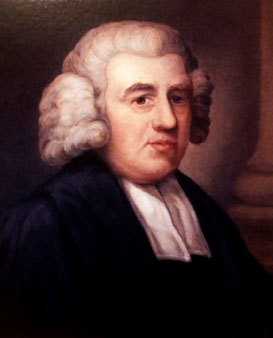
John Newton's article "Our Imperfect Knowledge of Christ's Love" explores the profound and multifaceted nature of understanding God's love through Christ. Newton emphasizes that Christians inherently grasp their own sinful limitations and the depth of Christ’s grace, which he describes as surpassing knowledge according to Ephesians 3:18-19. He discusses the incremental journey of growing in knowledge both of oneself and of Christ, using vivid analogies of a deep cavern to illustrate the complexity of the human heart and the vast, unfathomable love of Christ. Newton roots his arguments in Scripture, noting that the love of Christ is full of riches that are beyond comprehension, and reflects on the practical significance of this understanding for believers seeking assurance and growth in faith. Ultimately, he asserts that such awareness leads to greater humility, gratitude, and a desire to share the gospel.
Key Quotes
“If our own hearts are beyond our comprehension, how much more incomprehensible is the heart of Jesus.”
“His ways and thoughts are higher than ours; as the heavens are higher than the earth, his love has a height and depth and length and breadth which passes all knowledge.”
“All that we have received or can receive from him in this life compared with what he is in himself or what he has for us—is but as the drop of a bucket compared with the ocean.”
“The excellency of the knowledge of Christ will be growing upon us through time—yes, I believe through eternity.”
What does the Bible say about Christ's love?
The Bible reveals that the love of Christ surpasses knowledge and is unsearchable, demonstrating God's immense grace towards humanity (Ephesians 3:19).
Ephesians 3:18-19, Romans 5:8, John 15:13
How do we know grace is sufficient for us?
Grace is sufficient because God's power is made perfect in our weakness, affirming that we can rely on Christ in all circumstances (2 Corinthians 12:9).
2 Corinthians 12:9, Hebrews 4:16
Why is knowing God's love important for Christians?
Knowing God's love is vital as it provides peace, assurance, and the basis for our relationships with others (1 John 4:19).
1 John 4:19, Romans 8:38-39
How do I comprehend the depth of Christ's love?
Comprehending the depth of Christ’s love involves immersing ourselves in Scripture and daily seeking His presence through prayer (Ephesians 3:18-19).
Ephesians 3:18-19
April 29, 1776.
My dear Miss M,
I thank you for your last letter; and I rejoice in the Lord's goodness to you. To be drawn by love; to be exempted from those distressing terrors and temptations which some are beset with; to be favored with the ordinances and means of grace, and connected with those, and with those only, who are disposed and qualified to assist and encourage you in seeking the Savior—these are special privileges, which all concur in your case. He loves you, he deals gently with you, he provides well for you, and accompanies every outward privilege with his special blessing; and I trust he will lead you on from strength to strength, and show you still greater things than you have yet seen.
Those whom he teaches, are always increasing in knowledge, both of themselves and of him. The heart is deep, and, like Ezekiel's vision, presents so many chambers of imagery, one within another, that it requires time to get a considerable acquaintance with it, and we shall never know it thoroughly. It is now more than twenty-eight years since the Lord began to open mine to my own view; and from that time to this, almost every day has discovered to me something which until then was unobserved; and the farther I go, the more I seem convinced that I have entered but a little way. A person who travels in some parts of Derbyshire may easily be satisfied that the country is cavernous; but how large, how deep, how numerous the caverns may be, which are hidden from us by the surface of the ground, and what is contained in them—are questions which our most discerning inquirers cannot fully answer. Thus I judge of my heart—that it is very deep and dark, and full of evil; but as to particulars, I know not one of a thousand!
And if our own hearts are beyond our comprehension, how much more incomprehensible is the heart of Jesus! If sin abounds in us—grace and love superabound in him! His ways and thoughts are higher than ours, as the heavens are higher than the earth; his love has a height, and depth, and length, and breadth, which passes all knowledge! The riches of his grace are unsearchable riches! Eph. 3:8, Eph. 3:18, Eph. 3:19. All that we have received or can receive from him, or know of him in this life, compared with what he is in himself, or what he has for us—is but as the drop of a bucket—compared with the ocean; or a single ray of light—compared with the sun. The waters of the sanctuary flow to us at first almost ankle deep—so graciously does the Lord condescend to our weakness; but they rise as we advance, and constrain us to cry out, with the Apostle, O the depth! We find before us, as Dr. Watts beautifully expresses it,
A sea of love and grace unknown,
Without a bottom or a shore!
O the excellency of the knowledge of Christ! It will be growing upon us through time—yes, I believe through eternity! What an astonishing and what a cheering thought—that this high and lofty One should unite himself to our nature, that so, in a way worthy of his adorable perfections, he might by his Spirit unite us to himself! Could such a thought have arisen in our hearts, without the warrant of his Word (but it is a thought which no created mind was capable of even conceiving until he revealed it), it would have been presumption and blasphemy! But now he has made it known, it is the foundation of our hope, and an inexhaustible spring of life and joy. Well may we say, Lord what is man, that you should thus visit him!
Letter 1
June 29, 1757,
Dear fellow pastor,
I would earnestly press both of us—to follow the Lord fully; to aim at a life of self-denial; to renounce self-will; and to guard against self-wisdom. The less we have to do with the world—the better! Unless we watch and pray—we shall often be ensnared!
Time is precious, and opportunities once gone are gone forever! Even by reading, and what we call studying—we may be comparatively losers. The best way to study—is to be closely waiting upon God in humble, secret, fervent prayer. The treasures of wisdom and knowledge are in His hands—and He gives bountifully, without upbraiding!
Whatever we may undertake with a sincere desire to promote His glory—we may comfortably pursue. Nothing is trivial—which is done for Him.
Pray for me, that I may be enabled to break through the snares of vanity which lie in my way; that I may be crucified with Christ—and live a hidden life of faith in Him who loved me, and gave Himself for me!
Adieu,
John Newton
Letter 2
August 31, 1757.
Dear Sir,
I wish you much of that spirit which was in the Apostle, which made him content to become all things to all men—that he might win some. I am persuaded, that love and humility are the highest attainments in the school of Christ, and the brightest evidences that he is indeed our Master. If any should seem inclined to treat you with less regard, because you are or have been a Methodist teacher, you will find forbearance, meekness, and long-suffering, the most prevailing means to conquer their prejudices. Our Lord has not only taught us to expect persecution from the world, though this alone is a trial too hard for flesh and blood; but we must look for what is much more grievous to a renewed mind—to be in some respects slighted, censured, and misunderstood, even by our Christian brethren; and that, perhaps, in cases where we are really striving to promote the glory of God and the good of souls, and cannot, without the reproach of our consciences, alter our conduct, however glad we would be to have their approbation.
Therefore we are required, not only to resist the world, the flesh, and the devil—but likewise to bear one another's burdens; which plainly intimates there will be something to be borne with on all hands; and happy indeed is he who is not offended. You may observe what unjust reports and surmises were received, even at Jerusalem, concerning the Apostle Paul; and it seems he was condemned unheard, and that by many thousands too, Act. 21:20-21; but we do not find he was at all ruffled, or that he sought to retort anything upon them, though doubtless, had he been so disposed, he might have found something to have charged them with in his turn; but he calmly and willingly complied with everything in his power, to soften and convince them.
Let us be followers of this pattern, so far as he was a follower of Christ; for even Christ pleased not himself. How did he bear with the mistakes, weakness, intemperate zeal, and imprudent proposals of his disciples while on earth! And how does he bear with the same things from you and I, and every one of his followers now! And do we, can we think much to bear with each other for his sake? Have we all a full remission of ten thousand talents which we owed him, and were utterly unable to pay; and do we wrangle among ourselves for a few pence? God forbid!
If you should be numbered among the Independents, I advise you not to offend any of them by unnecessary singularities. I wish you not to part with any truth, or with anything really expedient; but if the omitting anything of an indifferent nature will obviate prejudices, and increase a mutual confidence, why should not so easy a sacrifice be made? Above all, my dear friend, let us keep close to the Lord in a way of prayer. He gives wisdom that is profitable to direct. He is the wonderful counselor; there is no teacher like Him. Why do the living seek to the dead? Why do we weary our friends and ourselves, in running up and down, and turning over books for advice? If we shut our eyes upon the world, and worldly things, and raise our thoughts upwards in humility and silence—should we not often hear the secret voice of the Spirit of God whispering to our hearts, and pointing out to us the way of truth and peace? Have we not often gone astray, and hurt either ourselves or our brethren, for lack of attending to this Divine Instruction? Have we not sometimes mocked God, by pretending to ask direction from him, when we had fixed our determination beforehand? It is a great blessing to know that we are sincere; and next to this, to be convinced of our insincerity, and to pray against it.
Letter 3
November 21, 1757.
Dear Sir,
Can you forgive so negligent a correspondent? I am indeed ashamed; but (if that is any good excuse) I treat you no worse than my other friends. Whenever I write, I am obliged to begin with an apology; for what with business, and the incidental duties of every day—my time is always mortgaged before it comes into my hands, especially as I have so little skill in redeeming and improving it. I long to hear from you, and I long to see you. I have mislaid your letter, and cannot remember the particulars. In general, I remember you were well, and going on comfortably in your work; which was matter of joy to me; and my poor prayers are for you, that the Lord may own and prosper you more and more.
The two great points we are called to pursue in this sinful divided world, are peace and holiness. I hope you are much in the study of them. These are the peculiar characteristics of a disciple of Jesus; they are the richest part of the enjoyments of heaven. And so far as they are received into the heart, they bring down heaven upon earth; and they are more inseparably connected between themselves than some of us are aware of.
The longer I live, the more I see of the vanity and the sinfulness of our unchristian disputes. They eat up the very vitals of religion. I grieve to think how often I have lost my time and my temper that way, in presuming to regulate the vineyards of others, when I have neglected my own; when the beam in my own eye has so contracted my sight, that I could discern nothing but the mote in my neighbor's. I am now desirous to choose a better part. Could I speak the publican's words with a proper feeling, I wish not for the tongue of men or angels to fight about notions or sentiments. I allow that every branch of Gospel truth is precious, that errors are abounding, and that it is our duty to bear an honest testimony to what the Lord has enabled us to find comfort in, and to instruct with meekness such as are willing to be instructed; but I cannot see it my duty, nay, I believe it would be my sin—to attempt to beat my notions into other people's heads. Too often I have attempted it in time past; but I now judge, that both my zeal and my weapons were carnal.
When our dear Lord questioned Peter, after his fall and recovery, he did not say, Are you wise, learned, and eloquent? Are you clear, and sound, and orthodox? But this only, "Do you love me?" An answer to this was sufficient then—why not now? Any other answer we may believe would have been insufficient then. If Peter had made the most pompous confession of his faith and sentiments, still the first question would have recurred, "Do you love me?" This is a Scripture precedent. Happy the preacher, whoever he be, my heart and my prayers are with him—who can honestly and steadily appropriate Peter's answer! Such a man, I say, I am ready to hear, though he should be as much mistaken in some points as Peter afterwards appears to have been in others.
What a pity it is, that Christians in succeeding ages should think the constraining force of the love of Christ too weak, and suppose the end better answered by forms, subscriptions, and questions of their own devising! I cannot acquit even those churches who judge themselves nearest the primitive rule in this respect. Alas! will-worship and presumption may creep into the best external forms. But the misfortune both in churches and private Christians is, that we are too prone rather to compare ourselves with others—rather than to judge by the Scriptures. And while each can see that they give not into the errors and mistakes of the opposite party, both are ready to conclude that they are right; and thus it happens, that an attachment to a supposed Gospel-order will recommend a man sooner and farther to some churches, than an eminency of Gospel practice. This, like a worm at the root, has nipped the graces, and hindered the usefulness, of many a valuable man; and those who change sides and opinions are the most liable to it. For the pride of our heart insensibly prompts us to cast about far and near for arguments to justify our own behavior, and makes us too ready to hold the opinions we have taken up to the very extreme, that those among whom we are newly come may not suspect our sincerity.
In a word, let us endeavor to keep close to God, to be much in prayer, and to watch carefully over our hearts. The secret of the Lord is with those who fear him, and who wait on him continually; to these he will show his covenant, not notional—but experimentally. A few minutes of the Spirit's teaching will furnish us with more real useful knowledge, than toiling through whole folios of commentators and expositors! They are useful in their places, and are not to be undervalued by those who can perhaps in general do better without them. But it will be our wisdom to deal less with the streams, and be more close in applying to the fountain head. The Scripture itself, and the Spirit of God, are the best and the only sufficient expositors of Scripture. Whatever men have valuable in their writings, they got it from hence; and the way is as open to us as to any of them. There is nothing required but a teachable humble spirit; and learning, as it is commonly called, is not necessary in order to this. I commend you to the grace of God.
Letter 4
January 10, 1760.
Dear Sir,
I have procured Cennick's sermons—they are in my judgment sound and sweet. O that you and I had a double portion of that spirit and unction which is in them! Come, let us not despair; the fountain is as full and as free as ever—precious fountain, ever flowing with blood and water, milk and wine! This is the stream which heals the wounded, refreshes the weary, satisfies the hungry, strengthens the weak, and confirms the strong. It opens the eyes of the blind, softens the heart of stone, teaches the dumb to sing, and enables the lame and paralytic to walk, to leap, to run, to fly, to mount up with eagle's wings! A taste of this stream raises earth to heaven—and brings down heaven upon earth. Nor is it a fountain only; it is a universal blessing, and assumes a variety of shapes to suit itself to our needs. It is a sun, a shield, a garment, a shade, a banner, a refuge. It is bread, the true bread, the very staff of life. It is life itself, immortal, eternal life!
The cross of Jesus Christ, my Lord,
Is food and medicine, shield and sword.
Take that for your motto; wear it in your heart; keep it in your eye; have it often in your mouth, until you can find something better. The cross of Christ is the tree of life and the tree of knowledge combined. Blessed be God! There is neither prohibition nor flaming sword to keep us back; but it stands like a tree by the wayside, which affords its shade to every passenger without distinction. Watch and pray. We live in a sifting time. Error gains ground every day. May the name and love of our Savior Jesus keep us and all his people!
Letter 5
November 15, 1760.
Dear Sir,
If your visit should be delayed, let me have a letter. I want either good news or good advice; to hear that your soul prospers, or to receive something that may quicken my own soul. The Apostle says, "You know the grace of our Lord Jesus Christ." Alas! we know how to say something about it—but how faint and feeble are our real perceptions of it! Our love to him is the proof and measure—of what we know of his love to us. Surely, then, we are mere children in this kind of knowledge, and every other kind is vain. What would we think of a man who would neglect his business, family, and all the comforts of life, that he might study the Chinese language; though he knows beforehand he should never be able to attain it, nor ever find occasion or opportunity to use it? The pursuit of every branch of knowledge that is not closely connected with the one thing needful, is no less ridiculous.
You know something of our friend Mrs. B. She has been more than a month confined to her bed, and I believe her next remove will be to her coffin! The Lord has done great things for her. Though she has been a serious exemplary person all her life, when the prospect of death presented, she began to cry out earnestly, "What shall I do to be saved?" But her solicitude is at an end. She has seen the salvation of God, and now for the most part rejoices in something more than hope. This you will account good news, I am sure. Let it be your encouragement and mine. The Lord's arm is not shortened, nor is his presence removed. He is near us still, though we perceive him not. May he guide you with his eye in all your public and private concerns, and may he in particular bless our communications to our mutual advantage!
Letter 6
July 29, 1761.
Dear Sir,
Are the quarrels made up? Tell those who know what communion with Jesus is worth, that they will never be able to maintain it, if they give way to the workings of pride, jealousy, and anger. This will provoke the Lord to leave them dry; to command the clouds of his grace that they rain no showers of blessing upon them. These things are sure signs of a low frame, and a sure way to keep it so. Could they be prevailed upon, from a sense of the pardoning love of God to their own souls, to forgive each other as the Lord forgives us—freely, fully, without condition and without reserve, they would find this like breaking down a stone wall, which has hitherto shut up their prayers from the Lord's ears, and shut out his blessing from filling their hearts. Tell them, I hope to hear that all animosities, little and big, are buried by mutual consent in the Redeemer's grave.
Alas! the people of God have enemies enough. Why then will they weaken their own hands? Why will they help their enemies to pull down the Lord's work? Why will they grieve those who wish them well, cause the weak to stumble, the wicked to rejoice, and bring a reproach upon their holy profession? Indeed this is no light matter; I wish it may not lead them to something worse; I wish they may be wise in time, lest Satan gain further advantage over them, and draw them to something that shall make them (as David did) roar under the pains of broken bones. But I must break off.
May God give you wisdom, faithfulness, and patience. Take care that you do not catch an angry spirit yourself, while you aim to suppress it in others; this will spoil all, and you will exhort, advise, and weep in vain. May you rather be an example and pattern to the flock. And in this view, be not surprised if you yourself meet some harsh usage; rather rejoice, that you will thereby have an opportunity to exemplify your own rules, and to convince your people, that what you recommend to them—you do not speak by rote—but from the experience of your heart.
One end why our Lord was tempted was for the encouragement of his poor followers, that they might know him to be a High Priest suited to them, having had a fellow-feeling in their distresses. For the like reason, he appoints his ministers to be sorely exercised both from without and within, that they may sympathize with their flock, and know in their own hearts the deceitfulness of sin, the infirmities of the flesh, and the way in which the Lord supports and bears with all that trust in him. Therefore be not discouraged; usefulness and trials, comforts and crosses, strength and exercise—all go together. But remember Him has said, "I will never leave you nor forsake you. Be you faithful unto death, and I will give you a crown of life!" When you get to heaven, you will not complain of the difficult way by which the Lord brought you. Farewell. Pray for us.
Letter 7
Dec. 14, 1761.
Dear Sir,
I pray the Lord to accompany you; but cannot help fearing you go on too fast. If you have not (as I am sure you ought not) made an absolute promise—but only conditional one—you need not be so solicitous. Depend upon it, when the Lord is pleased to remove you, he will send one to supply your place. I am grieved that your mind is so set upon a step, which I fear will occasion many inconveniences to a people who have deserved your best regard. Others may speak you fairer—but none wishes you better than myself. Therefore I hope you allow me to speak my mind plainly, and believe that it is no pleasure to me to oppose your inclinations. As to your saying they will take no denial, it has no weight with me. Had they asked what you were exceedingly averse to, you would soon have expressed yourself so as to convince them it was to no purpose to urge you; but they saw something in your manner or language that encouraged them; they saw the proposal was agreeable to you, that you were not at all unwilling to exchange your old friends for new ones; and this is the reason they would take no denial. If you should live to see those who are most forward in pressing you, become the first to discourage you, you will think seriously of my words.
If I thought my advice would prevail, it would be this. Call the people together, and desire them (if possible) to forget you ever intended to depart from them; and promise not to think of a removal, until the Lord shall make your way so clear, that even they shall have nothing reasonable to object against it. You may keep your word with your other friends too; for when a proper person shall offer, as likely to please and satisfy the people as yourself, I will give my hearty consent to your removal.
Consider what it is you would have in your office—but maintenance, acceptance, and success. Have you not those where you are? Are you sure of having them where you are going? Are you sure the Spirit of God (without which you will do nothing) will be with you there, as he has been with you hitherto? Perhaps if you act in your own spirit—you may find as great a change as Samson. I am ready to weep when I think what difficulties were surmounted to accomplish your ordination; and now, when the people thought themselves fixed—that you should so soon disappoint them!
Letter 8
Feb. 15, 1762.
Dear Sir,
I have been often thinking of you since your removal, and was glad to receive your letter today. I hope you will still go on to find more and more encouragement to believe, that the Lord has disposed and led you to the step you have taken. For though I wrote with the greatest plainness and earnestness, and would, if in my power, have prevented it while under deliberation—yet, now it is done, and past recall—I would rather help than dishearten you. Indeed, I cannot say that my view of the affair is yet altered.
The best way not to be cast down hereafter—is not to be too expectant at first. You know there is something pleasing in novelty; as yet you are new to them—and they to you. I pray God that you may find as cordial a regard from them as at present, when you have been with them as many years as in the place you came from. And if you have grace to be watchful and prayerful, all will be well; for we serve a gracious Master, who knows how to over-rule even our mistakes to his glory and our own advantage.
Yet I observe that when we do wrong, sooner or later we smart for our indiscretion; perhaps many years afterwards. After we have seen and confessed our fault, and received repeated proofs of pardoning love, as to the guilt—yet chastisement, to remind us more sensibly of our having done amiss, will generally find us out. So it was with David, in the matter of Uriah. The Lord put away his sin, healed his broken bones, and restored unto him the light of his countenance—yet many troubles, in consequence of this affair, followed one upon another, until at length (many years afterwards) he was driven from Jerusalem by his own son! So it was with Jacob. He dealt deceitfully with his brother Esau. Notwithstanding this, the Lord appeared to him and blessed him, gave him comfortable promises, and revealed himself to him from time to time—yet, after an interval of twenty years, his fault was brought afresh to his remembrance, and his heart trembled within him when he heard his brother was coming with armed men to meet him!
And thus I have found it in my own experience. Things which I had forgotten a long while have been brought to my mind by providential dispensations which I little expected; but the first rise of which I have been able to trace far back, and forced to confess, that the Lord is indeed He who judges the heart and tries the thoughts. I hint this for your caution. You know best upon what grounds you have proceeded; but if (though I do not affirm it, I hope otherwise), I say, if you have acted too much in your own spirit, been too hasty and precipitate; if you have not been sufficiently tender of your people, nor thoughtful of the consequences which your departure will probably involve them in; if you were impatient under the Lord's hand, and, instead of waiting his time and way of removing the trials and difficulties you found—you have ventured upon an attempt to free and mend yourself. I say, if any of these things have mixed with your determinations, something will fall out to show you your fault. Either you will not find the success you hope for—or friends will grow cold—or enemies and difficulties you dream not of, will present themselves—or your own mind will alter, so as what seems now most pleasing will afford you little pleasure. Yet, though I write thus, I do not mean (as I said before) to discourage you—but that you may be forewarned, humble, and watchful. If you should at any time have a different view of things, you may take comfort from the instances I have mentioned.
The trials of David and Jacob were sharp; but they were short, and they proved to their advantage, put them upon acts of humiliation and prayer, and ended in a double blessing. Nothing can harm us, which quickens our earnestness and frequency in applying to a Throne of Grace! Only trust the Lord and keep close to him—and all that befalls you shall be for good. Temptations end in victory; troubles prove an increase of consolation; yes, our very falls and failings tend to increase our spiritual wisdom; and give us a greater knowledge of Satan's devices—and make us more habitually upon our guard against them. Happy case of the believer in Jesus! When bitten by the fiery serpent he needs not go far for a remedy; he has only to look to a bleeding Savior, and be healed.
I think one great advantage that attends a removal into a new place is, that it gives an easy opportunity of forming a new plan, and breaking off any poor habits which we have found inconvenient, and yet perhaps could not so readily lay aside, where our customs and acquaintance had been long formed. I earnestly recommend to you to reflect, if you cannot recollect some things which you have hitherto omitted, which may properly be now taken up; some things formerly allowed, which may now with ease and convenience be laid aside. I only give the hint in general; for I have nothing in particular to charge you with.
I recommend to you to be very choice of your time, especially the beginning of the day. Let your morning hours be devoted to prayer, reading, and study; and do not allow the importunity of friends to rob you of the hours before noon, without a just necessity. And if you accustom yourself to rise early in the morning, you will find a great advantage. Be careful to avoid losing your thoughts, whether in books or otherwise, upon any subjects which are not of a direct subservience to your great design, until towards dinner time. The afternoon is not so favorable to study. This is a proper time for paying and receiving visits, conversing among your friends, or unbending with a book of instructive entertainment, such as history, etc., which may increase your general knowledge, without a great confinement of your attention; but let the morning hours be sacred.
I think you would likewise find advantage in using your pen more. Write short notes upon the Scriptures you read, or transcribe the labors of others; make extracts from your favorite authors, especially those who, besides a fund of spiritual and evangelical matter, have a happy talent of expressing their thoughts in a clear and lively, or moving manner. You would find a continued exercise in this way would be greatly useful to form your own style, and help your delivery and memory; you would become insensibly master of their thoughts, and find it more easy to express yourself justly and clearly.
What we only read we easily lose—but what we commit to paper is not so soon forgotten. Especially remember (what you well know—but we cannot too often remind each other), that frequent secret prayer is the life of all we do. If any man lack wisdom, let him ask of God, and it shall be given—but all our diligence will fail—if we are remiss in this particular!
Keep close to the work you have undertaken; and endeavor to avoid anything that looks like ostentation, or a desire to be taken notice of. You see I advise you with the freedom of a friend who loves you, and longs to see your work and your soul prosper.
You will, I doubt not, endeavor to promote the practice of frequent prayer in the houses that receive you. I look upon prayer meetings as the most profitable exercises (excepting the public preaching) in which Christians can engage. They have a direct tendency to kill a worldly trifling spirit, to draw down a Divine blessing upon all our concerns, resolve differences, and enkindle (at least to maintain) the flame of Divine love among brethren. But I need not tell you the advantages; you know them. I only would exhort you; and the rather as I find in my own case, the principal cause of my leanness and unfruitfulness is owing to an unaccountable backwardness to pray. I can write, or read, or converse, or hear, with a ready will—but prayer is more spiritual and inward than any of these; and the more spiritual any duty is—the more my carnal heart is apt to draw aside from it. May the Lord pour forth his precious spirit of prayer and supplication in both our hearts!
I am not well pleased with the account you give of so many dry bones. It increases my wonder, that you could so readily exchange so much plump flesh and blood as you had about you—for a parcel of skeletons. I wish they may not haunt you, and disturb your peace! I wish these same dry bones do not prove thorns in your sides and in your eyes. You say, now you have to pray, and prophesy, and wait for the four winds to come and put life into these bones. God grant that your prayers may be answered. But if I knew a man who possessed a field in a tolerable soil, which had afforded him some increase every year; and if this man, after having bestowed seven years' labor in cultivating, weeding, fertilizing, fencing, etc.—just when he has brought his ground (in his neighbor's judgment) into good order, and might reasonably hope for larger crops than he had ever yet seen, should suddenly forego all his advantages, leave his good seed for the birds to eat, pull up the young fences which cost him so much pains to plant—and all this for the sake of making a new experiment upon the top of a mountain; though I might heartily wish him great success, I could not honestly give him great encouragement. You have parted with that for a trifle, which in my eye seems an inestimable jewel; I mean the hearts and affections of an enlightened people! This appears to me one of the greatest honors and greatest pleasures a faithful minister can possess, and which many faithful and eminent ministers have never been able to obtain. This gave you a vast advantage. Your gift was more acceptable there than that of any other person, and more than you will probably find elsewhere. For I cannot make a comparison between the hasty approbation of a few, whose eyes are but beginning to open, and their affections and passions warm, so that they must, if possible, have the man that first catches their attention; I say, I cannot think this worthy to be compared to the regard of a people who understood the Gospel, were able to judge of men and doctrines, and had trial of you for so many years.
It is indeed much to your honor (it proves that you were faithful, diligent, and exemplary) that the people proved so attached to you—but that you should tear yourself from them, when they so dearly loved you, and so much needed you—this has made all your friends in these parts to wonder, and your enemies to rejoice; and I, alas! know not what to answer in your behalf to either. Say not, "I hate this Micaiah, for he prophesies not good of me—but evil;" but allow me the privilege of a friend. My heart is full when I think of what has happened, and what will probably be the consequence. In few words, I am strongly persuaded you have taken an unadvised step, and would therefore prepare you for the inconvenience and uneasiness you may probably meet with. And if I am (as I desire I may prove) mistaken, my advice will do no harm; you will need something to balance the caresses and success you meet with.
We would be very glad to see you, and hope you will take your measures, when you do come, to lengthen your usual stay, in proportion to the difference of the distance. Pray for us.
Letter 1
August 1, 1774
My dear sir,
We were very glad to hear so favorable an account of your health—but your letter to Mr. ___ (we were with him when it came to hand) rather balked the hope we had entertained, that you would be well in a few days. Therefore we shall be glad to hear from you again, for we sincerely feel ourselves much interested in all that concerns you. However, I know that you are in safe and merciful hands, and that the Lord loves you better than we can do. Though we may mistake in estimating particulars, we are sure that the sum-total of all dispensations will be good. Health is good while the Lord preserves it—and sickness is still better when he appoints it. He is good when he grants our wishes and multiplies our comforts—and he is good when he sends us trials and crosses. We are short-sighted and cannot see how many and what important consequences depend upon every turn in life; but the whole chain of events are open to his view.
When we arrive in the land of glory, we shall have an affecting retrospect of the way by which the Lord our God led us through this wilderness. We shall then see that whenever we were in heaviness, there was a need-be for it. We shall then, I doubt not, remember, among our choicest blessings, those things which, while we were here, seemed the hardest to account for, and the hardest to bear. Perhaps we were sinking into a lukewarm formality, or spiritual pride was springing up, or Satan was spreading some dangerous snare for our feet. How seasonable and important at such a time, is the mercy which, under the disguise of an affliction, gives an alarm to the soul, quickens us to prayer, makes us feel our own emptiness, and preserves us from the enemy's net!
These reflections are applicable to all the Lord's people—but emphatically so to his ministers. We stand in the fore-front of the battle. The nature of our employment exposes us to peculiar dangers; more eyes are upon us; our deviations are more observed, and have worse effects, both with respect to the church and the world, than if we were in private life. By our own sufferings we learn likewise (the Lord sanctifying them to that end) to sympathize with the afflicted, and to comfort them from the experiences we have had of the Lord's goodness and faithfulness to ourselves. I trust you will be thankful for your late exercises, and that we, in due time, shall have to join you in thanking the Lord for restoring you to health and strength, and that you will come forth, under the fresh anointing of his Holy Spirit, to publish the glad tidings of salvation, and win many souls to the knowledge of Jesus.
I mentioned having been at Mr. ___ 's. We went on Tuesday morning, and did not return until Saturday evening. Had not the Sunday service called me home, I believe we would have stayed longer. It was a happy opportunity; I believe mutually so. We talked of you, and would have been glad to have had you with us. I have seldom been in a family where I thought myself more at home, or where I have been more satisfied that the blessing of the Lord dwelt. I returned in some measure thankful and refreshed. I have great reason to be thankful that my spirit is not confined within the paper walls of a denomination; for I have had frequent proof that the Spirit of the Lord will not be restrained within such narrow bounds. May my soul be ever free to unite with all who love the Lord Jesus Christ in sincerity, without regarding those lesser differences which will soon be done away.
Your prayers and kind wishes for me and mine, I heartily thank you for, and hope we shall repay you (as we are enabled) in kind. Many here have, indeed, reason to speak well of the Lord. He has been very gracious to us. But, alas! most of us may complain of ourselves. But, unworthy as we are, he bears with us; he multiplies pardons, and keeps us upon the whole in a persuasion that his loving kindness is better than life. The workings of a corrupt nature, and the subtlety of our spiritual enemies, cause us much exercise; but we find one with us who is greater than our hearts, and greater than he who is in the world. When I look at some of my people, I am filled both with joy and shame; joy to see that the Lord has not allowed my labor among them to be in vain; shame to think that I have preached so much more effectually to them—than to my own heart. It is my mercy that I am not under the law—but under grace. Were it not for this thought, I would sink. But it is given me to know that Jesus is all—to those who are nothing. The promise whereon I trust, and the power of trusting in it, are both from him, and therefore I am encouraged to plead, "Remember your Word unto your servant, wherein you have caused me to hope." A sure promise, a complete atonement, a perfect righteousness, an Almighty Savior, who is able to save to the uttermost, and has said, "I will never cast out." These are the weapons with which I (alas, how feebly!) oppose the discouragements which arise from self and unbelief.
I am sincerely, dear sir, your affectionate and obliged.
Letter 2
October 6, 1774
My dear friend,
I have two letters to thank you for; and was thinking of answering the first, when the second came. The contents gave me pleasure. My poor prayers have been, and shall be, for you; and, that I might be with you in spirit as much as possible, I thought I would write to you on your wedding-day. May the good Lord say Amen to your engagements and desires, and give you, in each other, a help-meet, a counselor, a comforter; may he fill your hearts with his peace, give you a daily increase of happiness in your connection, that you may be,
Enamored more, as more remembrance swells
With many a proof of recollected love!
And while the Lord blesses your relation outwardly, in the midst of his best gifts, and the most endearing satisfaction that creatures can afford—may you both have grace to remember that you are not your own, that this is not your rest; that the time is short, and that the light of God's countenance is still, comparatively, "The one thing needful."
I have been interrupted since I began my letter, and I must leave it again soon to go to my children, for it is almost eleven. I may now salute you as one, and, from the time of my standing in wedded life, I shall take the liberty of assuming the professor's chair, and offering you a little lecture upon the subject. May the Lord prompt my heart and guide my pen.
With respect to this world, marriage is undoubtedly the most important concern in which we can engage. It has an influence upon every action and every hour of the future life. The success depends not upon physical appearances, for they are changeable; nor upon our present affections or purposes, for we are frail, inconstant creatures, and prone to be soon weary of the possession of our warmest wishes; but entirely upon the blessing of the Lord, without which no union can exist. We see too many instances of people who come together with all seeming advantages, and yet from unforeseen causes, the affection which promised to be permanent, gradually subsides into indifference, and perhaps terminates in disgust. We cannot but wonder at these failures, when we consider how seldom the Lord is duly acknowledged either in the choice, the pursuit, or the attainment of the object. It is your mercy that he taught you both to seek his direction, and to depend upon his providence, in bringing this weighty affair to an outcome; and therefore you may cheerfully expect repeated proofs that he did not bid you to seek his face in vain.
Since I began this paragraph I have been with my children, and the passage which came in course for my exposition to them, was Genesis 24. It was quite apropos to the case upon my mind. The historical part of the Old Testament, so far as it concerns nations, is undoubtedly put into our hands as a specimen of the Lord's government over all the nations of the earth—and the history of his care and providence over the personal and family concerns of his children from age to age. His interposition is not always so obvious to sense now, as it often was then; but it is as real and necessary in itself, and not less evident to faith when in exercise. He provided and prepared you for each other; he opened the way; he has brought you together, and now he will be with you to bless your union, to guide you with his eye, to be your Sun and your Shield. And yet there are so many evils in our hearts to be checked, and the comparative vanity and emptiness of all below the skies is a lesson so very needful to be learned, and so unattainable in any other way than by experience—that we must expect at times to find bitters mingled with our sweets, and some of our sharpest pains flowing from the same source with our most valued pleasures.
I am now far advanced in the twenty-fifth year of marriage; and, though I set out blindfold, and was so far infatuated by an idolatrous passion, that for a while I looked no higher for happiness than to a worm like myself; yet the Lord, whose dealings with me have always been singular, did not deal with me as I deserved. He sent, indeed, again and again, a worm to the root of my gourd, and many an anxious trembling hour have I suffered; but he pitied my weakness, gradually opened my eyes, and, while he in some measure weakened and mortified the idolatrous part of affection, he smiled upon that part of it which was lawful and subordinate, and caused it to flourish and strengthen from year to year.
When I look back upon my past life, and look around in the world, I mean especially as a husband, I cannot but say, my lot in life has been most happy. Few, I think, can have been more favored; and, to the best of my recollection, I never wished, for a single minute, it were possible to exchange situation with any person upon earth. And yet what is it I have known? When I recollect my wedding-day, the circumstances are so present with me, that it seems as if it were but yesterday, and all the interval but a dream. If I take that interval to pieces, I see, indeed, that goodness and mercy have followed us all our days; I see, as I have said, that we have had a larger share of such happiness as this world can afford—but at the same time mingled with so many trials, that, though the Lord mercifully parceled them out, and has brought me safely through them one after another—taken together, they have made very large abatements in the article of pleasure.
My dear friends, you will now acquire a new set of feelings. How sickness, or pain, or trouble affects you in your own persons, you know; but how you will be affected by them in the person of a husband or a wife, you have yet to learn. I wish you may know as little of it as is consistent with your best good; but, if the Lord loves you, and you love each other, now and then something of this sort will be needful. Yet be not afraid; he delights in the prosperity of his children, and will not causelessly afflict.
One trial of mine I wish you may be wholly freed from, the experience of a deceitful and desperately wicked heart, that you may never have to confess, as I do to you, that my perverseness and ingratitude have revealed themselves most frequently, and most flagrantly—by occasion of that very instance of his goodness, which in a temporal view I account the chief blessing of my life. This has been an abatement indeed. How often have I wondered that he has not punished me in kind, and taken away the desire of my eyes with a stroke.
One trial we have yet to come—the alternative of leaving or being left. The flesh shrinks at the thought of either; and since we know not how soon, or in what way, a separation may take place, there can be no abiding peace until we are enabled to commit ourselves, and all that we hold most dear—to the care and the disposal of our Lord. I have been long aiming at this; and it seems so right, so eligible in theory, that sometimes I think I have succeeded, that I have made an absolute surrender, and am well satisfied that he should do whatever he pleases—then what he pleases, must be the best—but, alas! the next alarm convinces me how weak I am, and how afraid and unwilling to trust him. Yet, surely, it is the desire of my soul to say, without reserve or exception, Not my will—but yours be done. So far as we can attain to this, we are happy.
I have left no room to answer your letters. I could have wished for a more favorable account of your health—but hope the Lord will gradually confirm it. He can, for he is power; He will, for he is love—if it be upon the whole best for you. I am glad to hear of Mr. ___ , and wish him much success, and commend my love to him. Mr. ___ , has lost his wife; I suppose he had her not much above a year. So frail are all things here below!
I am sincerely yours.
Letter 3
May 31, 1775
My dear sir,
Though we agreed to waive apologies, it would befit me to make a very humble one if I should long delay writing, now you have favored me with a second letter. I thank you for both; it gives us real pleasure to hear of your and your wife's welfare.
I rejoice that the Lord keeps your spirit alive in his work, and lets you see that your labor is not in vain. Oh, the honor, the blessedness, of being an instrument in his hands of feeding his gathered sheep and lambs, and bringing wanderers into his fold! That is a striking and beautiful thought of the apostle, "as poor—yet making many rich." When I feel my own poverty, my heart wandering, my head confused, graces languid, gifts apparently dormant; when I thus stand up with half a loaf, or less, before a multitude—and see the bread multiply in the breaking, and that, however it may be at the time with myself, as to my own feelings, the hungry, the thirsty, the mourners in Zion, are not wholly disappointed; when I find that some, in the depth of their outward afflictions, can rejoice in me, as the messenger by whom the Lord is pleased to send them a word in season, balm for their wounds, and cordials for their cases; then indeed I magnify my office.
Let who will, take the lead in the cabinets of princes; let those whom the Lord permits shine in the eyes of men, as statesmen, generals, or favorites; He has given me the desire of my heart, and I am more disposed to pity than to envy those whom the world admires. "This is what the Lord says: 'Let not the wise man boast of his wisdom or the strong man boast of his strength or the rich man boast of his riches—but let him who boasts boast about this: that he understands and knows Me, that I am the Lord, who exercises kindness, justice and righteousness on earth, for in these I delight,' declares the Lord." Jeremiah 9:23-24
On the day when the Lord admitted me into the ministry, and I received ordination, I thought he had then ennobled me, and raised me to greater honor and preferment than any earthly king could have bestowed; and, blessed be his name, I think so still, and had rather be the pastor of this church, than in any situation the world can afford, if detached from the privilege of preaching the gospel. Yet I find the ministry a bitter sweet; the pleasure is tempered with many things that make a near and painful impression upon the spirit; but, upon the whole, it is given unto me (and I trust to you likewise) to rejoice in it.
The civility of your genteel neighbors is an agreeable circumstance, so far as it can be preserved without inconvenience. I am quite of your mind, that our high calling, as Christians, does not require us to be cynical, and that many professors, and perhaps preachers, bring needless trouble upon themselves, for lack of a gentle, loving spirit. The gospel teaches us to show benevolence and a humble posture to all. Yet there is an extreme upon the other hand, which is, upon the whole, even more dangerous. They are singularly favored, whom the Lord is pleased to guide and to keep in the golden balance. What we call a polite and cultivated behavior, is certainly no real bar to that faithfulness we owe to God or man; and, if maintained under a strict Scriptural restraint, may greatly soften prejudices, and conciliate the good-will even of unawakened hearers in a considerable degree. But, indeed, those who have it, have need of a double guard of watchfulness and prayer, for unless the eye is kept very single, and the heart dependent upon the Lord—we are more liable to be drawn into a compliance with the ways of the polite world, than likely to prevail on them to follow us, so far as we follow Christ.
I could name instances where it has appeared to me, that the probable good effects of a very faithful testimony in the pulpit, have (humanly speaking) been wholly defeated by too successful endeavors to be agreeable when outside of it. The world will often permit a minister to think, and perhaps to preach, as he pleases—provided he will come as near them as possible in a sociable conformity. I hope you will not be angry with me—but rather impute it to my cordial affection, if I feel some fears, lest the kindness of your neighbors should insensibly in some degree at least dampen your zeal and abate your influence. I trust my fears are groundless, and my admonitions quite unnecessary.
I see you possessed of all advantages, recommended by family, situation, education, and address, and encompassed, it seems, with people who are disposed to receive you favorably upon these accounts. I see you stand in a post of honor—and therefore I know Satan eyes you, and watches subtly for an advantage against you. Were he to raise a storm of persecution against you, and attack you openly, I would be in little pain for the event. For I believe the Lord has given you such a sense of the worth of the gospel, that you would not be threatened easily into a timid silence; and perhaps that natural warmth of temper which you speak of, might be of some advantage were the assault made on this side. This, perhaps, Satan knows; he knows how to suit his temptations, to our personal tempers and circumstances. And if, like Achilles, you have a vulnerable heel—the serpent will be sure to strike there!
I apprehend you are more in danger of suffering loss by the smiles, than by the frowns of men. Since I have seen some eminent ministers, whom I need not name to you, so sadly hurt, both in their experience and in their usefulness, (and many more in private life,) by worldly connections, I am ready perhaps to take the alarm, and to sound the alarm too soon. But I know that the heart is deceitful in all things, and I know that often the first steps by which we deviate from the path of duty, diverge so gently and imperceptibly from the right line—that we may have actually lost our way before we are sensible we have missed the road! After all, I hope this, my grave remonstrance, has sprung entirely from my own misapprehension of a few lines in your first letter, and will stand for nothing but to show that I love you, and that, professing myself a friend, I dare be faithful. if you think me faulty, of course you will not write until you have forgiven me, and therefore I hope you will forgive me soon, or my punishment will be heavy enough.
I hope often to think of your wife. May the Lord preserve her safely to and through the hour of trial, and make her a joyful mother. May you both rejoice hereafter in being parents to a vessel of mercy. Please to give our respects to her. You may assure her, I can hardly think of any person whose idea affects me with more esteem and regard than her's. We would have been glad to have seen you both here, had your journey taken place, and shall be so at any time. As to myself, I have no more expectation of seeing the Yorkshire hills—than the Alps! But I know that my inclination is not lacking.
The Lord has transplanted some more of my flowers, or rather his own—to flourish in a better climate; but he has likewise given us a few slips and seedlings to supply their place. The Word does not flourish here as I ought to wish it; but, through mercy, it is not wholly without effect. We are in good harmony; ordinances are prized, and a gospel lifestyle is maintained, by those who profess.
You ask how I am—but I know not what answer to give. My experience is made up of enigmas—but the sum and solution of all is, "That I am a vile creature—but I have a good Lord. He has chosen me; and through his rich grace—I have chosen Him. There is a union between Him and my soul, which shall never be broken, because he has undertaken for both parts—that He never will forsake me, and that I never shall forsake Him. Oh, I like those royal, sovereign words, "I will," and "you shall." How sweetly are they suited to the sense and long experience he has given me of my own weakness, and the power and subtlety of Satan. If my spiritual conflicts terminate in victory, it must be owing to His own arm, and for His own name's sake. For I in myself have neither strength nor plea. If I were not so poor, so sick, so foolish—the power, skill, riches, wisdom, and mercy of my Physician, Shepherd, and Savior—would not be so signally illustrated in my own case. Upon this account, instead of complaining, we may glory in our infirmities. Oh, it is pleasant to be deeply indebted to Him, to find Him, and own Him, all in all—
Our Husband, Shepherd, Brother, Friend,
Our Guide, and Guard, our Way, and End!
"Christ is all!" Colossians 3:11
"I will make an everlasting covenant with them, that I will not turn away from them, to do them good; but I will put My fear in their hearts—that they shall not depart from Me!" Jeremiah 32:40
I beg a frequent interest in your prayers, and remain, dear sir, your affectionate and obliged servant.
Letter 4
July 26, 1775
My dear sir,
I have been a little impatient until I could find a leisure hour to thank you for your very obliging answer to my last letter. I ventured a good deal upon my opinion of you, or I would not have written so freely; and I am not disappointed. You may be assured that I never heard a word concerning you but what was good; and I plead the manner of my writing as a proof that I saw nothing in you but what tended to endear you to me. Had I observed anything with my own eyes which I had disapproved, it is probable I would have been deterred by it from expressing that fidelity which you are so kind as to take in good part.
My suspicions did not arise from any fear of you, personally considered, so much as from the feelings of my own heart, and the sense I have of the weakness of human nature, and the subtlety of Satan in general. Nay, upon second thoughts, I believe that there was nothing in your letter from whence such suspicions could be fully and warrantably deduced. However, whether I would or not, my thoughts took such a turn, I seemed to be almost satisfied at first that they were groundless; yet I was determined to communicate them to you, for such reasons as these—
First, I was persuaded that, at any rate, it would do no harm to drop a word by way of putting you upon your guard, since I knew that you, as well as myself, were still within gun-shot of the enemy.
Secondly, I really expected that you would think favorably of my intention, and love me the better for it.
And of course I believed, thirdly, that the proof you would give me, under your own hand, of your humility and uprightness of spirit, in receiving my hint as I meant it, would heighten my regard for you, and thus our friendship would be mutually strengthened.
All has happened according to my wishes; and I ought to ask your pardon, when I confess that, in the interval between my letter and yours, I sometimes felt my heart go a little pit-a-pat, for fear that you would be displeased. I wronged you by entertaining the most distant apprehension of this kind. How sorry would I have been to have grieved you, or to have appeared to you in the disagreeable light of a busy-body, or a dictator! However, if I had not pretty well known my man, I ran a considerable risk. Indeed, my pen is apt to express the sentiments of my heart with little restraint, when I write to those whom I cordially love and esteem; but surely no one has less right than myself to set up for a censor. I have enough to watch over and bemoan at home; and any cautions or advises which I occasionally offer to my friends, would, as coming from me, be highly impertinent and presuming, did not the Word of God seem to bear me out in supposing that the hearts of others are in some degree like my own.
Much of what you say of yourself, I think I can adopt likewise. I hope I am pretty generally considered among my acquaintances as a lover of peace, and therefore I am amicably treated and borne with on all sides. But I am a sort of middle man, and consequently no great stress is laid upon me where the strengthening of a party, or the fighting for a sentiment, is the point in view. I am an avowed Calvinist. The points which are usually comprised in that term, seem to me so consonant to Scripture, reason, (when enlightened,) and experience—that I have not the shadow of a doubt about them. But I cannot dispute—and I dare not speculate. What is by some called high Calvinism, I dread. I feel much more union of spirit with some Arminians, than I could with some Calvinists. If I thought a certain person feared sin, loved the Word of God, and was seeking after Jesus, I would not walk the length of my study to proselyte him to the Calvinistic doctrines. Not because I think them mere opinions, or of little importance to a believer—I think the contrary; but because I believe these doctrines will do no one any good until he is taught them of God. I believe a too hasty assent to Calvinistic principles, before a person is duly acquainted with the plague of his own heart, is one principal cause of that lightness of profession which so lamentably abounds in this day, a chief reason why many professors are rash, heady, high-minded, contentious about words, and sadly remiss as to the divine means of grace. For this reason, I suppose, though I never preach a sermon in which the tincture of Calvinism may not be easily discerned by a judicious hearer—yet I very seldom insist expressly upon those five points, unless they fairly and necessarily be in my way. I believe most people who are truly alive to God, sooner or later meet with some pinches in their experience which constrain them to flee to those doctrines of grace, for relief, which perhaps they had formerly dreaded, if not abhorred, because they knew not how to get over some harsh consequences they thought necessarily resulting from them, or because they were stumbled by the miscarriages of those who professed them. In this way I was made a Calvinist myself; and I am content to let the Lord take his own way, and his own time, with others.
I remember to have seen a letter from you to Mr. ___ —but I can recollect nothing in particular of the subject—but I suppose, if I had disliked it, or received any unfavorable impressions from it, some traces of it would have still remained in my memory. From what I have written above, and from the beginning of Omicron's ninth letter, (which was written in answer to one from Mr. ___ ,) I hope you will believe that I should be much more likely to blame his forwardness in giving the challenge, than your prudence in declining. I trust he means well; but, as you say, he is young, and I know not but the kind reception he met with in Yorkshire might send him home with a greater idea of his own importance than he carried with him from hence. I suppose it was just about that time, when his spirit was a little raised, that he wrote to you. Young men often make mistakes of this kind. The Lord's blessing upon years, experience, and inward exercises, cures them of it by degrees, or at least in a degree; for, alas, the root of SELF lies deep, and is not easily eradicated. "People will be lovers of self" 2 Timothy 3:2. "If anyone wants to be My follower, he must deny himself, take up his cross, and follow Me." Mark 8:34
We were very glad to hear that your wife is likely to do well after her delivery. I hope, that if the Lord spares the child to you—he will be numbered among the children of his grace. If God calls him home by a short life, he will escape a number of storms and troubles incident to human life. I know not how to regret the death of infants, especially under the dark apprehensions I have of the times. How do they appeal to you? The prevalence of sin, and the contempt of the gospel, in this long favored land, make me apprehensive that the present commotions are but the beginning of sorrows. Since we heard of the commencement of hostilities in America, we have had extraordinary prayer-meetings. It is held on Tuesday morning, weekly, at five o'clock, and is well attended. We are not politicians here; but we wish to be found among those described, Ezekiel. 9:4. We pray for the restoration of peace, and a blessing upon our public counsels.
I am your affectionate and obliged.
Letter 5
September 3, 1776
My dear sir,
The flowers which you sent have their value, they are very beautiful, and therefore pleasing; but they are very transitory, and therefore instructive. All flesh is grass, and all the glory of man as the flower; the flower is more conspicuous and beautiful than the grass—but likewise more precarious and liable to fade. Ministers, some of them at least, have a beauty beyond the grass, the bulk of their hearers. They are adorned with gifts and advantages of knowledge and expression which distinguish them for a time—but the flower fades.
How precarious are those distinctions for which some admire them, and for which they are in danger sometimes of admiring themselves! A fever, or a small change in the physical system, may deprive them of their abilities; and, while they remain, a thousand things may happen to prevent their exercise. Happy are those wise and faithful stewards, who know and approve their talents while afforded, who work while it is day—aware how soon, how suddenly, a night may overtake them. They may be hastily removed, cut down by the scythe of death; or, as the stalk remains after the flower is faded, they may outlive their usefulness.
However, the true servants of the Lord have something that will not decay. Grace is of an abiding nature, and will remain when the gifts of knowledge and elocution are withered. We know not what changes we may live to see; but God's love and promises, which are the pleasing subjects of our ministry, are unchangeable.
It gives me much pleasure that we are remembered by you and your friends for then, I hope, you pray for us. We are likewise mindful of you. Though absent in body, I am often present with you in spirit.
The ignorance of the people is indeed lamentable; we have affecting instances of it even here, where there has been no sound but the gospel heard, from the pulpits of either church or meeting, for many years. You ask what I think is the best method of removing it. I know no better, no other, than to go on praying, preaching and waiting. When we have toiled all night and have caught nothing, we have still encouragement to cast the net again. It must, it will be so, until the Lord opens the understanding—and then light shines out of darkness in a moment.
Should this ignorance be so far removed from the head, that people can form tolerable notions of the truths we preach—there is but little real advantage gained—unless the heart is changed by divine power! But the moment the heart is touched—they will begin to savingly comprehend.
A woman who had heard me for years, went home one day, and expressed a pleasing surprise that I had entirely changed my manner of preaching. "Until now," said she, "I have often listened with attention—but could never make out anything of your meaning; but this afternoon you preached so plainly, that I understood every word!" The Lord had opened her heart so suddenly, and yet so gently, that at first she thought the change was not in herself—but in me. It is well that he is pleased so to work, that we should have no pretense for taking any glory to ourselves. He lets us try and try again, to convince us that we can do nothing by ourselves. And then, often when we give up the case as desperate—he comes and does all!
Do not you feel something of 1 Samuel 4:13, in this dark day? "When he arrived, there was Eli sitting on his chair beside the road watching, because he was anxious about the ark of God. When the man entered the city to give a report, the entire city cried out!"
I am not a politician, much less an American; but I fear the Lord has a controversy with us. I cannot but tremble at the consequences of our present disputes, and lest the disappointment our forces met with at Charlestown should be the prelude to some more important miscarriage. The plans of our operations may, for anything I know, be well laid, according to human wisdom, and our generals and admirals well qualified and supported to carry them into execution; but I am afraid the Lord Almighty is but little acknowledged or thought of in our councils, fleets, or armies. I see the nation in general hardened into that spirit of insensibility and blind security, which in all former ages and nations has been the token and forerunner of judgment; and therefore I lay but little stress upon the wisdom of the wise, or the prowess of the valiant. I think if our sins were not ripe for visitation, the Lord would have prevented things from coming to the present extremities. I would have better hope, if I saw his own people duly impressed with the present awful appearances; but, alas, I fear that too many of the wise virgins are slumbering, if not asleep, at such a time as this! May the Lord pour out upon us a spirit of humiliation and prayer, that we may prevail, if possible, for our country; or if wrath be decreed, and there be no remedy, we may have our hearts kept in peace, and find him a sure sanctuary for ourselves. Two texts seem especially suited for our meditation, Luke 21:34-36, Revelation 3:10.
I trust the Lord will reconcile you to his will, if he removes your sister. He is all-sufficient to make up every loss; and, indeed, it is wrong to grieve much for those who are called away from sin and sorrow, to perfect and endless happiness.
I have had a growth on my thigh sixteen years; it is now threatening to get bigger, and therefore I expect soon to go to London to have it eradicated. It is not painful, and the surgeon tells me the operation will be neither difficult nor dangerous; only I must keep to the house for some weeks, until the wound is healed.
I am sincerely yours.
Letter 6
My dear sir,
My wife returns you thanks for your present and your care. What avails it for a flower, or a man or woman, to bear a good name, if degenerated from the characteristic excellencies which the name imports. A tulip that has lost its colors; or a shriveled, deformed, irregular carnation, would not long preserve their places in your parterre; much less could you allow weeds to rear their tawdry heads among your choice flowers. But, alas! how is the Lord's garden, the professing church, overrun with weeds! Almost every lily grows among thorns or baleful plants, which convert all the nourishment they draw from the soil into poison. A time is coming when all that he has not planted shall be rooted up. May we, as under-gardeners, be furnished with grace, wisdom, and diligence to detect, and, as much as possible, to check every root of bitterness that would spring up, both in God's garden at large, and in our own hearts.
I am like your flowers, getting apace into an autumn state. May the Lord grant that I may find my declension of physical vigor, which I must soon expect to feel, balanced by a ripeness in judgment and experience. To be sure, I have had more proofs of an evil nature and deceitful heart, than I could possibly expect or conceive of twenty years ago. I believe likewise my understanding is more enlightened into the three great mysteries of the person, love, and life of Jesus. Yet I seem to groan under darkness, coldness, and confusion, as much as ever. I must go out of the world with the same language upon my lips which I used when I first ventured to a throne of grace, "Have mercy upon me, O Lord, a poor worthless sinner!" My love is faint; my services feeble and defiled; my defects, mistakes, and omissions innumerable; my imaginations are as wild as the clouds in a storm—yes, too often as foul as a common sewer!
What can I set against this mournful confession? Only this—That Christ has died for me! I believe He is able to save to the uttermost! Upon His person, worth, and promise, rests all my hope; and this is a foundation able to bear the greatest weight.
I am your sincerely affectionate and obliged.
Letter 1
Jan. 16, 1772.
Dear Sir,
It is true that I was apprehensive from your silence, that I had offended you—but when your letter came it made me full amends. And now I am glad I wrote as I did, though I am persuaded I shall never write to you again in the same strain. I am pleased with your gracious attitude; and your bearing so well to be told of the mistakes which I pointed out to you—endears you more to me than if you had not made them. Henceforward I can converse freely with you, and shall be glad when I have the opportunity.
Plain people are easily puzzled. I have met with many preachers who have appeared to be rather wise than warm, rather positive than humble, rather faultfinding than lively, and more disposed to talk of speculations than experience. However, let us give ourselves to the study of the Word, and to prayer; and may the great Teacher make every Scriptural truth food to our souls.
I desire to grow in knowledge—but I want nothing which has not a direct tendency to make sin more hateful, Jesus more precious to my soul; and at the same time to animate me to a diligent use of every appointed means, and an unreserved regard to every branch of duty. I think the Lord has shown me in a measure, that there is a consistent sense running through the whole Scripture, and I desire to be governed and influenced by it all. Doctrines, precepts, promises, warnings, all have their proper place and use. I think many of the errors of the present day, spring from separating those things which God has joined together, and insisting on some parts of the Word of God almost to the exclusion of the rest.
I have filled my paper with what I did not intend to say a word of when I began, and must leave other things which were more upon my mind for another season. I thank you for praying for me. Continue that kindness; I both need it and prize it.
Letter 2
July 31, 1773.
Dear Sir,
I received your sorrowful epistle yesterday; and in order to encourage you to write, I answer it today.
The ship was safe when Christ was in it—though he was really asleep. At present I can tell you good news, though you know it; He is wide awake, and his eyes are in every place! You and I, if we could be joined together, might perhaps make two tolerable ones. You are too anxious, and I am too easy in some respects. Indeed I cannot be too easy—when I have a right thought that all is safe in his hands. But if your anxiety makes you pray, and my composure makes me careless, you have certainly the best of it. However, the ark is fixed upon an immovable foundation; and if we think we see it totter, it is owing to a dizziness in our heads. Seriously, the times look dark and stormy, and call for much circumspection and prayer—but let us not forget that we have an infallible Pilot, and that the power and wisdom and honor of God are embarked with us. Jesus has both wind and weather are at his command, and he can turn the storm into a calm in a moment. We may therefore safely and confidently leave the government upon his shoulders. Duty is our part; the care is his.
A revival is needed with us, as well as with you; and I trust some of us are longing for it. We are praying and singing for one; and I send you, on the other side, a hymn, that you (if you like it) may sing with us. Let us take courage. though it may seem marvelous in our eyes, it is not so in the Lord's. He changed the desert into a fruitful field, and bid dry bones to live! And if he prepares our heart to pray—he will surely incline his ear to hear!
The miscarriages of professors are grievous—yet such things must be; how else could the Scriptures be fulfilled? But there is one who is able to keep us from falling. Some who have distressed us, perhaps never were truly converted; how then could they stand? We see only the outside. Others who are sincere are permitted to fall for our instruction, that we may not be high-minded, but fear. However, he who walks humbly—walks surely!
Letter 3
Feb. 22, 1774,
Dear Sir,
There is a danger of leaning to impressions. Texts of Scripture brought powerfully to the heart are very desirable and pleasant—if their tendency is to humble us, to give us a more feeling sense of the preciousness of Christ, or of the doctrines of grace; if they make sin more hateful, enliven our regard to the means, or increase our confidence in the power and faithfulness of God. But if they are understood, as intimating our path of duty in particular circumstances, or confirming us in purposes we may have already formed, not otherwise clearly warranted by the general strain of the Word, or by the leadings of Providence, they are for the most part ensnaring, and always to be suspected. Nor does their coming into the mind at the time of prayer give them more authority in this respect. When the mind is intent upon any subject, the imagination is often watchful to catch at anything which may seem to countenance the favorite pursuit. It is too common to ask counsel of the Lord—when we have already secretly determined for ourselves! And in this disposition, we may easily be deceived by the sound of a text of Scripture, which, detached from the passage in which it stands, may seem remarkably to tally with our wishes! Many have been deceived this way; and sometimes, when the event has shown them they were mistaken, it has opened a door for great distress, and Satan has found occasion to make them doubt even of their most solid experiences.
I have sometimes talked to **** upon this subject, though without the least suspicion of anything like what has happened. As to the present case, it may remind us all of our weakness. I would recommend prayer, patience, much tenderness towards her, joined with faithful expostulation. Wait a little while, and I trust the Lord who loves her will break the snare. I am persuaded, in her better judgment, she would dread the thoughts of doing wrong; and I hope and believe the good Shepherd, to whom she has often committed her soul and her ways—will interpose to restore and set her right.
I am sorry you think any of whom you have hoped well, are going back—but be not discouraged. I say again, pray, and wait—and hope the best. It is common for young professors to have a slack time; it is almost necessary, that they may be more sensible of the weakness and deceitfulness of their hearts, and be more humbled in future, when the Lord shall have healed their breaches, and restored their souls. We join in love to you and yours. Pray for us.
Letter 4
Feb. 3, 1775.
Dear Sir,
It is very lawful at your age to think of marriage, and, in the situation you describe, to think of money likewise. I am glad you have no person, as you say, fixedly in view; in that case, advice comes a post or two too late. But your expression seems to intimate, that there is one transiently in view. If it is so, since you have no settlement, if she has no money, I cannot but wish she may pass on until she is out of sight and out of mind.
I take it for granted, that you are free from the love of filthy lucre; and that money will never be the turning point with you in the choice of a wife. Methinks I hear you think, If I needed money, I would either dig or beg for it—but to preach or marry for money, that is far from me. I commend you. However, though the love of money is a great evil, money itself, obtained in a fair and honorable way, is desirable, upon many accounts, though not for its own sake. Food, clothes, and housing, cannot easily be had without it. Therefore, if these are necessary, money which procures them must be necessary likewise. If things were otherwise than you represent them, if you were able to provide for a wife, then I would say, Find a gracious girl (if she be not found already) whose person you like, whose temper you think will suit; and then, with your father and mother's consent (without which I think you would be unwilling to move), thank the Lord for her, marry her, and account her a valuable portion, though she should not have a shilling! But while you are without income or settlement, if you have thoughts of marriage, I hope they will be regulated by a due regard to consequences.
Those who set the least value upon money, have in some respects the most need of it. A generous mind will feel a thousand pangs in strait circumstances, which some unfeeling hearts would not be sensible of. You could perhaps endure hardships alone—yet it might pinch you to the very bone—to see the person you love exposed to them. Besides, you might have a John, a Thomas, and a William, and half a dozen more to feed (for they must all eat); and how this could be done without a sufficient income? Besides, you would be grieved not to find an occasional shilling in your pocket to bestow upon one or another of the Lord's poor, though you should be able to make some sort of a shift for those of your own house.
But is it not written, "The Lord will provide"? It is. But it is written also, "You shall not tempt the Lord your God." Hastily to plunge ourselves into difficulties, upon a persuasion that God will find some way to extricate us, seems to me a species of tempting him!
Therefore I judge, it is so far lawful for you to have a regard to money in looking out for a wife, that it would be wrong, that is, in other words, unlawful, for you to omit it, supposing you have a purpose of marrying in your present situation.
Many serious young women have a preference in favor of a minister of the Gospel; and I believe among such, one or more may be found as spiritual, as amiable, as suitable to make you a good wife, with a tolerable fortune to boot—as another who has not a penny. If you are not willing to trust your own judgment in the search, entreat the Lord to find her for you. He chose well for Isaac and Jacob; and you, as a believer, have warrant to commit your way to him, and many more express promises than they had for your encouragement. He knows your state, your wants, what you are at present, and what use he designs to make of you. Trust in him, and wait for him. Prayer, and faith, and patience, are never disappointed. I commend you to his blessing and guidance. Remember us to all in your house.
Letter 5
May 28, 1775.
Dear Sir,
You must not expect a long letter this morning. I am just going to court, in hopes of seeing the King, for he has promised to meet me. We can say that he is mindful of his promise; and yet it is astonishing, that though we are all in the same place, and the King in the midst of us—it is but here and there one (even of those who love him) can see him at once. However, in our turns we are all favored with a glimpse of him, and have had cause to say, How great is his goodness! How great is his beauty! We have the advantage of the queen of Sheba; a more glorious object to behold, and not so far to go for the sight of it. If a transient glance exceeds all that the world can afford for a long continuance, what must it be to dwell with him? If a day in his courts be better than a thousand elsewhere, what will eternity be in his presence?
I hope the more you see—the more you love; the more you drink—the more you thirst; the more you do for him—the more you are ashamed you can do so little; and that the nearer you approach to your journey's end—the more your pace is quickened. Surely, the power of spiritual attraction should increase—as the distance lessens. O that heavenly magnet! May it so draw us that we may not creep—but run. In common traveling, the strongest become weary if the journey is very long—but in the spiritual journey we are encouraged with a hope of going on from strength to strength. No road but the road to heaven, can thus communicate refreshment to those who walk in it, and make them more fresh and lively when they are just finishing their course than when they first set out!
Letter 6
April 18, 1776.
Dear Sir,
Are you sick, or lame of your right hand, or are you busy in preparing a folio for the press—that I hear nothing from you? You see by the excuses I would contrive, that I am not willing to suppose that you have forgotten me—but that your silence is rather owing to a cannot than a will not.
I hope your soul prospers. I do not ask you if you are always filled with sensible comfort—but do you find your spirit more bowed down to the feet and will of Jesus, so as to be willing to serve him for the sake of serving him, and to follow him, as we say, through thick and thin; to be willing to be anything or nothing—so that he may be glorified? I could give you plenty of good advice upon this head—but I am ashamed to do it, because I so poorly follow it myself! I want to live with him by the day, to do all for him, to receive all from him, to possess all in him, to live all to him, to make him my hiding-place and my resting-place. I want to deliver up that rebel SELF to him in chains—but the rogue, like Proteus, puts on so many forms, that he slips through my fingers! But I think I know what I would do if I could fairly catch him.
My soul is like a besieged city—a legion of enemies outside the gates, and a nest of restless traitors within—which hold a correspondence with those outside—so that I am deceived and undermined continually! It is a mercy that I have not been overwhelmed long ago. Without help from Jesus—it would soon be over with me. How often have I been forced to cry out, "O God, the enemies have gotten into your castle! They defiled your holy temple—and defaced all your work!" Indeed it is a miracle that I still hold out. I trust, however, I shall be supported to the end, and that my Lord will at length destroy the siege, and cause me to shout deliverance and victory!
Pray for me—that my walls may be strengthened and wounds healed. We are all pretty well as to the outward man, and join in love to all friends.
Letter 7
July 6, 1776.
Dear Sir,
I was abroad when your letter came—but employ the first post to thank you for your confidence. My prayers (when I can pray) you may be sure of. As to advice, I see not that the case requires much. Only be a quiet child—and lie patiently at the Lord's feet. He is the best friend and manager in these matters, for he has a key to open every heart!
I would not have taken Mr. Z****'s letter for a denial, as it seems you did. Considering the years of the parties involved, and other circumstances, a prudent parent could hardly say more, if he were inclined to favor your views. To me you seem to be in a tolerably fair way—but I know in affairs of this kind, that Mr. Self does not like suspense—but would like come to the point at once. But Mr. Faith (when he gets liberty to hold up his head) will own, that, in order to make our temporal mercies wear well, and to give us a clearer sense of the hand which bestows them—a waiting and a praying time are very seasonable.
Worldly people expect their schemes to run upon all-fours, as we say, and the objects of their wishes to drop into their mouths without difficulty; and if they succeed, they of course burn incense to themselves, and say, "This was my doing!" But believers meet with rubs and disappointments, which convince them, that if they obtain anything, it is the Lord who must do it for them. For this reason I observe, that he usually brings a death upon our prospects, even when it is his purpose to give us success in the outcome. Thus we become more assured that we did not act in our own selfish hearts, and have a more satisfactory view that his providence has been concerned in filling up the rivers and removing the mountains that were in our way. Then when he has given us our desire—how pleasant is it to look at it and say, This I got, not by my own sword, and my own bow—but I wrestled for it in prayer! I waited for it in faith, I put it into the Lord's hand, and from his hand I received it.
You have met with the story of one of our kings, who wanted to send a nobleman abroad as his ambassador, and he desired to be excused on account of some affairs which required his presence at home. The king answered, "You take care of my business—and I will take care of yours." I would have you think the Lord says thus to you. You were sent into the world for a nobler end than to be pinned to a girl's apron-string! And yet if the Lord sees it not good for you to be alone, he will provide a help-mate for you. I say, if he sees the marriage state best for you, he has the proper person already in his eye. And though she were in Peru or Nova-Zembla, he knows how to bring you together. In the mean time—you go and preach the Gospel. Watch in all things; endure afflictions; do the work of an Evangelist; make full proof of your ministry. And when the thoughts rise in your mind (for you have no door to shut them quite out), run with them to the Throne of Grace, and commit them to the Lord! Satan will perhaps try to force them upon you unseasonably and inordinately—but if he sees they drive you to prayer, he will probably desist, rather than be the occasion of doing you so much good.
Believe likewise, that as the Lord has the appointment of the person, so He fixes the time. His time is like the time of the tide—all the art and power of man can neither hasten nor retard it a moment. it must be waited for; nothing can be done without it, and, when it comes, nothing can resist it. It is unbelief which talks of delays. Faith knows that, properly, there can be no such thing. The only reason why the Lord seems to delay what he afterwards grants is—that the best hour is not yet come. I know you have been enabled to commit and resign your all to his disposal. You did well. May He help you to stand to the surrender. Sometimes He will put us to the trial, whether we mean what we say. He takes his course in a way we did not expect; and then, alas! how often does the trial put us to shame! Presently there is an outcry raised in the soul against his management of a particular situation; in short, all these things are against us! And then we go into the pulpit, and gravely tell the people how wise and how good he is; and preach submission to his will, not only as a duty—but a privilege! Alas, how deceitful is the heart! Yet since it is and will be so, it is necessary we should know it by experience. We have reason, however, to say, He is good and wise; for he bears with our perverseness, and in the outcome, shows us that if he had listened to our murmuring, and taken the methods we have prescribed to him, we would have been ruined indeed, and that He has been all the while doing us good—in spite of ourselves!
If I judge right, you will find your way providentially opened more and more; and yet it is possible, that when you begin to think yourself sure, something may happen to put you in a panic again. But a believer, like a sailor, is not to be surprised if the wind changes—but to learn the art of suiting himself to all winds for the time. And though many a poor sailor is shipwrecked, the poor believer shall gain his port. O it is good sailing with an infallible Pilot at the helm, who has the wind and weather at his command!
If I did not love you well, I would not have spared so much of the only day I have had to myself for these past two weeks. But I was willing you should know that I think of you and feel for you, if I cannot help you.
I have read Mr. ****'s book. Some things are strongly argued; in some he has laid himself open to a blow, and I doubt not but he will have it. I expect answers, replies, rejoinders, etc. and say with Leah, Gad, a troop comes. How the wolf will grin—to see the sheep and the shepherds biting and worrying one another! And well he may. He knows that contentions are a surer way to weaken the spirit of love, and stop the progress of the Gospel, than his old stale method of fire and sword. Well, we shall be of one heart and one mind when we get to heaven at least.
Let who will fight, I trust neither water nor fire shall set you and me at variance. We unite in love to you. The Lord is gracious to us, etc.
Letter 8
1776.
Dear Sir,
I do not often serve your letters so—but this last I burnt, believing you would like to have it out of danger of falling into improper hands. When I saw how eagerly the flames devoured the paper, how quickly and entirely every trace of the writing was consumed, I wished that the fire of the love of Jesus might as completely obliterate from your heart every uneasy impression which your disappointment has given you. Surely when he crosses our wishes it is always in mercy, and because we are short-sighted creatures, we often know not what we ask, nor what would be the consequences if our desires were granted.
Your pride, it seems, has received a fall by meeting a repulse. I know SELF does not like to be mortified in these affairs—but if you are made successful in wooing souls for Christ, I hope that will console you for meeting a rebuff when only wooing for yourself. Besides, I would have you pluck up your spirits. I have a good old proverb at your service. "There are as good fish in the sea—as any which are brought out of it." Perhaps all your difficulties have arisen from this—that you have not yet met the right person. if so, you have reason to be thankful that the Lord would not let you take the wrong, though you unwittingly would have done it if you could. Where the right one lies hidden, I know not. The Lord in his providence will disclose her, put her in your way, and give you to understand, "This is she!" Then you will find your business go forward with wheels and wings, and have cause to say that His choice and time were better than your own.
Did I not tell you formerly, that if you would take care of his business—he will take care of yours? I am of the same mind still. He will not allow those who fear Him and depend upon Him, to lack anything that is truly good for them. In the mean while, I advise you to take a lodging as near as you can to Gethsemane, and to walk daily to mount Golgotha, and borrow (which may be had for asking) that telescope which gives a prospect into the unseen world. A view of what is passing within the veil has a marvelous effect to compose our spirits, with regard to the little things which are daily passing here on earth. Praise the Lord, who has enabled you to fix your supreme affection upon Him who is alone the proper and suitable object of it, and from whom you cannot meet a denial or fear a change. He loved you first, and He will love you forever; and if He is pleased to arise and smile upon you, you are in no more necessity of begging for happiness to the prettiest creature upon earth, than of the light of a candle on Midsummer noon.
Upon the whole, I pray and hope the Lord will sweeten your cross, and either in kind or in kindness, make you good amends. Wait, pray, and believe—and all shall be well. A cross we must have somewhere; and those who are favored with health, plenty, peace, and a conscience sprinkled with the blood of Jesus, must have more causes for thankfulness than grief. Look round you, and take notice of the very severe afflictions which many of the Lord's own people are groaning under, and your trials will appear comparatively light.
Our love to all friends.
Letter 9
June 3, 1777.
Dear Sir,
It seems I must write something about the smallpox—but I know not well what. Not having had it myself, I cannot judge how I would feel if I were actually exposed to it. I am not a professed advocate for inoculation.
But if a person who fears the Lord should tell me—"I think I can do it in faith, looking upon it as a beneficial expedient, which God in his providence has revealed, and which therefore appears my duty to have recourse to, so that my mind does not hesitate with respect to the lawfulness, nor am I anxious about the event; being satisfied, that whether I live or die, I am in that path in which I can cheerfully expect his blessing;" —I do not know that I could offer a word by way of dissuasion.
If another person should say—"My times are in the Lord's hands; I am now in health, and am not willing to bring upon myself a disorder, the consequences of which I cannot possibly foresee. If I am to have the smallpox, I believe he is the best judge of the season and manner in which I shall be visited, so as may be most for his glory and my own good; and therefore I choose to wait his appointment, and not to rush upon even the possibility of danger without a call. If the very hairs of my head are numbered, I have no reason to fear that, supposing I receive the smallpox in a natural way, I shall have a single pimple more than he sees expedient; and why should I wish to have one less? Nay, admitting, which however is not always the case, that inoculation might exempt me from some pain and inconvenience, and lessen the apparent danger, might it not likewise, upon that very account, prevent my receiving some of those sweet consolations which I humbly hope my gracious Lord would afford me, if it were his pleasure to call me to a sharp trial? Perhaps the chief design of this trying hour, if it comes, may be to show me more of his wisdom, power, and love, than I have ever yet experienced. If I could devise a means to avoid the trouble, I know not how great a loser I may be in point of grace and comfort. Nor am I afraid of my face—it is now as the Lord, has made it, and it will be so after the smallpox. If it pleases him, I hope it will please me. In short, though I do not censure others—yet, as to myself, inoculation is what I dare not venture upon. If I did venture, and the outcome should not be favorable, I would blame myself for having attempted to take the management out of the Lord's hands, into my own; which I never did yet in other matters, without finding I am no more able than I am worthy to choose for myself. Besides, at the best, inoculation would only secure me from one of the innumerable natural evils the flesh is heir to. I would still be as liable as I am at present to a putrid fever, a bilious colic, an inflammation in the stomach, or in the brain, and a thousand formidable diseases which are hovering round me—and only wait his permission to cut me off in a few days or hours. And therefore I am determined, by his grace, to resign myself to his disposal. Let me fall into the hands of the Lord (for his mercies are great), and not into the hands of men!"
If a person should talk to me in this strain, most certainly I could not say, "Notwithstanding all this, your safest way is to be inoculated."
We preach and hear, and I hope we know something of faith—as enabling us to trust the Lord with our souls. I wish we had all more faith to trust him with our bodies, our health, our provision, and our temporal comforts likewise. The former should seem to require the strongest faith of the two! How strange is it, that when we think we can do the greater, we should be so awkward and unskillful when we aim at the less?
Give my love to your friend. I dare not advise—but if she can quietly return at the usual time, and neither run intentionally into the way of the smallpox, nor run out of the way—but leave it simply with the Lord, I shall not blame her. And if you will mind your praying and preaching, and believe that the Lord can take care of her without any of your contrivances, I shall not blame you. Nay, I shall praise him for you both. My prescription is to read Psalm 121 every morning before breakfast, and pray it over until the cure is effected.
"I lift up my eyes to the hills—where does my help come from? My help comes from the Lord, the Maker of heaven and earth. He will not let your foot slip—he who watches over you will not slumber; indeed, he who watches over Israel will neither slumber nor sleep. The Lord watches over you—the Lord is your shade at your right hand; the sun will not harm you by day, nor the moon by night. The Lord will keep you from all harm—he will watch over your life; the Lord will watch over your coming and going both now and forevermore!" Psalm 121:1-8
Letter 1
Sept. 14, 1765.
Dear Sir,
When I was at London last June, your name first reached me, and from that time I have been desirous to wish you success in the name of the Lord. A few weeks ago I received a further account from Mrs. ****, with a volume of your sermons. She likewise gave me a direction where to write, and an encouragement that a letter would not be unacceptable. The latter indeed I did not much need when I had read your book. Though we have no acquaintance, we are already united in the strictest ties of friendship, partakers of the same hope, servants of the same Lord, and in the same part of his vineyard. I therefore hold all apologies needless. I rejoice in the Lord's goodness to you; I pray for his abundant blessing upon your labors; I need an interest in your prayers; I have an affectionate desire to know more concerning you. these are my motives for writing.
Mrs.**** tells me that you have read my Narrative. I need not tell you, therefore, that I am one of the most astonishing instances of the forbearance and mercy of God upon the face of the earth. In the close of it, I mention a warm desire I had to the ministry. This the Lord was pleased to keep alive for several years, through a succession of views and disappointments. At length his hour came, and my way was made easy. I have been here about fifteenth months. The Lord has led me by a way that I little expected, to a pleasant lot, where the Gospel has been many years known, and is highly valued by many. We have a large church and congregation, and a considerable number of lively thriving believers, and in general go on with great comfort and harmony. I meet with less opposition from the world than is usual where the Gospel is preached. This burden was borne by Mr. B**** for ten years; and in that course of time some of the fiercest opposers were removed, some wearied, and some softened; so that we are now remarkably quiet in that respect. May the Lord teach us to improve the privilege, and preserve us from indifference.
How unspeakable are our obligations to the grace of God! What a privilege is it to be a believer! They are comparatively few, and we by nature were no nearer than others—it was grace, free grace, which made the difference! What an honor to be a minister of the everlasting Gospel! These upon comparison are perhaps fewer still. How wonderful that one of these few should be sought for among the wilds of Africa, reclaimed from the lowest state of impiety and misery, and brought to assure other sinners, from his own experience, that "there is forgiveness with God, that he may be feared."
And you, sir, though not left to give such flagrant proofs of the wickedness of the heart and the power of Satan—yet owe your present views to the same almighty grace. If the Lord had not distinguished you from your brethren, you would have been now in the character of a false minister, misleading the people, and opposing those precious truths you are now laboring to establish. Not unto us, O Lord—but unto your name be the glory! I shall be thankful to hear from you at your leisure. Be pleased to inform me whether you received the knowledge of the truth before or since you were in the ministry; how long you have preached the joyful sound of salvation by Jesus; and what is the state of things in your parts.
We are called to an honorable service—but it is arduous. What wisdom does it require to keep the middle path in doctrines, avoiding the equally dangerous errors on the right hand and the left! What steadiness, to speak the truth boldly and faithfully in the midst of a gainsaying world! What humility, to stand against the tide of popularity! What meekness, to endure all things for the elect's sake, that they may be saved! "Who is sufficient for these things?" We are not in ourselves—but there is an all-sufficiency in Jesus.
Our enemy watches us closely; he desires to have us, that he may sift us as wheat. He knows he can easily shake us—if we are left to ourselves. But we have a Shepherd, a Keeper, who never slumbers nor sleeps! If he permits us to be exercised, it is for our good; he is at hand to direct, moderate, and sanctify every dispensation. He has prayed for us—that our faith may not fail; and he has promised to maintain his fear in our hearts, that we may not depart from him. When we are prone to wander—he calls us back; when we say, "my feet slip"—his mercy holds us up; when we are wounded—he heals us; when we are ready to faint, he revives us.
The people of God are sure to meet with enemies—but especially the ministers. Satan bears them a double grudge. The world watches for their halting, and the Lord will allow them to be afflicted, that they may be kept humble, that they may acquire a sympathy with the sufferings of others, that they may be experimentally qualified to advise and help them, and to comfort them with the comforts with which they themselves have been comforted of God. But the Captain of our salvation is with us. His eye is upon us; his everlasting arm beneath us. In his name therefore may we go on, lift up our banners, and say, "If God be for us—who can be against us? Nay, in all these things we are more than conquerors, through him who has loved us!" The time is short. In a little while—he will wipe all tears from our eyes, and put a crown of life upon our heads with his own gracious hand!
If any occasions should call you into these parts, my house and pulpit will be glad to receive you. Pray for us, dear sir!
Letter 2
Nov. 2, 1765.
Very dear Sir,
Your last letter gave me great pleasure. I thank you for the particular account you have favored me with. I rejoice with you, sympathize with you, and find my heart opened to correspond with unreserved freedom. May the Lord direct our pens, and help us to help each other. The work you are engaged in is great, and your difficulties many—but faithful is he who has called you, who also will do it. The weapons which he has now put into your hands are not carnal—but mighty through God to the pulling down of strong-holds. Men may fight—but they shall not prevail against us, if we are but enabled to put our cause simply into the Lord's hands, and keep steadily on in the path of duty. He will plead our cause, and fight our battles; he will pardon our mistakes, and teach us to do better.
My experience as a minister is but small, having been but about eighteen months in the vineyard—but for about twelve years I have been favored with an increasing acquaintance among the people of God, of various ranks and denominations, which, together with the painful exercises of my own heart, gave me opportunity of making observations which were of great use to me when I entered upon the work myself. And ever since, I have found the Lord graciously supplying new lights and new strength, as new occurrences arise. So I trust it will be with you. I endeavor to avail myself of the examples, advice, and sentiments of my brethren—yet at the same time to guard against calling any man master. This is the peculiar of Christ. The best of men—are but men; the wisest may be mistaken; and that which may be right in another—might be wrong in me, through a difference of circumstances. The Spirit of God distributes his gifts variously; and I would no more be tied to act strictly by others' rules—than to walk in shoes of the same size. My shoes must fit my own feet.
I endeavor to guard against extremes. Our nature is prone to them, and we are liable likewise, when we have found the inconvenience of one extreme, to revert insensibly (sometimes to fly suddenly) to the other. I pray to be led in the middle of the path. I am what they call a Calvinist—yet there are particularities and hard sayings to be found among some of that system, which I do not choose to imitate. I dislike those sentiments against which you have borne your testimony in the note at the end of your preface. But, having known many precious souls in that party, I have been taught, that the kingdom of God is not in names and theological sentiments—but in righteousness, faith, love, peace, and joy in the Holy Spirit.
I would, however, upon some occasions oppose those tenets, if they had any prevalence in my neighborhood—but they have not. In general, I believe the surest way to refute or prevent error—is to preach the truth. I am glad to find you are aware of that spirit of enthusiasm which has so often broken loose and blemished hopeful beginnings, and that the foundation you build upon is solid and Scriptural. This will, I hope, save you much trouble, and prevent many offenses. Let us endeavor to make our people acquainted with the Scripture, and to impress them with a high sense of its authority, excellence, and sufficiency. Satan seldom remarkably imposes on ministers or people, except where the Word of God is too little consulted or regarded.
Another point in which I aim at a medium, is in what is called prudence. There is certainly such a thing as Christian prudence, and a remarkable deficiency of it is harmful. But caution too often degenerates into cowardice; and if the fear of man, under the name of prudence, gets within our guard, like a chilling frost it nips everything in the bud. Those who trust the Lord, and act openly, with an honest freedom and consistency, I observe that God generally bears them out, smooths their way, and makes their enemies their friends, or at least restrains their rage. While such as halve things, temporize, and aim to please God and man together, meet with double disappointment, and are neither useful nor respected. If we trust to Him—He will stand by us; if we regard men—He will leave us to make the best we can of them.
I have set down hastily what occurred to my pen, not to dictate to you—but to tell you how I have been led, and because some expressions in your letter seemed to imply that you would not be displeased with me for so doing. As to books, I think there is a medium here likewise. I have read too much in time past—yet I do not wholly join with some of our brethren, who would restrain us entirely to the Word of God. Undoubtedly this is the fountain; here we should dwell—but a moderate and judicious perusal of other authors may have its use; and I am glad to be indebted to such helps, either to explain what I do not understand, or to confirm me in what I do. Of these, the writings of the last age afford an immense variety.
But, above all, may we, dear sir, live and feed upon the precious promises, John 14:16, John 14:17, John 14:26; and John 16:13-15. There is no teacher like Jesus, who by his Holy Spirit reveals himself in his Word—to the understanding and affections of his children. When we thus behold his glory in the Gospel looking-glass, we are changed into his image. Then our hearts melt, our eyes flow, our stammering tongues are unloosed. That this may be your increasing experience, is my sincere prayer.
Letter 3
Jan. 21, 1766.
Dear Sir,
Your letters give me the sincerest pleasure. Let us believe that we are daily thinking of and praying for each other, and write when opportunity offers, without apologies. I praise the Lord that he has led you so soon to a settled judgment in the leading truths of the Gospel. For lack of this, many have been necessitated with their own hands to pull down what, in the first warm emotions of their zeal, they had labored hard to build. It is a mercy, likewise, to be enabled to acknowledge what is excellent in the writings or conduct of others, without adopting their singularities, or discarding the whole—on account of a few blemishes. We should be glad to receive instruction from all, and avoid being wholly led by any. We have one master, even Christ.
We may grow wise quickly in opinions—by learning from books and men—but vital, experimental knowledge can only be received from the Holy Spirit, the great instructor and comforter of his people. And there are two things observable in his teaching:
1. That he honors the means of his own appointment, so that we cannot expect to make any great progress without diligence on our part.
2. That he does not teach all at once—but by degrees. Experience is his school; and by this I mean the observation and improvement of what passes within us and around us in the course of every day.
The Word of God affords a history in miniature, of the heart of man, the devices of Satan, the state of the world, and the method of grace. And the most instructing and affecting commentary on it, to an enlightened mind, may be gathered from what we see, feel, and hear from day to day. No knowledge in spiritual things but what we acquire in this way, is properly our own, or will abide the time of trial.
This is not always sufficiently considered. We are ready to expect that others should receive upon our testimony, in half an hour's time, those views of things which have cost us years to attain! But none can be brought forward faster than the Lord is pleased to communicate inward light. Upon this ground controversies have been multiplied among Christians to little purpose; for plants of different standings will be in different degrees of growth.
A young Christian is like a green fruit—it has perhaps a disagreeable austerity, which cannot be corrected out of its proper course; it needs time and growth. Wait a while, and, by the nourishment it receives from the root, together with the action of the sun, wind, and rain in succession from without—it will insensibly acquire that flavor and maturity for the lack of which, an unskillful judge would be ready to reject it as nothing worth.
We are favored with many excellent books in our tongue—but I with you agree in assigning one of the first places (as a teacher) to John Owen. I have just finished his Discourse on the Holy Spirit, which is an epitome, if not the master-piece, of his writings. I would be glad to see the republication you speak of—but I question if the booksellers will venture upon it. I shall perhaps mention it to my London friends. As to Robert Leighton, besides his Select Works, there are two octavo volumes, published at Edinburgh in the year 1748, and since reprinted at London. They contain a valuable Commentary on Peter's First Epistle, and Lectures on Isaiah six, Psalm 39:1-13, Psalm 134:1-3, and a part of Romans 12. I have likewise a small quarto, in Latin, of his Divinity Lectures, when professor at Edinburgh. Mine was printed in London 1698. I believe this book is scarce. I set the highest value upon it. He has wonderfully united the simplicity of the Gospel with all the captivating beauties of style and language. Burner says he was the greatest master of the Latin tongue he ever new; of which, together with his compass of learning, he has given proof in his Lectures. Yet, in his gayer dress, his eminent humility and spirituality appear to no less advantage than when clad in plain English. I think it may be said to be a diamond set in gold. I could wish it translated, if it was possible (which I almost question) to preserve the beauty and spirit of the original.
Jonathan Edwards on Free Will, I have read with pleasure, as a good answer to the proud reasoners in their own way—but a book of that sort cannot be generally read. Where the subject matter is unpleasing, and the method of treating it requires more attention than the Athenian spirit of the times will bear, I do not wonder that it is uncalled for.
You send us good news indeed, that two more of your brethren are declaring on the Gospel side. May the Lord confirm and strengthen them, add yet to your numbers, and make you helps and comforts to each other. Surely he is about to spread his work. Happy are those whom he honors to be fellow-workers with him. Let us account the disgrace we suffer for his Name's sake—to be our great honor. Many will be against us—but there are more for us. All the praying souls on earth, all the glorified saints in heaven, all the angels of God, yes, the God of angels himself—all are on our side. Satan may rage—but he is a chained enemy. Men may contend and fight—but they cannot prevail.
Two things we shall especially need—courage and patience, that we neither faint before them, nor upon any provocation act in their spirit. If we can pity and pray for them, return good for evil, make them sensible that we bear them a hearty good-will, and act as the disciples of Him who wept for his enemies, and prayed for his murderers—in this way we shall find the Lord will plead our cause, soften opposers, and by degrees give us a measure of outward peace. Blind zeal and imprudence have often added to the burden of the cross. I rejoice that the Lord has led you in a different way; and I hope your doctrine and example will make your path smoother every day—you find it so in part already. As the Lord calls out a people, and witnesses for you to the truth of his Word—you will find advantage in bringing them often together. The interval from Sabbath to Sabbath is a good while, and affords time for the world and Satan to creep in. Intermediate meetings for prayer, etc., when properly conducted, are greatly useful. I could wish for larger sheets and longer leisure—but I am constrained to say adieu, in our dear Lord and Savior.
Letter 4
Dec. 12, 1767.
Dear Sir,
This is not intended as an answer to your last kind letter—but an occasional line, in consequence of the account Mr. T**** has given me of your late illness. I trust this dispensation will be useful to you; and I wish the knowledge of it may be so to me. I am favored with an unusual share of good health, and an equal flow of spirits. If the blow you have received should be a warning to me, I shall have cause to be thankful. I am glad to hear you are better; I hope the Lord has no design to disable you from service—but rather (as he did Jacob) to strengthen you by wounding you; to maintain and increase in you that conviction which, through grace, you have received—of the vanity and uncertainty of everything below; to give you a lively sense of the value of health and opportunities; and to add to the treasury of your experience—new proofs of his power and goodness, in supporting, comforting, and healing you; and likewise to quicken the prayers of your people for you, and to stir them up to use double diligence in the present improvement of the means of grace, while by this late instance they see how soon and suddenly you might have been removed from them.
I understand you did not feel that lively exercise of faith and joy which you would have hoped to have found at such a season. But let not this discourage you from a firm confidence, that, when the hour of death shall come, the Lord will be faithful to his gracious promise, and give you strength sufficient to encounter and vanquish your last enemy. You had not this strength lately, because you needed it not. for though you might think yourself near to death, the Lord intended to restore you, and he permitted you to feel your weakness, that you might know your strength does not consist in grace received—but in his fullness, and his promise to communicate from himself as your occasions require. Oh, it is a great thing to be strong in the grace that is in Christ Jesus! but it is a hard lesson. It is not easy to understand it in theory—but, when the Lord has taught us so far, it is still more difficult to reduce our knowledge to practice.
But this is one end he has in view in permitting us to pass through such a variety of inward and outward trials, that we may cease from trusting in ourselves, or in any creature or frame or experiences, and be brought to a state of submission and dependence upon him alone. I was once visited something in the same way, seized with a fit of the apoplectic kind, which held me near an hour, and left a disorder in my head which quite broke the scheme of life! This was, consequently, one of the means the Lord appointed to bring me into the ministry—but I soon perfectly recovered.
I think dear Mr. **** some years since, had a sudden stroke on a Christmas day, which disabled him from duty for a time. To him and to myself, these turns were only like the caution which Philip of Macedon ordered to be repeated to him every morning, "Remember you are mortal." I hope it will be no more to you—but that you shall live to praise him, and to give many cause to praise him on your behalf.
Blessed be God—we are in safe hands! The Lord himself is our keeper; nothing befalls us but what is adjusted by his wisdom and love. Health is his gift; and sickness, when sanctified, is a token of his love likewise. Here we may meet with many things which are not joyous—but grievous to the flesh—but he will in one way or other sweeten every bitter cup, and before long he will wipe away all tears from our eyes. Oh that joy, that crown, that glory—which awaits the believer! Let us keep the prize of our high calling in view, and press forward in the name of Jesus the Redeemer, and he will not disappoint our hopes.
I am but just come off from a journey, am weary, and it grows late; must therefore break off. When you have leisure and strength to write, gratify me with a confirmation of your recovery, for I shall be somewhat anxious about you.
Letter 5
March 14, 1775.
My dear Friend,
I thought you long in writing—but am afraid I have been longer. A heavy family affliction called me from home in December, which put me out of my usual course, and threw me behind-hand in my correspondence—yet I did not suspect the date of your last letter was so old by two months as I now find it. Whether I write more frequently or more seldom—the love of my heart to you is the same; and I shall believe the like of you—yet, if it can be helped, I hope the interval will not be so long again on either side.
I am glad that the Lord's work still flourishes in your parts, and that you have a more comfortable prospect at home than formerly. I was pleased with the acceptance you found at S****; which I hope will be a pledge of greater things. I think affairs in general, with respect to this land, have a dark appearance—but it is comfortable to observe, that, amidst the abounding of iniquity, the Lord is spreading his Gospel; and that, though many oppose—yet in most places where the Word is sent, great numbers seem disposed to hear. I am going (if the Lord pleases) into Leicestershire on Friday. This was lately such a dark place as you describe your country to be, and much of it is so still—but the Lord has visited three of the principal towns with Gospel light. I have a desire of visiting these brethren in the vineyard, to bear my poor testimony to the truths they preach, and to catch, if I may, a little fire and fervor among them.
I do not often go abroad—but I have found a little excursion now and then (when the way is made plain) has its advantages, to quicken the spirits, and enlarge the sphere of observation. On these accounts, the recollection of my last journey gives me pleasure to this day; and very glad would I be to repeat it—but the distance is so great, that I consider it rather as desirable than practical.
My experiences vary as well as yours. But possibly your sensations, both of the sweet and of the bitter, may be stronger than mine. The enemy assaults me more by sap—than by storm; and I am ready to think I suffer more by languor than some of my friends do—by the sharper conflicts to which they are called. So likewise, in those seasons which comparatively I call my best hours, my sensible comforts are far from lively. But I am in general, enabled to hold fast my confidence, and to venture myself upon the power, faithfulness, and compassion of that adorable Savior to whom my soul has been directed and encouraged to flee for refuge! I am a poor, changeable, inconsistent creature—but he deals graciously with me. He does not leave me wholly to myself—but I have such daily proofs of the malignity and efficacy of the sin that dwelt in me, as ought to cover me with shame and confusion of face, and make me thankful if I am permitted to rank with the lowest of those who sit at his feet. That I was ever called to the knowledge of his salvation, was a singular instance of his sovereign grace; and that I am still preserved in the way, in defiance of all that has arisen from within and from without to turn me aside—must be wholly ascribed to the same sovereignty! And if, as I trust, he shall be pleased to make me a conqueror at last, I shall have peculiar reason to say, Not unto me, not unto me—but unto your name, O Lord, be the glory and the praise!
How oft have sin and Satan strove
To rend my soul from you, my God!
But everlasting is your love,
And Jesus seals it with his blood.
The Lord leads me, in the course of my preaching, to insist much on a life of communion with himself, and of the great design of the Gospel to render us conformable to him in love. And as, by his mercy, nothing appears in my outward conduct remarkably to contradict what I say—many, who only can judge by what they see, suppose I live a very happy life. But, alas! if they knew what passes in my heart, how dull my spirit is in secret, and how little I am myself affected by the glorious truths I propose to others—they would form a different judgment! Could I be myself what I recommend to them—I would be happy indeed. Pray for me, my dear friend, that, now the Lord is bringing forward the pleasing spring, he may favor me with a spring season in my soul; for indeed I mourn under a long winter.
Letter 6
April 16, 1772.
My dear Friend,
I hope the Lord has contracted my desires and aims almost to the one point of study—the knowledge of his truth. All other acquisitions are transient, and comparatively vain! And yet, alas! I am a slow scholar! Nor can I see in what respect I get forward, unless that every day I am more confirmed in the conviction of my own emptiness and inability to all spiritual good. And as, notwithstanding this, I am still enabled to stand my ground, I would hope, since no effect can be without an adequate cause, that I have made some advance, though in a manner imperceptible to myself, towards a more simple dependence upon Jesus as my all in all. It is given me to thirst and to taste, if it is not given me to drink abundantly; and I am thankful for the desire.
I see and approve the wisdom, grace, suitableness, and sufficiency of Gospel salvation; and since it is for sinners, and I am a sinner, and the promises are open—I do not hesitate to call it mine. I am a weary, heavy-laden soul; Jesus has invited me to come, and has enabled me to put my trust in him. I seldom have an uneasy doubt, at least not of any continuance, respecting my pardon, acceptance, and saving interest in all the blessings of the New Testament. And, amidst a thousand infirmities and evils under which I groan, I have the testimony of my conscience, when under the trial of his Word, that my desire is sincerely towards him, that I choose no other portion, that I allowedly serve no other master.
When I told this to our friend lately—he wondered, and asked, "How is it possible, that, if you can say these things, you should not be always rejoicing?" Undoubtedly I derive from the Gospel a peace at bottom, which is worth more than a thousand worlds. But though I rest and live upon the truths of the Gospel—they seldom impress me with a warm and lively joy. In public, indeed, I sometimes seem in earnest and much affected—but even then it appears to me rather as a part of the gift entrusted to me for the edification of others, than as a sensation which is properly my own. For when I am in private, I am usually dull and stupid to a strange degree, or the prey to a wild and ungoverned imagination; so that I may truly say, when I would do good, evil, horrid evil, is present with me!
Ah, how different is this from sensible comfort! and if I was to compare myself to others, to make their experience my standard, and was not helped to retreat to the sure Word of God as my refuge, how hard would I find it to maintain a hope that I had either part or lot in the matter! What I call my best times, are when I can find my attention in some little measure fixed to what I am about; which indeed is not always, nor frequently, my case in prayer, and still seldom in reading the Scripture. My judgment embraces these means as blessed privileges, and Satan has not prevailed to drive me from them. But in the performance of them, I too often find them tasks; feel a reluctance when the seasons return, and am glad when they are finished. O what a mystery is the heart of man! What a warfare is the life of faith! (at least in the path the Lord is pleased to lead me.) What reason have I to lie in the dust as the chief of sinners, and what cause for thankfulness that salvation is wholly of grace!
Notwithstanding all my complaints, it is still true that Jesus died and rose again; that he ever lives to make intercession, and is able to save to the uttermost! But, on the other hand, to think of that joy of heart in which some of his people live, and to compare it with that apparent deadness and lack of spirituality which I feel—this makes me mourn. However, I think there is a Scriptural distinction between faith and feeling, grace and comfort—they are not inseparable, and perhaps, when together, the degree of the one is not often the just measure of the other. But though I pray that I may be ever longing and panting for the light of his countenance—yet I would be so far satisfied, as to believe the Lord has wise and merciful reasons for keeping me so short of the comforts which he has taught me to desire and value more than the light of the sun!
Letter 1
Dear friend,
Long and often I have thought of writing to you—and now the time is come. May the Lord help me to send a word in season! I know not how it may be with you—but God does; and to him I look to direct my thoughts accordingly. I suppose you are still in the school of the cross, learning the happy art of extracting real good—out of apparent evil; and to grow tall in grace—by stooping in humility. The flesh is a sad vexing dunce in this school—but grace makes the spirit willing to learn by suffering. Yes, it cares not what it endures—just so long as sin may be mortified, and a conformity to the image of Jesus be increased.
Surely when we see the most and the best of the Lord's children so often in heaviness, and when we consider how much he loves them, and what he has done and prepared for them—we may take it for granted that there is a need-be for their sufferings. For it would be easy to his power, and not a thousandth part of what his love intends to do for them, should he make their whole life here, from the hour of their conversion to their death, a continued course of satisfaction and comfort, without anything to distress them from within or without. But were it so, would we not miss many advantages?
In the first place, we would not then be very conformable to our Head, nor be able to say, As he was, so are we in this world. Methinks a believer would be ashamed to be so utterly unlike his Lord. What! the Master always a man of sorrow and acquainted with grief—and the servant always happy and full of comfort! Jesus despised, reproached, neglected, opposed, and betrayed—and his people admired and caressed! He living in the need of all things—and they filled with abundance! He sweating blood for anguish—and they strangers to distress! How unsuitable would these things be! How much better to be called to the honor of filling up the measure of his sufferings! A cup of suffering was put into his hand on our account—and his love engaged him to drink it for us. The wrath which it contained, he drank wholly himself—but he left us a little affliction to taste, that we might remember how he loved us, and how much more he endured for us than he will ever call us to endure for him.
Again, how could we manifest the nature and truth of Gospel-grace, without sufferings? What place would we then have for patience, submission, meekness, forbearance, and a readiness to forgive—if we had nothing to try us either from the hand of the Lord or from the hand of men. A Christian without trials would be like a mill without wind or water. The mechanism and design of the wheel-work within, would be unnoticed and unknown, without something to put it in motion from without.
Nor would our graces grow, unless they were called out to exercise. The difficulties we meet with, not only prove—but strengthen the graces of the Spirit. If a person was always to sit still, without making use of legs or arms, he would probably wholly lose the power of moving his limbs at last—but by walking and working he becomes strong and active. So, in a long course of ease, the powers of the new man would certainly languish; the soul would grow soft, indolent, cowardly, and faint; and therefore the Lord appoints his children such trials as make them strive, and struggle, and pant. They must press through a crowd, swim against a stream, endure hardships, run, wrestle, and fight; and thus their strength grows in the using.
By these things likewise, they are made more willing to leave the present world—to which we are prone to cleave too closely in our hearts when our path is very smooth. Had Israel enjoyed their former peace and prosperity in Egypt, when Moses came to invite them to Canaan, I think they would hardly have listened to him. But the Lord allowed them to be brought into great trouble and bondage, and then the news of deliverance was more welcome—yet still they were but half willing, and they carried a love to the flesh-pots of Egypt with them into the wilderness. We are just like them. Though we say this world is vain and sinful, we are too fond of it; and though we hope for true happiness only in heaven, we are often well content to stay longer here. But the Lord sends afflictions one after another—to quicken our desires, and to convince us that this poor world cannot be our rest. Sometimes if you drive a bird from one branch of a tree, he will hop to another a little higher, and from thence to a third—but if you continue to disturb him, he will at last take wing, and fly quite away. Thus we, when forced from one creature-comfort, we perch upon another, and so on—but the Lord mercifully follows us with trials, and will not let us rest upon any. By degrees our desires take a nobler flight, and can be satisfied with nothing short of himself; and we say, "To depart and be with Jesus is best of all."
I trust you find the name and grace of Jesus, to be more and more precious to you. May His promises be more sweet, and your hope in them more abiding. May your sense of your own weakness and unworthiness be daily increasing. May your persuasion of his all-sufficiency to guide, support, and comfort you—be more confirmed. You owe your growth in these respects, in a great measure—to his blessing upon those afflictions which he has prepared for you and sanctified to you. May you praise him for all that is past—and trust him for all that is to come.
Letter 2
Dear friend,
Though I have the pleasure of hearing of you, and sending a remembrance from time to time, I am willing by this opportunity to direct a few lines to you, as a more express testimony of my sincere regard.
I think your experience is generally of the fearful, doubting cast. Such souls, however, the Lord has given particular charge to his ministers to comfort. He knows our infirmities, and what temptations mean; and, as a good Shepherd, he expresses a peculiar care and tenderness for the weak of the flock, "He tends his flock like a shepherd: He gathers the lambs in his arms and carries them close to his heart; he gently leads those that have young." Isaiah 40:11. But how must I attempt your comfort? Surely not by strengthening a mistake to which we are all too liable, by leading you to look into your own heart for (what you will never find there) something in yourself whereon to ground your hopes, if not wholly—yet at least in part. Rather let me endeavor to lead you out of yourself. Let me invite you to look unto Jesus! Should we look for light in our own eyes—or in the sun?
Is it indwelling sin which distresses you? Then I can tell you (though you know it) that Jesus died for sin and sinners. I can tell you, that his blood and righteousness are of infinite value; that his arm is almighty, and his compassions infinite. Yes, you yourself read his promises every day, and why should you doubt their being fulfilled? If you say you do not question their truth, or that they are accomplished to many others—but that you can hardly believe they belong to you; I would ask, what evidence you would require? A voice, or an angel from heaven—you do not expect. Consider, if many of the promises are not expressly directed to those to whom they belong. When you read your name on the superscription of this letter, you made no scruple to open it. Why then do you hesitate at embracing the promises of the Gospel; where you read that they are addressed to those who mourn, who hunger and thirst after righteousness, who are poor in spirit, etc., and cannot but be sensible that a gracious God has begun to work these dispositions in your heart.
If you say, that though you do at times mourn, hunger, etc., you are afraid you do not do it enough—or not aright. Then consider, that this sort of reasoning is very far from the spirit and language of the Gospel; for it is grounded on a secret supposition, that in the forgiveness of sin, God has a respect to something more than the atonement and mediation of Jesus; namely, to some previous good qualifications in a sinner's heart, which are to share with the blood of Christ in the honor of salvation. The enemy deceives us in this matter the more easily, because a propensity to the covenant of works is a part of our natural depravity. Depend upon it, you will never have a suitable and sufficient sense of the evil of sin, and of your share in it, so long as you have any sin remaining in you. We must see Jesus as he is, before our apprehensions of any spiritual truth will be complete. But if we know that we must perish without Christ, and that he is able to save to the uttermost, we know enough to warrant us to cast our souls upon him, and we dishonor him by fearing that when we do so—that he will disappoint our hope.
But if you are still perplexed about the high points of election, etc. I would advise you to leave the disposal of others to the great Judge. And as to yourself, I think I need not say much to persuade you, that if ever you are saved at all—it must be in a way of free and absolute grace. Leave disputes to others; wait upon the Lord, and he will teach you all things, in such degree and time as he sees best. Perhaps you have suffered for taking things too much upon trust from men. "Cease from man, whose breath is in his nostrils." One is your master, even Christ. Study and pray over the Bible; and you may take it as a sure rule, that whatever sentiment makes any part of the Word of God unwelcome to you—is justly to be suspected. Aim at a cheerful spirit. The more you trust God, the better you will serve him. While you indulge unbelief and suspicion, you weaken your own hands and discourage others. Be thankful for what he has shown you, and wait upon him for more. You shall find he has not said, "Seek my face" in vain. I heartily commend you to his grace and care.
Letter 3
Dear friend,
At length, and without farther apology for my silence, I sit down to ask you how you fare? Afflictions, I hear, have been your lot; and if I had not heard so, I would have taken it for granted. For I believe the Lord loves you; and as many as he loves—he chastens. I think you can say that afflictions have been good for you, and I doubt not but you have found strength according to your day; so that though you may have been sharply tried—you have not been overpowered. For the Lord has engaged his faithfulness for this to all his children—that he will support them in all their trials—so that the fire shall not consume them, nor the floods drown them, 1Co. 10:13; Isaiah 43:2.
If you can say thus much, cannot you go a little further, and add, in the Apostle's words, "None of these things move me, neither count I my life dear. I rather glory in my infirmities, that the power of Christ may rest upon me; yes, doubtless, I count all things loss and of no regard, for the excellency of the knowledge of Christ Jesus my Lord; for when I am weak, then I am strong?" Methinks I hear you say, 'God, who comforts those who are cast down, has comforted my soul, and as my troubles have abounded—my consolations in Christ have abounded also. He has delivered, he does deliver, and in him I trust that he will yet deliver me!' Surely you can set your seal to these words. May the Lord help you then to live more and more a life of faith, to feed upon the promises, and to rejoice in the assurance that all things are yours, and shall surely work for your good.
If I guess right at what passes in your heart, the name of Jesus is precious to you; and this is a sure token of God's salvation. You could not have loved him—if he had not loved you first. He spoke to you, and said, "Seek my face," before your heart cried to him "Your face, O Lord, will I seek." But you bemoan, "Alas! I love him so little." That very mourning proves that you love him a great deal. For if you loved him but a little—you would think you loved him enough. A mother loves her child a great deal—yet does not complain for not loving it more; nay, perhaps she hardly thinks it possible. But such an infinite object is Jesus, that those who love him better than parents or child, or any earthly relation or comfort—will still think they hardly love him at all; because they see such a vast disproportion between the utmost they can give him—and what in himself he deserves from them.
But I can give you good advice and good news—love him as well as you can now, and before long you shall love him better. O when you see him as he is—then I am sure you will love him indeed! If you want to love him better now while you are here, I believe I can tell you the secret how this is to be attained: Trust him. The more you trust him—the better you will love him. If you ask farther, How shall I do to trust him? I answer: Try him. the more you make trial of him, the more your trust in him will be strengthened. Venture upon his promises; carry them to him, and see if he will not be as good as his Word. But, alas! Satan and unbelief work the contrary way. We are unwilling to try him, and therefore unable to trust him; and what wonder, then, that our love is faint, for who can love uncertainties?
If you are in some measure thankful for what you have received, and hungering and thirsting for more—you are in the frame I would wish for myself; and I desire to praise the Lord on your behalf. Pray for us. We join in love to you.
Letter 1
May 29, 1784
My dear madam,
We have heard that you have been sick, and I write in hopes of obtaining an answer, to inform me that you have experienced the help and power of the great Physician, and that you are now better. I know indeed before-hand, that, whether sick or well—you are just as you should be; and that what the Lord chooses for you—is always the best. But the gospel, though calculated to form us (rebellious as we are by nature) to a cheerful acquiescence in his will, and to regulate our sensibility—is not designed to suppress it. The same love which rejoices in the comforts of others, will likewise sympathize with them in affliction.
We are directed to pray for one another in this view, that, if it is the Lord's pleasure to prolong life and to restore health, our sense of the mercy may be heightened by the consideration that it is bestowed in answer to prayer. You do not properly need my prayers and wishes, you are safe in the hands of infinite wisdom and love; and, if you were in a wilderness remote from all society, you could not be sick or afflicted an hour longer than the Lord saw necessary to answer some gracious purpose in your favor. But this is his institution, that as members of the same body, we should maintain a fellowship and sympathy, helping together by prayer, that, so for the gift bestowed by means of many people, thanks may be given by many on our account.
It pleases me to think, that, though I am surrounded with noise, smoke, and dust here in London—that you my friend, enjoy the beautiful scenes of rural life. Oh, how I long sometimes to spend a day or two among woods, and lawns, and brooks, and hedge-rows, to hear the birds sing in the bushes, and to wander among the sheep and lambs, or to stand under the shadow of an old oak, upon a hill-top! Thus I lived when at Olney—how different is London! But, hush, Olney was the place once, but London is the place now. Hither the Lord brought me, and here he is pleased to support me, and in some measure, I trust, to own my ministry. I am satisfied. I hope I can make a good shift without your woods, and bushes, and pastures. What is the prospect from the finest hill in Essex, compared with the prospect I have from our London pulpit? What is the singing of birds, compared with the singing our hymn after sermon on a Sunday evening? What the bleating of lambs, compared with the lisping of inquiring souls, who are seeking after Jesus? Welcome noise, and dust, and smoke—just so that we may but be favored with his gracious presence in our hearts, houses, and ordinances. This will make all situations nearly alike, if we see the Lord's hand placing us in it, are enabled to do his will, and to set him before us, as our Lord and out Beloved.
You will please to present my good wishes to Mrs. B ___ , and likewise Miss D ___ , if she is with her. May He, in whose presence is life, whose loving-kindness is better than life, be with you all. Though we do not see each other, we are not far asunder. The throne of grace is a center, where thousands daily meet in spirit, and have real, though secret, communion with each other. They eat of one bread, walk by one rule; they have one Father and one home. There they will shortly meet, to part no more. They will shine, each one like the sun. They will form a glorious constellation, millions of suns shining together in their Lord's kingdom.
How pleased is Satan when he can prevail to set those at variance, who are in so many respects united! but, such is his subtlety, and such their weakness which he practices upon, that he has often prevailed thus—sometimes he shuts them up so close within the paper walls of a denomination, that they cannot see an inch beyond the bounds of their own party. Sometimes he holds his magical looking-glass before their eyes; and, when they thus view each other through the medium of prejudice, so that they look upon other true Christians with disgust! Here and there one escapes this general delusion—these wonder at the bustle around them, and endeavor to persuade the rest to peace and love as befits brethren, and perhaps are requited with the reproaches of both sides, as neutrals, time-servers, and cowards. But these peace-makers are blessed, approved of God, and beloved by all men who are in possession of their spiritual senses.
Through mercy, my dear madam, neither you nor I are to be scared by such words as Methodist or Calvinist. We see there is both wheat and chaff among all parties, and that they who love the Lord Jesus Christ, are a people scattered abroad at this time, as they were in the apostles' days, 1 Peter 1:1. We are much as usual. Accept our cordial love. Shall I beg you to pray for me and mine? I know you will.
Believe me to be, your affectionate and obliged.
Letter 2
November 27, 1784
My dear madam,
What shall I say to the news which Mr. C ___ , (judging rightly of our affection for you,) was so kind as to bring me this morning? May I not say, without sinning, that I am sorry, very sorry? If I said otherwise I would be a hypocrite. If my wife or I could have prevented it, you would not have fallen. Our gracious Lord who condescended to take our nature upon him, took it with all the feelings belonging to it which are not sinful. He was truly a man, and sympathized like a man with the afflictions of his friends. Instead of sharply rebuking Mary and Martha for their tears when their brother died, he kindly wept with them, though he had determined to raise him again from the dead. I allow myself, therefore, to be sorry for your fall and hurt, and to feel a solicitude until I hear further of you. Perhaps Mrs. B ___ may favor me with a line of information, if, as I apprehend, you may not be able to write yourself.
But now, to use the apostle's expression, "I have spoken to you as a man," let me look at you in another point of view. The Lord, who by his grace has enabled you to devote and entrust yourself to him, has engaged, by his promise, to take care of you, and to keep you in all your ways. Under his protection you have been safe a number of years—and did he fail you at last? Far from it! His eye was as directly upon you, his arm as certainly with you—when you fell, as at any other moment of your life! And you would no more have fallen, than the planets can fall from their orbits, without his permission and appointment. This event must work for your good, because he has promised that all things shall. If I could assign no other reason for those dispensations to his children, which, upon the first impression, are apt to startle us, this ought to be a sufficient reason, not only to silence, but to satisfy us—that it is the Lord. For, can infinite wisdom mistake? Or infinite goodness do anything that is unkind?
But I see other reasons why, in the present state of things, all things should appear as happening alike to all; and that his own people, who are freed from guilt and condemnation, and to whom he manifests himself as he does not unto the world, should not be therefore exempted from a share in any of the outward afflictions to which sin has rendered mankind liable. I can see many inconveniences which would follow, if those who love the Lord were distinguished from the world around them, by a visible mark in their foreheads. But, if his providence universally preserved them from the calamities which others feel, so that it should be notorious and generally known that their persons were always safe, and that no true believer ever suffered by falls, fires, broken bones, and the like; such an exemption, in this calamitous state, would distinguish and point them out, almost as plainly as if they were surrounded with a glory, as the apostles are sometimes represented in popish pictures. Besides, how would it be known that the Lord whom they serve can make them cheerful and comfortable, under those trials and sufferings which the flesh naturally shrinks at—unless they were now and then put into such circumstances.
I trust, madam, you are of the same mind with a good woman I heard of about thirty years ago. She was very aged, and very poor. One day, in attempting to cross the street, a cart threw her down, and she broke her thigh-bone. She was taken into a house, and many people were soon about her, expressing their concern; but she said, "I thank you for your pity; but all is very well, and I hope I have not one bone in my body but is willing to be broken—if such is the Lord's will." What may be the outcome of this fall as to yourself, I know not. It is a greater thing to heal a broken heart—than a broken bone. So long as I hear that you are alive, I shall probably feel a wish that you may live a little longer. I shall therefore commend you to him to whom belong the issues from death, being assured that you are immortal until the appointed number of your sufferings and services shall be completed! But, if your fall should prove a means of hastening your removal to the church triumphant, then, however I and your many friends may regret our own loss, we ought to rejoice in your gain. As this may possibly be the event, though I am willing to hope otherwise, I take a sort of leave of you, begging that, while you do remain on this side Jordan, you will pray for me and mine, that we may have grace to follow you while we live, and to follow you when we die—to that heavenly home, where the wicked cease from troubling, and where the weary are at rest. Oh, madam, what a prospect awaits you!
Oh, what has Jesus bought for me,
Before my ravished eyes;
Rivers of life divine I see,
And trees of paradise!I see a world of spirits bright,
Who taste the pleasures there!
They all are robed in spotless white,
And conquering palms they bear!
Ah, that robe, that crown, those songs! Surely it is unspeakably better—to depart and to be with Jesus! If he calls you, I must and will consent to let you go; but I shall miss you. If he is pleased to raise you up, I shall rejoice to see you again. My wife joins me in best love to you.
I am, dear madam, your very affectionate and obliged servant.
Letter 3
February 25, 1785
My dear madam,
I cannot think that you will continue a great while in this poor world, or that I can reasonably expect to see you again. The comfort is, that, though Christian friendship be very pleasing, and Christian fellowship be very profitable when rightly managed—yet we are not necessary to each other. We are absolutely dependent upon the Lord—but not necessarily dependent upon any creatures. They smile upon us when he bids them, they do us good when he sends them—but they cannot benefit us without him. On the other hand, he can well supply their absence or inability, and do everything for as without them. Though I seldom saw you when you were in London—yet it gave me pleasure to think I might expect to see you now and then. When you are gone to heaven, this pleasure will fail—I shall see you no more here; I shall miss you; but in a little while I hope we shall meet again there.
But where is heaven? Is it at an immense distance beyond the fixed stars? Have our ideas of space anything to do with it? Is not heaven often upon earth in proportion as the presence of God is felt? Was not the apostle caught up there, though he knew not whether he was in the body or not, and consequently was not sure that he had changed his place? Is there not joy in heaven over one sinner that repents? Perhaps the redeemed of the Lord, as well as his angels, are nearer to us than we are aware. Perhaps they see us, though we see not them. Perhaps nothing but this veil of flesh and blood prevents us from seeing them likewise. However, on our part, the barrier is impenetrable! Oh, the wonders that will break in upon our mind, when death shall open this barrier to us!
What shall we then see? It is sufficient for us at present, to know that we shall see Jesus! We shall see him as he is—and we shall be like him! The circumstances of the heavenly state, if I may so speak, are hidden from us; but this, which constitutes the essence of it, we can form some faint apprehension of, from our present experience. All that deserves the name of happiness here, consists of such conceptions of Jesus, and such measures of conformity to him, as are attainable while in a mortal and defiled nature. But we see him only as in a looking-glass, darkly and in part—but, when that which is perfect arrives, that which is in part shall be done away. We shall be all eye, all ear, all activity, in the communications of his love, and in the celebration of his praise.
Here on earth, we are almost upon a level with worms; there we shall rise to an equality with angels. In some respects our privilege will be superior to theirs. Angels cannot sing the song of the redeemed, nor claim so near a relation to Him who sits upon the throne. Are not these things worth dying for? I congratulate you, madam, you have almost finished your course; and he who has enabled you to keep the faith, and to fight the good fight, will shortly give you the conqueror's crown, prepared for you, and for all who love his appearing. They are many crowns, and yet one. The blessings of the other world are not like the wealth of this world, which is diminished in proportion to the numbers among whom it is divided. There each one shall possess the whole; as here we enjoy the light of the sun, though millions enjoy it with us, as fully as we could if there were none upon earth but ourselves to see it.
You will likewise soon be removed from all evil. You are going where pain, and sickness, and sorrow, and temptation and sin, have no place. Where your eyes and your heart will no longer grieved with the wickedness of the world, where no one will ask you with a taunt, "What is your beloved more than another beloved?" In a word, where death shall be swallowed up in life, and where the miserable effects of our fall from God, shall be no more perceived, than we can perceive a stone that is sunk in the midst of the mighty ocean. I do not ask nor expect you to write an answer. I see you are too weak, to wish to impose such a task upon you. I only beg, that, while you stay below, you will remember me and mine in prayer. My wife sends her affectionate remembrance with mine.
Believe me to be, your sincere friend, and obliged servant.
Letter 1
November 27, 1767
My dear friend,
I congratulate you and your wife on your settlement in your new house, where I hope the Lord will dwell with and bless you both, and make you blessings to many.
Visits, etc. of ceremony are burdensome; yet something is due to civility; and, though we cannot have equal comfort in all our acquaintance, it is best to be on peaceful and neighborly terms. You need not have much of it—but so far as it cannot be prudently avoided, bear it as your cross. I would not wish to have you attempt to force spiritual things too much upon those who do not like them; or to expect them from those who have not experienced them. But, like a physician among sick people—watch opportunities of doing them good if possible.
You know not what the Lord has to do; some whom you now can hardly bear, may prove your comforts hereafter; and, if in the mean time they are disposed to be friendly—they have a right to a return in the same way.
I approve and rejoice in your faithfulness—but in some things, perhaps, you would do as well to keep your mind more to yourself; I mean in your free and unreserved manner of speaking of ministers, etc. Our Lord's direction to his disciples, in something of a similar case, was, "Let them alone." So far as it is needful to withstand them, do so in the Lord's strength; but in mixed conversation, it is a good rule, to say nothing without a just call to the disadvantage of others. I must agree with Mr. B ___ , that such expressions as, drowsy Dissenters, are as well avoided in public prayer, being more likely to give offence than to do good. And I thought some few things you said to Mr. W ___ , might as well have been spared, considering the spirit of some of your hearers. I endeavor to bear a testimony against everything wrong—but alas! the best of us have cause for humiliation. My judgment of many people and things agrees with yours; but I have seen there is good sense in the old proverb, "Least said, soonest mended." We are sometimes mistaken in our own spirits, and though it befits us to be plain and open upon proper occasions, it is not our duty to be very busy in disturbing a nest of hornets. I was once in a large company where very severe things were spoken of Mr. W ___ , when one person seasonably observed, that though the Lord was pleased to effect conversion and edification by a variety of means, he had never known anybody convinced of error—by what was said of him behind his back! This was about thirteen years ago, and it has been on my mind as a useful hint ever since!
Believe me to be affectionately yours.
Letter 2
July 15, 1768
My dear friend,
I was glad to hear that you and your wife were again safely restored to each other, and that the Lord had freed you from your illness. No doubt it was far from pleasing to be so straitened. But to be made, in a measure, submissive to the Lord's will, to appear to a disadvantage at those times and places when, perhaps, we should particularly desire to do our best; I say, to be content to appear weak and poor, from a real sense of our weakness and poverty in his sight; to see his wisdom and love in appointing us such humbling dispensations, and to submit to them—is a nobler attainment than to be able to speak with the tongue of an angel!
The Lord, who opened the mouth of Balaam's donkey, could, if he had pleased, have enabled it to have preached a sermon an hour long, and with as much method and accuracy as the most learned in academies or universities. Speaking is but a gift, and if he is pleased sometimes to open our mouths freely, we know not but a wicked man might equal or exceed us. But grace is the peculiar blessing which he bestows upon his dear children—and upon them only. Your streams may sometimes run low—but only when he sees it as both good and necessary; at other times you shall be as if you were taking water from Ezekiel's river. However, rejoice in this—that the fountain is yours, and nothing can cut you off from it!
I am affectionately yours.
Letter 3
September 30, 1768
My dear friend,
This has been a sort of busy week; but seldom have I felt more unfit to teach others, or more unfit to preach to my own heart. Oh, these outside services are wearisome things, when the Lord leaves us to feel our own hardness and emptiness! But I should learn to glory in my infirmities, that the power of Christ may rest upon me. As to myself, though cause enough to be humbled, I have no cause to be cast down, since my righteousness is in heaven. And as to my ministry, I ought to desire that it may appear, that the excellency of the power is of God, and that there is nothing in me but weakness.
Dust and ashes is my name,
My all is sin and misery!
So we say, so we believe—and yet we would gladly go forth as if we were wise and good. The Lord help us to discover SELF in all its various windings, to resist it by the sword of the Spirit, as we would the devil, for surely—self is his great engine of evil. It would be a fine thing to have the united knowledge of Paul and the eloquence of Apollos—so that we might be the tip-top characters in the foolish dispute among professors, "Who is the best preacher?" But I can tell you a finer thing, and more within our reach, because it is what the Lord invites even the lowest of the flock to seek for; I mean, the character to which the promise is made, "For the High and Exalted One who lives forever, whose name is Holy says this: "I live in a high and holy place, and with the contrite and lowly of spirit, to revive the spirit of the lowly and revive the heart of the contrite!" Isaiah 57:15. Let the discourses of others be admired for ingenuity, learning, or pathos—but may we be ambitious that ours may savor of a broken and contrite spirit; then shall we be best able to commend a precious Savior, and then we may warrantably hope the Lord will not allow us to speak in vain.
I am affectionately yours in the best bonds.
Letter 4
February 17, 1769
Dear sir,
I cannot agree with your friends, or with Witsius, respecting the degrees in glory. Perhaps we are not capable of stating the question properly in this dark world. I see no force in the argument drawn from 1 Corinthians 15:40-41; or rather, that does not appear to me the sense of the passage, or that the apostle had any respect to degrees of glory. The text in Matthew 19:28, may be compared with Revelation 3:21. However, admitting such degrees, perhaps they will not be distributed (according to human expectation) to such as have been most employed in active life, Matthew 10:41. As wickedness is rated by the judgment of God, not according to the number of outward acts—but by what the heart would do had opportunity offered, Matthew 5:28; so the Lord will graciously accept the desires of his people, and they shall in no wise lose their reward, because his providence has appointed them a narrower sphere.
One man like Mr. Whitfield is raised up to preach the gospel with success through a considerable part of the earth; another is called to the humbler service of sweeping the streets, or cleaning this 'great minister's' shoes. Now if the latter is thankful and content in his poor station, if he can look without envy, yes, with much love on the man that is honored; if he can rejoice in the good that is done, or pray for the success of those whom the Lord sends—I see not why he may not be as great a man in the sight of God, as he who is followed and admired by thousands!
Upon a supposition of degrees of glory, I would think it probable, the best Christian will have the highest place, and I am inclined to think, that if you and I were to travel in search of the best Christian in the land, or were qualified to distinguish who deserved the title, it is more than two to one we would not find the person in a pulpit, or any public Christian ministry; perhaps some old woman at her wheel; or some bed-ridden person, hidden from the knowledge of the world, in a mud-walled cottage, would strike our attention more than any of the 'doctors' or 'reverends' with whom we are acquainted. Let us not measure men, much less ourselves, by gifts or services. One grain of grace is worth abundance of gifts. To be self-abased; to be filled with a spirit of love, and peace, and gentleness; to be dead to the world; to have the heart deeply affected with a sense of the glory and grace of Jesus; to have our will bowed to the will of God; these are the great things, more valuable, if compared in the balance of the sanctuary, than to be an instrument of converting a province, or a nation! See 1 Cor. 13:1-3.
In a word, I would think, from Luke 7:47, that those who love most—will be most happy; that those who have most forgiven—will love most. And as, in the present life, every believer thinks himself a peculiar instance of God's mercy, and sees his sins in a peculiar light of aggravation, I apprehend it to be so hereafter. The sin of nature is equal in all; and so I think would actual sin be likewise—but the differences are made by the restraining grace and providence of God. He is not perhaps, in the sight of God, the greatest sinner, who has committed the most notorious acts of sin in the sight of man. We would not judge one wolf to be fiercer than another, because he had opportunity of devouring more sheep. Any other wolf would have done the same, in the same circumstances. So in sin. So (think I) in grace. The Lord's people, every one of them, would be glad to do him as much service, and to yield him as much honor, as any of the best have attained to. But he divides severally to one, 60; to one, 30; to one, 100—as he pleases; but they are all accepted in the same righteousness; equally united to Jesus; and, as to the good works on which a supposed difference is afterwards to be founded, I apprehend those that have most—will gladly do by them as Paul did by his legal righteousness, count them loss and dung for the excellency of Christ Jesus the Lord! Matthew 25:37.
But it may be said, Is then nothing to be expected for so many trials and sufferings, as some ministers are called to for the sake of the gospel? In my judgment, he who does not find a reward in being enlivened, supported and enabled by the Holy Spirit in the work of the gospel; who does not think, that, to have multiplied labors owned to the conversion even of a few souls—is a great reward; who does not account the ministry of the gospel, with grace to be faithful in the discharge of it, a reward and honor in itself sufficient to over-balance all the difficulties it may expose him to; whoever, I say, does not thus think of the service of Jesus—has some reason to question his right to the lowest degree of glory, or, at least, has little right to look for eminence in glory, even though he should preach with as much power and acceptance, and in the midst of as many hardships, as Paul did.
You will hardly think by my letter that I am straitened for time at present—yet this indeed is the case; but I have dropped into a gossip with you insensibly. I am glad the Lord has visited you and comforted you of late. Think it not strange, if such seasons are followed by temptations and darkness. Paul was in danger of being exalted above measure; and you know the means the Lord employed to preserve him. You are no better than he; and need not desire to be more graciously dealt with. His grace shall be sufficient for you. As to everything else, submit yourself to him.
Letter 5
July 7, 1770
My dear friend,
I received your piteous, doleful letter. I hope it is needless now to attempt to comfort you, and that this letter will find Satan cast out, and the man restored to his right mind, sitting at the feet of Jesus. I pity you that you have so many conflicts; yet I rejoice with you, because I know the Lord intends you good by these tossings, and will thereby keep you humble and dependent. Is it not better to be sifted and shaken—than to be left to fall in such snares as some have been taken in, whom you have accounted better than yourself? But why are you so ready to throw down your shield, and to talk of running away from the battle? He who harasses you while you hold the gospel plough, would be presently with you if you were ploughing in the field! Nor can any change of circumstance put you out of his reach, unless you could tell how to run away from yourself.
It is said, "You shall not muzzle the ox that treads out the corn." I am sure the Lord has not muzzled you—how is it then, that while you set forth a free salvation to others, you do not feed upon it yourself; but contradict your own preaching, and reason and complain, as though you had found out that the blood of Jesus Christ cannot cleanse from all sin; or, as though the Lord were as changeable as you are? I know you are a staunch Calvinist in your judgment—but I would think you an Arminian, by some of your complaints!
When the enemy would tempt you to murmur about a provision, tell him that he knows, (for he walks to and fro the earth,) that, taking the kingdom around, there is not one minister of the gospel in ten, so well provided for as you. And if so, you may ask him, if you have not much more cause for thankfulness than murmuring. What you have, the Lord has given you; and if he sees that is too little—he will give you such and such things—2 Samuel 12:8. But then it must be in his way and time, and not in your own. How can you teach others to live a life of faith, except you learn, by daily experience, to live it yourself? And the life of faith is maintained, not by bags and coffers—but by pleading the promises in prayer, when we have nothing else to look to.
As to the success of your ministry, it is no part of your concern, further than to make it matter of prayer. Faithfulness and diligence is our part; the success of it, is the Lord's part. I suppose you are quite as acceptable in your city, as Jeremiah was in Jerusalem; and probably see more to encourage you in your hearers, than he did in his. He was not very popular—but he was plain and honest; and if not owned to save the souls of others, he delivered his own. And, after all, the Lord did just as much by him, as he purposed before he called him; and he did not a tittle more than he had purposed before-hand, by the preaching of Paul.
But it seems, you think other people preach better than you. I hope you will always think so. If you should be mistaken, it is a fault on the right side. But other people think so too. I am not so sure of that; but if they do, it is perhaps to chastise you for your unbelieving fears. If you have a mind to outdo yourself, and to outdo us all, I will give you a receipt—Believe! The more you believe—the better you will preach. If the ministers they commend are faithful, simple preachers of the truth, depend upon it, the more your people like them, the more they will like you. I believe you are as free from a fear of being outshone by others, as most men are; but there is some of this leaven in all of our hearts—let us watch and pray against it, and heartily wish and pray, that all who preach Jesus, may do it with more power and success—than we can ourselves! We shall not be the poorer—for their riches; but our Lord and theirs will take it well of us; and if he sees us simply content to take the lowest place, he will raise us up higher; for it is a standing law in his kingdom, that he who humbles himself shall be exalted.
I have touched on all your complaints, and brought myself to the end of my paper. Notwithstanding what I have written, I could fill a sheet with sorrowful stories in my turn; but, "The Lord is good."
I am affectionately yours.
Letter 6
My dear friend,
I might defer answering your last letter until I see you; yet, because I love you, I will write. I apprehend your mind is darkened with temptation, for your views of the gospel, when you preach, are certainly clearer than your letter expresses. You may think you distinguish between evidences and conditions—but the heart is deceitful, and often beguiles our judgment when we are judging concerning ourselves.
You say, "I hope it is my desire to cast myself upon the free promise in Jesus Christ; but this alone does not give assurance of my personal interest in his blood." I ask, Why not? Because you lean to conditions, and do not think yourself good enough. It appears to me, that if I cast myself upon his promise, and if his promise is true, I must undoubtedly be interested in his full redemption; for he has said, "Him that comes to me—I will never cast out." If you can find a case or circumstance which the words 'never' will not include—then you may despond.
It is certainly a delusion to imagine oneself of the number of elect, without scriptural evidence. But have you not that evidence? I think, as the saying is, you cannot see the forest, for the trees. You tell me what evidences you lack namely, spiritual experiences, inward holiness, earnest endeavors. All this I may allow in a right sense; but, in judging on these grounds, it is common and easy in a dark hour—to turn the gospel into a covenant of works.
But take it your own way—If a fear of being deceived, a mourning under a sense of vileness, a hungering and thirsting after righteousness, a sense of the evil and danger of sin, a persuasion of the preciousness and suitableness of Christ in his offices, etc.; if these are not spiritual experiences, I know not what are! And will you dare deny, that God has given you these? As to inward holiness, when we meet, you shall define, if you please, what you mean by it.
The holiness of a sinner seems principally to consist in self-abasement, and in admiring views of Jesus as a complete Savior—these are the main principles from whence every gracious fruit is derived. In proportion as we have these—we shall be humble, meek, patient, weaned from the world, and devoted to God. But, if you will look for a holiness, that shall leave no room for the workings of corruption and temptation; you look for what God has no where promised, and for what is utterly inconsistent with our present state. If you say, you must doubtless expect to feel evil in your heart—but that you are discouraged by feeling so much evil; I ask further, If you can find from the Word of God, how much evil a holy person may feel? For my own part, I believe the most holy people feel the most evil. Indeed, when faith is strong and in exercise, sin will not much break out to the observation of others; but it cuts them out work enough within.
Indeed, my friend, you will not be steadily comfortable, until you learn to derive your comforts from a simple apprehension of the person, work, and offices of Christ. He is made unto us of God—not only righteousness, but sanctification also. One direct appropriating act of faith in him, will strengthen you more than all the earnest endeavors you speak of. Evidences, as you call them, are of use in their place; but the best evidence of faith—is the shutting our eyes equally upon both our defects and our graces, and looking directly to Jesus as clothed with authority and power to save to the very utmost. So you preach to others—so you deal with exercised consciences; why not preach so to yourself? Will you point out a ground for their hopes, upon which you are afraid to venture your own hope? Has he not kept you sound in the faith in wavering times? Does he not preserve you unspotted from the world? Does he not enable and own you in your ministry? Has he not often refreshed you with his consolations? Do you not tell others, that the blood of Jesus cleanses from all sin? Why then do you give way to doubts and fears?
I would have you humbled before the Lord for your unworthiness. In this I wish I was more like you; but rejoice in Christ Jesus, and resist every temptation to doubt your interest in his love, as you would resist a temptation to adultery or murder. Plead the apostle's argument, Romans 8:31-38, before the Lord and against Satan, and do not dishonor Christ so as to imagine he will disappoint the desire—which no power but his could implant in your heart!
Your's in the best bonds, etc.
Letter 7
My dear friend,
I shall be glad to hear that you and your wife are in good health, and that your souls prosper. Mine was dull and languid when I was with you, and has been too much so ever since. But I trust the Lord, the good Shepherd, will lead me safely through this wilderness, and bring me at last to see him in his kingdom. I am weary of living at such a distance from God—yet cannot quicken myself. Pray for me and mine, that we may be favored with a season of refreshment. I have everything else I need; but the lack of more lively and abiding communion with him, makes my chariot wheels drive move heavily.
To him I owe my wealth and friends,
And health and safe abode;
Thanks to his name for meaner things,
But these are not my God.
I find VANITY engraved in capital letters, on myself and everything around me. And, while encompassed with mercies, and so thoroughly satisfied with my outward condition, that I could hardly wish a single circumstance altered, I feel emptiness, and groan being burdened. If you think, by my writing in this strain, that I am very spiritual, you will be greatly mistaken. But I can say—I wish to be so.
My preaching seems contrary to my experience—in some respects. The two points on which I most largely insist, are, the glories of the Redeemer, and the happiness of a life of communion with God. I can often find something to say on these subjects in the pulpit; but, at some other times, my thoughts of Jesus are so low, disjointed, and interrupted, that it seems as if I knew nothing of him—but by the hearing of the ear! And answerable to this, is the sensible communion I have with him. Alas! how faint, how infrequent! I approach the throne of grace, encumbered with a thousand distractions of thought, each of which seems to engage more of my attention—than the business I have in hand.
To complete the riddle, I would add, that, notwithstanding all these complaints, which seem great enough to forbid my hope, to plunge me in despair—I have peace at bottom. I see, I know, I cannot deny, that he is all-sufficient; that he can, and does pity and help me, unworthy as I am; and though I seldom enjoy a glimpse of sunshine—yet I am not wholly in the dark. My heart is vile, and even my prayers are sin; I wish I could mourn more—but the Lord forbid I should sorrow as those that have no hope. He is able to save to the uttermost. His blood speaks louder than all my evils. My soul is very sick—but my Physician is infallible. He never turns out any as incurable, of whom he has once taken the charge. That would be equally to the dishonor of his skill and his compassion. Had he been willing that I should perish, he would not have wrought a miracle (for I account it no less) to save me from sinking into the great deep, when he first put it in my heart, to cry to him for mercy. And, oh, what astonishing goodness has followed me from that day to this! Help me to praise him; and may he help you to proclaim the glory of his salvation, and to rejoice in it yourself.
I am affectionately yours.
Letter 8
December 6, 1772
Dear sir,
I long for you to learn to distinguish between what are properly the effects of a nature miserably depraved, and which shows itself in the heart of every child of God—and the effects of Satan's immediate temptations. What you complain of, are fiery darts—but you cannot be properly said to shoot them at yourself; they come from an enemy, and the shield of faith is given to you—that you may quench them. Why then, are you so ready to throw it away?
You seem to think yourself better at one time than at another. I believe that we, as in and of ourselves, are always alike. Look at the sea; sometimes it rages and tosses its waves, at another time it is calm and smooth. But the nature of the sea is not changed; it is not grown more gentle in itself than it was before; wait but until the next storm, and you will see it rage again as much as ever. Our unrenewed part is as untamable as the sea. When temptations are at a distance, or the Lord is present, it may lie quiet—but it is always deceitful and desperately wicked. Or like a lion, which may be sometimes awake, sometimes asleep; but whether asleep or awake, it is a lion still, and a little matter will rouse it from its slumber, and set it roaring; though, while sleeping, it may seem as harmless as a kitten!
If we could muse less upon ourselves, and meditate more upon the Lord Jesus—we would do better. He likewise, is always the same—as near and as gracious in the storm—as in the calm. Yes, he expresses a peculiar care of those who are tempted, tossed, and not comforted. Though you are sore thrust at that you may fall—He will be your refuge. But I wish you could more readily rest upon his Word, and rejoice in his righteousness, even in that only.
Believe me to be, sincerely and affectionately yours.
Letter 9
October 22, 1773
My dear friend,
If the lives of the two Henry's, and of other good men, were written by inspired men, you would not be so much discouraged at reading them. Depend upon it, they saw as much reason to be ashamed of themselves as we do. To us they appear in their best clothes, and we are told more of what the Lord wrought for them, than of the effects of indwelling sin under which they groaned. If I should outlive you, and should have a call to write your biography—I would perhaps find more to say in your favor than you are aware of; and if you would have the darker side known, as well as the brighter—you must write it yourself.
I am glad Mr. ___ preached among you. There are some points on which we must exercise mutual forbearance. I have heard him speak sometimes as if he considered assurance to pertain to the essence of faith. Yet I do not think he would willingly discourage a weak believer. He is a frank honest man, and I am persuaded would not have been offended, if you had hinted to him in conversation anything in which you seemed to differ; and perhaps, were he to explain himself, the difference would not appear to be great.
I hope you and your wife are well reconciled to the death of your child. Indeed, I cannot be sorry for the death of infants. How many storms do they escape! I think, in my private judgment, that they are included in the election of grace. Perhaps those who die in infancy, are the exceeding great multitude of all people, nations, and languages mentioned, Revelation 7:9, in distinction from the visible body of professing believers, who were marked in their foreheads, and openly known to be the Lord's. But I check myself, and would not indulge opinions about points not clearly and certainly revealed.
I am sincerely, your affectionate friend and brother.
Letter 10
June 24, 1774
My dear friend,
I returned home in safety, under that invisible and gracious protection to which we are always equally indebted, whether at home or abroad, and which had preserved all in peace during my absence. Many, undoubtedly, who left their houses on the day I went to ___, will never return to them again alive. And probably many who left their families in peace, have found, or will find when they come back, that some unexpected calamity has quite prevented the pleasure they proposed in seeing their habitation again. To live as I have long done, from year to year, exempted from the distresses with which the world is filled; to see so many falling and suffering around—yet I and mine preserved; sickness and death marching all around us, and filling almost every house with groans—and yet not permitted to knock at our door—this is a mercy for which I am not sufficiently thankful!
Indeed, ingratitude and insensibility towards the Lord, are evils which I may abhor myself for; and did I act in the like unfeeling, stupid spirit towards my fellow-creatures, they would soon be weary of me! But he is God—and not man. I often call upon my heart, and charge it not to forget his benefits; but there is so much stone and lead in its composition, that I can make little impression upon it. Melt it, O Lord, with the fire of your love!
Though I was very glad to see you and our friends at your house, I was not pleased with myself when there. Particularly, I was sorry I gave way to the discourse about baptism, which, as we all seemed well persuaded in our own minds, was little better than idle talk. When tea was almost over, it occurred to me, how easily I might have turned it to a more profitable subject—but then it was too late. Methinks it did not require much study to find out that we were but poorly employed. Perhaps I may be wiser hereafter; but one word draws on another so strangely, that we are liable to be entangled before we are aware, for Mr. Self loves to speak last.
I thought of you yesterday. I hope you had a pleasant visit. I would have been glad to have been with you; I love that house. There seems to be no leisure in it to talk about people or opinions. The inquiry there is concerning Jesus—how to love him more, and serve him better; how to derive from him, and render to him. If this is to be a Moravian, I do not wonder they are reproached and scorned. Where the spirit of the gospel is, there the cross will be. But, as I am acquainted only with two families, I cannot say how it is with the rest; but why should I not hope they are all in the same way? If they have, notwithstanding, some little peculiarities, I apprehend that very few of those societies which are ready to censure them, can exceed them in the real fruits of the Spirit.
I am yours sincerely affectionate.
Letter 11
September, 1774
My dear friend,
Your judgment in the gospel is sound; but there is a legal something in your experience, which perplexes you. You are capable of advising others; I wish you could apply more effectually what you preach—to yourself, and distinguish in your own case, between a cause of humiliation—and a reason of distress. You cannot be too sensible of the inward and inbred evils you complain of; but you may be, yes, you are, improperly affected by them. You say, you find it hard to believe that it is compatible with the divine purity—to embrace or employ such a monster as yourself. You express not only a low opinion of yourself, which is right—but too low an opinion of the person, work, and promises of the Redeemer; which is certainly wrong. And it seems too, that, though the total, absolute depravity of human nature is a fundamental article in your creed, you do not experimentally take up that doctrine, in the length, and breadth, and depth of it—as it lies in the Word of God. Or else, why are you continually disappointed and surprised that in yourself, you find nothing but evil? A man with two broken legs will hardly wonder that he is not able to run, or even to stand. Your complaints seem to go upon the supposition, that, though you have nothing good of your own—you ought to have; and most certainly you ought if you were under the law; but the gospel is provided for the helpless and the worthless.
You do not wonder that it is cold in winter, or dark at midnight. All depends upon the sun; just so the exercise of grace depends upon the Sun of Righteousness. When he withdraws, we find ourselves very bad indeed—but no worse in ourselves than the Scriptures declare us to be. If, indeed, the divine rectitude and purity accepts and employs you, it is not for your own sake, nor could it be, even if were you ten thousand times better than you are. You have not, you cannot have, anything in the sight of God—but what you derive from the righteousness and atonement of Jesus. If you could keep Jesus more constantly in view—you would be more comfortable. He would be more honored.
Satan transforms himself into an angel of light. He sometimes offers to teach us humility; but though I wish to be humble, I desire not to learn in his school. His premises perhaps are true—that we are vile, wretched creatures—but he then draws abominable conclusions from them; and would teach us—that, therefore, we ought to question either the power, or the willingness, or the faithfulness of Christ. Indeed, though our complaints are good, so far as they spring from a dislike of sin; yet, when we come to examine them closely, there is often so much self-will, self-righteousness, unbelief, pride, and impatience mingled with them—that they are little better than the worst evils we can complain of!
We join in love to you both. Let us pray that we may be enabled to follow the apostle's, or rather the Lord's command by him, 'Rejoice in the Lord always, and again I say, Rejoice!' We have little to rejoice in ourselves—but we have right and reason to rejoice in him.
I am, for his sake, sincerely yours.
Letter 12
February 11, 1777
My dear friend,
The words, "for them," Isaiah 35:1, had better have been omitted, for they have no business with the text, and only perplex the sense. This is the judgment of the best commentators. But, if retained, the best meaning is, that, when the power of Edom is destroyed, the places which before were desolate and barren, shall rejoice over them; to the destruction of the one, the glory of the other shall succeed.
The whole chapter is chiefly a pastoral description of the blessed change which the gospel shall effect; as if a dry wilderness shall be changed into a well watered and fruitful country. There is no need to seek a particular and express meaning of the words, "reeds and rushes;" they only enliven the description and contrast. Dry sandy deserts, as in Africa, are the haunt or habitation of serpents or dragons. But such an alteration shall ensue, that, instead of dry places, there shall be rivers and pools; water not merely to refresh the grass—but in great abundance, as in these places where reeds and rushes usually grow. What is often said of parables—That they do not go on all-fours, is true of many prophetical descriptions; there are circumstances which heighten the beauty of the painting; but, if we attempt to deduce doctrines from every such circumstance, we rather enervate the spirit of the passage, than explain it.
It must be allowed, likewise, that our translation, though in the main excellent and faithful, often misses the beauty and clearness of the original, owing sometimes to a servile dependence on the Masorite pointing, and sometimes to the translators not attending to the genius of the Hebrew poetical language, which is considerably different from the prose. "In the habitation of dragons, where each lay;" the word each makes the passage bald. "In the places where dragons lay (or lurked) shall be grass," etc. In the eighth verse likewise, instead of, "but it shall be for those," the original points out a glorious thought, which is quite lost in the version, because it follows an improper division of the verse. Lowth's later version, which, when read, seems to speak for itself, is to this purpose—"The unclean shall not pass over it; but He shall walk with them in it, and the fool (or the weak) shall not err therein." This is the reason why no lion or unclean shall be there, and why the weakest of his people shall not be destroyed or wander—because He (their God and Savior, Isaiah 35:4,) shall walk with them, and be their Guard and Guide.
However, in public preaching, I meddle as little and as gently as possible with these differences. I sometimes intimate, that the words will bear another sense; but I would be unwilling to make plain people suspect their Bibles are not right. But there are innumerable places in the prophets which are capable of a much clearer translation than what they have at present. Let me add one more, Isaiah 62:5. Instead of, "So shall your sons marry you," it should undoubtedly be, "So shall your Maker (or Creator) marry you," agreeably to the following part of the verse.
Believe me to be affectionately yours.
Letter 13
March 11, 1772
My dear friend,
I hope your wife's cold is better, and the children's illnesses are on the mending hand. How many careful hours by day, and sleepless hours by night, have I escaped by not being a parent! It is well when they that have children, and they that have none—are alike pleased with the Lord's appointment.
I fear we are not yet come to the national crisis. But I know not the Lord's secret will. That I am sure will take place. As to outward appearances, and the purposes of men, pro and con, I pay little regard to them. Indeed, they are no more stable than the clouds in a storm, which vary their shape every moment. It is enough for us that the Lord reigns, is carrying on his own cause, and will take care of his own people. The best, the only way in which we can serve the public, is by praying for it, and mourning for those sins which have given rise to these calamities.
Alas! what does one day of humiliation in a year signify? When the day is over, everything goes on just as it did before. The busy world, the mirthful world, and the religious world, are, I suppose, much the same since the fast day—as they were before it—buying and selling, eating and drinking, dancing and playing; and the professing sheep biting and tearing each other like wolves; or else like decoy-ducks, enticing one another into the world's snares. And, though I find fault with others, I have enough to look upon at home. May the Lord pardon them—and me also! My heart is deceitful and wicked; my services poor and polluted; my sins very many, and greatly aggravated; so that I should be one of the last to be censorious! And yet I cannot help seeing that the profession of many is cold—where it should be warm; and only warm in animosity and contention. May the Lord help us; for we are in a woeful case as a people.
I am sincerely yours.
Letter 14
September 4, 1778
My dear friend,
I hope you were the instrument of much good abroad, and brought home much comfort and peace in your own heart. How many are the seen and the unseen mercies we are favored with in a long journey! And what mercy to your wife and your family well on their return, as I hope you did!
The same good providence which has preserved you and yours, has taken care of me and mine. But my wife has been ill for some time; yet no oftener and no more than we have been able to bear, or than the Lord saw was most for our advantage. After so many years' experience of his goodness, we surely have reason to be convinced that he does all things well. At present, she is tolerably well.
We are his sheep—and he is our Shepherd. If a sheep had reason, and were sensible of its own state, how weak to withstand the wolf, how prone in itself to wander, how utterly unable to provide for its own subsistence; it could have no comfort, unless it knew that it was under the care of a shepherd; and, in proportion to the opinion it formed of the shepherd's watchfulness and sufficiency, such would be its confidence and peace. But if you could suppose the sheep had depravity likewise, then it would act as we often do; its reason would degenerate into vain reasoning, it would distrust the shepherd, and find fault with his management! It would burden itself with contrivances and cares; tremble under the thoughts of a hard winter, and never be easy unless it was surrounded with hay-stacks. It would study from morning until night where to hide itself out of the wolf's way. Poor, wise, silly sheep! if you had not a shepherd, all your schemes would be fruitless; when you had broken your heart with care, you are still as unable to preserve yourself as you were before—and if you have a good shepherd, they are all needless. Is it not sufficient that he cares for you?
Thus I could preach to such a sheep as I have supposed; and thus I try to preach to my own heart. But though I know I cannot, by any study of mine, add an inch to my stature—I am prone to puzzle myself about twenty things, which are equally out of my power, and equally unnecessary—if the Lord is my Shepherd.
Letter 15
November 4, 1778
My dear friend,
Mr. ___ told me on Saturday, that when he left, you and two of your children were ill of the infected sore throat; the next day he sent me word that you were better—but unable to preach. I have not had an opportunity of writing since; but you have been often on my mind. I hope you will be able to inform me soon, that the Lord has caused his rainbow to appear in this dark cloud, and that you and your wife found him to be a present help in time of trouble. The disorder, I know, is very alarming, and the event fatal in many instances. It would have been no less so to you, if it had received commission to remove you by a quick passage out of the reach of sin and sorrow. But I hope your work is not yet done; and, if not, I know the most dangerous disease cannot affect your life. Until the Lord's purposes by us and concerning us, are fulfilled—we are in perfect safety, though on a field of battle, or surrounded by the pestilence.
I trust you will be spared a while longer to your family, friends, and people. Upon the same grounds, if either of your children should die—I shall not so directly ascribe it to the illness, as to the will of God; for, if, upon the whole, it be the most for his glory, and best for you—they likewise shall recover. Should he appoint otherwise, it must be best, because he does it! And a glance of the light of his countenance, the influence of that grace which he has promised shall be afforded according to our day, will enable you to resign them. I do not say it will cost you no pain; but in defiance of the feelings of flesh and blood, you will, I trust, hold nothing so dear that you have received from him—as to be unwilling to return it into his hands when he is pleased to call for it. He will help you to remember, that you owe him all; that your children are not properly your own. He lent them, and every creature-comfort that you enjoy—and he has a right to reclaim them.
We do not like to have anything forced from us which is our own; but it would be dishonest in us to want to keep what we have only borrowed, if the rightful owner demands it. Further, the Lord is not only sovereign—but infinitely wise and good; and therefore it is our interest, as well as our duty, to acquiesce in his appointments. Should you be called to the trial, I wish you the same supports and the same submission as Mr. ___ had when he recently parted with his little one; and as you have the same God, and the same promises, I hope you will. Thus much upon a supposition that this should find you under God's rod. But I shall be glad to hear that the merciful Lord has healed both you and them, and that you are now feeling the meaning of Psalm 103:1-5.
My wife has been favored with a comfortable share of health since she was at Bedford; a little indisposed now and then—but slightly, and soon better. The many attacks she has had the last two years, have rendered such considerations as I have shared with you, familiar to my thoughts; sometimes I have felt the force of them, sometimes they all seem to fail me. For I can do nothing—or I can do all things; just as the Lord is—or is not, present with me. In my judgment, however, I am satisfied that I have at all times great cause for thankfulness, and at no time any just reason to complain, for I am a sinner.
Believe me to be, your very affectionate friend and servant.
Letter 16
November 18, 1778
Dear sir,
I have observed, that most of the advantages which Satan is recorded to have gained against the Lord's servants have been after great and signal deliverances and favors; as in the cases of Noah, Lot, David, and Hezekiah. And I have found it so repeatedly in my own experience. How often, if my history were written by an inspired pen, might this proof of the depravity of my heart be inserted; "But John Newton did not render unto the Lord, according to all the benefits he received; for his heart was lifted up in pride." May it be far otherwise with you. May you come out of the furnace refined; and may it appear to yourself and all around you, that the Lord has done you good by your afflictions.
Thus vile are our natures—to be capable of making the Lord such perverse returns for his great mercies—as we often do! How would we blush if our earthly friends and benefactors could bring such charges of ingratitude against us, as God justly might. No; they could not bear a thousandth part; the dearest and kindest of them would have been weary of us, and cast us off long ago, had we behaved so towards them. We may well say, Who is a God like unto You, who pardons iniquity, and passes by the transgression of his people? It seems that the prophet selects the Lord's patience towards his own people, as the most astonishing of all his perfections, and that which eminently distinguishes him from all other beings.
And indeed, the sins of believers are attended with aggravations peculiar to themselves. The inhabitants of Sodom and Gomorrah were great sinners—but they did not sin against light, and love, and experience. Pharaoh was proud—but he had not been humbled at the foot of the cross. Ahab killed Naboth for his vineyard—but not altogether so basely as David killed Uriah for his wife. I see many profligate sinners around me—but the Lord has not blessed them with mercies, instructions, and pardons, as he has followed me. My outward life, through mercy, is not like their's; but, if the secrets of my heart were laid open—no one would not think me much better than the worst of them! Especially at some times and seasons, since I first tasted that he was gracious. And yet he has borne with me, and is pleased to say, that He will never leave me nor forsake me.
Well, when we have said all we can of the abounding of sin in us—grace still more abounds in Jesus. We cannot be so evil—as he is good. His power is a good match for our weakness. His riches are a good match for our poverty. His mercy is a good match for our misery. We are vile in ourselves—but we are complete in him. In ourselves we have cause to be abased—but in him we may rejoice. Blessed be God for Jesus Christ!
I am sincerely yours.
Letter 17
December 29, 1780
My dear friend,
I hope when this letter arrives, it will find you and yours comfortable, and your heart and mouth full of gratitude to him who crowns the year with his goodness. Well, these passing years each bear away a large portion of our remaining time—and the last year cannot be far off. Oh, that precious name—which can enable a sinner to think of his last year and his last hour without dismay! What do we owe to him who has disarmed death of its sting and horrors, and shown us the land of light and immortality beyond the grave!
May he be with us in the new year. Yes, he has promised he will, even unto death. Therefore, though we know not what a day may bring forth, we need fear no evil; for he knows all, and will provide accordingly, Oh, what a relief it is—to be enabled to cast every care and burden upon him who cares for us! Though the night should be dark, the storm loud, and the billows high—the infallible Pilot will steer our barks safely through.
This has been an important year with me, it has introduced me into an entire new scene of service; and it has likewise seemed a very short year. Oh, how the weeks have whirled round! It has not been without its trials; but comforts have much more abounded. With respect to my public work, I have been much favored with liberty, peace, and acceptance. I hope it has not been wholly a lost year; though, with respect to my part and share of it, I have reason to say, 'Enter not into judgment with your servant!'
Let us help each other with your prayers, that the little uncertain remainder of life may be filled up to the praise of our dear Lord; that we may be united to his will, conformed to his image, and devoted to his service. Thus we shall show forth his praise; that we aim to walk as he walked, and, by a sweet constraining sense of his love—are formed into an habitual imitation of his spirit and temper, in meekness, integrity, benevolence towards men; in humility, dependence, resignation, confidence, and gratitude towards him.
I pity such wise-headed Calvinists as you speak of. I am afraid there are no people more fully answer the character, and live in the spirit of the Pharisees of old, than some professed loud sticklers for free grace. They are wise in their own eyes; their notions, which the pride of their hearts tells them are so bright and clear, serve them for a righteousness, and they trust in themselves, and despise others. One modest, inquiring Arminian is worth a thousand such Calvinists in my esteem. You will do well to preach quietly in your own way, not minding what others say, while your own conscience testifies that you preach the truth. If you are traveling the right road, (to London for instance,) though fifty people should meet you and say that you are wrong; you, knowing you are right, need not mind them. But, alas! the spirit of self, which makes us unwilling to hear of contradiction, is not easily subdued.
Letter 18
March 29, 1781
Dear sir,
It is certain I did not wish to leave this town; and likewise that if the Lord had left me to choose my situation, London would have been almost the last place I should have chosen. But, since it was the Lord's choice for me, I am reconciled and satisfied. He has in this respect given me another heart; for, now that I am fixed here, I seem to prefer it. My sphere of service is extremely enlarged, and my sphere of usefulness likewise. And, not being under any attachment to systems and parties, I am so far suited to my situation. My hearers are made up of all sorts, and my connections are of all sorts likewise; I mean of those who hold to the head, Jesus Christ. My inclination leads me chiefly to insist on those things in which all who are taught of God agree. And my endeavor is to persuade them to love one another, to bear with one another, to avoid disputes, and, if they must strive, to let their strife and emulation be, who shall most express the life of the Son of God in their temper and conduct.
I preach my own sentiments plainly—but peaceably, and directly oppose no one party. Accordingly, Churchmen and Dissenters, Calvinists and Arminians, Methodists and Moravians, now and then even Papists and Quakers, sit quietly to hear me. I can readily adopt No Popery for my motto; but Popery with me has a very extensive sense. I dislike it, whether it be on a throne, as at Rome; or upon a bench, or at a board, as sometimes in London. Whoever wants to confine me to follow his sentiments, whether as to doctrine or church order, is so far a Papist. Whoever encourages me to read the Scriptures, and to pray for the teaching of the Holy Spirit, and then will let me follow the light the Lord gives me, without being angry with me because I cannot, or will not, see with his eyes, nor wear his shoes—is a consistent Christian. The depravity of human nature, the Deity of the Savior, the influences of the Holy Spirit, a separation from the world, and a devotedness to God, these are principles which I deem fundamental. And, though I would love and serve all mankind, I can have no religious union or communion with those who deny them.
But whether a surplice or a band be the fittest distinction of a minister, whether he be best ordained by the laying on or the holding up of hands; whether water-baptism should be administered by a spoon-full or tub-full, or in a river, in any river, or in Jordan, (as Constantine thought,) are to me points of no great importance. I will go further—though a man does not accord with my views of election—yet if he gives me good evidence that he is effectually called of God—he is my brother! Though he seems afraid of the doctrine of final perseverance; yet, if grace enables him to persevere, he is my brother still. If he loves Jesus, I will love him, whatever hard name he may be called by, and whatever incidental mistakes I may think he holds. His differing from me will not always prove him to be wrong, except I am infallible myself.
I praise the Lord for preserving you from harm when you fell; I have had such falls from horses and received no hurt. When I dislocated my shoulder, I was at my own door, and in the greatest apparent safety. But we are only safe naturally or spiritually—while the Lord holds us up!

Comments
Your comment has been submitted and is awaiting moderation. Once approved, it will appear on this page.
Be the first to comment!