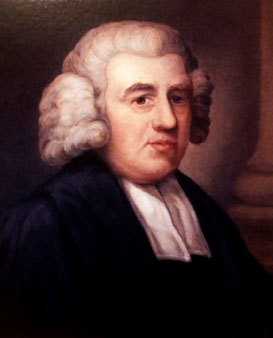
John Newton's "Nine Letters to a Pastor" explores various aspects of pastoral ministry and personal faith through a series of correspondences. The letters emphasize the importance of humility, reliance on Scripture, and a deep relationship with Jesus Christ, demonstrating the balance between doctrinal understanding and practical Christian living. Newton frequently references biblical texts, such as Psalm 121 and verses from John 14, which support his emphasis on trusting God's providence and the centrality of prayer in a believer's life. The practical significance of these letters lies in their call for pastors to be equipped through prayer, humility, and Scripture, and to rely on God's sovereignty in their ministry and personal struggles, ultimately aiming to encourage growth and faithfulness in pastoral duties.
Key Quotes
“Plain people are easily puzzled [...] rather wise than warm, rather positive than humble.”
“Duty is our part; the care is his.”
“Many have been deceived this way and sometimes when the event has shown them they were mistaken it has opened a door for great distress.”
“There are as good fish in the sea as any which are brought out of it."
What does the Bible say about prayer and duty?
The Bible emphasizes the importance of prayer and diligent duty, conveying that while our responsibility is to act, the ultimate care lies with God.
Philippians 4:6-7, Matthew 6:25-34
How do we know God is in control during difficult times?
The Scriptures affirm God's sovereignty over all circumstances, providing assurance that He governs everything for our good and His glory.
Romans 8:28, Isaiah 46:9-10
Why is it important to have faith in God's providence?
Believing in God's providence graces Christians with peace and assurance, knowing that He guides all events according to His wise purposes.
Proverbs 3:5-6, Philippians 4:19
How does prayer align with a Christian's duty?
Prayer and duty are intertwined in a Christian's life, as prayer seeks God's guidance and strength to fulfill responsibilities effectively.
Ephesians 6:18, 1 Thessalonians 5:17
Letter 1
Jan. 16, 1772.
Dear Sir,
It is true that I was apprehensive from your silence, that I had offended you—but when your letter came it made me full amends. And now I am glad I wrote as I did, though I am persuaded I shall never write to you again in the same strain. I am pleased with your gracious attitude; and your bearing so well to be told of the mistakes which I pointed out to you—endears you more to me than if you had not made them. Henceforward I can converse freely with you, and shall be glad when I have the opportunity.
Plain people are easily puzzled. I have met with many preachers who have appeared to be rather wise than warm, rather positive than humble, rather faultfinding than lively, and more disposed to talk of speculations than experience. However, let us give ourselves to the study of the Word, and to prayer; and may the great Teacher make every Scriptural truth food to our souls.
I desire to grow in knowledge—but I want nothing which has not a direct tendency to make sin more hateful, Jesus more precious to my soul; and at the same time to animate me to a diligent use of every appointed means, and an unreserved regard to every branch of duty. I think the Lord has shown me in a measure, that there is a consistent sense running through the whole Scripture, and I desire to be governed and influenced by it all. Doctrines, precepts, promises, warnings, all have their proper place and use. I think many of the errors of the present day, spring from separating those things which God has joined together, and insisting on some parts of the Word of God almost to the exclusion of the rest.
I have filled my paper with what I did not intend to say a word of when I began, and must leave other things which were more upon my mind for another season. I thank you for praying for me. Continue that kindness; I both need it and prize it.
Letter 2
July 31, 1773.
Dear Sir,
I received your sorrowful epistle yesterday; and in order to encourage you to write, I answer it today.
The ship was safe when Christ was in it—though he was really asleep. At present I can tell you good news, though you know it; He is wide awake, and his eyes are in every place! You and I, if we could be joined together, might perhaps make two tolerable ones. You are too anxious, and I am too easy in some respects. Indeed I cannot be too easy—when I have a right thought that all is safe in his hands. But if your anxiety makes you pray, and my composure makes me careless, you have certainly the best of it. However, the ark is fixed upon an immovable foundation; and if we think we see it totter, it is owing to a dizziness in our heads. Seriously, the times look dark and stormy, and call for much circumspection and prayer—but let us not forget that we have an infallible Pilot, and that the power and wisdom and honor of God are embarked with us. Jesus has both wind and weather are at his command, and he can turn the storm into a calm in a moment. We may therefore safely and confidently leave the government upon his shoulders. Duty is our part; the care is his.
A revival is needed with us, as well as with you; and I trust some of us are longing for it. We are praying and singing for one; and I send you, on the other side, a hymn, that you (if you like it) may sing with us. Let us take courage. though it may seem marvelous in our eyes, it is not so in the Lord's. He changed the desert into a fruitful field, and bid dry bones to live! And if he prepares our heart to pray—he will surely incline his ear to hear!
The miscarriages of professors are grievous—yet such things must be; how else could the Scriptures be fulfilled? But there is one who is able to keep us from falling. Some who have distressed us, perhaps never were truly converted; how then could they stand? We see only the outside. Others who are sincere are permitted to fall for our instruction, that we may not be high-minded, but fear. However, he who walks humbly—walks surely!
Letter 3
Feb. 22, 1774,
Dear Sir,
There is a danger of leaning to impressions. Texts of Scripture brought powerfully to the heart are very desirable and pleasant—if their tendency is to humble us, to give us a more feeling sense of the preciousness of Christ, or of the doctrines of grace; if they make sin more hateful, enliven our regard to the means, or increase our confidence in the power and faithfulness of God. But if they are understood, as intimating our path of duty in particular circumstances, or confirming us in purposes we may have already formed, not otherwise clearly warranted by the general strain of the Word, or by the leadings of Providence, they are for the most part ensnaring, and always to be suspected. Nor does their coming into the mind at the time of prayer give them more authority in this respect. When the mind is intent upon any subject, the imagination is often watchful to catch at anything which may seem to countenance the favorite pursuit. It is too common to ask counsel of the Lord—when we have already secretly determined for ourselves! And in this disposition, we may easily be deceived by the sound of a text of Scripture, which, detached from the passage in which it stands, may seem remarkably to tally with our wishes! Many have been deceived this way; and sometimes, when the event has shown them they were mistaken, it has opened a door for great distress, and Satan has found occasion to make them doubt even of their most solid experiences.
I have sometimes talked to **** upon this subject, though without the least suspicion of anything like what has happened. As to the present case, it may remind us all of our weakness. I would recommend prayer, patience, much tenderness towards her, joined with faithful expostulation. Wait a little while, and I trust the Lord who loves her will break the snare. I am persuaded, in her better judgment, she would dread the thoughts of doing wrong; and I hope and believe the good Shepherd, to whom she has often committed her soul and her ways—will interpose to restore and set her right.
I am sorry you think any of whom you have hoped well, are going back—but be not discouraged. I say again, pray, and wait—and hope the best. It is common for young professors to have a slack time; it is almost necessary, that they may be more sensible of the weakness and deceitfulness of their hearts, and be more humbled in future, when the Lord shall have healed their breaches, and restored their souls. We join in love to you and yours. Pray for us.
Letter 4
Feb. 3, 1775.
Dear Sir,
It is very lawful at your age to think of marriage, and, in the situation you describe, to think of money likewise. I am glad you have no person, as you say, fixedly in view; in that case, advice comes a post or two too late. But your expression seems to intimate, that there is one transiently in view. If it is so, since you have no settlement, if she has no money, I cannot but wish she may pass on until she is out of sight and out of mind.
I take it for granted, that you are free from the love of filthy lucre; and that money will never be the turning point with you in the choice of a wife. Methinks I hear you think, If I needed money, I would either dig or beg for it—but to preach or marry for money, that is far from me. I commend you. However, though the love of money is a great evil, money itself, obtained in a fair and honorable way, is desirable, upon many accounts, though not for its own sake. Food, clothes, and housing, cannot easily be had without it. Therefore, if these are necessary, money which procures them must be necessary likewise. If things were otherwise than you represent them, if you were able to provide for a wife, then I would say, Find a gracious girl (if she be not found already) whose person you like, whose temper you think will suit; and then, with your father and mother's consent (without which I think you would be unwilling to move), thank the Lord for her, marry her, and account her a valuable portion, though she should not have a shilling! But while you are without income or settlement, if you have thoughts of marriage, I hope they will be regulated by a due regard to consequences.
Those who set the least value upon money, have in some respects the most need of it. A generous mind will feel a thousand pangs in strait circumstances, which some unfeeling hearts would not be sensible of. You could perhaps endure hardships alone—yet it might pinch you to the very bone—to see the person you love exposed to them. Besides, you might have a John, a Thomas, and a William, and half a dozen more to feed (for they must all eat); and how this could be done without a sufficient income? Besides, you would be grieved not to find an occasional shilling in your pocket to bestow upon one or another of the Lord's poor, though you should be able to make some sort of a shift for those of your own house.
But is it not written, "The Lord will provide"? It is. But it is written also, "You shall not tempt the Lord your God." Hastily to plunge ourselves into difficulties, upon a persuasion that God will find some way to extricate us, seems to me a species of tempting him!
Therefore I judge, it is so far lawful for you to have a regard to money in looking out for a wife, that it would be wrong, that is, in other words, unlawful, for you to omit it, supposing you have a purpose of marrying in your present situation.
Many serious young women have a preference in favor of a minister of the Gospel; and I believe among such, one or more may be found as spiritual, as amiable, as suitable to make you a good wife, with a tolerable fortune to boot—as another who has not a penny. If you are not willing to trust your own judgment in the search, entreat the Lord to find her for you. He chose well for Isaac and Jacob; and you, as a believer, have warrant to commit your way to him, and many more express promises than they had for your encouragement. He knows your state, your wants, what you are at present, and what use he designs to make of you. Trust in him, and wait for him. Prayer, and faith, and patience, are never disappointed. I commend you to his blessing and guidance. Remember us to all in your house.
Letter 5
May 28, 1775.
Dear Sir,
You must not expect a long letter this morning. I am just going to court, in hopes of seeing the King, for he has promised to meet me. We can say that he is mindful of his promise; and yet it is astonishing, that though we are all in the same place, and the King in the midst of us—it is but here and there one (even of those who love him) can see him at once. However, in our turns we are all favored with a glimpse of him, and have had cause to say, How great is his goodness! How great is his beauty! We have the advantage of the queen of Sheba; a more glorious object to behold, and not so far to go for the sight of it. If a transient glance exceeds all that the world can afford for a long continuance, what must it be to dwell with him? If a day in his courts be better than a thousand elsewhere, what will eternity be in his presence?
I hope the more you see—the more you love; the more you drink—the more you thirst; the more you do for him—the more you are ashamed you can do so little; and that the nearer you approach to your journey's end—the more your pace is quickened. Surely, the power of spiritual attraction should increase—as the distance lessens. O that heavenly magnet! May it so draw us that we may not creep—but run. In common traveling, the strongest become weary if the journey is very long—but in the spiritual journey we are encouraged with a hope of going on from strength to strength. No road but the road to heaven, can thus communicate refreshment to those who walk in it, and make them more fresh and lively when they are just finishing their course than when they first set out!
Letter 6
April 18, 1776.
Dear Sir,
Are you sick, or lame of your right hand, or are you busy in preparing a folio for the press—that I hear nothing from you? You see by the excuses I would contrive, that I am not willing to suppose that you have forgotten me—but that your silence is rather owing to a cannot than a will not.
I hope your soul prospers. I do not ask you if you are always filled with sensible comfort—but do you find your spirit more bowed down to the feet and will of Jesus, so as to be willing to serve him for the sake of serving him, and to follow him, as we say, through thick and thin; to be willing to be anything or nothing—so that he may be glorified? I could give you plenty of good advice upon this head—but I am ashamed to do it, because I so poorly follow it myself! I want to live with him by the day, to do all for him, to receive all from him, to possess all in him, to live all to him, to make him my hiding-place and my resting-place. I want to deliver up that rebel SELF to him in chains—but the rogue, like Proteus, puts on so many forms, that he slips through my fingers! But I think I know what I would do if I could fairly catch him.
My soul is like a besieged city—a legion of enemies outside the gates, and a nest of restless traitors within—which hold a correspondence with those outside—so that I am deceived and undermined continually! It is a mercy that I have not been overwhelmed long ago. Without help from Jesus—it would soon be over with me. How often have I been forced to cry out, "O God, the enemies have gotten into your castle! They defiled your holy temple—and defaced all your work!" Indeed it is a miracle that I still hold out. I trust, however, I shall be supported to the end, and that my Lord will at length destroy the siege, and cause me to shout deliverance and victory!
Pray for me—that my walls may be strengthened and wounds healed. We are all pretty well as to the outward man, and join in love to all friends.
Letter 7
July 6, 1776.
Dear Sir,
I was abroad when your letter came—but employ the first post to thank you for your confidence. My prayers (when I can pray) you may be sure of. As to advice, I see not that the case requires much. Only be a quiet child—and lie patiently at the Lord's feet. He is the best friend and manager in these matters, for he has a key to open every heart!
I would not have taken Mr. Z****'s letter for a denial, as it seems you did. Considering the years of the parties involved, and other circumstances, a prudent parent could hardly say more, if he were inclined to favor your views. To me you seem to be in a tolerably fair way—but I know in affairs of this kind, that Mr. Self does not like suspense—but would like come to the point at once. But Mr. Faith (when he gets liberty to hold up his head) will own, that, in order to make our temporal mercies wear well, and to give us a clearer sense of the hand which bestows them—a waiting and a praying time are very seasonable.
Worldly people expect their schemes to run upon all-fours, as we say, and the objects of their wishes to drop into their mouths without difficulty; and if they succeed, they of course burn incense to themselves, and say, "This was my doing!" But believers meet with rubs and disappointments, which convince them, that if they obtain anything, it is the Lord who must do it for them. For this reason I observe, that he usually brings a death upon our prospects, even when it is his purpose to give us success in the outcome. Thus we become more assured that we did not act in our own selfish hearts, and have a more satisfactory view that his providence has been concerned in filling up the rivers and removing the mountains that were in our way. Then when he has given us our desire—how pleasant is it to look at it and say, This I got, not by my own sword, and my own bow—but I wrestled for it in prayer! I waited for it in faith, I put it into the Lord's hand, and from his hand I received it.
You have met with the story of one of our kings, who wanted to send a nobleman abroad as his ambassador, and he desired to be excused on account of some affairs which required his presence at home. The king answered, "You take care of my business—and I will take care of yours." I would have you think the Lord says thus to you. You were sent into the world for a nobler end than to be pinned to a girl's apron-string! And yet if the Lord sees it not good for you to be alone, he will provide a help-mate for you. I say, if he sees the marriage state best for you, he has the proper person already in his eye. And though she were in Peru or Nova-Zembla, he knows how to bring you together. In the mean time—you go and preach the Gospel. Watch in all things; endure afflictions; do the work of an Evangelist; make full proof of your ministry. And when the thoughts rise in your mind (for you have no door to shut them quite out), run with them to the Throne of Grace, and commit them to the Lord! Satan will perhaps try to force them upon you unseasonably and inordinately—but if he sees they drive you to prayer, he will probably desist, rather than be the occasion of doing you so much good.
Believe likewise, that as the Lord has the appointment of the person, so He fixes the time. His time is like the time of the tide—all the art and power of man can neither hasten nor retard it a moment. it must be waited for; nothing can be done without it, and, when it comes, nothing can resist it. It is unbelief which talks of delays. Faith knows that, properly, there can be no such thing. The only reason why the Lord seems to delay what he afterwards grants is—that the best hour is not yet come. I know you have been enabled to commit and resign your all to his disposal. You did well. May He help you to stand to the surrender. Sometimes He will put us to the trial, whether we mean what we say. He takes his course in a way we did not expect; and then, alas! how often does the trial put us to shame! Presently there is an outcry raised in the soul against his management of a particular situation; in short, all these things are against us! And then we go into the pulpit, and gravely tell the people how wise and how good he is; and preach submission to his will, not only as a duty—but a privilege! Alas, how deceitful is the heart! Yet since it is and will be so, it is necessary we should know it by experience. We have reason, however, to say, He is good and wise; for he bears with our perverseness, and in the outcome, shows us that if he had listened to our murmuring, and taken the methods we have prescribed to him, we would have been ruined indeed, and that He has been all the while doing us good—in spite of ourselves!
If I judge right, you will find your way providentially opened more and more; and yet it is possible, that when you begin to think yourself sure, something may happen to put you in a panic again. But a believer, like a sailor, is not to be surprised if the wind changes—but to learn the art of suiting himself to all winds for the time. And though many a poor sailor is shipwrecked, the poor believer shall gain his port. O it is good sailing with an infallible Pilot at the helm, who has the wind and weather at his command!
If I did not love you well, I would not have spared so much of the only day I have had to myself for these past two weeks. But I was willing you should know that I think of you and feel for you, if I cannot help you.
I have read Mr. ****'s book. Some things are strongly argued; in some he has laid himself open to a blow, and I doubt not but he will have it. I expect answers, replies, rejoinders, etc. and say with Leah, Gad, a troop comes. How the wolf will grin—to see the sheep and the shepherds biting and worrying one another! And well he may. He knows that contentions are a surer way to weaken the spirit of love, and stop the progress of the Gospel, than his old stale method of fire and sword. Well, we shall be of one heart and one mind when we get to heaven at least.
Let who will fight, I trust neither water nor fire shall set you and me at variance. We unite in love to you. The Lord is gracious to us, etc.
Letter 8
1776.
Dear Sir,
I do not often serve your letters so—but this last I burnt, believing you would like to have it out of danger of falling into improper hands. When I saw how eagerly the flames devoured the paper, how quickly and entirely every trace of the writing was consumed, I wished that the fire of the love of Jesus might as completely obliterate from your heart every uneasy impression which your disappointment has given you. Surely when he crosses our wishes it is always in mercy, and because we are short-sighted creatures, we often know not what we ask, nor what would be the consequences if our desires were granted.
Your pride, it seems, has received a fall by meeting a repulse. I know SELF does not like to be mortified in these affairs—but if you are made successful in wooing souls for Christ, I hope that will console you for meeting a rebuff when only wooing for yourself. Besides, I would have you pluck up your spirits. I have a good old proverb at your service. "There are as good fish in the sea—as any which are brought out of it." Perhaps all your difficulties have arisen from this—that you have not yet met the right person. if so, you have reason to be thankful that the Lord would not let you take the wrong, though you unwittingly would have done it if you could. Where the right one lies hidden, I know not. The Lord in his providence will disclose her, put her in your way, and give you to understand, "This is she!" Then you will find your business go forward with wheels and wings, and have cause to say that His choice and time were better than your own.
Did I not tell you formerly, that if you would take care of his business—he will take care of yours? I am of the same mind still. He will not allow those who fear Him and depend upon Him, to lack anything that is truly good for them. In the mean while, I advise you to take a lodging as near as you can to Gethsemane, and to walk daily to mount Golgotha, and borrow (which may be had for asking) that telescope which gives a prospect into the unseen world. A view of what is passing within the veil has a marvelous effect to compose our spirits, with regard to the little things which are daily passing here on earth. Praise the Lord, who has enabled you to fix your supreme affection upon Him who is alone the proper and suitable object of it, and from whom you cannot meet a denial or fear a change. He loved you first, and He will love you forever; and if He is pleased to arise and smile upon you, you are in no more necessity of begging for happiness to the prettiest creature upon earth, than of the light of a candle on Midsummer noon.
Upon the whole, I pray and hope the Lord will sweeten your cross, and either in kind or in kindness, make you good amends. Wait, pray, and believe—and all shall be well. A cross we must have somewhere; and those who are favored with health, plenty, peace, and a conscience sprinkled with the blood of Jesus, must have more causes for thankfulness than grief. Look round you, and take notice of the very severe afflictions which many of the Lord's own people are groaning under, and your trials will appear comparatively light.
Our love to all friends.
Letter 9
June 3, 1777.
Dear Sir,
It seems I must write something about the smallpox—but I know not well what. Not having had it myself, I cannot judge how I would feel if I were actually exposed to it. I am not a professed advocate for inoculation.
But if a person who fears the Lord should tell me—"I think I can do it in faith, looking upon it as a beneficial expedient, which God in his providence has revealed, and which therefore appears my duty to have recourse to, so that my mind does not hesitate with respect to the lawfulness, nor am I anxious about the event; being satisfied, that whether I live or die, I am in that path in which I can cheerfully expect his blessing;" —I do not know that I could offer a word by way of dissuasion.
If another person should say—"My times are in the Lord's hands; I am now in health, and am not willing to bring upon myself a disorder, the consequences of which I cannot possibly foresee. If I am to have the smallpox, I believe he is the best judge of the season and manner in which I shall be visited, so as may be most for his glory and my own good; and therefore I choose to wait his appointment, and not to rush upon even the possibility of danger without a call. If the very hairs of my head are numbered, I have no reason to fear that, supposing I receive the smallpox in a natural way, I shall have a single pimple more than he sees expedient; and why should I wish to have one less? Nay, admitting, which however is not always the case, that inoculation might exempt me from some pain and inconvenience, and lessen the apparent danger, might it not likewise, upon that very account, prevent my receiving some of those sweet consolations which I humbly hope my gracious Lord would afford me, if it were his pleasure to call me to a sharp trial? Perhaps the chief design of this trying hour, if it comes, may be to show me more of his wisdom, power, and love, than I have ever yet experienced. If I could devise a means to avoid the trouble, I know not how great a loser I may be in point of grace and comfort. Nor am I afraid of my face—it is now as the Lord, has made it, and it will be so after the smallpox. If it pleases him, I hope it will please me. In short, though I do not censure others—yet, as to myself, inoculation is what I dare not venture upon. If I did venture, and the outcome should not be favorable, I would blame myself for having attempted to take the management out of the Lord's hands, into my own; which I never did yet in other matters, without finding I am no more able than I am worthy to choose for myself. Besides, at the best, inoculation would only secure me from one of the innumerable natural evils the flesh is heir to. I would still be as liable as I am at present to a putrid fever, a bilious colic, an inflammation in the stomach, or in the brain, and a thousand formidable diseases which are hovering round me—and only wait his permission to cut me off in a few days or hours. And therefore I am determined, by his grace, to resign myself to his disposal. Let me fall into the hands of the Lord (for his mercies are great), and not into the hands of men!"
If a person should talk to me in this strain, most certainly I could not say, "Notwithstanding all this, your safest way is to be inoculated."
We preach and hear, and I hope we know something of faith—as enabling us to trust the Lord with our souls. I wish we had all more faith to trust him with our bodies, our health, our provision, and our temporal comforts likewise. The former should seem to require the strongest faith of the two! How strange is it, that when we think we can do the greater, we should be so awkward and unskillful when we aim at the less?
Give my love to your friend. I dare not advise—but if she can quietly return at the usual time, and neither run intentionally into the way of the smallpox, nor run out of the way—but leave it simply with the Lord, I shall not blame her. And if you will mind your praying and preaching, and believe that the Lord can take care of her without any of your contrivances, I shall not blame you. Nay, I shall praise him for you both. My prescription is to read Psalm 121 every morning before breakfast, and pray it over until the cure is effected.
"I lift up my eyes to the hills—where does my help come from? My help comes from the Lord, the Maker of heaven and earth. He will not let your foot slip—he who watches over you will not slumber; indeed, he who watches over Israel will neither slumber nor sleep. The Lord watches over you—the Lord is your shade at your right hand; the sun will not harm you by day, nor the moon by night. The Lord will keep you from all harm—he will watch over your life; the Lord will watch over your coming and going both now and forevermore!" Psalm 121:1-8
Letter 1
Sept. 14, 1765.
Dear Sir,
When I was at London last June, your name first reached me, and from that time I have been desirous to wish you success in the name of the Lord. A few weeks ago I received a further account from Mrs. ****, with a volume of your sermons. She likewise gave me a direction where to write, and an encouragement that a letter would not be unacceptable. The latter indeed I did not much need when I had read your book. Though we have no acquaintance, we are already united in the strictest ties of friendship, partakers of the same hope, servants of the same Lord, and in the same part of his vineyard. I therefore hold all apologies needless. I rejoice in the Lord's goodness to you; I pray for his abundant blessing upon your labors; I need an interest in your prayers; I have an affectionate desire to know more concerning you. these are my motives for writing.
Mrs.**** tells me that you have read my Narrative. I need not tell you, therefore, that I am one of the most astonishing instances of the forbearance and mercy of God upon the face of the earth. In the close of it, I mention a warm desire I had to the ministry. This the Lord was pleased to keep alive for several years, through a succession of views and disappointments. At length his hour came, and my way was made easy. I have been here about fifteenth months. The Lord has led me by a way that I little expected, to a pleasant lot, where the Gospel has been many years known, and is highly valued by many. We have a large church and congregation, and a considerable number of lively thriving believers, and in general go on with great comfort and harmony. I meet with less opposition from the world than is usual where the Gospel is preached. This burden was borne by Mr. B**** for ten years; and in that course of time some of the fiercest opposers were removed, some wearied, and some softened; so that we are now remarkably quiet in that respect. May the Lord teach us to improve the privilege, and preserve us from indifference.
How unspeakable are our obligations to the grace of God! What a privilege is it to be a believer! They are comparatively few, and we by nature were no nearer than others—it was grace, free grace, which made the difference! What an honor to be a minister of the everlasting Gospel! These upon comparison are perhaps fewer still. How wonderful that one of these few should be sought for among the wilds of Africa, reclaimed from the lowest state of impiety and misery, and brought to assure other sinners, from his own experience, that "there is forgiveness with God, that he may be feared."
And you, sir, though not left to give such flagrant proofs of the wickedness of the heart and the power of Satan—yet owe your present views to the same almighty grace. If the Lord had not distinguished you from your brethren, you would have been now in the character of a false minister, misleading the people, and opposing those precious truths you are now laboring to establish. Not unto us, O Lord—but unto your name be the glory! I shall be thankful to hear from you at your leisure. Be pleased to inform me whether you received the knowledge of the truth before or since you were in the ministry; how long you have preached the joyful sound of salvation by Jesus; and what is the state of things in your parts.
We are called to an honorable service—but it is arduous. What wisdom does it require to keep the middle path in doctrines, avoiding the equally dangerous errors on the right hand and the left! What steadiness, to speak the truth boldly and faithfully in the midst of a gainsaying world! What humility, to stand against the tide of popularity! What meekness, to endure all things for the elect's sake, that they may be saved! "Who is sufficient for these things?" We are not in ourselves—but there is an all-sufficiency in Jesus.
Our enemy watches us closely; he desires to have us, that he may sift us as wheat. He knows he can easily shake us—if we are left to ourselves. But we have a Shepherd, a Keeper, who never slumbers nor sleeps! If he permits us to be exercised, it is for our good; he is at hand to direct, moderate, and sanctify every dispensation. He has prayed for us—that our faith may not fail; and he has promised to maintain his fear in our hearts, that we may not depart from him. When we are prone to wander—he calls us back; when we say, "my feet slip"—his mercy holds us up; when we are wounded—he heals us; when we are ready to faint, he revives us.
The people of God are sure to meet with enemies—but especially the ministers. Satan bears them a double grudge. The world watches for their halting, and the Lord will allow them to be afflicted, that they may be kept humble, that they may acquire a sympathy with the sufferings of others, that they may be experimentally qualified to advise and help them, and to comfort them with the comforts with which they themselves have been comforted of God. But the Captain of our salvation is with us. His eye is upon us; his everlasting arm beneath us. In his name therefore may we go on, lift up our banners, and say, "If God be for us—who can be against us? Nay, in all these things we are more than conquerors, through him who has loved us!" The time is short. In a little while—he will wipe all tears from our eyes, and put a crown of life upon our heads with his own gracious hand!
If any occasions should call you into these parts, my house and pulpit will be glad to receive you. Pray for us, dear sir!
Letter 2
Nov. 2, 1765.
Very dear Sir,
Your last letter gave me great pleasure. I thank you for the particular account you have favored me with. I rejoice with you, sympathize with you, and find my heart opened to correspond with unreserved freedom. May the Lord direct our pens, and help us to help each other. The work you are engaged in is great, and your difficulties many—but faithful is he who has called you, who also will do it. The weapons which he has now put into your hands are not carnal—but mighty through God to the pulling down of strong-holds. Men may fight—but they shall not prevail against us, if we are but enabled to put our cause simply into the Lord's hands, and keep steadily on in the path of duty. He will plead our cause, and fight our battles; he will pardon our mistakes, and teach us to do better.
My experience as a minister is but small, having been but about eighteen months in the vineyard—but for about twelve years I have been favored with an increasing acquaintance among the people of God, of various ranks and denominations, which, together with the painful exercises of my own heart, gave me opportunity of making observations which were of great use to me when I entered upon the work myself. And ever since, I have found the Lord graciously supplying new lights and new strength, as new occurrences arise. So I trust it will be with you. I endeavor to avail myself of the examples, advice, and sentiments of my brethren—yet at the same time to guard against calling any man master. This is the peculiar of Christ. The best of men—are but men; the wisest may be mistaken; and that which may be right in another—might be wrong in me, through a difference of circumstances. The Spirit of God distributes his gifts variously; and I would no more be tied to act strictly by others' rules—than to walk in shoes of the same size. My shoes must fit my own feet.
I endeavor to guard against extremes. Our nature is prone to them, and we are liable likewise, when we have found the inconvenience of one extreme, to revert insensibly (sometimes to fly suddenly) to the other. I pray to be led in the middle of the path. I am what they call a Calvinist—yet there are particularities and hard sayings to be found among some of that system, which I do not choose to imitate. I dislike those sentiments against which you have borne your testimony in the note at the end of your preface. But, having known many precious souls in that party, I have been taught, that the kingdom of God is not in names and theological sentiments—but in righteousness, faith, love, peace, and joy in the Holy Spirit.
I would, however, upon some occasions oppose those tenets, if they had any prevalence in my neighborhood—but they have not. In general, I believe the surest way to refute or prevent error—is to preach the truth. I am glad to find you are aware of that spirit of enthusiasm which has so often broken loose and blemished hopeful beginnings, and that the foundation you build upon is solid and Scriptural. This will, I hope, save you much trouble, and prevent many offenses. Let us endeavor to make our people acquainted with the Scripture, and to impress them with a high sense of its authority, excellence, and sufficiency. Satan seldom remarkably imposes on ministers or people, except where the Word of God is too little consulted or regarded.
Another point in which I aim at a medium, is in what is called prudence. There is certainly such a thing as Christian prudence, and a remarkable deficiency of it is harmful. But caution too often degenerates into cowardice; and if the fear of man, under the name of prudence, gets within our guard, like a chilling frost it nips everything in the bud. Those who trust the Lord, and act openly, with an honest freedom and consistency, I observe that God generally bears them out, smooths their way, and makes their enemies their friends, or at least restrains their rage. While such as halve things, temporize, and aim to please God and man together, meet with double disappointment, and are neither useful nor respected. If we trust to Him—He will stand by us; if we regard men—He will leave us to make the best we can of them.
I have set down hastily what occurred to my pen, not to dictate to you—but to tell you how I have been led, and because some expressions in your letter seemed to imply that you would not be displeased with me for so doing. As to books, I think there is a medium here likewise. I have read too much in time past—yet I do not wholly join with some of our brethren, who would restrain us entirely to the Word of God. Undoubtedly this is the fountain; here we should dwell—but a moderate and judicious perusal of other authors may have its use; and I am glad to be indebted to such helps, either to explain what I do not understand, or to confirm me in what I do. Of these, the writings of the last age afford an immense variety.
But, above all, may we, dear sir, live and feed upon the precious promises, John 14:16, John 14:17, John 14:26; and John 16:13-15. There is no teacher like Jesus, who by his Holy Spirit reveals himself in his Word—to the understanding and affections of his children. When we thus behold his glory in the Gospel looking-glass, we are changed into his image. Then our hearts melt, our eyes flow, our stammering tongues are unloosed. That this may be your increasing experience, is my sincere prayer.
Letter 3
Jan. 21, 1766.
Dear Sir,
Your letters give me the sincerest pleasure. Let us believe that we are daily thinking of and praying for each other, and write when opportunity offers, without apologies. I praise the Lord that he has led you so soon to a settled judgment in the leading truths of the Gospel. For lack of this, many have been necessitated with their own hands to pull down what, in the first warm emotions of their zeal, they had labored hard to build. It is a mercy, likewise, to be enabled to acknowledge what is excellent in the writings or conduct of others, without adopting their singularities, or discarding the whole—on account of a few blemishes. We should be glad to receive instruction from all, and avoid being wholly led by any. We have one master, even Christ.
We may grow wise quickly in opinions—by learning from books and men—but vital, experimental knowledge can only be received from the Holy Spirit, the great instructor and comforter of his people. And there are two things observable in his teaching:
1. That he honors the means of his own appointment, so that we cannot expect to make any great progress without diligence on our part.
2. That he does not teach all at once—but by degrees. Experience is his school; and by this I mean the observation and improvement of what passes within us and around us in the course of every day.
The Word of God affords a history in miniature, of the heart of man, the devices of Satan, the state of the world, and the method of grace. And the most instructing and affecting commentary on it, to an enlightened mind, may be gathered from what we see, feel, and hear from day to day. No knowledge in spiritual things but what we acquire in this way, is properly our own, or will abide the time of trial.
This is not always sufficiently considered. We are ready to expect that others should receive upon our testimony, in half an hour's time, those views of things which have cost us years to attain! But none can be brought forward faster than the Lord is pleased to communicate inward light. Upon this ground controversies have been multiplied among Christians to little purpose; for plants of different standings will be in different degrees of growth.
A young Christian is like a green fruit—it has perhaps a disagreeable austerity, which cannot be corrected out of its proper course; it needs time and growth. Wait a while, and, by the nourishment it receives from the root, together with the action of the sun, wind, and rain in succession from without—it will insensibly acquire that flavor and maturity for the lack of which, an unskillful judge would be ready to reject it as nothing worth.
We are favored with many excellent books in our tongue—but I with you agree in assigning one of the first places (as a teacher) to John Owen. I have just finished his Discourse on the Holy Spirit, which is an epitome, if not the master-piece, of his writings. I would be glad to see the republication you speak of—but I question if the booksellers will venture upon it. I shall perhaps mention it to my London friends. As to Robert Leighton, besides his Select Works, there are two octavo volumes, published at Edinburgh in the year 1748, and since reprinted at London. They contain a valuable Commentary on Peter's First Epistle, and Lectures on Isaiah six, Psalm 39:1-13, Psalm 134:1-3, and a part of Romans 12. I have likewise a small quarto, in Latin, of his Divinity Lectures, when professor at Edinburgh. Mine was printed in London 1698. I believe this book is scarce. I set the highest value upon it. He has wonderfully united the simplicity of the Gospel with all the captivating beauties of style and language. Burner says he was the greatest master of the Latin tongue he ever new; of which, together with his compass of learning, he has given proof in his Lectures. Yet, in his gayer dress, his eminent humility and spirituality appear to no less advantage than when clad in plain English. I think it may be said to be a diamond set in gold. I could wish it translated, if it was possible (which I almost question) to preserve the beauty and spirit of the original.
Jonathan Edwards on Free Will, I have read with pleasure, as a good answer to the proud reasoners in their own way—but a book of that sort cannot be generally read. Where the subject matter is unpleasing, and the method of treating it requires more attention than the Athenian spirit of the times will bear, I do not wonder that it is uncalled for.
You send us good news indeed, that two more of your brethren are declaring on the Gospel side. May the Lord confirm and strengthen them, add yet to your numbers, and make you helps and comforts to each other. Surely he is about to spread his work. Happy are those whom he honors to be fellow-workers with him. Let us account the disgrace we suffer for his Name's sake—to be our great honor. Many will be against us—but there are more for us. All the praying souls on earth, all the glorified saints in heaven, all the angels of God, yes, the God of angels himself—all are on our side. Satan may rage—but he is a chained enemy. Men may contend and fight—but they cannot prevail.
Two things we shall especially need—courage and patience, that we neither faint before them, nor upon any provocation act in their spirit. If we can pity and pray for them, return good for evil, make them sensible that we bear them a hearty good-will, and act as the disciples of Him who wept for his enemies, and prayed for his murderers—in this way we shall find the Lord will plead our cause, soften opposers, and by degrees give us a measure of outward peace. Blind zeal and imprudence have often added to the burden of the cross. I rejoice that the Lord has led you in a different way; and I hope your doctrine and example will make your path smoother every day—you find it so in part already. As the Lord calls out a people, and witnesses for you to the truth of his Word—you will find advantage in bringing them often together. The interval from Sabbath to Sabbath is a good while, and affords time for the world and Satan to creep in. Intermediate meetings for prayer, etc., when properly conducted, are greatly useful. I could wish for larger sheets and longer leisure—but I am constrained to say adieu, in our dear Lord and Savior.
Letter 4
Dec. 12, 1767.
Dear Sir,
This is not intended as an answer to your last kind letter—but an occasional line, in consequence of the account Mr. T**** has given me of your late illness. I trust this dispensation will be useful to you; and I wish the knowledge of it may be so to me. I am favored with an unusual share of good health, and an equal flow of spirits. If the blow you have received should be a warning to me, I shall have cause to be thankful. I am glad to hear you are better; I hope the Lord has no design to disable you from service—but rather (as he did Jacob) to strengthen you by wounding you; to maintain and increase in you that conviction which, through grace, you have received—of the vanity and uncertainty of everything below; to give you a lively sense of the value of health and opportunities; and to add to the treasury of your experience—new proofs of his power and goodness, in supporting, comforting, and healing you; and likewise to quicken the prayers of your people for you, and to stir them up to use double diligence in the present improvement of the means of grace, while by this late instance they see how soon and suddenly you might have been removed from them.
I understand you did not feel that lively exercise of faith and joy which you would have hoped to have found at such a season. But let not this discourage you from a firm confidence, that, when the hour of death shall come, the Lord will be faithful to his gracious promise, and give you strength sufficient to encounter and vanquish your last enemy. You had not this strength lately, because you needed it not. for though you might think yourself near to death, the Lord intended to restore you, and he permitted you to feel your weakness, that you might know your strength does not consist in grace received—but in his fullness, and his promise to communicate from himself as your occasions require. Oh, it is a great thing to be strong in the grace that is in Christ Jesus! but it is a hard lesson. It is not easy to understand it in theory—but, when the Lord has taught us so far, it is still more difficult to reduce our knowledge to practice.
But this is one end he has in view in permitting us to pass through such a variety of inward and outward trials, that we may cease from trusting in ourselves, or in any creature or frame or experiences, and be brought to a state of submission and dependence upon him alone. I was once visited something in the same way, seized with a fit of the apoplectic kind, which held me near an hour, and left a disorder in my head which quite broke the scheme of life! This was, consequently, one of the means the Lord appointed to bring me into the ministry—but I soon perfectly recovered.
I think dear Mr. **** some years since, had a sudden stroke on a Christmas day, which disabled him from duty for a time. To him and to myself, these turns were only like the caution which Philip of Macedon ordered to be repeated to him every morning, "Remember you are mortal." I hope it will be no more to you—but that you shall live to praise him, and to give many cause to praise him on your behalf.
Blessed be God—we are in safe hands! The Lord himself is our keeper; nothing befalls us but what is adjusted by his wisdom and love. Health is his gift; and sickness, when sanctified, is a token of his love likewise. Here we may meet with many things which are not joyous—but grievous to the flesh—but he will in one way or other sweeten every bitter cup, and before long he will wipe away all tears from our eyes. Oh that joy, that crown, that glory—which awaits the believer! Let us keep the prize of our high calling in view, and press forward in the name of Jesus the Redeemer, and he will not disappoint our hopes.
I am but just come off from a journey, am weary, and it grows late; must therefore break off. When you have leisure and strength to write, gratify me with a confirmation of your recovery, for I shall be somewhat anxious about you.
Letter 5
March 14, 1775.
My dear Friend,
I thought you long in writing—but am afraid I have been longer. A heavy family affliction called me from home in December, which put me out of my usual course, and threw me behind-hand in my correspondence—yet I did not suspect the date of your last letter was so old by two months as I now find it. Whether I write more frequently or more seldom—the love of my heart to you is the same; and I shall believe the like of you—yet, if it can be helped, I hope the interval will not be so long again on either side.
I am glad that the Lord's work still flourishes in your parts, and that you have a more comfortable prospect at home than formerly. I was pleased with the acceptance you found at S****; which I hope will be a pledge of greater things. I think affairs in general, with respect to this land, have a dark appearance—but it is comfortable to observe, that, amidst the abounding of iniquity, the Lord is spreading his Gospel; and that, though many oppose—yet in most places where the Word is sent, great numbers seem disposed to hear. I am going (if the Lord pleases) into Leicestershire on Friday. This was lately such a dark place as you describe your country to be, and much of it is so still—but the Lord has visited three of the principal towns with Gospel light. I have a desire of visiting these brethren in the vineyard, to bear my poor testimony to the truths they preach, and to catch, if I may, a little fire and fervor among them.
I do not often go abroad—but I have found a little excursion now and then (when the way is made plain) has its advantages, to quicken the spirits, and enlarge the sphere of observation. On these accounts, the recollection of my last journey gives me pleasure to this day; and very glad would I be to repeat it—but the distance is so great, that I consider it rather as desirable than practical.
My experiences vary as well as yours. But possibly your sensations, both of the sweet and of the bitter, may be stronger than mine. The enemy assaults me more by sap—than by storm; and I am ready to think I suffer more by languor than some of my friends do—by the sharper conflicts to which they are called. So likewise, in those seasons which comparatively I call my best hours, my sensible comforts are far from lively. But I am in general, enabled to hold fast my confidence, and to venture myself upon the power, faithfulness, and compassion of that adorable Savior to whom my soul has been directed and encouraged to flee for refuge! I am a poor, changeable, inconsistent creature—but he deals graciously with me. He does not leave me wholly to myself—but I have such daily proofs of the malignity and efficacy of the sin that dwelt in me, as ought to cover me with shame and confusion of face, and make me thankful if I am permitted to rank with the lowest of those who sit at his feet. That I was ever called to the knowledge of his salvation, was a singular instance of his sovereign grace; and that I am still preserved in the way, in defiance of all that has arisen from within and from without to turn me aside—must be wholly ascribed to the same sovereignty! And if, as I trust, he shall be pleased to make me a conqueror at last, I shall have peculiar reason to say, Not unto me, not unto me—but unto your name, O Lord, be the glory and the praise!
How oft have sin and Satan strove
To rend my soul from you, my God!
But everlasting is your love,
And Jesus seals it with his blood.
The Lord leads me, in the course of my preaching, to insist much on a life of communion with himself, and of the great design of the Gospel to render us conformable to him in love. And as, by his mercy, nothing appears in my outward conduct remarkably to contradict what I say—many, who only can judge by what they see, suppose I live a very happy life. But, alas! if they knew what passes in my heart, how dull my spirit is in secret, and how little I am myself affected by the glorious truths I propose to others—they would form a different judgment! Could I be myself what I recommend to them—I would be happy indeed. Pray for me, my dear friend, that, now the Lord is bringing forward the pleasing spring, he may favor me with a spring season in my soul; for indeed I mourn under a long winter.
Letter 6
April 16, 1772.
My dear Friend,
I hope the Lord has contracted my desires and aims almost to the one point of study—the knowledge of his truth. All other acquisitions are transient, and comparatively vain! And yet, alas! I am a slow scholar! Nor can I see in what respect I get forward, unless that every day I am more confirmed in the conviction of my own emptiness and inability to all spiritual good. And as, notwithstanding this, I am still enabled to stand my ground, I would hope, since no effect can be without an adequate cause, that I have made some advance, though in a manner imperceptible to myself, towards a more simple dependence upon Jesus as my all in all. It is given me to thirst and to taste, if it is not given me to drink abundantly; and I am thankful for the desire.
I see and approve the wisdom, grace, suitableness, and sufficiency of Gospel salvation; and since it is for sinners, and I am a sinner, and the promises are open—I do not hesitate to call it mine. I am a weary, heavy-laden soul; Jesus has invited me to come, and has enabled me to put my trust in him. I seldom have an uneasy doubt, at least not of any continuance, respecting my pardon, acceptance, and saving interest in all the blessings of the New Testament. And, amidst a thousand infirmities and evils under which I groan, I have the testimony of my conscience, when under the trial of his Word, that my desire is sincerely towards him, that I choose no other portion, that I allowedly serve no other master.
When I told this to our friend lately—he wondered, and asked, "How is it possible, that, if you can say these things, you should not be always rejoicing?" Undoubtedly I derive from the Gospel a peace at bottom, which is worth more than a thousand worlds. But though I rest and live upon the truths of the Gospel—they seldom impress me with a warm and lively joy. In public, indeed, I sometimes seem in earnest and much affected—but even then it appears to me rather as a part of the gift entrusted to me for the edification of others, than as a sensation which is properly my own. For when I am in private, I am usually dull and stupid to a strange degree, or the prey to a wild and ungoverned imagination; so that I may truly say, when I would do good, evil, horrid evil, is present with me!
Ah, how different is this from sensible comfort! and if I was to compare myself to others, to make their experience my standard, and was not helped to retreat to the sure Word of God as my refuge, how hard would I find it to maintain a hope that I had either part or lot in the matter! What I call my best times, are when I can find my attention in some little measure fixed to what I am about; which indeed is not always, nor frequently, my case in prayer, and still seldom in reading the Scripture. My judgment embraces these means as blessed privileges, and Satan has not prevailed to drive me from them. But in the performance of them, I too often find them tasks; feel a reluctance when the seasons return, and am glad when they are finished. O what a mystery is the heart of man! What a warfare is the life of faith! (at least in the path the Lord is pleased to lead me.) What reason have I to lie in the dust as the chief of sinners, and what cause for thankfulness that salvation is wholly of grace!
Notwithstanding all my complaints, it is still true that Jesus died and rose again; that he ever lives to make intercession, and is able to save to the uttermost! But, on the other hand, to think of that joy of heart in which some of his people live, and to compare it with that apparent deadness and lack of spirituality which I feel—this makes me mourn. However, I think there is a Scriptural distinction between faith and feeling, grace and comfort—they are not inseparable, and perhaps, when together, the degree of the one is not often the just measure of the other. But though I pray that I may be ever longing and panting for the light of his countenance—yet I would be so far satisfied, as to believe the Lord has wise and merciful reasons for keeping me so short of the comforts which he has taught me to desire and value more than the light of the sun!

Comments
Your comment has been submitted and is awaiting moderation. Once approved, it will appear on this page.
Be the first to comment!