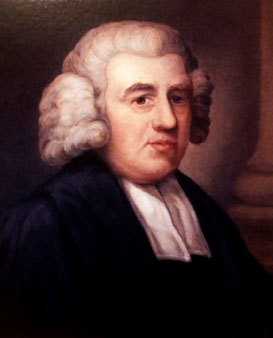
In "Little Trials," John Newton addresses the theological implications of life's various trials, emphasizing that the weight of a trial is not determined by its outward significance but by its impact on the believer's spirit. He argues that even seemingly small challenges can become overwhelming when faced without reliance on God's strength, while Christ's power can turn the heaviest trials into light burdens. Newton references Scripture, particularly Philippians 4:13 (“I can do all things through Christ who strengthens me”) and 2 Corinthians 12:9 (“My grace is sufficient for you”), to illustrate God's provision in times of difficulty. The practical significance of his argument lies in the understanding that dependence on Christ is crucial for maintaining joy and resilience during both significant and trivial adversities, highlighting a core Reformed doctrine of total reliance on God's grace.
Key Quotes
“The smallest will be too heavy for us if we are left to grapple with it in our own strength or rather weakness.”
“When faith is in exercise though the flesh will have its feelings the spirit will triumph over them.”
“It requires the same grace to bear with a right spirit a cross word—as a cross injury or the breaking of a china plate—as the death of an only son.”
What does the Bible say about trials and hardships?
The Bible teaches that trials should be viewed in light of God's power and love, which can transform our suffering into growth.
Romans 5:3-5, 2 Corinthians 12:9
How do we know that God provides strength in our trials?
We know that God provides strength in our trials through Scripture and personal experience of His sufficiency.
Philippians 4:13, 2 Corinthians 1:3-4
Why is understanding our weakness important for Christians?
Understanding our weakness is crucial for Christians as it drives us to depend on God's grace rather than our own strength.
2 Corinthians 12:9
October 15, 1774.
My dear friend,
I think the greatness of trials is to be estimated rather by the impression they make upon our spirits, than by their outward appearance. The smallest will be too heavy for us if we are left to grapple with it in our own strength, or rather weakness. And if the Lord is pleased to put forth his power in us, he can make the heaviest trial light. A lively impression of his love, or of his sufferings for us, or of the glories within the veil, accompanied with a due sense of the misery from which we are redeemed; these thoughts will enable us to be not only submissive—but even joyful, in tribulations. When faith is in exercise, though the flesh will have its feelings, the spirit will triumph over them.
But it is needful that we should know that we have no sufficiency in ourselves, and in order to know it, we must feel it; and therefore the Lord sometimes withdraws his sensible influence, and then the buzzing of a fly will be an overmatch for our patience. At other times he will show us what he can do in us and for us; then we can adopt the Apostle's words, and say—I can do and suffer all things, through Christ strengthening me. He has said, My grace is sufficient for you.
It is observable, that the children of God seldom disappoint our expectations under great trials; if they show a wrongness of spirit, it is usually in such little incidents that we are ready to wonder at them. For which, two reasons may be principally assigned. When great trials are in view, we run simply and immediately to our all-sufficient Friend, feel our dependence, and cry in good earnest for help; but if the occasion seems small, we are too apt secretly to lean to our own wisdom and strength, as if in such slight matters we could make shift without him. Therefore in these we often fail.
Again: the Lord deals with us as we sometimes see mothers with their children. When a child begins to walk, he is often very self-important: he thinks he needs no help, and can hardly bear to be supported by the finger of another. Now in such a case, if there is no danger of harm from a fall, as if he is on a plain carpet, the mother will let him alone to try how he can walk. He is pleased at first—but shortly, down he goes! A few experiments of this kind convince him that he is not so strong and able as he thought, and make him willing to be led. But was he upon the brink of a river or a precipice, from whence a fall might be fatal, the tender mother would not trust him to himself—no not for a moment! I have not room to make the application, nor is it needful. It requires the same grace to bear with a right spirit a cross word—as a cross injury; or the breaking of a china plate—as the death of an only son.

Comments
Your comment has been submitted and is awaiting moderation. Once approved, it will appear on this page.
Be the first to comment!