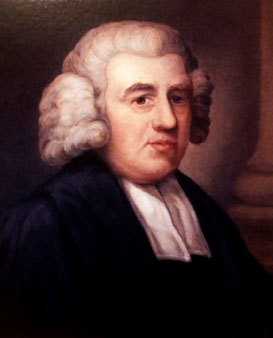
The main theological topic addressed in John Newton's "The Work of Grace" is the nature and experience of God's grace in the life of the believer. Newton emphasizes that while grace is powerful and transforming, its work is often gradual, comparing it to a slowly growing oak rather than an instant phenomenon. He uses Scripture indirectly, referring to promises that those who believe will not be confounded, thus underlining the faithfulness of God's grace through trials. The practical significance of this message lies in cultivating patience and understanding in believers, encouraging them to recognize their own weaknesses and rely on God's timing in their spiritual growth, which leads to a deeper and more resilient faith built on the sure foundation of Christ.
Key Quotes
“Without the immediate protection and care of Him who preserves the stars in their courses there could be no traveling safely a few miles nor even sitting in safety by the fire-side.”
“If left to ourselves we would have built upon sand. But he has provided and revealed a sure foundation... which cannot fall for it is founded upon a rock, the Lord Jesus Christ.”
“The work of grace is not like Jonah's gourd which sprang up and flourished in a night and as quickly withered but rather like the oak which... advances with an almost imperceptible growth.”
“I know that I am his child because he teaches me to say Abba Father; I know that I am his because he has enabled me to choose him for my best portion.”
What does the Bible say about the work of grace?
The Bible teaches that grace is God's unmerited favor towards sinners, enabling transformation and faith in Christ.
In addition, the work of grace is a gradual process, much like the growth of a tree, as illustrated in the article through the comparison of an oak tree's slow but steady development. Newton encourages patience in the believer’s life, assuring that although growth in grace may seem imperceptible at times, it is indeed occurring under the watchful care of the Lord. This slow maturation process reflects a deepening relationship with Christ, where reliance and trust in His purposes can lead to sustained joy and faithfulness.
How do we know God's grace is true?
We know God's grace is true through scripture, personal experience, and the transformation it brings in our lives.
Moreover, the transformative power of grace in a believer's life is undeniable. As individuals grow in their understanding of God's character and His unchanging promises, they come to recognize that their ability to choose and desire Him comes from grace itself. The ongoing work of the Holy Spirit in revealing spiritual truths aligns with the witness of grace in a believer’s life, affirming its reality and sufficiency. Ultimately, we know grace is true as it produces faith and obedience, leading to a life that reflects Christ's love.
Why is patience important in the work of grace?
Patience is crucial in the work of grace as it allows for spiritual growth and deeper dependence on God.
Additionally, patience cultivates a deeper reliance on God's timing and wisdom. While believers may desire immediate assurance or powerful manifestations of grace, the Lord’s timing is always perfect. Trusting in His plan helps to build character, as believers learn to wait on the Lord and find strength in His promises. This reliance fosters a more profound relationship with Christ and reflects a grace-filled attitude that is vital for enduring the trials of life.
September 3, 1776.
My dear Miss M,
We saw no danger upon the road homeward; but my judgment tells me we are always upon the brink of danger, though we see it not; and that, without the immediate protection and care of Him who preserves the stars in their courses--there could be no traveling safely a few miles, nor even sitting in safety by the fire-side! But with him we are safe in all places and circumstances, until our race is done, and his gracious purposes concerning us in the present life are completely answered. Then he will call us home, that we may see his face, and be with him forever! It will not much matter, by what messenger he shall be pleased to call us home by.
While he took care of us abroad, he watched over our concerns at home likewise; so that we found all well upon our return, and met with nothing to grieve us. Many go out and return home no more, and many find distressing things have happened in their absence; but we have to set up our Ebenezer, and to say, Hitherto he has helped us! Assist me to praise him. The Lord is leading you in the good old way, in which you may perceive the footsteps of his flock who have gone before you. They had in their day the same difficulties, fears, and troubles as we have; and, through mercy, we partake of the same consolation which supported and refreshed them; and the promises which they trusted and found faithful--are equally sure to us. It is still true--that those who believe shall never be confounded.
If left to ourselves, we would have built upon sand. But he has provided and revealed a sure foundation, removed our natural prejudices against it; and now, though rains, and floods, and storms assault our building, it cannot fall--for it is founded upon a rock--the Lord Jesus Christ!
The suspicious and fears which arise in an awakened mind, proceed, in a good measure, from remaining unbelief; but not wholly so, for there is a jealousy and self-distrust of ourselves, a wariness, owing to a sense of the deceitfulness of our hearts--which is a grace, and a gift of the Lord.
Some people, who have much zeal--but are destitute of this jealous fear--may be compared to a ship which spreads a great deal of sail--but is not properly ballasted, and is therefore in danger of being over set whenever a storm comes. A sincere person has many reasons for distrusting his own judgment; is sensible of the vast importance of the case, and afraid of too hastily concluding in his own favor, and therefore not easily satisfied. However, this fear, though useful, especially to young beginners, is not comfortable. Those who simply wait upon Jesus, are gradually freed from it, in proportion as their knowledge of him, and their experience of his goodness, increases.
He has a time for settling and establishing them in himself--and his time is best. We are hasty, and would be satisfied at once; but his word is, "wait for the Lord's time." The work of grace is not like Jonah's gourd, which sprang up and flourished in a night--and as quickly withered; but rather like the oak, which, from a little acorn and a tender plant, advances with an almost imperceptible growth from year to year, until it becomes a broad-spreading and deep-rooted tree, and then it stands for ages. The Christian oak shall grow and flourish forever.
When I see any, soon after they appear to be awakened, making a speedy profession of great joy, before they have a due acquaintance with their own hearts--I am in pain for them. I am not sorry to hear them afterwards complain that their joys are gone, and they are almost at their wit's end; for, without some such check, to make them feel their weakness and dependence, I seldom find them to turn out well; either their fervor insensibly abates, until they become quite cold, and sink into the world again--of which I have seen many instances. Or, if they do not give up all--their walk is uneven, and their spirit has not that savor of brokenness and true humility which is a chief ornament of our holy profession. If they do not feel the plague of their hearts at first--they find it out afterwards, and too often manifest it to others.
Therefore, though I know the Spirit of the Lord is free, and will not be confined to our rules, and there may be excepted cases; yet, in general, I believe the old proverb, "Soft and fair goes far," will hold good in Christian experience. Let us be thankful for the beginnings of grace, and wait upon our Savior patiently for the increase. And as we have chosen him for our physician--let us commit ourselves to his management, and not prescribe to him what he shall prescribe for us. He knows us and he loves us better than we do ourselves, and will do all things well.
You say, "It never came with power and life to my soul that he died for me." If you mean that you never had any extraordinary sudden manifestation, something like a vision or a voice from heaven, confirming it to you, I can say the same. But I know he died for sinners; I know I am a sinner; I know he invites those who are ready to perish; I am such a one. I know, upon his own invitation, I have committed myself to him; and I know, by the effects, that he has been with me hitherto, otherwise I should have been an apostate long ago! And therefore I know that he died for me; for had he been pleased to damn me (as he justly might have done), he would not have shown me such things as these.
If I must perish, would the Lord
Have taught my heart to love his Word?
Would he have given me eyes to see
My danger and my remedy;
Revealed his name, and bid me pray--
Had he resolved to say me nay?
I know that I am his child, because he teaches me to say, Abba, Father. I know that I am his, because he has enabled me to choose him for my best portion. For such a choice and desire could never have taken place in my heart--if he had not placed it there himself. By nature I was too blind to know him, too proud to trust him, too obstinate to serve him, too base-minded to love him. The enmity I was filled with against his government, righteousness, and grace--was too strong to be subdued by any power but his own. The love I bear to him is but a faint and feeble spark--but it is an emanation from himself; he kindled it, and he keeps it alive; and because it is his work, I trust many waters shall not quench it.

Comments
Your comment has been submitted and is awaiting moderation. Once approved, it will appear on this page.
Be the first to comment!