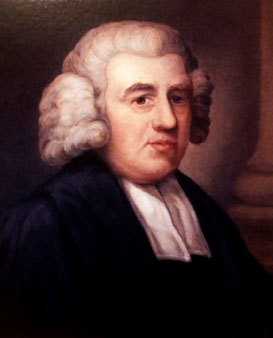
The article "The Impatient Patient" by John Newton addresses the theological theme of spiritual healing and the believer's relationship with Christ as the divine physician. Newton uses his personal reflections to argue that just as patients trust skilled surgeons during painful operations for their physical well-being, Christians must learn to trust God's providential and often painful work in their spiritual lives. He references the constant need for spiritual surgery, drawing parallels with Scripture to highlight God's compassion and the believer's inclination toward impatience and doubt in times of suffering. The practical and doctrinal significance lies in acknowledging the believer's ongoing struggle with sin and the importance of surrendering to God's will, ultimately cultivating a deeper appreciation for Christ's grace and mercy.
Key Quotes
“Yet alas I too often discover such impatience, distrust, and complaining when under His hand.”
“I have gained that which I once would rather have been without such accumulated proofs of the deceitfulness and desperate wickedness of my heart.”
“Every grain of this experience is worth mountains of gold.”
“Oh, I may rejoice in Him to think that He will not be ashamed of me.”
What does the Bible say about the surgeon's work of God on our souls?
The Bible teaches that God's work in our souls is akin to a surgeon performing necessary operations for our spiritual health.
Therefore, our patience and trust in Him are vital as we undergo these spiritual 'operations.' Like Newton, we often exhibit impatience and doubt under God’s hand, questioning His methods and timing. It’s important to remember that the temporary pain of growth is intended for our long-term benefit, leading us ultimately to a fuller experience of His healing grace and righteousness, as stated in Isaiah 53:5, 'by His wounds we are healed.'
Psalm 147:3, Isaiah 53:5
How do we know God's compassion is true?
God's compassion is evident in His continual care and provision for our souls, which is foundational to our faith.
Furthermore, Newton reflects on his own life experiences, noting that even amid his struggles, he recognizes the transformative power of God's grace at work within him. His ongoing awareness of his failings has led him to a deeper understanding of God’s character, fostering a sense of gratitude for the redemptive work of Christ. Through this lens, Christians can find assurance in God's unwavering compassion, seeing how He continually works to bring healing and restoration into our lives.
2 Corinthians 1:3-4, Romans 5:8
Why is patience important for Christians?
Patience is crucial for Christians as it allows us to trust God's process in our spiritual growth and healing.
Newton articulates his struggles with impatience during spiritual surgery, often desiring to direct God's hand rather than submit to His wise care. However, developing patience is intertwined with our grasp of God’s faithfulness and capacity for healing. The more we experience God’s grace in our lives, the more we are prompted to wait on Him, knowing that every trial shapes our character, is for our good, and glorifies God. Colossians 1:11 underscores this truth, encouraging believers to be strengthened with all power for endurance and patience with joy.
James 1:2-4, Colossians 1:11
November 23, 1774.
My dear Sir,
I hope to be informed in due time—that the Lord has given you full health and cure. He has preserved me hitherto from the hands of surgeons; but I feel as if my flesh would prove, as you say, a very coward, were it needful to submit to a painful operation. Yet I observe, when such operations are necessary, if people are satisfied of a surgeon's skill and prudence, they will not only yield to be cut at his pleasure, without pretending to direct him where, or how long, he shall make the incision—but will thank and pay him for putting them to pain, because they believe it for their advantage. I wish I could be more like them in my concerns.
My body, as I said, is, through mercy, free from considerable ailments—but I have a soul which requires surgeon's work continually: there is some tumor to be cut out, some dislocation to be reduced, some fracture to be healed, almost daily! It is my great mercy, that One who is infallible in skill, who exercises incessant care and boundless compassion towards all his patients, has undertaken my case! And, as complicated as it is, I dare not doubt his making a perfect cure! Yet, alas! I too often discover such impatience, distrust, and complaining, when under his hand; am so apt to find fault with the instruments he is pleased to make use of; so ready to think the beneficial wounds he makes are unnecessary, or too large. In a word, I show such a promptness to control, were I able, or to direct, his operations, that, were not his patience beyond expression, he would before now have given me up!
I am persuaded no money would induce any doctor to attend upon a patient who should act towards him—as I have towards my best Physician. Sometimes I indulge a hope that I am growing wiser, and think, "Surely, after such innumerable proofs as I have had, that he does all things well, I shall now be satisfied to leave myself quietly and without reserve to His disposal." A thousand such surrenders I have made, and a thousand times I have retracted them. Yet still he is gracious. Oh, how shall I praise him at last!
I thank you for your letter; I never receive one from you without pleasure, and, I believe, seldom without profit, at least for the time. I believe, with you, that there is much of the proper and designed efficacy of the Gospel mystery which I have not yet experienced; and I suppose those who are advanced far beyond me in the Divine life judge the same of their utmost present attainments. Yet I have no idea of any permanent state in this life—which shall make my experience cease to be a state of warfare and humiliation. At my first setting out, indeed, I thought to be better, and to feel myself better from year to year; I expected by degrees to attain everything which I then comprised in my idea of a godly Christian. I thought my grain of grace, by much diligence and careful improvement, would, in time, amount to a pound; that pound, in a farther space of time, to a talent; and then I hoped to increase from one talent to many; so that, supposing the Lord should spare me a number of years, I pleased myself with the thought of dying rich in grace.
But, alas! these my golden expectations have been like South-Sea dreams! I have lived hitherto a poor sinner, and I believe I shall die one! Have I then gained nothing by waiting upon the Lord? Yes, I have gained, that which I once would rather have been without, such accumulated proofs of the deceitfulness and desperate wickedness of my heart, as I hope, by the Lord's blessing, has, in some measure, taught me to know what I mean, when I say, "Behold I am vile!"
And, in connection with this, I have gained such experience of the wisdom, power, and compassion of my Redeemer; the need, the worth, of his blood, righteousness, attention, and intercession; the glory that he displays in pardoning iniquity and sin and passing by the transgression of the remnant of his heritage—that my soul cannot but cry out, "Who is a God like unto you!" Thus, if I have any lower thoughts of myself, Eze. 16:63, and any higher thoughts of him than I had twenty years ago, I have reason to be thankful. Every grain of this experience is worth mountains of gold. And if, by his mercy, I shall yet sink more in my own esteem, and he will be pleased to rise still more glorious to my eyes, and more precious to my heart—I expect it will be much in the same way. I was ashamed when I began to seek him; I am more ashamed now; and I expect to be most of all ashamed when he shall appear to destroy my last enemy. But, oh! I may rejoice in him, to think that he will not be ashamed of me.

Comments
Your comment has been submitted and is awaiting moderation. Once approved, it will appear on this page.
Be the first to comment!