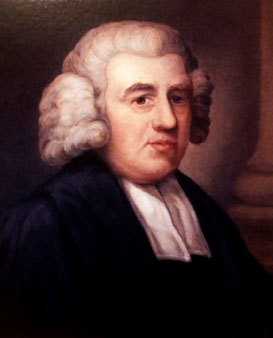
The main theological topic addressed in John Newton's "I Was Once Blind, but Now I See" is the nature of spiritual enlightenment through grace and the role of the Holy Spirit in regeneration. Newton argues that understanding spiritual truths is not attainable through human effort or learning alone; rather, it requires the supernatural opening of one's eyes by God. He uses the example of Nicodemus and the analogy of blindness to illustrate the inability of natural man to perceive divine reality without grace, referencing Scripture such as 2 Corinthians 4:6, which emphasizes God's sovereign illumination. This doctrine highlights the necessity of divine intervention for true understanding and places emphasis on the preaching of the Gospel as the means through which the Holy Spirit works. The practical significance lies in encouraging believers to rely on God's grace for true knowledge and assurance of salvation while recognizing the limitations of human wisdom.
Key Quotes
“A man born blind... may learn to talk about the light... but it is impossible that he can have a just idea of either.”
“Regeneration... is the effect of Almighty power. Neither education, endeavors, nor arguments can open the eyes of the blind.”
“Those who now see were once blind even as others and had neither power nor will to enlighten their own minds.”
“The spiritual sight and faculty is that which may be principally considered as permanent in a believer.”
What does the Bible say about spiritual blindness?
The Bible teaches that spiritual blindness is a condition affecting those who have not received the Holy Spirit's illumination, preventing them from understanding divine truths.
2 Corinthians 4:6, John 3:3
Why is the doctrine of regeneration important for Christians?
Regeneration is crucial because it is the divine act that enables sinners to perceive and understand spiritual truths, essential for salvation.
John 3:3, 2 Corinthians 5:17
How do we know the sovereignty of grace is true?
The sovereignty of grace is supported by the Scriptural teaching that God alone has the authority and ability to grant spiritual sight to the blind.
Ephesians 2:8-9, Romans 9:16
Why is preaching the Gospel important for spiritual understanding?
Preaching the Gospel is essential as it is the primary means through which the Holy Spirit opens the eyes of the spiritually blind.
Romans 10:14, 1 Corinthians 2:4-5
Dear Sir,
The question, "What is the discriminating characteristic nature of a work of grace upon the soul?" has been upon my mind; if I am able to give you satisfaction concerning it, I shall think my time well employed.
The reason why men in a natural state are utterly ignorant of spiritual truths is, that they are wholly destitute of a faculty suited to their perception. A remarkable instance we have in the absurd construction which Nicodemus put upon what our Lord had spoken to him concerning the new birth. And in the supernatural communication of this spiritual faculty, by the agency of the Holy Spirit, I apprehend the inimitable and abiding criterion, which is the subject of our inquiry, does primarily consist. Those passages of Scripture wherein the Gospel truth is compared to light, lead to a familiar illustration of my meaning. Men by nature are stark blind with respect to this light; by grace, the eyes of the understanding are opened.
Among a number of blind men, some may be more ingenious and of better capacity than others. They may be better qualified for such studies and employment's which do not require eye-sight than many who can see, and may attain to considerable skill in them; but with respect to the true nature of light and colors, they are all exactly upon a level. A man born blind, if ingenious and inquisitive, may learn to talk about the light, the sun, or the rainbow, in terms borrowed from those who have seen them; but it is impossible that he can have a just idea of either; and whatever hearsay knowledge he may have acquired, he can hardly talk much upon these subjects without betraying his real ignorance. The case of one blind person has been often quoted. He believed, that, after much inquiry and reflection, he had at last found out what scarlet was; and being asked to explain himself, "I think," says he, "scarlet is something like the sound of a trumpet." This man had about the same knowledge of natural light as Nicodemus had of spiritual. Nor can all the learning or study in the world, enable any person to form a suitable judgment of divine truth, until the eyes of his mind are opened, and then he will perceive it at once. Indeed, this comparison is well suited to show the entire difference between nature and grace, and to explain the ground of that enmity and scorn which fills the hearts of blinded sinners, against those who profess to have been enlightened by the Spirit of God.
But if we could suppose it possible, that there was a whole nation of blind men, and one or two people should go among them, and profess that they could see, while they could not offer them such a proof of their assertion as they were capable of receiving, nor even explain, to their satisfaction, what they meant by sight; what may we imagine would be the consequence? I think there is little doubt but these innovators would experience much the same treatment as the believers of Jesus often meet with from a blind world. The blind people would certainly hate and despise them for presuming to pretend to what they had not. They would try to dispute them out of their senses, and bring many arguments to prove that there could be no such thing as either light or sight. They would say, as many say now, 'How is it, if these things are so, that we should know nothing of them?' Yes, I think it probable they would rise against them, as deceivers and enthusiasts, and disturbers of the public peace, and say, "Away with such fellows from the earth; it is not fit that they should live!" But if we should suppose further, that during the heat of the contest some of these blind men should have their eyes suddenly opened, the dispute as to them would be at an end in a minute; they would confess their former ignorance and obstinacy, confirm the testimony of those whom they had before despised, and of course share in the same treatment from their blind brethren, perhaps be treated still worse, as apostates from the opinion of the public.
If this illustration is justly applicable to our subject, it may lead us to several observations, or inferences, which have a tendency to confirm what we are elsewhere expressly taught by the word of God.
In the first place, it shows, that regeneration, or that great change without which a man cannot see the kingdom of God, is the effect of Almighty power. Neither education, endeavors, nor arguments, can open the eyes of the blind. It is God alone, who at first caused light to shine out of darkness, who can shine into our hearts, "to give us the light of the knowledge of the glory of God in the face of Jesus Christ." People may attain some natural ideas of spiritual truths by reading books, or hearing sermons, and may thereby become wise in their own conceits; they may learn to imitate the language of an experienced Christian; but they know not what they say, nor whereof they affirm, and are as distant from the true meaning of the terms, as a blind man who pronounces the words blue or red, is from the ideas which those words raise in the mind of a person who can distinguish colors by his sight.
And from hence we may infer the sovereignty, as well as the efficacy of grace; since it is evident, not only that the objective light, the word of God, is not afforded universally to all men; but that those who enjoy the same outward means have not all the same perceptions. There are many who stumble in the noon-day, not for lack of light, but for lack of eyes; and those who now see, were once blind even as others, and had neither power nor will to enlighten their own minds. It is a mercy, however, when people are so far sensible of their own blindness, as to be willing to wait for the manifestation of the Lord's power, in the ordinances of his own appointment. He came into the world, and he sends forth His Gospel, that those who see not may see; and when there is a desire raised in the heart for spiritual sight, it shall in his due time be answered.
From hence likewise we may observe the proper use and value of the preaching of the Gospel, which is the great instrument by which the Holy Spirit opens the blind eyes. Like the rod of Moses, it owes all its efficacy to the appointment and promise of God. Ministers cannot be too earnest in the discharge of their office; it behooves them to use all diligence to find out acceptable words, and to proclaim the whole counsel of God. Yet when they have done all, they have done nothing, unless their word is accompanied to the heart by the power and demonstration of the Spirit. Without this blessing, an apostle might labor in vain: but it shall be in a measure afforded to all who preach the truth in love, in simplicity, and in all humble dependence upon him who alone can give success. This in a great measure puts all faithful ministers on a level, notwithstanding any seeming disparity in gifts and abilities. Those who have a lively and pathetic talent, may engage the ear, and raise the natural passions of their hearers; but they cannot reach the heart. The blessing may be rather expected to attend the humble, than the voluble speaker.
Farther: we may remark, that there is a difference in kind between the highest attainments of nature, and the effects of grace in the lowest degree. Many are convinced, who are not truly enlightened; are afraid of the consequences of sin, though they never saw its evil; have a seeming desire of salvation, which is not founded upon a truly spiritual discovery of their own wretchedness, and the excellency of Jesus. These may, for a season, hear the word with joy, and walk in the way of professors; but we need not be surprised if they do not hold out—for they have no root. Though many such fall, the foundation of God still stands sure. We may confidently affirm, upon the warrant of Scripture, that those who, having for a while escaped the pollutions of the world, are again habitually entangled in them; or who, having been distressed upon the account of sin, can find relief in a self-righteous course, and stop short of Christ, "who is end of the law for righteousness to everyone that believes"—we may affirm, that these, whatever profession they may have made, were never capable of perceiving the beauty and glory of the Gospel salvation.
On the other hand, though, where the eyes are divinely enlightened, the soul's first views of itself and of the Gospel may be confused and indistinct, like him who saw men as it were trees walking; yet this light is like the dawn, which, though weak and faint at its first appearance, shines more and more unto the perfect day. It is the work of God; and his work is perfect in kind, though progressive in the manner. He will not despise or forsake the day of small things. When he thus begins, he will make an end; and such people, however feeble, poor, and worthless, in their own apprehensions, if they have obtained a glimpse of the Redeemer's glory, as he is made unto wisdom, righteousness, sanctification, and redemption—so that his name is precious, and the desire of their hearts is towards him—have good reason to hope and believe, as the wife of Manoah did in a similar case, that if the Lord had been pleased to kill them, he would not have showed them such things as these.
Once more: The spiritual sight and faculty is that which may be principally considered as permanent in a believer. He has no stock of grace, or comfort, or strength, in himself. He needs continual supplies; and if the Lord withdraws from him, he is as weak and unskillful after he has been long engaged in the Christian warfare, as he was when he first entered upon it. The eye is of little present use in the dark; for it cannot see without light. But the return of light is no advantage to a blind man. A believer may be much in the dark; but his spiritual sight remains. Though the exercise of grace may be low, he knows himself, he knows the Lord, he knows the way of access to a throne of grace. His frames and feelings may alter; but he has received such a knowledge of the person and offices, the power and grace, of Jesus the Savior, as cannot be taken from him; and he could withstand even an angel that should preach another gospel, because he has seen the Lord. The length of this paper constrains me to break off. May the Lord increase his light in your heart.

Comments
Your comment has been submitted and is awaiting moderation. Once approved, it will appear on this page.
Be the first to comment!