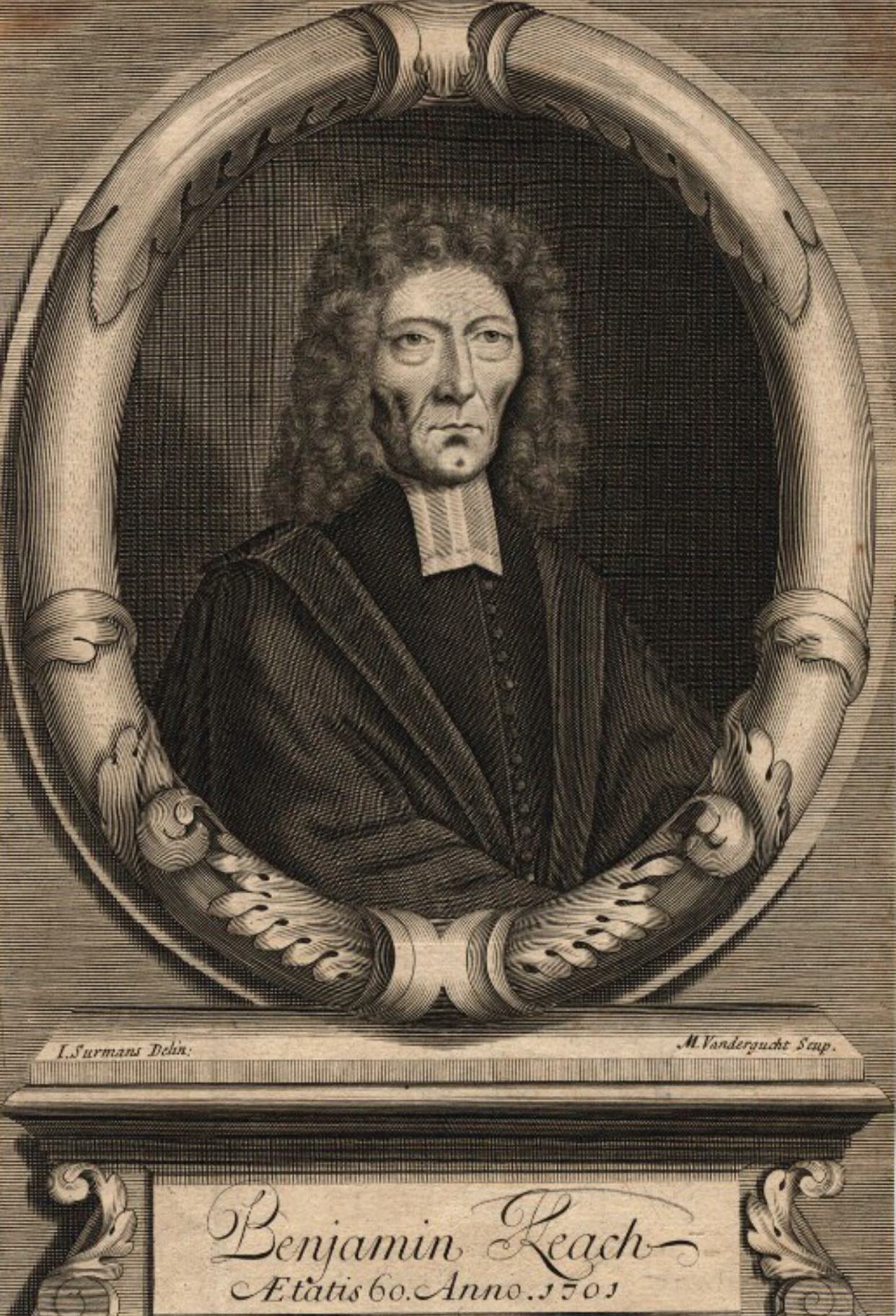
The main theological topic addressed in Benjamin Keach's sermon is the concept of the Suretiship of Christ within the framework of the Covenant of Grace. Keach argues that Christ serves not only as Mediator but also as Surety, engaging on behalf of God's Elect to fulfill the requirements of the Covenant of Peace. Scriptures such as Isaiah 54:10 and Hebrews 9:15 are pivotal, illustrating God's unchanging mercy and the necessity of Christ's sacrifice for the redemption of those bound by sin. The practical significance of this doctrine is profound, as it assures believers of their security in Christ; His Suretiship guarantees that they will be preserved in grace and ultimately delivered from wrath, reflecting the Reformed emphasis on divine sovereignty and assurance of salvation.
Key Quotes
“A Surety is one that undertakes for others wherein they are defective really or in Reputation.”
“Had not our Mediator engaged in this Covenant of Peace and Redemption for us there had been no Covenant nor Peace for us at all.”
“All the Promises of God in him are Yea and in him Amen unto the Glory of God the Father.”
“O what Exemption and discharge have we hereby from the Law and Justice of God.”
What does the Bible say about the Covenant of Peace?
The Covenant of Peace is God's promise to His elect, secured through Christ as our Surety.
Isaiah 54:10, Hebrews 9:15, Romans 3:25
How do we know that Christ's Suretiship is true?
Christ's Suretiship is verified through Scripture, emphasizing His unique role in redeeming God's elect.
Hebrews 7:22, Romans 8:32-34, 1 Timothy 2:5-6
Why is Christ's role as our Surety important for Christians?
Christ's role as our Surety is vital as it guarantees our salvation and secures our relationship with God.
Hebrews 10:14, John 10:28-29, 1 Peter 1:5
For the mountains shall depart, and the hills be removed; but my kindness shall not depart from thee, neither shall the covenant of my peace be removed, saith the LORD that hath mercy on thee. - Isaiah 54:10
Wherein the Suretiship of Christ is opened.
Neither shall the Covenant of my Peace be removed, saith the Lord that hath mercy on thee.
Doct. THAT there is a Covenant made, or agreed on, and stands firm in the behalf of all God's Elect.
I am, my Brethren, a speaking concerning those Transactions betwixt God the Father, and God the Son, before the World began, about the bringing in, and establishing of the Covenant of our Peace; in which Transactions I have shewed you the Son of God was chosen Mediator, considered as God-man, and as to that Office of his, we have spoken distinctly; but as he is Mediator, so you have heard he is Surety of the Covenant of Peace, and so more than a mere, or simple Mediator.
And since the Covenant of Peace so much depends upon the Suretiship of Christ; I shall here,
I. Shew what Surety doth import, or open this Relation.
II. Shew why Christ came under this Relation.
III. Shew what Christ was to do, and we were to receive as Christ's our Surety.
IV. Shew how his Suretiship differs from Suretiship among Men.
V. Apply it.
1. A Surety is one that undertakes for others, wherein they are defective, really, or in Reputation, in Latin, Sponsor fide jussor; a Surety is one that engages to make Satisfaction for one, or more, or engages for others: Thus Ruben became Surety to his Father Jacob, Gen. 43.9. to bring Benjamin again; and Paul for Onesimus, Philem. 18, 19. If he hath wronged thee, or oweth thee ought, put that on mine Account; I Paul have written it with my own Hand, I will pay it: In this Sense we take Christ to be a Surety.
(1.) It signifies likewise to give a Pledge, Isa. 36.8. 2 Kings 18.23.3.
(2.) Also to strike Hands, Prov. 22.26.
Thus Christ is our Surety, i. e. he struck Hands with God for us in this Covenant.
I say, a Surety is one that undertakes for one or more Persons whose Credit is gone, or is not good; one not to be Trusted, or whose Faithfulness, or Ability is suspected.
Now, my Brethren, when Man had broken the Law of the first Covenant, his Credit was gone or lost for ever; God would not enter into Covenant any more with him without a Surety, he knowing that Man's Inability and Unfaithfulness in his Fallen Estate; therefore was graciously pleased to provide for us, or in our behalf, a Sponsor, or Surety; By so much was Jesus made a Surety of a better Covenant: As Christ engaged to God for us, to satisfy for our Sins, and to bring us into a State of Grace, and Peace with God, and preserve us in that State to the end, and to give Security to the Covenant of Peace, which he is a Surety of, he is called a Surety: And as he gives all good things, and Divine Blessings to us, he is called a Testator; for a Testator denotes one dying, making his Last Will and Testament firm, and bequeathing Legacies to his Friends; some I know would not have Christ be a Surety of that Covenant that was made betwixt God the Father and himself, (which they call the Covenant of Redemption) but of the Covenant of Grace made with us, but I know no ground for such a distinction (as I shall hereafter prove;) my Brethren, evident it is, that had not our Mediator engaged in this Covenant of Peace and Redemption for us, there had been no Covenant nor Peace for us at all, because all depends on Christ's Suretiship, or on Christ's Obligation to the Father for us; nor did God ever manifest more rich Grace to us, than he did in providing of such a Surety for Man. And hence God saith (speaking of the Covenant of Grace; ) My Mercy will I keep for him for ever, and my Covenant shall stand fast with him: I have laid help upon one that is mighty,I have exalted one chosen out of the People; one able to perform and do all his Pleasure, one that he can trust, who neither wants Ability nor Faithfulness.
3. A Surety commonly engages for one Party, even for him whose Credit is suspected, or who being poor, the Creditor will not, nor cannot Trust him; the Lord Jesus is only a Surety for us unto God, not for God to us, for God had no need for any to engage, or be a Surety for him, he never failed any of his Creatures, he broke not his Covenant with Man, but Man with him; Because they continued not in my Covenant, I regarded them not, saith the Lord. Therefore God will not Treat, nor Trade with Man any more without such a Mediator, and Surety as Christ is; therefore I am not of his Opinion that saith,
That the Suretiship of Christ was, that Sinners might be induced to give God Credit, and that he might have a Responsible Party to deal with; for this is to cast Contempt upon the Holy, and Faithful God, as if he is not to be Trusted in, without he gives us good Security, that he will not fail, nor deceive us.
4. The end of Suretiship among Men, is to give Stability and Security in case of Bonds or Covenants, &c. that such Bonds or Covenants may be firm and sure; and to this end did Christ become the Surety of this Covenant of Peace, Grace, and Redemption. My Brethren, this Covenant depends upon the Suretiship of Jesus Christ, upon whose Undertakings and Security God Promised and Covenanted with him, to be our God again, and to give to us all that good which was in his Heart, to bestow upon his Elect from everlasting.
There being such things requisite to be done in order hereunto, which God well knew we were not able to perform, i. e. the Satisfaction of his Justice, or Payment of all our Debts, and Victory over all our Enemies, and that this Covenant might not be broken, as the first was. My Covenant shall stand fast in him.
5. Suretiship imports, that the Obligation be free and voluntary, for the Law forces none to be a Surety, or to engage for others.
My Brethren, tho God chose Jesus Christ to be the Surety of this Covenant for us, yet Christ as a most free and voluntary act on his part, undertook that Office, for that Law we had broke, laid no Obligation on him, nor was he under any necessity of Nature to undertake herein, because he was the Son of God, but it is ascribed wholly to his Infinite Love and Goodness, and as a Sovereign Act of his own Free Grace, to undertake for Man, and not for Angels, and also only for some of the lost Sons of Adam, and not for all: No Man taketh my Life from me, but I lay it down freely; I have power to lay it down, and I have power to take it up again. Lo,I come in the Volume of the Book, it is written of me to do thy Will, O God.
6. Suretiship imports not only a voluntary Obligation for others, or for another: but also Union of Parties, or Assumption of the Condition of that Person or Debtor: In a Law sense it denotes a Federal, or Law Union, the Surety and the Debtor are but one Party; yet not so, but that it is the Surety that pays; it is his Money, and not the Debtors.
My Brethren, Christ, by virtue of his Suretiship, did not only take our Sins upon him, but our Nature, and put himself in our Law-place, he took our Condition upon him: He was made of a Woman, made under the Law to redeem them.
Object. I know it is objected, If Christ and the Elect are but one Party, and that his Righteousness be ours, i. e. imputed to us, or that he did, and suffered all in our stead, then we are our own Saviors; we are Mediators, as having a Mediator's Righteousness.
Ans. This (as one well observes) follows not;
for they may as well argue the Debtor is the Surety, because his Surety's Payment is accepted for him.
Object. Again they object, If Christ our Surety and we are one, and that his Righteousness is ours, then we are as Righteous as Christ.
Ans. They may as well affirm the Bankrupt is as rich as his Surety, because his Surety pays his Debts.
7. A Surety doth not only engage for Debtors, but also sometimes for Criminals.
Those that Christ became Surety for in the Covenant of Peace, to Reconcile to God, and to Redeem from Sin and Hell, were Criminals, and not only Debtors; we all deserved Death, and were under the Sentence thereof.
The Evangelists render the Words, Sins, and Debts promiscuously, as Luke 11.4. compared with Matt. 6.12. the Laws of some Countries admit of a Surety for a Criminal; i. e. that one Man shall die for another: Thus did Christ obey the Law for us, and die for us: He was made a Curse for us—Gave himself for us— His Life a Ransom for us—The Just for the Unjust— Made Sin for us: All proves he was a Surety for Condemned Criminals, and so died in our stead, to satisfy the Law, and Justice of God; What the Law could not do—God sent his own Son; i. e. we could not keep it perfectly, nor satisfy for the breach of it; therefore Christ died not only nostro bono, for our good and profit, as the Socinians, and our Work-Mongers say, but nostra vice, in our room, he died for his Church, for his Elect, as he died not for the Holy Angels, yet he died for their good, and for the whole Creation in some sense; he is the Head, and Confirmer of the Angels; is instead, the Sufferings of the Saints are for the good of the Church, but they are not substituted to obey and die in the stead of others: A Surety to obey and die for others, as one hath abundantly proved, is to obey and die in their stead or room.
8. A Surety having paid all, and fully satisfied for Debtors; it follows, that neither the Creditor, nor the Law can exact Satisfaction of the Debtors, and also that the Debtors for whom Satisfaction is made, shall be delivered out of Prison, and be actually discharged and acquitted according to the Time and Terms agreed on between the Creditor, and the Surety.
God will not, cannot in point of Justice and Righteousness exact Satisfaction of any Sinners, for whom Christ became a Surety, and hath satisfied; for i. e. they cannot suffer in Hell, but shall all in due time be actually discharged and acquitted, and the Law Sentence taken off of them: For no sooner are their Eyes opened, or are illuminated by the Spirit, but they plead, that their Surety hath paid all for them; he hath paid their Debt of perfect Obedience, and hath also born all that Vindictive Wrath and Vengeance that was due to them for their Sins; Who was delivered for our Offences,and was raised again for our Justification:The Lord laid on him the Iniquities of us all.
II. Why did-Christ become a Surety for us, and put his Hand to the Covenant?
1. Because his Love and Bowels were such to God's Elect, his Love constrained him thus to do.
2. Because he would readily comply with his Father's Will, Design, and Purpose herein, which was to exalt his Infinite Grace and Divine Goodness to Mankind.
3. It was to raise the Honour, or cause all the Divine Attributes to shine forth in their equal Glory, and meet together in his Work and Undertakings as Mediator and Suretiship, in sweet harmony.
4. Because he would magnify God's Law, and make it honourable: But more of this hereafter.
5. Because he knew God would not otherwise enter into a Covenant of Peace, to save lost Sinners, Man being weak, and unable to answer what both Law and Justice required, in order to our Peace and Reconciliation with God: Whatsoever the Law exacted on us, he engaged and condescended to do as our Surety; he promised and struck Hands to satisfy whatsoever the Law, I say, could demand of God's Elect. See Heb. 9.15. Rom. 3.25. Heb. 10.5, 7.
III. What was Christ to do,and we receive by virtue of his Mediation and Suretiship?
First, Whatsoever Christ as Mediator Covenanted with the Father to do, that he considered as the Surety of the said Covenant engaged to perform.
1. To vindicate the Honour of God in all the Perfections of his Nature, particularly to preserve the Justice and Veracity of God, and Sanction of his Holy Law.
2. He engaged as the Surety of the Covenant, to restore to Man, or to all God's Elect, that Righteousness which Man lost, that as we were made Sinners by Adam's Disobedience, so by his Obedience we should all be made Righteous; that as the Sin of the first Adam was imputed to our Condemnation, so his Righteousness, as our Covenanting Head, might be imputed to all his Seed, and all this according to the Contrivance of God's Infinite Wisdom, and to answer the Design, Purpose, and Proposal of God the Father, in the Council of Peace.
3. And seeing Man was a Rebel, and in Arms against God, and filled with Rage and Madness, and having Enmity in his Mind against God, Being alienated from the Life of God: Jesus Christ, as our Surety, engaged to change the Hearts of all he undertook for, and bring them to accept of Terms of Peace, through the Blood of his Cross; I say, he engaged to God to bring home all that were given to him. Hence he says, Them I must bring, and they shall hear my Voice: He must bring them because of the Covenant he had made with God the Father; and upon the Consideration of that Obligation, he laid himself under, as their Surety. He must Circumcise our Hearts to love the Lord our God; for Christ also hath once suffered for Sins, the Just for the Unjust, that he might bring us to God.
From hence it appears, that Christ by virtue of these Articles of Peace, as our Surety, engaged to open Blind Eyes, and to bring the Prisoners out of the Prison-house, and to set at liberty those that were bound; or by the Blood of his Covenant, to send the Prisoners out of the Pit, where there was no water; for this was agreed should be the Effects of his Undertakings: See Zech. 9.11. Luke 4.18. The Spirit of the Lord is upon me, because he hath Anointed me to Preach the Gospel to the Poor; he hath sent me to heal the Broken-hearted, to Preach Deliverance to the Captives, and recovering of Sight to the Blind, and to set at liberty them that were bruised. He engaged to take away the Heart of Stone, and to give us a Heart of Flesh, to give a new Heart for this the Father promised in the Covenant, and what he promised Christ engaged to do for us; for without Almighty Power this cannot be done; He works all our Works in us and for us: He engaged to subdue Satan, and divest him, that strong Man Armed of all his Power.
In a word, Christ as the Surety of this Covenant, engaged to Renovate our Hearts, Regenerate our Souls, or to Create the Image of God again in us; And that from his Fullness,we should all receive Grace for Grace: And, indeed, to this end it pleased the Father, that in him should all Fullness dwell.
4. Jesus Christ as our Surety, engaged to make good another Article in this Covenant, which was to preserve all his People in a State of Grace, not only to bring us into a State of Grace, but to preserve us in the State, or to preserve Grace as a Vital Principle in our Souls.
That as all the Promises of God are made to us in Christ, so Christ hath engaged that we should persevere in Grace and Holiness, and that we shall never finally depart from God any more; He that hath begun a good Work in you, will perform it to the Day of Christ. It is not said, he will finish it, but he will perform it, which denotes his Covenant; as when a Faithful Man hath engaged to do a piece of Work, we say, he will perform it; He shall bring forth Judgment unto Victory.
1. He will according to his Promise and Covenant, strengthen our Faith, and increase it.
2. Subdue our Iniquities; He will subdue our Iniquities, thou wilt cast all their Sins into the Depths of the Sea, thou wilt perform thy Truth to Jacob.
3. To support and succour us under all Temptations, thus he hath promised, and he is Faithful, therefore will do it, 1. Cor. 10.13. No Temptation hath befallen you, but such that is common to Men, and God is Faithful, who will not suffer you to be tempted above what you are able, &c.
4. To comfort us in all our Sorrows; I will not leave you Comfortless, &c.
5. To help us under all our Afflictions, Reproaches, Losses, and Persecutions, all these are Covenant Blessings, and therefore promised to us.
6. To enable us to perform acceptably all Holy Duties; for without him we can do nothing.
7. To make us Fruitful, and so to abide unto the end; I have chosen you, and ordained you, that you go and bring forth Fruit, and that your Fruit should remain, the Righteous shall flourish like a Palm-tree:Those that are planted in the House of the Lord, shall flourish in the Courts of our God, they shall still bring forth Fruit in Old Age, they shall be fat and flourishing. And all this God hath promised to us by virtue of Christ's undertaking as our Surety for us.
For the Grace by which all this is done, was promised first to Christ; he is filled full of Grace, as our Head of Influence: And he hath engaged to God for us to act, and influence us with that Grace which he so received, which he doth perform in what measure and manner he pleaseth, through or by virtue of that Union we have with him, and by the constant communication of fresh Supplies from himself; Therefore it is added, To shew that the Lord is Upright, and that there is no Unrighteousness in him.
Brethren, pray consider this well, that all Grace and Spiritual Blessing whatsoever which we receive, is all promised to us by God the Father, and made good to us through Christ's Mediation, and Undertakings, as our Surety: For all the Promises of God in him, are Yea,and in him, Amen, unto the Glory of God the Father. I say, that that Mutual Covenant betwixt God the Father, and our Lord Jesus Christ, makes all Covenant Blessings and Promises sure to us; all Promises are from the Father, through Christ, by the Holy Spirit.
Christ received the Spirit without measure, upon his Covenanting with the Father, and he engaged to send the Spirit to be the Almighty Agent to do all things for us; for as he purchased the Spirit for us, so he hath asked it of the Father, and still (as our Surety and Advocate) he intercedes with the Father for us, that we may receive a Gracious Measure thereof; I will pray the Father, and he will give you another Comforter.
The Father upon Christ's Suretiship promised to him, that his Spirit shall never depart from him, nor his Seed: As for me,this is my Covenant with them, saith the Lord; My Spirit that is upon thee, and my Words which I have put into thy Mouth, shall not depart out of thy Mouth, nor out of the Mouth of thy Seed, nor out of the Mouth of thy Seeds Seed, from henceforth and for ever.
8. Christ hath engaged to confirm us to the end; this he undertook as our Surety, it was God's Promise to him, He shall see his Seed: This was promised to him upon what he was to do, and suffer; and Christ, I say, hath engaged as our Surety to confirm us; Who shall confirm you to the end? God is Faithful, by whom ye were called unto the Fellowship of his Son Jesus Christ our Lord. Jesus Christ, by virtue of this Covenant, was to have many Companions, or fellow Heirs of Glory, and God's calling us, is the first Foundation Act in God, of performance of this Covenant with Christ, and to us in him: The Father is as much bound and obliged to keep us, as Christ is; because of that Price he hath received for us by Christ, which he accepted of in this Covenant of Peace.
9. Christ was obliged, as our Surety, not to lose one of them, which the Father gave him; And this is the Father's Will that sent me,That of all which he hath given me, I should lose nothing, but should raise it up at the last Day. This is as if our Lord should have said, The Father's Will and Covenant made with me is, That I should not lose one of his Elect.
The Father (as one observes) promised three things to the Son in this Covenant, upon what he was to do and suffer.
1. His Assistance.
2. That he should have a Seed which he should see.
3. He promised Eternal Glory to him, and to all them in him.
I. His Assistance; The Spirit of the Lord shall rest upon him; the Spirit of Wisdom, and Understanding; the Spirit of Counsel, and Might; the Spirit of Knowledge, and of the Fear of the Lord.
Behold my Servant that I uphold,mine Elect in whom my Soul delighteth; I have put my Spirit upon him: Well, and what hath Christ engaged to do? He shall bring forth Judgment to the Gentiles.
A bruised Reed shall he not break; and the smoking Flax shall he not quench; he shall bring forth Judgment unto Truth.
I, the Lord, have called thee in Righteousness,and will uphold thine Hand, and will keep thee, and give thee for a Covenant of the People, for a Light of the Gentiles: That is, for the Surety of my Covenant.
To open Blind eyes, &c. He shall feed in the Strength of the Lord, in the Majesty of the Name of the Lord his God: Christ was to plead these Promises; He shall cry unto me,Thou art my Father, my God, and the Rock of my Salvation.
II. God promised him a Seed.
1. A Numerous Seed; As the Dew of the Morning in abundance upon the Flowers and Plants; fear not for I am with thee, I will bring thy Seed from the East, and gather thee from the West.
I will say to the North, Give up; and to the South, Keep not back: Bring my Sons from afar, and my Daughters from the Ends of the Earth.
2. A Perpetual Seed, or a Seed that shall endure for ever; His Seed will I make to endure for ever,and his Throne as the Days of Heaven— My Covenant will I not break, &c.
III. The Father promised him great Glory, and an Eternal Kingdom; Ask of me, I will give thee the Heathen for thine Inheritance, and the uttermost parts of the Earth for thy Possession; behold my Servant he shall deal prudently, he shall be exalted and extolled and made very high— I will divide him a Portion with the Great,and he shall divide the Spoil with the Strong, because he poured out his Soul unto Death.
All Power is given to me in Heaven and Earth.
He shall strike through Kings, in the Day of his Wrath.
But we see Jesus, who was made a little lower than the Angels for the suffering of Death, Crowned with Glory and Honour—And he shall bring all his to Glory too: For it became him for whom are all things, and by whom are all things, in bringing many Sons to Glory, to make the Captain of their Salvation perfect through Sufferings. As this was promised by the Father to him, and to us in him, so he as our Surety engaged to bring it to pass, or to make it good unto us.
Object. If Jesus Christ entered into Bonds for us, and that by virtue of the Sanction of the Law of Works, was obliged, as our Surety, to suffer for our Sins, doth it not follow,that he was Surety of the Covenant of Works? And how then is it said He was Surety of a better Covenant?
1 Answ. Tho Christ was obliged, as our Surety, to fulfill the Covenant of Works, or of perfect Obedience; yet he was not Surety of the Covenant of Works, because he did not undertake, that we should perfectly keep the Law in our own Persons, which he must have done, had he been Surety of the Law of Works, but that he would keep that Law for us; and therefore it was another and better Covenant.
2. The Covenant of Works was made betwixt God and Man, without a Surety; the Covenant of Grace is made betwixt God the Father, and Jesus Christ as our Surety for us; therefore another and better Covenant.
These Men plead for a Covenant of Grace made betwixt God and us, distinct from the Covenant of Redemption; in which, Christ, as our Surety, engaged that we shall keep the New Law of Faith, and sincere Obedience; Christ having abolished the Law of perfect Obedience, and merited this mild Law, &c.
1 Answ. Tho the Law as a Covenant of Works, Do this and Live, is taken away; yet as a Law, or Rule of perfect Obedience, it remains for ever: As the Reverend Mr. Cross, hath fully proved.
2. As to their New Law, it brings in Justification by Works; and such Works too, that are attended with Sin, or Imperfections; and therefore their Doctrine is to be abhorred.
See Mr. Clark's New Book; but more of this hereafter.
IV. I shall shew that Christ's Suretiship greatly differs from Suretiship among Men.
1. A Surety among Men, is not of the Creditor's, but of the Debtor's procurement.
But the Surety of the Covenant of Peace, was of God's procurement, who is Man's Creditor, or rather offended Creator; God as an Act of Infinite Wisdom, Love, and Mercy, found him; I have found a Ransom. Moreover, the Father Chose him, Called him, and Anointed him to be the Mediator and Surety of this Covenant, as hath been fully proved: Therefore it doth not follow, that so soon as our Surety struck Hands, or just when he laid down the Price, all God's Elect must actually be acquitted.
For should a Creditor find a Surety for the Debtor, all must confess it is in his choice how and when the Debtor should be actually acquitted. Moreover, 'tis evident, that we had no actual Existence when Christ struck Hands for us; besides, it was for such that he foresaw would fall under Sin, Wrath, and Condemnation, and Christ did not become a Surety to keep the Elect from falling under Wrath, and the Sentence of Death, but to recover them out of that State; Justification presupposes we were once Charged and Condemned.
2. A Surety and Debtor among Men, both enter into the same Bond, and the Debtor is look'd upon the principal Bondsman.
But Christ's single Bond, in this Covenant, is accepted for all; here is a Change of Persons, God leaves out our Names, and puts in Christ's Name, that the Debt, Satisfaction, and Curse might fall upon him alone. See Dr. Goodwin:He was made Sin for us—Christ hath redeemed us from the Curse of the Law, being made a Curse for us; he was wounded for our Transgressions—And now Jesus Christ here by putting his Name unto this Bond, is become the principal Debtor, and is wholly obliged to pay, and satisfy for all the Sins of God's Elect; his Suretiship hath swallowed up the offending Debtors Obligation, to satisfy Law and Justice.
Object. Doth it not then follow, we need not be concerned to keep or fulfill the Law?
Answ. We are not to be concerned to keep the Law to that end Christ kept it, i. e. not to be Justified by it, for so it is removed; but the Moral Law, as a perfect Rule of Righteousness, obliges us to perpetual Obedience, it being so unchangeable a Law.
3. Among Men, when the Surety makes a full satisfaction for Debtors, the said Debtors cannot be said to receive their Release, or Discharge, as an Act of Grace and Favour, but as an Act of Justice only.
But Jesus Christ, in the Covenant of Peace, makes full Satisfaction for us, and yet we receive our Release and Discharge as an Act of Grace and Favour alone.
1. In that God and not we found the Surety, which was an Act of his own Sovereign Grace, he being wholly at Liberty, whether he would save Man, or not.
So that our Discharge through the Satisfaction of Christ, must needs primarily and originally flow out of pure Grace, Favour, Love and Pity of God to us.
Had Man found the Surety, it had been otherwise.
2. Because the Surety being the only begotten Son of God, it is a farther Demonstration of Infinite Love and Favour to us, in that God should substitute him in our stead, and dispense with the rigorous Action of Satisfaction from us, and take it from our Surety, as put in our Law-place.
3. Because God, that he might work about our Discharge, in a way of Grace and Mercy, to the Honour of his Justice, &c. made his own Son a Sacrifice for our Sins.
4. Because that Interest we have in that Redemption, Pardon, Peace, and Reconciliation by Christ's Undertakings, is freely bestowed on us, as an Act of God's Sovereign Grace and Goodness, for as Christ purchased all Grace for us, so as an Act of God's Favour, and Christ's Purchase and Merits, he gives us the Spirit and Faith, in order to our actual Interest in all Covenant Blessings; so that although it all is in a way of Justice as to Christ, yet it is all in a way of Mercy and Free-Grace as to us.
5. In that God accepted of Christ as a Surety for us who deserved no Pity, we having wilfully forfeited our vast Inheritance, and were become his Vile Enemies, and rebels against him.
6. Because Christ became our Surety, from whom he could expect no after Recompence, or Satisfaction for that vast Sum he laid down for us, he never expected any Recompence from us for the Debt paid.
7. Because we are not only pardoned, and have Peace, but by Christ's Undertaking, are raised to great Honour: And O what Grace, Love, and Divine Goodness is here!
USE.
I Admiration. What hath God done? Christ done for us? What Love is this?
1. Christ knew before he became our Surety, that the whole Payment would fall upon him, and yet struck Hands.
2. O! what Exemption and discharge have we hereby from the Law and Justice of God? The Law, as our Husband, is dead, and we dead to that; that Cruel Husband has no more Power over us, though as a Law, or Rule of Righteousness, it still commands us, yet it cannot Kill us, Curse us, nor Condemn us to Eternal Burning.
3. Bless God for Jesus Christ our Surety: What a sweet Covenant is this, that we are brought into? How sure are all Covenant Mercies? What Riches, Glory and Power is in Christ the Mediator? As thou hast given him Power over all Flesh, that he should give Eternal Life to as many as thou hast given him. We are in Christ's Hand, and none can pluck us out.
4. We shall for ever abide in this Covenant; our Surety hath engaged to keep us, that we shall never break Covenant with God any more, so as to lose our Inheritance.
5. How easy hath God made the Terms of Peace as to us, since Christ is obliged to work all our Works in us, as well as for us?
II. What Good News is here for broken Sinners, who lie Condemned by the Covenant of Works?
O sue out your Pardon, by taking hold of Christ.
III. Reproof. How doth this again tend to reprove such that turn the Gospel-Covenant, or Covenant of Peace, into a Law, with the Sanction of Rewards for Obedience, and Threatenings for Disobedience; denying that Christ stood in our Law-place, to do and suffer for us, or to keep the Law of perfect Righteousness, in point of Justification, and to die in our stead?
Why will Men stand upon their own Legs? —Proud Man would fain live of himself, or have whereof to Glory, but not before God, or in Christ Jesus; he would have God take his Copper, and refuse his own most pure Gold.
Why will they seek Relief other ways than by the Surety and Mediator of the Covenant?
Can our Imperfect Righteousness, or Sinful Duties Justify us at God's Bar? Will they dare to plead it at Death.
IV. Trial. Is Grace given to you? Have you Union with Christ? Have you a new Heart? Do you truly and savingly know the Lord? Then you are brought into the Bonds of the Covenant of Peace.
V. Consolation. If you are once in Covenant, you are for ever in Covenant, and all Covenant-Blessing, even all things that are therein promised to Christ, as your Surety shall be given to you.
But no more at this time.
And with this I conclude the Second Thing, under the Second General Head, viz. That the Terms proposed in the Covenant of Peace betwixt the Father and the Son, were agreed to, and of Christ's Work, as Mediator and Surety therein, I have endeavoured to clear to the Weakest Capacity.

Comments
Your comment has been submitted and is awaiting moderation. Once approved, it will appear on this page.
Be the first to comment!