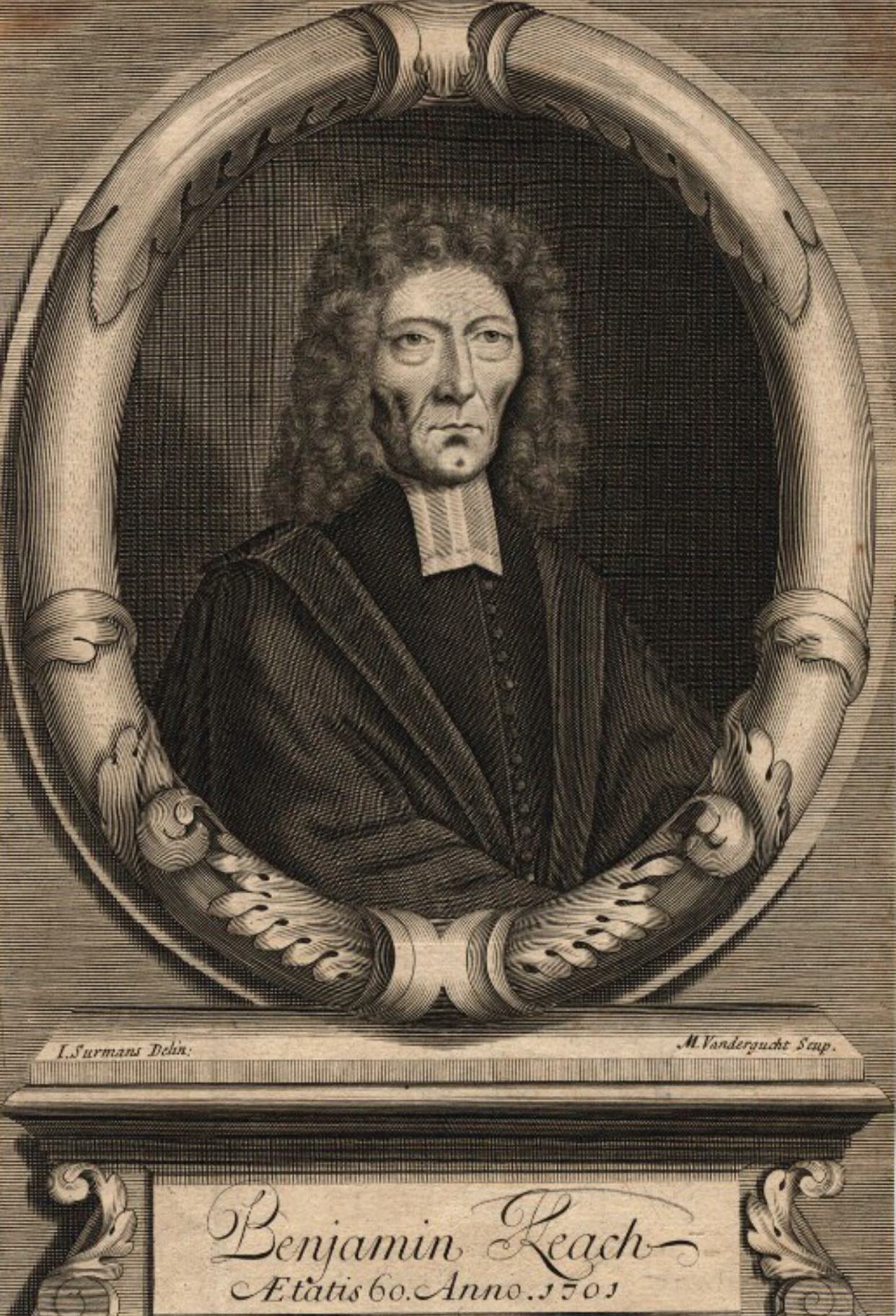
The article "Sermon V" by Benjamin Keach discusses the theological doctrine of the Covenant of Peace, emphasizing its eternal nature and the role of Jesus Christ as both Mediator and Surety. Keach argues that this covenant was established between God the Father and God the Son before the world began, making it an immutable agreement confirmed by divine oath. Key Scripture references include Isaiah 54:10, which asserts God's enduring kindness and commitment to His covenant, and Hebrews 7:21, pointing to the confirmation of Christ's priesthood by an oath. The practical significance of this doctrine underscores the assurance of salvation for the elect, highlighting the necessity of Christ's death in ratifying the covenant and ensuring believers’ reconciliation with God.
Key Quotes
“There is a Covenant made or agreed on and stands firm in the behalf of all God's Elect.”
“The Death of Christ is the great and sure Ratification and Confirmation of the Covenant of Peace.”
“The Gospel is the instrumental means through the Spirit's Operations of the Sinner's Reconciliation to God.”
“Peace is proclaimed to you this Day to you Sinners.”
What does the Bible say about the Covenant of Peace?
The Covenant of Peace is an agreement between God the Father and Jesus Christ, confirmed by God's oath, assuring salvation for all God's elect.
Moreover, the Covenant of Peace illustrates God's intention to reconcile sinful humanity to Himself through Christ's sacrificial death. The Proclamation of this Covenant, which is the Gospel, invites sinners to embrace the peace God has made possible through Christ, thereby emphasizing the importance of this doctrine in the life of believers. It establishes not only the terms of reconciliation but also assures believers of their position within this Covenant, revealing God's heart towards humanity and His desire for them to partake in His grace.
Isaiah 54:10, Hebrews 6:13-14, Romans 8:28-30
How do we know the Covenant is ratified?
The Covenant is ratified through the death of Christ, who confirmed its terms as the Testator, ensuring its promises are inherited by believers.
This means that Christ's death not only confirms the Covenant but also serves as the means by which all Covenant blessings, such as justification and eternal life, are made available to the elect. The eternal security of the Covenant is underscored by God's oath and the stable foundation provided by Christ’s righteousness. Thus, believers can be confident that the terms promised in the Covenant are immutably secured through Christ's sacrificial offering, granting them full access to the riches of God's grace and holiness.
Hebrews 9:16-17, 1 Corinthians 11:25
Why is the Proclamation of Peace important for Christians?
The Proclamation of Peace is crucial as it reveals the reconciliation between God and sinners through Christ, offering hope and assurance of salvation.
It is through this Proclamation that believers are assured of their salvation and the blessings of the Covenant. Romans 5:1 highlights this peace that believers enjoy as a direct consequence of their justification through faith in Christ. Moreover, the Gospel empowers Christians to share this message, thus extending the invitation of grace and forgiveness to others who are seeking reconciliation with God. Hence, the Proclamation of Peace is not merely an announcement; it is the transformative message that guides believers in their faith journey and compels them to live in light of the eternal promises of God.
Romans 5:1, 2 Corinthians 5:18-19
For the mountains shall depart, and the hills be removed; but my kindness shall not depart from thee, neither shall the covenant of my peace be removed, saith the LORD that hath mercy on thee. - Isaiah 54:10
Containing the Ratification, or Confirmation of the Covenant of Peace; shewing, how, and by what, and when it was confirmed; also how proclaimed, and what the Proclamation is.
Neither shall the Covenant of my Peace be removed, saith the Lord that hath mercy on thee.
Doct. THAT there is a Covenant made, or agreed on, and stands firm in the behalf of all God's Elect.
I have shewed you First, That in a Covenant of Peace there is a treating betwixt the Covenanting Parties about the Terms upon which it is made: And accordingly in order to the making, or bringing in of this Covenant, you have heard that there was a treating between the Father, and the Son before the World began.
Secondly, That in such a Covenant, the Terms proposed are agreed unto by both Parties; so I have shewed you it was here; and also that the Mediator of the Covenant of Peace is Jesus Christ, who was also the Surety thereof;
whose Work, both as he is Mediator and Surety, we have opened.
Thirdly, I shall now proceed to the next thing, which is the Ratification, or Confirmation of the Covenant.
My Brethren, there was a twofold Confirmation of the Covenant.
I. It was confirmed by God in Christ, and this was, as I conceive, in that Council of Peace that was held in Eternity betwixt them both: True, among Men this is called, The Signing of the Articles of Peace; but there was a full Confirmation of this Covenant, when it was Agreed on, and Signed, and that by both Parties.
1. The Father Confirmed it to Christ, and to all the Elect in him, by his Oath; I have made a Covenant with my Chosen, I have sworn unto David my Servant: By David is meant Jesus Christ; and I see no reason to doubt, but that this Oath of God the Father to the Son, as Mediator of our Peace, passed to him before the World began; Once have I sworn by my Holiness,that I will not lye unto David.
My Brethren, when God concluded this Covenant of Peace with Jesus Christ, he made a Promise to him of performing all things which he agreed unto; and evident it is, that this was before the World began; In hope of Eternal Life, which God that cannot lye promised, before the World began. And as it was promised then to Christ, as the Head and Representative of all the Elect, on their behalf; so there is the same Parity of Reason to believe, that then the Oath of God passed to our Lord Jesus Christ, and to us in him also; and now this Promise and Oath of God to Christ, gives not only Solemnity, but also firm and sure Stability to this Covenant.
(1.) He added his Oath to his Promise (saith our late Annotator on the Holy Bible) to make, and prove it to be Immutable: Hence Christ, it is said, was made a Priest by an Oath, not after the Order of Aaron:
(2.) But after the Order of Melchisedec. This Oath is said to be sworn once, which Word and Phrase (saith he) implies the Completeness, Certainty, and Irrevocableness of the thing.
(3.) God swore by his Holiness; What is more Sacred? By which God is seldom known to speak, or to swear; therefore nothing can more fully confirm this Covenant to Christ, and to us in him.
(4.) Jesus Christ then confirmed also the Covenant on his part; on our behalf, by his putting his Hand in our stead, and to stand in our Law-place for us, as you have heard: This, my Brethren, was more than a bare Signing and Sealing the Covenant of Peace. But—
II. There is yet a farther Ratification, and Confirmation of the Covenant of Peace, as also there is among Men.
1. It was agreed betwixt God the Father, and the Son as Mediator, that this Covenant should come under another Acceptation, i. e. as the Last Will and Testament of Jesus Christ: True, it was not only Christ's Will, or Christ's Covenant and Testament, but the Father's Will and Covenant also: Hence the Testament is called, The Revelation of Jesus Christ,which God gave unto him; that is, a Mediator: Yet Christ is the Testator, or he that is to dispose of all those rich Legacies which the Father by him, as Mediator, designed to bestow on all his Elect, it is called his Covenant, Testament, or Last Will.
And now, since the New Covenant was to come under this Character, viz. Christ's Last Will and Testament; there was a Necessity (for many other Reasons) that the Covenant should be Confirmed and Ratified by his Death: The Greek Word is, Diathemenos, Berith. A Testament is the Sentence, or Declaration of our last Will of what we would have done after our Death; now this Testament contains all the Blessings, Grants, and Privileges agreed unto and given to Christ, as Mediator of the Covenant of Peace, and more properly it denotes Christ's giving them forth as one Dying, to confirm the Covenant.
1. A Testator signifies a Disposer; one that makes his Last Will and Testament, who hath Goods to bestow, and Persons to give them unto.
2. It denotes, that a Dying Person, who to confirm his Will and Testament; there is a Necessity of his Death, and thus Christ as a Testator, died by virtue of those Covenant Transactions betwixt God the Father and himself on the behalf of God's Elect; Where a Testament is,there must also of necessity be the Death of the Testator.
3. It also denotes, that he the Testator hath, or is Invested with some Estate, and hath a proper Right to dispose of it; Jesus Christ in this Covenant had all the Riches of Grace and Glory given to him as Mediator. See John 13.3. Jesus knowing that the Father had given all things into his Hands, &c.
4. Moreover it denotes, that whatsoever he gives as a Testator, is of mere Grace, or of the Good Pleasure of his Will.
5. Also it gives a Just Right to all such (to whom he bequeaths any Legacies) to what is given, so that such may sue out for them as their own.
Furthermore it imports the Revelation and Declaration of his Will, Love, and Affections to all his Relations and Friends: So did Jesus Christ, in his Last Will and Testament, reveal his Will, Love, and rich Bounty to all God’s Elect.
Now the Design of God and Christ herein, was.
1. To give, or superadd a new Title to all Believers (as one well observes) of all Covenant Blessings, that we might have all manner of Security imaginable to the Inheritance.
2. Also to shew the Absolute Freeness of the Conveyance of all Covenant Grants, and Blessings to Believers.
3. And more directly to the purpose in hand, Jesus Christ came under this Relation to ratify and confirm the Covenant of Peace, and our sure Right and Title to all Blessings contained therein; Tho it be but a Man's Testament,yet if it be confirmed, no Man disannulleth, or addeth thereunto: The Covenant was in force even from the Beginning; and all God's Elect who lived under the Old Testament Dispensation, received the Grace and Blessings thereof, through Faith in Christ's Death, who they knew would come in the fulness of time, and by his Blood confirm this Covenant: The Father, indeed, trusted the Son upon his Holy Compact or Covenant with him, upon the account of what he was to do, and suffer in time. Pray, Brethren, observe, That the Death of Christ, is the great and sure Ratification and Confirmation of the Covenant of Peace. It is a Confirmation of such Validity, that it is made unalterable, and cannot be disannulled.
To proceed, there are, Beloved, seven or eight things to be considered in the Death of Christ.
I. The Death of Christ put an end to, or abrogated the Old Covenant; He took away the first, that he might establish the second— Having abolished in his Flesh the Enmity, even the Law of Commandments contained in Ordinances for to make in himself of twain,one New Man, so making Peace: The first Will, or Covenant is made void by the second, i. e. by the Last Will and Testament; nor is the Ceremonial Law only abolished, but the Moral Law as a Covenant of Works, Do this and Live; not as it is a Law requiring perfect Obedience on Righteousness, but as to the Tenure, or Terms of it.
Not, my Brethren, but that all Believers, who lived under the Old Testament, were saved by the Covenant of Grace, Christ was to establish, as I said before: Yet was not the Old Covenant actually taken away till Christ died, the latter Covenant is called an Everlasting Covenant; not, I say again, that the first, as to Righteousness, is ceased, or disannulled; no, but as a Covenant of Works, requiring perfect Righteousness of us in our own Persons, if ever we are Justified in God's Sight; but that the perfect Obedience which Law required of us is transmitted to another Head, i. e. the Christ Jesus, who having answered all its Demands in point of Obedience and Righteousness, so that He is the end of the Law,as touching Righteousness, to every one that believeth: Insomuch that the Law cannot Curse, nor any more Condemn them that are in Christ Jesus.
II. Christ's Death (as well as his Active Obedience to the Law) was the Condition on his part for us, upon which God the Father entered into this Covenant of Peace, on our behalf; therefore had not Christ died, all that believed before he came had perished, but neither of these were possible.
III. The Death of Christ, was the Price of our Redemption, by this vast Sum we were Redeemed: Ye are not your own, you are bought with a Price. Not our own observe.
1. We were sold under Sin, and were in bondage to the Law and Justice of God.
2. There was a treating about the Price of our Redemption, and the Terms were agreed to, which was, That Christ must die; For as much as ye know that ye were not Redeemed with corruptible things, as Silver and Gold, &c. but with the Precious Blood of Christ—Who verily was fore-ordained before the Foundation of the World; or was delivered up according to the Compact, or Result in the Covenant of Peace, (to Redeem us from Wrath and Hell,) held in Eternity between the Father and himself.
3. The Time also when this should be done, was also then agreed on; that is, when Christ should die; But when the fullness of Time came,God sent forth his own Son in the likeness of sinful Flesh—To Redeem them that were under the Law, &c.
IV. The Death of Christ was that Price by which all Grace is purchased for us; for tho we have all Covenant Grants, and Blessings freely given to us, or merely of God's Free Grace, yet Faith, a New Heart, Regeneration, Repentance, Pardon, and Peace, and all other Grace, and Blessings here, and Glory hereafter were all purchased for us by the Death of Christ; for as you heard Christ did more than pay our Debts.
V. Christ's Death was the Pacifying, or Atoning Sacrifice, his Precious Blood quenched the Fire of God's Wrath, and so it is the only way by which we come to be delivered from Hell: Our Jonah was cast over-board to make a Calm, and caused the Storm of Divine Vengeance to cease.
VI. And more directly to our present Purpose; I say again, the Death of Christ was to ratify and confirm the Covenant.
VII. Moreover, the Death of Christ was not only to confirm the Covenant of Peace it self, but to confirm all Covenant Grants, Covenant Blessings, and Covenant Promises also; for had not the Testator died, none could sue for any Legacy therein bequeathed to them.
Furthermore, also the Holy Ghost is appointed to be the Executioner of this Covenant; or, of the Last Will and Testament of our Lord Jesus Christ: How much more shall the Blood of Christ, who through the Eternal Spirit offered himself to God; Purge your Consciences from Dead Works, to serve the true living God. It is the same Spirit of Jesus that offered up his Body, that applies his Blood, and makes it efficacious to us, and also puts us into the Possession of the Inheritance purchased for us.
And for this Cause he is the Mediator of the New Testament, that by means of Death, that they which are called, might receive the Promise of the Eternal Inheritance; That is, through his Intercession, and the Agency of the Holy Spirit, the Effects of his Sacrifice might become effectual to all the Elect, viz. to their Justification, Vocation, Sanctification, and Glorification.
If the Will of Man had been left, or substituted to be the Executioner of Christ's Last Will and Testament, not one Soul might have been saved, or if otherwise, yet all the Glory would not have then renown’s to Jesus Christ, but one great part thereof to the Creature.
But thus it is not left, 'Tis not of him that willeth, nor of him that runneth: No, no, it is wholly committed to the Blessed Agency of the Holy Ghost; who doth, and must bow, and bend the Will of Man unto God: But more of this hereafter.
My Brethren, It is very remarkable what Knowledge some of the Ancient Jews had of the Messiah.
Rabbi Hadars, (as I find him quoted by a Worthy Divine) speaks thus, viz. God treating with the Messiah, said, Righteous Messiah, Those who are hid in thee, are such, whose Sins in time shall bring thee to Grief; thy Ears shall hear Reproaches, thy Tongue cleave to the Roof of thy Mouth, thou shalt be wearied with Sorrows.
The Messiah answered; Lord of the World, I joyfully take them upon me, and Charge my self with their Torment, but upon this Condition, that thou shalt quicken the Dead; God, saith this Rabbi, granted him this, and from that time the Messiah charged himself with all kinds of Torments.
USE.
I. From hence we may infer what horrid Evil there is in Unbelief, or the Shamefulness of Unbelief, and O what Ignorance there is in Men, of this Covenant Agreement; God is pacified and reconciled, but Sinners will not believe it, and from hence retain frightful Thoughts of God.
2. We infer, That our Salvation stands upon a sure and certain Foundation, and that the Elect shall be saved.
(1.) They are the Seed of Christ, and are given to him, tho never so unworthy in themselves.
(2) In regard of the firmness of the Covenant of Peace, you hear how, and by what it is confirmed.
(3.) In regard Jesus Christ hath done his Suffering Work, his Bleeding Work, his Dying Work, confirming his Covenant, and he is bound to do all the rest in us and for us, and the Spirit is the Executor, Christ, tho he died, is alive, and dies no more; and therefore can, and will see his own Will fully executed.
(4.) Because God hath linked in this Covenant his own Glory and our Good together.
II. Contemplate on the Love of your dying Friend; Shall the King Immortal become a dying Testator?
O search into this Will to find your Names, and see what vast Legacies are bequeathed therein to you! Moreover, you see that your Right to Grace and Glory is a Testamentary Right, the Covenant betwixt God and Christ is turned into a Testament between him and you; My Peace I leave with you: He hath paid dear for it.
III. Sinners, will you by Unbelief make void (if it were possible) this Covenant, or not sue out by Christ's Blood your Pardon, but think to get it some other ways, Sirs, all saving Grace is comprehended in this Covenant.
IV. What are all Earthly Legacies to those Christ hath left in his Last Will and Testament—
V. Terror. Let all such tremble that turn Christ's Last Will and Testament into a Law of Works, or into a Conditional Covenant, or that give the Glory to their Faith, to their Obedience, or to the Creature, and let all such fear likewise that venture to alter any thing contained in Christ's Last Will and Testament.
Lastly, Do not forget your dying Friend; O keep up his Remembrance in those Holy Signs of his Death and Suffering which he hath left in his word, This do in remembrance of me.
I shall now proceed to the next thing proposed under this General Head.
Fourthly, After a Covenant of Peace is ratified and confirmed, it is proclaimed, and so it is here also; this is the next thing, God assisting, I shall speak to.—And now, as Peace among Men is commonly published by a Proclamation, so hath God graciously ordered this Peace to be published by a Proclamation also.
And in speaking to this I shall
1. Shew you what is the Proclamation of this Peace.
2. Who they are that God hath authorized to Proclaim it.
3. Open the Nature of the Proclamation.
4. Open the Terms upon which it is proclaimed.
The Proclamation of this Peace is the Gospel of Jesus Christ: Hence the Gospel is called, The Word of Reconciliation, and the Gospel of Peace.
I. Because the Gospel only shews us how Reconciliation is made between an offended God, and offending Creatures; and no other ways is this revealed, or made known to Men.
II. Because God, my Brethren, is hereby declared to be reconciled or pacified towards Sinners, even in Jesus Christ; To wit, that God was in Christ, reconciling the World to himself, not imputing their Trespasses unto them. Some would have this extend to all the World universally, but then all would be saved; for if all were reconciled to God by the Death of his Son, they shall much more be saved by his Life; for so Paul argues in respect of all them that God by the Death of his Son, was reconciled to; For if when we were Enemies, we were reconciled to God by the Death of his Son, much more being reconciled, we shall be saved by his Life. If God gave us the great Gift, he will much more give the lesser Gift, i. e. Faith and Perseverance; compare this with Rom. 8.32. My Brethren, 'tis the same [All,] or World that Christ promised that he would draw to him, and that he takes away the Sin of. Moreover, if he had reconciled the whole World to God, he would have prayed for the whole World, but that he saith he did not, yet he prayed for all he died for.
III. Because the Gospel discovers the Meritorious Cause, or Foundation of our Reconciliation, viz. the Death of Christ, this was that Sacrifice that turned away God's Anger, and Vindictive Wrath and Vengeance; He saw the Travel of his Soul and was satisfied.
IV. Because the Gospel contains mutual Reconciliation, not only an account of God's Reconciliation to us, but also our Reconciliation to him, which is through the receiving the Atonement, God is reconciled in Christ, by his Wrath-appeasing Sacrifice; but the Gospel shews, that Sinners are not actually reconciled to God, until they are by the Spirit united to Christ, and believe in him, having that Natural Enmity removed, that is in their Hearts against God.
V. The Gospel is the instrumental means, through the Spirits Operations of the Sinner's Reconciliation to God; We pray you in Christ's stead be ye reconciled to God. It is called the Power of God to Salvation,because therein the Righteousness of God is revealed, Vers. 17. It is, my Brethren, an Instrument of his Power, or a powerful means ordained of God to this purpose, it having an excellent and efficacious Influence attending it through the Spirit where it is proclaimed and received. My Brethren, Faith, Regeneration, Conversion, or Holiness, do not reconcile us to God; no, no, nothing doth that but the Blood of Christ.
And this I might make appear,
1. Because our Reconciliation on God's part is by the Death of Christ; For when we were Enemies, we were reconciled to God by the Death of his Son. Hence we are said to be Justified by his Blood; that is, Meritoriously, yet Materially it is by his Active, as well as his Passive Obedience.
2. Because our Reconciliation on God's part, I mean his being Reconciled to us, is antecedent to Faith, Regeneration, &c. your Faith doth not make your Peace, tho it be an Instrument by which you receive that Atonement that Christ hath made,
3. Faith, &c. is an effect of our Reconciliation, that we may be actually acquitted, and saved from Sin and Wrath in our own Persons, and have it evidenced to our own Consciences; it is our receiving that of Christ, which he received for us upon his Discharge, as our Head, and Surety; Much more being now Justified by his Blood, we shall be saved through him: Therefore Christ’s Blood must be the appeasing Sacrifice that delivers us from the Wrath we lay under.
4. Nay, my Brethren, Justification is the Effects of Reconciliation; for had not Christ satisfied Divine Justice for us, we had not been pronounced Just, or Righteous in him; the Prisoner is acquitted as the Effects of the Payment of his Debts, his believing his Debts are paid, and the Law and justice satisfied, doth not pay his Debts; tho a Sinner is not in his own Person actually discharged, until he doth believe, or leastwise in his own Conscience.
True, Jesus Christ, as Mediator, doth both these; i. e. he pays our Debts, and knocks off our Chains; he makes the Atonement, and sprinkles the Blood upon our Consciences by his Spirit; if Reconciliation was the bending of our Hearts to God, to believe in him, and love him, why should Faith and Sanctification be laid down as the End and Effect of this Reconciliation: Yet now hath he reconciled in the Body of his Flesh, through Death, to present you Holy and Unreprovable in his Sight.
VI. A Proclamation discovers, or reveals who they are that shall receive the Blessings of that Peace which is made, and upon what Terms.
So, my Brethren, the Gospel makes known who they are that are comprehended in that Peace our Lord Jesus Christ had made, viz. all that God hath Elected, or Chosen in Him,or all his Seed, or all that the Father hath given to him, or, if you please, all that do believe in him; and also it shews upon what Terms, viz. wholly of mere Grace and Favour; By Grace ye are saved through Faith, and that not of your selves, it is the Gift of God, not of Works, least any Man should boast, not by any Act of the Creature, not by his Faith and sincere Obedience, nor by Works of Righteousness that we have done, either in Obedience to Law or Gospel: See Rom. 11.6. the Terms are without Money,and without Price.
VII. Some Proclamations proclaim Peace; so, my Brethren, the Gospel Proclaims our Peace with God: Peace, Peace to them that are afar off, and to them that are nigh; It proclaims Liberty to the Captives, &c. Hence our Lord saith to his Disciples; That which ye have spoken in the Ear,shall be proclaimed on the House Top — And came and preached Peace, (or proclaimed Peace) to you which were afar off, and to them that are nigh. And hence the Gospel also comes so to be called; for what is Gospel, but glad Tidings, good News, Peace on Earth, good Will to Men! It is called, the Joyful Sound, Blessed is the People that know the Joyful Sound, &c. Not they that only hear it, but that know it, it is that which when known and received, pacifies a Wounded Conscience.
VIII. A Proclamation of Peace and Pardon, is that which a Self-condemned Traitor takes hold of, and presently submits himself with Tears, and falls down at his Sovereign's Feet, being broken to Pieces at the Thoughts of his Prince's Clemency, and Free Pardon. Also it gives an Assurance to all such of Pardon and Peace.
So, my Brethren, the Gospel is that which Sin-convicted, and Self-condemned Sinners, and Stubborn Rebels against God, takes hold of; and it is this that breaks and melts their hard Hearts, What hear that their Peace is made, and God reconciled? Nay, and that he has Scarified his own Son to this very end, this breaks the Heart of Stone, and brings the Rebel to lay down his Arms, and to take hold of Pardon. And it gives to each poor Sinner also, an assurance of Mercy, he brings the Proclamation as it were to God, and pleads his Pardon, Where the Word of a King is, there is Power: The King's Word and Promise, (saith the Soul) is passed in his Proclamation, that I shall have Free Pardon, and here it is.
IX. A Proclamation is Written, nay Printed, that it may be read, and known of all Men; so God, in his Providence, hath caused his Gospel to be Printed, that it may be read and known to all to whom it is sent; it was first Written as Holy Men speak, as they were moved by the Holy Ghost; and since it has been Printed also.
X. A Proclamation is set up in the Marketplace, or in some Publick place, so is the Gospel publickly made known; Wisdom crieth without, she uttereth her Voice in the Streets,in the chief Place, in the Concourse, in the opening of the Gates, in the City she uttereth her Voice, see Prov. 8.1. It is, and shall be made known to all Nations, to their Joy and Comfort, and for their Obedience of Faith. — But let me note here some Disparities.
1. Proclamations are not put into a Book, I say, I think that is not usually done, to be kept for after Times upon Record, but the Gospel, or good News to Sinners, or this Proclamation, is put into a Book, for all succeeding Ages, and Generations to know and understand.
(1.) This Book, Brethren, is wholly by Inspiration given out to remain as a Witness of God's Eternal Love, and Christ's Eternal Love, and Favour.
(2.) There is a Blessing pronounced to him that reads, and that understands this Book.
(3.) It is a Book ratified and confirmed by Miracles.
(4.) A Book that all Holy and good Books point to, Moses points to this Book, the Prophets point to this Book, and all Divine Writers point to this Book.
(5.) It is a Book of all Truth, and no Errors.
(6.) A Book that all Good Books, Holy Books were taken out of.
(7.) A Book kept and preserved by Almighty Power, in spite of Rome, Hell, and Devils.
But let me add one thing more here, viz. That there were different ways of proclaiming this News of Peace, by Jesus Christ.
1. It was first proclaimed to Adam, upon his Fall, by the Promise of the Seed of the Woman.
2. To Abraham it was proclaimed in these Words, i. e. In thy Seed shall all the Nations of the Earth be Blessed.
Thus Paul saith, God Preached the Gospel to Abraham, to Jacob by the coming of Shiloh.
To Moses, by a Prophet that God would raise up of their Brethren, like unto him; and by Types and Sacrifices.
To David, by a Promise of a Son to Sit upon his Throne, and by a Covenant made with him, as a Type of Christ.
To the Prophets many ways very clearly.
But in the New Testament Times more fully and clearer then ever; before it was hid, as it were, but the Vision is now opened, and hidden things, things long kept secret, are plainly revealed; We behold with open Face: Many Prophets, and Kings, desired to see and hear what we see and hear, but saw, and heard them not.
3. A Proclamation doth not usually contain the Sum of all the Articles of Peace, nor give an Account of all the Gifts, Grants, Blessings, and Privileges thereof. But this Proclamation, i. e. the Gospel doth publish and make known to all the World, the Sum of all the Articles of this Covenant of Peace; together with all the great Gifts, Grants, Blessings, and Privileges thereof: In the Gospel we read of the Council, Compact, and Eternal Purpose of God, concerning of all those Covenant Transactions that were betwixt the Father and the Son from Eternity, which were hid, or kept secret until this Proclamation came forth.
4. A Proclamation of Peace doth not particularly give an account of all the horrid Crimes and Offenders that are by virtue thereof, freely pardoned upon their coming in; for such a Proclamation is rather put out by a Prince to reclaim Stubborn Rebels, in which their Names are inserted; but this Proclamation, i.e. the Gospel, proclaims Free Pardon for all manner of Sins, Iniquities, and Transgressions; and to all the vilest Traitors, Enemies and Rebels against the Eternal God; as to all Swearers, Liars, Drunkards, Harlots,Whoremongers, or Adulterers, Idolaters, Effeminate Persons, Abusers of themselves with Mankind, Proud Persons,Covetous Backsliders, Thieves, Extortions, Malicious Persons, Murderers, Back-biters,Blasphemers, Sorcerers, ye all manner of Sinners have Free Pardon offered to them upon their coming in, and laying hold of Jesus Christ; and none are excepted but such who have sinned against the Holy Ghost.
USE.
1. Bless God for the Gospel, that ever this Proclamation came to your Ears, Peace is proclaimed to you this Day, to you Sinners! What do you say? Do you resolve to throw down your Arms and come in? 'Tis no matter what kind of Rebels you have been: Here's a Pardon for all Sins and Blasphemy (in this Proclamation) committed against the Father and Son, and but one sort of Sinners are excluded, and but one Sin, i. e. the Sin against the Holy Ghost.
Is not this Good News? Do you believe it? And is it in your Hearts to take hold of the Promises of the Gospel? What Answer shall I return to him that sent me.
II. This informs us of the Necessity of Revealed Religion, I mean of the Gospel; for without this Proclamation had been published, the way of Peace could not be known, or without such a way of Revelation.
1. For the Moral Law written in the two Tables, reveals nothing of this Peace made by Jesus Christ.
2. The Law or Light within all Mankind, reveals nothing of it, tho that convicts of Sin, yet it reveals nothing of a Saviour.
The Moral Law and Light, in all, discovers a God, but no Christ, no Mediator: What doth the Pagan World know of this Covenant of Peace? Or of this Mediator, or of this Proclamation? What will those Arch Heretics say to this, who Talk of the Light within, and boldly affirm, That they should have known by a Christ within, as much as they do now, if the Word had never been written; But why then do not the poor Indians, and Pagans know it, who have the same Light in them? And why can't they tell us, What those other things are that Jesus Christ did, that are not written? Believe them not: These things are written, that ye might believe that Jesus is the Christ, and that believing,ye might have Life through his Name: These Heretics deny not only the Christ of God, but the only Rule of our Faith and Practice also.
3. Certainly here is good News to you Sinners who hear me this Day; I am appointed by the Lord to proclaim Peace to you in this Place; and do assure you, in the Name of my Great Lord and Master Jesus Christ, that if you come in, and i. e. believe in him, ye shall have Eternal Life, tho you have been long Enemies to God, ye Stout-hearted,and far from Righteousness, or tho never so Vile and Notorious Sinners, Grace, Pardon, and Peace is offered freely to you this Day, Without Money, and without Price; i. e. without any Previous Qualifications, or any thing required of you, 'tis all freely tendered, upon your Believing; upon your Espousing of Jesus Christ all the Blessings of the Covenant of Peace are yours. Whosoever will, let him take the Water of Life freely.

Comments
Your comment has been submitted and is awaiting moderation. Once approved, it will appear on this page.
Be the first to comment!