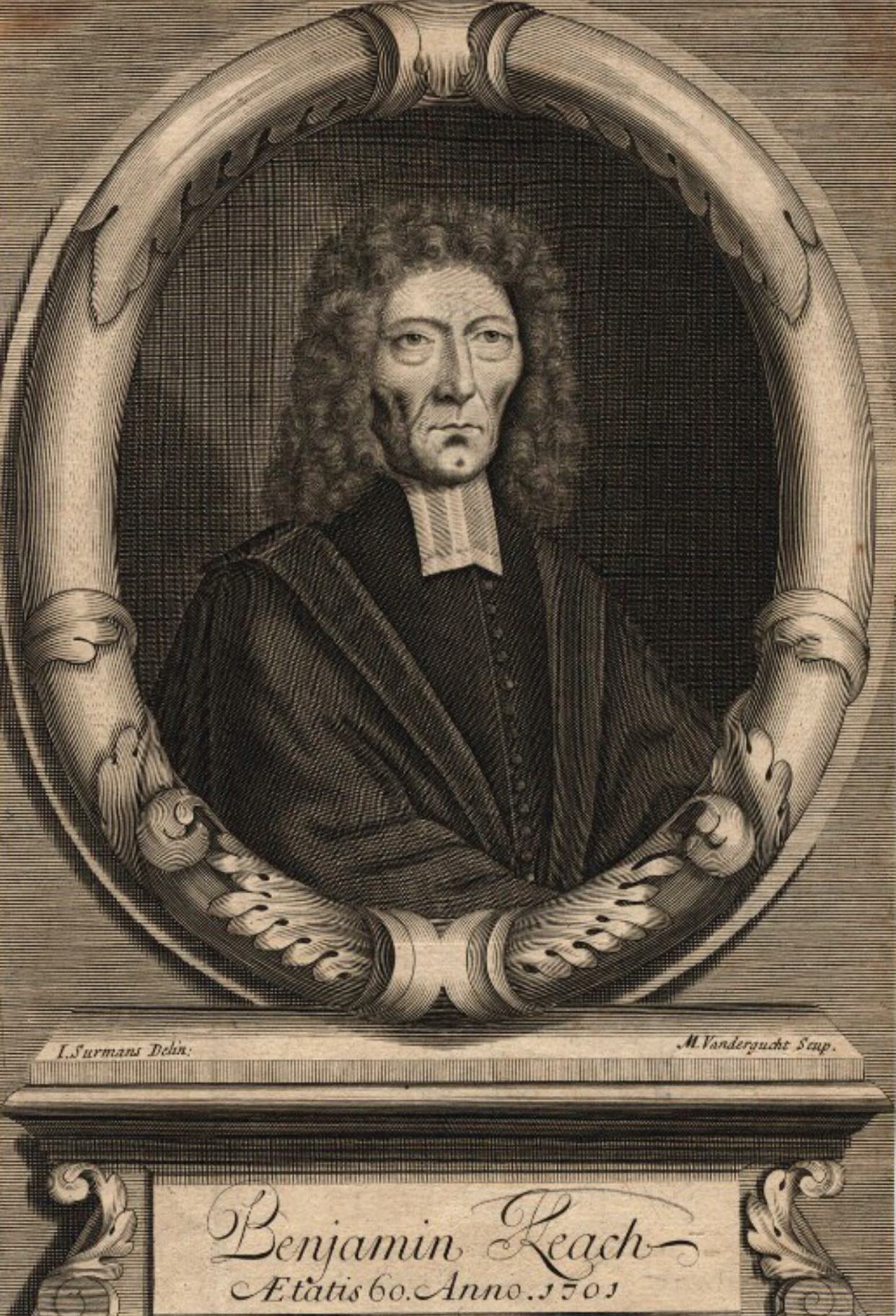
The main theological topic addressed by Benjamin Keach in "Sermon III" is the role of Christ as the Mediator of the Covenant of Peace, particularly focusing on His multifaceted offices as King, Priest, and Prophet. Keach argues that this covenant is established on the fulfillment of Christ's sacrificial work, showcasing His patience, courage, and the mollifying nature required of a mediator. He cites Isaiah 54:10 to illustrate God's steadfast mercy and the unshakeable basis of the covenant, emphasizing that Christ not only represents believers but also secures their justification through His obedient life and atoning death. The doctrinal significance of this teaching highlights the completeness and efficacy of Christ's work, assuring believers of their eternal security and underscoring the necessity of relying solely on Christ's merit for salvation, rather than any form of personal righteousness or works.
Key Quotes
“Doct That there is a Covenant of Peace made or agreed upon and stands firm in behalf of all God's Elect.”
“My Brethren Jesus Christ the Mediator of Peace in this Covenant hath shewed wonderful Patience he endured the Anger and Wrath of God.”
“Christ is of a mollifying Temper towards Man for he brings Man that he might partake of the Blessings of Peace.”
“It is a hard case my Brethren that these degenerate Presbyterians...should deny Christ to be a Common Head and Surety for the Elect.”
What does the Bible say about the Covenant of Peace?
The Bible affirms that there is a Covenant of Peace made on behalf of all God's elect, as highlighted in Isaiah 54:10.
Isaiah 54:10
How do we know that Christ's sacrifice is sufficient for our sins?
Christ's sacrifice is sufficient as He fully satisfied divine justice through His death and resurrection, fulfilling the requirements of the law.
Hebrews 10:12
Why is imputed righteousness important for Christians?
Imputed righteousness is vital for Christians as it allows them to stand justified before God, completely dependent on Christ's merit rather than their own works.
2 Corinthians 5:21
How does the Office of Christ as Mediator work in the Covenant of Peace?
Christ mediates the Covenant of Peace by serving as our representative, providing atonement, and ensuring the application of grace to believers.
1 John 2:1
For the mountains shall depart, and the hills be removed; but my kindness shall not depart from thee, neither shall the covenant of my peace be removed, saith the LORD that hath mercy on thee. - Isaiah 54:10
Neither shall the Covenant of my Peace be removed, saith the Lord that hath mercy on thee.
Further opening the Work of Christ as Mediator: Together with the Exercise of his Offices, as King, Priest, Prophet, Surety, Testator, &c.
THE Doctrine I have raised from these Words, is this, viz.
Doct. That there is a Covenant of Peace, made or agreed upon, and stands firm in behalf of all God's Elect.
I am, my Brethren, upon the Work and Office of Christ, as Mediator of this Covenant of Peace; I have gone through an Induction of Nine Particulars, and shall now proceed:
X. A Mediator ought to be endowed with much Patience and Long-suffering for Peace sake, either from the one or the other Party.
Now, my Brethren, Jesus Christ, the Mediator of Peace in this Covenant, hath shewed wonderful Patience, he endured the Anger and Wrath of God; the Father smote him,and hid his Face from him, he spared not his own Son. And he was also despised and rejected of Men, yet bore it all patiently; He was oppressed and afflicted, and yet opened not his Mouth; who when he was reviled, he reviled not again, but committed himself to him that judgeth righteously.
XI. A Mediator must be undaunted, and very courageous, and not tired nor wearied out.
Jesus Christ, my Brethren, is full of Courage; He shall not fail nor be discouraged,till he hath set Judgment in the Earth.
Tho his Work was heavy and amazing which he was to do, yet he fainted not; God the Father having promised to uphold him, I will uphold thee; indeed it was impossible that he should want courage who was the Mighty God, the Lord that fainteth not, neither is weary, he hath the fulness of the Godhead dwelling Bodily in him, I that speak in Righteousness mighty to save: He never fainted under his Burden so as to cast it off, but faithfully finished the Work his Father gave him to do; It is finished, and he bowed his Head and gave up the Ghost.
XII. A Mediator must be of a mollifying Temper, endeavouring to bring both Parties to terms of Peace, the one not to stand up to the uttermost rigor of Justice further than is absolute requisite, nor the other to remain stubborn and obstinate.
Now Jesus Christ the Mediator of this Covenant of Peace in this infinitely excelled all that ever undertook such an Office.
1. How Mollifying was his Temper towards God? True, he well knew God could not in point of Justice, considering his Infinite Holiness, Rectitude of his Nature, and the Sanction of his Law, abate any thing; no, not one Farthing of the whole Debt, but must have full Satisfaction; yet Christ brought the Majesty of God to accept of his Mediation and Suretiship for us; and O how did God condescend to him herein, who might have vigorously exacted a full Satisfaction from the Sinner himself, and not to have admitted of a Substitute for him! But the Blessed Mediator prevails with God to accept of Payment from his Hands instead of a Personal Satisfaction made by the Sinner; God yields to Jesus Christ, and accepts of Payment or Satisfaction from his Hands; not in our Persons, but in the Person of his Son as Mediator; for tho the Father might make the first Proposal of this to his Son, yet 'tis by Christ's Undertaking that God is pacified, &c.He was made a Curse for us, therefore as by the Offence of one Judgment came upon all Men to Condemnation, so by the Righteousness of one, the Free-gift came upon all Men unto Justification of Life.For as by one Man's Disobedience many were made Sinners; so by the Obedience of one shall many be made Righteous. As Adam brought us into Debt, and made us obnoxious to Divine Wrath, so Jesus Christ hath paid our Debts by his active Obedience to God's Law, and by bearing that Wrath on his Soul and Body which our Sins had brought upon us; For the Transgressions of my People was be stricken.
2. See how the Mediator prevails with God, for instead of God's demanding an inherent Righteousness, a Righteousness wrought out in our Persons; he accepts of an Imputed Righteousness wrought out in the Person of his own Son in our Nature as Mediator, Who of God is made unto us, Wisdom and Righteousness, and Sanctification, and Redemption—In the Lord, shall one say, have I Righteousness and Strength.
And then on the other side.
(1.) Christ is of a mollifying Temper towards Man, for he brings Man that he might partake of the Blessings of Peace, to forego or give up all his own Righteousness as good for nothing; nay, to account it as Dung in point of Justification at God's Bar, or when it is compared to the Righteousness of God in Christ, and instead of seeking Justification by our own Righteousness, or by our Faith and sincere Obedience, utterly to renounce it, and to submit to the Righteousness of God, That we may be Justified freely by his Grace,through the Redemption that is in Christ Jesus.
(2.) Not to work to be Justified, not to repent or love God to be Justified, But to work not, but believe in him that Justifies the Ungodly.
(3.) Not to work for Life, but from Life, i. e. from a Principle of Life wrought in the Soul, not to change one Work or Act of the Creature in Justification to another Work or Act of the Creature; I mean not to renounce all Works of the Law in point of Justification, and to include Gospel-works, or Faith and Obedience as part of our Justifying Righteousness before God; no, no, but to exclude all manner of Works, Faith and Obedience whatsoever, and to rest upon Christ alone, or on his Righteousness exclusive of all the Creature doth, or can do.
(4.) And tho the Soul sees he is already Justified, and accepted in the Beloved, and for ever delivered from Wrath and Condemnation; yet to live a Holy Life and renounce all Sin and Iniquity from a Principle of Faith; and because Sin is so hateful unto God, and so abominable in his Sight, and because Christ is his Lord, therefore to do all things whatsoever he commandeth him, and all this in Love to Christ, not to seek his Acceptance and Justification by the Worth of his Faith and Obedience, but in Christ, and to account himself an Unprofitable Servant, when he hath done all that Christ hath commanded him.
(5.) Christ never leaves his Elect, until he hath brought them to these Terms.
XIII. A Mediator whose Mediation is rejected, after long Patience, leaves the Offended and Obstinate Person to the Severity of that Law he hath broke, and under the Sentence thereof.
So, my Brethren, will the Lord Jesus Christ, after long Patience, and Forbearance, leave all Obstinate, Rebellious, and Unbelieving Sinners, to the Severity of the Law of God which they have broken, and to the Wrath and Vengeance of God; He that believeth not,is Condemned already. All are condemned in the first Adam, and their Condemnation will be aggravated upon them, because they reject the Offers of Peace, or the Mediation of Jesus Christ, and believe not in him; and indeed all Men would do this, was not Infinite Love shewed, and Power put forth towards some according to God's Eternal Purpose in Election.
XIV. A Mediator leaves no liberty of an Appeal after he hath passed the definitive Sentence. Moreover, it is some times left to him also to pass that Sentence.
So, my Brethren, the Lord Christ at the last Day will leave no room for any Sinner to appeal to any other Court or Person, there will be no relief; for God the Father hath committed all Judgment to the Son; he will therefore pass the definitive Sentence against all Mankind in the Day of Judgment; For the Father Judgeth no Man, but hath committed all Judgment to the Son: All Judgment in the Administration of the Mediatory Kingdom, is given to Jesus Christ, and in and by the Son will God Judge the World: Because he hath appointed a Day in the which he will Judge the World in Righteousness, by that Man whom he hath ordained, whereof he hath given assurance to all Men in that he hath raised him from the Dead. The Mediator of this Peace shall Judge all Men, he shall execute Judgment, because he is the Son of Man; and this God will do, That all Men may honour the Son, even as they honour the Father: Which shews, that the same Honour and Divine Worship is due to Christ, that is due to God the Father, he being the very same Eternal God. So much at present as to Christ's Work, as Mediator of this Covenant of Peace. And now let me apply this, before I proceed to the next thing, which is the Suretiship of Christ.
APPLICATION.
1. We infer from hence, that Sin is exceeding sinful: O what Evil is there in Sin! That nothing can atone for it, nor make our Peace, but the Blood of the Lord Jesus Christ the Mediator.
It is not his bare Pleading, but it must be done by his bleeding or dying for us, or in our stead: And O how great was that Breach, which nothing could make up, but such a Bloody Sacrifice!
2. We also infer from hence, that God's Love to us in Christ is an amazing and wonderful Love, our Peace shall be made, tho it cost God the Blood of his own dear and beloved Son; God so loved the World, How was that? Who can conceive of the greatness of it? Even so as he gave his only begotten Son to die for us, even for his Enemies: God commended his Love towards us in that, while we were yet Sinners Christ died for us; for when we were Enemies we were reconciled to God by the Death of his Son: Not that God was only reconcilable, but by that Sacrifice God was reconciled; our Faith doth not reconcile God to us, but we thereby receive the Atonement, or the Blessing of Peace and Reconciliation.
3. We infer likewise from hence, that the Love of Jesus Christ was wonderful, and his Condescension exceeding great: What, did God take our Nature into Union with himself? What, is the Lord of Heaven and Earth Born of a Woman? The Ancient of Days became a Child of a Day old? He that was in the Form of God, found in the Form of a Servant; Shall God purchase his Church with his own Blood? This is amazing to think upon.
4. We infer from hence also, how wonderfully God hath hereby exalted and magnified Man: Christ is a Man, truly Man, tho God as well as Man; he that is God, is a Man: Forasmuch as the Children are made Partakers of Flesh and Blood, he also himself took part of the same; and by this means we are nearly related to God, he is our Kinsman, the nearest of Kin had under the Law the Right of Redemption, to raise up Seed to the Dead: Christ is our Kinsman, our Brother, and by this means the Inheritance (even God) and all he hath) is settled on the whole Heavenly Family, or on all his Seed, or Elect: What can exalt Man more than this? O what greater Honour could be conferred on our Nature then, for the Son of God to assume it into Personal Union with the Godhead!
(1.) Hereby we are made near to God, even nearer than the Holy Angels; Verily he took not on him the Nature of Angels, but the Seed of Abraham. Angels are not the Spouse of Christ; they are not Bone of his Bone, and Flesh of his Flesh, but Christ is flesh of our Flesh and Bone of our Bone; and hereby also we have a nearer Union with God than Adam had in Innocency; nay, as I said, nearer than the Angels have; for Believers are Christ's Mystical Body, Christ is the Head of the Church; For both he that Sanctifieth, and they who are Sanctified, are all of one; for which Cause he is not ashamed to call them Brethren.
(2.) Our Nature hereby (as one observes) is the Store-house or Treasury of all that good which God intends to dispense to Men and Angels. Moreover, Angels and Men Worship God in our Nature, that is, Jesus Christ, God-man: And how astonishing is this?
(3) Moreover, God in our Nature shall be the Judge of Men and Angels; the Man Christ is God's Equal, God's Fellow. And,
(4.) What Dignity and Honour is it then to be espoused to such a Prince?
(5.) This speaks great comfort to Believers; Christ who is Mediator, is near unto God, and as near unto us, the Father hath Called, Chosen, Anointed and Accepted of him in our behalf; he can sympathize with us, he knows our Infirmities, and he hath always God's Ear, and God's Heart, and represents us, and our Cause to the Father.
Exhortation. Sinners, Will not you accept of Peace?
1. Shall such a Mediator make your Peace; nay, die to make your Peace with God, and shall any refuse to accept of that Peace which he hath made.
2. The Terms are not hard but easy; it is to believe in him, to trust in him, to believe he hath made your Peace, or that God in him is reconciled; 'tis to sue out your Pardon through Faith in his Blood.
Take a few Motives to stir you up thus to do.
1. Consider that you cannot have Peace with God any other ways, There is no other Name given under Heaven whereby you can be saved.
2. That whosoever cometh to him, receiveth him, believeth in him, resteth upon him, shall not Perish,but have Everlasting Life.
3. Consider how able he is to save; He is able to save all that come to God by him, and to save them to the uttermost, tho they are never such great Sinners, abominable Sinners, profane Sinners.
4. Consider the Necessity of the Application of his Blood, or of that Atonement which he hath made; He that Believeth not, shall be Damned, if ye believe not that I am he; that is, (that I am the only Messiah, the only Mediator, the only Saviour, and that I am able to save you) Ye shall die in your Sins.
5. Consider the woeful Condition of such that reject Jesus Christ, or lay not hold on his Strength, or that slight his Mediation, or that think to find Peace some other way; some think to have Peace by the Law, by the Moral Law, either as it is written in the two Tables, or as it is written in the Hearts of all Men, or by the Light of their own Natural Conscience, others by a new Law, turning the Gospel into a Law, and so bring in (and seek to establish) their own Righteousness.
Alas, If there had been a Law (as Paul shews) that could have given Life, then Christ is dead in vain. These cast great Contempt upon the Mediation of Jesus Christ; nay, strive to frustrate the grand Design of God, in contriving our Salvation by his Son Jesus Christ, which was to magnify his own Free Grace alone, and to abase the Creature, that no Man might boast, or glory in himself, but that all might be ashamed, and confounded for ever.
Question. What Offices doth Jesus Christ exercise as he is Mediator.
1 Answ. I answer: Divines generally assert, That he exerciseth a threefold Office, and this every one ought to know, and also the Work of Christ in respect had unto each Office, or what peculiarly relates to his Priestly Office, and what to his Kingly Office, and what to his Prophetical Office, &c. A little to each of these.
1. He is a Priest, and as a Priest he is the Propitiation for our Sins; he hath satisfied Justice by a condign Price, the Price of the Blood of him who is God, he paid our Debts to the last Farthing; as a Priest he laid down the atoning Sacrifice, and thereby quenched the Flames of God's Divine Wrath and Vengeance, which otherwise would have fed on us to an endless Eternity.
2. And as a Priest he intercedes now in Heaven, that all those for whom he died may be called, and have the Merits of his Blood applied to their Souls; and that all that are called, and do believe, may have all that Grace which they need bestowed upon them, to help them to resist Temptations, and to be supported under all Trials and Afflictions, and be enabled to perform all Holy Duties, and have all their Sins pardoned. If any Man sin,we have an Advocate with the Father, Jesus Christ the Righteous; he presents his Righteousness, the Deserts, Merits, and Satisfaction of his Blood, for Remission of all their Sins, neither can Sin be charged at any time upon any Believer, as to that Vindictive Wrath which is due to it, because he pleads the Satisfaction of his own Blood as their full Discharge from the Guilt and Punishment thereof for ever; for otherwise Justified Persons might again come under Condemnation, which they cannot; For there is now no Condemnation to them that are in Christ Jesus, &c. And thus was Christ a Priest; i. e. On Earth he eminently Sacrificed and Offered up himself to God; How much more shall the Blood of Christ, who through the Eternal Spirit offered himself without Spot to God, purge your Consciences from dead Works, to serve the Living God.
And in Heaven also he eminently intercedes for us, Seeing he ever liveth to make Intercession for them; and that his Atonement might be efficacious to us, He now appears in the Presence of God for us; therefore it is said, That We are come to Jesus the Mediator of the New Covenant, and to the Blood of sprinkling, that speaketh bitter things than the Blood of Abel. Come to Jesus, &c. that is, to a clearer knowledge of his Work and Office: Sirs, all Christ's Satisfaction and Priesthood would be ineffectual for our good, if he did not continue in the exercise of it in Heaven by his Intercession; for it is by virtue of his Intercession that all his Merits are applied to us; for if when we were Enemies we were reconciled to God by the Death of his Son, or God was reconciled to us, (for it is that, which the Holy Ghost intends; ) much more being reconciled we shall be saved by his Life; the design of this Office therefore was to make our Peace, or our Reconciliation to God by a Price paid, and to apply that Atonement that it might be effectual, and continued unto us for ever: Christ doth not reconcile God to us as a King, but as a Priest, and it is not done by what he works in us, but by what he hath done for us.
II. As Christ is a Priest, so also he is a King: He is, I say, invested with Kingly Authority, as he is Mediator; Yet have I set my King upon my Holy Hill of Sion. His Kingdom (as one observes) is not Regnum naturale, which he hath as God, co-essential with the Father, but Regnum Oeconomicum, which he hath by Donation and Unction from his Father, it is given to him as Mediator. Moreover, his Power as King is very great, He is King of Kings, and Lord of Lords, the only Potentate.
1. King over Sin, which as a Tyrant hath long Reigned.
2. King over Devils, and all the Powers of Darkness.
3. King over Death, that King of Terrors; the Keys of Hell and Death are given to him.
4. King of Saints, (he being the Universal Head of the Church) and King of Nations.
5. Nay, he hath Kingly Power and Headship over the Holy Angels; He is the Head of Principalities and Powers; yea, his Power is over all Creatures, God hath put all things under his Feet.
His Kingship and Authority is therefore Universal, All Power is given to me in Heaven and Earth.
And hence, There is nothing which he (as Mediator God-man) cannot do.
Now the Work of Christ as King.
1. Is to subdue all our Enemies for us, which indeed he hath effectually already done, Sin, the World, Devils, and Death, being all brought under his Feet.
2. To give us Laws, Statutes, and Ordinances; for as he is Mediator, he is our Law-giver, but he doth not give us Laws that by our Obedience to them our Peace should be made, and we be Justified: In this Sense Christ is no Law-giver; no, to make our Peace that appertains partly to his Priestly Office, (as I have shewed you before) and partly to his Suretiship, for so he paid both our Debt of perfect Obedience, and our Penal Debt also, and merited all Grace and Glory for us; for tho Christ is a Priest, yet he is more than a Priest, viz, a Surety also) but he gives us Laws as we are his Free-born Subjects, whom he Redeemed by his Blood, that we might know how to Honour, and Live under him that died for us and rose again.
3. His Work as King is to govern his Church, and every Member thereof; moreover, his Laws in the New Testament do contain, all those Rules for the Constitution of a Gospel-Church, and also all the Rules of the Government and Discipline thereof.
4. Christ's Work and Office as King is to subdue all the Elect unto himself; I mean, to work Grace in them, and to change their Hearts, and vanquish the Power of Sin, and Satan, for this is, and must be done by that Almighty Power which he exerts by his Spirit in their Souls, and so takes possession of them as King and Supreme Ruler, whom as a Priest he purchased by his Blood; and all this as he is Mediator of this Covenant of Peace, That Christ may dwell in our Hearts by Faith, or sway the Scepter there.
5. Moreover, Christ as King, will exercise his Kingly Office, in taking to him his great Authority and Regal Power, and Reign over all the Earth: For his Right is, Ask of me, and I will give thee the Heathen for thy Inheritance, and the uttermost parts of the Earth for thy Possession:Thou shalt break them in pieces like a Potters Vessel— The Kingdoms of this World,are become the Kingdom of our Lord, and of his Christ, and he shall Reign for ever and ever:And of the increase of his Government, there shall be no end upon the Throne of David, and upon his Kingdom, to order it, and to establish it with Justice and with Judgment, from henceforth and for ever.
All the Kingdoms under the whole Heavens, shall be given unto him, And he shall possess the Gates of his Enemies—This will be made good more fully and visibly upon the going off of the Fourth-Monarchy, and upon the passing away of the second Woe, or Mahomitan Power, and downfall of the Beast, and Mystery Babylon, which is now at the very Door, when Christ will save his Church from all her Enemies.
III. Christ as Mediator is a Prophet; A Prophet shall the Lord your God raise up unto you, of your Brethren like unto me: He as Prophet, is the Minister of the New Covenant, or the chief and great Ambassador of Peace, the chief Shepherd of the Sheep, and Bishop of our Souls.
His Work as a Prophet.
1. Is to reveal the Will, Purpose, Counsel, and Design of God unto his Chosen; and this he did in the Days of his Flesh in his own, and in his Apostles Ministration revealing, That My-Mystery that was hid from Ages and Generations —He was indeed a Teacher that came from God, as Nicodemus saith, My Doctrine (saith he) is not mine, but the Father's that sent me; For I have not spoken of my self,but the Father which sent me gave me Commandment what I should say, and what I should speak; denoting that he received his Mission, his Doctrine, and his Authority to Preach from the Father as he is Mediator.
As a Prophet he gives the knowledge of Salvation to his People, for without his Divine Revelation, Mankind could not arrive to the knowledge of it; for the Light that is in Man naturally reveals nothing of the Mystery of Redemption, of the Covenant of Peace, and Mediation of Jesus Christ.
2. Nor can any savingly know this, but as Christ reveals it by his Spirit, as the great Prophet and Teacher of the Church; No Man knoweth the Son but the Father, neither knoweth any Man the Father but the Son, and he to whomsoever the Son will reveal him. No Man knoweth the Essence of the Father, or hath a perfect knowledge of the Godhead; nor do they know the Councils, Purposes, and Dispensations of the Father of his saving of Men by Jesus Christ, except Jesus Christ reveals these Mysteries to them; all true and saving knowledge of God, is in and through Christ as a Prophet.
But as Christ doth not Atone for our Sins as a King, but as a Priest, so he doth not give forth Laws, &c. as a Priest, but as a King; nor doth he teach, instruct, or reveal God, and Salvation to us simply as a Priest or King, but as a Prophet; besides there are some things about the Covenant of Peace, which he doth not simply as a King, Priest, nor Prophet, but as simply consider'd a Mediator, Surety, and Testator, &c.
I would therefore desire Mr. Sam. Clark, for all his Confidence, to consider of his great mistake in his late Treaty, doth it follow (should it be granted) because Christ's Active Obedience doth not properly belong neither to his Kingly, his Priestly, nor to his Prophetical Office, that therefore his Active Obedience to God's Law, or Active Righteousness is no part of the matter of our Justification before God, for may not some things be done by Christ, as Mediator, or as Surety, or Testator, that doth not properly relate to either of his other three Offices; for evident it is, that the whole of Christ's Work in this Covenant of Peace, doth not strictly belong to these threefold Offices; therefore the Scripture gives an account of other Offices besides these, which he exerciseth.
But I will proceed a little further to open the Offices of Christ in the Covenant of Peace: And,
I. Of the Necessity of his exercising of these Offices as Mediator.
1. Of his Priestly Office, it was absolutely necessary that he should be a Priest, and that in our Nature, because he was to answer the Types under the Law, the Priests of the Law that were ceremonially Sanctified, and were to Sanctify others, were of the same Nature with the People.
And since they offered Sacrifices up to God, it also behooved him to offer up the Antitypical, Real, and Wrath-appeasing Sacrifice And
2. Forasmuch that we were Slaves and Captives of Sin, and Satan, being in Chains and Fetters by such Enemies that none could redeem us out of their Hands, but one clothed with Almighty and Infinite Power.
It behooved Jesus Christ to be a King, who is invested with God-like Power and Authority, upon this Account.
And since it was the Father's good Pleasure to exalt and magnify him with the sole Government of the World, and of the Church, it was necessary he should be Constituted, and Invested with Kingly Authority likewise.
3. And since we were ignorant of God, and under deep alienation from God, Having the Understanding darkened, being alienated from the Life of God, through the ignorance in them, because of the blindness of their Hearts: It behooved Jesus Christ to be a Prophet; yea, such a Prophet that can not only teach the Knowing, and Understanding Heart, but can give Knowledge to the Heart which is without Understanding; and seeing we were blind and ignorant of the way of Salvation, it behooved him that was to make our Peace, to bring us to the knowledge of that Peace and Reconciliation he hath made.
Moreover, we were dead, therefore he must quicken us; we were Enemies, therefore he must reconcile us to God, as well as God to us, we were Impotent, and could not come to the Father, therefore he, as a Kingly-Prophet, must draw us; the Father draws us by Jesus Christ to himself; also we were in Debt, and Divine Justice will be satisfied, and will not abate us one Farthing, therefore Christ must be our Surety to engage, and also actually pay all our Debts, in respect of the Preceptory and Penal parts thereof; for we owed Perfect Obedience unto God, as well as Punishment.
Also he was to confirm the Covenant of Peace by his Blood, and make his Last Will and Testament, and bequeath many Legacies to all the Legatees; therefore it was necessary that he should be a Testator; yea, the Testator of the New Testament, or Covenant. —Furthermore, we were Sick, therefore it behooved him to be appointed our Physician, we were as Sheep gone astray, therefore he is our Shepherd.
II. As to the End and Excellencies of Christ's Offices, I have lately opened them in a late Treatise upon Jacob's Ladder, to which I shall direct you; but know this, the whole design and purport of all his Offices are, that he might effectually be empowered with all things necessary, in respect had to the Glory and Honour of God, and for our good, and to give us interest in all the Blessings of the Covenant of Peace.
Objection. 'Tis objected, That Christ did not suffer for Sinners as a common Person, Head, and Representative of all the Elect, or their Surety, but did all merely as a Mediator, or as one endeavouring to compose the Difference betwixt God and Sinners.
1 Answ. I answer, Sad it is to see how in these Perilous Days Men are degenerated from the Apostolic Doctrine in this most important case, and oppose all our Protestant Writers, and deny Christ to be a Common Person, Head, Representative, and Surety, &c. but that he, as Mediator, hath by his Death merited a new and mild Law of Grace, i. e. of Faith and Sincere Obedience, and hath made a Compensation to the Justice of God, and Law of Works, and so removed the Law of perfect Obedience, or abolished it for ever; so that now God deals with us not according to the strict Law of perfect Obedience, but according to this New Law, i. e. on easier Conditions, viz. such that believe and sincerely obey, shall be Justified even so far as they do Obey, and are Sanctified; not that Christ's Obedience to the Law, or that his Active and Passive Obedience imputed to us, and our trusting in him according to the Free Promise of God, is the immediate and sole cause of Pardon, by virtue of Christ's Satisfaction; but that tho Christ hath made God a means for Legal Righteousness, having satisfied that Law, and took it away; yet our Obedience to this New Law according to these Men, is our Evangelical Righteousness, whereby we fulfill the Gospel, and that our Obedience is the Condition of our Justification before God: Thus Mr. Baxter, Mr. Williams, Mr. Clark of Wickham, and many others.
And thus is Popery revived amongst us, and Justification by Works asserted by these Law and Work-mongers, for I cannot call them Gospel-ministers; true, they affirm that Christ died for our good, but not in our stead; the Doctrine we maintain, is, that he died for our good; But how for our good? Even so, that he suffered as our Head and Representative in our stead or room, the Just for the Unjust, or the Surety for the Principal, or for the Sinner; and this according to the Terms agreed upon in the Covenant of Peace, (and not simply for our good any otherwise) God being in his own Nature Just, as well as Gracious, could not without Wrong, or Injury to his Justice, Holiness, and the Sanction of his Law Acquit, Justify and Pardon any Sinner, without a full Satisfaction to both Law, and Justice, and this must either be done by us, or by our Surety for us.
2. We affirm, that the Law of Perfect Obedience results from the Holiness, Purity, and Rectitude of God's Nature; and therefore it stands as a perpetual Law, and can never be abolished as a Rule of Life, tho it be taken away as it required perfect Obedience of us, or as a Law of Works to be fulfilled and satisfied for in our own Persons in point of Justification.
Do we then make void the Law through Faith?God forbid? Yea, we establish the Law; because by Christ we attain a perfect Righteousness, being interested in his most complete and perfect Obedience to the Moral Law, and by his Spirit to live in more exact Conformity thereunto: My Brethren, Is it not our Duty still, and as much as ever it was, To love the Lord our God with all our Hearts, with all our Souls, and with all our Strength, and our Neighbour as our selves; not only sincerely, but perfectly; nay, to be perfect as our Father in Heaven is perfect: Tho we are not able to do this, yet the Moral Law still remains, and requires us thus to do; true, we shall not be Damned for want of this perfect Obedience, because Christ hath in our Nature, and stead, kept the Law perfectly for us; and so he is the end of the Law in respect of Righteousness to all that believe.
Christ did not come to engage, or undertake as a Mediator, that we should perfectly in our own Persons, keep the Moral Law, and so be Justified in God's Sight; nor did he come to undertake that we should sincerely keep any other Law to that end; much less, leave us to the exercise of our Natural, or Spiritual Abilities, to keep such a Law, as the Condition of our Justification, and Acceptation with God; but he came to procure for us such a Righteousness by his own Obedience and Suffering, that the Holiness, Justice, and Law of God doth require of us if we are Justified with God, for what the Law could not do,in that it was weak through the Flesh, God sent forth his Son, &c. Tis a hard case, my Brethren, that these degenerate Presbyterians, or any pretending to be Gospel-Preachers, should deny Christ to be a Common Head and Surety for the Elect; for he that dies in the stead and room of others, is by the consent of the Law-giver substituted in their Law place, and so takes upon him the Capacity of a Surety, Representative, or common Person, undertaking to do, and suffer what others should, but these Men deny this Relation or Capacity of Christ as a Surety, in this Sense, and therefore deny he obeyed and died in our stead. And from hence it follows also that Christ did not do that for us, which our own Perfect Obedience did do, whilst Man stood, and would have done, had he not sinned, i. e. Justified him, or have given him a Title to Life.
3. Moreover, if Christ was not put in our Law place, as our Representative and Surety, Why was he made of a Woman,and made under the Law? Was it not that the Law might reach him?
(1.) As to its commanding Power as our Surety, to pay the Debt of Perfect Obedience thereunto.
(2.) And as a Sinner, in a Law Sense, to die, or be made Sin for us, (that is by Imputation;) for had not he been under the Law, the Law could not have reached him in either sense, i. e. either to do or suffer, and had not he took our Law place upon him, we could not have been the better; for what could his taking our Nature on him have profited us, had he not been substituted in our room? But as we were obliged by the Law, Justice, and Holiness of God, to keep the Law perfectly, so he was made under the Law to keep it for us, and as we were sinful Men, and liable to the Just Sentence of the Law for our Violation of it, so he was made under the Law, and as our Representative and Surety, to die and to satisfy Divine Justice for our Transgressions that were against it.
He was made under the Law, i. e. under the Preceptory part of it, to fulfill and establish that; he satisfied for that part of the Law.
He was under the Law, as being liable to the Punishment, or Penalty of the Law, that he might answer and fulfill that, and for ever deliver us from the Punishment thereof, and all this as our Surety standing in our Law place.
Reproof. This may tend severely to reprehend those new and erroneous Notions that so prevail amongst us, concerning Christ's Work and Office as Mediator; we say, and prove that by Christ's Active and Perfect Obedience to the Law, we are justified and delivered from Wrath and Condemnation, or that by Christ's Righteousness imputed, Believers are perfectly Justified, and freed from the Curse of the Law, and are certainly entitled to Eternal Life.
1. But our new Work-mongers assert, That our Justification or Right to Life, depends wholly upon our Obedience (to the Gospel as a Law) as the Condition to which it is promised: Therefore (as one observes) it puts us into a Condition of Life imperfect, and subject to change, as Obedience itself is, and that we are not perfectly Justified till our Obedience is perfected: Thus Mr. Clark of High-Wickham, and others. Take Mr. Clark's Words, viz.
Our Justification at present, while we are in this World, is but Partial, Imperfect, and Incomplete.
Ans. Now, say I, this confounds Justification, with Sanctification; and as I have told him, then it also follows that Believers are partly justified, and partly condemned, i. e. we are not acquitted from the guilt of all Sin, whilst in this World, and so Christ's Dove is not Undefiled: Lord, what an Age do we live in!
2. We say, that we are made Partakers of Christ's Righteousness, and the Benefits of it, by our Union with him through the Spirit, by which means Faith is wrought in us, by which we apprehend him; and we say, that Faith is an Instrument whereby we receive him, Faith only Justifying us objectively, i. e. It is not Faith, but Jesus Christ that Faith takes hold of, that doth Justify us in the Sight of God.
But they say, That Faith in its whole Latitude, is our believing and obeying the Gospel; that is, Faith and all the Fruits thereof, or Faith and Obedience, (or, if you please, Faith and Gospel-Works:) For Mr. Clark says, That Justification by Works, springing from Faith, is Justification by Faith, in this Sense.
Again, they say, That we are made Partakers of the Benefits of Christ, he having purchased this Grant or Law, i. e. That they that do obey him to the end, shall be saved; that is, Our Obedience doth both Justify us and Save us.
Answ. The Vanity of which, and how erroneous it is, we have shewed some time since .
3. They say, Christ hath merited a New Law, or easier Terms and Conditions, that our Faith, Obedience, and Good Works may Justify, and Save us; but what saith Paul, All boasting is excluded; not legal boasting only, but all boasting, and cause of boasting, but by their New Law boasting is let in. Moreover, he says, If it be of Grace, it is not of Works; and if it be of Works, it is not of Grace; or else Grace is no more Grace, and Works no more Works. Brethren, Works cannot mix with Free Grace; they are directly contrary to each other in their Nature; besides, these Men forget that we are Justified alone by the Obedience and Righteousness of one, (even as we were made Sinners by the Disobedience of one) and that is by the Righteousness of Christ imputed to us; for it was by the Disobedience of Adam, as imputed to us, that we became Sinners.
In a word, Christ hath wrought out a Righteousness for us, which is put upon us, or accounted, or imputed to us, and not that Christ merited a Law, that a Justifying Righteousness might be wrought out in us, or by us, in conforming to that New Law; Who of God is made unto us Wisdom, and Righteousness, and Sanctification, and Redemption: Not only that his Righteousness, is the Meritorious Cause of our Justification, as Mr. Clark affirms, p. 104. but the Material Cause thereof, or that by which we are Justified, no other Righteousness but his which is perfect, being pleadable at God's Bar.
4. We say, That Justification of a Sinner, is the acceptance of his Person, or the pronouncing him Just and Righteous in God's Sight, through the Imputation of the Righteousness of Christ, whereby he hath a full Right and Title to Eternal Life.
They say, That Justification is nothing else but the pardon of Sin, i. e. the not executing the Punishment of Sin due by the Law of Works, and an acceptance of a Man so long as he performeth the New Condition of Sincere Obedience.
For the Lord's sake, and for your Souls sake, beware of those Men, and their new and strange Doctrine; for it appears, Salvation must be a Debt, and not wholly of Grace, if what they say were true; because it is granted upon our fulfilling of the Conditions required, which are indeed not light, but weighty and difficult Conditions, as Faith, Regeneration, and Perseverance, even Mr. Dan. William's Baptismal Covenant, which all they who do not fulfill it, he says, shall be damned; the Violating of that Covenant, being, as he affirms, the Damning Sin: And this so far as I can see, is that which is their Covenant of Grace; not that Christ engaged for us to the Father, to do all for us, and in us in the Covenant of Redemption, even to reconcile God to us, and us to God; no, but that that was a distinct Covenant from the Covenant of Grace, which was to make way for us to enter into a Conditional Covenant of Grace, i. e. of Faith, Good Works, or Gospel-Obedience.
Which Error and Mistake, I purpose, God willing, to refute before I leave my Text, and prove the Covenant of Peace is but one entire Covenant with that of Redemption.
Comfort and Consolation, if, my Brethren, it is as you have heard that Jesus Christ, as a Mediator, is equally interested in both Parties, then what Comfort is here for Believers.
1. We have no ground to suspect him of partiality; he will not fail us, because he is so dearly and nearly related to us; and also considering what he hath done and suffered for us: And for their sakes I sanctify my self,that they also might be sanctified through the Truth.
2. Consider his Ability, not only to reconcile us to God, but to continue us in that reconciled State, we may depend upon his Power; For I know whom I have believed, and I am persuaded, that he is able to keep that which I have committed unto him against that Day.
3. Considering his Love, and Faithfulness towards us, in the Exercise of his Work and Office; Faithful is he that calleth you, and also he will do it.
4. With what boldness also may we come to God by him? Seeing we have such a great High-Priest, that is passed into the Heavens, Jesus the Son of God. Having therefore, Brethren, boldness to enter into the Holiest by the Blood of Jesus.
This, I say, may encourage us to make our humble Supplications to God with boldness, since we have such a Mediator between God and us, the Man Christ Jesus.

Comments
Your comment has been submitted and is awaiting moderation. Once approved, it will appear on this page.
Be the first to comment!