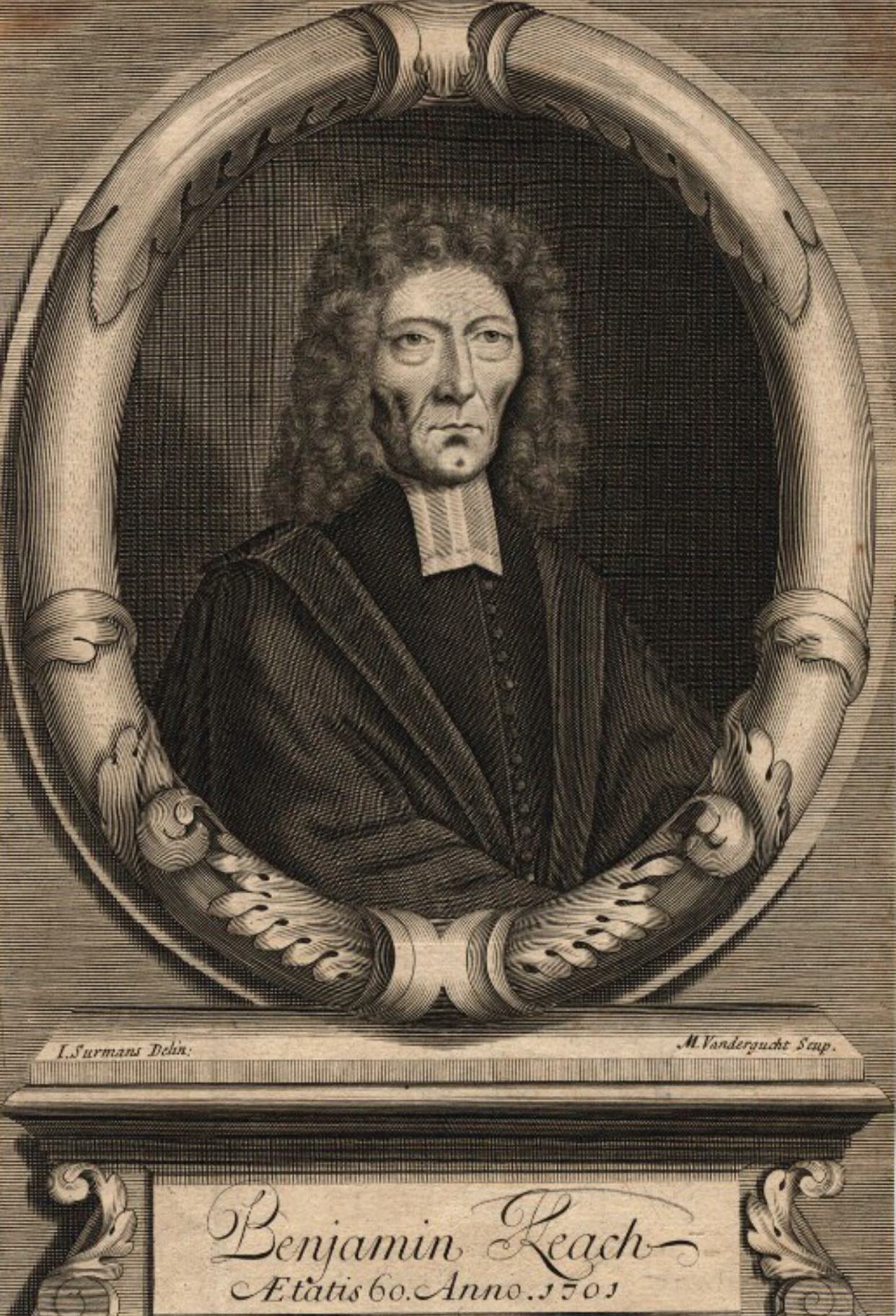
The main theological topic in Benjamin Keach's "Sermon II" is the Covenant of Peace between God the Father and God the Son, particularly focusing on the arrangement made for the redemption of the elect. Keach outlines six key elements of this covenant: the treaty process, terms of agreement, the role of the Mediator (Christ), the ratification, proclamation, and the initiation of peace for the elect. He supports his arguments with Scripture references such as Isaiah 53:10-12 and Psalm 89:3, underscoring that Jesus, as the Mediator, consented to the terms proposed by the Father to restore peace and reconcile humanity with God. The significance of this doctrine emphasizes the necessity of Christ's mediation and His dual nature as both God and man, which is foundational to Reformed theology's understanding of salvation, underscoring grace and the sovereignty of God in the covenants made.
Key Quotes
“The Covenant of Peace with Christ my Brethren was not made simply for himself but for the Elect; he merited that we might possess True all is to him of mere Desert and Merit but to us in him of mere Grace and Favour.”
“The Lord possessed me in the beginning of his way before his work of old I was set up from everlasting from the beginning before ever the Earth was.”
“This my Brethren was long kept secret but it is now clearly revealed; the secrets of the Lord is with them that fear him and he will shew them his Covenant.”
“A Mediator properly signifies a Midler a middle Man a Reconciler or a Days Man that lays his Hands upon both one that interposes to make up the Breach or Difference that is between disagreeing Parties.”
What does the Bible say about the Covenant of Peace?
The Covenant of Peace refers to the agreement made between God the Father and Jesus Christ before the world began, ensuring reconciliation for the elect.
Psalm 89:3, Isaiah 53:10-12, Isaiah 42:6
How do we know the Covenant of Peace is true?
The truth of the Covenant of Peace is affirmed by Scripture, showing that God made a binding agreement with Christ with specific terms for our salvation.
Psalm 89:3, Isaiah 53:10-12, Hebrews 9:15
Why is the concept of a Mediator important for Christians?
The Mediator, Jesus Christ, is essential for Christians because through Him, reconciliation with God is achieved, satisfying divine justice.
1 Timothy 2:5, Hebrews 9:15, Colossians 1:20
Neither shall the Covenant of my Peace be removed, saith the Lord that hath mercy on thee.
Doct. THAT there is a Covenant of Peace made and agreed on, and standeth firm in behalf of all the Elect of God.
The last Day we spoke to those Explanatory Propositions proposed to be opened by way of premise. And now to proceed to the next General Head.
Secondly, I shall endeavour to open the main or chief transactions about the bringing in this Covenant of Peace.
There are my Brethren, Six Things to be considered in a Covenant of Peace among Men, and so also in and about this Covenant.
I. A Treaty, or a Solemn Consultation, or a Treating about the Terms of Peace.
II. An Agreement upon the Terms proposed.
III. Who the Mediator is of this Covenant of Peace, together with his Work and Office.
IV. The Ratification of the Covenant.
V. The Proclamation or proclaiming the Peace.
VI. The Time when the Peace shall commence, and who are included in it, and what is required in order to their actual possession and enjoyment thereof.
My Brethren, These are the main things that are contained in, and about a Covenant of Peace among Men, as the chief Covenant Transactions; and my Purpose is to speak unto these Six things particularly: Tho I grant there is some difference between a Covenant of Peace between Kingdoms and States among Men, and this Covenant; especially concerning the Work of the Glorious Mediator of this Covenant, and a Mediator of Peace concluded between Earthly Princes and States: As we, God assisting, shall make appear.
But to proceed:
I. Concerning the Treaty, or Treating about this Covenant. My Brethren, Commonly Princes and States appoint their Extraordinary Ambassadors or Plenipotentiaries to Treat about the Terms upon which they design and are willing to conclude a Peace after a ruinous and destructive War: They do not Treat about it in their own Persons; but the Treaty of Peace in this Covenant was only between God the Father, and God the Son; Sinners then had no actual Being, or did not exist, and therefore could not send any Plenipotentiary to agitate Matters on their behalf.
It is true, Our Lord Jesus Christ is called The Messenger of the Covenant whom we delight in. He is indeed our Delegate, Messenger or Trustee; but the Father alone, and not we Delegated that Office and Power to him, for us, and on our Behalf, out of his own Sovereign Grace and Goodness before the World began. This Name of Messenger of the Covenant doth:
1. Denote Christ's Dispensatory Employment, Work and Office, and his free and voluntary condescension to undertake in this Treaty, according to the Design, Purpose and Will of the Father, as our great Trustee, Ambassador and Plenipotentiary. And
2. He may not only be called The Messenger of the Covenant, as our great Representative to Treat with the Father in Eternity, upon the Terms of our Peace; but also in his being sent from Heaven to Earth, actually to work about, and accomplish all things that were agreed on between them both; concerning the making of our Peace. He travelled from Heaven to Earth on this Errand, and to effect this blessed Work.
3. He may be so called, because he is the Messenger that published the Happy News of the Peace contained in this Covenant, in the clear and glorious Ministration of it: Hence it is said, it was first began to be spoken by the Lord. Our Lord Jesus is the great Apostle, and Chief Minister and Messenger of the New Covenant, a Minister of the Sanctuary, and of the true Tabernacle, which the Lord pitched,and not Man.
4. He is the Messenger who doth interpret, open and explain all those dark and obscure Mysteries contained in the Covenant of Peace, that were kept secret and hid from the beginning of the World; He is that Messenger, one of a thousand:All things (saith he) are delivered unto me of my Father; and no Man knoweth the Son but the Father; neither knoweth any Man the Father,save the Son, and he to whomsoever the Son will reveal him. No Man hath seen God at any time, the only begotten Son which is in the bosom of the Father,he hath declared him: But no more as to this now.
1. I shall prove that there was a Covenant between God and Christ, or a blessed Treaty about our Peace before the World began, see Psalm 89. v. 3. I have made a Covenant with my chosen. God first chose his Son as the Representative, Covenanting Head and Surety of his Elect, and then Treated with him about the Terms of our Peace. It is said to be made with David, but no otherwise than as he was a Type of Christ. It is Jesus Christ who is the true David,My Mercy will I keep for him evermore, and my Covenant shall stand fast with him: Hence our Blessed Lord, it is said, was delivered by the determinate counsel and foreknowledge of God.
2. Here are the two Covenanting Parties the Covenant of Peace is between them both: that is, between the Lord of Host, and the Man who is the Branch; betwixt them it was consulted, agreed to, or concluded, I was set up from everlasting, from the beginning, or ever the Earth was: that is, as the Covenant-Head of all God's Elect, or as Mediator and Peace-maker between God and them, and this setting up that, clearly implies a Covenant or holy Compact that was between them both.
3. The consent of two Parties, or more, upon the Proposals made by the one Party, and the agreement of the other, tends to make a formal Covenant, so here was, my Brethren, a mutual re-stipulation betwixt God the Father and Christ about our Peace and Redemption. For here were things commanded by the one, and agreed to be done in obedience by the other: In these Transactions the Father makes Proposals to the Son, and shewed him what he will have him do, if ever our Peace succeed and is made. And
4. Moreover, Upon the doing of which many great Promises are made to Christ for the Merit or Desert of his Work, and to the Elect in him, out of mere Grace, for Christ's sake, or for his just deservings; hence our Lord saith he came to do the will of his Father, This is the Will of him that sent me, &c. he laid down his Life as his Father commanded him; he knew it was according to the Eternal Compact, Purpose and Decree of his Father, unto which he consented; God the Father agreed to prepare the Son a Body, the Son consented to assume our Nature, or take that Body, Then said I, lo, I come to do thy Will O God! and in that body he was enjoined to die, I have power to lay down my life, and power to take it up again, this Commandment have I received of my Father. Also these Federal Transactions betwixt God the Father and Jesus Christ are held forth in Isa. 53.10, 11, 12. He shall make his Soul an offering for Sin, this was that which Christ was obliged to do; and then we have the Promise of the Fathers to him, (1.) Of justifying of many. (2.) Of seeing his Seed, He shall see his Seed. (3.) That the pleasure of the Lord shall prosper in his hand; he shall have them all united to himself, pardoned and saved for ever. Again Isa. 42.6. The Covenanting Parties are mentioned, the Father saith, I. will give thee (that is, thee my Son) for a Covenant to the People. Here's the Father's Designation and first Sealing of our Lord Jesus Christ to the Mediatorial Office and Employment.
Moreover, Our Lord Jesus readily complied with the Father's Purpose and Will herein, The Lord God hath opened mine Ear,and I was not rebellious, I gave my Back to the Smiters, and my Cheeks to them that plucked off the Hair; I hid not my Face from shame and spitting. I gave consent thus to do, I readily yielded to my Father's Pleasure herein; and in the Fulness of Time he actually thus suffered to fulfill and answer the Terms of this Covenant.
I will declare the Decree, (or as Dr. Hammond reads it) the Covenant: that is, I will publish or manifest that which was agreed upon betwixt God the Father and me This my Brethren, was long kept secret, but it is now clearly revealed, The secrets of the Lord is with them that fear him,and he will shew them his Covenant. The Hebrew Word Decree, the Learned in that Language render Statute, Decree, Agreement, Pact, Covenant; the Word that is here used (saith a Learned Author) is in the Scripture sometimes promiscuously, or synonymously used with the Word that is usually rendered Covenant; Covenant is taken either properly or figuratively.
First Properly, for a mutual Contract, Compact or Agreement between two Parties, which differs from a Law which is without Obligation on the Lawgiver; and also from a single Promise which is without Stipulation. Covenant may be thus taken (as one Notes) i. e. in a proper sense when applied to the whole Covenant of Peace or Grace. between the Father and the Son, because there was a mutual Stipulation.
2. Figuratively, For a bare Promise; so it was to Noah, Gen. 9.9. and so the Covenant of Grace run to Abraham, viz. being no more than a free Promise of God; and thus we are to take the Word Covenant when it refers to us in Christ, for we receive no Covenant-Blessings upon any mutual Stipulation betwixt God and us, upon or from the Merit of our Work, but all upon the account of Free Grace, and of Christ's Covenant with God, and by virtue of that Federal Union we had then with him; for all things which we receive in Time, was promised to us in Christ from Eternity; therefore the Elect must federally be considered in Christ from everlasting: The Covenant of Peace with Christ, my Brethren, was not made simply for himself, but for the Elect; he merited that we might possess: True, all is to him of mere Desert and Merit; but to us in him, of mere Grace and Favour. So much as to the first thing that was proposed to be opened, viz. That there was a Treaty or Treating between the Father and the Son about this blessed Covenant of Peace.
II. I shall shew you more fully, That there was an Agreement upon the Terms. Or, That the Son of God did consent to what the Father proposed.
1. It is very evident from what hath been said, That God proposed Matters to his own Son; or what he must do to procure, and establish the Covenant of Peace; but let me add here one or two Scriptures more to shew you that Christ consented unto those Proposals made by the Father, I the Lord have called thee in righteousness, and will hold thine hand, and will keep thee, and give thee for a Covenant of the People, for a light unto the Gentiles: to open blind eyes, to bring out the Prisoners from the Prison, and them that sit in darkness out of the Prison-House. And in Isa. 49.5, 6. it is said, And now saith the Lord that formed me from the Womb to be his servant, to bring Jacob again to him, tho Israel be not gathered, yet shall I be glorious in the eyes of the Lord, And my God shall be my strength: And he said it is a light thing that thou shouldest be my Servant, to raise up the Tribes of Jacob, to restore the preserved of Israel, I will give thee for a light to the Gentiles, that thou mayest be my Salvation to the ends of the Earth. These things all Expositors that are Orthodox agree were spoken by Jehovah to Jesus Christ, and do contain Proposals concerning the Covenant of Peace. And now
2. Let us in the next place consider of such Scriptures that prove that Christ did consent unto these Proposals. To this effect, see Prov. 8.22.23, 24. The Lord possessed me in the beginning of his way, before his work of old. I was set up from everlasting, from the beginning, before ever the Earth was. When there was no depths I was brought forth, when there was no Fountains abounding with Water, 30, 31. Then was I with him as one brought up with him, and was daily his delight, rejoicing always before him, rejoicing in the habitable part of the Earth, and my Delights were with the Sons of Men. As this Text proves the Eternity of the Son of God, who is the substantial, eternal Wisdom of God; so also it shews there was a voluntary and ready consent in our Lord to undertake in the Work of our Peace and Redemption, that he was set up and did agree to undertake, as our Mediator, to make our Peace with God; and also, that he took pleasure in his so engaging on our behalf; To this, let me add what David in the Person of Christ speaks, Sacrifice and Offerings thou didst not desire, mine ears hast thou opened; Burnt Offerings and Sin Offerings hast thou not required, then said I, lo I come to do thy Will O God. This place is cited by the Apostle, Wherefore when he cometh into the World he saith, Sacrifice and Offerings thou wouldst not, but a Body hast thou prepared me. In Burnt Offerings and Sacrifices for sin thou hast had no pleasure. Then said I, lo I come, in the Volume of the Book it is written of me, to do thy Will, O God. Nothing can more fully shew Christ's cheerful Consent;
What God the Father required, Jesus Christ yielded to do, which was, to make satisfaction for Sin, in his Body on the Tree, and so to make our Peace with the Eternal Jehovah.
I. Consider who the Persons transacting and treating with each other were, even God the Father, and God the Son; the Father stands upon satisfaction to his Law and Justice, or demands the whole Sum or Price of our Redemption, that so our Peace might be made, and Christ engaged to give it.
II. The business or grand Matter transacted, I say, betwixt them was our Peace and Reconciliation unto God, and so to recover all God's Elect from Sin, Wrath and Misery, and work about their Eternal Happiness; the Elect, tho not then in Being, yet are here considered as fallen, wretched and forlorn Creatures.
III. That the Manner or Nature of these Transactions were federal, or in a Covenant-way, one Person mutually engaging and stipulating with the other: The Father stands upon the strict demands of Law and Justice, the Son consents to glorify the Father therein, and raise the honour of all the Divine Attributes, which in time he did do, I have glorified thee on Earth,I have finished the work thou gavest me to do. And now Father, glorify me with thine own Self. As if he should say, the Terms agreed upon, or thy Demands are done, therefore let me have my Reward, and let mine Elect be made one in us; Let me not only Personally be one with thee, but also Mystically one, and so be glorified, as it is due to me, as the Hire or Reward of my Work.
IV. If any ask when this Covenant or holy Compact was made, I told you, and say again, it bears Date from Eternity, or before the World began, when we had (as I said before) no Existence but only in the Eternal Decree and Purpose of God. Moreover, Remember this Covenant was made with Christ for us, and in him with us, for all that Grace which is given to us in time, was promised unto us in Christ, nay given to us in Christ from Eternity, 2 Tim. 1.9. Tit. 1.1, 2, 3. as our Surety, Covenanting-Head, and blessed Representative.
As to the special and particular Articles agreed upon, on which the Covenant of Peace was made and concluded, I shall open them under the next Head of Discourse.
V. Commonly in all Treaties, or Covenants of Peace amongst Men, there is a Mediator chosen. So God chose a Mediator of this Covenant; yet his Work as Mediator, greatly differs from the Work and Office of all other Mediators, as I might make it appear: For Christ is not only Mediator of the Covenant, but Surety, Messenger and Testator of it also: And as he is considered Mediator, he is invested with a Threefold Office more particularly, which Offices he faithfully executeth in order to the making our Peace with God, in reconciling God to us, and us to God, which I purpose to treat of and open in order.
The Work of our Mediator is not barely to see our Peace made, or to labour by Intreaty to bring each Party to Moderation, and pliable Terms, and to see every thing done according to the Preliminaries agreed upon; but the whole Work of making Peace is solely committed to our Lord Jesus Christ, not to see others do it, but he himself doth it all, even all that God requires on his part, and what is necessary to be done for us, in us, and by us also.
I. Let it be also considered, That God would not make any Covenant of Peace with us without a Mediator, without such a Mediator; and that Jesus Christ alone is the Mediator, is evident, There is one Mediator between God and Man, even the Man Christ Jesus. I say, God chose his Son to be the Mediator of this Covenant of Peace: and hence he is said to be given for a Covenant unto the People, that is, as some conceive, To be the Mediator thereof.
II. God the Father's Demands must be granted; he will not suffer his Just Right and Honour to be invaded, nor his Glory eclipsed, therefore was this Mediator chosen; besides the Sanction of his Holy Law must be preserved; Private Persons may forgive Offences, as they please; but the Just and Holy Governor of the World, will not, cannot pass by Offences till the end of Government be secured, that so his Holiness and Justice be not stained, nor his Law fall to the Ground: Hence one main Article proposed was, That the Mediator of our Peace do make full Satisfaction, and if he doth not this, there could be no Covenant of Peace concluded; this therefore was the result of that Counsel of Peace held in Eternity.
III. There was I say, a necessity for the Son of God to be both Mediator and Surety of this Covenant: I do not say, that there was a necessity laid either upon the Father or the Son to enter into this Covenant of Peace for us: No, no! But if God will in a way of Free and Sovereign Grace enter into such a Covenant for Mankind, there was a Necessity for Christ to be the Mediator and Surety of it; I say, Necessity, so far as we can, or are able to conceive, in respect of this Matter.
1. Because God hath not revealed, or made known any other way by which our Peace could be made, but by a Mediator, I do not say, that God could not any other way make our Peace, but that he could not in regard of his own Honour (so far as it appeareth unto us.) Moreover, if God hath not made known any other way, then there is no other way for us to obtain Peace with him: But no other way is made known.
2. There could be no other way, as we can conceive, because the breach that was between God and us, must be made up by a full satisfaction to the Law and Justice of God, God being Just as well as Gracious; and hence one end why Christ was made a propitiation through Faith in his blood, was To declare his righteousness for the remission of sins that are past, through the forbearance of God, v. 25. To declare, I say, at this time his righteousness, that he might be just, and the Justifier of him that believeth in Jesus, vers. 26. that is, That no wrong might be done to the Essential Purity of God's Nature, or Rectitude of his Will; nor yet to his immediate Justice, by which he cannot but hate Sin, and for it require a Satisfaction.
3. In regard of the Truth of God's Threatening pronounced against all Mankind in Adam, upon his Disobedience, legal Threatenings are such, that they admit of no Pardon, without Satisfaction be made to the Justice and Holiness of God; and this was signified by all those Typical Sacrifices and Offerings under the Law; therefore in vindication of the Truth or Veracity of God, together with the Honour, Equity, and Sanction of the Law, there must be Satisfaction made, or no Peace with God, for fallen Mankind; and this could not be done but by such a Mediator as Jesus Christ is.
For that which could not be done by Men or Angels, nor as a simple Act of God's Mercy, without the Impeachment of his Holiness, Truth, and Justice, &c. could not be done at all: But no pardon, no Peace could be procured by Men nor Angels, nor as an absolute or simple Act of Mercy, without the Impeachment or eclipsing the Glory of the Attributes of God's Justice, Truth, and Holiness, &c. therefore it could not be so done at all.
4. To say God might have entered into a Covenant of Peace for us any other way than by the Mediator Jesus Christ, or through his Death and Atonement would (as one observes) reflect upon his Love to his own dear Son: For why should the Son of God be made a Curse for us, or suffer the cursed Death of the Cross, to make our Peace, if Peace could be made any other way, without the least injury to the Justice, Law, or Holiness of God, &c. No doubt my Brethren, but that the Son of God had been spared, if he had foresaw that our Peace might have been made some other way.
Moreover, would it not then follow that there might have been two Ways to obtain Peace and Reconciliation with God, which is contrary to what our Blessed Lord says, No Man cometh to the Father but by me; that is, cannot come to have Peace with God any other way, but by me, by my Death, or through my Blood, nor without believing, or depending upon me: For thus it is with the adult.
5. There is no other way of Peace with God, and therefore a Necessity of Christ's Mediation; because without the shedding of Blood,there is no Remission; no Pardon, and so no Peace; there could be no discharge from the guilt of Sin, no removal of the Punishment of Sin, nor any Purgation from the filth and pollution thereof, without the Blood of Christ be shed.
6. Because it is positively said, There is no other Name given under Heaven whereby we must be saved: If there is no other Name, Way, or Means given, but by Jesus Christ; then there is a Necessity that our Peace be made alone by him: But this is so, therefore there is a Necessity of Christ's Mediation.
In the next place we will enquire what is absolutely necessary for the Mediator of our Peace to do, or were Requisites in him, according to the Articles agreed on in this Covenant, to make our Peace with God.
1. A Mediator of this Covenant of Peace, must understand the Nature of that difference, or breach which was betwixt God and Man; and what Terms the Holy God, who is the Injured Party) stands upon; and must have granted him if ever our Peace be made; and who but Jesus Christ, who is God, knew this? It was he only that well knew what it was that could satisfy Infinite Justice: Had it been proposed either to Men or Angels to resolve this Question, i. e. By what Means shall fallen Man come to be reconciled to God, and God be righted as touching all that wrong Sin and Sinners have done him? What Answer think you could they have made? Alas! no mere created Being could resolve such a Question.
2. He that is the Mediator of this Covenant, or that maketh our Peace, must not only know what will do it, but also he must be able to answer all God's Demands, both in respect of his Law and Justice; and also be able to supply all our Wants and Necessities: He must seek the Honour of the Blessed God, and equally seek and be able to relieve poor Sinners; and none but Jesus Christ could do this, who is an indifferent Person, or one equally related unto both, he being both God and Man in one Person.
(1.) He being God, the one and the same Eternal God, he could not know what concerned the Glory of his Father; and therefore would not, could not eclipse his Glory.
(2.) And he being Man, he could not but sympathize with the poor Creature; and as being God he did not only know all our Wants, but he is able also to supply them. This brings me to the next particular.
III. The Mediator of this Covenant must therefore be every ways suitably qualified, or capacitated for this Work and Mediatorship; and to this end I say, he must be God; nay, God in our Nature, (for a mere Man could not satisfy Infinite Justice); his Obedience or Sufferings else could not therefore have been meritorious: For it was from the Union of the Divine Nature with the Humane, that put such a Worth or meritorious Efficacy in his Sacrifice.
I say, Jesus Christ our Mediator must be God,
1. Because those Evils which he was to expiate, could never be taken away by any Person that was not God, or whose Sacrifice or Atonement had not an infinite Worth and Satisfaction in it; because Sin is against the Infinite Majesty of Heaven.
2. Jesus Christ as Mediator must be God, because otherwise he could not sustain, or bear in his Body and Soul that great weight of Sin and Wrath laid upon him; for if but the guilt of one Sin was laid on any mere Man, it would sink him down to the lowest Hell; much more then would the weight of all the Sins of God's Elect have sunk down the Lord Jesus Christ,
when laid upon him, had he not been God, but a mere Man. How doth David cry out of the burden of his Sins? Mine Iniquities are gone over mine Head, as an heavy burden, they are too heavy for me. Nay, my Brethren, when our Sins were laid upon our Lord Jesus Christ, and he began to bear, and feel the weight of them, tho he was God, how did he cry out? and he began to be sore amazed, and said, My Soul is exceeding sorrowful, even unto Death: Tarry ye here and watch, and he went forward a little, and fell on the Ground: The weight of our Sins and Divine Wrath, brought him down to the Earth.
3. Christ our Mediator must be God, otherwise his Suffering, or the purchase of his Blood could not have merited all that Grace and Glory for all God's Elect, which indeed it did. Brethren there is a difference between a full Satisfaction or Payment of Debts, and a Price that is laid down not only to do that, but also to merit and purchase a Right to great Riches, high Privileges and Honour.
Now if Christ had only paid our Debts, or satisfied the Justice of God as to his vindictive Vengeance, tho we thereby had been delivered from Hell, yet that Payment could not have raised us up to Heaven; no, it is through the Merits of that Infinite Price Christ laid down, that we come to be the Sons of God, and Heirs of Glory; and all this is through the Dignity of his Person, and infinite Value and Worth of his Purchase, as being God; and also as it was the Grant of God the Father to Christ, in the Covenant of Peace, as the result of those Transactions.
4. He must be God, because otherwise he could not have subdued, and overcome all his and our Enemies: What mere Man is able to wrestle with, and overcome Satan, and all the Powers of Darkness? Or how could he have prevailed against Death? Overcome and have subdued Death? I will ransom them from the Power of the Grave: I will redeem them from Death: O Death, I will be thy Plague; O Grave, I will be thy Destruction. And hence Christ says, Destroy this Temple,and in three Days I will raise it up again. This he could not have done except he had been the Eternal God. Now this is sometimes attributed to the whole Trinity, sometimes to the Father, sometimes to the Holy Ghost, so it is sometimes attributed to Jesus Christ, which shews, that the three Persons are all but one and the same God.
5. He must be God, in respect of his Work as Mediator in reference to Man; for he was obliged to quicken all God's Elect, (who in the first Adam were dead in Sins and Trespasses) and raise them from that Spiritual Death, and overcome the Power of Sin and Satan in them, as well as for them. This brings me to the next Thing.
II. Jesus Christ also as Mediator of Peace, must be Man.
1. He must be Man, because he must work out a Righteousness in the same Nature that had sinned, Man was obliged to keep the Law perfectly; and this must be done by Man, if ever he be Justified with God; (for God will in no wise clear the Guilty.) True, this is not required in the Covenant of Peace to be done in the Person of every elect Sinner,' but in the Person of Christ, who is the Representative of every one of them. For as we were all made Sinners by one Man, as the Head and Representative of all his Seed, so we became Righteous by the complete and perfect Obedience of one Man, as the Head and Representative of all his Seed; for as the Law being broken by one Man, is imputed to all his Seed, so the Law being completely kept by one Man, Jesus Christ, is imputed to all his Seed: For as by one Man's Disobedience many were made Sinners; so by the Obedience of one, shall many be made Righteous. Moreover, Justice required that the same Nature that broke the Law, should keep the Law, tho room for a Substitute, or Surety, was reserved in the Wisdom and Council of God.
2. Christ must be Man, because he must die; now God as God (I mean the Godhead) could not die; Man must die to satisfy offended Justice for the Breach of the Law; therefore Christ must be Man and die: And by Virtue of the Union of the Divine Nature with the Humane Nature in his Person, the Death of Christ was a full Satisfaction to the Justice of God.
3. He must be one with us, or else how could his Obedience be imputed to us? For as our Sins was imputed to him, so his Righteousness is imputed to us.
4. He must be Man, that he might be a Merciful High-Priest, being touched with the feeling of our Infirmity, he must have access to both, he was to deal with God for Man, and for God with Man.
Jesus Christ ought to be of the same Stock with those he Redeemed or Sanctified to God, of one Stock, of one Blood saith a worthy Author;
That by the Law of Propinquity of Blood, he might have right to redeem us; Goel the next of Kin, had an Obligation upon him to redeem his Brother's Land if Mortgaged: If thy Brother be waxen poor,and hath sold away some of his Possession, and if any of his Kin come to redeem it, then shall he redeem that which his Brother sold.
So of Persons, If sold,after he is sold he may be redeemed again, one of his Brethren may redeem him: So Christ is called Goel, Job 19.25. For I know that my Redeemer liveth: Christ is our Kinsman, not only true Man, but the Son of Man; true Man he might have been, if God had created him out of nothing, or he had brought his Substance from Heaven; but he is the Son of Man descended from the Loins of Adam, as we are, and so doth redeem us, not only Jure proprietatis, by virtue of his Interest as our Creator, but Jure propinquitatis, by virtue of Kindred, as one of the same Stock and Lineage, as the Son of David, as well as the Son of God, for Christ Jesus, of all the Kindred, was the only one that was free, and able to pay a Ransom for us.
5. He must be Man, as the said Author notes, That we might find a Fountain of Holiness in our Nature, God hath poured out upon his Humane Nature, such a measure of Holiness, that he might be a common Fountain to all the Elect; of his Fullness have all we received, and Grace for Grace. Christ, as God-man, is the Fountain from whence we receive all Grace.
6. To give us a Pledge of that Tenderness of his Love and Compassion towards us; for he that is our Kinsman, Bone of our Bone, and Flesh of our Flesh, will not be strange to his own Flesh; especially since he is one that is so not by necessity of Nature, but by voluntary Choice and Assumption, we could not have such familiar and confident recourse to an Angel, or to one of another or different Nature from ours; this made Laban, tho otherwise a churlish Man, kind to Jacob; Surely thou art my Bone and my Flesh.
III. Christ must be God and Man, if he be a fit Mediator betwixt God and Man; i.e. he must take our Nature into Union with his Godhead, and that
(1.) That we might mystically be united to God, or draw near to God, and so be raised up into a glorious and happy State; for the Spring or Foundation of our Happiness riseth from the Hypostatical Union of the two Natures in the Person of Christ; we had never been able to have drawn near to God, nor have been united mystically to God, had not there been such an Hypostatical Union of our Nature to the Divine Nature in Christ's Person; for that was the Spring, I say, and Foundation of our Union.
(2.) Moreover Christ must be God-man, because the Covenant of Peace was transacted with Christ, not as God, simply so considered, but as God-man, or as Mediator; and as so he struck Hands with God, Christ-God, (as one observes) could not be under the Law, nor represent Man, and take his Law-place; nor could the Godhead suffer, and pay the price of Blood, nor receive a Mission, and Mandates; Christ simply considered as God, could not be a Messenger, nor be sent, nor as God could there be Promises made to him, nor any Rewards given him, but as Mediator this was done.
(3.) Had Christ not been God-man, how could there been two Parties Covenanting with each other about making of our Peace: For Christ-God, the second Person, could not constitute a Party distinct from God, considered essentially one: I and my Father are one; but a Mediator is not a Mediator of one, but God is one: Therefore the Covenant of Peace was made with Christ as God-man, God in our Nature.
I shall now proceed to shew you what a Mediator signifies, and so open the Work of Christ as Mediator.
1. A Mediator properly signifies a Midler, a middle Man, a Reconciler, or a Days Man that lays his Hands upon both, one that interposes, to make up the Breach, or Difference that is between disagreeing Parties: Now Jesus Christ is a middle Person, and fit every ways to be a Mediator betwixt God and Man, he is at an equal distance, and equally drawing near to, and a like related unto both, he being God and Man in one Person, he is a meet and a proper Reconciler of God to Man, and of Man to God. For there is one Mediator between God and Men,the Man Christ Jesus; and for this cause he is the Mediator of the New Covenant, &c. For as he is God's Son, so also he is our Brother or Kinsman; and so the Right of Redemption falls upon him.
2. A Mediator must have a legal Call to this Office, or be authorized to manage this great Trust, as well as be every ways fitly qualified so to do, and must be allowed to undertake herein by the Injured Party. Now, my Brethren, Christ was Chosen, Called, Authorized, and Anointed by the Father to be Mediator, and willingly, as I have shewed you, he accepted of this Work and Office.
He did actually interpose, or step in betwixt God and Man, and acted and executed the Mediator's Office, as a Days-man's part, in this Treaty of Peace, by the Appointment, Call, and Authority of God, God accepteth him for us to make our Peace; I have made my Covenant with my Chosen: He was chosen, Behold mine Elect—Again God saith, I have called thee in Righteousness, and will hold thy Hand, &c. God did with him strike Hands; with us, the Stipulation on our part was made by him. I have laid help upon one that is mighty, I have exalted one chosen out of the People.
In Christ we were represented by mutual Agreement in those Covenant Transactions with his Father.
3. A Mediator must comply with the just demands of the wronged Party, and do that which he requires, without which he will never make Peace.
Jesus Christ therefore must be Man, because the shedding of his Blood is absolutely necessary, in order to the making of our Peace the just Right of the offended Sovereign of Heaven and Earth, must be vindicated; and to this End the Son of God took our Nature upon him, that he might offer up, or Sacrifice that Body to the Justice of God, he laid down his Life, as the Father gave him Commandment, for he is our Peace,who hath made both one— And that he might reconcile both unto God, in one Body, by the Cross, having slain the Enmity thereby; and having made Peace by the Blood of his Cross,by him to reconcile all things to himself, &c.
4. A Mediator must be a Person that hath interest in both Parties, and be one whom both Parties may trust, being equally affected unto both, seeking to do all just right to one, and to relieve the offending Party, so far as he is capable to do it.
Now our Lord Jesus Christ hath interest in God, being his own Son, and one and the same God; and being Man he is nearly related unto as, God therefore can trust him as his most Faithful Servant; and God in Mercy and Infinite Love chose him as our Trustee, knowing that he would not, could not fail us; therefore he committed our Interest and Concernments of our Peace to him, we having no other Friend in Heaven nor Earth. And this, Brethren, was before we had any Being, or were able to dispose of our Interest or Concernments.
5. A Mediator ought to be a Person that is a Well-wisher to Peace, or one that loves Peace, longs after it, there being nothing more acceptable to him than Peace.
Jesus Christ is called the Prince of Peace; not only a peaceable Prince, but the Prince of Peace, the only Person of Peace, or Peacemaker.
Never did any Person give such clear, full, and undeniable Proofs, and Demonstrations of his being a Well-wisher to Peace, or a Lover of Peace, as Jesus Christ hath done. As,
I. Witness how freely he offered himself to the Father, in our behalf, to treat about, and yield to the terms of, and sign this Blessed Covenant of Peace.
II. Witness the Glory he was willing to leave, in order to his actual accomplishment thereof.
III. Witness the long Journey he took from Heaven to Earth, that he might reconcile God and Man.
IV. Witness his great Abasement, and wonderful Condescension for being in the Form of God,he thought it not Robbery to be equal with God: (not equal by a delegated Power from God for in Essence he is Co-equal, Co-essential, and Co-eternal with the Father,) but made himself of Reputation, and took upon him the Form of a Servant, and was made in the likeness of sinful Man. His Condescension was free, and voluntary, and unconstrained (unless it was by Love). He suffered his Glory for a time to be eclipsed, yet he did not lay down the essential Form of God; no, that was impossible; but he assumed the Form of a Servant, by taking our Nature into Union with his Divine Nature, and all this to make our Peace.
V. Witness how desirous he was of Peace, by considering what in that Body he past through from first to last, that he might make Peace.
(1.) Consider his Bloody Agony: Divine Wrath touched his Soul, he sweat great Drops, (or congealed Clots) of Blood, tho it was in a cold Night; he prayed, he feared, he cried with strong Crying and Tears, the Pangs of Hell took hold of him; no Man ever felt what he felt in his Soul; he poured forth his Soul to Death, or came under a Spiritual Death, My God, my God, why hast thou forsaken me?
(2.) Consider what an Ignominious Death he suffered; to be hanged on a Tree, was a Death which none but Slaves and notorious Malefactors endured, the Lord of Heaven and Earth suffered the Punishment of a vile and cursed Offender; and all this to make our Peace.
(3.) Consider how painful this Death was, my Brethren, it was not only a shameful and ignominious Death, but also a very painful and lingering Death; for from his Scourging by Pilot, to his giving up the Ghost (it is observed) it was six Hours, all which time he was in bitter Torture and Anguish, both in Soul and Body too; he suffered from Heaven, from Earth, and from Hell.
(4.) Consider it was also a cursed Death; He was made a Curse for us, as it is written, Cursed is every one that hangeth on a Tree; and all this to make our Peace.
(5.) Consider when this was done, even at such a time when Multitudes were come out of the Countries round about to Jerusalem, to keep the Feast; who, no doubt, had heard of the great Fame of Christ, and of his mighty Miracles, and longed (it is like) to see him; and now for them to behold this Person thus Mocked, Scourged, and Hanged on a Tree as a Miserable Wretch, must needs wound his tender Heart; but all this he bore to make our Peace, which abundantly proves he was inclined to Peace, willing to make our Peace, and appease God's Wrath.
(6.) Consider his most importunate Endeavours to bring poor Sinners to accept of that Peace which he hath made.
1. What Arguments doth he use.
2. How long he doth wait knocking at their Doors.
3. And what Repulses doth he daily meet withal and sustain, and what abominable Affronts doth he suffer from Unbelieving, and Hard-hearted Sinners: O how much is he for Peace!
VI. A Mediator must be of a yielding and condescending Spirit, one that can comply with each Party, not Self-willed, nor seeking his own Honour, &c.
Our Lord Jesus Christ condescended in every thing to do his Father's Will; nevertheless, Not my Will, but thy Will be done; tho he was a Son,yet learned he Obedience by the things which he suffered: He stuck at nothing; I did not withhold my Face from Shame and Spitting. No Mediator ever condescended as Christ did, He that speaketh of himself seeketh his own Glory, but he that seeketh his Glory that sent him, the same is true, and there is no Unrighteousness in him: All his whole design in his working about our Redemption and Reconciliation, was to advance his Father's Glory; and he complied to do whatsoever was requisite in order thereto.
VII. A Mediator ought to be clothed with Power, (I mean not only with a legal Authority, for that I have spoken to already) but to be one that hath Ability, Wisdom, and Discretion to make up the Breach that is between Parties at variance; every one is not in a capacity to become a Mediator, were they called to that Office, for want of Ability.
Now our Lord Jesus Christ is mighty in Power; He is mighty to save.
(1.) He is every way capable to accomplish the Work of making Peace and Reconciliation with God: He is the Power of God,and the Wisdom of God. He is called God's Arm, and the Man of his Right Hand. Let thy Hand be upon the Man of thy Right Hand, upon the Son of Man, whom thou madest strong for thy self. Let thy Hand of Justice be upon him, take Satisfaction in him: Beloved, whatever Justice required, the Holiness of God required, the Veracity of God required, or the Law of God required; in order to our Peace, Christ is able to answer all: I that speak in Righteousness, mighty to Save.
(2.) Moreover, whatsoever our deplorable Condition and Necessities do require, in order to our Peace and Restoration, he is able to answer it fully also.
1. He is able to encounter and overcome Satan; and as he hath done this in his own Person for us, so he also doth it in us; for naturally we were in Satan's Chains, even Captives to the Devil, the strong Man armed held us fast, but Christ being clothed with greater Power, hath delivered us out of Satan's Hands: He was Anointed to set at Liberty those that were bound.
2. He hath overcome Sin, or destroyed that Enemy: This was part of his Work, i. e. To make an end of Sins, and to make Reconciliation for Iniquity, and to bring in everlasting Righteousness, &c.
That is, to make an end of Sin as to the Guilt, Condemning Power, and Punishment thereof; and at last he will make an end of the very Being of Sin also, in all his People.
3. To overcome the World: In the World you shall have Tribulation, but be of good cheer, I have overcome the World. As he overcame the World in all its Snares, Temptations, Flatteries, and Frowns for us, so through him we shall overcome the World also. We overcome in him, and shall by him, or through his Aid and Assistance at last, and so sit down with him on his Throne.
4. He is able to open blind Eyes: This he was also Anointed to do, even not only to proclaim Liberty for the Captives, But the recovering of Sight to the Blind; for we by Nature were all born Blind, and none but Christ can give us Sight, or open the Eyes of our Understanding.
5. He hath Power to raise the Dead, The Dead shall hear the Voice of the Son of God, and they that hear shall live:You hath he quickened that were dead in Sins and Trespasses: Not one Soul could receive any benefit by his Mediation, unless he had been clothed with power to raise dead Lazarus from the Grave. I mean every elect Sinner dead in Sin.
6. To change our Rebellious Hearts, or bow and bend our stubborn Wills, or to make the Unwilling Will willing, which he doth in the Day of his Power. And so to take away that Enmity that naturally was in our Hearts against God, or remove all our Vicious Habits, or that averseness that was in us to God, and to the things of God, or to Circumcise our Hearts to love the Lord our God, which could not be done by any but by one clothed with a creating Power, for it is he that forms the Image of God again in us.
7. To clothe the naked Soul, by putting on the Robe of his own Righteousness upon it.
8. To raise us up from the Dead at the last Day: I will ransom them from the Power of the Grave, I will redeem them from Death: O Death,I will be thy Plague; O Grave, I will be thy Destruction— Moreover
9. He is able not only to bring us to God, or into the Bonds of his Covenant, but also to keep us in a State of Peace, so that we shall not break Covenant with God any more for ever, so as to lose his, Love and Favour: And as Jesus Christ hath power to do this, so he also in this Covenant of Peace engaged to do it.
He is able, I say, and will do it: Brethren, shall he shed his Blood to make our Peace, and shall he not secure that Peace to us, or not preserve us in a State of Peace? I shall, before I have done, shew you that he is not only Mediator, but Surety also of the Covenant of Peace, and he is bound or obliged to perform all these things, for all that are given unto him by the Father,and he will lose not one of them; we are the Preserved in Jesus Christ, as well as Called.
VIII. A Mediator is not only to bring one Party to Terms of Peace, but to reconcile both Parties if possible.
Jesus Christ is not only to reconcile God to Man, but also Man to God. A Mediator is not a Mediator of one, but God is one. God is the offended and injured Party, and Jesus Christ reconciled God by that Satisfaction he made to his Holy Law and Justice, but he hath another Work to do, which is to reconcile the Elect unto God: Some Men intimate, that although God on his part in Christ is reconciled, yet Man is to reconcile himself to God, or make his own Peace as well as he can, and that he is to enter into a Covenant himself with God, and labour to perform these things upon the pain of Damnation, but this Gospel I understand not; I know no Covenant of Peace but that which Christ made with the Father; and it is his Work as Mediator to bring poor Sinners to accept of the Terms of Peace agreed on in order to their personal and actual Interest in the Blessings of the said Covenant, Christ must change the Sinners Heart by the infusing of his Spirit, and so unite the Soul to himself, by which means he brings the Sinner into the Bonds of the Covenant: The outward means is indeed the Preaching of the Gospel, but the inward and effectual means, is the efficacious Operations of the Holy Spirit; and he that saith it is in the Power of Man's Will to make his Peace, or to lay hold of the Covenant, takes the Work of Christ's Mediation out of his Hand, and the Crown from off his Head.
IX. A Mediator many times meets with great trouble, and Difficulties in undertaking to make Peace; and what trouble hath Jesus Christ met with? And what Sorrow hath he undergone from Devils, from Men, nay, and from Divine Justice, and incensed Wrath, when he put himself in our Law place? What Reproaches and Temptations did attend him? What Tears did he shed? What Anguish did he feel? And what a Bloody Agony did he pass under? And what a Painful und Shameful Death did he Die? And also what Opposition and Resistance, Scorn and Contempt doth he daily still meet with from Sinners? Oh! how averse are Men to accept of Peace and Reconciliation with God by Christ? Some contemn his Blood, rendering it as an empty and carnal thing, and think to obtain Peace by another Christ; a Christ within, even by the Law or Light in their Hearts: Others by a new Law, or by their Faith and Sincere Obedience.—Moreover, some value the League they have made with Sin, Hell, and Death, and will not nullify that, but esteem that Covenant before and above this Covenant of Peace, made between the Father and Son, and confirmed by Christ's Blood. But I can proceed no further at this time.

Comments
Your comment has been submitted and is awaiting moderation. Once approved, it will appear on this page.
Be the first to comment!