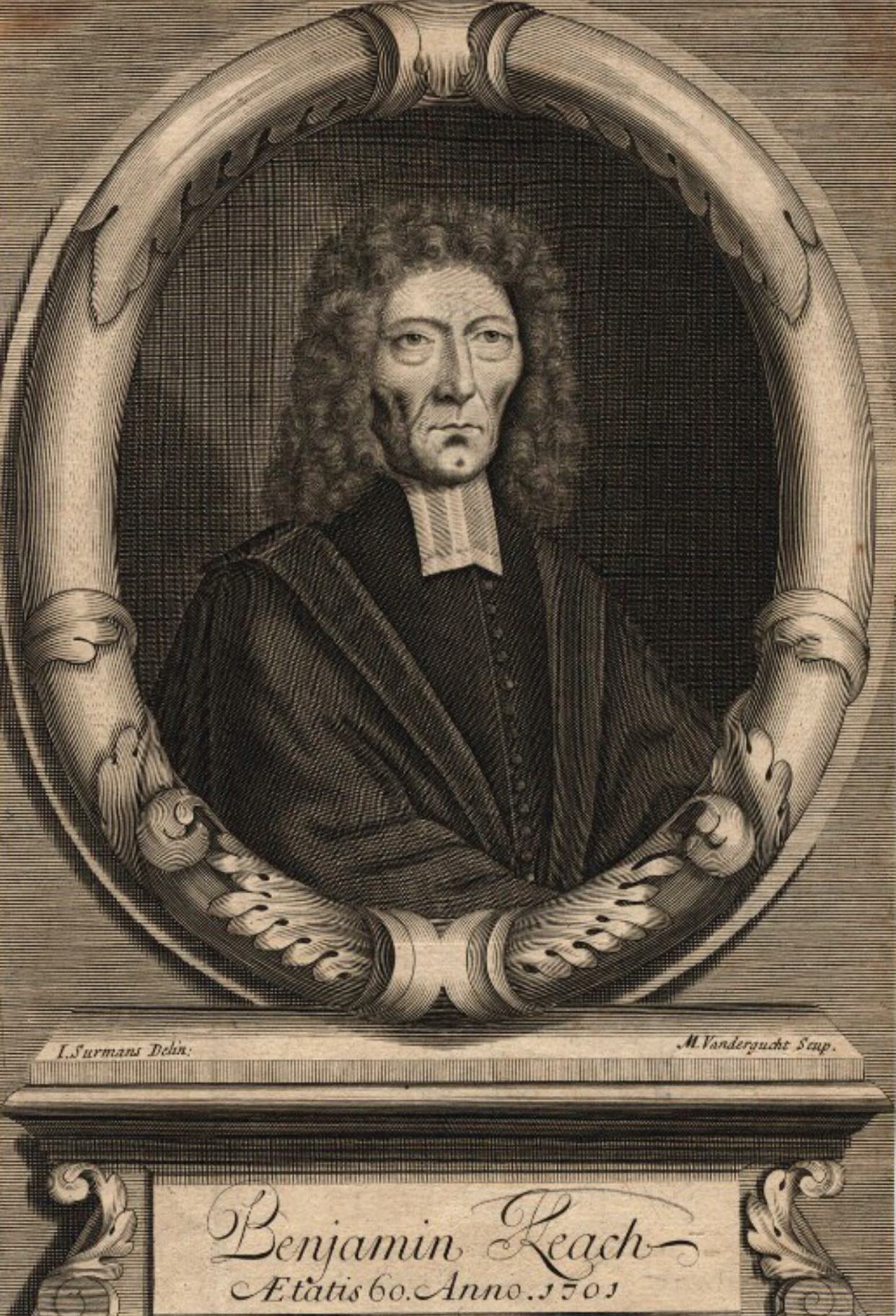
In "Sermon I," Benjamin Keach explores the doctrine of peace, particularly emphasizing one's spiritual peace with God rather than mere national peace. He argues that external peace can often mask deeper spiritual unrest caused by sin and rebellion against God. Keach discusses several Scripture references, including Isaiah 54:10, to demonstrate that true and lasting peace is found only in God's covenant with His people, marked by His unwavering mercy. The significance of this discourse lies in its call for recognition of individual and national sins and the urgent need for genuine reconciliation with God as the foundation for all peace.
Key Quotes
“What Peace can such a People expect who are not humbled for those Sins and Abominations which caused the righteous and holy God to bring the Plague of War and Devastations upon them?”
“For the Mountains shall depart and the Hills be removed but my kindness shall not depart from thee neither shall the Covenant of my Peace be removed saith the Lord that hath mercy on thee.”
“This brings me to the Words of my Text... a most Gracious Promise in which are Five Things to be considered.”
“There is a Covenant of Peace made or agreed upon and it stands firm on behalf of all Gods Elect.”
What does the Bible say about the Covenant of Peace?
The Covenant of Peace, assured by God's promise, signifies that His kindness and mercy towards believers will never waver.
Isaiah 54:10
How do we know God's mercy is true?
God's mercy is demonstrated through His covenant promises and the sacrifice of Christ, affirming His unchanging love.
Ephesians 1:5, Isaiah 54:10
Why is peace with God important for Christians?
Peace with God is essential as it signifies reconciliation, assurance of salvation, and a restored relationship with the Creator.
Romans 5:1, Romans 8:1, Ephesians 2:14
Neither shall the Covenant of my Peace be removed, saith the Lord, that hath Mercy on thee.
I Have promised some Brethren to Enter upon the Great Subject of Peace: Not to Treat of Peace with Men, but Peace with GOD; not National Peace, but Spiritual Peace; And that which partly put me upon the Thoughts hereof, was, To see, and hear what Great Joy there is among us in this Nation, and in other Kingdoms and States, upon account of the Peace lately concluded betwixt the French King and the Confederate Princes.
I must confess National Peace is a great Blessing, when it is given in Mercy, and it is sanctified, and well improved by those Kingdoms and People that enjoy it But whether the Present Peace may be in Mercy (to the Nations) or in Judgment, I know not; Time must discover that: Alas! What Peace can such expect, who continue in Rebellion against the GOD of Heaven and Earth? What Peace can such a People expect who are not humbled for those Sins and Abominations which caused the righteous and holy God to bring the Plague of War and Devastations upon them? When the Cause is not removed, what reason have we to think the Effect will cease? GOD may it is true, take off one Rod, and yet chasten us with another; if War and the Pestilence humble us not, Famine may be looked for. See what God speaks in Levit. 26.21. And if you walk contrary unto me, and will not hearken unto me, I will bring seven times more Plagues upon you, according to your sins; and ye shall eat the flesh of your Sons, and the flesh of your Daughters shall you eat, v. 29. A People may cry Peace, Peace! when sudden Destruction is just coming upon them. I may say of the Nations of the Earth, as Jehu said to Joram's Messenger, What hast thou to do with Peace? What Peace so long as the Whoredoms of thy Mother Jezzabel, and her Witchcrafts are so many? What Peace can such a Nation or People look for, long to continue, whilst their horrid Wickedness,Prophaneness, cursed Oaths, Blasphemy, Drunkenness, Whoredom, Pride, Treachery, Cruelty, covetousness, Heresies, Superstitions, and all manner of abominations abound amongst them? know this assuredly God's Anger is not yet turned away, but his hand is lifted up still. The Seven last Plagues will over a short time be poured forth; and whatsoever you may think of the present Peace, I fear worser things are near than what the Earth hath seen or felt yet; we are not fallen in such an Age as to expect any long time of Peace; No, No! God hath a fearful Controversy with the Kingdoms of the Earth; Babylon must fall, and Sion must rise, and Jesus Christ shall Reign and Possess his Visible Kingdom. And tho Reverend Mr. Beverly, in some respect, hath acknowledged himself mistaken, yet the Church of God is greatly obliged to him for his elaborate Pains, in his careful searching out the Mystical Numbers, so as to know the time of the end of the Beasts Reign and Tyranny, and the passing away of the Second Woe. Moreover, I am persuaded he hath out-done all that went before him, and may be the World will see in a short space, that he was not much mistaken as to the Time.
Therefore it will be Wisdom in all to forbear too hard Censures of this Worthy Person: Let us wait to see what will be produced by Divine Providence between this and the end of the Year 1700. No doubt but amazing Revolutions are ready to break out in the Earth. God will overturn, overturn, overturn,till he come whose right it is, viz. our Lord Jesus Christ, and it shall be given unto him.
Things look abroad as if we may expect a Religious War, and such an one doubtless, will be produced when God puts it into the hearts of the Ten Kings (or some of them) to hate the Whore. So that from the whole we may expect God will yet take Peace from the Earth, tho blessed be his Name, we enjoy a little repose at this time. But what may such Princes and People expect, who having got Peace from abroad, continue, or raise an Open War against the Lord and his People at Home; nay, shew their Rage and Malice (more since) in persecuting them than before. Oh! That all of us may be stirred up to cry to the Lord mightily for those poor People, and against their Enemies, as they are Foes and Opposers, and make War against the Lamb, and those that follow him: These things tend to cause me to conclude that the Present Peace in the European World may not last long.
My Brethren, Peace made between Kingdoms and Nations may soon be broken or removed: But there is a Peace which being made shall be lasting, and never be removed: And this brings me to the Words of my Text:
For the Mountains shall depart, and the Hills be removed, but my kindness shall not depart from thee, neither shall the Covenant of my Peace be removed, saith the Lord that hath mercy on thee.
The Text containeth a most Gracious Promise, in which are Five Things to be considered.
I. Who it is that makes this Promise.
II. To whom the Promise is made.
III. What is contained in the Promise.
IV. The Spring or Rise of the Promise.
V. The Stability of the Promise.
I. It is GOD, the great God and Father of Mercy which makes this Promise; he that made and created us, see verse 5. For thy Maker is thy Husband, the Lord of Hosts is his Name, the God of the whole Earth shall he be called; A Promise of Peace from such a King is worth regard, and to be prized by all to whom it is made.
II. This Promise is made unto the Gentile Church, and therefore it wonderfully behoveth us to consider it, and lay the matter to heart; some of those great Promises contained in the Writings of the Prophets, do peculiarly refer to the Jews, the Natural Seed of Abraham, but this wholly and particularly respecteth the Gentile Church, as you may see if you read v. 1. Sing O barren, thou that didst not bear, break forth into Singing, and cry aloud thou that didst not travel. The Jewish People were in a Legal Covenant Married to the Lord, and many among them were spiritually espoused unto him, and brought forth blessed Fruit, the Church of Israel had a numerous Off-spring; but for a long Period of Time we poor Gentiles were passed by, God espoused us not; the Gentiles were not Married, or taken into a Covenant Relation with God until the Times of the Gospel, and it was upon the Rejection, and casting off of the Jews, that they were grafted in, as Paul shews at large, Rom. 11.
Now the Reasons why the Gentile People are called, or excited here to Rejoice and Sing, may be these.
1. From what precedes in the 53d. Chapter, where mention is made of the Sufferings, Humiliation, and Passion of our Lord Jesus Christ. Surely he hath born our Griefs, and carried our Sorrows, &c. ver. 4. He was wounded for our Transgressions, he was bruised for our Iniquities. For our Iniquities, that is, for all the Iniquities of Gods Elect, not only for them among the Jews, but them also amongst the Gentiles. Therefore, Sing O Barren, sing ye Poor Gentiles, for Jesus Christ Dyed for you, he bore your Transgressions.
2. Upon the Consideration of the Promise of the Father to Jesus Christ in respect of them as well as any other, Chap. 53.10. He shall see his Seed, or the Travel of his Soul, even them amongst the Gentiles, as well as them amongst the Jews; i. e. He shall see all them for whom he Died, brought into a Covenant Relation with himself, even Married to him, and his own gracious Image stampt upon them; they shall be called, he shall see them Converted, he shall enjoy them, and embrace them in his Arms, and they shall lie in his Bosom.
They are called upon to Sing (as I conceive) in respect of that great and glorious Privilege of there being thus Married to Jesus Christ, who before had no Husband, For thy Maker is thy Husband.
3. From the Consideration, she is delivered from the shame of being Barren; see ver. 4. Cry aloud thou that didst not Travel, &c.
4. Upon the Consideration of her numerous off-spring; For more are the Children of the Desolate, than the Children of the Married Wife, saith the Lord, verse 1. Enlarge the Place of thy Tents, and let them stretch forth the Curtains, &c. verse 2. For thou shalt break forth on the Right Hand, and on the Left. This shews, that there should be a Multitude of the Gentiles Converted unto Jesus Christ; yea, a far greater number than of the Jews, which hath been made good in the Gospel Days, and will yet more abundantly in Times that now draw very near, when the fulness of the Gentiles shall be brought in: But O! How barren is she now, that once was the Darling of Heaven, and the only Church and People of God? hardly one Jew to be found throughout the Earth, that owns the true Messiah, or is a Believer, or a true Christian.
5. Because she shall never suffer shame any more, though for a short Time she was forsaken, and seemed not to be regarded by the Lord; but being now Espoused, she shall perpetually be Beloved, and enjoy Christ’s special Favour.
6. From the Consideration of the Covenant, that God has made with Christ’s for them; For the Mountains shall depart, and the Hills be removed, but my Kindness shall not depart from thee, neither shall the Covenant of my Peace be removed, &c.
This brings me to the next Thing.
III. Which is, that which is contained in the Promise, viz. Peace, Peace is a sweet Blessing, Peace with Men is highly esteemed; but this is Peace with God which is far better, and exceeds all kind of Peace whatsoever. Yea Peace by Virtue of a Covenant, a Covenant made by God himself, The Covenant of my Peace, saith the Lord.
IV. We have the Spring or Rise of this Promise, or the grand Motive that moved God to enter into this Covenant of Peace, or to make this Promise; viz. His Love and Mercy, Saith the Lord, that hath Mercy on thee. This shews, that the Covenant of Peace was founded for poor Creatures who were in Misery, or in a deplorable Condition, Man before his fall needed not Gods Mercy, he was the Object of Gods Love and Favour, but not of his Mercy: For Mercy extended to any Person, denotes he was in a forlorn and Miserable Condition before; and at that Time when Bowels of Pity and Compassion were moved towards him.
V. We have here also the Stability of the Promise, the Mountains that stand so fast shall, or may sooner depart, and the Hills be removed, than this Covenant of Peace can be broken or he removed; nay, and he that saith this, is the Lord, the faithful, and true God, that cannot lie; but to make it yet more firm, he hath sworn to his Promise; for as I have sworn that the Waters of Noah shall no more, go over the Earth, so have I sworn that I would not be Wrath with thee nor rebuke thee; that is, not to forsake her utterly.
So much shall suffice as to the Parts, and Explanation of the Words of our Text.
I shall only raise, and prosecute one Point of Doctrine from hence, viz.
Doct. That there is a Covenant of Peace made or agreed upon, and it stands firm on behalf of all Gods Elect.
In the speaking unto this Proposition, I shall take this Method following, viz.
1. Lay down eight Explanatory Propositions by way of Premise.
2. I shall endeavour to open the main or chief Transactions about the bringing in, and establish-of this Covenant of Peace.
3. I shall open the Nature of this Covenant of Peace.
4. I shall shew you what is contained, granted or given in this Covenant.
5. Shew the Nature of the Peace comprehended in this Covenant.
6. Apply it.
Proposit. I. That God foresaw from Eternity,that Man would fall from that happy and blessed State in which he was Created; and that a fearful Breach would arise betwixt himself and Mankind. Thereby, Had it not been thus, there would have been no room, no need, no occasion for God to enter into a Covenant of Peace with his own blessed Son, in behalf of Mankind without a War foreseen, there could I say, be no occasion of a Covenant of Peace and Reconciliation.
II. Proposition, That this Covenant of Peace was entered into between the Father and the Son before the World began. Hence the Apostle saith, (alluding to this Covenant) God hath saved us,and called us with an holy Calling, not according to our Works, but according to his own purpose and Grace which was given us in Christ Jesus before the World began. Moreover, Our Lord Jesus saith, that he was set up from everlasting, from the beginning, or ever the Earth was. That is ordained, substituted and anointed to be the great Representative and Covenanting-Head in behalf of all the Elect of GOD.
III. Proposition, That the Breach which God foresaw would arise, would be very great, or a most amazing or fearful Breach betwixt himself and lost Mankind, and that it was so might abundantly be demonstrated.
It was a Breach occasioned by Sin, God did not first fall out with us, or proclaim War against Mankind; but we first broke that League and Covenant of our Creation with God; Man rebelled against his Creator, casting off his Obedience and Allegiance, and subjected himself to Sin and the Devil, Lo this only have I found, that God hath made Man upright, but they have sought out many inventions. Tho all the Wickedness that is in Man's Heart, that Deceit, Hypocrisy, and streams of Filthiness that is there, Solomon, the Wisest of Men could not find out: Yet this he had discovered, viz. the Fountain of it, namely Original Sin; or what it was that first caused that Breach and War which is between God and all Unconverted Men, or all ungodly Ones in the World. And now, That it is a fearful Breach appeareth,
1. In that Man run away from God, and hid himself, And the Lord God called unto Adam and said unto him, Where art thou? And he said, I heard thy Voice in the Garden, and I was afraid, because I was naked, and I hid my self. That God who was before the Object of his Love and Delight, was now become Terrible unto him because of his horrid Sin and Guilt which lay upon him.
2. It was an unreasonable act of Disobedience, and most horrid Rebellion, considering what God had done for Man, and how Great, Noble and Honourable God had made him; he formed Man in his own Image, and made him capable of enjoying sweet Fellowship and Communion with his Creator; he made him Lord and Governor of all things on Earth, and gave him a lovely, beautiful Spouse to be a sit help meet for him; he gave him power to stand in that happy Estate, tho he left him in a possibility of Falling to prove his Fidelity and Obedience to his Maker. But Man cast horrid Contempt upon God by his Unbelief. He disbelieved the true and faithful God, and believed the Devil, that Father of Lies, and so gave more Glory to Satan, than to his blessed and most rightful Sovereign.
3. The Dismal Nature of this Breach further appears on Man's part, by considering of that vile and abominable Enmity which is in the Hearts of all Mankind (who abide in that old Nature) against God as the effects of that first Sin, The carnal mind is enmity against God, for it is not subject unto the Law of God, neither indeed can be; he doth not say, it is an Enemy, but in the abstract, it is Enmity; an Enemy (as one observes) may be reconciled, but Enmity can never be reconciled: Man by this Sin came to be alienated in the highest degree from God, having the Understanding darkened, being alienated from the life of God: And in another place, saith the same Apostle, And you that were sometimes alienated and enemies in your minds by wicked works, yet now hath he reconciled.
4. This still further appears, In that all Men naturally resist God and his good Spirit, they fight against God, Ye stiff-necked and uncircumcised in heart and ears, ye do always resist the Holy Ghost, as your Fathers did, so do ye. Nay, they are called haters of God, The haters of God (saith David) should have submitted themselves. Ye have both hated me and my Father, saith our blessed Lord. What can render Sin more evil, or Man more vile than to be called a Hater of God, they are haters of God and despiteful; Their soul, saith the Lord, abhorred me, and my Soul loathed them. Moreover, They are said to be Contemnors of God, they even dare God to his Face, and harden their Hearts against him, Wherefore doth the wicked contemn God?
He saith in his heart, thou wilt not require it; They fear him not, they atheistically deny his Providence, nay, his very being; or wish at least there was no God. And all this is the fruit and effect of Man's Rebellion or of his First Sin.
II. As this in part sets out the Nature of this fearful Breach by reason of Sin on Man's part; so also hereby God is become an Enemy to Man; and hence David saith, The face of the Lord is against them that do evil, to cut off the remembrance of them from the Earth.
Some conceive by the Face of God here, is meant his Anger, because Anger discovers it self in the Face; others think by the Face of God in this place, is meant all his Attributes, his Justice, Wisdom, Power, Holiness, &c. are set against them.
2. GOD is said to abhor the ungodly, the wicked boasteth of his hearts desire, and blesseth the covetous whom the Lord abhorreth. This is an amazing Text, and enough to terrify all greedy Worldlings, or covetous Persons, and such that commend and bless them. True, all Sinners are abhorred upon the account of Sin, 'yet none more hated and abhorred than the covetous Person is, Covetousness is Idolatry.
3. It is said, That God is angry with the wicked every day, if he return not he will whet his Sword, he hath bent his bow, and made it ready, he hath also prepared for him the instruments of Death, he hath drawn his Sword, his Bow is bent, and his Arrows are on the string ready to shoot. Ah! Who is able to Encounter with such an Enemy, or to stand before his Indignation.
4. He hath laid all Mankind, as considered in the First Adam, under the Curse of the Law, Cursed is every one that continueth not in all things which are written in the Book of the Law to do them; yea, the Elect themselves by Nature are Children of Wrath as well as others: All the World is become guilty before God; such is the Nature of the Breach through Man's Sin and Disobedience in breaking the Law of the First Covenant.
5. The Wrath of God abides upon all them that believe not: Brethren, the Sentence is past upon all the whole Race of Mankind, in the First Adam, even the Sentence of Everlasting Death: They are all condemned already, tho the Sentence is not presently executed.
IV. Proposition: That the Breach betwixt God and Man, was occasioned by the violation of the First Covenant which God entered into with Adam, as the Common or Publick Head and Representative of all Mankind; which Covenant was a Covenant of Works; I say, God gave a Law, or entered into a Covenant of Works with the First Adam and his Seed, and in that Covenant he gave himself to be our God, even upon the strict and severe condition of perfect Obedience, personally to be performed by Man himself, with that Divine Threatening of Death and Wrath if he broke the Covenant, In the Day thou eatest thereof thou shalt surely die. Yet some may doubt (as one observes) whether this was a Covenant of Works, because here is only a threatening of Death upon his Disobedience to this one positive Law.
Answ. (But as he well observes)
Man in his First Creation was under a Natural Obligation to universal compliance to the Will of God, and such was the Rectitude of his Nature, it imports an exact Conformity to the Divine Will, there being an inscription of the Divine Law upon Adam's heart, which partly still remains, or is written in the hearts of the very Gentiles (tho much blur'd) which is that light which is in all, or that which we call The light of Nature.
Tho evident it is that God afterwards more clearly and formally repeated this Law of Works to the People of Israel, it being written into Two Tables of Stone, tho not given in that Ministration of it for Life, as before it was to Adam; yet as so given, it is by St. Paul frequently called the Old Covenant, and the Covenant of Works, which required perfect Obedience of all that were under it, to their Justification at God's Bar, and so made Sin appear exceeding sinful, and tended to aggravate Man's Guilt and Misery upon his Conscience, tho the Design of God hereby was to discover unto Man how unable he was in his Fallen State to fulfill the Righteousness of God, that so that Law, together with the Types and Sacrifices, might be a Schoolmaster to lead us to Christ.
Now in that Ministration of the First Covenant given to Israel when they came out of Egypt, there seemed to be a mutual Contract and Stipulation betwixt God and them, God enjoin'd perfect, universal and continual Obedience of them, and they promised and covenanted formally so to do.
2. Brethren! Pray consider, The First Covenant required Perfect Righteousness of Man as the condition of his Justification, &c. and that not enjoined by the Holy God as a simple act of his Sovereignty (as some conclude) but as it resulted from his Holiness, and the Rectitude of his Nature: It being inconsistent with the Justice, Holiness or Purity of God's Nature, to justify any Man who is not perfectly righteous, or wholly without sin, even in Thought, Word and Actions.
3. That Adam before the Fall had Power to answer this Covenant of perfect righteousness, and which he was obliged to do; yet had no Surety to engage to God for him.
4. Moreover, he breaking this Covenant (as you have already heard) he was utterly undone, and all his Off-spring in him, and his Credit being lost for ever with God, the Lord will not Treat with him any more, nor enter into any Terms of Peace without a Surety, and that too upon the Foundation of a better Covenant, or not at all.
V. Proposition. That there was none in Heaven nor Earth, I mean neither Men nor Angels, that could make up that Breach which Sin hath made between God and Man. And as no Man nor Angel could do it, so no Repentance, no Tears, tho Tears of Blood, no Reformation, nor any Sacrifice, no not a Thousand Rams, nor Ten Thousand Rivers of Oil, nor the fruit of the Body. I say, none of these could atone for the Sin of the Soul, or make our Peace with God. It is not enough for a Man to say, he will sin no more, for he hath sinned, and stands obliged to God to pay Ten Thousand Talents, and yet hath not one Farthing to repay; neither will God forgive one Rebel or any Debtor the least Mite, as a simple act of Mercy, but doth require a Full Satisfaction for the whole Debt. Moreover, Man is both a Debtor and a Criminal.
VI. Proposition, That God presenteth himself not as an irreconcilable Enemy, for tho he be Just, yet he is gracious; Mercy and Goodness are a like glorious Attributes, or Properties of his Nature, as Justice, Holiness, &c. Yet the Display of his Favour, Love, Mercy and Goodness, ought to be considered with respect had to his absolute Sovereignty. He was, my Brethren, No more obliged to magnify his Mercy in a Surety and Saviour to Mankind, than he was to the Fallen Angels; he had not been unjust if all Adam's Posterity had been cast into Hell, and not one Soul saved; as he is not unjust in throwing all the fallen Angels into Hell for ever, without affording one of them any Relief, Redemption, or hope of Recovery; neither is he obliged to save the whole Lump of Mankind, either in a way of Justice or Mercy, because he is pleased to save a remnant of them. God was at the liberty of his Will whether he would make this World or not; it was, I mean, the only Act of his Sovereignty; its actual existence in time, was according to his absolute Decree and Purpose from Everlasting; and according to his absolute Sovereignty he governs and disposes of all things, and may do what he will with his own: All Nations tremble before him, whom he would he slew, and whom he would he kept alive. The most High doth according to his Will in the Armies of Heaven, and among the Inhabitants of the Earth, and none can stay his hand, or say unto him, what dost thou? So he hath mercy upon whom he will have mercy, and compassion on whom he will have compassion, and whom he will he hardeneth. He called Abraham, and revealed himself to him, and let the most of Mankind in his days remain ignorant of him as to Salvation by Jesus Christ: He also entered into a Covenant with the Seed of Abraham, and gave them his Laws and Ordinances, he did not do so to any other Nation: And in Gospel Times he called a few poor and illiterate Fishermen, and such like Persons, and let the Pharisees and Learned Rabbins remain under the power of Sin and Satan; and all this as the act of his own absolute Sovereignty, and Good Pleasure of his Will, as our Lord sheweth, At that time Jesus answered and said,I thank thee O Father, Lord of Heaven and Earth, because thou hast hid these things from the wise and prudent, and hast revealed them to Babes: Even so Father for so it seemed good in thy sight.
So now, at this day, he sends the Gospel into one Nation, and not into another; and then also in such Nations where the Gospel is Preached, it is but here and there clearly opened; Nay, and many who come under the powerful Ministration of the Gospel, have it only come unto them in Word, that which is the savour of life unto life to some, is the savour of Death unto Death to others. Now from whence is all this? but merely from the Sovereignty of God, or good pleasure of his Will, for It is not of him that willeth, nor of him that runneth, but of God that sheweth mercy.
God's special Love and Election is not from any Man's willing, or running; it riseth not from Natural Powers improved, not from his Desires, Good Deeds, or Good Inclinations, or from the fore-sight of his Faith and Obedience; but from and of God's mere Mercy, Sovereign Grace and Favour: The Truth is, to deny God to have the power of his own Free Act in dispensing his own Sovereign Bounty, is to Eclipse his Glory, and to render him to have less Sovereign Power than that which he hath given, and alloweth to Mankind: May not a Man shew his Favour and Goodness in redeeming a few Captives, out of a Multitude, who wilfully brought themselves into Bondage, but he must redeem them all, or be unjust? Or cannot a Man give a bountiful Gift to One or Two poor Men in a Parish, but he must bestow like Bounty to all the Poor in the said Parish? Or, can't a King contrive and enter into a Covenant of Peace for a few Rebels that have (with a Multitude of others) taken up Arms against him, but he must be charged with Injustice, because he did not extend like Favour in the said Covenant to them all; sure, no Man, in his right Senses, will deny him this Liberty: And now, Shall not GOD have like power to dispense his Sovereign Grace to whom he pleaseth, who is said to do all things according to the pleasure of his own Will, and eternal purpose in Jesus Christ?
Proposition VII. And from hence it appeareth, That the Covenant of Peace is the Covenant of Grace. For tho the Covenant of Peace, in respect had to Christ, as our Mediator, Head and Surety, was upon the Condition of his Merits; yet as to the Design, End and Purpose of it, in respect of us, it was only an act of Pure Grace; hence said to be according to the good pleasure of his Will, Ephes. 1.5. And to the praise of the glory of his Grace, v. 6.
1. It was the Free Grace of God the Father to vouchsafe us a Substitute, a Saviour, a Mediator of this Peace, and to Choose, Ordain and Appoint his own Son to be the Person, and to accept him in our stead. Oh! What Favour is this? God so loved the World, &c.
2. And it was the Free Grace of God the Son to engage himself to the Father, to enter into this Covenant to make our Peace; the Glory of Both Persons equally shine forth to the amazement of all in Heaven and Earth, the Counsel of Peace was between them both.
3. Nay, my Brethren, the Free and Rich Grace of God in this Covenant is to be adored, even as to the Main and Ultimate End and Design thereof, Not according to our Works, but according to his own Purpose and Grace,which was given to us in Christ before the World began. The whole Contrivance, Foundation and Rise of this Covenant of Peace, is of love and Grace; Neither do we receive any Grace from God in Time, but as it results from the Covenant of Peace made with us in Christ before all Time; But this I purpose to enlarge upon further when I come to open the nature of the Covenant.
Proposition VIII. And as the Covenant of Peace is the Covenant of Grace; so it results from God as an act of Infinite Mercy; It is therefore a merciful Covenant; it was not made with Man considered in his State of Innocency; for Man, as so considered, could not be the Object of God's Mercy; for tho God appeared very good and gracious to us in our First Creation, and as we came out of his Hands, and that many ways; Yet such was our Happy State, that we stood then in no need of Mercy; for where Mercy is shewed, it is to such that are in Misery; but before Man fell he knew no Misery, Pain or Sorrow; but when God first cast his Eyes upon us, and entered into this Covenant of Peace with his own Son for us, he saw us lie in our Blood, and fallen under his Divine Wrath and Anger; and this indeed the very name of the Covenant of Peace doth import: There was no need of Peace had there not been a War, or a fearful Breach between God and us; and that this Covenant results from God's great Mercy, read again my Text, Saith the Lord that hath mercy on thee. God foresaw us cast out like a wretched Infant in the day of its Nativity, whose Navel was not cut, neither washed in Water, nor salted, nor swaddled at all; and what doth God say more, None Eye pitied thee to do any of these things for thee, but thou wast cast out in the open Field, to the loathing of thy person in the day thou wast born. This was the time of his Love, and also of his Pity and tender Mercy; And when I passed by thee I saw thee polluted in thine own blood, ver. 6. that is, when he was first concerned for us, in this Covenant of Peace, and entered into that holy Compact with his own Son: Behold, thy time was a time of love, and I spread my Skirt over, and covered thy nakedness; yea, and I sware unto thee, and entered into Covenant with thee, saith the Lord, and thou becamest mine. This was the time of God's entering into Covenant with his Elect, viz. it was with them in Christ, and what of this is actually accomplished on us in Time, in our own Persons, is but the execution of all that Grace, Pity and Mercy manifested to us in Christ from Eternity; he then shewed his Eternal Purpose of Compassion towards his Chosen, and he then said in his blessed Covenant to them live.
I should now proceed to the next general Head, but shall say no more at this time.

Comments
Your comment has been submitted and is awaiting moderation. Once approved, it will appear on this page.
Be the first to comment!