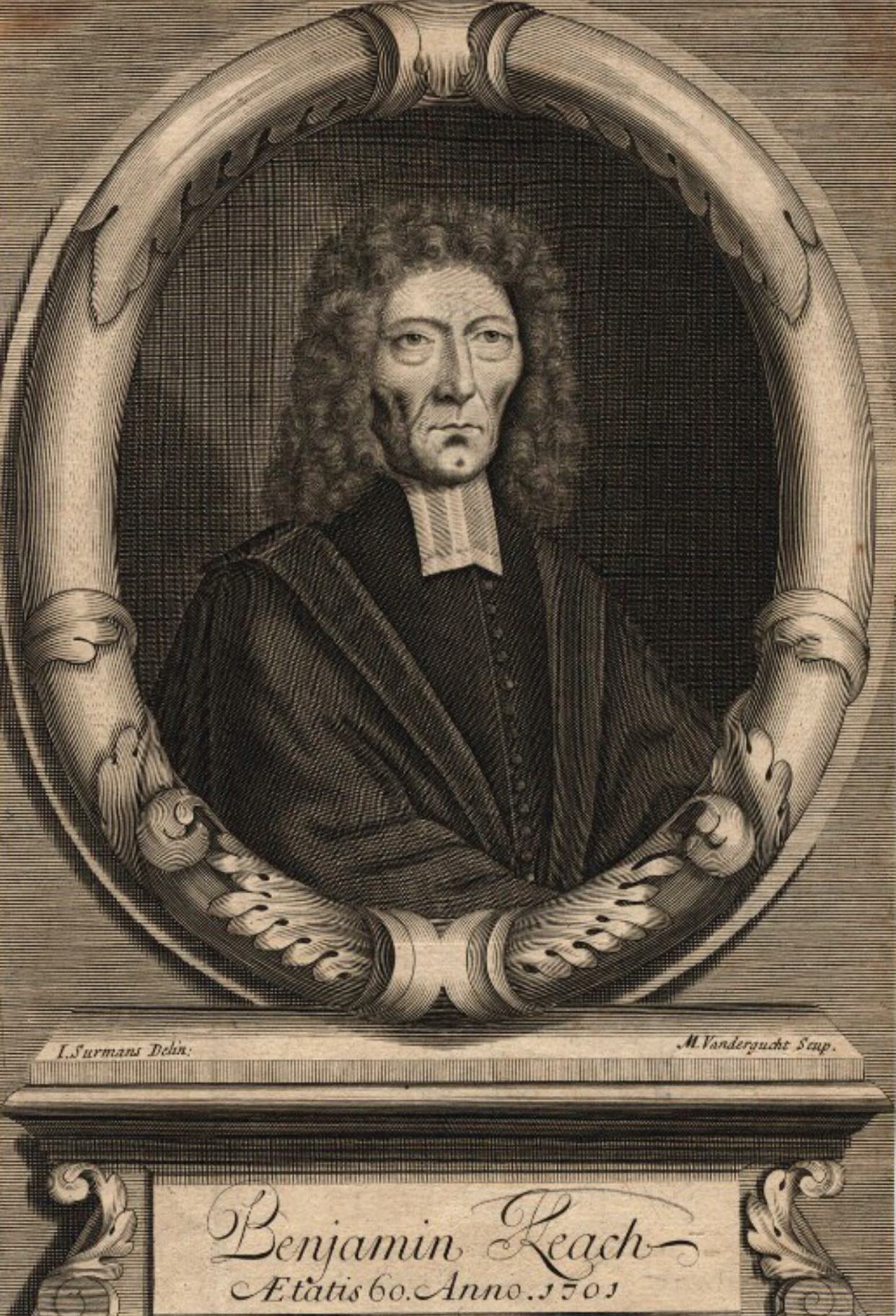
In "VI. of a Metaphor in General," Benjamin Keach explores the theological concept of metaphor within Scripture, emphasizing its uniqueness and utility in conveying divine truths. Keach argues that metaphors, which can stem from simple similitudes or analogies, are distinct from similes and parables as they function as one thing representing another, often requiring meticulous interpretation to maintain coherence with the text's intent and the analogy of faith. He references various Scriptures—such as Matthew 5:13 and John 10:11—to illustrate how metaphors are employed to enrich understanding of spiritual realities. The significance of this exploration lies in its call for careful study of biblical language and context, encouraging believers to delve deeper into the meanings behind metaphors to better understand God’s nature and His revelation to humanity.
Key Quotes
“As to its definition it is said to be a trope when a word is translated from its proper and genuine signification to another less proper.”
“This trope is the most frequent so it is the most florid and pleasant giving a most wonderful energy or power and evidence to the style of Holy Scripture.”
“Great care and accuracy must be used to find out the reason of the similitude and the scope or intention of the comparison.”
“A variety of metaphors is almost infinite; there is nothing in nature from whence a similitude may not be brought.”
What does the Bible say about metaphors?
The Bible frequently uses metaphors to convey deeper spiritual truths and insights.
John 8:12, Psalm 23:1
How do we know that metaphors are important in the Bible?
Metaphors enrich biblical understanding and facilitate deeper engagement with the text.
Proverbs, John 10:11
Why is understanding metaphors in Scripture crucial for Christians?
Understanding metaphors in Scripture allows Christians to grasp complex theological concepts.
2 Corinthians 5:17, 1 Corinthians 12:12-27
Of a Metaphor in general, let the following things be noted;
1. As to its definition, it is said to be a trope, when a word is translated from its proper and genuine signification to another less proper. Or when like is signified by like. Fabius Lib. 8, c. 6. calls it a short similitude. There are other definitions, but all to this sense. Some in handling the definition of this trope tell us, that a Metaphor may be taken, either from a simple similitude, or from analogy or proportion. And that these two are different, because there may be a similitude betwixt two, as between a living and a painted man, whence the name of the man is ascribed to the picture. But in proportion, two answers two, as Aristotle in his second book of the soul compares a root to the mouth, because it performs the same office to a plant, as the mouth does to a living creature. Here is indeed a double similitude, for a "plant is compared to a living creature, and the root to his mouth, because plants receive their nourishment from the root, as a living creature does by the mouth. Of the first sort is that metaphor, when drops of dew are called pearls, when flowers are called stars, or a gross corpulent man is called a hog. Of the latter are, when the master of a ship has been by poets compared to a waggoner, and e contra, because he takes the same care of his waggon, as the master does of his ship. In scripture metaphors we shall observe the same distinction, but promiscuously.
2. As to its difference from a similitude and parable, the difference is either contracted, or more large; for in a similitude there is a manifest comparison of one thing with another, and so it is a logical argument; but in a metaphor there is one thing put for another that's like it, which nevertheless in its explication is to be handled by an apparent similitude. And we are to note here, that frequently in scripture (especially in the Proverbs of Solomon) a word or phrase may be expounded by the deficient particle. And in such it is rather a contracted similitude, than a metaphor; and therefore many things of that nature are not hereafter reckoned amongst metaphors.
3. As to its dignity, as this trope is the most frequent, so it is the most florid and pleasant, giving a most wonderful energy or power, and evidence to the style of Holy Scripture, so that it may be truly called, "the academy or school, where God [i] communicates the knowledge of nature and the creation to his scholars," affording matter enough for their most serious and diligent study, making plain those divine and glorious matters therein revealed, in terms which call for deep scrutiny and search into their nature and properties. For, as Rivet tells us, Isag. ad Script. Sacr. cap. 5, p. 49, "The scripture chiefly treating about things relating to grace and glory, yet affords occasion for the perfection and study of all philosophical knowledge, and borrows so much of natural things, as may serve for a looking-glass to represent divine things to our eyes," etc.
[i] Thj fusewj kai ktisewj Oeon frontijhrion kai thj Qeognwsiaj paudenthrion, etc.
4. As to the manner of handling, whereas the properties of things from whence they are deduced, are many and various, there must be great care and accuracy used to find out the reason of the similitude, and the scope or intention of the comparison, lest there may be an aberration from the proper coherence of the text, or the analogy of faith; to do this it is needful that a person be well acquainted with the respective natures, and the philosophical notions and theories of all things from whence this trope is taken, as also with the peculiar customs, and distinct qualities of other nations, particularly the ancient Jewish state in their ecclesiastical and civil government and economy; besides the knowledge of the original languages, (in which the scriptures were penned, as Hebrew and Greek) which very frequently carry a native grace and emphatical fulness, hardly expressible (with the same beauty and significancy) in a translation.
More particularly there ought to be care taken, that one metaphor be not strained to express things in themselves quite opposite, nor make the parallels run till they grow lame; for one metaphor may be brought to signify many things, with respect to some different qualities and diverse attributes. Thus Christ is called a lion, Re 5:5, because noble, heroic, and unconquerable: the devil is called a lion, because roaring, rapacious, and devouring, 1Pe 5:8; wicked men and tyrants are called so, Job 4:10-11; 2Ti 4:17, because they are fierce, outrageous, and cruel to weaker men, as the lion is to weaker creatures.
By the like reason a unicorn is compared to the godly, with respect to its strength and courage, Ps 92:10; and to the wicked because of its desperate boldness and spitefulness, Ps 22:21.
Leaven expresses the wonderful force and penetrating virtue of the word, and kingdom of God, Mt 13:33, with respect to its piercing and diffusive quality but it is applied to corrupt and evil doctrine, Mt 16:6; 1Co 5:6-7, because of its malignant and souring quality, which is also very spreading and insinuates itself into all the parts.
Sleep metaphorically denotes the quiet and peaceable death of the godly, 1Th 4:13-14; and the carnal security, carelessness, and infidelity of sinners, Ro 13:11; Eph 5:14.
The sun amongst other things denotes happiness, because of its light and splendor, Jg 5:31; and infelicity or misfortune, because of its scorching and excessive heat, Ps 121:6; Mt 13:6,21 ect.
A shadow signifies protection against evils as Isa 49:2, and many other places because it defends from intemperate heat. It denotes great perils and calamities (as Ps 23:4; Lu 1:79,) because of its darkness and fogginess, which are symbols of sorrow and evil.
A river metaphorically denotes plenty of good and desireable things, Ps 36:8; 46:4; Isa 66:12, because of the abundance of its waters and the usefulness thereof well-known. It also denotes terrors, perils, and overwhelming, Ps 18:4, and Ps 124:4, because of the danger of its rapid and sudden inundations.
The harvest is used in a good sense, Ps 126:4-6; Mt 9:37, and elsewhere because of the great profit and necessity of the gathered fruit. It is also used in a bad sense, Jer 51:33; Joe 3:13, because it is cut down and destroyed.
Treasure and treasurer are also to be understood in a good sense, Mt 6:20,34; and in a bad sense, Ro 2:5; both are joined, Mt 12:35.
Sometimes metaphors taken from diverse things, are joined together, where there is a necessity of a distinct enumeration; an evident example of this we have in La 3:16; here metaphors are taken sometimes from men of different circumstances and capacities; sometimes from beasts to set forth the punishments inflicted by God. So in Eph 2:20, the metaphors taken from civil society, and from building are joined together, to set forth the mystical conjunction of the godly in Christ, etc.
3. As to the variety of the metaphors Bartholinus rightly says, that they may be taken from all things in the world, whether substances or accidents, natural or artificial things. And Cicero says, nihil est in rerum natura, unde simile duci non possit,[ii] that there is nothing in nature from whence a similitude may not be brought, adding, that a variety of metaphors is almost infinite.
[ii] Lib. 3. de. Oratione.
Others say, that it is as possible to empty the sea with a sieve, as to reduce or confine metaphors to certain classes or bounds. The like may (in a manner) be said of metaphors in Holy Scripture. But inasmuch as it is very profitable for such as are studious in that sacred writing, it shall be endeavoured so to dispose of most, if not all, the metaphors (as much as may be done among such a multitude of them) found there, especially the most frequent and illustrious, as that they may be reduced of a certain order, under their respective heads, which will enable us to give a sound judgment of the most elegant and rhetorical part of the Bible. And if any be missing, the harvest being large, it may stir up others to gather up and improve the gleanings.
6. As to the right distribution or distinction of metaphors into their right classes or heads, some take the method of Plutarch and Quintilian (who to avoid confusion in such an infinite variety, which can scarce be concluded or terminated by art, rightly say, that the most illustrious sort of metaphors are to be expounded and distinguished under certain heads, and they make them four, viz.
1. From animate things (viz. such as have life) to animate, as when God is put for a magistrate, or a shepherd for a prince or ruler.
2. From animate things, to inanimate (viz. things which have no life) as when the earth is said to groan, and the olive to lie.
3. Or from inanimate things to animate, as when Christ is called a door, a vine, etc.
4. Or from inanimate things to animate, as when the mystery of salvation is called a foundation, 1Ti 6:19; 2Ti 2:19 etc.
Others not respecting things as they are in nature, observe a grammatical series, or order, because metaphors are found in nouns, verbs, and adverbs.
In nouns substantives, as where it is said, De 22:14, "The fat of the kidnies of wheat," for choice grains of wheat, where is a double metaphor. First, in fat, for the choiceness or preciousness, and Secondly, in reins, which is put for grains, because they are like them in form; and both are joined, because the reins in a living creature are covered with fat. Thus Christ is called the "light of the world," Joh 8:12; "the good shepherd," Joh 10:11. The apostles are called "the salt of the earth," Mt 5:13, etc.
In nouns adjectives, as when one is said to be of uncircumcised lips, ears, heart, as Ex 6:12; Jer 6:10; 9:26, for to be of an impure and sinful heart. When the unbelieving and worldly minded man is said to be dead, Mt 8:22. When the word or heavenly doctrine is said to be sound; 1Ti 1:10; 6:3; 2Ti 1:13; 4:3, etc.
In verbs, as when it is said of the wicked they shall wither, Ps 37:2, that is, they shall perish. The soul is said to thirst, when it earnestly and vehemently desires anything, Ps 42:2. So when putting on is taken for assuming, as Eph 4:24.
In adverbs, as when to take a thing hardly is put for grief and sorrow, as Ge 21:11. To speak hardly is put for roughly or severely, as Ge 42:7. To be grievously wounded is put for very much, 1Ki 22:34. Thus in the vulgar Latin edition, but the Hebrew is without adverbs there.
But a more proper example, as in Mt 26:75, he wept pikrwj, bitterly, that is, very much; a metaphor taken from taste: so lamprwj, splendidly, is put for eminently or sumptuously, Lu 16:1; 9.
But waving these, our method shall be to consider this trope,
(I.) More specially.
(II.) More generally.
1. More specially, which shall be about things that are translated to God, which properly belong to man, chap. 7. The
2. About what things belonging to other creatures are ascribed to God, ch. 8: The
3. When things properly ascribable to persons, are attributed to things that are not persons, chap. 9.
4. More generally, which shall be to lay down the distinct heads and classes of metaphors, with succinct explications of each.
5. We shall produce such metaphors taken from God and the creatures, as are obvious in universal nature, chap, 10, 11, 12.
6. Such as are taken from sacred persons and things, as divine worship, etc., chap. 13.

Comments
Your comment has been submitted and is awaiting moderation. Once approved, it will appear on this page.
Be the first to comment!