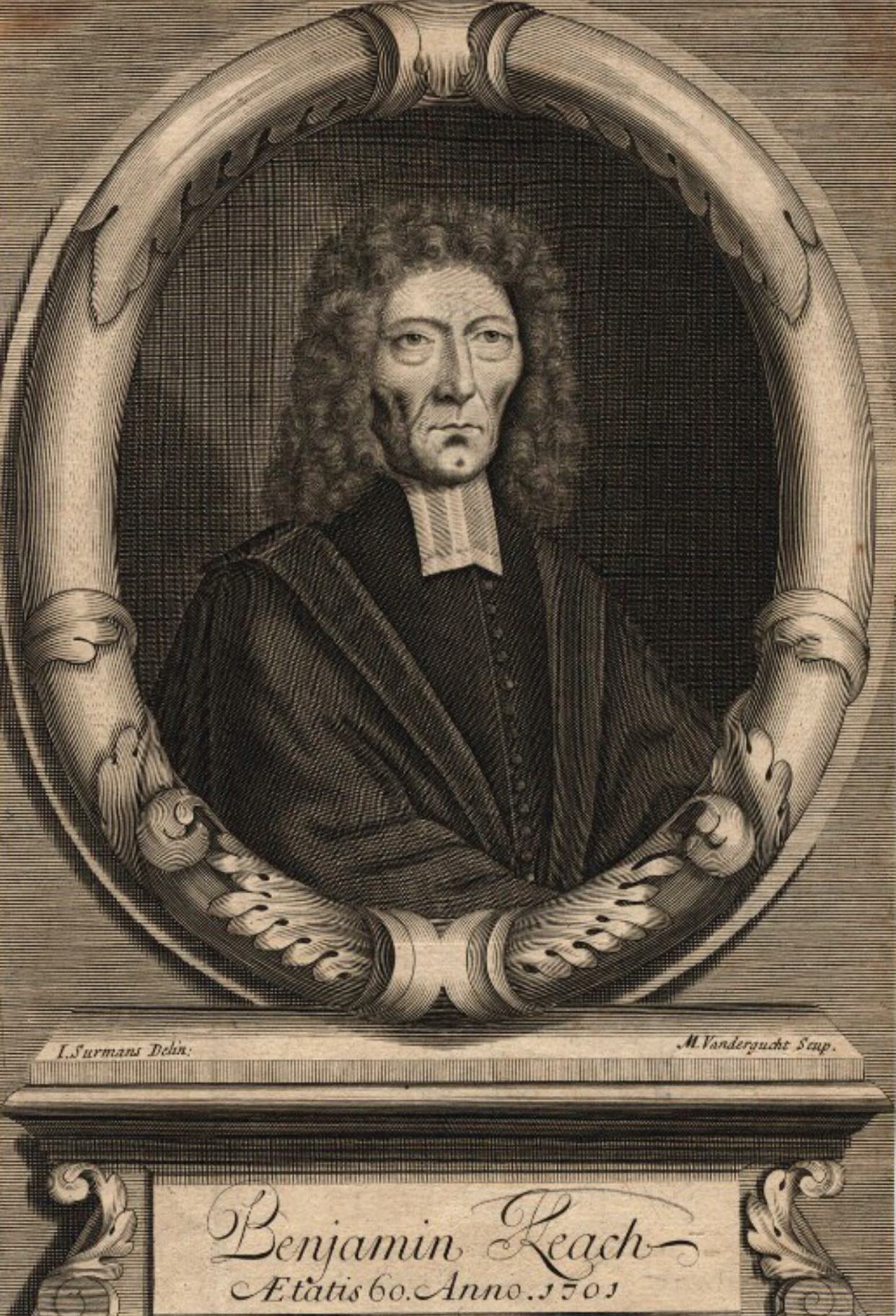
The main theological topic addressed in Benjamin Keach's chapter on "Anthropopathia" is the use of human metaphors in describing God. The key argument is that such metaphors, while necessary for human understanding, must be carefully qualified to ensure that they do not imply any imperfections found in humans. Keach underscores that attributes or actions ascribed to God, like having a heart or arms, are intended to communicate divine truths while maintaining God's transcendence. Scripture references include 1 Corinthians 2:10-13, where Paul emphasizes the role of the Spirit in revealing divine mysteries, and various instances where human qualities or actions (such as anger or love) are attributed to God to convey His attributes in a way that is relatable to human experience. The practical significance lies in enhancing believers' understanding of God's nature and encouraging them to approach Him in a manner befitting His holiness while realizing their own limitations.
Key Quotes
“Anthropopathiae is a metaphor by which things properly belonging to creatures, especially man, are by a certain similitude attributed to God.”
“Whatsoever is translated from creatures to God must first be separated from all imperfections.”
“By the face of God, his presence and propitious aspect is noted.”
“He is all eye because every part of him sees all; all ear because every part of him hears all.”
What does the Bible say about anthropopathism?
Anthropopathism is a metaphor that attributes human emotions or characteristics to God to help us comprehend His divine nature.
1 Corinthians 2:13, Isaiah 63:10, Jeremiah 51:14
How do we know God's attributes are true?
God's attributes are revealed in Scripture and understood through faith as perfect representations of His divine nature.
Romans 1:20, Ephesians 1:17-18, Hebrews 11:6
Why is understanding divine metaphors important for Christians?
Understanding divine metaphors helps Christians grasp complex spiritual truths and deepen their relationship with God.
1 Corinthians 2:13, Ephesians 3:17-19, Isaiah 55:8-9
CHAPTER VII.
Of Metaphors translated from, Man to God, which kind is called Anqrwpopaqeia.
Anthrwpopatheia is a metaphor by which things properly belonging to creatures, especialiy man, are by a certain similitude attributed to God and divine things. It is likewise called sugkataBasiv, condescension, because God in his holy word descends as it were, so low as our capacities, expressing his heavenly mysteries after the manner of men, which the Hebrews elegantly call the way of the sons of men.
In this metaphor it is very necessary to take great heed that no mean, base, or indecentthing be attributed to the most high and holy majesty, but that the reason of the similitude be always improved with this caution or canon of divinity, viz.
Whatsoever is translated from creatures to God, must first be separated from all imperfections, and then that which is perfect may safely be ascribed to God.[1] To understand these similitudes, as the Lord descends graciously to us, so let us with a devout mind (by faith and prayer) ascend unto him, comparing spiritual things with spiritual, 1Co 2:13, that we may have honourable apprehensions of him and his divine mysteries, which cannot be done without the aid of the Holy Spirit, who only knows the things of God, and the depths of his wisdom, revealing them to men by the word, 1Co 2:10-11.
[1] Quæcunque a creaturis transferuntur ad Deum, repurganda prius sunt ab omnibus imperfectionibus, et turn demum id, quod perfectum est, Deo attribuendum.
To this may our Saviour's speech be referred, Joh 6:53, when by a similitude of human things he speaks of the participation of heavenly things. Some of the disciples being of gross and carnal understandings, said, this is a hard speech, who can hear it?[2] abhorring such flesh-eating, and blood-drinking, to whom Christ says, verse 63, "It is the Spirit that quickeneth, the flesh profiteth nothing: the words that I speak unto you, they are spirit and they are life." That is my words are not to be received in the mode and measure of vulgar or earthly things, but waving such thoughts, by the aid and guidance of the Spirit, as things spiritually spoken they are to be spiritually understood, and by faith to be believed, for so they are life and give life, &c.
[2] Quis æquo animo audiat, et non potius abhorreat ab istiusmodi krewfagia kai aimatoposia, quam inculcat? D. Calixti paraphr. Pag. 255. Hermon. Evangel.
In proceeding we shall not only show those metaphors that respect God, considered singly in his essence and divine majesty, but also as manifest in the flesh.
Some metaphors are taken from man, and some from other creatures.
From man as 1. His parts and members.
2. His affections.
3. His actions.
4. His adjuncts. Of which in order.
The Parts and Members of a Man attributed to God.
A soul is attributed to God, by which his life, essence, and will, and therefore himself, is understood: for as man lives and operates by the soul, so God in himself is essential life, and a most pure act---"My soul shall not abhor you," Le 26:11, "The wicked his soul hateth," Ps 11:5. See Isa 1:14, and Isa 42:1; Jer 5:9,29; Mt 12:8; Heb 10:38. Hence the Lord is said to swear by his soul, Jer 51:14; Am 6:8, that is, by himself, as our translation renders it, and agreeable to Isa 45:23; Jer 22:5; Heb 6:13, where it is expounded.
A body, by reason of his incorporeal essence, is no where attributed to God, but it is ascribed to our Saviour Christ in a twofold respect.
1. As opposed to the shadows, figures, and types in the Old Testament, the truth, complement, or fulfilling of the things prefigured by these shadows, being held forth in him, Col 2:17, "Which are a shadow of things to come, but the body is of Christ," that is, the truth and complement is in Christ. And Col 2:9, it is said, "That in him dwelleth all the fulness of the Godhead, swmatikwv, bodily," that is, most really, perfectly, and solidly, and not in a typical or shadowy manner, as God manifested himself in the Old Testament.
2. The church is called the body of Christ, Eph 1:22-23, "And God gave him to be the head over all things to the Church, which is his body, the fulness of him that filleth all in all." It is called his body, because he rules it, giving sense, life, and spiritual motion to it, as a man's head does to his body. It is called his fulness, because (though Christ is absolutely perfect in himself and has no need of us) his love is so great to his Church, that he will not be without it, any more than a head would be willing to want his members. "Father, I will that they also whom thou hast given me, be with me where I am," &c., Joh 17:24; Eph 4:12,15-16. So much for Christ's mystical body. As for the human body of our Lord, it being really, and not metaphorically such, it concerns not this place.
God is called the Head of Christ, 1Co 11:3.
(1.) With respect to his human nature, for in that sense Christ says, the Father is greater than he, Joh 14:28.
(2.) With respect to his office as Mediator and Redeemer, for all the actions of Christ were done by the will, order, and commission of the Deity.
The apostle by the figure climax, or a certain gradation in the same text, calls Christ the head of the man, because he chose that sex when he took human nature upon him, so becoming the first-born among many brethren, Ro 8:29; he also calls man the head of the woman, because of the pre-eminence of sex, and being ordered her Lord and superior. In these places the word is metaphorical, in respect of eminency, because the head in the natural body is seated highest, excelling the whole body in dignity of sense and reason.
(3.) In respect of rule and government, the natural body being ruled by it, &c.,
More generally Christ is called the Head of the church, Eph 1:22, and Eph 4:15; Col 1:18, (&c.,) in which sense man has no prerogative over the woman as to the participation of the benefits of Christ, and mystical union with him, Ga 3:28, "Neither male nor female, for ye are all one in Christ Jesus." Hence it is said, Eph 1:10, "That he might gather together in one head,[3] all things in Christ, both which are in heaven, and which are on earth;" which Chrysostom well interprets, viz., "It is done by the mystery of redemption, that celestial and terrestrial things, that is, angels and men, should have one head;" that is, Christ, whereas before by reason of man's sin, heavenly things are separated from earthly.
[3] Anakefalaioun.
A face is attributed to God, by which the manifestation of himself to angels and men, and the various workings of his providence are to be understood: for so God is known to us, as one man is known by his face to another: the face of God signifies manifestation.
1. In the blessed state of eternity, Ps 16:11, "With thy face is fulness of joys," so the Hebrew, and Ps 17:15, "I will behold thy face in righteousness: I shall be satisfied when I awake in thy likeness." Mt 18:10, "Their angels do always behold the face of my Father, which is in heaven." In this sense, no man can see God's face and live, Ex 33:20,23. "For now we see through a glass darkly, but then face to face," 1Co 13:12, (&c.)
2. In the state of mortality, when God in any measure reveals himself. As
(1) By the face of God, his presence and propitious aspect is noted, as Ex 13:21, "The Lord went before them by day in a pillar of a cloud, and by night in a pillar of fire." Ex 33:14, "My face," so the Hebrew, "shall go with thee, and I will give thee rest," and verse 15, Moses said, "If thy face go not (with us) cause us not to go up hence," &c., that is, if you be not present as heretofore in the pillar of a cloud and fire.
Hence that appellation given to Christ is deduced, Isa 63:9, "The angel of his face," or presence, because by the pillar of a cloud and fire in a visible manner, he led the Israelites of old, and made the face of God, as it were, conspicuous to them: others say, it is because "he is the image of the invisible God," by whom we know the Father as one man is known by his face to another, Col 1:15; Joh 14:9-10; which cannot be said of any other.
The face of God signifies also that glorious appearance of God to the people on Mount Sinai, De 5:4, and that more illustrious manner of his revealing himself to Moses above any other, De 34:10. See Nu 12:6-8, (&c.) Sometimes the face of God is put for the place where God reveals himself, and where the ministry of the word flourishes; or as Jehovah himself words it, Ex 20:24, ""Where he records his name," &c. Thus Cain is said to go forth from the face of God, Ge 4:14,16, that is, from the place where his parents worshipped him; and Jonah rose up to flee from the face of the Lord---that is, left the church and people of God, to go to Tarshish among infidels; not, but that he knew, that none can so fly from the face of God, as to be unseen by him, but he thought that there was no place for divine revelations besides the holy land,[4] and therefore hoped that in those strange places God would no longer trouble him, nor impose so hard a province upon him as to preach against Nineveh, &c. See Ex 23:15; 25:30; Ps 100:1-3, and Ps 104:4; 2Sa 21:1; Ps 139:7; Le 17:10; Ps 9:4, (&c.) Sometimes wrath and divine punishment is noted by the face of God, as Ps 68:1, "Let them that hate him flee before his face"---Jer 21:10, "I have set my face against this city for evil," &c. La 4:16, "The face of the Lord hath divided them," &c., 2Th 1:9; 1Pe 3:12.
[4] Vide Brentium in loc.
Sometimes the grace, favour, and mercy of God is expressed by it, as Da 9:17; Ps 13:2; Eze 39:24; Ps 31:20, and Ps 17:2; 2Ch 29:12; Nu 6:25-26; Ps 4:7; 31:17; 67:1-3, and Ps 80:4,8,19. It is said of men to seek the face of God, that is, His grace and favour by prayer, Ps 27:8; 2Ch 7:14,17; Isa 18:3, (&c.)
God is said to have eyes, by which we are to understand his most exact knowledge, Ps 11:4, "His eyes behold, his eye-lids try the children of men"---in the word eyebrows, there is also a synecdoche., Job 34:21, "For his eyes[5] are upon the ways of man, and he seeth all his goings;" that is, he clearly discerns and understands the ways of man, which intimates, 1. A present act, (they are). 2. A continued act, his eyes are never off the ways of man. 3. An intentive and serious act, this denotes not only a bare sight, but also that which is operative, as being done with most exact scrutiny and disquisition---God looks through and discerns men to the utmost, he beholds not only the external acts of men, but also the soul and spirit of them.
[5] See Caryl on the place, Vol. 10. p. 656.
Isa 1:16, "Put away the evil of your doings from before mine eyes," that is, be ye pure inwardly as well as outwardly, for I see through you, &c.
It is said Ho 13:14, "Repentance shall be hid from mine eyes"---that is, they do not repent at all, therefore will I not respite the sentence, but execute it certainly---for that which is hid from the eyes or knowledge of the omniscient God, is not, nor can have existence, Ps 110:4; Ro 11:29; Isa 65:16.
Heb 4:13 "All things are naked and opened unto the eyes of him with whom we have to do" the word[6] tetraxhlismena, rendered in our translation opened, as very emphatical; for it signifies a dissection, quartering, or cleaving asunder through the backbone, as they do in anatomy, wherein they are very curious to find out every little vein or muscle, though never so close, so as nothing can be hid---The apostle therefore translates this word to his purpose, to signify that all the secrets of hearts are so exposed to the notice and view of God, as if all were dissected and opened like a mere anatomy.
[6] traxhlizomai, in collum seu cervicem resupino. traxhlov, totam spinam dorsi significant. Hemming in Com.
2. By the eyes of God may be understood his providential grace and divine benevolence to men, De 11:12, "A land which the Lord thy God careth for (or seeketh) "The eyes of the Lord thy God are always upon it, from the beginning of the year, even unto the end of the year"---that is, he graciously cherishes, takes care for and defends it, l Kings 9:3, "I have hallowed this house which thou hast built, to put my name there forever, and mine eyes and mine heart shall be there perpetually"---that is, my presence and blessing shall be there with you. 2Ch 16:9, "For the eyes of the Lord run to and fro throughout the whole earth, to shew himself strong in the behalf of them whose heart is perfect towards him"---and Ezr 5:5, "The eye of their God was upon the elders of the Jews," &c.," that is, they are under his care and gracious protection, while they build the house of the Lord. Ps 32:8, "I will guide thee with mine eye," that is, I will inform thee by my Spirit, and will lead thee in a right way. See Ps 34:15; 1Pe 3:12; Eze 20:17; 5:11; 7:4; De 32:10; Ps 17:8; Ec 2:8; 3:9; 4:10.
Sometimes the eye of God signifies divine wrath and punishment, as Am 9:4, "I will set mine eyes upon them for evil, and not for good." And Isa 3:8, "Their tongue and their doings are against the Lord, to provoke the eyes of his glory."
Ears are attributed to God, which denotes not only his knowledge of all things done on earth, but also that he understands, approves of, and gives gracious returns to the prayers and applications of his people, Ps 10:17; 31:3; 55:1-2; 71:2, and Ps 130:2. By the ears of God we are to understand that,
2. He knows the sins of men, which are said to cry, and enter into the ears of the Lord, Jas 5:4; Isa 5:9.
There is a very ernphatical phrase of the promise of the Messiah, Ps 40:6, "Mine ears[7] hast thou digged; that is, thou hast marked me as a faithful servant to thyself---by this the most perfect servitude and obedience is noted from the Son as incarnate or made flesh to the Father. The metaphor is taken from a custom amongst the Jews, that the servant's ear should be bored through with an awl, and serve for ever, unless he would be made free the seventh year, Ex 21:6; De 15:17, see Isa 50:4-5; Heb 10:5.
[7] Messias in duali de auribus suis loquitur, ad eminentiam spiritualis suæ servitutis et obedientiæ notandam.
A nose is attributed to God, De 33:10. "They," that is, the Levites, "shall put incense before thee," in the Hebrew to thy nose---some interpret it, to thy face, that is, before thee, Chaldee XXXX, The Lxx enopion osu.
Eze 8:17, "And lo they put the branch to their nose;" this is rendered, and lo, they send a stench to their nose,[8] which the textual Masora says, should be XXXX my nose (viz., God's nose) which opinion is taken up by Galatinus, Vatablus, and Schindler. But the word translated stench signifies also, a branch, so that the meaning of the text (as Jerom says) must be this. It was a custom for twenty-five men in the likeness of idols to hold a branch to their noses, doubtless of palms, which the Greeks call ta baia, that it may by these be signified that they worship the idols. See Ezra 15:2.
[8] El ecce ipsi inittunt fætorem ad nasuni suum.
A mouth, the instrument of speech, is attributed to God, by which his will, word, sentence, command, &c., is understood; as Jos 9:14; 1Sa 15:24; 2Ki 24:3; Isa 30:2, (&c.) There is a notable place, De 8:3, "Man doth not live by bread only, but by every word that proceedeth out of the mouth of the Lord doth man live," that is, as God hath appointed and administered the means of living, whether ordinary or extraordinary, (as that in the desert was when they were fed with, manna) upon which place Vatablus[9] says thus, "Some understand these words of spiritual life, as if it had been said, that souls are not fed by visible bread, but by the word of God; which indeed is true in itself, but Moses had another meaning; for whereas no person had bread, he alludes to the manna, which was sent as an extraordinary supply to the people, that it might be received as an evident truth in all ages, that man's life depends not upon bread or any external provision, but upon the good pleasure and providence of God, which preserves nature's order, and the creature's being. So that the word of God is not put for doctrine, but the decree published by God in order to that end. For the Lord throws not off his creatures, for as he gives them life, so he sustains it." Heb 1:3. This speech of Moses is repeated by Christ, and opposed to Satan's temptation, Mt 4:4. Upon which D. Calixtus[10] has these words. "Our Saviour neither affirms nor denies himself to be the Son of God, but urges a most proper argument out of De 8:3, where Moses puts the Israelites in mind how they were fed for forty years, not by usual bread, but by heavenly manna, as if he had said, I have no reason to despair, as I must die for want of bread, neither is there any necessity that bread should be produced by miracle, because such are not to be wrought at the pleasure or curiosity of every body, but then only when the glory of God requires it, and when needful in order to men's salvation: for man lives not by bread alone, but by every word which proceeds out of the mouth of God; that is, by any other way, which God in his immense power and unconstrained will has constituted and appointed, that thereby the life of man may be supported."
[9] Quidam falso hæc verba ad spiritualem vitam detorquent, ac si dictuni esset, animas non ali visibili paue, sed Dei verbo, est id quidem in se verum, sed alio respexit Moses, &c. Vatablus in loc.
[10] Servator filium Dei se esse, neque ait, negat, sed ex loco convenientissimo, De 8:3, (&c.) In Har. mon. Evang.110.
It is said of Christ, Isa 11:4, [11] "That he shall smite the earth with the rod of his mouth, and with the breath of his lips shall he slay the wicked," agreeable to 2Th 2:8, "Whom (viz., the wicked one) the Lord shall consume with the Spirit of his mouth," by which is understood the word of Christ, who shall judge and condemn the wicked. Joh 12:48. The Chaldee translates it thus: [[12] By the speech of his lips will he slay the anti-Christ or wicked anti-God] as Guido Fabricus in His Syriac and Chaldee Lexicon renders it.
[11] El eloqui labiorum suorum interficiet.
[12] XXXX XXXX anti-Christum seu anti-Deum impium.
Lips are ascribed to God, Job 11:5, when speech or external manifestation of his mind are attributed to him---"O that God would speak and open his lips against thee." Sometimes lips and a tongue[13] are attributed to God, when he is angry, as Isa 30:27, "His lips are full of indignation, and his tongue as a devouring fire, and his breath as an overflowing stream," &c. Upon which Musculus [14] thus paraphraseth, "These things are ascribed to God after the manner of men, and are terms borrowed from a warrior vehemently provoked against his enemy, his face burns, that is, his eyes are inflamed, his lips and other gesture betokening a violent indignation," &c., Ps 18:8. In the description of God's anger, there are many similitudes borrowed from tempests, lightning, and other dreadful things to terrify man. "When God is said to speak to any mouth to mouth, it denotes familiarity and intimacy, which prerogative the Lord granted to Moses, Nu 12:8.
[13] Per prosopographiam.
[14] Humanomore tribuit illi quasi bellatoria vehementi in hostes commoto, faciem ardentem, id est, oculos flammantes, labia frementia, et summam indignationem in increpando præ se ferentia, linguam ad vorandum exsertam, et ignis instar flammeam, &c. Muscul. In loc.
It is said, Jer 18:17, "I will shew them the [15] back and not the face, in the day of their calamity;" whereby is signified a denial of his grace and favour, which is to be understood by face; the word translated back, signifies the hinder part of the neck, and indicates God's anger, as if he had said, I will not vouchsafe to hear them when they call, nor look upon them when they implore my help.
[15] Cervix the hinder part of the neck.
An arm is attributed to God, by which his strength and power is signified; because the strength of a man is known by the strength of his arm, whether it be labour, fight, &c., Ex 15:16; Job 40:4. Ps 77:16; 79:11; 89:11,14; Isa 30:30; 51:9; 59:16; 62:8; 63:5; Lu 1:51, (&c.) A stretched-out arm is ascribed to God, in his delivery of his people from Egypt, Ps 136:11-12, and Jer 32:17, "Thou hast made the heaven and the earth by thy great power and stretched-out arm," &c. This [16] metaphor is taken from men fighting or when engaged in hard labour, who with all their strength and force employ their arms which sometimes they make bare to remove the impediments of garments. Hence God says to the prophet Ezekiel, (Eze 4:7), "Therefore shalt thou set thy face before the siege of Jerusalem, and thine arm shall be uncovered, and thou shalt prophesy against it, that is, thou shalt[17] preach against it with all thy might, as eagerly as a warrior goes to battle.
[16] Metaphor a bellatoribus pugnantibus vel alijs vehementius labori incumbentibus desumpta.
[17] Instar fortis et ardentis bellatoris pugnabis tuis concionibus contra eam, etc.
Sometimes by the arm of God the doctrine of the Gospel is noted, as Isa 52:10, "The Lord hath made bare his holy arm, in the eyes of all the nations, and all the ends of the earth shall see the salvation of our God." See verse 7, 8, &c. So Isa 53:1, it is said, "Who hath believed our report, and to whom is the arm of the Lord revealed?" which is repeated, Joh 12:38. Some in these places (and Isa 51:9; 59:16), by the arm of the Lord, do understand (and not improperly) the Messiah, who is the Power and Wisdom of God, 1Co 1:24.
A hand is attributed to God, by which is understood his power, exerting itself in strong and marvellous operations, as Nu 11:23; Job 10:8; 12:9-10; Ps 8:7; 95:5; Isa 11:11; 59:1. Or his strong and gracious protection, Ps 31:6; 144:7; Joh 10:28-29; Ac 4:30. Or infliction of punishment, as Ex 9:3; Job 19:21; Ps 21:9; 17:14; 38:3; Ac 13:11. From hence it is put metonymically for the punishment itself inflicted by God, as Job 23:2, "My stroke (in the Hebrew, it is hand) is heavier than my groaning." And Job 27:11, "I will teach you by the hand of God," that is, the stroke or punishment of God. So Eze 39:21. The phrase "I will stretch forth mine hand," signifies, "I will punish." Ex 7:5; Isa 5:25; 9:12,17,21; 10:4; 14:27; 31:3; Jer 6:12; Eze 16:27; 25:7; Zep 1:4; 2:13. So putting forth the hand, Job 1:11; 2:5; Ps 138:7. So the shaking of the hand of the Lord, Isa 19:16, signifies to be more grievously punished, as Ps 32:4. So to lighten the hand signifies to mitigate punishment, 1Sa 6:5, See Eze 20:20; Isa 1:25.
Ac 4:28. The hand of God is put for his counsel and purpose. Isa 49:22, "To lift up the hand to the Gentiles," signifies a merciful calling them to repentance, Pr 1:24; Isa 65:2, because we lift up our hands to such as we would embrace, or whose presence we desire. To smite the hands together (as Eze 21:17; 22:13,) signifies a great[18] detestation and aversion. To lift up the hand (as Ex 6:8, for so the Hebrew is) signifies to swear, as also, De 32:40; Eze 20:5-6; 36:7, (&c.,) R. Salomon and Aben-Ezra expound[19] Ex 17:16, of God's oath, viz., "Because the hand of the Lord hath sworn (so the Hebrew) that the Lord will have war with Amalek from generation to generation," that is, the Lord hath sworn by his throne. The Chaldee expounds it thus, it is asserted by an oath, that is by the terrible One, whose Majesty dwells in the throne of glory, that there shall be a war waged by the Lord, against the house of Amalek to cut them off for ever, &c. Moses uses this phrase in allusion to what is spoken before, verse 11, "And it came to pass that when Moses held up his hand, that Israel prevailed, and when he let down his hand, Amalek prevailed," &c.
[18] Cujus signum apud hominess manuum complosio esse solet.
[19] XXXX XXXX XXXX XXXX XXXX manus super solium Jah.
It is said, Joh 3:35, "The Father loveth the Son, and hath given all things into his hand,"[20] denoting a communication of the fulness of the Godhead to his human nature. See Mt 11:27, and Col 2:9.
[20] Metaphora ab homine ducta, qui quod manu ipsa apprehendit tenetque sibi datum, omnium certissime possidet, etc.
A right-hand is ascribed to God, by which his divine power is understood, or indeed the omnipotent God himself, as Ex 15:6, "Thy right-hand, O Lord, hath become glorious in power; thy right-hand, O Lord, hath dashed in pieces the enemy." Ps 80:10, "I will remember the years of the right-hand of the Most High.'' Ps 118:15-16, "The right-hand of the Lord doeth valiantly. The right-hand of the Lord is exalted, the right-hand of the Lord doeth valiantly." Ps 139:10, "Even there shall thy hand lead me, and thy right-hand shall hold me," that is, thy power which is unlimited and diffused every where, Isa 48:13.
More especially the right-hand of God notes his power, which he exerts in mercy and bounty to believers, Ps 20:7; 18:35; 44:4; 63:9; 80:16,18. Sometimes his wrath and vengeance to his enemies, as Ex 15:6,12, (&c.)
The phrase of Christ's sitting at the right-hand of God, being exalted in his human nature, as Ps 110:1; Mt 26:64; Mr 16:19; Ac 2:33-34; 7:55-56; Ro 8:34, Col. 3:1, &c., is not to be understood properly, as if there were a local situation in a certain place of heaven, but by an Anthropopathy[21] or scripture way of speaking, and is to be understood of a dominion and power most powerfully and immediately operating and governing, as it is explained, 1Co 15:25; Eph 1:20-22; 4:10; Heb 1:3-4; 8:1.
[21] anqrwpopaqwv qeoprepwv, intelligenda et explicanda est.
A finger is ascribed to God, by which likewise his power and operating virtue is noted, as men work by the help of their fingers, Ex 8:19; 31:18; Ps 8:3, "When I consider thy heavens, the work of thy fingers," &c. Some apprehend that there is a metaphorical emphasis in this place, because the heavens were created with extraordinary facility by God, and built very artificially, as the finest and most precious sorts of workmanship are wrought by excellent artists, not by strength of body, nor with their arms and hands, but by the dexterity of their fingers.
By the finger of God, the Holy Spirit is understood, if you compare Lu 11:20, with Mt 12:28, because it respects the virtue and power of its operation, as Ac 10:38, (&c.)
If a man's fingers[22] be contracted, it is called the hollow of his hand, if extended, a span, which by an Anthropopathy are ascribed to God, Isa 40:12, "Who hath measured the waters in the hollow of his hand; and meted out the heavens with a span," &c., that is to say, the Lord hath done it; denoting how easy it is to create all things, and most powerfully to support and govern what he has created: for as men by engines and devices to lift up and advance huge weights, &c., so it is much more easy for God to rule and dispose the whole universe at his pleasure, Pr 30:4, (&c.,) Isa 48:13, (&c.) be contracted, it is called the hollow of his hand, if extended, a span, which by an Anthropopathy are ascribed to God, Isa 40:12, "Who hath measured the waters in the hollow of his hand; and meted out the heavens with a span," &c., that is to say, the Lord hath done it; denoting how easy it is to create all things, and most powerfully to support and govern what he has created: for as men by engines and devices to lift up and advance huge weights, &c., so it is much more easy for God to rule and dispose the whole universe at his pleasure, Pr 30:4, (&c.,) Isa 48:13, (&c.)
[22] Digitis humanis constituitur pugillas, si contrahantur, e spithama,si extendantur.
A heart is attributed to God, by which either his lively essence is denoted, as the heart in man is judged to be the principle or beginning of life, Ge 6:6, "It grieved him at the heart," that is, in himself---or else his will and decree, as Ge 8:21, "The Lord said in his heart," that is, he decreed and appointed, Chald. he said in his word, Jer 19:5, "It came not up into mine heart," so the Hebrew, that is, I did neither will nor command it: for the scripture makes the heart the seat of the soul, whose property it is to think, will, and discern.
More especially it signifies the good pleasure and approbation of God, 1Sa 13:14, "The Lord sought him a man after his own heart," that is, his[23] favour, or good will. So Ac 13:22, (&c.,) Jer 32:41, "I will plant them in this land assuredly, with my whole heart, and with my whole soul," that is, with the greatest benevolence, regard, and good will.
[23] Hoc est, eudokian, favorem, beneplacitum suum.
Bowels are attributed to God, by which his mercy and most ardent love is expressed, Isa 63:15, "Where is thy zeal and thy strength, the sounding of thy bowels, and of thy mercies towards me?" Jer 31:20, "My bowels are troubled for him," that is, for Ephraim. Lu 1:78, "Through the bowels[24] of the mercy of our God, whereby the day-spring from on high hath visited us." Hence comes the verb splagxnizeqai, misericordia commoveri, to be moved with compassion, which is frequently said of Christ, as Mt 9:36; 14:14; 15:32; Mr 1:41; 6:34, (&c.) See Ge 43:29; 1Ki 3:26; Ps 51:3, see Isa 63:7, (&c.,) where the Hebrew word[25] that signifies bowels and compassionate love is ascribed to God. Illyricus[26] upon the place says,---that this metaphor is deduced from the love of mothers to their children, which they bear in their wombs, (the same Hebrew word signifying bowels and womb) because the seat of affection is in the bowels, and so metonymically the thing containing is put for the thing contained, or the cause or instrument for the effect---agreeable to Isa 46:3, "Which are borne by me from the belly, which are carried from the womb;" which the Chaldee[27] expresses, "You who are beloved by me beyond all people, and dear beyond all kingdoms." Others by the term (womb) would properly understand the time of conception and nativity, so denoting God's constant care and preservation even from the very birth.
[24] So the Greek runs, dia splagxua, per viscera misericordiæ Dei nostri.
[25] XXXX significant uterum. The word signifies the mother's womb.
[26] Flac. Illyr. Clav. Script.
[27] Dilecti mihi præ omnibus populis, et chari præ omnibus regnis.
A bosom is in three places attributed to God, Ps 74:11, "Why withdrawest thou thy hand, even thy right? pluck it out of thy bosom," that is, suffer thy right hand to be no longer idle, but employ it, (as if it were drawn from thy bosom) in finishing thy glorious work, against thine and our enemies. See Pr 19:24, and Pr 26:15. Rabbi Kimchi,[28] by the bosom of God, understands a sanctuary, which is (as it were) a certain hiding-place for God, as a man's bosom.
[28] R. Kimchi per sinum Dei Sanctuarium intelligent, quod quædam quasi latebra Dei est, ut sinus hominis.
Isa 40:11, "He shall feed his flock like a shepherd, he shall gather the lambs with his arm, and carry them in his bosom, and shall gently lead those that are with young." This is spoken of the Messias,[29] who is here compared to a shepherd, and his tender care of the sheep and lambs, metaphorically sets forth his extraordinary philanthrophy, or love, mildness, and compassion to miserable sinners, who are broken under the sense of God's wrath, and weak in faith. Shepherds are wont to bear their little and weak lambs gently in their bosom, as they carry the great sheep upon their backs or shoulders, &c., so does Christ in a spiritual sense, &c.
[29] Christi filanqrwpia erga peccatores denotatur.
Joh 1:18, "The only begotten Son, which is in the bosom of the Father." This phrase metaphorically sets forth the most intimate communion that is betwixt God the Son and God the Father, which consists,
1. With respect to eternal generation, for parents are said to bear their children in their bosoms, Nu 11:12, "Have I begotten them, that thou shouldst say unto me, carry them in thy bosom," (as a nursing father beareth the sucking child,) &c. For the like reason, Pr 8:30, the Son of God is figured in the similitude of a child playing, before his father.
2. With respect to nearest and strictest relation, or rather indeed unity of nature and essence, as Joh 14:10, it is said, that "he is in the Father, and the Father in him."
3. With respect to the dearest and superlative degree of love; for, that which is dear unto men is carried usually in their bosom. And it is said of the disciple whom Jesus loved. Joh 13:23, That "he was leaning on his bosom," &c.
4. With respect to the most secret communication; for the Son only knew, and perfectly sees the Father, and therefore he alone reveals him and his heavenly mysteries to mankind. To which last particular, John chiefly had respect, as appears by the context.
Feet are attributed to God, by which (1.) his immensity and omnipresence upon the earth is noted or signified, as Isa 66:1.
(2.) His operation or activity in crushing, supplanting, or destroying his enemies, as Ps 74:3, "Lift up thy feet unto the perpetual desolations." See Ps 110:1, (&c.) The church is called the place of his feet, Isa 60:13, because he exhibits his grace and glory there, as if he had walked in it, agreeable to De 33:3, "All thy saints sat down at thy feet. Every one shall receive of thy words." This metaphor is taken from the custom of scholars, who sat at the master's feet, Ac 22:3, as Paul was at the feet of Gamaliel. And (Lu 10:39,) Mary who sat at Jesus' feet and heard his words. The clouds are called the dust of his feet, that is, as if he had walked upon the clouds, as men do upon the dust of the earth, and with extraordinary swiftness, as the clouds fly in the air See Isa 19:1; 60:8, and Ps 104:3.
Steps are attributed to Christ before his incarnation, Ps 89:51. Wherewith they have reproached the footsteps of thine anointed, that is, the documents of the Messiah[30] dwelling in us, who by his word raises us up, and comforts us in his promises of coming in the flesh, and to judgment, &c. Others say, that it is meant of some, who, by way of derision, reproached the for the delay of his coming, as proceeding with too slow a pace, that is, that he would never come. The Chaldee---"They reproach and disgrace the slow steps of the of thy Christ," &c. dwelling in us, who by his word raises us up, and comforts us in his promises of coming in the flesh, and to judgment, &c. Others say, that it is meant of some, who, by way of derision, reproached the Messias for the delay of his coming, as proceeding with too slow a pace, that is, that he would never come. The Chaldee---"They reproach and disgrace the slow steps of the feet of thy Christ," &c.
[30] Documenta habitantis in nobis Messiæ, ut quod verbo suo, erigit et solatur, &c.
Thus much of the parts of a man, and the members of his body, which I shall conclude in the remarkable words of Tertullian's[31] (if that book of the Trinity be his) Divinæ efficacies (says he) are shown by members, not the habit or corporeal lineaments of God---"By his eyes we are to understand that he sees all things," and by his ears that he hears all things; by his fingers some significations of his will and mind; by his nostrils, his savoury reception of prayers and sweet odours; by his hand, his active and creating power; by his arm, his irresistible strength; by his feet, his ubiquity, &c. For members or their particular offices are not necessary to him, whose tacit pleasure commands a ready obedience from all things. What needs he eyes who is light itself? What needs he feet who is every where? Why would he go in, when there is not a place out of which he can go? What occasion has he for hands, when his silent will is the builder, contriver, or architect of all things? What needs he ears, who knows even the most secret thoughts? or a tongue, when his very thoughts are commands? These members are necessary for men not for God, because man's purposes are ineffectual, without the assistance of organs to act by, but God's bare will is action producing effects at his mere pleasure. To conclude, he is all eye, because every part of him sees all! all ear, because every part of him hears all," &c.
[31] Tertul. Lib. de Trinit. Folio, 601. Efficaciæ Divinæ per membra monstrantur, &c.
Human Affections ascribed to God.
Here we must note the difference of human affections, for some are attributed to God, as being truly in him, yet not in that imperfect manner or[32] way of accident, as they are in man, but far more purely and eminently, and that[33] essentially and substantially too. And so all words which express human affections, are first to be separated from all imperfections, and then understood of God. The words of Augustin,[34] are notable: "The anger of a man (says he) causes a disturbance and a torment in his mind; but the wrath of God executes its vengeance with a perfect equity and tranquillity, void of all disturbances; the mercy of man has some mixture of heart-misery, and from thence in the Latin tongue hath its derivation. The apostle exhorts not only to rejoice with rejoicing, but also to weep with them that weep. But what man of a sound mind can say that God can be touched with any anxiety or torture of mind, the scripture every where affirming him to be full of mercy. The zeal of men is often tainted with a mixture of spite, envy, or some other disorderly passion; but it is not so with God, for though his zeal is expressed by the same word, yet it is not in the same manner with the sons of men."
[32] Per modum accidentis:
[33] Per modum essentiæ seu substantiæ.
[34] Tom. Iv. Lib. 2. ad Simplicianum. Quest. 2. Misericordia, quasi miseria cordis.
The words of Chemnitius[35] deserve notice. "Scholars (saith he) by a depraved application of that rule, that[36] accidents have no place in God, have taken away all affections from him; and that most sweet consolation, Ho 11:8-9, 'My heart is turned within me, my repentings are kindled together. I will not execute the fierceness of mine anger, I will not return to destroy Ephraim,'" (for I am God and not man) they affirm should be taken according to effection, not affection. It is true indeed, that accidents have no place in God, his commiseration is not such an affection as ours; but in regard his mercy is not distinguished from his Essence, it is certain, that it must be much more ardently in God, than we are able to think, &c.
[35] In loc. Theolog. P. 29.
[36] In Deum non cadit accidens.
When joy or rejoicing are attributed to God, it either denotes his delight and pleasure in his creatures, Ps 104:31, "The Lord shall rejoice in his works;" or else his gracious favour and propensity to his Church, as men take joy in things very dear to them, Isa 62:5, "As the bridegroom rejoiceth over the bride, so shall thy God rejoice over thee." So De 28:63; 30:9; Jer 32:41, (&c.) There is a joy in God, which exerts itself in gracious effects, but which is infinitely greater than it is in men, or can be thought by them. '
2. There are certain human affections, which according to their descriptions in a proper way of speaking are not in God, but are used by way of similitude to signify something divine (as we said about human members), and on that account are ascribed to God, of which kind in order.
Sadness and grief of mind is attributed to God, by which his displeasure, and the withdrawings of his grace and favour are signified, Isa 63:10, "But they rebelled and vexed his Holy Spirit: therefore he was turned to be their enemy, and he fought against them," that is, they have perpetrated such wickedness against their proper consciences, that the Holy Spirit has forsaken them, and justly withdrawn his grace. The like is said, Ps 78:40, "How often did they provoke him in the wilderness, and grieve him in the desert?" so Eph 4:30, [37] "Grieve not the Holy Spirit of God, whereby ye are sealed unto the day of redemption," that is, speak not so corruptly and profanely as to provoke the Holy Spirit to withdraw his gracious gifts and operations from you, and instead thereof to inflict wrath and punishment upon you. So Ge 6:6, "And it repented the Lord that he had made man on the earth, and it grieved him at his heart," that is, their malignity so displeased him, that he manifested his divine decree to punish them. The Chaldee[38] renders it, "And he said in his word that he would break their power according to his will."
[37] Mh lupeite to pneuma, &c. Ne contristetis spiritum, &c.
[38] Et dixit verbo suo, se confracturum potentiam eorum secundum voluntatem suam.
So Jg 10:15, "And his soul was[39] grieved for the misery of Israel," that is, as the Chaldee renders it, [he grieved, or his soul was affected with anguish;] by which grief the commiseration and compassion of God, for the afflictions and calamities of Israel is noted. The like phrase of the indignation and averseness of God is used, Ec 11:8. The word broken when ascribed to God is also of the same sense, as Eze 6:9, "I am broken with their whorish heart which hath departed from me," that is, I am affected with grief, and as it were compelled to decree their punishment, as verse the 10th.
[39] Or shortened, so it is in the Hebrew.
Repentance is ascribed to God, by which likewise his divine displeasure against man's iniquities, and the infliction of punishment is noted, Ge 6:6; 1Sa 15:35; Jer 18:10.
Sometimes (if the speech be with reference to men that by serious repentance are converted to God) it denotes divine commiseration, and a taking away of punishment Ex 32:12,14; 2Sa 24:16; Ps 106:45; Jer 18:8, and Jer 27:3; Ho 11:8; Joe 2:13-14. Upon which place Tarnovius thus expresses himself, "The condition of men being changed, the immutable God is not changed, but the thing itself; for he willeth always, that it should go ill with the obstinate, and that they should perish eternally, but that the holy and regenerate should be truly happy in this and the other world." When God to converted souls, remits that punishment which he denounced to wicked and nefarious sinners, he is said to repent of the evil by an anthropopathy, because he seems to do that which repeating men do, otherwise cannot properly repent because he is not a man, 1Sa 15:29.
Augustin says,[40] that the repentance of God is not after any error, but the change of things and constitutions in his power is noted, as when it is said, that he repents, the change of things is signified, the divine prescience remaining immutable; and when he is said not to repent, it is to be understood, that things are unchanged.
[40] Lib. 17. de Civit. Dei.
Polanus57[41] says, that the repentance of God is not a perturbation or grief arising from any sense of error in his counsel or divine decree, which is immutable, 1Sa 15:29. But the change of his works, the divine will remaining unchanged, &c. Its causes are the sins or repentance of men, &c.
[41] In syntag. Theol. P. 194.
Anger, revenge, hatred, when attributed to God, are by some referred to this head. Where we are to note, that these words are not ascribed to God by way of anthropopathy, for God most truly, properly, and for infinite reasons, is justly angry with sinners, takes vengeance on them, or afflicts them, Jer 9:9, Nahum 1:2, &c. He truly hates sinners and hypocrites, Ps 5; 6., Isa 1:14, (&c.,) ([42] although these things are ascribed to him without any perturbation, confusion, or imperfection,) yet there is an Anthropopathy in certain words and phrases by which these affections are wont to be expressed. Thus breath, or to breathe, do sometimes note the anger of God, by a metaphor taken from men, who in the vehement commotion of anger, do draw their breath more strongly than ordinary, Ex 15:8; Job 4:9; Isa 30:28; Eze 21; 31.
[42] Licet absque ulla perturbatione, atacia aut imperfectione hæc sint Deo tribuenda.
Where it is said, De 28:63,[43] "The Lord will rejoice over you to destroy you," &c., it denotes his alacrity to inflict punishment, answering to his rejoicing over them to do them good. When a thing is said to be burdensome or wearisome to the Lord, Isa 1:14, it notes his aversation and hatred. He is said to receive consolation, when he avenged himself of his enemies, as revenge is wont to be sweet to abused and angry persons, Isa 1:24, and Isa 57:6; Eze 5:13.
[43] In this text there is a figure called Antanaclasis, which is when the same word is repeated in a various or contrary signification; here is a rejoicing to do good, and a rejoicing to destroy.
Zeal or jealousy is ascribed to God, to denote his most ardent love to believers, and his care of their safety joined with an indignation against their enemies, Isa 9:7; Ec 1:14-15; Joe 2:18. It also sometimes notes God's vehement anger against stubborn, rebellious sinners, who violating that faith, by which God espoused them to himself, commit spiritual adultery, Ex 20:5; Nu 25:11; Ec 8:2. So in Hiphil, men are said to provoke God to jealousy by their idolatry and sins, De 32:16,21; 1Ki 14:22; Eze 8:3.
Human Actions ascribed to God.
THESE we shall distribute according to those more eminent faculties.
(1.) That which is intelligent and rational.
(2.) That which is sentient or animal.
Actions which respect the intellect and reason, and from which (as from the first principles) things flow, are either internal or external, the internal which by anthropopathy are attributed to God, are
Knowledge, which must not be generically understood, for that most properly, and most perfectly belongs to the omniscient God, but such a knowledge as is experimental, and arrived unto, by some special acts, or new acquisitions, as Ge 18:21, "I will go down now, and see whether they have done altogether according to the cry of it, which is come unto me, and if not, I will know." The omniscient Jehovah speaks of himself after the manner of men, who when they would know a thing, repair to the place where it was done, that by autopsy[44] or personal sight, and other mediums, they may be assured that it is so.
[44] Autoyia, aliisque mediis certi de ea fiunt.
Ge 22:12, "For now do I know that thou fearest God," &c. God knew it before, and had a most exact prospect into Abraham's heart, but such an illustrious example of faith and obedience, was never externally shown; which done Jehovah says by the angel, Now I know, &c., that is, by a manifest and external proof, thy hearty faith and obedience is now apparent. See Ge 11:25; De 8:2, and De 13:3; Ps 14:2. To this may be referred what Paul says, Php 4:6, "In every thing by prayer and supplication let your requests be made, known[45] unto God." By prayers being made known unto God, he intimates that they are grateful to him, and assuredly heard. See Ac 10:4; Ps 1:6, and Ps 31:2,8,19.
[45] Gnwrizesqw.
Ignorance, which is the opposite to knowledge, is attributed to God, by which is denoted his displeasure, hatred, anger, and aversation, Isa 40:27, "Why sayest thou, O Jacob, and speakest, O Israel, my way is hid from the Lord?" &c., that is, we are hated and neglected by God, neither does he regard our affairs. Hence Christ says to the reprobates in the day of their judgment, Mt 7:23, "I never knew you, depart from me, ye that work iniquity." See Mt 25:12; Lu 13:25,27, (&c.)
To this head may be referred those questions which God asks as if he had been ignorant, whereas in proper speaking there is nothing hid from him, neither has he any need of being informed, as Ge 3:9, "And the Lord called unto Adam, and said unto him, where art thou?" This was no interrogation of ignorance, but a summons to an unwilling appearance, reducing into Adam's mind how much he was changed from that blessed state of immortality, after his fall.
Ambrose[46] upon the place says, "Where is that (well-known guilty) confidence of thine? Thy fear argues a crime, and thy skulking, prevarication. Therefore where art thou? I do not ask in what place, but in what state? whither has thy sin hurried thee, that thou hidest thyself from God, whom before thou hast sought." This is more a chiding, than a question; from what good, from what blessedness, from what grace, and into what misery, art thou fallen? Ge 4:9, "And the Lord said unto Cain, where is Abel thy brother?" Augustin[47] says, he asks not as an ignorant, that would fain know, but as a Judge to punish the guilty---See Ge 32:27; Nu 22:9; 1Ki 19:9,13; 2Ki 20:14-15; Isa 39:3-4. So the questions of Christ, Mt 22:20; Lu 8:45, (&c.)
[46] De parad. C. 14.
[47] Lib. 12. coutra Faustum Manich. Cap. 10
To this may also be referred when God seems to deliberate, as if he had not known (or doubts) what to do.
Junius in his commentary, on Eze 20:8, says thus---"God, that he may more amply show the wonders of his mercy, seems in Scripture to use a consultation with himself after the manner of men, and then, as if swayed by mercy to his creature, though a sinner, after his disputes in his own mind, and a (seemingly) doubtful conflict, inclines at last to a sentence of mercy."---of which there is an eminent instance in Ho 11:8-9, "How shall I give thee up, Ephraim? How shall I deliver thee, Israel? My heart is turned within me, my repentings are kindled together. I will not execute the fierceness of my anger, I will not return to destroy Ephraim, for I am God, and not man," &c. So when God is said to "search the heart and reins," which must not be understood as if they were before unknown to him, but a most exact and infinite knowledge is denoted by this phrase. So Paul says of the Holy Spirit, "that it searcheth all things, yea, the deep things of God," 1Co 2:10. Search and inquiry goes before knowledge in men, and without it they can scarce arrive at any certain excellency in science, therefore this phrase is only used to signify the infinite perfection[48] of knowledge in the Holy Spirit by an anthropopathy.
[48] Asfalezath, certissima scientia.
Remembrance is attributed to God, sometimes in good part, signifying that he will give help and relief unto men after hard calamities, in which he seemed to forget them, as Ge 8:1,"And God remembered Noah, and every beast or living thing:" upon which Luther in his comment, says, "Although it be true, that God always remembers his, even when he seems to forsake them, yet Moses here signifies, that he was mindful of them, even with respect to sense, that is, so far as to make a signal and manifest discovery thereof, which before by his Word and Spirit he had promised. See Ge 30:22; Ex 2:24; 1Sa 1:11,19, and several other places.
Divine remembrance towards men denotes the benevolence, affection, grace, and good will of Jehovah towards them, Ps 115:12; 136:23; Ne 5:19; 13:22,31; Lu 23:42; Ac 10:4. After the same manner, the remembrance of his covenant is attributed to God, by the sight of which he becomes a gracious Benefactor to men, Ge 9:15-16; 6:5, "And the remembrance of his mercy," Ps 25:6, "Of his word," Ps 119:49.
Jerome in his comment on La 5:1, saith, "Remembrance is ascribed to him, who could never forget any. It is not to refresh his memory, that the Divinity is so prayed to, for all things past and to come are present with him. It is unbecoming, to attribute oblivion to so great a Majesty, but he is prayed to remember that he would quickly afford help to the needy, and that his grace may be made manifest which before was hidden."
To remember, when it is applied to God with respect to bad men, signifies the execution of punishment and vengeance upon them, Ps 25:7; 79:8; 137:7; Isa 45:25; Re 18:5. He is said "to remember the blood of the innocent," when he revenges its violent effusion, or unjust slaughter, Ps 9:13.
Forgetfulness or oblivion is attributed to God, which signifies that he disregards, and leaves men exposed to evils, without any comfort or help, as if he had quite forgotten them, 1Sa 1:11; Ps 9:18; 13:1; 42:9-10; Isa 49:15; Jer 23:39; Ho 4:6, (&c.,) Lu 12:6, "Are not five sparrows sold for two farthings? and not one is forgotten before God," that is, God has a care of every individual creature and sustains them. Sometimes God is said to forget when he delays and defers the punishment of the wicked, for their deeds, Ps 74:22-23; Am 8:7; Job 12:7, "And know that God hath forgotten thee (so XXXX signifies) for thine iniquity," that is, he delays your punishment, and does not rigidly exact, according to their greatness, agreeing in sense with our translation, which runs thus---"And know therefore that God exacteth of thee less than thine iniquity deserveth."
Thoughtfulness or thinking is ascribed to God, by which his will, sentence, or decree is understood, Ge 50:20, "You thought evil against me, but the Lord thought it into good," so the original has it, that is, he turned it into good, or as our translation hath it, "meant it unto good." Here is an antanaclasis of one verb properly applied to malignant men, but to God by an anthropopathy, alluding to the former. See Ps 60:5-6; 92:5-6; 139:16-17; Isa 55:8-9; Jer 4:28; 29:11; 51:12, (&c.)
Hitherto of the inward acts of man---The external or outward acts, which are obvious to the notice of sense, for order's sake, may be distinguished into the actions.
(1.) Of the mouth.
(2.) Of the hands.
(3.) Of the feet.
Hissing is attributed to God, by which, a divine call, or summons of God, for men to gather together, and appear in a certain place, is noted, as Isa 5:26; 7:18. For it is customary with men oftentimes to call certain beasts to them that way. This hissing of God is used in a good sense, Ec 10:8, "I will hiss for them, and gather them, for I have redeemed them, and they shall increase as they have increased," which is understood of the gathering of the church by the voice of the Gospel.
Breathing is ascribed to God, Ge 2:7, "And he breathed into his face the breath of life," that is, he endued the body he had formed with a living soul, in the image of God. Sometimes it denotes God's anger, the metaphor being taken from angry men, who then puff and blow strongly, as Eze 21:31, "I will pour out mine indignation upon thee, I will blow or breathe against thee," &c. See Ac 9:1.
Laughing and deriding are attribiited to God, Ps 2:4, "He that sitteth in the heavens shall laugh, the Lord shall have them in derision." Ps 37:12, "The wicked plotteth against the just, and gnasheth upon him with his teeth." Verse 13, "The Lord shall laugh at him, for he seeth that his day is coming." This is spoken by an anthropopathy, the metaphor being taken from a wise and prudent man, who (when he sees some heady and inconsiderate undertaker, rush on towards his fancied exploits, without deliberation, or a solid foundation laid, and bragging of extraordinary matters) has him in contempt, and, as it were laughing in his sleeve, expects an unhappy event, that is to say, when this mountain shall bring forth a mouse, as is vulgarly spoken. So men deride an enemy that threatens, when he has no strength or power to execute his menaces. But this phrase notes the most wise providence of God which slights the folly of his enemies, whom he tolerates for a time, and to whose malice he hath appointed bounds, and at the appointed season, confounds, tramples on, and destroys them. As it is said of wicked and stubborn men, Pr 1:26, "I will also laugh at your calamity, I will mock when your fear cometh." By which is to be understood, the neglect and rejection of the wicked in their adversity. As if he had said---even as you neglect and despise my wholesome admonitions, so will I despise and neglect your applications, and reject you when your calamities come, &c.
Kissing is ascribed to God, when the speech is of the Son of God incarnate, as Song 1:2. Where the optative words of the mystical spouse, viz., the church, are had, "Let him kiss me with the kisses of his mouth." Upon which place the Chaldee says, that it is allusive to God's speaking face to face to the Israelites, as a man does to his friend, and kisses him for love. But more truly it is to be understood or expounded of the promulgation or publishing of the Gospel by the Son of God made man, Joh 1:17-18; 1Ti 1:10-11; Heb 1:1, (&c.)
Solomon says, Pr 24:26, "That every man shall kiss his lips that giveth a right answer, which by[49] way of eminency is applicable to him, of whom it is said, Isa 50:4, "The Lord hath given him the tongue of the learned, that he should know how to speak a word in season to him that is weary"---and Ps 45:2, "Into whose lips grace is poured." Jehovah kissed (that is, showed intimate tokens of his love to) his people in the Old Testament times, by many appearances, and by Moses, prophets, and angels employed to make discoveries of him, but this came short of this kiss, which the church (under the term of spouse) here desires. "Let him kiss me with the kisses of his mouth," that is, let him comfort me with a manifestation more eminent than the former, viz., of Christ's coming into the flesh, and completing the work of redemption.
[49] Kat ecoxhn.
The paraphrase of Origen[50] upon this text is---how long will my spouse send me kisses by Moses, and the prophets? Now I long to have them, personally of himself---let him assume my natural shape, and kiss me in the flesh according to the prophecies, Isa 7:14, "Behold a virgin shall conceive, and bear a Son, and shall call his name Immanuel," so that this is a prayer for the incarnation of Christ, the blessed spouse, and Bridegroom of our souls, Heb 1:1. To this divine kiss by a mutual relation faith answers, Song 8:1, "O that thou wert as my brother, that sucked the breast of my mother; when I should find thee without, I would kiss thee." But which the sincere love of the Church, and the unblemished obedience of faith, is understood.
[50] Homil. In Cant. Jerom. Interpr. Tom. 4. fol. 80.
Ps 2:12, "Kiss the Son lest he be angry," by which the kings of the earth, and the potentates in the world, are instructed to yield homage and obedience to the King of Glory, Christ the Son of God, being exhibited in the world. For in former times subjection was signified by a kiss, as Ge 41:40; 1Sa 10:1; 1Ki 19:18; Ho 13:2.
A military clamour, or the crying of a travailing woman, is attributed to God, Isa 63:3-4. By which is noted that his lenity, patience, and long forbearance, are changed into a severe vengeance. Junius and Tremellius do remark from Vegetius, that the Roman soldiers were wont in the beginning of battle to fall on with a horrible clamour to daunt the enemy.
Also a travailing woman, though in great pain, yet patiently endures it to the utmost extremities of her throes, and then being overcome by the violence of her grief breaks out into cries and vociferation, which most elegantly[51] expresses the patience and forbearance of God, and the extremity of his wrath when provoked. See Ps 78:65-66; Ro 2:4-5.
[51] Pulcherrime divina makroqumiai, et subsequentis vindictæ gravissimæ conditio cxprimitur.
Speaking and speech, are attributed to God. Where we must note that those places of scripture wherein God is said to speak or titter certain words, that he might manifest his divine pleasure to men that way, do not belong to this place. God sometimes thus spake immediately as to our first parents, Ge 2:16; 3:9; to Noah, Ge 6:13; to Abraham, Ge 12:1,16-18 to Moses, Ex 3:4-5, and the following verses; and to patriarchs, prophets, &c., in the Old Testament.
2. Sometimes God did speak mediately, by divinely-inspired men, in whom a mind enlightened by the Spirit of God was formed into words. An account of such[52] is found every where in scripture, as also of angels who are his ministering spirits. Now God does not speak thus by way of anthropopathy or metaphor, but truly and properly, although in a far different and more excellent manner than men do, or can think.
[52] Quorum poli Qrullhton ubivis prostat.
But that speaking of God which belongs to this figure is,
(1.) When the effectual or efficacious decree of the divine will about the creature, and the executions thereof, is revealed or expressed after the manner of human speech, as Ge 1:3, "And God said, let there be light, and there was light," (suitable to 2Co 4:6, where it is written, "And God who said, or commanded the light to shine out of darkness;" verse 6, "And God said, let there be a firmament in the midst of the waters," and verse 9, "And God said, let the waters under the heaven be gathered together," &c.; and verse 11, "And God said, let the earth bring forth grass," &c.; verse 14, "And God said, let there be lights in the firmament of the heavens;" and verse 20, "And God said, let the waters bring forth abundantly the moving creature;" and verse 24, "And God said, let the earth bring forth the living creature," &c. Rab. Mos. Maimon.[53] says, that this phrase in the creation (and God said) is to be understood of the will, and not of speech; because speech by which a thing is commanded, must of necessity be directed to some being or object capable to execute his commands, but no objects of such a capacity had then being; therefore of necessity it must be understood only of God's will.
[53] Cum efficax divinæ voluntatis de Creaturis decretum, ejusve Executio per modum loquelæ humunæ erprimitur, &c., In more Nebochim, Part 1. Cap. 65
Musculus in his comment, says, that Moses speaks of God after the manner of men, not that God spoke so. For by his word the virtue and efficacy of his will is expressed, &c., for what we would have done. That it might be understood, believed, or done, we express ourselves by the prolation of a word; and when God's will is expressed, it is called a word. God is a Spirit, and uses no corporeal or organical speech, no transient voice, nor Hebrew, Greek, or other idiom, unless in some temporary dispensation he was pleased to utter himself organically, which has no place here, &c. So the appellation of names given to the creatures, verses 5, 8, 10, which is ascribed to God, notes only his decree and divine constitution that men should so call them.
So the blessing of God to fishes, fowl, &c., verse 22, denotes his real appointment of the multiplication of their respective kinds. Upon which Musculus[54] very well says, "If you consider that God speaks to Aquatiles or watery creatures, you will judge it a wonderful kind of speech; but he speaks not to their ears, but to their natures, to which by the virtue of his word he hath given a power and efficacy to propagate their own kinds."
[54] Benedictio divina quæ ad pisces, et aves prolata esse a Deo dicitur, Versu 22. realis est multiplicationis specierum illarum constitutio.
From this description of the creation, the divine force and efficacy of God's will in the creation and conservation of the creatures (which is so conspicuous) is called the Word of God, Ps 33:5-6; 107:20, and Ps 147:15,18; Heb 1:3, and Heb 11:3; 2Pe 3:5,7, (&c.) So in other decrees of the divine will, God is said to speak, Ge 8:21, "And the Lord said in his heart, I will not again curse the ground," that is, he so constituted and decreed it, that by Noah it should be so manifested unto the world.
Ps 2:5, "Then shall he speak to them in his wrath," that is, he will crush his enemies with horrible judgments and punishments.
Sometimes the decrees and appointments of the Trinity by way of dialogue or colloquy, among the Divine Persons, as Ge 1:26, "And God said, let us make man in our likeness or image, &c., and Ge 2:18, "And the Lord said, it is not good that the man should be alone; I will make him an help meet, for him;" and Ge 3:22, "And the Lord God said, behold, the man is become as one of us," &c.; Ge 11:6, "And the Lord said, behold, the people is one, and have one language---go, let us go down, and there confound their language." By this deliberate way of expression, the decrees of the Holy Trinity, and their effectual power of operation, are noted, Ps 2:7, "I will declare the decree, the Lord said unto me, thou art my Son, this day have I begotten thee---ask of me and I will give thee the Heathen for thine inheritance." Ps 110:1, "The Lord said unto my Lord, sit thou at my right hand," &c. These phrases signify the most holy and most efficacious discerning and efficiency of God's will.
To this speaking of the Father answers the hearing attributed to Christ, Joh 8:26,40; 15:15, and to the Holy Spirit, Joh 16:13.
For this cause (among others) the Son of God is called the word, logov for by him a manifestation of the internal speech of the Holy Trinity (that is their divine decrees) for man's salvation is made unto us, Joh 1:1,13-14, (&c.)
So much of speech in general. More particularly rebuking or chiding is attributed to God, by which its real effect, or destruction, is noted, of which you may see examples, Ps 18:15; 2Sa 22:16. Where tempests, earthquakes, &c., are said to be at God's rebukes, and Ps 104:7, that at his rebuke the waters fled, that is, were separated from the earth, Ge 1:2.
To rebuke, in proper speaking, two things are requisite.
(1.) That that which is reprehensible, may be checked.
(2. That it maybe corrected or amended; these may be aptly applied to God's creating word, for when he said, "Let the waters under the heaven be gathered together into one place, and let the dry land appear;" in the first the indigested confusion of things is reprehended, and in the second they are corrected, and rightly disposed of into their proper places. Musculos on this place annexes this marginal note---"that it is an invincible argument of Christ's divinity, that at his rebuke the winds and seas were obedient," Mr 4:39; Lu 8:24. See Ps 9:5; 76:6; 68:30; Isa 17:13; Ec 3:2.
Rebuke signifies destruction, De 28:20. Calling, when ascribed to God, signifies its real product or effect, as 2Ki 8:1, "The Lord hath called for a famine, and it shall also come upon the land for seven years." Ps 105:16.
Ro 4:7, God's commanding inanimate or irrational creatures denotes a direction for some certain work to be done or omitted, as Isa 5:6, "I will also command the clouds, that they rain no more upon it."See Isa 45:12.
Answering is attributed to God, when he is said to answer men's prayers, 1Ki 9:3; Ps 3:4-5; Isa 58:8, (&c.) lllyricus says, that in hearing God answers in a threefold manner.
(1.) By the very hearing, for every man that prays earnestly, requests that.
(2.) By some testimony of his Spirit, that we are heard.
(3.) By granting the petition, which is the most real and apparent answer.
Contrary to this, is God's silence when his people pray, by which his delay in comforting and helping them is noted, as Ps 28:1, "Unto thee, O Lord, do I cry---be not deaf toward me," &c. So Ps 83:1. And God is said to answer when he takes pleasure in man, Ec 5:20; 9:7.
The Lord is said to be a witness, when he declares the truth of a thing in fact, or justly punishes liars, 1Sa 12:5; Jer 42:5; Mal 3:5, (&c.) "The Lord hath been a witness between thee and the wife of thy youth," Mal 2:14, that is, to join them in an individual society of life.
A judicial inquisition, which inflicts revenge and punishment upon the guilty, is noted in these texts, Ge 9:5; Jos 22:23; Ps 9:12; 10:14-15. The metaphor is taken from the custom of judges, who, by the examination and weighing of testimonies, first inquire into the case, and then proceed to sentence.
By numbering the most exact care and providence of God is noted, as men keep accounts of affairs that concern them much, Ps 56:8, "Thou tellest my wanderings, put thou my tears into thy bottle, are they not in thy book?" Mt 10:30, "But the very hairs of your head are numbered." Also his most exact knowledge of things that are innumerable to us, Ps 147:4, "He telleth the number of the stars, he calleth them all by their names." Isa 40:26, "He bringeth out their host by number, he calleth them all by their names, by the greatness of his might," &c.
By the term selling, a delivery into the power of the enemy, by an offended God, is noted, as things that are sold by men, are translated into the right, power, and property of another, as De 32:30, "How should one chase a thousand and two put ten thousand to flight, except their rock had sold them?" Jg 2:14, "And the anger of the Lord was hot against Israel, and he delivered them into the hands of spoilers, that spoiled them, and he sold them into the hands of their enemies round about," &c., and Jg 4:9, "The Lord shall sell Sisera into the hand of a woman," &c. See Ps 44:12; Isa 1:1; Eze 30:12, (&c.)
By the term buying is signified redemption, by and through Christ, as 1Co 6:20, "For ye are bought with a price, therefore glorify God," &c., and 1Co 7:23, "Ye are bought with a price, be ye not the servants of men." So Ga 3:13; 4:5; 2Pe 2:1; Re 14:3-4. The price which purchases this mystical buying is the blood, death, passion, and merit of our blessed Saviour.
The second kind of actions, which are proper to the hands, are either general or special. In general there is ascribed to God by an anthropopathy.
Labour, in the work of the creation. So Job calls himself the "Labour of his hands," Job 10:3, that is, fashioned and formed him in his mother's womb, of which he emphatically speaks in verse 8, "Thine hands have made me, and fashioned me together round about." The Hebrew word XXXX properly signifies the forming of a thing with great labour, art, and diligence: in other places it denotes anxiety, grief, and trouble; setting forth the exceeding wisdom of God in the creation, or forming of man, which is expounded in the 10th and llth verses, with more special and emphatical words, "Hast thou not poured me out as milk, and curdled me like cheese. Thou hast clothed me with skin and flesh, and hast fenced me with bones and sinews," &c. Ps 139:13-15. This divine work is spoken of, "Thou hast covered me in my mother's womb---I will praise thee, for I am fearfully and wonderfully made; marvellous are thy works, and that my soul knoweth right well---My substance was not hid from thee, when I was made in secret, and curiously wrought in the lowest parts of the earth," &c. The Hebrew translated XXXX (curiously wrought) is very emphatical, for it properly signifies to paint with a needle, or the texture or weaving various figures and pictures, in arras or tapestry hangings, or garments interwoven or wrought with many curious colours. The formation of man is therefore compared to such a work, because[55] of its marvellous order, symmetry, and contexture of various members, veins, arteries, bones, flesh, skin, &c.
[55] Ob mirabilem, ex tam variis, membris, venis, arteries, ossibus, carue, cute quasi contexturam.
In the work of redemption, the passion and death of Christ is called labour, as Isa 43:24, "Thou hast made me labour in thine iniquities" (so the Hebrew.) "He shall see the labour (or travail) of his soul," Isa 53:11. This comes to pass in a two-fold respect which attends labour, as
(1.) Anxiety and toil: then
(2.) The utility and profit that follows, for the word comprehends both, according to that saying, Ge 3:19, "In the sweat of thy face shalt thou eat bread," where the toil and profit are joined. The toil and anxiety of Christ in the work of our redemption is largely described by the Evangelists; and how great the profit and benefit of it (with respect to the unspeakable blessing it brought to poor mankind) is evident to every soul that has tasted of his grace.
To labour is opposed rest and recreation, which by this figure is attributed to God, Ge 2:2, "And God rested on the seventh day from all his work, which he had made"---and verse 3, "And God blessed the seventh day and sanctified it; because that in it he had rested," &c. This rest in God, presupposes no weariness (as it does in men) but the completing, end, and perfection, of his admirable work, of this great and incomprehensible fabric, and so only a cessation from his creating work is to be understood. For among men, the more arduous, laborious, and profitable the work is, the more pleasing and delectable the artificer's rest is, when he completes it.
Some say that the word XXXX rest, is properly attributed to God, which does not strictly signify rest, as XXXX does, but a bare and simple cessation, as Jos 5:12; Job 32:9; Re 4:8, (&c.) And commonly it is said, that he that ceases from his work, does rest, although not weary, but in full strength and vigour.
Be it so, but for XXXX the word XXXX is put for the very rest here spoken of, Ex 20:11, "For in six days the Lord made heaven and earth, and all that in them is, and rested the seventh day," &c. And if the word signifies a mere cessation without any previous weariness, 1Sa 25:9, it is to be heedfully noted that it is said, Ex 31:17, "For in six days the Lord made heaven and earth, and on the seventh day he[56] rested," was refreshed (or took breath;) which word is also used, Ex 23:12, of the weary servant after his labour, viz., on the seventh day shalt thou rest, and 2Sa 16:14, it is expressly opposed to weariness. Sion and the church is called the place of his rest, Ps 132:14, and Isa 11:10, which denotes His gracious presence, operation, and complacency.
[56] XXXX
Of the special actions of men, a great many are attributed to God, by which his various works of grace, righteousness, and wrath, are to be understood. As
1. He is said to wash away filth and sin, when he graciously remits it, Ps 52:2, "Wash me thoroughly from mine iniquity, and cleanse me from my sin." Isa 4:4, "When the Lord shall have washed away the filth of the daughter of Sion," &c.
2. He is said to hide the godly and believers when he protects and defends them, Ps 31:20, "Thou shalt hide them in the secret of thy presence." Ps 64:2, "Hide me from the secret counsel of the wicked, from the insurrection of the workers of iniquity." Ps 91:9.
3. He is said to wipe when he destroys, 2Ki 21:13, a metaphor taken from dishes, which are wiped or made clean by rubbing with the hands. He is said to wipe away tears from off their faces, when he comforts and rejoices his people, Isa 25:8; Re 7:17.
4. He is said to gird with strength when he comforts and supports, as Ps 18:32; 30:11-12.
5. He is said to build when he produces a being by way of creation, Ge 2:22, "And the rib which the Lord God had taken from him, builded he a woman." See Ex 1:21; 2Sa 7:11.
6. He is said to bind up wounds, when he spiritually heals men and secures them from mischief, Job 5:18; Ps 147:2-3; Isa 61:1; Ho 6:1, '"Come, let us return unto the Lord; for he had torn, and he will heal us; he hath smitten, and he will bind us up."
7. He is said to open the gates of heaven, when he bestows divine and miraculous blessings, Ps 78:22-24, "Though he had commanded the clouds from above, and opened the doors of heaven, and had rained down manna upon them to eat, and had given them of the corn of heaven," &c. And also when he sends down rain, De 28:12. He is said to open the door of speech, when he affords a fit occasion, and saving means to his Ministers of preaching the Gospel, 1Co 16:9; 2Co 2:12; Col 4:3. "To open the door of faith," when he calls and admits men to the faith and communion of the church, Ac 14:27. "To open the heart and mind," when he gives the saving understanding of his word, Lu 24:45; Ac 16:14; Ps 119:129-130.
8. He is said to hold the right hand of Cyrus, when he gave him a prosperous success in ins warlike expedition against Babylon, Isa 45:1.
9. He is said to conclude men in sin and unbelief, when, as a most just Judge, he declares them obnoxious to sin, and therefore liable to eternal damnation, Ro 11:32; Ga 3:22.
10. He said to try and prove, as silver is tried, (after the manner of goldsmiths, or others concerned in metals,) when he purifies and tries the godly with crosses and afflictions, Ps 17:3; 66:10, Ecclesiastes 13:9. So when he purifies and reforms doctrines. Mal 3:2-3, or destroys such as are obstinately wicked, Eze 22:18, (&c.)
11. He is said to break with a rod of iron, when he chastises and destroys, Ps 2:9; 3:7; Isa 38:13, and La 3:4, (&c.)
12. He is said to sift in a sieve, when he tries his people by calamities, and yet preserves them, Am 9:9. And when he scatters or disperses his enemies like chaff, Isa 30:28. "To sift the nations with the sieve of vanity"---that is, they shall be cast on the earth, as through a sieve, that so dispersed they shall no longer appear. He compares the multitude of the Gentiles, by whom Jerusalem was to be distressed, to dust or chaff, which is easily blown away, so that little will remain of a great heap.
13. He is said to make bald the head, when he despoils men of their ornaments, Isa 3:17-24, for the chief adorning of women was in their hair, as 1Pe 3:3.
14. He is said to blot out of the book of life, which men are not accounted in the number of the saved, Ex 32:32-33; Ps 69:28-29. He is said to blot out sins, when he remits or forgives them, Ps 37:2-3. For the scripture speaks as if there were an account kept of them, in a certain written book, which because the Messias has made satisfaction, are blotted or crossed out. See Col 2:13-14.
15. He is said to devour or swallow, when he totally destroys, as Ex 15:7; Isa 25:8; 1Co 15:54. He is said to make room or enlarge, when he vouchsafes deliverance from difficulties and troubles, Ge 26:22; Ps 4:1-2, and Ps 119:31-32.
He is said to direct or make plain the way, when he gives a happy issue and conclusion to the endeavours of men, as Ps 5:8-9; Isa 45:2,13.
To loose or ungird the lions, when he makes men feeble and unarmed, and so incapable of defence or offence, Isa 45:1.
To pour out his anger, when he punishes, Ps 79:5-6; Eze 9:8; 20:13,21,33.
To pour out his Spirit, when he largely distributes his gifts, Joe 3:1-2; Ec 12:10; Ac 2:17-18,33; Ro 5:5; Tit 3:5-6.
To make void counsel, when he disappoints and blasts the purposes of men, Jer 19:7.
To pour out a blessing, when lie plentifully distributes his benefits, Mal 3:10.
He is said to hew by the prophets, when he terrifies men by fearful admonitions, and legal threatenings, as Ho 6:5; and when he spiritually kills them, as in the following verses.
He is said to stretch out the line of confusion, and the stones of emptiness, when he leaves kingdoms and nations to the desolations of the enemy, Isa 34:11. This metaphor is taken from architects, who use lines, perpendiculars, and little ropes, &c.
He is said to bear or carry, when he preserves, sustains, supports, and governs his people, as De 1:31; Ex 19:4; Isa 46:3-4; Heb 1:3.
He is said to break the head, when his wrath falls heavy and destroys men, Ps 110:5-6; Heb 3:13.
He is said to sling out the souls of David's enemies, as out of a sling, 1Sa 25:29, that is, he will violently take it away, (as a stone out of a sling flies with greater force a greater way, without further regard of him that throws it.) The metaphor is taken from the weapons of David, which was a sling, &c. On the contrary, the soul of David is said to be bound up in the bundle of life, denoting God's fatherly care of him in securing him from death, which his enemies designed, and preserving him so safe, that nothing could be forced away from him.
He is said to make way to his anger, when with just judgments he recompenses the unjust stubbornness and contumacy of the wicked, Ps 78:50, "He made way for his anger, he spared not their souls from death, but gave their life over to the pestilence."
He is said "to weigh the mountain in scales, and the hills in a balance," Isa 40:12, which notes with what facility and ease the Lord can sustain, and manage the whole universe, even as men do a small pair of scales. The Lord is said "to weigh spirits," Pr 16:2, by which his most exact knowledge of our minds and inward frames is noted. This metaphor is taken from men, who do with a great deal of exactness weigh things that they may know their value. See Pr 5:21; 21:2; 24:12.
God is said "to put his hook in the nose, and his bridle in the lips of his enemies," when he stops their fury, thwarts their purposes, and keeps them under, 2Ki 19:28; Isa 37:29.
He is said "to put the tears of the godly in a bottle," when he suffers them not to be shed in vain, but preserving their memory, turns them to everlasting joy, Ps 56:8.
Christ is peculiarly said "to bear our sins," Isa 53:4,12, by which their imputation to him, and a full satisfaction is understood,[57] 1Pe 2:24, "Who his own self bare our sins in his own body on the tree, that we being dead to sin, should live unto righteousness, by whose stripes ye were healed."
[57] Qua imputatio illi facta, et plena satisfactio intelligitur, 1Pe 2:4.
God is said "to cast our sins behind his back," when he forgives them, and remits the punishment, Isa 38:17, to which there is a contrary phrase, Ps 90:8, "Thou hast set our iniquities before thee, our secret sins in the light of thy countenance."
He is said "to shave with a razor, the head, and the hair of the feet, and the beard," when he makes a spoil and devastation of the land, and scatters small and great from thence, Isa 7:20.[58] God here intimates that by the king of Assyria he would punish the Israelites, so as that men, beasts, buildings, plants, &c., should be destroyed. "He says "with a razor that is hired," that they may know it would exact its own reward; that is, that the Assyrians, through greediness of prey and spoil, would make havoc of, and sweep away all things. The Lord is said "to break forth upon his enemies," when he disperses, crushes, and slays them, 2Sa 5:20; 6:8.
[58] Judicat se opera Regis Assyriæ Israelitus puniturum, ita ut homines, et animalia, ac ædificia et plantæ vastentur. Ideo auicm addit, conductitia, at sciant illam novaculam suam mercedem flagitaturam, &c.
He is said to shoot with an arrow, when he heaps swift and speedy vengeance upon the wicked, Ps 64:7, "But God shall shoot at them with an arrow, suddenly shall they be wounded."
God is said "to write," which denotes his knowledge and providence, with respect to grace and benignity, as when he is said to "write the godly in the book of Life," or his book, Isa 4:3; Da 12:1, or when he "writes his law in their hearts," Jer 31:33; Heb 8:10, by which a renovation by the Holy Spirit is noted, that believers should know, and willingly obey the will of God, 2Co 3:3. Hence he is said "to grave them upon the palm of his hands," Isa 49:16, which shows his most faithful care and eminent grace towards them. See Re 3:12.
Sometimes his writing signifies his wrath and punishment of sinners, as when Job says, "Thou writest bitter things against me," Job 13:26, that is, thou dost afflict me with bitter and heavy strokes; a metaphor taken from courts of judicature, where legal sentences are recorded, Isa 65:6, "Behold it is written before me, I will not keep silence, but I will recompense, even recompense into their bosom," by which divine knowledge is noted; a metaphor taken from men, who write down in a book or paper what they would remember.
It is said, Jer 17:13, "They that depart from thee shall be written in the earth, because they have forsaken the Lord, the Fountain of living waters," that is, such apostates shall be excluded from heaven, and destined to eternal destruction.
God is said to "search Jerusalem with candles," that is, all their secret sins shall be brought to light and punished, Zep 1:12.
He is said "to engrave the graving of one stone," &c. Ec 3:9; which betokens the wounds, languor, and passion of Christ, who is figured by that stone.
He is said "to put a hedge round about one," when he preserves him from the malignity of malicious spirits, Job 1:10; and to remove the hedge, signifies, that he will leave them naked, exposed, and defenceless, Isa 5:5; Ps 8:9,9; 89:40-41. When, he is said "to inclose man's way with hewn stones," it denotes a being environed with afflictions and calamities, as La 3:9. "To hedge up the way with thorns," as' Ho 2:6, signifies that God will by afflictions, and other means, hinder and divert men from an intended sin and iniquity.
God is said "to seal up the hand of every man," Job 37:7, when he prohibits or hinders their actions. It is said that "God the Father sealed Christ," Joh 6:27, that is, sent him forth, with divine authority for the good of men. See Song 4:12; 8:6; Hag 2:23, where by seal is betokened that he confirms and preserves believers, in truth and piety, 2Co 1:22; Eph 1:13; 4:30, as men fix their seal to that which they would ratify and confirm.
The Father is said "to draw men to Christ," Joh 6:44-45,65, when he illuminates the mind with his word, and bestows the true knowledge of salvation. So Song 1:4; Jer 31:2; Ho 11:4; Joh 12:32; 2Th 3:5. This is no violent compulsion, but a benevolent flexion, bending, or disposition of a mind averse to goodness, and that by means, as the word revealed and preached, &c.
It is said, Jer 15:7, "I will fan them with a fan," &c., that is, in my anger I will disperse and destroy them. The word is properly taken, Isa 30:24. It is said of Christ, Mt 3:12; Lu 3:17, "That his fan is in his hand, and he will thoroughly purge his floor, and gather his wheat in his garner, but he will burn up the chaff with unquenchable fire;" that is, by the word of his power, and by afflictions and tribulations he will segregate or separate the godly from the wicked, as by a fan or winnowing, the pure grain is divided from the chaff.
God is said "to sweep with the besom of destruction," Isa 14:23, which intimates an utter desolation, and spoil of inhabitants to the land.
It is said, Ps 76:12, "He shall cut off the spirit of princes;" the word translated "cut off" is emphatical, and signifies, the lopping off the branches of a vine, leaving it naked and desolate, and so it notes a deprivation of strength, courage, or life itself.
God is said "to anoint," when he comforts, lifts up, or makes glad his people, Ps 23:4-5; 2Co 1:21; but most large, extensive, and copious is the unction of Christ, our blessed Saviour, wherewith he is by the Father anointed for the salvation of poor sinners, Ps 45:7-8; Isa 61:1; Lu 4:18; Heb 1:9; Joh 3:34; Ac 10:38, (&c.)
A third kind of actions, which properly belong to the feet, are ascribed to God, as Ge 3:15, "A breaking the serpent's head"---whereby the serpent is meant the devil, who seduced Eve in that form: and by the serpent's head, his power, and diabolical fierceness. So the breaking of his head is to be performed by the Messias,[59] God-man, and signifies the destruction of the power and kingdom of the Devil, and Man's redemption, from its tyranny and vassalage. Our Saviour is figured here as a magnificent hero, who with his feet tramples upon the serpent or dragon, and breaks his head. But it is said that "the serpent shall bruise his heel," by which phrase the passion and death of Christ is meant. To this passage, the Apostle Paul alludes, Ro 16:20, "And the God of peace shall bruise Satan under your feet shortly," &c.
[59] Qeanqrwpov.
Such a treading under foot as is used in a wine-press, is ascribed to La 1:5, by which the extreme oppression and affliction of men is noted. To this may be referred, that emphatical phrase, Isa 63:3, "I have trodden the wine-press alone," &c., which is spoken of Christ, who by his merit and satisfaction freed us from our enemies, whom he crushed under his feet.
Hitherto of actions which concern the rational soul, and such as concern the animal faculty follow, which are threefold, as it respects the present purpose.
1. The actions of the external senses, which are five.
2. The actions of the locomotive faculty, or which respect motion, and local situation.
3. Actions procreating or generating, which physicians call vegetative, but we reduce it to the animal, for vegetatives are comprehended under it.
Seeing or sight is attributed to God, by which, (as was said before when we treated of eyes) his most exact knowledge is intimated, Ex 32:9, "I have seen this people, and behold it is a stiff-necked people," that is, I very well know how wicked they are. 1Sa 16:7, "A man[60] looketh on what is before his eye, but the Lord sees to the heart," that is, he hath an exact prospect into the very thoughts of the heart, and the whole inward frame of the mind, and accordingly judges. Ps 11:4, "The Lord's, eyes behold, his eye-lids try the children of men." It is a singular passage which we find, Joh 5:19, where Christ says of himself, "Verily, verily, I say unto you, the Son can do nothing of himself, but what he seeth the Father do; for what things soever he doeth, these also doeth the Son likewise." Here the sight of Christ is equal with the omniscient Father's, and consequently His omnipotence is equal and his energeia, energy, or power, in operation. Upon this and the following verse, Erasmus thus paraphrases,[61] "I affirm it again, and again, that the Son, who wholly depends on the Father, can of himself do nothing, forasmuch as he is not of himself, but what he sees the Father do, the same does he; their will and power is the very same: with the Father there is authority, and whatsoever the Son is or can do is derived from him. Whatsoever therefore the Father hath done, the same in the like manner is wrought by the Son, because of the equality of the communicated power. Amongst men the sons oftentimes degenerate from the fathers, neither have they always the same will and faculty; but the matter is otherwise here, the Father loves the Son alone, and begot him most like himself, and transferred an equal power of operation into him, showing him all things that are to done by himself; he is sent forth as the great exemplar by him; in all other matters the operation of each is common, &c.
[60] Homo videt quæ sunt præ oculis, Dominus autem videt ad Cor.
[61] Illud etiam atque etiam affirmo vobis, fitius qui totus a patre pendet, non potest quicquam ex se facere, eum ex se non sit, &c. Erat. Paraphr. In loc.
2. By the sight of God, his providence over his creatures is to be understood, sometimes denoting his approbation, favour, grace, and good will, as Ge 1:4, "And God saw that the light was good," &c. So verses 10, 12, 18, 21, 25. After which is annexed a general sentence, verse 31, "And God saw every thing that he had made, and behold it was very good." Which signifies his divine approbation of his created works, and his sanction of the duration of nature's order to the end of the world. See Ps 104:30-31, (&c.) Hence comes that form of speech, when God is said to see, denoting his providence of certain persons or things, under his immediate care and government, as Ge 16:13, "Thou God seest me," that is, thou providest for me. And Ge 22:8, "God will see (that is, provide) himself a lamb for a burnt-offering." It is not to be understood that Abraham knew before-hand, that he should find a ram to offer for a sacrifice to God instead of Isaac, but that he would quiet his son by that kind of answer, be being solicitous and inquisitive for the lamb that should be offered for a burnt-offering, therefore he intimates that Isaac should leave it to the care of divine providence; and as Abraham spoke, the event happened, for "he lifted up his eyes," verse 13, and beheld the sacrifice to be offered, and so he gave the place a name, viz., "Jehovah-jireh, that is, God shall see," verse 14, &c. So 1Sa 16:1, I have seen me a king among his sons," that is, as our translation has it, "I hare provided and chosen me a king."
More specially the to respicere, or seeing, or respect of God, as it concerns men, denotes his approbation, mercy, care, and help. Of which Illyricus in Clave. [62] There is in this a twofold figure, viz., an anthropopathy, inasmuch as sight is ascribed to God, then a metalepsis or metonymy, because the external motion of the eyes, the effect being put for the cause, signifies the inward affection of the mind: for it takes in the external help which is the consequent of the internal affection, and the external motion of the eyes, so that here is a third trope. Ge 4:4, "And the Lord had respect unto Abel and to his offering," and verse 5. "but unto Cain, and his offering he had not respect," that is, he accepted and approved of the one, but not of the other. See Nu 16:15; 1Sa 1:11; Ps 9:13-14; 10:13-14; 84:9-10; 102:17-18; 74:19-20, and Ps 113:6; Isa 66:2; La 4:16; 5:1; Jon 3:10; Lu 1:25,48, (&c.,) De 26:15; Ps 80:14-15, and Ps 102:20; La 3:50, (&c.)
[62] Est in his duplicata figura, nempe tum anthropopathia, quod Deo aspectus tribuitur, tum etiam Metalepsis aut Metonymia, quod externus oculorum molus consequens est, &c.
Hitherto the phrase of God's seeing or respecting, denotes his favour and love, which is sometimes directed to the object, as when he is said to have respect to the man, or his offering: sometimes to an internal cause, as when he is said to have respect to his covenant, that is, the declaration of his mercy and grace that way expressed to man, Ps 74:19-20, Likewise when he is said to look upon the face of his anointed (that is, Christ) who is our Mediator and Saviour, for whose sake David prays for a blessing, calling him the servant of the Lord, 2Ch 17:19. And the word of the Lord, 2Sa 7:21, see 1Ch 17:17.
2. It denotes evil, as wrath, vengeance, and punishment, as Ex 14:24, "And it came to pass that in the morning watch, the Lord looked unto the host of the Egyptians, through the pillar of fire, and of the cloud, and troubled them," &c. 1Ch 12:17; Ps 104:31-32; Jer 3:8; La 3:36; Eze 16:50, (&c.)
Hearing is attributed to God, in which likewise his grace and benevolence in satisfying the desires of his people, and in a ready hearing their prayers and sighs is denoted, as Ge 16:11---"The Lord hath heard thy affliction." Ex 2:24, "And God heard their groaning." 2Ki 20:5, "I have heard thy prayer," &c. So Ps 4:3-4; 5:1-4; 130:1-2; Isa 65:24; 1Jo 5:14, (&c.) Thus God is said to hear the heavens, Ho 2:21; when he gives the blessings (as Paul mentions, Ac 14:17,) of rain from heaven, and fruitful seasons are granted, which heaven as it were silently desires and begs God for.
The scripture uses the term of God's attention, hearkening as it were to the prayers and desires of the godly, by way of illustration of the greatness of his compassion, Ps 10:16-17; 66:18-19, and Ps 130:1-2, (&c.) On the contrary, God is said to shut prayers, La 3:8. "And to cover himself with a cloud," that prayers could not pass through, verse 44, when he rejects the petitions of any; see Isa 1:15, and Isa 59:2, (&c.)
Smelling is attributed to God, by which in like manner his complacency and grace are noted, as a man is refreshed and pleased with a sweet smell, as Ge 8:21, "And the Lord, smelled a savour of rest," so the Hebrew. The Chaldee says, and the Lord received their sacrifice very pleasingly. Upon which place Luther[63] says thus---"As physicians sometimes recover fainting or swooning persons, by the fragrancy of odours, and, on the contrary, as a horrible stench does vehemently offend nature, and sometimes makes men faint, so God may be said to be offended with the ill savour of impiety, and to be delighted, and as it were refreshed, when he sees Noah prepare himself to sacrifice, as a specimen of his gratitude, and by a public example manifest himself not to be wicked, but a true and cordial worshipper and reverencer of God, which was the proper end of sacrifices.
[63] In aureo commentario, hoc locc sicut medici nonnunquam examines suavitate adorum revocant, &c.
Musculus, in his comment upon the place, says very excellently, that "Moses by an[64] anthropopathy ascribes the faculty of smelling to God, and writes not of the sacrifice of Noah, for it is not said that the Lord smelled the odour of the burnt-offering, but a sweet savour; for God smells not by the organ of nostrils as man does, for it was not the smell of the sacrifice of beasts that yielded that fragrancy, such being in themselves rather nauseous than sweet. Hence we learn that our works of what kind soever they be, have a certain smell which ascends to the nostrils of God, and is either approved by him as sweet and pleasing, or disapproved as noisome and unsavoury. The odour is, not what our external works represent to sense, but what results from the spirituality of our hearts; for good acts proceeding from a good and pious intention smells sweetly, but bad ones the contrary. In the sacrifice of Noah, there was a corporal external savour, which was obvious to the notice of men, but the piety of his heart was pleasing to God, whilst in the sincerity and faithfulness of a pious mind, he acknowledged and celebrated the goodness of his Lord, &c." To this may be referred several other places where this phrase (of a sweet-smelling savour) is found, as Ex 29:18,25,41; Le 1:9; 2:12; 3:16; 8:21; Nu 28:2; Eze 20:28,41, (&c.) Doubtless in these places respect is had to the Messias, whom the sacrifices of the Old Testament typified, as Eph 5:2, "Christ Jesus also hath loved us, and hath given himself for us an offering and a sacrifice to God for a sweet-smelling savour." So Isa 11:3, where it is said, "that he shall make him of a scent or a smell, (so the Hebrew,) in the fear of the Lord," which is expounded of the propitiatory sacrifice of Christ, and his obedience to the Father even unto death, which the prophet calls the fear of the Lord, according to 2Co 2:15, "For we are made of God a sweet savour of Christ," that is, our ministry to God through Christ, is as it were accepted as a sweet sacrifice. See Ro 15:16; Ps 45:8-9; Song 1:3, (&c.)
[64] Per anthropopathiam Moses Deo tribuit odorandi facullatem et de sacrificio Noe onscribit, &c.
Tasting and touching are ascribed to God, of which there are not many examples, Ps 104:34, "My meditation shall be sweet to him," so the Hebrew, that is, grateful and acceptable. Ho 9:4, "They shall not offer wine (offerings) to the Lord, for they shall not be sweet unto him," that is, not pleasing nor accepted. See Mal 3:4; Jer 30:21; Ps 40:8-9; Joh 4:32,34.
It is said, Ps 104:32, "He toucheth the hills and they smoke," as if it were said, by his touch only he can destroy the loftiest and most firm things. So some say that the phrase, Ps 144:5, alludes to the smoking of Mount Sinai at the promulgation of the law, Ex 19 and Ex 20. Also some phrases may be reduced hither that are mentioned, where a hand is attributed to God, as before.
So much of the external actions of sense, whose affections are sleep and watchfulness; for as in sleep the actions of sense are still and quiet, so in watchfulness they are provoked to their respective operations, as Aristotle[65] says.
[65] Lib. de somno & Virgil, c. 1.
Both these are by an anthropopathy attributed to God, Ps 44:23-24, "Awake, why sleepest thou, O Lord, cast us not off ever." Ps 78:65, "Then the Lord awaked as one out of sleep." Jer 31:26, "Upon this I awaked and beheld, and my sleep was sweet unto me," by the former a delay of divine help is noted, by the latter his strength and power against his enemies, and his favour and grace towards his church after that delay. A waking without the mention of sleep is expressed, Ps 30:12,12; Isa 51:9, (&c.) It is said, Ps 121:3-4, "He that keepeth thee, will not slumber---behold he that keepeth Israel, shall neither slumber nor sleep," by which phrase the absolute and undoubted certainty of divine help is declared. So watching[66] is attributed to God, and denotes his assiduity or despatch, in inflicting punishments or granting benefits, Jer 31:28; 44:27.
[66] XXXX, vigilavit.
Actions of the second kind, as local motion, are ascribed to God by an anthropopathy as coming unto believers, whereby the exhibition of his grace and blessings is to be understood, Ex 20:24; Joh 14:23. There is also a coming to judge and punish, Isa 3:13-14. To which belongs that in Ho 11:9, "I will not come (or enter) into the city," that is, in an hostile manner, or to destroy it, as Sodom.
Walking is attributed to God, whereby his gracious presence and help is signified. Levit. 29:12, "And I will walk in the midst of you," that is, ye shall have my present help and protection. So De 23:14; 2Co 6:16; Le 26:24, It is said, "Then will I also walk contrary to you and punish you," that is without distinction of persons, I will let the reins of mine anger loose upon you.
God is said to come down from heaven, when he takes apparent and especial cognizance of the actions of men, and that sometimes out of grace and favour, as Ex 3:8, or to punish in wrath and anger, as Ge 11:5,7; 18:21; Ps 18:9-10; Isa 64:1, (&c.)
The Son of God is said to come down from heaven, when he assumed human nature and manifested himself to men in order to their salvation, Joh 3:13, and Joh 6:38,42,50. The Holy Spirit is said to come down, when in the visible appearance of a dove he manifested himself resting upon Christ, Mt 3:16; Mr 1:10; Lu 3:22; Joh 1:32-33. In another signification God promised that he would go down with Jacob into Egypt, that is, that His grace and protection should accompany him in that way, Ge 46:4.
Riding is ascribed unto God, by which his glorious operation is noted, which he exerts in the heavens, in tempests and otherwise, De 31:26, "There is none like unto the God of Jeshurun, who rideth upon the heaven." Ps 68:33, "To him that rideth upon the heaven of heavens." Likewise his speed and celerity, in the execution of his judgments, Ps 18:10, "He rode upon a cherub, and did fly, yea he did fly upon the wings of the wind." So Isa 19:1, (&c.)
To meet or meeting with a person is ascribed to God, and signifies either his manifestation, as Nu 23:4,16, or his grace and beneficence, as Isa 64:5. God is said to return to his place, which signifies a sending of punishment, Ho 5:15, for when men are afflicted, and help is delayed, God seems to be absent from them.
Jg 16:13; La 3:43-44. A returning on high, signifies his going into his judicial throne, or divine judgment itself, Ps 7:7. A returning to the godly, signifies the taking away of sin and the exhibition of grace, Ps 6:4-5; Ec 1:3.
By his rising up, his divine purpose with respect to his great works is noted, Nu 10:35; Ps 12:5-6; 44:26,26; 68:1-2; 102:14; Isa 33:10.
The Holy Ghost coming upon one, signifies that he works in a singular manner in and by him, Lu 1:35; Ac 1:8, which Lu 14:35, is to be endued with power from on high.
A passing through, or passing over, is attributed to God, Ex 12:13; Am 5:17, by which divine punishment is noted; sometimes a forbearance from punishing, as Am 7:8; 8:2, with Am 1:3; Mic 7:18; Pr 19:11, XXXX, Pesach or Pascha, the Passover takes its name from hence, Ex 12:13,23. So it is used in the deliverance of the people from the Babylonish captivity, Isa 31:5; Da 5:30.
Visitation is ascribed to God, by which either his exploration, that is, a diligent search, notice, or knowledge of things, Ps 17:3, or a real exhibition of his grace and benefits, is noted, Ge 21:1; Ps 65:9-10; 106:4; Jer 29:10; Lu 19:44, (&c.) Sometimes it denotes wrath and punishment, Ex 34:7; Ps 59:6; Isa 27:1; Jer 6:6; 15:3.
Sometimes a diligent search is attributed to God, Eze 20:6, "To bring them forth out of the land of Egypt, to the land which I searched out for them, (so it is in the Hebrew,) flowing with milk and honey;" the land of Judea is commended (says Junius[67] ) by the providence and choice of the eternal God, because (as if it were by search) he had provided it for a most commodious seat, where after they had cast out their enemies they were to rest, &c.; the like is said of the ark of the covenant, Nu 10:33.
[67] In Comment. Hoc loco.
Seeking, which is done by going up and down, is also ascribed to God, signifying his desire and serious will, Eze 22:30; Joh 4:23, (&c.)
Finding out iniquity is attributed likewise to God, when he chastises and punishes in wrath, Ge 44:16. He is said to find his enemies, when he lays condign punishment upon them. He is said to find David his servant, when out of singular love and providence he elected and made choice of him, Ps 89:20; Ac 13:22. In which sense he is also said to seek him, 1Sa 13:14.
The third kind of action is generative, not that eternal generation, by which God the Father from everlasting begat the Son, co-eternal and con-substantial with himself, for that is not metaphorical, but most proper, Ps 2:7; Pr 8:24-25; Heb 1:5. But that spiritual and mystical generation, by which he is said to "beget his believing people," when he remits their sins, renews his own image upon them, and adopts them into the privilege of sonship, through Christ the Saviour. Of which see Isa 66:6; Joh 1:13; 3:5-6; Tit 3:5; 1Pe 1:3,23; 1Jo 3:9; Jas 1:18, (&c.)
God is said to be a Father with respect to certain inanimate creatures, Job 38:28, "Hath the rain a father? or who hath begotten the drops of the dew?"---that is, besides me. For there is no other can send it upon the earth, by which God intimates, that he only can give this benefit, and that men cannot imitate it. And verse 29, "Out of whose womb came the ice? (that is, where is the artist besides me, that can make it?) and the hoary frost of heaven, who hath gendered it?" viz., beside me.
To this may be referred that phrase, Zep 2:2, where God says, "Before the decree bring forth." Upon which place the learned Tarnovius[68] thus paraphrases. "Prepare yourselves to meet the Lord, who was not yet brought forth, produced, or executed his decree, or statute, which he (as if he were pregnant with punishment) goes now big with. For as the birth does not immediately follow conception, but has a certain allotted and prescribed time by nature's law, for its ripening, or maturity; so God, although he hath certainly decreed to punish, and has established and conceived the sentence in his own mind; yet he defers execution for a certain space, that he may give opportunity for repentance, which, if sinners will by no means do, then their iniquity grows ripe, and God's punishment mature, and fit for execution. And as the birth must of necessity follow conception, when the time limited by nature is expired; so the judgments of God are inevitable, when the determinate time comes."
[68] Parate vos in occursum Domini, cum nondum parit, seu in Lucem edit et exequitur decretum seu statutum quod pænis velut prægnans Deus fecit, easquejam parturit, etc. Tarnovius in loco.
Human adjuncts ascribed to God.
THESE are either private,[69] or positive. Of the first sort are these, viz., when something of impotency or inability is (after the manner of men) attributed to God, or when God says of himself, that he cannot do a thing, being as it were prohibited by his truth, goodness, and holiness, as Ge 19:22, "Haste thee, escape thither; for I cannot do any thing until thou be come thither." These are the words of the Son of God, who, when he departed from Abraham, turned towards Sodom to destroy the cities, and says thus to Lot, viz., whereas it is the immutable and certain determination of God, out of a gracious and favourable respect to you, to deliver you from this destruction, therefore before you be placed in safety, the execution of the sentence by which Sodom must be burnt, shall be delayed. Upon which place D. Hunnius[70] says, "The execution of God's absolute decree or power no creature can retard, but here he speaks of his power as it is tempered, qualified, and allayed, by the favour of his fatherly mercy towards men, and as accommodated for the profit of believers, that nothing which he does shall hurt them."
[69] stetrhtika, privateva; et Qetika positiva.
[70] Potentiam Dei absolutam nulla creatura retardare potest. Hic vero loquitur de sua potentia, prout illa, &c.
To this may be referred that speech of God, which of all is most sweet and gracious, and full of comfort (inasmuch as it was spoken, in the very swelling, as it were, of anger.) When he speaks to Moses of the grievous sin and apostacy of the people, Ex 32:10, "Now therefore let me alone, that my wrath may wax hot against them, and that I may consume them," &c., Jehovah speaks as if he had been bound and constrained by the faith and prayer of Moses, so as that he could not destroy the people unless he had asked him leave, as Ps 106:23, "Therefore he said that he would destroy them, had not Moses his chosen, stood before him in the breach, to turn away his wrath lest he should destroy them." Of so great a virtue and efficacy are the prayers of the just before the Lord, Jas 5:16. See Ge 32:28; Ho 12:4; Jos 10:12-14, (&c.,) Isa 1:13, "The calling of assemblies I cannot away with: (or more properly I cannot bear) it is iniquity." This is expounded with respect to the sanctity of God, and his abomination of iniquity, as verse 14, "Your new-moons, and your appointed feasts, my soul hateth," which is intimated by these phrases of human abhorrence.
Something also of loosened or disjointed members, after the manner of men, is attributed to God, as Jer 6:8, "Be thou instructed, O Jerusalem, lest my soul be loosened[71] or disjointed from thee," so the Hebrew; that is, lest after the manner of a member that is broken, or out of joint, it depart from, or be separate from thee, and thou as a strange member be cut off, or divided from me.
[71] XXXX
Eze 23:18, "She discovered her whoredoms, and discovered her nakedness; then my mind was, XXXX, disjointed from her." By this phrase the communion of God[72] with believers, is most excellently expressed; for if for their wilful and contumacious rebellions God departs from them, the head is, as it were, separated or plucked off the putrified members, as the Lord, by a like metaphor, speaks to the wicked synagogue, Jer 15:6, "For thou hast forsaken me, saith the Lord, thou art gone backward; therefore will I stretch out my hand against thee, and destroy thee; I am weary with repenting." Much and great were the forbearance and patience of God, before this desertion, which is indeed the filling the measure of iniquity spoken of, Ge 15:16; Mt 23:32. To these privatives in man may be referred diseases, by which is signified the punishment of sin, which Christ bore in our stead, Isa 53:4,10, suitable to Ho 13:14, "I will ransom them from the power of the grave; I will redeem them from death: O death, I will be thy plagues! O grave, I will be thy destruction! repentance shall be hid from mine eyes." Thus he speaks with respect to his sacerdotal or priestly office, as Heb 2:14, "Forasmuch as the children are made partakers of flesh and blood, he also himself took part of the same, that through death he might destroy him that had the power of death, that is, the devil."
[72] Junius.
(2.) With respect to his prophetical office, 2Ti 1:10, "Because by the gospel he hath abolished death, and brought life and immortality to light:" for he strongly defends his Church, so as that the gates of hell shall not prevail against it, and 1Co 15:26, "The last enemy that shall be destroyed is death." Here is a most evident symbol of the resurrection, as Junius and Tremellius upon the place rightly conclude. Paul upon these words of Hosea, 1Co 15:55, thus speaks, "O death, where is thy sting? O grave, where is thy victory?" &c.
Of the second sort of men's actions, which are ascribed to God, there may be a distinction made, viz., such as are internal, and such as are external. The internal are with respect to the diverse states, circumstances, or conditions of men; and so God is said to be a Husbandman;[73] that is, (synecdochially) a vine-dresser, Joh 15:1. The reason of the comparison follows in the next verses, and is largely expounded, Isa 5. and Mt 20., (&c.,) Christ, who is the hypostatical wisdom of God, and his eternal Son, calls himself a workman, when he speaks of the creation, Song 7:1. "For by him were all things made, and without him was nothing made that was made," Joh 1:3; Col 1:16, (&c.)
[73] gewrg.
So God is said to be the Builder[74] and Maker of a city, which hath foundations, Heb 11:10, that is, the Cause, Fountain, and Author of eternal life and heavenly joy.
[74] Texnithv kai dhmiourgov artifex et conditor.
So he is called a Man of war, Ex 15:3, from that Almighty work of his overwhelming and drowning Pharaoh and his Egyptian host. Besides in wars waged among men, he is the chief General, and Captain, giving victory to whom he pleases, and scattering, rooting, or destroying whom he pleases. See Ps 46 and Ps 76. (&c.)
Christ is called a Counsellor, Isa 9:6, with respect to his most wise decree in restoring salvation, at whose disposal it was, 1Ti 1:9, "Who hath saved us, and called us with an holy calling, not according to our works, but according to his own purpose and grace, which was given us in Christ Jesus, before the world began." Likewise with respect to his most holy office, in manifesting the divine will to our capacities in order to salvation, and his obedience to the Father, &c. The Lord is called a Physician, Ex 15:26, because he frees men from all perils of souls, and bodies (which are frequently compared to diseases,) Ps 147:2-3, (&c.) This is peculiarly ascribed to Christ the Redeemer, for the blessing of spiritual health, which we receive from him, Mt 9:12; Mr 2:17, see Isa 61:1.
He is called a Shepherd, Ps 23:1, which appellation is also peculiarly attributed to Christ, with respect to his office as a Saviour, Song 1:7; 2:16, and Song 6:2; Eze 34:23; 37:24; Mic 5:3; 7:14; Ecclesiastes 13:7; Joh 10:11; Heb 13:20; 1Pe 2:25; 5:4, and elsewhere.
He is called a Father, De 32:6; Ps 68:6; Isa 64:8; Mt 6:1,6,8-9; Ro 8:15; which term is most full of comfort and joy, declaring the love and affection of the omnipotent God towards men. So he is called Father of Spirits, Heb 12:9, (&c.) Christ is called the everlasting Father, or as in the Hebrew, the Father of eternity, Isa 9:6, because he most sincerely loves believers, and glorifies them in a blessed eternity. The seventy have most elegantly translated this place pathr tou mellontov aiwnov, pater futuri seculi, the Father of the age to come.
He is called the First-born, Ps 89:27; Col 1:15,18; Re 1:5. Jehovah, and Christ, are frequently called, Prince, Captain, King, Isa 9:6; 55:4; 32:1; 33:22, to denote their majesty and celestial dominion; of which more elsewhere.
He is called a Bridegroom, -Mt 9:15; 25:1; Mr 2:19; Lu 5:34; Joh 3:29. This title is ascribed to Christ, for many causes, principally for his unspeakable love to his church, which is by faith espoused to him, Ho 2:19; Eph 5:26-28, (&c.)
He is called a Witness, which term is applied to the Messiah, Isa 43:10; 55:4; Re 1:5; 3:14, because of a certainty he discovers heavenly truth to us, Joh 18:37. As also because he hath most exactly fulfilled whatsoever the prophets of the Old Testament have foretold concerning him, Joh 1:17, (&c.)
External adjuncts of a man are either inseparable, or separable. The inseparable are, being in a place and time. Each of these is attributed to God, (who in his own nature is eternal, and not circumscribed to place) by an anthropopathy. First,
More generally Place, is ascribed to God, Ps 24:3, "Who shall stand in his holy place," viz., the holy kingdom where the scriptures say his habitation is. He is said "to go out of his place," when he manifests his conspicuous and apparent presence, as Isa 26:21; Mic 1:3. He is said to retire or return to his place, when he withdraws the benefit of his grace, and as it were hides himself in order to punish offenders, Ho 5:15.
More especially a seat, or Throne, is attributed to God, Ex 17:16, (of which before) Ps 9:7-8; 11:3-4; 47:8-9; Isa 66:1; Mt 5:34, by which his most superexcellent majesty, sublimity, and authority is intimated. The prophet, Jer 14:21, prays God, that he would not abhor, or disgrace the throne of his glory. By which Judea is understood, wherein the visible or peculiar kingdom of God was contained, and where God vouchsafed the most eminent appearances of his power and glory. Or else the temple of Jerusalem, as in chap. xvii. 12. It is taken, upon which Rabbi Moses Maimou.[75] Every place which God hath appointed for the manifestation of his power and glory is called his throne. For great and powerful men, as kings and princes, sit on their thrones, when they make a solemn appearance; so are we to understand this word (XXXX kiss, solemn) throne, of the magnificence, power, and dignity of him, to whom it is attributed.
[75] In More Nebochim.
When a throne, and sitting upon it, is attributed to Christ, we are to understand that heavenly kingdom and government to which he was exalted in his human nature, as Ps 45:6-7; Isa 16:5; Mt 19:28; Heb 1:8; 4:16; 8:1, (&c.)
The earth is said to be the Lord's Footstool, Isa 66:1; Mt 5:35; by which is noted his immensity, for he is present in the lowermost part of the world. Or the ark of the covenant, in which by special revelation, he was to manifest his presence, according to 1Ch 28:2; Ps 99:4-5; 132:6-7; La 2:1; some by this appellation would understand the sanctuary of God. See Ps 99:4-5,8-9. Upon which Illyricus says, the sense is, "know, that no where else, nor with any of the Gentiles, is the true worship of God, and his propitious presence to be found. Therefore seek him here, according to his word and promises." When it is said of Christ, Ps 110:1, "The Lord said unto my Lord, sit thou on my right hand, until I have made thine enemies thy footstool," and 1Co 15:25, "For he must reign, until he hath put his enemies all under his feet," and Heb 1:13, it intimates, that he will most perfectly conquer and subdue his enemies, as it is said, Ps 8:6; Eph 1:22; Heb 2:8, (&c.,) "That all things are put under his feet."
Neither is Place only ascribed to God, but a local posture or situation also, as Ps 10:1, "Why standest thou afar off," by which the delay of divine help is noted; a metaphor taken from men, who when they stand at a great distance cannot lend a helping hand. "To stand at the right hand," notes his powerful help and favour, as Ps 16:8, "Because he is at my right hand, I shall not be moved." So Ac 2:25. God is said to sit, Ps 29:10, and other places, in the same sense that a throne is ascribed to him; by which his government, divine judgment, and exercises in peculiar actions are signified.
He is said to "sit upon a cherub, Ps 80:1; 99:1, because of the peculiar manifestation of his presence in that place.
He is said to "sit upon the circle of the earth," Isa 40:22, because of his majesty in glory, which infinitely excels all the glories of the world; and therefore the inhabitants of the earth are called grasshoppers, &c.
Of the "sitting of Christ at the right hand of God," we have spoken before. God is said to dwell on high, in Sion, in the church, and in contrite hearts, &c., Ps 68:16-17; 132:12-14, and Ps 135:20-21; Isa 57:19; Eze 37:27; Joh 14:23; 2Co 6:16; by which the gracious manifestation, action, defence, illumination, consolation, and salvation, of his divine presence to his people, is to be understood.
It is an emphatical word which Paul uses, 2Co 12:9,[76] "That the power of Christ may rest upon me," the words properly are, that the virtue or power of my God may dwell upon me, or that he would place his tabernacle upon me, and as an umbrage or shadow may surround, clothe, and protect me. When the cloud of glory had filled the temple, Solomon said, 1Ki 8:12, "The Lord said that he would dwell in the thick darkness;" that is, by this sign he manifests himself to be present, as he said to Moses, Le 16:2, "I will appear in the cloud upon the mercy-seat." See Ex 19:9; 16:10; Nu 9:15; Isa 6:4; Mt 17:5, (&c.)
[76] Ina episkhnwsh ep eme h dunamiv tou Qeou, quod proprie est, ut superhabitet super me virtus Dei, vel, ut super me tabernaculum suum collocet.
The phrase of God's sitting in the heavens, or dwelling there, as Ps 2:4; 103:18-19; 1Ki 8:39,43, Illyricus thus expounds,[77] "Heaven neither ought nor can, when it is called the habitation of God, be understood of a certain real or material place, but it has rather a metaphorical signification, and denotes that spiritual kingdom, glory, and felicity, in which God with his holy angels and other blessed spirits lives and reigns," as Ps 115:16, '"The heaven, even the heavens, are the Lord's, but the earth hath he given to the children of men," that is, he requires and commands spiritual good, and divine worship, to be given to him, and leaves them to enjoy the good things of the world, for he in a proper sense requires not money, calves, kids, &c.
[77] Non potest nec debet Cælum, cum pro habitatione Dei accipitur, intelligi de loco aliquo certo reali aut materiali; sed potius est metaphorica significatio, &c. Illyr. In Exeq. Tom. 1. p. 831.
And the learned Gerhard says, "God is everywhere, with respect to his essence, but he is said to dwell in heaven with respect to the more ample appearance of his majesty and glory; so the whole soul is in every part of the body, but most radically in the heart, most effectively in the head, because, its most excellent effects are from thence produced." So Alcunius.[78] "God is therefore said to dwell in the heavens, because the angels and the souls of blessed saints have a clearer and more illustrious prospect and knowledge of him, than the saints on earth can have, by reason of their dwelling in so gross a habitation." Likewise Polanus.[79] "The scripture oftentimes says, that God dwells in the heavens, not that he is there included, but to intimate, that he is above all in majesty, power, and operation, so as that he cannot be hindered by any on earth; as also that our minds may be elevated above the world, so as that we may have no low, or carnal, or worldly thoughts of God," &c.
[78] Deus est ubique ratione essentiæ, etc. lib. de Trinit. Cap. 50.
[79] In Syntagm. Theol. P. 195.
To this may be also referred, when it is said, "That the Holy Ghost doth rest upon any," as Nu 11:25-26; 2Ki 2:15, by which the distribution, and energy, or power, of his gifts is intimated. This Spirit is said to rest upon the Messiah, Isa 11:2; 61:1, which is to be understood of the communication of his gifts, in their absolute fulness to Christ, according to his humanity, Ps 45:7-8; Joh 3:34. The visible symbol was the resting of the Holy Spirit upon Christ in the likeness of a dove, Mt 3:16, (&c.)
Time is ascribed to God aiqrwpinwv (in a way of human) speaking, but is to be understood Qeoprepwv (in a way of divine dialect) of his absolute eternity; sometimes the description of God's eternity is taken from the names and differences of seasons, as years are ascribed unto God, which nevertheless are said to be, "Throughout all generations," Ps 102:24, "And shall have no end," ver. 27. "That he is the same, and that his years shall not fail," Heb 1:12. "And that the number of his years cannot be searched out," as Job 36:26.
Days are also attributed to him, whence he is called the ancient of days, Da 7:9, which are called the days of eternity, Mic 5:1; 2Pe 3:18. Eternity is described by eternal time or times, Ro 16:25; 2Ti 1:9; Tit 1:2, and aiwnev, secula, ages, by which term properly, times, and things done in time, are noted. Eph 3:9; Col 1:26, (&c.)
Sometimes two or three differences of time, that eternity which wants beginning, interruption, and end, may be expressed, Heb 13:8, "Jesus Christ the same (that is, always like himself, invariable, and immutable) yesterday, to-day, and for ever," that is, from eternity to eternity. Re 1:4, "Grace be unto you, and peace, from him which is, and which was, and which is to come," (or will be) that is, who is the eternal God; so in the 8th verse, there is another symbol of eternity "I am a and w, Alpha and Omega," the first and last letters of the Greek alphabet, which denote the beginning and end of any thing, which are the bounds and notes of time, brought to express him who is the beginning without beginning, and the end without end, that is, who is indeed absolutely eternal; so Christ speaks; Re 21; 22:13, as is apparent from the context.
To this may be referred, where the scripture uses words concerning God which respect the time to come, whereas in eternity there is not properly any time past, or to come, as Ps 139:2, "Thou understandest my thought afar off;" that is, long before it came in my mind, as verse 4, "For there is not a word in my tongue, but lo, O Lord, thou knowest it altogether." It is said, Ro 8:29, "For whom he did proegnw, foreknow, he also did predestinate," &c. Ro 11:2, "God hath not cast away his people which he foreknew," &c. 1Pe 1:2, "Elected according to the foreknowledge of God the Father," &c.
D. Mylius, upon Ro 8., says thus, God is said to foreknow such as he foresaw would believe in his Son, not that there is any future time properly ascribable to God, in whom no accident, condition, or circumstance, of time, and place, can be admitted, but these things are spoken of God by an anthropopathy, that is, after the manner of men.
This prescience of God, inamuch as it is certain and never fails, therefore such as he foreknew he also predestinated, for this foreknowledge is never without predestination.
Ambrose confirms this interpretation, in these words: "those whom God foreknew, would embrace the faith, he elected them, to the promised rewards, that they that seem to believe, and either are not really such as they pretend to be, or forsake the faith, may be excluded, for such as God hath elected to himself do remain his." 1Pe 1:20, It is said of Christ the Lamb of God, and the Redeemer of the world, that he was proegnwsmenov, "foreknown before the foundation of the world," that is, he was ordained by the eternal decree of God, to be offered as a sacrifice for the sins of men.
Hitherto of inseparable adjuncts, the separable are various, we shall recite some.
Armour and weapons are attributed to God, for he is sometimes said to be clad in arms to denote the exertion, or execution of his wrath and vengeance, Ps 35:2-3, "Take hold of shield and buckler, and stand up for mine help.---Draw out also the spear, and stop the way against them that prosecute me," &c. Isa 59:17-18, "For he put on righteousness as a breast-plate, and an helmet of salvation upon his head; and he put on the garments of vengeance for clothing, and was clad with zeal as a cloak," &c. Jer 50:25, it is said, "The Lord hath opened his armoury, and hath brought forth the weapons of his indignation; for this is the work of the Lord God of hosts in the land of the Chaldeans;" when by the enemy he brings punishment, and a general destruction[80] upon a people; thus the king of Babylon is called God's battle-axe and weapons of war, for with him will he break in pieces the nations, and with him will he destroy kingdoms, Jer 51:20, because by him, and his host, the Lord did afflict, and make desolate several countries.
[80] Panolethria.
More especially a bow, arrows, and strings, are attributed to God, Ps 21:12; La 2:4; 3:12, "He hath bent his bow like an enemy---he hath set me as a mark for the arrow"---by which the effects of his divine wrath against the wicked are noted. By the arrows of God are meant swift, and unlocked for calamities sent for sin, De 32:22-24, "I will heap mischiefs upon them; I will spend mine arrows upon them," Job 6:4; Ps 38:2-3; 64:7-8; Ec 9:14; La 3:13. And more particularly the arrows of God are said to be hail-stones, thunder, lightnings, coals of fire, &c., Ps 18:13-14; 144:6; Hab 3:11. Sometimes the inspired efficacy of the Gospel in saving the godly, and judging and condemning the wicked, Ps 45:5; Isa 49:2; Joh 12:47-48; 2Co 2:15-16.
A sword is ascribed to God, by which likewise is intimated his wrath, and vengeance, of which that is an index and symbol, De 32:41; Jg 7:20; Ps 17:15; Isa 27:1; 34:5-6; Eze 21:8-10; Ecclesiastes 13:7. Munsterus upon Isa 34 says, "that the sword of the Lord is his divine decree, which none can change," Ps 35:2-3. By these weapons, divine vengeance is metaphorically described. See Re 19:15,21. The term sword is applied also to God with respect to its penetrating force, of which more hereafter in its proper place.
A glittering spear, or lightning spear, is attributed to God, Hab 3:11, stones, hail, thunder, lightning, &c., sent from heaven are thereby noted, as Jos 10:11.
When a shield or target is ascribed to God, it is to be understood of his propitious favour, and mercy, to men through Christ, becoming their defence, protection, and security---warding (as a shield does blows) all assaults and violences of the enemy, and converting all into good for his people, Ge 15:1; De 33:29; Ps 3:3; 18:2-3; 28:6-7; 84:11-12, and Ps 5:12, "For thou, O Lord, will bless the righteous; with favour wilt thou compass them as with a shield." The word of God is called a shield, Ps 91:4; Pr 30:5; Eph 6:16, because when it is received by faith, its virtue is exerted in the defence of believers.
The Holy Spirit is called an earnest given by God to believers, 2Co 1:22; 5:5; Eph 1:14. The Hebrew call XXXX (of whom the Greeks borrowed ArraBwn, the Latins Arrhabo) any thing that is given to confirm a promise, or bind a bargain, therefore some translate it a pledge. According to Suidas "Arrhabo or an earnest, is a piece of money given by the buyer to the seller, to ascertain the payment of the residue." Jerome says, "it is a certain testimony, evidence, or obligation to secure the bargain made." It differs from a pledge, which is left as a security for the return of borrowed money, and upon payment is returned to the owner. The Holy Spirit is thus called because he assures believers, that they shall obtain eternal life." Some refer this metaphor to nuptials or marriage, as the bridegroom pledges his faith to the bride, and gives her an espousal token, as a pledge to assure her that he will marry her; so when God espouses himself to believers, Ho 2:19, "I will betroth thee unto me for ever; yea, I will betroth thee unto me in righteousness, and in judgment, and in loving-kindness, and in mercies," &c. But the nuptials of the Lamb did not yet appear, Re 19:7. Therefore God gives them a most noble earnest, viz., the Holy Spirit, to comfort their hearts, and confirm their faith, that they shall in due season be admitted to the marriage of the Lamb.
It is said, Ps 75:8, "For in the hand of the Lord there is a cup, and the wine is red; it is full of mixture, and he poureth out the same: but the dregs thereof, all the wicked of the earth shall wring them out, and drink them"---by which the various kinds of divine afflictions are intimated.
The like metaphor we meet with Isa 51:17,22, (&c.) Chariots are. attributed to God, by which either his divine magnificence is manifested to men, as Hab 3:8, "Thou didst ride upon thine horses, and thy chariots of salvation," or else it denotes those myriads of ministering angels mentioned, Ps 68:17, "The chariots of God are twenty thousand, even many thousands of angels."
The wheels by which a chariot or cart moves, are by an elegant metaphor attributed to God, Ps 65:11, "Thy[81] cart-wheels drop fatness," (so the Hebrew,) that is, thy clouds distil down rain and snow, which refresh and fertilize the ground, so that with the blessing of God it produces various, profitable, and necessary fruits. The clouds are called the chariots and horses of God, and rain is said to make the earth fat and fruitful, Ps 18:10-12; 144:2-3; Isa 19:1.
[81] Orbitæ tuæ stillant pinguedinem.
Riches are attributed to God, by which the abundance of his divine majesty and glory, as also his mercy and grace are noted, Pr 8:18; Ro 2:4; 9:23; 10:12; 11:33; 2Co 8:9; Eph 1:7-8,18; 2:4,7, and Eph 3:8,16; Col 1:27; Php 4:19. Such as receive these in true faith, are called rich in God, Lu 12:21, and Jas 2:5.
Windows are ascribed to heaven, the habitation of God, out of which he has, as it were, a prospect, and sends good or evil upon men, Ge 7:11; 8:2;---2Ki 7:2; Isa 24:18; Mal 3:10; De 26:15; Ps 14:2; 102:19-20; La 3:8,50.
A furnace is attributed to God, Isa 31:9, by which the divine vengeance, whereby God, as it were in a fiery oven, consumes the enemies of his church is intimated, Isa 30:30,33; Ps 21:8-10.
Lot, portion, or inheritance is attributed to God, when it is said that the people and land of Israel is his heritage, De 32:9; Jer 2:7; 12:7-8; 16:18, (&c.,) by which his great love, and singular care and providence is intimated. See Ex 19:6; De 11:12, and when it is said of Christ, that "he is constituted heir of all things," Heb 1:2, and that "he hath by inheritance obtained a more excellent name than angels," verse 4, it is with respect to his right of primogeniture and divine title of command over all things.
A book is ascribed to God, by which his most exact knowledge and providence is noted. The metaphor is taken from wise men, who are wont diligently to note down in their books such persons, things, and memorable actions, which they would remember.
The book of God's providence, generally considered, concerns every creature, as Ps 139:16; to this belongs the book of life, out of which death is to be blotted, which we find mentioned, Ex 32:32-33, compared with verse 10, Nu 11:5. And sometimes more specially it concerns the church and believers, Ps 56:8-9; Mal 3:16. "The book of life," so often mentioned in scripture, as Isa 4:3; Da 12:1; Ps 69:28-29; Php 4:3; Lu 10:20; Re 3:5; 13:8; 17:8; 20:12,15, and of which see 2Ti 2:19, "The Lord knoweth them that are his," &c., or as it were a catalogue which God keeps of those, who by faith in Christ are elected to everlasting life. In the vision of Da 7:10, and John, Re 20:12, we find books of judgment mentioned, by which that divine and most exact knowledge of men's deeds, and words, are symbolically denoted. And whereas the scripture uses a plural expression, Jerome and others do understand that there are two books of judgment, one for believers, the other for unbelievers, for the world is wont to be distinguished into these two sorts, Joh 3:18,36, (&c.) To this relates that saying, Isa 66; Jude 1:4. viz., "Behold it is written before me, I will not keep silence," &c.
Oil or anointing is attributed to God, Ps 45:7, "Thy God hath anointed thee with the oil of gladness above thy fellows," Heb 1:9; Song 1:3, "where the Holy Spirit with his gifts is understood, which appears by comparing the place with Isa 61:1; Ac 10:38; Joh 3:34; where the unction of Christ as a king and priest is treated of, hence comes the derivation of the name of our Saviour, who is called XXXX Xristov, Unctus, anointed, Joh 1:42; 4:25, Kat ecoxhn, by way of eminency. Believers in a measure are made partakers of this unction, who by true faith adhere to Christ the chief head, as Isa 61:3; 2Co 1:21; 1Jo 2:20,27. Whence they also are rightly denominated, Xristianoi, Christians, (with respect to their primitive vocation or original) from the anointed Saviour Christ. See Ro 5:5; Tit 3:5-6; Ec 12:10, (&c.)
Bread is attributed to God, and sacrifices, with which it is said he is pleased as a man, with meat, and drink, Nu 28:2. Upon which place, Vatablus says, "By the term bread, flesh is understood, as verse 24, and the sense is, keep up the rights of offering flesh, and victims, which are sacrificed that they may be a pleasure to me, therefore let me be refreshed with the savour of it as I appointed." God calls sacrifices his meat, after the manner of men, who are chiefly fed with flesh, wine, oil, meal, bread, &c. So God would have those things in his sacrifices, not that he feeds on them, or (in proper speaking) is delighted with them, but that they are grateful to him upon another account, viz., for their faith in his beloved Son, who was typified and shadowed by all the sacrifices. Christ is called the bread of life frequently, Joh 6:35,48, and other places for his quickening, strengthening, and salutiferous energy, and power, which is exerted or communicated to believers, who by true faith do spiritually eat Christ, that is, receive him, and apply his benefits to their own souls.
By this trope God, in a hypothetical speech, attributes a signet, or seal to himself. Jer 22:24, "Though Coniah---were the signet upon my right hand, yet would I pluck thee thence," that is, although he were most dear to me, and always in my sight, &c. For a sealing ring, or signet, is a symbol of love and singular care, as Song 8:6; Hag 2:23.
The character of[82] the substance of God, Heb 1:3, is an appellation given to Christ. The term character is a metaphor taken from the image, figure, or impression of a seal, representing the prototype or first pattern itself in every thing: Bullinger in his comment says, "As the seal is most properly expressed in the wax, so the subsistency of the Father most properly shines forth in Christ." Xarakthr (which comes from Xarattein, insculpere, to engrave) in this place, does not so much respect the image or impression taken, as the seal itself. The Father has, as it were, most indelibly engraven, his whole essence and majesty upon this his eternal Son, and has drawn his own effigies upon him from everlasting, being his substantial image and exact representation, which explication fairly agrees with this mystery, leading our mind to such discoveries as will stir us up to desire the gracious participation of its fruit and efficacy. For it opens the secret of eternal generation, and shows us the love of the heavenly Father. A seal is highly valued, and more closely kept than other things." Of the Father's most fervent love to the Son, we have instances, Isa 42:1; Mt 3:17; 17:3; Joh 3:35; 17:24. By Zerubbabel, Hag 2:23, is meant Christ (of whom that captain of the people was a type) the phrase "I will make thee as a signet" is thus to be understood, viz., I will take care of thee, in thee will I rest in love, thou shalt be always in mine eye, worn in my hand, for I have chosen thee, alluding to Isa 42:1.
[82] Heb 1:3. The character of his substance, Xarakthr tnv upostasewv autou, character substantiæ ejus.
The use of a seal is to make impression in wax, by which covenants are sealed, ratified, and confirmed. Christ is the heavenly signet who has the glory of the Father, and the most express figure of his Majesty instamped upon him from eternity. "The foundation of God standeth sure, having this seal," 2Ti 2:19, by which believers are sealed, 2Co 1:22; Eph 1:13; 4:30; Joh 3:33, with Joh 6:27. A signet leaves the impression in the wax. By Christ the lost image of God is restored in believers, now inchoatively or with respect of beginning; after death consumatively, or with respect to perfection, Col 3:10, "Renewed in knowledge after the image of him that created him;" in him, and by him, believers are made "partakers of the divine nature," 1Pe 1:4, not by essential transmutation, but by a mystical union.
Treasures are ascribed to God, which is sometimes applied for good, so the heavens are called his treasures, De 28:12, which is expounded. Ac 14:17, "He did good, and gave us rain from heaven, and fruitful seasons, filling our hearts with food and gladness."
Sometimes it is put for vengeance or divine wrath, De 32:34-35, "Is not this laid up in store with me, and sealed up among my treasures? To me belongeth vengeance and recompence," &c. Here is noted the certainty of divine punishment, because it is hoarded and laid up by God as it were in a treasury, and sealed up, so as that it becomes most certain.
(2.) His justice and righteousness, for by the infidelity and stubbornness of men their punishment is treasured up, and they exposed to the wrath of God, &c., Ro 2:5.
(3.) The long forbearance and patience of God in his delays of executing vengeance; for those things only are laid aside, of which there is not a present, but a future use, &c.
(4.) His severity, for which, see Jer 1:19, and Ro 2:8-9. This sealed treasure will be opened at the great judgment, &c.
God is said "to bring the wind out of his treasuries," Ps 135:7; Jer 10:13; 2:16; by which not only its hidden original is declared, Joh 3:8, but also its utility, and efficacy, and those other rare qualities which are in the wind. Job 38:22, there is mention made of the treasures of snow and hail, for the same reason.
Heavenly and eternal good things are called (and indeed they are the best) treasures, Isa 33:6; Mt 6:20; 19:21; Mr 10:21; Lu 12:33; 18:22; 2Co 4:7. This is a treasure that never faileth, and they that use it become the friends of God, &c. Col 2:3. All the treasures of wisdom and knowledge are said to be hid in Christ, that is, the whole fulness, or eminent plenty of divine wisdom.
Clothing is ascribed to God, Ps 93:1, "The Lord reigneth, he is clothed with majesty, the Lord is clothed with strength, wherewith he hath girded himself." Ps 104:1, "Thou art clothed with honour and majesty;" verse 2, "Who coverest thyself with light as with a garment," &c. By this is signified the infinite and admirable majesty and beauty of God, who in his creation of light, and other great works, gave himself to be seen as it were by men; See Isa 51:9; 59:17; for in these places certain garments are ascribed to God, in his execution of vengeance against his enemies, by an elegant hopothesis. The metaphor is taken from a warrior completely armed who comes into the field to encounter his enemy. In both places Christ the Captain of our salvation is to be understood by the analogy of the text. He is said to be the Arm of the Lord, because he is the power of God, 1Co 1:24, and Isa 59:14. It is said that there was no intercessor of the race of man (that was dead in sin) that could free him from the power of Satan, which is a plain intimation Christ himself would be the Intercessor, the Conqueror of Satan and death, and our Saviour. See verses 20, 21, where the promise of the Redeemer is plainly given. "And the Redeemer shall come to Sion, and unto them that turn from transgression in Jacob, saith the Lord," &c. Ps 45:8, the mystical habit of Christ the celestial Spouse is described, upon which place Brentius thus paraphrases.
"All thy garments smell of myrrh, and aloes, and cassia, out of the ivory palaces, whereby they have made thee glad," that is, all the garments wherewith thou art apparelled and which can be produced for thy use, are not composed of wooden or vile materials, but brought from ivory (and most precious) repositories; (for these are called the houses or palaces of garments) they yield no other odour but myrrh, aloes, and cassia, that is, a most fragrant and odoriferous scent in which thou takest pleasure; that is, that most sweet fume which Christ himself and his apostles by preaching the gospel have spread not only in Judea, but in all parts of the world, Lu 10:17-19, (&c.) 2Co 2:15-16.
Christ is said passively to be put on by believers, Ro 13:14; Ga 3:27; when he dwells in their hearts by faith, Eph 3:17, and makes them partakers of his celestial benefits.
The apostles are said to be endued with strength from on high, Lu 24:49, when they receive the gift of the Holy Spirit as it is expounded, Ac 1:8. On the other side, a man is said to put on the Spirit of God, when it powerfully speaks or operates in or by him, as a man that goes forth in order to any work amongst men covers himself with a garment, Jg 6:34; 1Ch 12:18; 2Ch 24:20.
Moses calls Johovah a Banner, when he gave the altar he erected a name, XXXX Jehovah-nissi, "The Lord my banner," Ex 17:15, that is, the Lord is my helper both now and hereafter, against the Amalekites, and all other adversaries. Isa 11:10, it is said the "Messiah shall stand for an ensign (or banner) of the people," by which his kingly office is noted, as this passage is quoted, Ro 15:12, "He shall rise to reign over the Gentiles;" for a banner or trophy is a sign of victory, superiority, and lordship, inasmuch as the people are said to act under the banner of the prince. Christ is the only asylum or refuge, where such as fly to him by faith are protected, and kept safe from the spiritual enemy, as the soldiery repair to the standard of their general, where they are secure. See Song 2:4.
Ps 60:4, "Thou hast given a banner to them that fear thee, that it may be displayed because of the truth," which may be truly applied to Christ; upon these words Ainsworth says, "that the word (banner) is applied to the flag or ensign of the gospel," Isa 11:12; 49:22; 62:10. Here to David and his victory, to be high displayed, or to use for a banner, which hath the name of lifting high, Isa 59:19, "The Spirit of the Lord shall lift up a standard against him;" that is, he shall bring to pass, that Christ shall be that standard (or banner) of the people; for as soldiers convene or repair to the military standard, so the saints are gathered together by the knowledge of Christ, the Captain of their salvation.
A rod and staff is attributed to God, and our Saviour Christ, Ps 23:4, "Thy rod and thy staff comfort me," of which we have spoken in the metonymy of the sign for the thing signified, Ps 45:6; 110:2; Heb 1:8. The rod or sceptre of Christ, signifies his saving word whereby he directs His church and people. See Isa 2:3.
The rod of God signifies also castigation and punishment, Job 9:34; 21:9, in both which places the Chaldee renders it, a stroke. The king of Assyria is called the "Rod of God's anger," Isa 10:5, because by him, as with a rod, he was to chastise the people, and declare his wrath against sin; see verse 24. The word has almost the same signification, Ps 2:9, where (the epithet of iron being added) it is a symbol of a more grievous and severe punishment, "Thou shalt break them with a rod of iron," viz., such contumacious and stubborn enemies, that despise thy kingdom, whether they be Jews or Gentiles, as verse 1, 2; these are prophetical words of God the Father, respecting Christ his only begotten Son, who was constituted king of Sion, and (as it were) inaugurated to the sacred offices of Judge and Redeemer. See Ac 4:25-27. All those were to be broken with an iron rod by Christ the Judge, who would not submit to the sceptre of his saving grace, Ps 45:6-7; 110:6; Isa 2:3, but stubbornly resisted him, and therefore by the sword of his anger (which is that iron sceptre or rod,) as of a severe Judge they were to be destroyed.
To this place of the psalmist there seems to be an allusion, Eze 21:10,13. In our translation, thus, "a sword is sharpened to make a sore slaughter, it is furbished that it may glitter: Should we then make mirth? it contemneth the rod of my Son as every tree," (or as in the marginal reading,) the rod of my son despiseth every tree, and verse 13, "What if the sword contemn even the rod?" &c. Where an obscure periphrasis in the original Hebrew, has begot diverse interpretations. What seems to me to be most proper and suitable I will lay down, and submit it to the judgment of the godly and learned.
1. It is certain that the prophets do frequently cut off their speech, introducing even in the very context, then this, and then another, speaking, upon which Jerome[83] says, "that the change of persons, especially in the writings of the Prophets, makes the text difficult to be understood; which, if delivered with a clearer distinction of places, causes, and times, would render those things plain which seem to be obscure," Na 2. Hence the prophets are so obscure, because, when one thing is treated of, there is suddenly a change to another thing, or person, as Ps 2:1. The New Testament is introduced, as speaking and complaining of Christ's enemies; (see Ac 4:24-25, (&c.)) and verse 3, the wicked themselves speak; verse 4, the church's or the Psalmist's words are set down: verse 6, God the Father speaks: verse 7, God the Son; then again the Father; verse 10, and then the royal psalmist speaks the conclusion.
[83] In Cap. 8. Jerem.
Isa 51:1. Jehovah is represented as speaking; verse 3, the Prophet; verse 4, Jehovah; again verse 9, the Prophet; verse 12, then Jehovah, and so on. Something of the like nature may be observed, Isa 53:1,4,12, and in the whole Book of the Canticles, wherein there is a vicissitude and change of persons continued.
2. There are frequent allusions in the prophetical writings to things written by Divine Revelation before them, as shall be showed, Chap. xx. following.
3. In the very text of Eze 21:27, he prophesies of Christ the Son of God, as constituted a judge by the Father, and in the stead of God attributes judgment and the power of judging to him; as our Saviour himself says, Joh 5:22, that all judgment was committed to him by the Father. These things presupposed, the explication of these words will not be difficult. The prophet declares the vindictive anger of God against the rebellious Jews, by the similitude of a furbished and sharpened sword delivered into the violent enemies, hand in order to slay, but suddenly changing his speech, by the change of persons, and alluding to Ps 2:9, thus speaks, verse 10, "A sword is sharpened to make a sore slaughter, it is furbished that it may glitter," (so far the words of Jehovah, to which a short but divine parænesis (or exhortation) of the prophet's, is subjoined, advising the people what they should do to avoid that destruction,) "should we, or shall we then make mirth?" that is, shall we vaunt proudly? let us rather tremble, and submitting to, and serving the Lord as enjoined, Ps 2:11. "Serve the Lord with fear, and rejoice with trembling;" let us rejoice and work righteousness, as true conversion, and piety towards God is expressed, Isa 64:5. If you do this, it will be well, but if not, says Jehovah again,[84] "the rod of my Son, despising every tree," (so the Hebrew) shall come upon you, as Jehovah is at hand, as verse 13. And whereas it is said that this rod despises every tree, we are to understand that it consists of more lasting materials than any sort of wood, being of iron, which is very hard and difficult to be broken, as Ps 2:9, see Isa 30:32. This, but more concisely, is laid down, verse 13, "When there was a trial, what then?" (as if he had said, whilst by my castigations they were in a fatherly manner corrected, have they hitherto repented? Or what effect has it produced? Even nothing at all) shall not therefore a rod despising (viz. rod despising (viz. that iron rod despising, [or hard in comparison of] all other wood) come upon them, (that is, shall I not deservedly save that iron rod of my son as a sharpened sword amongst them, and so, rather deal with them as open enemies, than transgressing children? "says the Lord God." So much for that place. But observe that as Ezekiel alludes to the second verse of that psalm in this place; so Isa 13:14, alludes to the latter part, "he shall break it as the potter's vessel," &c., in a like description of punishment upon a stubborn and refractory people.
[84] Virga filii mci spernens omne lignum.

Comments
Your comment has been submitted and is awaiting moderation. Once approved, it will appear on this page.
Be the first to comment!