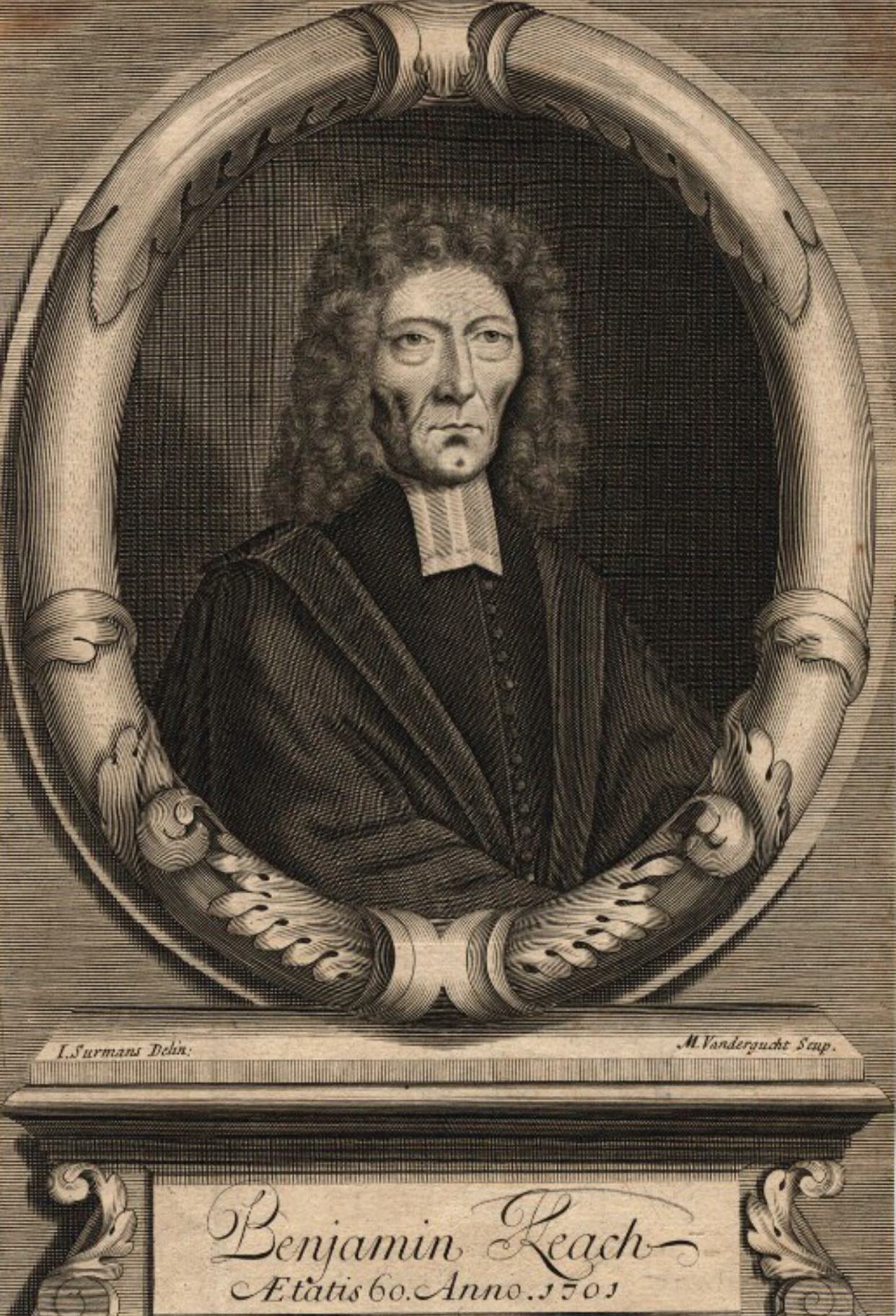
In Benjamin Keach's chapter "Of Metaphors Translated from Other Creatures to God," the author explores the doctrinal significance of various metaphors taken from nature to illustrate divine attributes. Key arguments emphasize how titles and characteristics derived from animals, plants, and inanimate objects are employed in Scripture to denote specific aspects of God's nature. For instance, Christ is referred to as a "Lamb" (John 1:29, 1 Peter 1:19) to signify His sacrificial role, and as a "Lion" to highlight His power and authority (Revelation 5:5). Keach supports his claims with a plethora of biblical references that show how these metaphors not only provide deeper insight into the person and work of Christ but also have practical significance in the believer's understanding of God’s attributes such as protection, strength, and nurturing. The chapter underscores the importance of these metaphors in theological discourse, aiding believers in recognizing God's characteristics through relatable imagery.
Key Quotes
“Christ is called a Lamb... because he was made an immolation or sacrifice for the sins of the whole world which the sacrifice of lambs in the Old Testament typically prefigured.”
“God is compared by an allegory to a lion... so men ought to be moved and tremble when the divine majesty speaks to them from heaven by thunder and lightning.”
“He is called a Green-tree opposing to himself a Dry-tree... if God suffers me that am innocent... to be so grievously afflicted, how much more grievously will he permit you to be afflicted who are guilty persons.”
“The Lord is thy shade upon thy right hand which denotes his heavenly protection which he affords believers as a shade refreshes and defends from the scorching heat of the sun.”
What does the Bible say about Christ as a Lamb?
The Bible portrays Christ as a Lamb, symbolizing his sacrifice for humanity's sins, reflecting Old Testament sacrificial lambs.
John 1:29, Revelation 13:8, 1 Corinthians 5:7, Isaiah 53:7
Why is the concept of Christ as a Lion important for Christians?
The concept of Christ as a Lion signifies His divine power and victory over sin and death.
Revelation 5:5, Hebrews 2:14-15, 1 Peter 5:8-9
How do we know the metaphor of Christ as a Vine is true?
The metaphor of Christ as a Vine, first introduced in John 15:1, illustrates the intimate connection between Him and believers.
John 15:1, John 15:4-5, Galatians 5:22-23
CHAPTER VIII.
OF METAPHORS TRANSLATED FROM OTHER CREATURES TO GOD.
THE things existing in nature besides man are either animate or inanimate. The animate are such as have a sensitive life, as beasts; or a vegetative, as plants. From beasts are taken and attributed to God,
1. Certain names of living creatures, as when Christ is called a Lamb, Joh 1:29; Re 13:8, because he was made an immolation or sacrifice for the sins of the whole world, which the sacrifice of lambs in the Old Testament typically prefigured, 1Co 5:7; 1Pe 1:16; Re 5:6; as also with respect to his mildness, patience, innocence, and beneficence, &c., see Isa 16:1; 2Sa 8:2, with 2Ki 3:4, (&c.)
Christ is called a lion, Re 5:5, "Behold the Lion of the tribe of Judah, hath overcome." He is so called, because of his great and divine fortitude in his resurrection from the dead, and his victory over the devil, the world, and hell. D. Franzius, in Hist. Animal, pag. 73, Ge 49:9, says,[1] "The whole polity of the Jews is called a lion, and a lion's whelp, because of the great firmness of that empire, which endured even until Christ's time, and was esteemed then the most famous among the governments of the world; and although in some respective seasons they had kings, eminent for power and wisdom. Yet Christ only is called a lion (kat ecoxhn or) by way of eminency, that is, he was the most powerful, most wise, and most excellent of the kings, that ever ruled in Juda," &c. And Drusius, lib. x. p. 410. "The Lion of the tribe of Juda, whose coat of armour was a lion, which was painted in the banner of that tribe in three colours; with these words, 'Arise, O Lord, let such as hate thee be scattered, and thine enemies fly from before thee,'" &c.
[1] Tola politia Judæorum dicitur teo et catulus leonis, propter summam aumitatem ipsius Imperii, &c.
The coats of armour of the four principal tribes of Israel, as R. Kimchi, on Eze 1. ult., recites them from the Talmud, were thus, "In the banner of Judah the shape of a lion, according to that which is written, Ge 49:9, 'Judah is a lion's whelp.' In the banner of Reuben, the shape of a man, according to what is said of it. Ge 30:14, 'and Reuben found mandrakes in the field, which are of a man's shape.' In the banner of Ephraim, the similitude of a cow, according to De 33:17, 'his Glory is like the firstling of his bullock or cow.' And in the banner of Dan, the shape of an eagle, as it is said, Ge 49:17, 'Dan shall be a serpent by the way,' and it is said here, as Isa 30:6, 'The viper and fiery flying serpent.'"
Ps 22., in the title, Luther and other interpreters say, that Christ is called XXXX Ajeleth, the morning hind; upon which see Luth. Tom. 2. Lat. Jen. Fol. 238. Illyricus in Clav. Script. Col. 112, 113. D. Gerhard. Harm. Histor. passionis Dominicæ, Cap. 7. p. 310. D. Franz. Hist. Animal, p. 163, &c. To which also some refer the Chald. Parphr. which says, "for thy everlasting and morning sacrifice, by which the end or reason for which this afflicted hind was slain, seems to be fairly expressed." For the obligation of Christ upon the cross is truly an everlasting and most perfect sacrifice, Heb 10:12,14,26. It is called the morning (hind) because his virtue and prefiguration, began about the beginning of the world, after the fall of our first parents, Re 13:8; Heb 13:8, typified by the morning sacrifices wont to be offered, in the Old Testament, Nu 28:4. The appellation of a morning hind, is thus expounded, viz., by it is denoted a hind, which the hunters, in the morning when it goes abroad to feed, lie in wait for, take and slay; so Christ with his disciples going abroad in Judea in the morning season, that is, in the beginning of his kingdom, or the first beamings of his divine and evangelical light, to the pastures of life, (not so much to feed himself, as to administer to others, was hunted by the devils, and by their setting dogs, the Jews, and his apostles being as hinds dispersed, he was at last taken and slain by them, which seems to be intimated, verse 16, "for dogs have compassed me, the assembly of the wicked have inclosed me, they pierced my hands and my feet."
To this phrase some apply the search that Herod made for him even in his infancy, and his being driven into Egypt, Mt 2:14-15, and the gathering together of the chief priests, Scribes, and elders of the people early in the morning to condemn Christ, as Mr 15:1. And as the morning hind is not taken and slain merely to destroy it, as wolves are wont to be killed, but that it may serve for pleasant food: so Christ in the sacrifice of his cross and death becomes most sweet food of life and salvation for us, to be sacramentally and spiritually eaten. Upon which Musculus says thus.---"O flesh of Christ truly like that of a hind's, but more exceedingly sweet to the faithful soul, than any things the nobles of this world taste in their greatest dainties. And that there may be nothing wanting to give it a delicate savour and relish, he was not merely slain but well turmoiled, hunted, and tired before, as our great men are wont to do in hunting and chasing their deer before they kill them, that the flesh may become more sweet, tender, and delicate," &c. Adding, "and see how agreeable this comparison is to the death of Christ, for as the side of the pursued hind is exposed to the hunter's dart, Christ's side was upon the cross pierced with a spear."
Ps 22:6; Christ calls himself a Worm, with respect to his debased state, and the extreme contempt to which he was exposed in the world; upon which Franzius in the aforesaid book, p. 826, says, Sicut vermis habetar pro villissimo excremento, &c., "As a worm is accounted a most vile excrement, which men will not so much as handle, or if they do will wash their hands after it, and if they see them lie upon the earth will remove them from the sight of men; so was Christ treated with extreme contempt, when he hung upon the cross."
It may not be amiss here to insert the paraphrase of Weidnerus[2] upon Pr 30:19, "Difficilia mihi sunt ista tria cognoscere: Viam Aquilæ in Coelo, i.e. Viam Christi ascendentis in cælum cum carne assumpta," &c. Those three things are difficult for me to know: The way of an eagle in the air, that is, the way of Christ ascending into heaven, in his human nature: the way of a serpent upon a rock, that is, the way of Christ from the cross to the sepulchre, which was cut out of a rock, and from whence he rose the third day, whence Christ himself says, as Moses lifted up the brazen serpent, &c. The way of a ship in the middle of the sea, that is, the way of Christ passing through the world in tempests and storms. The way of a man with a maid, that is, the way of Christ in his incarnation in the womb of a virgin, &c. It is added, verse 20, the "way of an adulterous woman," that is, the treacheries and machinations of the synagogue against Christ, see Burgensis upon Isa 7. addit. 5. fol. 21. What is spoken of the eagle by Gregor. Nazianzen,[3] is accommodated to the deity of Christ, which is ineffable, as D. Franzius cites it, page 327, &c.
[2] De præcipuis fidei Myster. Tract. Ii. P. 256
[3] Super Orat. 6. de Spir. S.
2. Some actions of living creatures ascribed to God.
As roaring, which is the property of lions, Joe 3:16; Am 1:2, by which the power and efficacy of his anger, and his word is intimated, see Am 3:8; Ho 11:10; Isa 5:29, (&c.)
Upon which Illyricus says, "it is a metaphor, for as the voice of a roaring lion is terrible to all other living creatures, so men ought to be moved and tremble, when the divine majesty speaks to them from heaven by thunder and lightning."
Jer 25:30, "The Lord shall roar from on high, and utter his voice from his holy habitation, roaring he "shall roar upon his habitation; that is, like a lion ready to seize upon his prey, he shall thunder horribly, see verse 38; in all this speech to the end of the chapter, God is compared by an allegory to a lion, kings and princes to shepherds, the people to flocks, and the nations to pastures and sheepfolds.
Job 37:4, roaring is applied to thunder (which is called the voice of God.) To the cry of Christ, Ps 22:1, "why art thou so far from my salvation (or helping me) and the words of my roaring," see Heb 5:7, and Ps 38:8.
God is said to fly, 2Sa 22:11; Ps 18:10, because of the most swift and impetuous motion of the wind, and sudden tempests of which he here speaks. The Spirit of God is said in the first creation to "move or rest upon the waters," Ge 1:2; which by its operative and vital power it cherished, and as it were made the waters apt for the production of all things, (together with heaven and earth, which then were mixed together.) A metaphor taken from birds, who sit upon their eggs, and by their vital heat bring their young to maturity and perfection.[4]
[4] Gram. Sacra. P. 299
Some members or parts of a living creature are ascribed to God.
As the Horn of Salvation, 2Sa 22:3; Ps 18:2. To Christ, Lu 1:69. For as a horn defends beasts, and thereby their strength is exercised; so God is the most strong defence of the godly. Chemnitius, on Lu 1:69, "By the word horn, strength and power is understood, as Ps 75:10, and Ps 112:9; La 2:3. By the word lifting up is described its solid strength and invincible stability, against which even the gates of hell shall not prevail. It is called, the horn of salvation, that is, it is salutiferous, obtaining victory against the enemy, and bringing safety to captives, &c. As bulls or cows strike, gore, or push down their enemies, so we by faith in the Mediator, are sufficiently armed against the power of the devil."
Wings are attributed to God, by which that singular defence, patronage, care, and protection which he affords his people is signified, Ps 91:4, "He shall cover thee with his feathers, and under his wings shalt thou trust," whence it is called "the shadow of his wings," Ps 17:8; 36:7; 57:1; 63:7. "The covert of his wings," Ps 61:4, a metaphor taken from birds or fowls, especially hens, who gather their chickens under them, cherish them, and protect them from being seized upon by kites or other birds of prey. The whole similitude is to be read, De 32:11; Isa 31:5; Mt 23:37. As to Ex 19:4, "I bare you on eagles' wings," see Gram. Sacr. p. 483.
There are some metaphors taken from Plants, and attributed to God, as a Branch, Isa 4:2; 11:1; Jer 23:5; 33:15; Ec 3:8; 6:12, which places by the Chaldee interpreter, are elegantly expounded of Christ the Messiah. Here principally his temporal nativity or pedigree according to the flesh is noted, as a branch derives its original from the earth, and having that (as it were) for its mother. It intimates also the greenness, felicity, and perpetuity of his kingdom, as the Hebrew word (XXXX, germinavit, crevit,) he hath bubbed, grown, or increased, is used of the kingdom of Christ, and the blessings thereof, Isa 43:19; 61:11; Ps 85:11-12; Ec 6:12. The Messiah is called the "Fruit of the earth," Isa 4:2, with respect as well to his original as to his humanity, Ps 67:6, "Then shall the earth yield her increase or fruit." This whole psalm treats of the blessings and benefits that will accrue to believers from Christ.
Lu 23:31, Christ calls himself a Green-tree, opposing to himself a Dry-tree, by which we are to understand the wicked---"If they do these things in a green-tree, what shall be done in the dry," that is, if God suffers me, that am innocent, and like a green and fruit-bearing tree, to be so grievously afflicted, and cut down as a dry or barren tree, how much more grievously will he permit you to be afflicted who are guilty persons, and sinners, and like dry trees, that will bear no fruit? Some by the "Tree of Life," Re 20:7; 22:2,14, understand Christ, others Life itself and eternal happiness, which is almost the same, that consisting solely in Christ, 1Jo 5:11-12,20.
Christ is called the Root of Jesse and David, Isa 11:10; Ro 15:12; Re 5:5; 22:16, which some expound by a metonymy, as the root is put for that which springs from the root, as Isa 11:1. Others say it is spoken with respect to his divinity. Bernard[5] says, "it is not said that David is his root, but he the root of David, because he bears, and is not borne by any. Fitly therefore, O holy David, dost thou call thy Son, thy Lord, because you did not bear the root, but the root thee." Some derive the reason of this appellation from these places, Isa 14:30, "I will kill thy root with famine," the Chaldee renders it, (thy son); the Septuagint, (thy seed): Mal 4:1, "He shall leave them neither root nor branch," the Chaldee renders it, neither son, nor son's son, or nephew, whence it appears that a son, especially the first-born, is as it were, the root of the family, from whom such as are sprung, are like branches. Hence the Patriarchs, from whom the people of Israel sprung, and with whom God first entered into covenant, are called a root, and their posterity branches, Ro 11:16. Christ is therefore called the root of Jesse and David, because he is that first-born, Ps 89:27, (also, "I will make him my first-born, higher than the kings of the earth,") issued, as to his humanity, from the family of Jesse and David, and was the foundation or root of all the spiritual family of God, whence he is called "the first-born among many brethren," Ro 8:29; which reason seems to be hinted, Isa 11:10, where he is said to "stand for an ensign of the people, to which the Gentiles shall seek," by which the call and conversion of that people is described, and the constitution of the New Testament church foretold, which is like a fruit-bearing tree, standing upon Christ as a root, drawing juice, nourishment, and life from him.
[5] In die Pasch. Serm. 1.
Christ is called a Vine, Joh 15:1,5, by which metaphor, principally, his most strict and close union with his disciples, and all believers is intimated, hence they are called branches engrafted in him, verse 2, 4, 5. The vine is homogeneal, or of the same nature with the branches, so is Christ according to his humanity with believers, Eph 5:30; Heb 2:14. The vine imbibes or drinks in a copious humour, and plenty of moisture, which it after communicates to the branches: so "Of the fulness of Christ we all receive and grace for grace," Joh 1:16. By a vital juice derived from the vine, the branches are animated, vegetated and fertilized, so as to bear sweet fruit: by the virtue of Christ and his spirit given to believers they are enlivened, quickened, and made apt to bear the fruits of piety to God (which fruit cheereth God and man, Jg 9:13,) but in the manner of this conjunction, there is a diversity or difference, for branches grow upon the vine naturally; but believers are engrafted in the true Vine spiritually, &c.
This is the primary reason of this metaphor; but by way of inference other things are intimated, viz., the meanness of the vine, as to outward aspect; Eze 15:2-3, quadrates very well with Christ in his state of humiliation, Isa 53:2-3. The dignity of the vine, before other plants, the delicate smell of its flowers, and the excellency and preciousness of its fruit, &c., with other things may be congruously applied to Christ the true and celestial Vine.
Christ is called a bundle of myrrh, (Song 1:13); of which abundance grows in Arabia; myrrh is indeed better, but most fragrant, and of singular profit, in cleansing and healing of wounds, in expelling of corrupt humours out of the body, in easing pains or griefs, in comforting the heart, and most effectual in preserving the body from putrefaction. All which may be most fairly accommodated and improved in parallels applied to our blessed Saviour's passion, most holy merits, and their fruit and efficacy to the saints when improved in faith.
Ex 30:23. There is mention made of the myrrh of liberty (so the Hebrew,) the Chaldee, pure, incorrupt, our version, pure myrrh, of which was made the holy ointment with which the chief priests were wont to be anointed, which prefigured the holy unction of Christ, the sacrifice of whose death is that myrrh of liberty, affording a heavenly deliverance from Satan, death, sin, and hell, Joh 8:36, (&c.)
He is called "a cluster of Camphire," Song 1:14, this tree is said to be odoriferous, bearing clusters of an exceeding greatness, Plin. lib. 12, cap. 24. Some interpret it cypress, for its sweetness, fragrancy, and plenty of glorious fruit, which things also may be attributed by way of improvement to Christ. Some paraphrase it thus, "Jesus is myrrh to me in his bitter passion, and a cluster of camphire, in his glorious resurrection."
He is called "the Rose, (or flower) of Sharon, and the Lily of the vallies," by which his true humanity, his purity and sanctity, as also the amiability of his office, and blessings he bestows are intimated, as shall be treated of elsewhere more at large. See Dn. D. Gerhard. Meditat. in Postilla Salomonea Dominic, quinquages. fest. purific. 17. post tr. fest.
What metaphors are deduced from inanimate things in nature, and transferred to God, do belong either universally, or severally to those things. To the former class belongs.
When there is a certain dimension ascribed to the infinite and immeasurable God, and a comparison with this whole universe, whereas betwixt finite and infinite, there is properly no proportion, Job 11:8, "It is (viz. Jehovah) the heights of heaven, the deeps (which is the perfection of God, as verse 7,) beyond hell, what canst thou know?" verse 9, "The measure thereof (is) longer than the earth, and broader than the sea;" by which the infiniteness and immensity, of God, and his wisdom, is intimated, of which verse 7, "Canst thou by searching find out God?" (others render it, canst thou find out the depth," viz. of the wisdom of God?") "Canst thou find out to the perfection of the Almighty?" (others say, "Canst thou find out the end of Almighty wisdom?") to this belongs that sacred mathematical expression of Paul, speaking of the love of God, and our Saviour Christ, Eph 3:18, "That ye may be able to comprehend with all saints, what is the breadth, the length, and depth, and height," viz., of the love of Christ, as verse 19, "Which passeth knowledge," showing by an anthropopathy, the unrneasurableness, and immensity of that love, as if he had said, it is higher than the heavens, deeper than the sea, larger than the earth, longer than any time, enduring even to all eternity. Upon which place Osiander says, "the sense is, I pray God that ye may be able with other sincere Christians, after a certain manner, to comprehend the unmeasurable love of Christ towards you, which, that I may use a metaphor, extends itself to all dimensions." And Hyperius in his comment very excellently. "The sense is, (says he,) My prayer is that you may have a full, certain, and absolute knowledge of the love of Christ in all its parts." Geometricians are wont to observe these differences of dimensions, when they inquire into the magnitude of solid bodies. Such therefore as belong to corporeal things, the Apostle artificially compares with things, incorporeal and spiritual; and signifies that he earnestly desires that they should arrive to an equal certainty and perfection in the knowledge of spiritual things, chiefly of the love of Christ, as the mathematicians do in the measure of solid bodies, &c.
Here we are to note, that when magnitude is attributed to God, not the quantity of a corporeal or bodily size and bigness, but the very infiniteness of his essence, and essential properties is to be understood, Ex 15:16; 18:11; Nu 14:19; De 3:24; Ex 5:8; Ps 48:1-2; 147:4-5; Jer 32:17-19; Da 2:45; Mal 1:14, (&c.,) Job 33:12. There is a comparison of God with man with respect to greatness, whereby the unsearchable immensity of God is intimated, (as if he had said) God, not only in majesty and power, but also in truth, justice, wisdom, and mercy, infinitely excels all mortals, therefore thy presumption is unjust to contend with him.
1Jo 3:20, it is said that "God is greater than our hearts," when the speech is of a guilty conscience, as if he had said, if conscience, which in many is blind, convinces us of hypocrisy, how much more will God, who is the greatest of all things, and infinite in knowledge, charge us in his judgment. 1Jo 4:4, God is said to be "greater than him that is in the world," that is, Antichrist, as verse 3, whom believers by the power of the infinite and invincible God, by grace in them do overcome.
Joh 10:29, God is said to be "greater than all," that is, that he (beyond comparison) excels the whole universe in power and majesty.
By the same reason a descriptive quantity, or plenty, is ascribed to God, as Ps 86:15, XXXX much (or plentiful) in mercy and truth, Ps 103:8, great (or plenteous) in mercy, Ps 130:7, "With him is plenteous redemption," by which is noted the infiniteness of God and his attributes, as it is described, Ps 147:5, "Great is our Lord, and of great power, and of his understanding (there is) no number," so the Hebrew. See Ps 26:6; Ro 11:33; 1Co 2:1.
In speaking of things inanimate severally, we will distribute them,
1. Into things celestial. And,
2. Things elementary.
To the first kind belongs when God is said to look down from heaven, and sit in, or inhabit heaven, as his throne. Of which before.
Also when God is called light, 1Jo 1:5, by which his majesty, holiness, perfection, and blessedness is noted, as when celestial light is transmitted to us, there is nothing fairer, clearer, purer, or more comfortable, whence it is said, Ec 11:7, "Truly the light is sweet, and a pleasant thing it is for the eyes to behold the sun." The Greeks had an adagy, or proverb, gluku faov, dulce lumen solis, sweet is the light of the sun.
1Ti 6:16, "God is said to dwell in (fwv aprosion) lucem inaccessibilem, inaccessible or unapproachable light," or, as our English translation renders it, "the light which no man can approach unto," that is, to act with, that glory, majesty, and felicity which no creature either can have, or comprehend. Upon which Chrysostom[6] says, "the Apostle says, that God dwells in inaccessible light, which is more than if he had said incomprehensible, for that which by inquiry and search we cannot find out, we call incomprehensible, but that which prohibits all essay of search, and to which none can come near we call inaccessible."
[6] Hom. 3. de incomprehens. Dei Nat.
Some with inaccessible light, compare an opposite phrase, where the difficulty of fully knowing God in his majesty and essence is described by his dwelling in mists and clouds; for every corporeal light, which for its exceeding brightness cannot be beheld, may be truly styled a mist, and therefore inaccessible, &c.
To this is referred, where God, Jas 1:17, is called "the Father of lights, with whom is no variableness nor shadow of turning;" in which phrase is denoted his essential majesty, and immutability in acting. Some (and very fitly,) judge that the phrase "Father of lights," is a periphrasis of the sun, attributed to God, anqrwpinwv, or after the manner of men: for as that super-celestial sun is distinguished from the corporeal, and visible sun, it is added, "that with him is no variableness, nor shadow of turning." When the sun is in the opposite hemisphere it leaves ours darkened and obscure, which vicissitude of darkness and light agrees not with God; for he is never the cause of sin and death, (which are noted by the term, darkness) but always the Author of good and life, (noted by the term light) and this is the scope of the apostle, as verse 13, "Let no man say when he is tempted, I am tempted of God: for God cannot be tempted of evils, neither tempteth he any man," &c.
Salmeron upon the words, says, "in the words, thophv aposkiasma, (viz., shadow of turning) he alludes to the sun, which by a certain vicissitude, and declination of itself from one tropic to the other, begets shadows of a different size, and the nearer it is to us, the greater are the shadows; but these vicissitudes are not compatible with God"---but the first interpretation is more comfortable to the apostle's scope.
From this denomination of light attributed to God, with respect to his essence and majesty, the Son of God is called apaugasma thv dochv Qeou, "the splendour (or brightness) of the glory of God," Heb 1:3. The primary reason of appellation is, in respect of the heavenly Father; from whom he, by ineffable generation (as it were) shined from eternity,[7] as light does from light: for apaugasma, signifies, a shining again, or a resplendency, as it were from the sun-beams; and so by the force of the proposition, his eternal original from the Father is indicated or shown. Brightness cannot be separated from the sun, and is of equal age with it; so, from the Father of lights, (of whom on Jas 1:17, we have spoken) this brightness, viz., the Son, can never be separated, because co-eternal with him, Joh 14:10. Lyranus, thus expresses himself, "The Son proceeds from the Father, as light or splendour from the sun, which splendour is of the same age with the sun, and would be eternal, if the sun were eternal."
[7] Ut in Niceno symbolo, est, as in the Nicene Creed.
A secondary reason may be in respect of men, and that manifestation which the heavenly Father made to us by the Son. The light of the sun is sent on the earth to cherish, vegetate, and render it fruitful; Christ the brightness of the Father's glory is sent to illuminate, vivify, and save us.
God is said to be a light and a sun, with respect to his energy, or power, and operation, amongst men, Ps 27:1, "The Lord is my light,' that is, who gives the true and saving light of his Spirit unto me, where the psalmist exegetically (or by way of exposition) adds, "The Lord is the strength of my life;" Ps 84:12, "The Lord God is a sun and a shield," the exposition is annexed; "the Lord will give grace and glory, no good (thing) will he withhold from them that walk uprightly." Isa 10:17, "And the light of Israel shall be for a fire, and his Holy One for a flame;" that is, God shall illustrate, and sanctify the Israelites. From hence arise those different phrases, wherein the light of God signifies,
(1.) His favour and grace, as when his face is said to shine, Nu 6:25; Ps 80:3, (&c.) Or,
(2.) His saving revelation of light and truth by the word, Ps 43:3, "Send out thy light and thy truth: let them lead me:" &c., Ps 67:1, "Let God cause his face to shine upon us;" which is meant of the revelation of his way and doctrine, as verse 2; see Ps 19:8; 2Co 4:4,6, (&c) Or,
(3.) Eternal glorifying, as Isa 60:19-20, "The Lord shall be to thee an everlasting light," which Re 22:5, is applied to eternal life.
In general, the light of God is to be taken with reference to some celestial benefits, as Ps 36:9, "In thy light shall we see light," where the preceding and following words show the sense to be, that by the grace of God manifested in his word, we come to true blessedness. By the light of God here Galatinus says, lib. 8, cap. 11, and Drusius lib. 15, observat. cap. 4, "that some ancient Rabbis understood the Messiah."
Hence we come to our Saviour, who is particularly called the light and sun, not with respect to his divine essence and person, as distinct from the Father, as before, but with respect to his office, benefits, and operations, Isa 9:2; 42:6; 49:6; 60:1; Mt 4:16; Lu 2:23; Joh 1:4,9; 3:19; 8:12; 12:35-36; Ac 13:47, The metaphor of light, in scripture expresses information, whereby the darkness of the understanding is dispelled, as also, a taking away of sin, which is compared to darkness, and a giving of comfort, all which our Saviour most eminently exhibits from himself to believers.
Concerning the appellation of sun, these two places are most eminent.
(1.) Mal 4:2, "But unto you that fear my name, shall the Sun of righteousness arise with healing in his wings." That this is spoken of our Saviour Christ, plainly appears from the scope and context of the prophet. See chap. 3:1, 2, 3, and iv. 5, with Mt 11:10; 17:11-13; Luke 1:17, &c. For there is a most fair and sweet comparison betwixt Christ and the natural sun. As,
(1.) With respect to oneness, there is but one sun, which is the eye of the world, which is enough to enlighten and cherish all; so there is but one mediator between God and man, the man Christ Jesus, 1Ti 2:5.
(2.) That the sun only shines by its own light, and communicates brightness to the moon and stars, so Christ is the Fountain of true light, illuminating the church, and teachers of his word (which are compared to stars, Re 1:20) with his own proper light.
(3.) As there is but one sun which excels and illuminates the inferior luminaries of heaven; so Christ has the pre-eminence (prwteuwn) over all, Col 1:18.
1. With respect to efficacy; for as the sun chases away darkness and clouds, illustrating all things: so Christ dispels the darkness of the mind, by the light of his word; the darkness of sin, by the light of his most holy merits; and the darkness of calamity, by the light of his comforting grace.
2. With respect to equality, for, "the sun rises on the evil and the good," (affording its light without distinction to all things sublunary,) Mt 5:45, which nevertheless blind men, and such as sleep by day, do not enjoy: so Christ "illuminates every man that cometh into the world," (that is, he affords the means of illumination,) 1Jo 1:9; yet unbelievers, who are blinded by the devil, and such as give themselves the liberty to sleep securely in sin (and, that by their proper fault, and particular vice) Joh 3:19, and 2Co 4:4, do not enjoy that saving light or illumination; which is the reason why the prophet Malachi, speaking of the actual illumination of the Sun of righteousness, says, "To them that fear the name of the Lord shall the sun of righteousness arise," &c.
3. No man can resist or hinder the course and efficacy of the sun: so no devil or tyrant can retard or hinder the course and energy of the gospel of Christ, the Sun of righteousness.
4. The sun refreshes and quickens the world by its heat, winch nature demonstrates in the spring: so Christ quickens and makes alive those that are spiritually dead, Eph 2:5, and causes a divine heat of love and devotion, Lu 24:32.
5. That which the prophet mentions, by the phrase, "with healing in his wings," is to be understood of the first beams or rays of light called the "wings of the morning," (or the first appearance of the sun) Ps 139:9, that is, the first sun-beams. This celestial Sun is also a physician which can heal and deliver from spiritual death. The sun when it rises gives some ease and comfort to sick persons; let all that are soul-sick, rejoice in this justifying and healing Sun of righteousness.
6. The sun rising causes joy to all things, who were as it were immersed in the melancholy sadness of night, as the poet says,
Phosphore redde diem, quid gaudia nostra moraris?
"Come, sweet Phosper, bring the day,
Why dost thou our joys delay?"
So by this heavenly Sun of righteousness, true cause of joy is given unto men, Lu 2:10-11; Isa 9:2-3.
7. The sun doth make all sorts of earthly fruit ripe, to which it also gave the beginning of vegetation. So Christ is the "Author and Finisher of our faith," Heb 12:2, "He worketh in us to will and to do," Php 2:13, "That we may walk worthy of the Lord, unto all well pleasing, being fruitful unto every good work, and increasing in the knowledge of God." Col 1:10.
8. It is said of the Heliotrope, or sunflower, that it always turns and inclines to the sun: so let our hearts always incline to Christ.
9. There is nothing more pleasant to those in captivity, than to behold the sun: so there is nothing ought to be more comfortable to us in our spiritual captivity, than by the eyes of faith to behold Christ the Sun of righteousness, &c.,
The second place is Lu 1:78, "Through the bowels of the mercy of our God; (so the Greek) whereby the Day-spring from on high hath visited us." Some think that this metaphorical appellation, (viz., anatolh ec uyouv oriens ex alto) arising from on high, is taken from plants which are said (anateilai) to branch or sprout forth, when they grow, or begin to flourish, that so it might respect those places of the Old Testament, where Christ is called a plant or branch, Jer 22:5; Ec 3:8; 6:12, where the Septuagint renders XXXX by anatolhn orien, arising, and that we are to understand here, the arising, or branch from on high, sent from heaven to us, and widely differing from all earthly branches. But the words immediately following show that Zacharias had respect rather to the similitude of the sun and light, as verse 79 of this place, viz. epifanai, "to give light to them that sit in darkness, and in the shadow of death, to guide (as a clear light does) our feet into the ways of peace." By a good reason it is therefore said, that the holy man respected the prophecy, Isa 9:2, (whence the phrase of sitting in the darkness, and shadow of death, is taken;) and chap. 60:1, 2, Mal 4:2. To which places, Junius (Parallel. 1, 55.) does learnedly show that he had immediate reference.
Anatellein, oriri, to arise, is proper to the sun, moon, and stars, from whence the noun, anatola, that, is, an arising, or the action or region of the orient sun, and metonymically it is put for the rising sun itself---to which, ec uyouv, from on high, for distinction's sake is added, by which Junius says, "we are to understand that meridian and powerful splendour, whereby the sun, (chiefly at noon) illustrates all things to difference it, apo thv Ewhv anatolhv, from its first uprising." But it seems to be referred more truly to the first original of the Sun of righteousness, viz., his visiting (and shining upon) us on earth, and that from on high, viz., heaven, as 1Co 15:47; Joh 3:31.
That the Messiah is called a Star, Nu 24:17, is the judgment of many; there shall come "a star out of Jacob, and a sceptre shall rise out of Israel," which words are thus rendered by the Chaldee, "there shall arise a king out of Jacob, and the Messiah shall be exalted out of Israel, &c." The same exposition Galatinus, Lib. 8. cap. 1, produces from R. Solomon, and R. Moses Hadarson. Vatablus paraphrases the whole verse thus---"O Balak, my counsel is that you be quiet, and fear not at this time, for that which I fortel of things to come, shall not come to pass in thy time, but in the latter days, viz., in the time of the Messiah, whom I see, but not near me, for he is yet afar off, when he comes, he will be as a great light and vehement splendour, which is signified by the star," &c. So says Brentius. Junius and Tremellius in their notes say, "that by the name of a star and sceptre, is meant, the kingdom of God's people, begun in David, and completed in Christ, between whom, the interjected time was the progress of the star, &c." See Junius in analyt. explic. h. l.
Such as understand this prophecy of Christ, paraphrase in this manner, "I shall see him, but not now, I shall behold him but not nigh," that is, my curses will be in vain against that people, whom God hath peculiarly chosen for himself, and from which according to the flesh the Messiah is to descend, but the time of that nativity is not yet come, therefore I seem to behold him at a great distance, but that promise will be certainly fulfilled, and God for his sake will preserve this kingdom so long;" "there shall come a star out of Jacob," that is, the Son of God, manifested in the flesh, shall come of this people, and shall spread the beams of his doctrine and miracles far and near, arising as the day-star in the hearts of unbelievers, 2Pe 1:19, enlightening them to eternal life; "and a sceptre shall rise out of Israel," that is, the Messiah shall not only be a Teacher of his people, but also a heavenly King; "and he shall smite through the princes of Moab, and destroy all the children of Seth;" that is, all such as will not obey his government, but remain unbelievers, he shall destroy with an eternal death, verse 18, "And Edom shall be a possession, Seir shall be a possession for his enemies;" that is, all his enemies (who by the Iclumeaus, the capital enemies of Israel, inhabiting Seir, are set forth) shall be destroyed by the sword of the Spirit; "But Israel shall do valiently;" that is, the church, which is the kingdom of the Messiah, shall be gloriously triumphant; verse 19, "Out of Jacob shall come he that shall have dominion, and shall destroy him that remaineth of the city," that is, he shall rule in the house of Jacob for ever, and "of his kingdom there will be no end," Lu 1:33. "He shall put all his enemies under his feet," 1Co 15:25-27, (&c.)
Christ calls himself "the bright and morning star" Re 22:16, because of those shinings of saving knowledge which proceed from him, whence he is fwsfworov anatolh, the light-bringer (usually translated Morning-star, or day-dawn,) "arising in the hearts of men by the sure word of prophecy." But more especially because of his promise of life and salvation: for as the morning-star is as it were the sun's harbinger, declaring its speedy approach; so by the clearness of Christ's resurrection, and his sure word of promise, he discovers unto men what an extraordinary light of glory will be afforded to believers in the general resurrection, when they shall shine as stars for ever, Da 12:3. The morning-star gives light, but much less in the sun; so the light of the knowledge of Christ in this life, is not to be compared with that most illustrious and shining glory, which the saints shall enjoy in bliss, and which by faith they expect, 1Co 13:12.
Secondly, Elementary things. God is called fire, yea, a consuming fire, De 4:24; 9:3; 32:22; Isa 10:17; 66:15-16; Eze 21:31, (&c.,) which denotes his wrath against sin, which consumes those miserable persons, against whom it burns, as fire does stubble. See Ps 18:8, where by smoke also the wrath of God is signified, as also Ps 74:1, and Ps 80:4, "How long wilt thou smoke against thy people?" so the Hebrew, De 29:20.
God is said to be a Lamp, Candle, or Lanthorn, when he exhibits his grace and favour to any, 2Sa 22:29, "Thou art my Lamp, O Lord." Ps 18:28, "For thou wilt light my candle (or lamp); the Lord my God will enlighten my darkness;" that is, he is the Author of my light, felicity, and salvation. So the candle of God is said to "shine upon Job's head," Job 29:3, in the same sense, as the following words show, viz., "By his light I walked through darkness," where he subjoins a clear description of his former felicity.
Pr 20:27, "The spirit of man is the candle of the Lord, searching all the inward parts of the belly," that is, the Lord kindles a light in man, by which he looks into the most inward things; and therefore it shines in the mind of a wise king, that he may search out a matter, and take away the wicked, Pr 25:2-3. The word of God is called a lamp, or candle, Ps 119:105; Pr 6:23; 2Pe 1:19, because of the light of saving institutions which it exhibits to believers.
To the element of air belongs, when blowing, or a blast, or breathing is attributed to God, by which his divine grace and refection, is noted, as a cool breeze refreshes a man in summer's heat---thus some aptly translate that passage, Isa 57:16, "For I will not contend for ever, neither will I be always wroth, the Spirit before me shall roll itself, and I will cause a blowing;" that is, the Holy Spirit, which I will send to sorrowful and contrite believers, shall (as it were,) open itself to them, dwell in them, and in the heat of temptations, shall with a comfortable gust or breeze refresh their fainting spirits.
Sometimes it denotes divine wrath and vengeance, as a strong wind overthrows what is before it, and inflames the fire, Job 4:9, "By the blast of God they perish, (that is, the wicked) and by the breath of his nostrils are they consumed." Ps 18:15, "At thy rebuke, O Lord, at the blast of the breath of thy nostrils." Isa 30:33, "The breath of the Lord, like a stream of brimstone doth kindle it;" that is, hell; as brimstone is a great nourisher of fire, so the infinite and never-ceasing wrath of God, shall be (as it were) an eternal nourisher or continuer of hell; for whilst a pair of bellows blow the fire, it burns; so the breath of the Lord, (viz. his wrath) shall be always of efficacy to torment the souls and bodies of the damned in that infernal stream of brimstone.
To the element of water belongs where God is called a "Fountain of living waters," Jer 2:13; 17:13, because he is the indeficient Author of all life and refreshment, here and hereafter. Ps 36:9, "With thee is the fountain of life," which is to be understood in the same sense, which verse 8, is called "the river of his pleasures," The Spirit is called a "river of living water," Joh 7:38-39, to which belongs the expression of pouring out, Isa 44:3; Joe 3:21; Ec 12:10; Ac 2:16-18,33; Tit 3:5-6.
Christ in general calls the blessings derived to men through him, living water, Joh 4:10,14. For he is that most abounding fountain of eternal life, Joh 1:16. Water cleanses, refreshes, quenches thirst, softens, or mollifies, &c., which with other good qualities, may be most fitly ascribed to the blessed Saviour in a spiritual sense; see Isa 55:1; Eze 36:25; Ecclesiastes 14:8; Ps 23:1-2, (&c.)
The heavens or clouds are called the "river of God full of water," Ps 65:9, because he sends plenty of rain from thence to make the earth fruitful.
To the Earth, we will refer whatsoever (besides what was produced before in their proper places) have a being in it, that are metaphorically transferred to God, whether they be natural productions, or made by human art.
Christ is sometimes called a Stone and Rock, as Ps 118:22, "The stone which the builders refused is become the head of the corner," which expressly referred to Christ, Mt 21:42; Ac 4:11; 1Pe 2:7. By the builders we are to understand the priests and great men, and others among the Israelites, whose office it was to build, not destroy the church of God. How these refused Christ, the evangelic history plentifully informs us; yet notwithstanding he is "made the head of the corner, or the firm and chief corner-stone of the whole church, fitly framed together, and growing in him," Eph 2:20-21; to wit, both of Jews and Gentiles, having broken down the partition-wall, verses 14, 15, 16, &c. Other places are, Isa 8:14; 28:16; Ec 3:9; Lu 2:34; Ro 9:32-33; 1Pe 2:4,6-8; where he is called a "Rock of offence, and a stumbling-stone," with respect to unbelievers and wicked men, &c., who are apt to despise his mean worldly estate, and be offended at his severity against their sinful ways.
God is called a Rock to such as trust in him, De 32:31; Ps 18:2; 31:2-3; 42:9; 73:26; Isa 26:4; that is, a most certain and invincible giver of help, for there were rocks in those countries, which for their height, strength, steepness, and difficulty of access, were reputed impregnable, &c.
Mt 16:18. Christ alluding to the name of Peter calls himself that "Rock upon which he was to build his church," that the "Gates of hell should not prevail against it."---Upon which Brentius very well paraphrases: "I have called thee Cephas before, that is, a rock, (Joh 1:42,) and I do not yet repent of giving thee that title; for now in your own and brethren's name, you acknowledge the true rock and foundation, in confessing, that I am Christ the Son of the living God---This confession is the true rock, and upon it, as upon a rock and foundation, will I build my church."
D. Calixtus says, "that the words, the church is built upon a rock, are said by a metaphor, which is taken from the firmness, strength, or solidity of the rock, not from any rule or government it has, for there is no such thing in it, and denotes a solid, steadfast, and immoveable foundation;" but what needs any further explication, when Paul, an undoubted interpreter, says, 1Co 3:11, "For other foundation can no man lay, than that is laid, which is Jesus Christ," but upon this rock, are laid other rocks, or stones, (for petrov, being an appellative, signifies a stone, not a rock) cut out of the living rock, which being single are not foundations, but many being joined, cemented, or united, constitute or make a secondary foundation, Re 21:14, "And the wall of the city had twelve foundations, and in them the names of the twelve apostles of the Lamb." Eph 2:20, "And are built upon the foundation of the apostles and prophets, &c."
1Co 10:4, Christ is called the Spiritual Rock, of which the Israelites did drink in the desert, that rock being a type of him, Ex 17:8: see Gram. Sacr. p. 504, 551.
God is called a secret or Hiding-place, Ps 91:1; 119:114, also a covert, refuge, or hiding, Isa 4:6; by which his gracious defence against all hostile violence is intimated. For the same reason he is called a munition, which signifies a fortification, or strong-hold, Ps 31:2-4; 71:3; 91:2,9; 144:2.
He is called a Wall of Fire, Ec 2:5, where the epithet of fire is added, to show that he is not only the Defender of his church, but also a most terrible Avenger, that will consume its enemies, as fire does combustible matter.
He is called a Strong Tower, Ps 61:3; Pr 18:10, because of his divine protection also; for as in high and well-fortified towers we are safe from the assaults of the enemy; so much more eminently does Jehovah place them in safety, who trust in him, 2Sa 22:51; "He is the tower of salvation," (says David of God) which is called "great deliverance," Ps 18:50. The tower is fortified,
1. With warlike engines, which are his divine virtue and power, and all the creatures which he makes use of to the destruction and overthrow of his enemies, Ps 148:8, "Fire and hail, snow and vapour, stormy wind fulfilling his word."
2. With provision, as the bread and drink of life; Ps 36:8-10, "They shall be abundantly satisfied with the fitness of thy house, and thou shalt make them drink of the rivers of thy pleasures," &c.
2. With a garrison of brave defendants, which are the holy angels, Ps 91:11-12; Da 7:10. So that this tower is impregnable, &c.
The Lord God Almighty and the Lamb are called the Temple of the heavenly city, Re 21:22; by way of opposition to the outward and earthly temple, as if he had said, in eternity there will be no need of those visible and external signs, by which God manifested himself to his people under the Old Testament dispensation, in the temple and in the ark of the covenant; for God will exhibit himself to be seen by his elect, face to face, that in this spiritual temple they may give him eternal and celestial praise, celebrating a festival of everlasting joy, &c.
Joh 14:6, Christ calls himself "the Way" viz., by which there is a passage to the Father, as verse 2, 3, 4; the words of the verse, "I am the way, and the truth, and the life, no man cometh unto the Father but by me;" that is, you say you know not the way to the Father, and heavenly felicity; why I myself, whom you know, am the way, by which you can arrive there, nor am I only a way, but a guide also, by the truth which I teach; and together with the Father, am the end of your journey, that is life, which the blessed enjoy. Calixt. in Harmon. Evangel.
John Husse (as Wolfius cites him, Tom. 1. Lect. Memor. p. 750.) says, "Let the humble passenger behold Christ, who says, "I am the way, the truth, and the life," here is a way for him that will go, for Christ is the way: a way whither he would go, for Christ is truth: and where he would tarry, for Christ is life."
Tho. a Kempis. Lib. 3. de Imit. Christi. Cap. 56, "I am the way, truth, and life." none can go without a way, nor know without truth, nor live without life. I am the way which you ought to follow, the truth which you ought to believe, and the life which you ought to hope for. I am the inviolable way, the infallible truth, and indeterminable life. I am the most right way, the most supreme truth, and most certain, blessed, and increated life; if thou tarry in my way, thou shalt know my truth, which shall deliver thee, and in it thou shalt find eternal life. The light and truth of God leads us, Ps 43:3; which Christ applies to himself, Joh 8:12, and Joh 14:6, for he leads us to himself, who is eternal life, 1Jo 5:11-12, in whom we have all things, Ro 8:32. How he leads to the Father is fairly expounded, Heb 10:19-20, (&c.)"
1. The way of the Lord God signifies his heavenly doctrine, Ps 5:8; 25:4,9-10; 67:2; 119:3,14,26,30, (&c.,) Isa 2:3; Ho 14:9; Mt 22:16; Ac 13:10; 18:25, (&c.) Hence comes the phrase "to keep the ways of the Lord," Ps 18:21., that is, to lead his life according to his word and precepts.
2. His providence and divine government, more generally as the whole course of his will, counsels, endeavours, and actions, as Ps 25:10; 77:13; Isa 55:8-9; Hab 3:6.
More particularly it signifies some singular actions of God, Ex 33:13; Ps 103:7; Job 40:14; Pr 8:22. John the Baptist is said "To prepare the way of the Lord," Mal 3:1; Lu 1:76, that is, to bear a serious testimony of his speedy coming, by preaching the word, and administering the holy ordinance of baptism. A metaphor taken from great men, at whose coming the ways are wont to be made plain and level. See Isa 40:3-4, (&c.)
God is called a Shade, Ps 121:5, "The Lord is thy shade upon thy right hand;" which denotes his heavenly protection, which he affords believers, as a shade refreshes and defends from the scorching heat of the sun; hence such are said to "abide under the shadow of the Almighty," Ps 91:1. When it is said, the shadow of his wings, the metaphor becomes double and more emphatical, for he is not only a pleasant shade in dry and torrid places, but such a nourishing protecting shade as the hen's wings are to her chickens; and so denotes a singular love and care.
We read also of the "shadow of God's hand," which also denotes a strong protection against all enemies, for a hand when attributed to God denotes so much. Of which before.
There is an eminent emphasis in that text, Lu 1:35, "and the Angel answered and said unto her, The Holy Ghost shall come upon thee, and the power of the highest shall overshadow thee," episkiasei soi. Mary being astonished by the view of that angelic messenger, enquired, verse 34, "How shall this be, seeing I know not a man?" viz., what was said, ver. 31, "And, behold thou shalt conceive in thy womb, and bring forth a son, and thou shalt call his name Jesus. He shall be great, and shall be called the Son of the Highest:" &c., verse 32. To Mary wondering at this, the angel answers, that it should be by the supernatural, and most singular operation of the Holy Spirit, and power of the highest, which operation is by an anthropopathy expressed by overshadowing, describing the manner thereof, as that there should be divine protection, which is the metaphorical signification of a shadow, as before. For God being a consuming fire, would consume Mary, by filling her with his peculiar and majestical glory, unless there were some divine ob-umbretion or shade between; as God covered Moses with his hand in that peculiar and extraordinary appearance of his divine glory, lest by the dazzling and majesty of God's presence he should be consumed, Ex 33:22. It may also respect that hidden formation of that most holy child in the virgin's womb, and his being secured from the least spot of sin, in his most admirable union with humanity.
This emphasis the word (shadow) carries, which being contrary to light, is a note of the incomprehensible and hidden energy of God; intimated also by the "shadow of a cloud over the tabernacle," Ex 40:35; let this shade therefore be a prohibition from any rash or curious inquisitiveness into this adorable mystery. The cloud was put over the tabernacle, that we should not rashly rush in, and the cherubims covered the ark, 2Ch 5:8, lest any body should be curiously prying into the majesty of God which dwelt upon it; so the shadow of the highest, ob-umbrates this mystery, lest our foolish reason should be inquisitive into the manner of it. And so with a shadow of imperfect revelation of these divine things, we end this chapter.

Comments
Your comment has been submitted and is awaiting moderation. Once approved, it will appear on this page.
Be the first to comment!